At A Glance
In 2026, marketing activation and measurement will operate as a single, connected system. Identity allows insights to guide decisions while campaigns run, not after they end. Experian helps marketers unify planning, activation, and outcome validation so performance signals inform action in real time and business impact stays visible throughout the campaign lifecycle.For years, marketers have worked around a familiar disconnect. Campaigns go live first. Measurement follows later. Insights arrive after audiences are reached, and budgets are committed.
That gap has slowed decisions, blurred performance signals, and limited marketers’ ability to respond when it counts.
In 2026, that model changes. Activation and measurement no longer operate as separate steps. They function as a single system, where insight informs action as campaigns unfold. Consistency across identity, data, and decision-making sits at the center of this shift, connecting the full campaign lifecycle from planning through outcomes.
How is marketing measurement shifting from post-campaign reporting to in-flight intelligence in 2026?
Marketing measurement in 2026 is moving from retrospective reporting to real-time input that shapes campaigns while they run. Instead of explaining performance after delivery, measurement now guides creative, audience, and channel decisions as verified outcomes appear.
Historically, measurement worked like a post-mortem. Dashboards showed what happened after campaigns ended, or weeks after impressions were delivered. Those insights supported long-term planning but rarely influenced performance in the moment.
That dynamic has changed.
Today, marketers embed measurement directly into activation. Campaigns adapt while they run. Creative evolves based on engagement quality. Audience strategies adjust as verified outcomes come into view. Channel investments respond to performance signals, not assumptions.
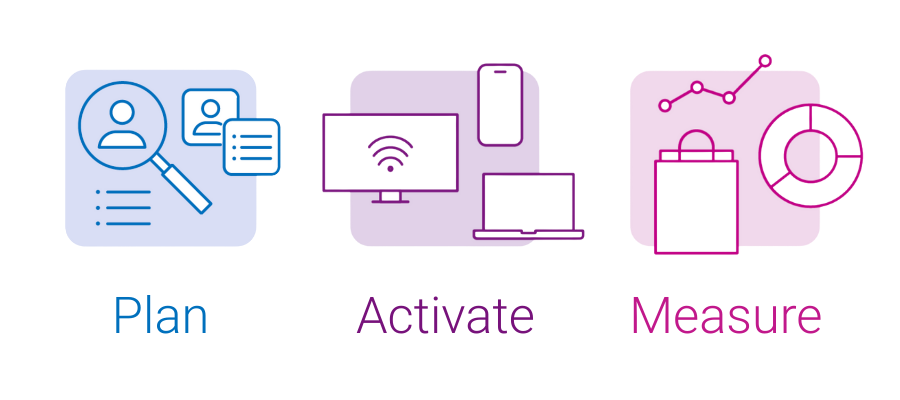
Connected ecosystems make this possible. Experian helps marketers plan, activate, and measure within a single framework by linking audiences, identity, and outcomes. When planning and performance live in the same environment, insight becomes actionable in the moment.
Why is identity the connective layer between activation and measurement?
Identity provides the consistent thread that links planning, activation, and outcomes into a unified system. Without it, marketers rely on proxy signals and disconnected views of performance.
For years, fragmented identity frameworks made it difficult to connect media exposure to real-world outcomes. Without a consistent way to recognize audiences across planning, activation, and measurement, marketers relied on proxy metrics and modeled assumptions.
That’s changing as identity becomes interoperable across the ecosystem.
Experian’s Digital and Offline Graphs help marketers onboard and resolve their data into a clean, connected foundation that supports everything that follows. From building audiences enriched with behavioral, demographic, and lifestyle insights, to activating those audiences across channels like connected TV (CTV), social, and programmatic through direct integrations with more than 200 platforms.
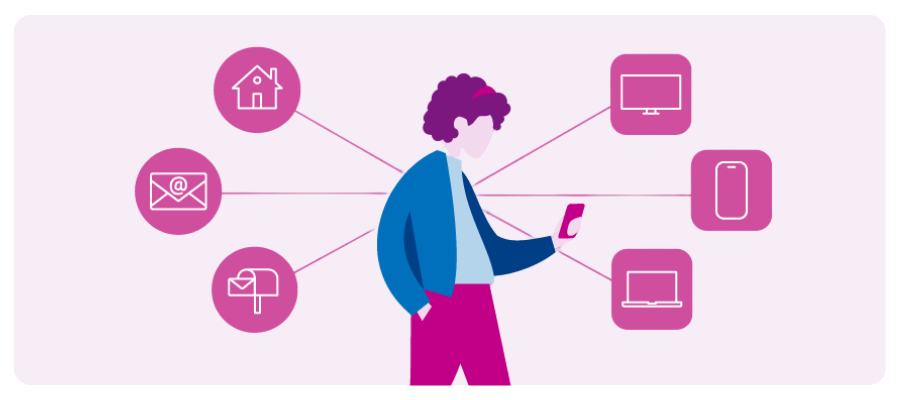
When identity stays consistent from the first impression through final outcome, marketers gain a clearer view of what drives performance and where to act next.

2026 Digital trends and predictions report
Our 2026 Digital trends and predictions report is available now and reveals five trends that will define 2026. From curation becoming the standard in programmatic to AI moving from hype to implementation, each trend reflects a shift toward more connected, data-driven marketing. The interplay between them will define how marketers will lead in 2026.
How does closed-loop measurement become standard in 2026?
Closed-loop measurement is becoming the default as activation and measurement come together. Marketers now tie exposure directly to verified business outcomes instead of relying on inferred signals.
In partnership with MMGY Global, we helped Windstar Cruises connect digital impressions directly to bookings. The result was more than 6,500 verified bookings and $20 million in revenue tied back to campaign exposure. That translated to a 13:1 return on ad spend.
This level of accountability changes how marketers optimize. Instead of relying on clicks or inferred intent, teams can measure outcomes that reflect business impact. Store visits. Purchases. Site activity. These signals now guide decisions while campaigns are live.
Through curated private marketplace deals and supply-path optimization, Experian also helps reduce cost, and improve reach and performance. With Experian and Audigent operating as one, marketers gain access to scalable, privacy-conscious data solutions that support both addressability and accountability across the supply chain.
What should marketers plan for as activation and measurement connect in 2026?
Marketing teams should prepare for an operating model built around continuous feedback, unified systems, and verified outcomes. This shift changes how success is defined and managed.
Marketers should plan for:
Whether you’re activating your own data or reaching new audiences, Experian connects every stage of the campaign. From early planners to last-minute buyers, we help you show up in the moments that matter and prove what is working.
The takeaway
Marketing’s next chapter centers on connection.
As data systems unify, activation and measurement operate as one. Insight flows directly into action. Decisions are guided by intelligence, not delayed reporting.
With Experian, marketers plan, reach, and measure in a connected cycle. Every impression is measurable. Every audience is accurate. Every decision is powered by data ranked #1 in accuracy by Truthset.
To explore this trend and the others shaping marketing in 2026, download our 2026 Digital trends and predictions report.
Ready to connect with our team?
About the author

Ali Mack
VP, AdTech Sales, Experian
Ali Mack leads Experian’s AdTech business, overseeing global revenue across the company’s expansive tech and media portfolio. With over a decade of experience in digital and TV advertising, Ali drives strategic growth by aligning sales, customer success, and solutions teams to deliver impactful outcomes for clients and partners.
She has successfully guided teams through two major acquisitions, integrating sales organizations and product portfolios into unified go-to-market strategies. Under her leadership, Experian has consistently exceeded revenue targets while fostering collaborative, results-driven teams and mentoring emerging leaders. Working closely with finance, product, and marketing, Ali develops strategies that support a diverse ecosystem of publishers, brands, and technology partners, positioning Experian at the forefront of data-driven advertising and identity resolution.
FAQS
Marketing measurement in 2026 is moving from retrospective reporting to real-time input that shapes campaigns while they run. Instead of explaining performance after delivery, measurement now guides creative, audience, and channel decisions as verified outcomes appear. Connected ecosystems make this possible. Experian helps marketers plan, activate, and measure within a single framework by linking audiences, identity, and outcomes.
When planning and performance live in the same environment, insight becomes actionable in the moment.
Identity provides the consistent thread that links planning, activation, and outcomes into a unified system. Without it, marketers rely on proxy signals and disconnected views of performance. Experian’s Digital and Offline Graphs help marketers onboard and resolve their data into a clean, connected foundation that supports everything that follows.
From building audiences enriched with behavioral, demographic, and lifestyle insights, to activating those audiences across channels like connected TV (CTV), social, and programmatic through direct integrations with more than 200 platforms.
Closed-loop measurement is becoming the default as activation and measurement come together. Marketers now tie exposure directly to verified business outcomes instead of relying on inferred signals. In partnership with MMGY Global, we helped Windstar Cruises connect digital impressions directly to bookings. The result was more than 6,500 verified bookings and $20 million in revenue tied back to campaign exposure. That translated to a 13:1 return on ad spend.
Marketers should plan for: always-on feedback loops, unified planning, activation, and outcome validation, outcome-based performance signals, and greater use of first-party data. Whether you’re activating your own data or reaching new audiences, Experian connects every stage of the campaign. From early planners to last-minute buyers, we help you show up in the moments that matter and prove what is working.
Latest posts

CPG companies often base marketing decisions on custom market positioning studies, surveys and generic consumer personas. There’s a better way…

Study reveals that brands with more mature identity programs were significantly more likely to be successful in achieving their key objectives Tapad, a part of Experian, a global leader in cross-device digital identity resolution and a part of Experian, has commissioned Forrester Consulting, part of a leading research and advisory firm, to conduct a new study that evaluates the current state of customer data-driven marketing and explores how marketers can use identity solutions to deliver privacy safe and engaging experiences, in an evolving data landscape. The study highlights the changing ground rules for digital marketing and the threat that poses to marketers’ ability to deliver against long standing KPIs and campaign goals. Nearly two-thirds (62%) of respondents said that the forces of data deprecation will have a significant (40%) or critical (21%) impact on their marketing strategies over the next two years. Among those surveyed, identity resolution strategies have surfaced as an opportunity to create more powerful customer experiences, with 66% aiming to have it help improve customer trust and implement more ethical data collection and use practices, while nearly 60% believe it will point the way to more effective personalization and data management practices. Although organizations are eager to implement identity resolution strategies, a complex web of solutions and partners makes execution a challenge. For example, respondents report using at least eight identity solutions on average, across nearly six vendor partners, and they expect that fragmentation to persist in the ‘cookieless’ future. Additionally, brands’ identity resolution technologies typically represent a patchwork of homegrown and commercial solutions. Eighty-one percent of respondents use both in-house and commercial identity resolution tools today, and 47% use a near-equal blend of the two. Despite the challenges, many brands have the foundation for a strong identity resolution strategy in place, and they are thriving as a result. Specifically, more mature brands were 79% more successful at improving privacy safeguards to reduce regulatory and compliance risk, 247% more successful at improving marketing ROI, and over four times more effective at improving customer trust compared to their low-maturity peers. Additional insights include: Marketers Are Increasingly Playing a Key Strategic Role Within the Organization, But There is a Mandate to Demonstrate Value. Nearly three-quarters of respondents in our study agree the marketing function is more strategically important to their organization than it used to be, while almost two-thirds agree there’s more pressure than ever to prove the ROI or business performance of their activities. Consumers Expect Brands to Deliver Engaging Experiences Across Highly Fragmented Journeys: Tapad, a part of Experian found that 72% of respondents agree that customers demand more relevant, personalized experiences at the time and place of their choosing. At the same time, 67% of respondents recognize that customer purchase journeys take place over more touchpoints and channels than ever, and 59% of respondents agree that those journeys are less predictable and linear than they once were. Marketing Runs on Data, But the Rules Governing Customer Data Usage are Ever-Evolving: According to the study, 70% of decision-makers agree that consumer data is the lifeblood of their marketing strategies – fueling the personalized, omnichannel experiences customers demand. At the same time, 69% of respondents recognize that customers are increasingly aware of how their data is being used. At least two-thirds agree that data deprecation, including tighter restrictions on data use (66%), as well as operating system and browser changes impacting third-party cookies (68%) means that legacy marketing strategies are unlikely to remain viable in the long-term.“ Our latest survey findings give us a better understanding of how our customers and other companies around the world are trying to master the relationship between people, their data and their devices,” said Mark Connon, General Manager at Tapad, a part of Experian. “This research shows why it’s fundamental for the industry to continuously work to develop solutions that are agnostic. Tapad, a part of Experian has worked tirelessly to deliver on this with our Tapad Graph, and by introducing solutions like Switchboard to help the evolving ecosystem and in turn helping customers reap the benefits of better identity in both short and long-term.” The study is founded on an online survey of over 300 decision-makers at global brands and agencies, which was fielded from March to April, 2021. Data deprecation and identity are fast-developing, moving targets, so this study delivers targeted insights and recommendations for how to prepare for coming shifts in customer data strategies – whether they manifest tomorrow or a year from now. Get in touch

With the recent announcement of delaying third-party cookie deprecation to 2024, the industry has more time to rethink how to identify and communicate with consumers.