Loading...

What happens when first-party, third-party, contextual, and geographic data work together

Published: January 28, 2026 by Scott Kozub, VP, Product Management

At A Glance

Your audience strategy works like a story. First-party data sets the outline, but scale and relevance come from connecting additional signals such as contextual, geographic, and behavioral data. Experian helps CMOs unify these inputs through identity, enabling consistent activation, privacy-forward targeting, and measurable outcomes as marketing strategies evolve in 2026.

How should CMOs think about data as part of their audience strategy?

The best digital marketers possess excellent storytelling capabilities—and they fuel the plot with data.

When you think about it, your audience strategy is the whole story, and the type of data you use helps create each chapter. Just as any good book incorporates numerous literary devices, you must use more than one type of data to develop a dynamic, relevant, and timely narrative that captures your target users’ attention.

In 2026, marketers should prioritize and invest in data and targeting strategies beyond just first-party to drive growth, improve efficiency, and strengthen customer relationships.

Our 2026 Digital trends and predictions report is available now and reveals five trends that will define 2026. From curation becoming the standard in programmatic to AI moving from hype to implementation, each trend reflects a shift toward more connected, data-driven marketing. The interplay between them will define how marketers will lead in 2026.

Why is first-party data not sufficient on its own?

First-party data provides a strong foundation for targeting and measurement. It reflects information consumers have shared directly through brand interactions. That makes it reliable and central to audience strategy.

That foundation alone does not tell the full story. First-party data defines known customers, but limits reach and frequency. Growth depends on expanding beyond existing relationships.

Think of first-party data as a way to create an outline, not the whole story, about your target audiences—the main characters in your marketing. To flesh out the entire narrative about them, you must source, connect, and activate additional data.

The ability to unify different data sources with accuracy, scale, and privacy at the forefront sits at the core of Experian’s business. We unify household, individual, device, demographic, behavioral, and first-party signals, along with contextual and geographic data points, to build a reliable view of consumers, even when specific signals are missing. This clarity helps you personalize, target, activate, and measure with confidence.
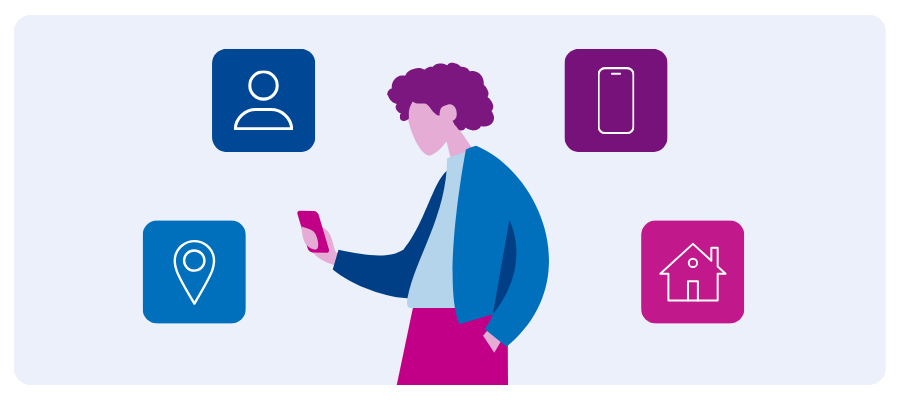
A person looking at their phone with icons for location, individual, phone, and house around them in a circle

By layering third-party data, contextual data, and geolocation data onto your first-party data foundation, your advertising strategies become stronger than if you used any of these sources as standalone solutions.

How do different types of third-party data add depth to audience profiles?

Third-party data expands understanding beyond known customers. If first-party data is the outline, third-party data helps with “character development”—a.k.a., addingdetailto your audience profiles. Good third-party marketing data complements first-party insights with demographic, behavioral, and transactional context, providing the missing puzzle pieces to complete the full customer profile. Filling in gaps in customer understanding helps youidentify, reach, and engage current and new customers more effectively. Third-party data allows brands to build loyalty with consumers by speaking to their interests and intent behind purchases.

Third-party data opens up new targeting tactics for advertisers, such as:

Behavioral

How people engage with brands or how they use social media

Demographic

Age, gender, education, income, and religion

Health

A combination of demographics, behaviors, and health needs

Interest

Delivering ads based on interests, hobbies, or online activities

Location

Where people live, work, or spend large amounts of time

Psychographics

Shared characteristics like attitudes, lifestyles, and interests

Purchases

Using previous purchase behavior to identify the right audiences

In addition to targeting, third-party data also remains critical to AI models, which must train on both structured and unstructured data. At Experian, our AI-powered technology interprets live bidstream data, device activity, content, and timing to optimize in the moment, ensuring campaigns deliver meaningful relevance, not just broader reach.

How are contextual and geographic approaches reshaping audience targeting?

Contextual and geographic approaches to targeting focus on environment and behavior rather than identifiers. Regulatory scrutiny, stricter and more fragmented compliance standards, and rising consumer expectations are transforming how marketers approach third-party data targeting. Evolving privacy laws and inconsistent identifiers across environments require new approaches that balance performance and privacy.

Contextual and geographic targeting help marketers reach relevant audiences while maintaining privacy.

What is data-informed contextual targeting?

Contextual targeting connects audience attributes to the content environments people choose. It helps determine the setting of your story—where your characters spend their time.

Solutions like Experian’s Contextually-Indexed Audiences harness advanced machine learning technology to combine contextual signals (a tried–and-true targeting tactic) with third-party targeting to ensure marketers reach their target audiences on the content they tend to consume, regardless of environment or location. What’s excellent about data-informed contextual targeting is that it moves beyond traditional keyword-based strategies to reach consumers on websites that over-index for visitors with the demographics, behaviors, or interests they are looking to target.

What is data-informed geotargeting?

Geotargeting uses shared location patterns to support relevance at scale. Geotargeting is another possibility for further developing the scene of your story.

People with similar behaviors and interests tend to live in similar areas, which is why so much effort goes into location planning for brick-and-mortar stores. Data-informed geotargeting combines geos with third-party data to make more informed media buys based on common behaviors within a geographic location.

We launched our Geo-Indexed audiences, which use advanced indexing technology to identify and reach consumers based on their geographic attributes. These audiences help marketers discover, segment, and craft messaging for consumers without relying on sensitive personal information, enabling them to reach target audiences while maintaining data privacy confidently.

What role does AI play in third-party data targeting?

AI acts like an automated editor of your book, refining and finding new ways to put valuable third-party audiences and data to work without relying on segments linked to known or disparate identifiers.

We’ve used AI and machine learning at Experian for decades to bring identity, insight, and generative intelligence together so brands and agencies can reach the right people, with relevance, respect, and simplicity.

Why does a balanced, integrated approach that combines first-party, third-party, contextual, and geo-targeting data matter?

The combined effects of integrating third-party, contextual, and geotargeting data (and the marketing tactics it underpins) with first-party data will drive your success.

Think of how any good author crafts a story. Regardless of whether it’s fiction or non-fiction, they draw on both first-person experience and external research and sources to develop their plot. No single data source tells the full story. Integration allows marketers to understand audiences more completely and act with confidence.

Pooling these inputs together moves you closer to your goal of understanding the whole story about your target customers. In fact, an almost even number of marketers plan to use contextual targeting (41%) and first-party data (40%) as their main targeting strategies, amid privacy laws and the loss of persistent advertisers.

Primary data strategyPercent of marketers that plan to use this data strategy
Contextual targeting41%
First-party data40%

A brand with strong first-party insights can extend reach by layering in additional signals. For example, a nutrition brand that knows who purchases protein supplements can expand prospecting by combining:

First-party signals

Customers who purchase protein supplements

Contextual signals

Engagement with fitness blogs, healthy recipe content, or workout apps

Geographic signals

Consumers located in the Greater Philadelphia area

By connecting these inputs, the brand can identify new health-conscious audiences with similar interests and behaviors. This approach supports privacy-safe targeting while improving engagement and performance.

How can marketers build an integrated data strategy in 2026?

An integrated data strategy reduces friction and supports scale. The right data partner offers a unified solution that helps unify data, activate audiences, and adapt as the ecosystem evolves. Here’s how:

Organize data

Create a clean, usable data foundation by eliminating fragmented silos. Experian’s solutions unify disparate data, enabling identity resolution and a single customer view.

Create a complete profile

Experian links a persistent offline core of personally identifiable information (PII) data with fresh digital signals, giving you a high-fidelity view of consumers to decorate with marketing data. This allows for improved customer understanding and personalized marketing that competitors struggle to replicate.

Build addressable audience segments

Create audiences using a mixture of signals, including first-party data, third-party behavioral, interest, and demographic data, as well as contextual signals. If you partner with Experian, you can use audiences built on our identity graph to guarantee accuracy, scale, and maximum addressability.

Drive innovation

Look for partners and platforms that prioritize innovation in finding new ways to reach target audiences across the ecosystem. You don’t want a vendor or a system that can’t keep pace and adapt with our rapidly evolving industry.

Marketers who want to create and activate campaigns more efficiently and effectively in 2026 need an integrated approach that combines first-party, third-party, contextual, and geotargeting data. Streamlining data integration and activation positions brands and agencies for sustainable growth and stronger consumer relationships in a privacy-conscious marketplace.

Build your next chapter on a connected data foundation

As audience strategies evolve, connection and interoperability matter more than ever. Connect with our team to learn how Experian helps marketers unify data, identity, and activation across channels.

This site is protected by reCAPTCHA and the Google Privacy Policy and Terms of Service apply.


About the author

Scott Kozub headshot, VP, Product, Experian

Scott Kozub

VP, Product Management, Experian

Scott Kozub is the Vice President of the Product Management team at Experian Marketing Services working across the entire product portfolio. He has over 20 years of product experience in the marketing and advertising space. He’s been with a few startups and spent many years at FICO and Oracle Data Cloud heavily focused on loyalty marketing and advertising technology.


FAQs

How should CMOs think about data as part of their 2026 audience strategy?

In 2026, CMOs should prioritize and invest in data and targeting strategies that combine first-party, third-party, contextual, and geographic data to drive growth, improve efficiency, and strengthen customer relationships. 

Why is first-party data not sufficient on its own? 

First-party data is not sufficient on its own because first-party data defines known customers but limits reach and frequency. Growth depends on expanding beyond existing relationships. The ability to unify different data sources with accuracy, scale, and privacy at the forefront sits at the core of Experian’s business. We unify household, individual, device, demographic, behavioral, and first-party signals, along with contextual and geographic data points, to build a reliable view of consumers, even when specific signals are missing. This clarity helps you personalize, target, activate, and measure with confidence.

How do different types of third-party data add depth to audience profiles?

Third-party data expands understanding beyond known customers. Third-party data opens up new targeting tactics for advertisers, such as:  
Location: Where people live, work, or spend large amounts of time
Health: A combination of demographics, behaviors, and health needs
Purchases: Using previous purchase behavior to identify the right audiences 
Behavioral: How people engage with brands or how they use social media 
– Interest: Delivering ads based on interests, hobbies, or online activities
Psychographics: Shared characteristics like attitudes, lifestyles, and interests
Demographic: Age, gender, education, income, and religion 
 
In addition to targeting, third-party data also remains critical to AI models, which must train on both structured and unstructured data. At Experian, our AI-powered technology interprets live bidstream data, device activity, content, and timing to optimize in the moment, ensuring campaigns deliver meaningful relevance, not just broader reach. 

What is data-informed contextual targeting?

Data-informed contextual targeting connects audience attributes to the content environments people choose. It helps determine the setting of your story—where your characters spend their time. Experian’s Contextually-Indexed Audiences harness advanced machine learning technology to combine contextual signals (a tried–and-true targeting tactic) with third-party targeting to ensure marketers reach their target audiences on the content they tend to consume, regardless of environment or location.

What is data-informed geotargeting?

Data-informed geotargeting uses shared location patterns to support relevance at scale. Experian launched our Geo-Indexed audiences, which use advanced indexing technology to identify and reach consumers based on their geographic attributes. These audiences help marketers discover, segment, and craft messaging for consumers without relying on sensitive personal information, enabling them to reach target audiences while maintaining data privacy confidently.

What role does AI play in third-party data targeting?

In third-party data targeting, AI refines and finds new ways to put valuable third-party audiences and data to work without relying on segments linked to known or disparate identifiers. We’ve used AI and machine learning at Experian for decades to bring identity, insight, and generative intelligence together so brands and agencies can reach the right people, with relevance, respect, and simplicity. 


Latest posts

Loading…
Tuned in and turned on: How identity is powering the audio boom

Audio platforms that overcome consumer identity challenges are winning new advertisers and driving higher ROAS. In this article, you’ll hear from leading audio platforms that are solving these challenges—and seeing results. Digital audio is evolving fast. What was once a niche channel of host-read sponsorships and direct buys is now a must-have in the modern media mix. Streaming platforms, podcasts, and digital radio are drawing more ad dollars thanks to audio’s ability to capture attention and connect with listeners. But with growth comes new pressure. Advertisers expect accuracy, scale, and to see results. At the same time, listeners want more relevant content and more personalized ad experiences. That’s where identity becomes essential. With Experian’s identity and audience solutions, audio platforms can: Bolster addressable audience targeting and personalization capabilities. Gain a comprehensive view of listeners’ digital identity to reach audiences across channels. Better understand consumer preferences, enabling advertisers to reach audiences with greater accuracy. Enhance the listening experience with more relevant content. Let’s break down the key challenges in audio—and how Experian can help solve them. Challenge 1: Anonymous listening limits addressability Most listening happens in environments where people aren’t logged in—via apps, smart speakers, and mobile devices. Without logged-in data, platforms struggle to know who’s listening and advertisers are unable to reach those anonymous listeners who don’t have an addressable ID. To overcome the identity gap in unauthenticated listening environments, leading audio platforms are turning to partners that connect fragmented signals—like device type, location, and behavioral patterns—to broader household and individual profiles. By using hashed emails and other alternative identifiers, platforms can begin to make anonymous sessions more addressable. This increase in addressability ensures the platform’s entire userbase can be reached, which leads to an increase in revenue. Experian’s solution Experian's identity spine, comprised of our Digital and Offline Graphs, helps you recognize listeners even when they’re outside your ecosystem. Platforms like Audacy are already leading the way. By integrating Experian’s Digital Graph, they’re gaining a more complete view of listeners’ digital identifiers—enhancing the experience across their app and website. With a better audience understanding, Audacy can deliver personalized content while helping advertisers reach specific groups with greater accuracy. Challenge 2: IP-based targeting falls short Audio has traditionally relied on IP addresses, but that’s no longer enough. A single IP could represent an entire household—or a public setting like a coffee shop. It’s not precise. Forward-thinking platforms are moving beyond IP-based targeting by integrating identity resolution technologies that combine household-level data with device-level intelligence. These solutions help distinguish between shared devices and individual listeners, allowing advertisers to serve more relevant messages without over-reliance on a single signal like an IP address. This layered approach improves precision—especially in dynamic listening environments like vehicles or communal spaces. Experian’s solution Our identity spine links home IPs to households, then connects them to specific devices and individuals. This helps platforms move beyond basic IPs and target real people based on accurate signals—even in shared listening environments like smart speakers and cars. We also help platforms and advertisers integrate alternative IDs—like Unified I.D. 2.0 (UID2)—into their programmatic audio campaigns. That means more reach, without compromising consumer trust. Challenge 3: Audio buying is fragmented From podcasts to streaming to radio, audio lacks consistency in how inventory is packaged and bought. It’s hard for advertisers to run scaled campaigns across channels—and harder still to measure performance. Plus, advertisers don’t think in silos—they think in strategies. If audio can’t connect to their display, connected TV (CTV), and social buys, it loses ground. What they need is a way to define audiences once and activate everywhere. To reduce friction in audio ad buying, platforms are investing in infrastructure that unifies audience insights across formats. By building a centralized view of the listener—regardless of whether they're tuning in via podcast, stream, or radio—publishers can offer advertisers consistent targeting parameters, clearer reporting, and better campaign orchestration. Identity graphs and audiences are playing a growing role in streamlining this complexity and unlocking scale. Experian’s solution Experian helps simplify audio buying. Experian audiences are built on top of our identity graph and are expanded to a deep set of digital identifiers, ensuring accuracy, scale and maximum addressability across channels. Platforms can blend their first-party data with advertiser data and our audiences—then deploy those audiences onsite or activate programmatically across open web and CTV. DAX is doing just that. DAX's partnership with Experian combines Experian’s 2,400+ audiences for targeting and activation with DAX’s innovative audio advertising approach. We’re helping advertisers connect with passionate and engaged listeners nationwide. "Through our partnership with Experian Marketing Services, advertisers can unlock deeper audience insights and execute more impactful digital audio campaigns. By combining our shared market presence, knowledge, and forward-thinking approach, we’re strengthening our digital audio network offering and delivering value to all our advertising partners."  Brian Conlan, President of DAX United States In addition to integrating Experian’s Digital Graph, Audacy is also integrating Experian's syndicated audiences to unlock accurate insights like demographics, shopping behavior, and interests – providing listeners with a more personalized advertising experience and advertisers with a higher return on investment.  “Historically, audio advertising lacked precise targeting capabilities, making it challenging for advertisers to reach specific audiences. By integrating our digital identity graph and syndicated audiences with Audacy’s platform, we’re transforming how advertisers connect with listeners. This collaboration enables more effective audience targeting and delivers personalized, impactful audio experiences across all channels.”Chris Feo, Chief Business Officer, Experian Privacy is non-negotiable Everything we do is privacy-forward by design. Backed by Experian’s Global Data Principles and decades as a regulated institution, we rigorously vet every data source to ensure compliance with all federal and state laws. Build an audio strategy that performs with Experian Your advertisers want more from their audio investments. With Experian, you can give it to them. We help you: Expand digital addressability to maximize reach for marketers and drive revenue growth for your platform. Create and activate addressable audiences across all channels. Enhance the listening experience with relevant content and personalized ads. Audio has always been a powerful way to connect. Now, it’s ready to perform. Let's connect Latest posts

Jun 04,2025 by Chris Meredith, Head of Sell-Side

Driving performance and scale: The rise of Experian’s data marketplace

When we launched our data marketplace earlier this year, we set out to transform how the industry discovers and activates privacy-safe audiences and maintains addressability across display, mobile, and connected TV (CTV). Yieldmo was one of the first adopters and their story speaks volumes about what’s possible when flexible tech meets premium data. Large retail brand boosts in-store traffic with Yieldmo and Experian Yieldmo, an advertising platform known for its inventive, AI-powered creative formats and privacy-first inventory, partnered with Experian to support a leading athletic retailer’s campaign focused on driving in-store traffic. The goal? Attract in-store shoppers likely to purchase from competitors, particularly during key sales windows. Using Experian’s Audience Engine platform, which includes our proprietary and third-party data marketplace, Yieldmo built a high-performing, self-serve targeting strategy that included both conquesting and in-store shopper segments. With the ability to easily combine Experian Audiences and Partner Audiences, like those from Alliant, Circana, Webbula, and Sports Innovation Lab, Yieldmo quickly built precise apparel and footwear audiences. Using Experian’s identity graphs in Audience Engine, Yieldmo increased cross-channel addressability to maximize campaign scale and impact. “Experian’s data marketplace in Audience Engine fills a critical gap, letting us quickly search by brand, build smarter conquest segments, and activate custom audiences fast. The platform is flexible and the support is hands-on and reliable.”Abby Littlejohn, Director of Sales Planning at Yieldmo With self-serve setup that cut down manual work, the ability to build highly tailored audiences, and expected lift in store visits, Experian helped the team achieve standout results. "We selected Experian as our primary third-party data partner based on contract ease, audience quality, and speed. Through Experian, we can find high-performing audiences from multiple providers that meet our client’s targeting objectives. We include Experian audience segments in 80% of formal RFP proposals and are in active discussions on how to optimize for future campaigns—making Experian a go-to partner for third-party targeting.”Nelson Montouchet, AVP, Strategic Partnerships, Yieldmo More data, more reach: Experian’s data marketplace fuels smarter targeting across ad platforms Today, just months after launch, Experian’s data marketplace is gaining traction across the ecosystem. Over 10 platforms, including leading supply-side platforms (SSPs) and TV platforms such as Madhive, OpenAP, and Optimum, are now actively utilizing our data marketplace to enhance their activation capabilities. As privacy rules tighten and many identity signals start to fade, a lot of activation platforms are finding it tougher to reach their audiences. This is where our data marketplace shines, with one of the most comprehensive identity graphs out there, 126 million households, 250 million individuals, and over four billion active digital IDs, we make it easy to activate audiences while keeping addressability high across channels. We preserve accuracy when scaling to digital IDs via our identity graphs since Experian is rooted in offline data, which provides better connections and smarter targeting. “Our long-standing partnership with Experian and breadth of Experian's data marketplace, combined with the interoperable, direct matching methodology of our Open Identity solution, make it possible for OpenAP to enable advertisers and agencies to use best-in-class data partners to build audiences with the highest fidelity and consistently reach audiences at scale wherever they are consuming content across premium video.”Chris LoRusso, Chief Business Officer at OpenAP Experian’s data marketplace has grown to include over 20 premium data providers, such as: “We’re thrilled to bring PlaceIQ’s privacy-first, visit-based audiences to Experian’s marketplace, giving brands quick and easy access to high-intent shoppers. From recent big-box customers to yoga-studio regulars, advertisers can add real-world relevance to campaigns across every channel.”Brian Bradtke, Head of Partner Development, Precisely PlaceIQ These partnerships bring unique value to platforms looking to understand and engage audiences more effectively, whether through physical location intelligence, sports and fandom insights, or behavioral intent signals. What’s next We're focused on expanding our data ecosystem and helping platforms and marketers turn fragmented data strategies into a unified competitive advantage. If Yieldmo’s story is any indication, this is just the beginning. Let’s connect and explore how Experian’s data marketplace can help you drive more revenue, scale your audience reach, and stay ahead of privacy shifts. Connect with us Latest posts

May 29,2025 by Experian Marketing Services

Missing out on revenue? How gaming companies can turn fragmented data into ad dollars and better player experiences

Gaming companies sit at a unique crossroads: they’re part entertainment powerhouse, part tech platform, part media company. Whether you’re publishing blockbuster titles, running a mobile game network, or building immersive in-game ad experiences, you have access to vast amounts of player data—and massive potential for growth. What's standing in the way of growth and loyalty Video game publishers and platforms are increasingly turning to data to understand, engage, and retain their players. But that’s easier said than done. Here are the top challenges they face: Data lives in silos. Gaming companies often collect data across multiple platforms—console, PC, mobile—but can’t stitch together a full view of the player across devices and titles. Identity is hard to resolve. Players interact across games, apps, websites, and platforms. It’s tough to connect all those signals and create a consistent, personalized experience. Privacy is non-negotiable. Regulations are tightening. Any solution must not only be powerful—it must be privacy-safe. Ad performance is difficult to measure. It’s often unclear which campaigns are driving engagement, conversions, or purchases—especially across fragmented digital touchpoints. How Experian can help you win with data and identity Experian helps gaming companies stop leaving value on the table. We turn scattered player data into a single, unified view—giving you the foundation to better understand and engage your players. Our approach: Organize, enrich, activate 1. We clean and unify your data We help you build a solid identity foundation by resolving messy, duplicate, or outdated records across systems. That means your player data from mobile, console, PC, and web all connects—giving you a clear view of how your users engage across games and platforms. 💡 How it’s working: A global interactive gaming company is partnering with Experian to unify and enrich player profiles across systems—boosting the performance of both player engagement campaigns and in-game monetization strategies. 2. We deliver deep customer insights With Experian, you go beyond surface-level data. We help you understand player behaviors, financial attributes, interests, and lifestyle factors—fueling more personalized experiences, smarter segmentation, and better monetization strategies. 💡 How it’s working: A major game developer used Experian’s data enrichment tools to gain deeper insights into player behavior and financial attributes—enabling more personalized in-game offers, smarter audience segmentation, and stronger player retention. 3. We enrich profiles and help you activate across channels We enhance your player records with hundreds of attributes—so you can create custom segments that work. Then, we help you activate those audiences in real-time across digital, social, and programmatic platforms. 💡 How it’s working: A global gaming publisher used Experian to build custom audiences and activate across programmatic channels, driving higher in-game engagement and ad ROI. Turning audiences into ad revenue In addition to improving their own player marketing, gaming companies are unlocking a second growth engine: ad revenue from non-endemic brands. Much like retail media networks, game publishers and platforms are realizing the value of their audience data. From airlines and automakers to QSR and CPG brands, advertisers are taking notice of the high-value, high-intent audiences inside game environments. But to attract that ad spend, publishers need to offer more than impressions—they need precise audience targeting, cross-device identity, and reliable measurement. How Experian helps drive better ad performance To appear authentically to a gamer, you need to know who they are and what they care about. Experian helps marketers understand a person’s behaviors and preferences to enable relevant, personalized advertising. And since nobody wants to see the same ad ten times during a session, we help manage ad frequency across devices and placements to protect the player experience. Our approach: Extend reach, measure results 1. We expand your digital reach Experian makes it easier to find and connect with your players wherever they are—across devices, platforms, and publishers. We help you build scalable audiences you can reach programmatically and with precision. 💡 How it’s working: Unity, a leading gaming platform, is redefining the way marketers reach their audiences across major and emerging channels. They’ve tapped into Experian’s syndicated audiences to gain player insights and help advertisers connect with gaming audiences across mobile, web, and connected TV (CTV) based on behaviors and preferences. 2. We help you measure what matters Whether your goal is app installs, in-game purchases, ad engagement, or player retention, we help connect the dots. You’ll know which campaigns are driving action—and where to double down. 💡 How it’s working: A leading global game publisher is working with Experian to enrich player profiles, build and activate audience segments, and measure how campaigns drive in-game engagement and purchases—giving them a clearer view of ROI across digital channels. Why choose Experian Whether you’re trying to build stronger player relationships or turn your audience into a high-performing advertising engine, Experian gives you the data and identity foundation to make it happen. We help you: Organize and clean your player data Resolve identities across digital touchpoints Enrich your data with deep, actionable insights Build and activate target audiences Measure impact across the player journey Let's power up together We’re already supporting leading brands across the gaming ecosystem—from global game publishers and mobile app developers to in-game ad networks and gaming platforms. And we’re ready to help more companies harness the full power of their data. Get in the game with us 🎮 Latest posts

May 21,2025 by Crystal Jacques, Head of Enterprise Sales

Subscribe to our newsletter

Enter your name and email for the latest updates

This site is protected by reCAPTCHA and the Google Privacy Policy and Terms of Service apply.

About Experian Marketing Services

At Experian Marketing Services, we use data and insights to help brands have more meaningful interactions with people. As leaders in the evolution of the advertising landscape, Experian Marketing Services can help you identify your customers and the right potential customers, uncover the most appropriate communication channels, develop messages that resonate, and measure the effectiveness of marketing activities and campaigns.

Visit our website

Subscribe to our newsletter

Stay up to date on the latest industry news and receive expert tips from our marketing experts.
Subscribe now!