At A Glance
Your audience strategy works like a story. First-party data sets the outline, but scale and relevance come from connecting additional signals such as contextual, geographic, and behavioral data. Experian helps CMOs unify these inputs through identity, enabling consistent activation, privacy-forward targeting, and measurable outcomes as marketing strategies evolve in 2026.How should CMOs think about data as part of their audience strategy?
The best digital marketers possess excellent storytelling capabilities—and they fuel the plot with data.
When you think about it, your audience strategy is the whole story, and the type of data you use helps create each chapter. Just as any good book incorporates numerous literary devices, you must use more than one type of data to develop a dynamic, relevant, and timely narrative that captures your target users’ attention.
In 2026, marketers should prioritize and invest in data and targeting strategies beyond just first-party to drive growth, improve efficiency, and strengthen customer relationships.

Our 2026 Digital trends and predictions report is available now and reveals five trends that will define 2026. From curation becoming the standard in programmatic to AI moving from hype to implementation, each trend reflects a shift toward more connected, data-driven marketing. The interplay between them will define how marketers will lead in 2026.
Why is first-party data not sufficient on its own?
First-party data provides a strong foundation for targeting and measurement. It reflects information consumers have shared directly through brand interactions. That makes it reliable and central to audience strategy.
That foundation alone does not tell the full story. First-party data defines known customers, but limits reach and frequency. Growth depends on expanding beyond existing relationships.
Think of first-party data as a way to create an outline, not the whole story, about your target audiences—the main characters in your marketing. To flesh out the entire narrative about them, you must source, connect, and activate additional data.
The ability to unify different data sources with accuracy, scale, and privacy at the forefront sits at the core of Experian’s business. We unify household, individual, device, demographic, behavioral, and first-party signals, along with contextual and geographic data points, to build a reliable view of consumers, even when specific signals are missing. This clarity helps you personalize, target, activate, and measure with confidence.
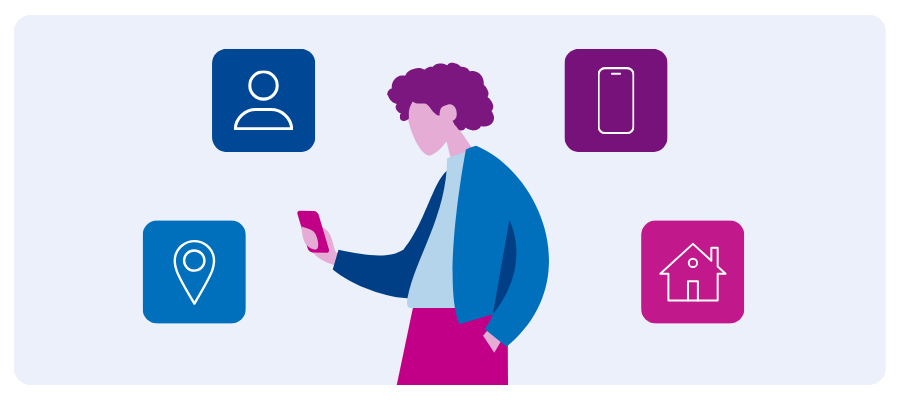
By layering third-party data, contextual data, and geolocation data onto your first-party data foundation, your advertising strategies become stronger than if you used any of these sources as standalone solutions.
How do different types of third-party data add depth to audience profiles?
Third-party data expands understanding beyond known customers. If first-party data is the outline, third-party data helps with “character development”—a.k.a., addingdetailto your audience profiles. Good third-party marketing data complements first-party insights with demographic, behavioral, and transactional context, providing the missing puzzle pieces to complete the full customer profile. Filling in gaps in customer understanding helps youidentify, reach, and engage current and new customers more effectively. Third-party data allows brands to build loyalty with consumers by speaking to their interests and intent behind purchases.
Third-party data opens up new targeting tactics for advertisers, such as:
In addition to targeting, third-party data also remains critical to AI models, which must train on both structured and unstructured data. At Experian, our AI-powered technology interprets live bidstream data, device activity, content, and timing to optimize in the moment, ensuring campaigns deliver meaningful relevance, not just broader reach.
How are contextual and geographic approaches reshaping audience targeting?
Contextual and geographic approaches to targeting focus on environment and behavior rather than identifiers. Regulatory scrutiny, stricter and more fragmented compliance standards, and rising consumer expectations are transforming how marketers approach third-party data targeting. Evolving privacy laws and inconsistent identifiers across environments require new approaches that balance performance and privacy.
Contextual and geographic targeting help marketers reach relevant audiences while maintaining privacy.
What is data-informed contextual targeting?
Contextual targeting connects audience attributes to the content environments people choose. It helps determine the setting of your story—where your characters spend their time.
Solutions like Experian’s Contextually-Indexed Audiences harness advanced machine learning technology to combine contextual signals (a tried–and-true targeting tactic) with third-party targeting to ensure marketers reach their target audiences on the content they tend to consume, regardless of environment or location. What’s excellent about data-informed contextual targeting is that it moves beyond traditional keyword-based strategies to reach consumers on websites that over-index for visitors with the demographics, behaviors, or interests they are looking to target.
What is data-informed geotargeting?
Geotargeting uses shared location patterns to support relevance at scale. Geotargeting is another possibility for further developing the scene of your story.
People with similar behaviors and interests tend to live in similar areas, which is why so much effort goes into location planning for brick-and-mortar stores. Data-informed geotargeting combines geos with third-party data to make more informed media buys based on common behaviors within a geographic location.
We launched our Geo-Indexed audiences, which use advanced indexing technology to identify and reach consumers based on their geographic attributes. These audiences help marketers discover, segment, and craft messaging for consumers without relying on sensitive personal information, enabling them to reach target audiences while maintaining data privacy confidently.
What role does AI play in third-party data targeting?
AI acts like an automated editor of your book, refining and finding new ways to put valuable third-party audiences and data to work without relying on segments linked to known or disparate identifiers.
We’ve used AI and machine learning at Experian for decades to bring identity, insight, and generative intelligence together so brands and agencies can reach the right people, with relevance, respect, and simplicity.
Why does a balanced, integrated approach that combines first-party, third-party, contextual, and geo-targeting data matter?
The combined effects of integrating third-party, contextual, and geotargeting data (and the marketing tactics it underpins) with first-party data will drive your success.
Think of how any good author crafts a story. Regardless of whether it’s fiction or non-fiction, they draw on both first-person experience and external research and sources to develop their plot. No single data source tells the full story. Integration allows marketers to understand audiences more completely and act with confidence.
Pooling these inputs together moves you closer to your goal of understanding the whole story about your target customers. In fact, an almost even number of marketers plan to use contextual targeting (41%) and first-party data (40%) as their main targeting strategies, amid privacy laws and the loss of persistent advertisers.
| Primary data strategy | Percent of marketers that plan to use this data strategy |
| Contextual targeting | 41% |
| First-party data | 40% |
A brand with strong first-party insights can extend reach by layering in additional signals. For example, a nutrition brand that knows who purchases protein supplements can expand prospecting by combining:
By connecting these inputs, the brand can identify new health-conscious audiences with similar interests and behaviors. This approach supports privacy-safe targeting while improving engagement and performance.
How can marketers build an integrated data strategy in 2026?
An integrated data strategy reduces friction and supports scale. The right data partner offers a unified solution that helps unify data, activate audiences, and adapt as the ecosystem evolves. Here’s how:
Marketers who want to create and activate campaigns more efficiently and effectively in 2026 need an integrated approach that combines first-party, third-party, contextual, and geotargeting data. Streamlining data integration and activation positions brands and agencies for sustainable growth and stronger consumer relationships in a privacy-conscious marketplace.
Build your next chapter on a connected data foundation
As audience strategies evolve, connection and interoperability matter more than ever. Connect with our team to learn how Experian helps marketers unify data, identity, and activation across channels.
About the author

Scott Kozub
VP, Product Management, Experian
Scott Kozub is the Vice President of the Product Management team at Experian Marketing Services working across the entire product portfolio. He has over 20 years of product experience in the marketing and advertising space. He’s been with a few startups and spent many years at FICO and Oracle Data Cloud heavily focused on loyalty marketing and advertising technology.
FAQs
In 2026, CMOs should prioritize and invest in data and targeting strategies that combine first-party, third-party, contextual, and geographic data to drive growth, improve efficiency, and strengthen customer relationships.
First-party data is not sufficient on its own because first-party data defines known customers but limits reach and frequency. Growth depends on expanding beyond existing relationships. The ability to unify different data sources with accuracy, scale, and privacy at the forefront sits at the core of Experian’s business. We unify household, individual, device, demographic, behavioral, and first-party signals, along with contextual and geographic data points, to build a reliable view of consumers, even when specific signals are missing. This clarity helps you personalize, target, activate, and measure with confidence.
Third-party data expands understanding beyond known customers. Third-party data opens up new targeting tactics for advertisers, such as:
– Location: Where people live, work, or spend large amounts of time
– Health: A combination of demographics, behaviors, and health needs
– Purchases: Using previous purchase behavior to identify the right audiences
– Behavioral: How people engage with brands or how they use social media
– Interest: Delivering ads based on interests, hobbies, or online activities
– Psychographics: Shared characteristics like attitudes, lifestyles, and interests
– Demographic: Age, gender, education, income, and religion
In addition to targeting, third-party data also remains critical to AI models, which must train on both structured and unstructured data. At Experian, our AI-powered technology interprets live bidstream data, device activity, content, and timing to optimize in the moment, ensuring campaigns deliver meaningful relevance, not just broader reach.
Data-informed contextual targeting connects audience attributes to the content environments people choose. It helps determine the setting of your story—where your characters spend their time. Experian’s Contextually-Indexed Audiences harness advanced machine learning technology to combine contextual signals (a tried–and-true targeting tactic) with third-party targeting to ensure marketers reach their target audiences on the content they tend to consume, regardless of environment or location.
Data-informed geotargeting uses shared location patterns to support relevance at scale. Experian launched our Geo-Indexed audiences, which use advanced indexing technology to identify and reach consumers based on their geographic attributes. These audiences help marketers discover, segment, and craft messaging for consumers without relying on sensitive personal information, enabling them to reach target audiences while maintaining data privacy confidently.
In third-party data targeting, AI refines and finds new ways to put valuable third-party audiences and data to work without relying on segments linked to known or disparate identifiers. We’ve used AI and machine learning at Experian for decades to bring identity, insight, and generative intelligence together so brands and agencies can reach the right people, with relevance, respect, and simplicity.
Latest posts
Healthcare and Life Sciences teams map the patient journey to spot care gaps and guide interventions. However, clinical records cover only what happens inside clinics, not the forces driving patient decisions. Enriching these records with lifestyle, socioeconomic, and consumer-behavior insights reveals the “why” behind health outcomes. That’s where non-clinical insights step in – revealing the real-world forces that shape patient results. To address these blind spots, Experian and Komodo Health have teamed to integrate de-identified insights from millions of patient journeys with Experian’s socioeconomic and lifestyle data. This enriched view lets enterprises see each journey in full, identify care disparities, and craft smarter strategies – while rigorously protecting privacy. Driving tangible outcomes and better patient care This collaboration focuses on turning insights into action. With Experian and Komodo's integrated clinical, socioeconomic, and lifestyle data, Healthcare and Life Sciences teams can move from insight to accuracy, building adherence programs, finding hard-to-reach patients, and demonstrating treatment success. They can: Layer Komodo’s de-identified patient-level medical and pharmacy insights and analytics with Experian lifestyle and socioeconomic attributes Segment patient populations by condition, treatment history, and socioeconomic status Prioritize outreach – reducing waste and focusing resources where care is needed most For instance: Neighborhood-level gaps Identify opportunities to capture untreated patients and improve clinical trial inclusion. Income-related support Flag populations most likely to benefit from cost-saving programs, ensuring communications highlight co-pay assistance or financial relief options. Inside the data stack At the core of Komodo Health's AI-enabled healthcare analytics platform is its Healthcare Map®. This innovative tool integrates de-identified patient-level medical and pharmacy claims data from the patient journeys of over 330 million unique individuals – providing insights on diagnoses, treatments, outcomes, and care patterns across the United States. Experian enhances this data by adding socioeconomic and lifestyle characteristics that influence up to 80% of health outcomes. Together, this combined data effectively addresses essential questions such as: Which neighborhoods face the highest diabetes risk? Where is therapy abandonment spiking? When should co-pay assistance messages drop? How can we accelerate HCP outreach or clinical-trial recruitment? Experian's socioeconomic and lifestyle insights: Fueling data-driven care decisions In this context, Experian provides valuable insights into socioeconomic factors and lifestyle patterns, covering everything from household composition and income ranges to psychographics and other attributes that help build a broader understanding of an individual's circumstances. Where deep patient understanding, health engagement, and real-world evidence converge As healthcare marketing, patient engagement, and real-world data converge, the Experian and Komodo collaboration is empowering Healthcare and Life Sciences teams with fast, actionable insights. Fusing de-identified patient-level clinical data with socioeconomic and lifestyle attributes helps teams engage the right patients, and fuels research from product launches to community programs. It elevates experiences while proving impact with real-world evidence. Ready to utilize these insights? Latest posts

Brand and tech leaders share insights to guide marketers forward Cannes Lions 2025 brought its usual charm, rosé, and lively discussions, but what stood out was a shift in tone: brand and tech leaders aren’t talking in theories anymore – they’re rebuilding how advertising works. From identity to outcomes, the consensus was clear: marketers need bold, structural changes to thrive. At Experian, we spoke with leaders from Ampersand, Butler/Till, Comcast Advertising, Fox, OpenX, Optable, Snowflake, VideoAmp, and Yieldmo. Their message? Foundational change, not incremental tweaks, is the way forward. Here are five moves marketers and CMOs should be making right now. 1. Make identity the foundation, not an add-on Identity must be the core of your marketing strategy, not an afterthought. Building a strong identity framework from the outset ensures that your data and tech stack work seamlessly across channels. This means investing in first-party data assets and identity resolution tools that inform every campaign and tactic. Identity isn’t just a feature; it’s the base layer of everything successful marketers do today. "There’s no AI strategy without a data and identity strategy. Marketers who want to stretch every media dollar and personalize each touchpoint need a unified, deeper view of the consumer – insight they can carry straight into downstream ad platforms.”David Wells, Snowflake Next step: Treat identity resolution as a prerequisite to every campaign, not a task to address later. Align your data management platform (DMP), customer data platform (CDP), and collaboration partners around a unified identity spine (Experian’s or your own) to ensure data flows uninterrupted from planning to reporting. 2. Curate, don't automate. Programmatic is getting personal Programmatic advertising remains relevant, but its purpose is evolving from mere automation to intelligent, data-driven curation. This shift requires moving beyond static site lists to dynamic, page-level contextual engines that determine, in real-time, which impressions to display. Today, it’s about carefully selecting and curating inventory to ensure transparency, quality, and relevance for your audience. Marketers are increasingly turning to private marketplaces (PMPs) that offer curated, brand safe inventory and clear supply paths to deliver meaningful results. Expect continued growth in curated PMPs, AI-assisted forecasting, and supply-side innovations that combine premium connected TV (CTV) inventory with deterministic data. The goal is to reach the right viewer and understand exactly how and why they got there. “What we’re talking about right now is almost like curation 2.0, which is bringing more of the capabilities that historically sat with the demand-side platform (DSP) into the hands of the supply-side platform (SSP) – that is, supply-side targeting, or what we call data-driven curation."Matt Sattel, OpenX Next step: Audit your supply chain. If you can’t clearly explain every step from bid request to delivery, explore curated deals or direct SSP partnerships that align with your quality and transparency standards. 3. Connect teams like you connect data Fragmented results often stem from fragmented teams. Persistent silos (like TV buys on one floor, digital on another, and data science somewhere else) slow down budgets and create inconsistent messaging. Forward thinking organizations are restructuring teams around unified KPIs and shared data. When planners, buyers, and analysts work together (or at least share dashboards), campaigns move faster and creative stays consistent. “We restructured our teams to focus on all forms of video – linear, streaming, and online. This allowed us to embrace partners who cross over these verticals and technical approaches.”Gina Whelehan, Butler/Till Next step: Map your current workflow end-to-end. Where does a brief stall or data stop flowing? Restructure teams or create shared success metrics to eliminate bottlenecks. 4. Turn disconnected data into unified insights Marketers have spent years gathering massive amounts of data, but hoarding data isn’t a winning strategy. The future belongs to those who can collaborate with partners to connect and utilize data effectively, all while respecting privacy and security. Rather than chasing the next data source, leading marketers are finding ways to safely connect data already available in-house or via partners. This might involve data clean rooms, secure data sharing agreements, or joint analytics initiatives – but the common thread is working together on data, not operating in isolation. “We've been encouraging marketers to tie in first-party data and to really utilize that data and to work with trusted sources and deterministic sources in order to overcome a lot of the challenges around signal loss with cookies, in particular. The other way is also clean rooms. Clean rooms really enable the opportunity to collaborate in a private, safe way, and connecting to those more deterministic sources in order to deliver the results that advertisers are looking for.”Carmela Fournier, Comcast Advertising Next step: Identify gaps in your first-party data. Then, collaborate with a provider like Experian to safely match data sets and unlock insights without exposing sensitive info. 5. Focus on outcomes, not clicks Impressions, clicks, and other output metrics have been the currency of marketing for decades. But the consensus at Cannes is that those proxies aren’t enough – business outcomes are what matter now. Marketers must shift their focus to measuring real results, such as sales lift, new customer acquisition, lifetime value, or brand impact, rather than getting bogged down in intermediate metrics. This move to outcome-based measurement changes how campaigns are planned and judged: success is defined by the value created, not just the volume delivered. Unified, identity-based analytics are finally making it possible to see who saw an ad and what they did next, across TV, CTV, and digital. That intel drives smarter budget shifts and tighter creative feedback loops. “Outcome-based measurement is table stakes in today’s media ecosystem, and Ampersand has woven it into almost everything we do. Thanks to Experian’s strength in identity, audience insights, and outcome measurement, we can give advertisers the attribution they need at every stage of the funnel.”Justin Rosen, Ampersand Next step: Identify metrics that matter to your bottom line, then find a partner who can measure them accurately. If measurement stacks don’t talk to each other, they’re holding you back. Preparing for the challenges ahead The common thread across these five moves is connection – connecting data, teams, and outcomes. Marketers who act on these imperatives will be ready for whatever new screen, format, or privacy rule comes next. Experian can help you: Establish an identity spine Enable secure data collaboration in or out of clean room environments Curate premium CTV inventory with deterministic audiences Measure business outcomes across every channel Ready to make your next bold move? Let's start a conversation Latest posts

Marketers are searching for better ways to connect with their audiences across screens and prove results. Optimum Media is at the forefront of this development, helping brands plan, activate, and measure campaigns across linear TV, addressable TV, connected TV (CTV), digital, and social platforms. To support this approach, Optimum Media partners with Experian, combining their subscriber data with Experian’s trusted audience and identity solutions. Together, we help brands not only find the right consumers but also understand their behaviors and measure real outcomes. Here’s how Optimum Media and Experian are working together. Build a complete customer view with rich data from Experian Optimum Media starts with strong first-party data, including viewership and exposure information from millions of households. However, reaching a deeper understanding of these audiences requires more than what subscriber records alone can offer. Through Experian’s Marketing Attributes, Optimum Media gains access to thousands of demographic and behavioral attributes to its data sets. These attributes—such as income ranges, lifestyle interests, and retail purchasing behaviors—help advertisers build a more complete view of the consumer. "We work with trusted partners like Experian to deliver the additional audience insights—like demographics and lifestyle—that are critical for our clients' success."Natalia Irmin, Sr. Director, Strategic Partnerships, Optimum Media Combining Experian’s Marketing Attributes with Optimum Media’s subscriber footprint helps brands segment audiences more precisely, develop refined media plans, and tailor messaging based on the real behaviors and interests of consumers. Move beyond basic targeting with Audience Engine To support more personalized and scalable targeting, Optimum Media uses Audience Engine—Experian’s self-service platform for audience management and activation. Through Audience Engine, Optimum Media can: Access Experian’s syndicated audiences Not just what’s available directly on their platform. Build custom segments Using Experian’s demographic and behavioral insights. Tap into our data marketplace To explore additional segments from Experian and our Partner Audiences through trusted third-party providers. These tools give Optimum Media and its clients the ability to move beyond basic targeting. Whether a brand wants to reach families preparing for back-to-school shopping, in-market car buyers, or upscale consumers planning home renovations, Audience Engine makes it possible to identify and activate those audiences with greater accuracy—based on real data, not guesswork. Extend campaign reach with Experian’s Digital Graph While Optimum Media has a substantial owned footprint, they often work with advertisers who need to extend reach beyond traditional subscriber bases. To support this, they rely on Experian’s Digital Graph. Our Digital Graph connects mobile ad IDs (MAIDs), IP addresses, CTV IDs, and hashed emails into unified household and individual profiles. This enables Optimum Media to identify and reach audiences outside of their network with the same level of accuracy as inside it. For even deeper audience insights, Digital Graph can be bundled with Marketing Attributes. This combination helps advertisers go beyond basic targeting to include real-world behaviors like shopping habits, travel preferences, and lifestyle characteristics. The result: campaigns that do more than deliver impressions—they connect with the right households across any channel. Turn viewership into measurable business outcomes One of the biggest challenges in multiscreen advertising is connecting exposure to real business results. With Experian’s solutions, Optimum Media can: Plan based on audience behaviors across screens, not just age and gender demographics. Activate household-level audiences across linear, CTV, digital, and social. Measure campaign performance using unduplicated reach, frequency, and attribution across devices. By offering advertisers access to a more complete consumer profile and maintaining consistent measurement across channels, Optimum Media and Experian help clients make better decisions about where to spend and how to adjust strategies over time. Why the Optimum Media and Experian partnership delivers Deeper audience understanding: By combining first-party viewership with Experian’s demographic and behavioral data, advertisers gain a fuller picture of who they are reaching. Seamless cross-platform execution: Identity solutions like Digital Graph allow brands to reach audiences across multiple devices and channels without losing precision. "Optimum Media has been instrumental in helping Experian strengthen the precision, quality, and real-world applications of our data. Their ongoing feedback is invaluable in making sure our solutions continue to meet client needs and perform at the highest level."Chris Feo, Chief Business Officer, Experian With a single, trusted partner offering both identity and audience solutions, Optimum Media avoids the complexity many advertisers still face when piecing together different data sets and vendors. “Having Experian’s identity and audience solutions under one roof makes it easier for us to plan, reach, and measure across every channel. It’s a complete solution that simplifies advertising and improves performance.”Natalia Irmin, Sr. Director, Strategic Partnerships, Optimum Media Start building better campaigns with Experian Ready to improve your audience targeting and measurement strategies like Optimum Media? Connect with our team today to learn how Marketing Attributes, Audience Engine, Digital Graph, and our other solutions can help you build stronger, more measurable advertising campaigns. Connect with us About Optimum Media Optimum Media is a multiscreen advertising business that partners with small and medium businesses, as well as national, political, media and entertainment, and agency clients across the United States. They work with advertisers to develop custom multiscreen advertising solutions powered by proprietary technology and a massive aggregated database of audience data points and TV viewership data. Latest posts