At A Glance
AI learns what your data teaches in 2025, "good data" in AI means accurate, current, consented, and easy to connect, or your models lose relevance and your investments underperform. Experian is leading this next era of responsible data where trust, transparency, and innovation come together to make marketing more human, not less.What makes data “good” in the age of AI?
In AI-driven marketing, data quality now defines success. “Good data” in AI isn’t about volume; it’s about the balance of accuracy, freshness, consent, and interoperability. As algorithms guide decisions, they must learn from data that’s both accurate and ethical.
At Experian, we believe good data must meet four conditions:
This is the data AI can trust and the data that keeps marketing relevant, predictive, and privacy-first.
Why does data accuracy matter more than ever?
AI models are only as intelligent as their inputs. Incomplete or inconsistent data leads to bad predictions and wasted spend. As the industry moves toward agentic advertising, where autonomous systems handle campaign buying and optimization, data accuracy becomes even more critical. If your ad server or audience data is flawed, these new AI agents will simply automate bad decisions faster.
Experian applies rigorous quality filters and conflict resolution rules to ensure our data is both deterministic and accurate. Deterministic signals alone don’t guarantee accuracy; they must be verified, deduplicated, and contextualized. Our identity resolution process anchors every attribute to real people, giving brands and platforms the confidence that every insight stems from truth, not noise.

Our data is ranked #1 in accuracy by Truthset, giving our clients confidence that every decision they make is backed by the industry’s most reliable insights.
Just because it is deterministic, doesn’t mean it’s highly accurate. You still need to refine and validate your data to make sure it tells a consistent story. You need to anchor your data around real people.
Why does AI need fresh data?
Outdated data can’t predict tomorrow’s behavior. AI thrives on recency.
At Experian, our audiences are refreshed continuously to mirror real-world signals, from purchase intent to media habits, so every campaign reflects what’s happening now, not six months ago.
And we don’t just advocate for fresh data, we rely on it ourselves. Our own AI-powered models, used across our audience and identity platforms, are continuously retrained on the most current, consented signals. This allows us to see firsthand how freshness drives better accuracy, faster optimization cycles, and more relevant outcomes.
But freshness alone isn’t enough. With predictive insights, our models go beyond describing the past. They forecast behaviors, fill gaps with inferred attributes, and recommend next-best audiences, helping you anticipate opportunity before it happens.
Fresh and predictive data means you’re reaching people in the moment that matters and shaping what comes next. With AI, that’s what defines performance.
How do consent and governance build trust in AI?
Responsible AI starts with responsible data. With 20 U.S. states now enforcing privacy laws, data compliance isn’t optional, it’s operational.
At Experian, privacy and compliance are built in. Every data signal, attribute, audience, and partner goes through our rigorous review process to meet federal, state, and local consumer privacy laws. With decades of experience in highly regulated industries, we’ve built processes that emphasize risk mitigation, transparency, and accountability.

Governance isn’t just about regulation, it’s also about innovation done right. We drive transparent and responsible innovation through safe, modular experimentation, from generative applications to agentic workflows. By balancing bold ideas with ethical guardrails and staying ahead of evolving legislation, we ensure our innovations protect consumers, brands, and the broader ecosystem while moving the industry forward responsibly.
Compliance and governance aren’t just boxes to check; they’re the foundation that gives AI its license to operate.
How does interoperability enable AI’s full potential?
AI delivers its best insights when data connects seamlessly across fragmented environments. Our signal-agnostic identity spine allows data to move securely between platforms (connected TV, retail media networks, and demand-side platforms) without losing context or compliance.
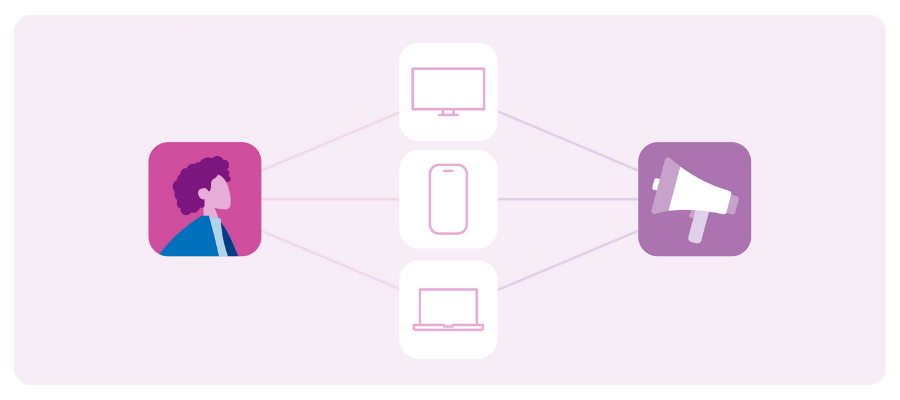
Interoperability isn’t just about moving data between systems; it’s about connecting insights across them. When signals connect across environments, AI gains a more complete view of the customer journey revealing true behavior patterns, intent signals, and cross-channel impact that would otherwise remain hidden.
This unified perspective allows AI to connect insights in real time, improving predictions, performance, and personalization while protecting privacy.
Where do AI and human oversight meet?
AI can make marketing more predictive, but people make it meaningful. At Experian, our technology brings identity, insight, and generative intelligence together so brands, agencies, and platforms can reach the right people with relevance, respect, and simplicity.

Our AI-powered models surface connections, recommend audiences, and uncover insights that would take humans months to find. But our experts shape the process, crafting the right inputs, ensuring data quality, reviewing model outputs, and refining recommendations based on industry knowledge and client goals. It’s this partnership between advanced AI and experienced people that turns predictions into actionable, trustworthy solutions.
What “good data” looks like in action
“Good data” becomes most powerful when it’s put to work. At Experian, our marketing data and identity solutions help brands and their partners connect accurate, consented, and interoperable data across the ecosystem, turning insight into measurable outcomes.
When Windstar Cruises and their agency partner MMGY set out to connect digital media spend to real-world bookings, they turned to Experian’s marketing data and identity solutions to close the attribution loop. By deploying pixels across digital placements and using Experian’s identity graph to connect ad exposure data with reservation records, we created a closed-loop attribution system that revealed the full traveler journey, from impression to confirmed booking.
The results were clear: 6,500+ bookings directly tied to digital campaigns, representing more than $20 million in revenue, with a 13:1 ROAS and $236 average cost per booking. Attributed audiences booked $500 higher on average, and MMGY’s Terminal audience segments powered by Experian data achieved a 28:1 ROAS.
This collaboration shows that responsible, high-quality data and AI-driven insights don’t just tell a better story; they deliver measurable business performance.
Why the future of AI depends on “good” data
The next phase of AI-driven marketing won’t be defined by who has the most data, but by who has the best. Leaders will:
AI success starts with good data. And good data starts with Experian, where accuracy, privacy, and purpose come together to make marketing more human, not less.
Partner with Experian for AI you can trust
About the author

Budi Tanzi
VP, Product, Experian
Budi Tanzi is the Vice President of Product at Experian Marketing Services, overseeing all identity products. Prior to joining Experian, Budi worked at various stakeholders of the ad-tech ecosystem, such as Tapad, Sizmek, and StrikeAd. During his career, he held leadership roles in both Product Management and Solution Engineering. Budi has been living in New York for almost 11 years and enjoys being outdoors as well as sailing around NYC whenever possible.
“Good” data in AI FAQs
At Experian, we define “good data” as the balance of accuracy, consent, freshness, and interoperability. We apply rigorous governance, validation, and cleansing across every signal to ensure that AI systems learn from real-time behaviors, not assumptions. This approach turns data into a foundation for reliable, ethical, and high-performing intelligence.
Experian ensures AI-ready data accuracy through advanced cleansing, conflict resolution, and human anchoring. Experian ensures AI models rely on verified, high-quality inputs. Experian’s data is ranked #1 in accuracy by Truthset.
Yes, Experian can help brands stay compliant with privacy laws. Experian’s privacy-first governance framework integrates ongoing audits, legal oversight, and consent management to ensure compliance with all federal, state, and global privacy laws. Compliance isn’t an afterthought; it’s embedded in every step of our data lifecycle.
Experian makes AI more human by pairing innovation with human oversight to ensure AI helps marketers understand people, not just profiles. At Experian, we believe the future of marketing is intelligent, respectful, and human-centered. AI has long been part of how we help brands connect identity, behavior, and context to deliver personalization that balances privacy with performance. Our AI-powered solutions combine predictive insight, real-time intelligence, and responsible automation to make every interaction more relevant and ethical.
Marketers can activate Experian’s high-quality data directly in Experian’s Audience Engine, or on-the-shelf of our platform partners where Experian Audiences are ready to activate. Built on trusted identity data and enhanced with partner insights, it’s where accuracy meets accessibility, helping brands power campaigns with confidence across every channel.
Latest posts

As a marketer, you know that the digital landscape is always changing. That's why it's important to make sure you're equipped with the right tools every step of the way – no matter how rapidly things change. You want to ensure your strategies and tactics stay ahead of any changes in technology or consumer behavior, so what new marketing strategies should be in your toolbox in 2023? Discover what industry leaders from Experian, Adweek, FreeWheel, Tubi, and Instacart had to say about what should be in every marketer's toolbox in 2023 at Cannes. Keep reading to learn the top four new marketing strategies you need in your marketing toolbox for 2023 and beyond. 1. A plan for signal loss The first item you should have in your marketing toolbox is a plan for signal loss. The phasing out of third-party cookies presents both a challenge and an opportunity. This shift not only poses challenges but also opens up opportunities for alternative strategies. On the one hand, it makes it more difficult to track users across channels and measure the effectiveness of marketing campaigns. On the other hand, it forces marketers to focus on building relationships with their customers and collecting first-party data. Consumer behavior is changing When we consider signal loss in a traditional sense, we think of the implementation of iOS 14, where we couldn't track click-based data from campaigns. It's important to reflect on the fact that the paid media ecosystem needed to adapt to new consumer realities. Younger demographics are less likely to click on ads and instead engage in video environments. They discover brands through platforms like TikTok or Instagram. It's crucial to understand how people behave, where they discover products, and where influence takes place. This understanding becomes even more vital when targeting a young audience demographic. Four things to consider when planning for signal loss There are four things you should consider when building out a plan to address signal loss and fragmentation. Channel diversification You need to reach your customers on the channels where they are already spending time, such as social media, email, and your own website. You should work with platforms that have first-party data to understand how your customers interact with your brand. Data privacy You need to be transparent about how you are collecting and using customer data. You should also anonymize data whenever possible. First-party data First-party data is now more crucial than ever, awakening its importance in shaping our actions. The combination of channel diversification and first-party data will be essential in the years to come. By focusing on these two areas, you can build stronger customer relationships and create more effective marketing campaigns. Contextual targeting Contextual targeting is emerging as a viable method to deliver more relevant content to your intended audience. By embracing signal loss, the alternative new marketing strategies that are emerging as a result, and adopting a privacy-centric mindset, you can navigate cookie deprecation. 2. Collaboration The second item you should have in your marketing toolbox is collaboration within the AdTech ecosystem. To address signal loss and changes in privacy, moving toward a more collaborative, holistic marketing ecosystem is key. Two ways we can achieve better collaboration Here are two ways we can create better collaboration in the AdTech ecosystem. Enable interoperability We should aim to create an ecosystem that fosters collaboration between marketers, publishers, advertisers, ad tech companies, and more. When we enable seamless interoperability, everyone can use the best data available. Use clean rooms We are witnessing a growing trend of collaboration between parties, where buyers and sellers share data in these secure environments. Clean rooms can help us develop data strategies in a controlled manner. 3. Generative artificial intelligence (AI) The third tool you should have in your marketing toolbox is generative AI. Benefits of implementing AI There are three main benefits to implementing AI within your marketing strategy. Enables creativity Although AI and machine learning have long been part of our toolbox, this moment marks an extraordinary acceleration that expands our capabilities. Copywriters can now create visuals, and art directors can write compelling copy. It's an extension of what we're capable of, potentially alleviating the burden of repetitive tasks and enabling more time for collaboration, creativity, and strategic thinking. By embracing generative AI, we can preserve valuable talent, prevent burnout, and invigorate the advertising industry. Enables more personalization The rise of personalization with AI has significantly increased the demand for tailored experiences. People now willingly allow AI agents to read their emails, hoping for quicker and easier responses. This shift signifies a change in the previous emphasis on privacy and consumer preferences. Consumers now see the value in exchanging personal information for more targeted services. E-commerce has already witnessed this transformation with customized ads based on individual preferences and behaviors. For instance, if a CPG brand notices you're not purchasing meat, they won't serve you ads for meat products. However, it's crucial to strike the right balance between being useful and intrusive. Users want relevant information that aligns with their needs without feeling intruded upon. As we navigate this path, we must ensure that personalization remains beneficial and respectful of user preferences. Helps drive impactful results and customer satisfaction The tool is a perfect analogy for improving your job performance and business operations. Having the right data input to feed the machine is crucial, just like using the right ingredients to cook a perfect meal. Keeping the consumer in mind throughout the process is key. You can ensure customer satisfaction by putting the right ingredients in and allowing the machine to work its magic. Scaling up, repeating, and refining the process will drive impactful results. 4. First-party data The fourth item you should have in your marketing toolbox is first-party data. Benefits of implementing a first-party data strategy Moving from a third-party cookie world to a first-party cookie world brings about significant transformation. Here are two benefits of implementing a first-party data strategy. Greater accuracy The shift to first-party cookies ensures greater accuracy, enabling us to establish critical mass through secure partnerships. This empowers us to strengthen and refine our personalization capabilities, much like Amazon's ability to anticipate customer needs before they arise. When you can predict and understand customer behaviors with remarkable precision, you can reach your customers with tailored and creative ads. "Building a robust first-party data strategy should be a central discussion for marketers, involving key stakeholders such as CEOs and CMOs. Quality and precise data are paramount, and while first-party relationships with consumers form the foundation, even established brands benefit from strategic partnerships. Together, we can unlock the potential of accurate and meaningful data-driven marketing."jeremy hlavacek, cco, experian Identify high-growth audiences First-party data can help you identify audiences with the greatest growth potential, ultimately optimizing marketing dollars for greater efficiency. Watch our Cannes panel for more new marketing strategies for 2023 We hosted a panel with Adweek in Cannes that covered what should be in every marketer's toolbox this year. Check out the full recording below to hear from leaders at Tubi, Freewheel, Instacart, Adweek, and Experian. Watch now Check out more Cannes content: Our key takeaways from Cannes Lions 2023 Insights from a first-time attendee Exploring the opportunities in streaming TV advertising The future of identity in cookieless advertising Maximize ad targeting with supply-side advertising Follow us on LinkedIn or sign up for our email newsletter for more informative content on the latest industry insights and data-driven marketing. Get in touch Latest posts

It's back-to-school season. Knowing your target audience is an essential piece of planning a successful back-to-school marketing campaign. To get the most out of your marketing investment this back-to-school season, it’s important to understand how to identify and segment back-to-school shoppers so you can make sure that the right message reaches the right group at the right time. In this blog post, we'll cover how you can segment your target audience to create and deliver custom messaging tailored to individual groups. We'll discuss segmentation methods that uncover: Who they are Where they live What type of person they are How they behave and spend Here are our tips to accurately define and target your back-to-school marketing audience. Maximize back-to-school marketing with customer segmentation Customer segmentation is the process of dividing your audience into smaller groups based on common characteristics such as demographics, behaviors, psychographics, geographics, and more. The purpose of customer segmentation is to create a more personalized and effective approach to marketing. By understanding the unique needs and preferences of each segment, you can tailor your messaging, campaigns, and content to resonate with your customers on a deeper level. Benefits of customer segmentation Three benefits of customer segmentation include: Improved audience targeting Higher engagement rates Increased ROI Instead of addressing your entire customer base with generic messaging, segmentation enables you to deliver custom campaign messaging that speaks directly to each group. This personalized approach helps build trust and loyalty with your customers over time. Customer segmentation also allows you to better understand your customers, their motivations, and pain points, ultimately leading to more effective marketing campaigns. Types of customer segmentation When it comes to segmenting your customers, there are several methods to consider. By experimenting with different approaches, you can find the best fit for your business. Keep in mind that the most effective customer segments will differ depending on the industry. Let's review four types of customer segmentation that you can implement as part of your back-to-school marketing strategy. 1. Demographic segmentation Demographic segmentation categorizes consumers into groups based on shared demographic characteristics such as age, gender, income, occupation, marital status, and family size. For example, targeting college students during the back-to-school season with promotions on laptops is likely to be more effective than targeting retirees who may have less interest in such products. 2. Behavioral segmentation Behavioral segmentation divides customers into groups based on their demonstrated behaviors. This method sorts customers by their knowledge of products or services, attitudes toward brands, likes/dislikes about offers, responses to promotions, purchasing tendencies, and usage of products/services. Behavioral segmentation can help you identify the highest-spending customer segments, so you can budget and target more effectively. Through this type of segmentation, you can analyze each group's patterns, discover trends, and plan informed marketing moves for the future. In a back-to-school campaign, you could use behavioral segmentation to identify students who prefer to shop locally. You could then target students who value supporting local businesses and emphasize the importance of buying from local retailers during the back-to-school season. 3. Geographic segmentation Geographic segmentation involves dividing your target market into groups based on their physical locations. Geographic segmentation reveals aspects of a local market, including physical location, climate, culture, population density, and language. In a back-to-school campaign, you could use geographic segmentation to identify target audiences in colder climates who may be more interested in winter clothing and gear. You could also use geographic segmentation to target students living in college towns with messaging that speaks directly to campus life. 4. Psychographic segmentation Psychographic segmentation groups customers based on psychological factors such as lifestyle, interests, personality, and values. In a back-to-school campaign, you could use psychographic segmentation to target students who value sustainable practices, promote eco-friendly products, or offer incentives for recycling and reusing items. Watch our 2024 video for tips from industry leaders for back-to-school In our new Q&A video with Experian experts, we explore changing consumer behaviors surrounding back-to-school shopping in 2024. In the video, we discuss: Anticipated shifts in consumer behaviors and shopping habits Tactics we predict marketers will employ to navigate signal loss Which channels will be the most successful And more! Watch now Get in touch Latest posts

As I walked onto the buzzing streets of Cannes for the first time, my senses were immediately captivated by the energy that filled the air. I'd heard plenty about Cannes Lions, the globally revered International Festival of Creativity, but being in the midst of it all was an entirely different ballgame. 1. A visual extravaganza From the moment I woke up from my two-hour nap, (Seattle was a long way to travel to Cannes), I was awestruck by the grandeur of the festival. Usually known for its tranquil beauty, the city was alive and brimming with imagination. Massive installations, eye-catching billboards, and immersive media experiences were scattered over the two-kilometer stretch of La Croisette, transforming the city into a canvas of creativity. I saw firsthand how abstract concepts could be turned into palpable realities, especially those of Spotify, Yahoo!, and Stagwell's Sport Beach with their basketball court with stadium seating setup. 2. Nuggets of wisdom shared in panels The festival's days were jam-packed with thought leadership panels – each a masterclass in the ever-evolving universe of AdTech. Fortunately, as a member of the Experian team, I didn't have to travel far for unique panels; we hosted four panels throughout the week, and I was immersed in dynamic discussions about new trends, groundbreaking ideas, and the challenges ahead. One recurring theme that resonated with me was the intricacies of authentically connecting with consumers. Finding genuine human connections amidst digital chaos can be challenging in today's tech-driven world. These dialogues provided incredible insights into how we could maintain the delicate balance between personalization and privacy and effectively use artificial intelligence (AI) to enhance customer engagement without compromising the human essence in advertising. Watch our panels 3. Connect with your peers If Cannes Lions is known for anything apart from its creative inspiration, it's the unparalleled networking opportunities. The festival allowed me to interact with professionals from all corners of the world. Each exchange was not merely about exchanging contact details but building meaningful relationships. Will these first arcs lead to meaningful friendships? I sure hope so. 4. A comprehensive learning opportunity The most crucial aspect of the festival was the immense opportunity it offered for learning. I found myself constantly absorbing new information and insights from the panels, every conversation, and every chance meeting. 5. Juggle your time Effective time management was crucial for maximizing my Cannes experience, with many things happening concurrently. I would give myself a B- for this. During the day, when I had some downtime, I could have ventured to another panel, attended a networking event, or taken in a view of the city I didn't get. That's the biggest challenge, and the beauty of Cannes Lions is its unique blend of professional learning opportunities set against the backdrop of a picturesque seaside town, but how do you do it all? 6. Relish the experience My week at Cannes was filled with intense learning, insightful conversations, and eye-opening experiences, leaving me mentally drained and intellectually stimulated (I think those can happen concurrently). The festival left me with a renewed appreciation of why we do what we do in the AdTech industry: supporting the pursuit of creativity, the drive for innovation, and the desire to forge meaningful connections. Cannes Lions was more than just a festival – it was a week of stepping out of my comfort zone, gaining deep insights, and establishing relationships that I hope will last a lifetime. As I boarded my flight out of Nice, surrounded by adults with layers of event access bracelets, I was inspired and stacked with knowledge and ideas that will help drive meaningful marketing opportunities with our content and partnerships. The grandeur, the learning sessions, the networking, and the profound lessons exceeded all my expectations. My week at Cannes Lions was unique, intense, insightful, and unforgettable. It was an experience I can't wait to repeat! Follow us on LinkedIn or sign up for our email newsletter for more informative content on the latest industry insights and data-driven marketing. Get in touch Latest posts