At A Glance
Pharma marketers need privacy-first identity workflows that keep DTC and HCP paths separate while connecting activation and measurement. Experian’s pharma marketing playbook shows how brands can prepare audiences, coordinate approved destinations, and build measurement into the workflow so teams can connect media exposure to trusted outcomes.From onboarding to outcomes
Pharma marketing teams need identity workflows that can support accurate audience creation, governed activation, and partner-enabled measurement without combining DTC and HCP identity paths.
Download our pharma marketing playbook to help your team:
- Plan DTC and HCP identity strategies with clearer separation
- Prepare audiences for activation across approved channels and partners
- Evaluate audience quality, usable reach, and governance
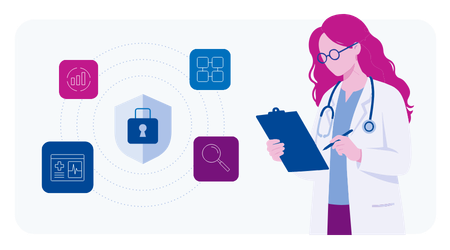
Pharma marketers need to build more meaningful relationships with patients (DTC), caregivers, and healthcare professionals (HCP) across a health journey that spans many channels, partners, and decision moments.
That creates an operational challenge. Data, activation, and measurement often sit with different vendors, each with its own rules, IDs, and handoffs. DTC and HCP campaigns need separate identity paths, but both still need to support the same brand objective. Pharma marketing teams need a clearer way to connect audience strategy, media exposure, and outcomes without adding risk or confusion. That starts with identity, not as a single system for every audience, but as a governed workflow that keeps DTC and HCP paths separate and coordinated.
In our pharma marketing playbook, “From onboarding to outcomes: The privacy-first independent identity workflow for pharma marketing,” we show pharma brands how to build privacy-first workflows that connect identity, activation, and measurement across the healthcare ecosystem.
Here are three priorities pharma marketing teams can use to build more governed, measurable engagement.
1. Why should pharma marketers keep DTC and HCP identity workflows separate?
Pharma marketers should keep DTC and HCP identity workflows separate because each audience requires different data signals, activation paths, and measurement methods. Separate workflows give teams clearer governance controls while helping DTC and HCP campaigns support the same brand objective.

DTC and HCP campaigns often support the same brand objective, but they need separate ways to manage data, reach audiences, and measure results. That’s where identity plays a central role. It gives pharma teams a governed way to keep DTC and HCP data, activation, and measurement separate while coordinating both toward the same goal, like driving drug awareness and impacting prescribing behavior.
The missing layer in pharma marketing. Watch our Q&A
DTC activation depends on privacy-safe identity, which can include tokenization, aggregated audience logic, and non-clinical consumer context. This helps brands better understand patients and caregivers as people, not only as condition-defined audiences.
HCP activation depends on a different foundation. It may use signals such as National Provider Identifier (NPI), specialty, practice location, partner identifiers, and other verified attributes. When DTC and HCP workflows are treated as one system, you can create governance risk, weaken audience logic, and make measurement harder to defend. Keeping them separate gives teams clearer controls, audience planning, and a stronger way to show how both efforts support the same brand goal.
2. How can pharma marketing teams make audiences activation-ready with privacy-safe identity?
Pharma teams can make audiences activation-ready by translating fragmented inputs into governed audience workflows that can be matched, activated, separated, and measured. Privacy-safe identity helps prepare DTC and HCP audiences for approved channels and partners while maintaining the separation each workflow requires.
Privacy-safe identity helps prepare DTC and HCP audiences for approved channels and partners while maintaining the separation each workflow requires.
After separating DTC and HCP data, activation, and measurement, the next step is making each audience ready to use across approved channels and partners. Pharma audiences rarely start in a format that is ready for activation across platforms, publishers, and partners. Inputs may come from partner audiences, platform identifiers, CRM systems, privacy-safe consumer signals, HCP attributes, or partner-provided data.
Those inputs need to be translated into usable audiences through governed identity workflows. For DTC campaigns, activation readiness may include cohort construction, non-clinical enrichment, caregiver logic, tokenized matching, and exclusion rules. For HCP campaigns, it may include verified identity inputs such as NPI, specialty, practice location, and professional address.
A strong workflow answers four questions:
- Can the audience be matched accurately?
- Can it be activated across approved destinations?
- Can DTC and HCP separation be maintained?
- Can the audience connect back to verification and measurement?
When the answer is yes, pharma brands have a stronger foundation for audience quality, usable reach, and cross-channel activation.
3. Why should pharma marketers build measurement into the workflow from the start?
Pharma marketers should build measurement into the workflow from the start because campaign exposure needs to connect back to permitted identity frameworks and partner-held outcomes. Planning measurement before activation gives teams a clearer, more explainable way to evaluate how audience strategy, media exposure, and outcomes work together.
Making audiences ready for activation is only one part of the job. Pharma teams also need a clear way to connect media exposure to outcomes, and that measurement plan needs to be in place before a campaign goes live.
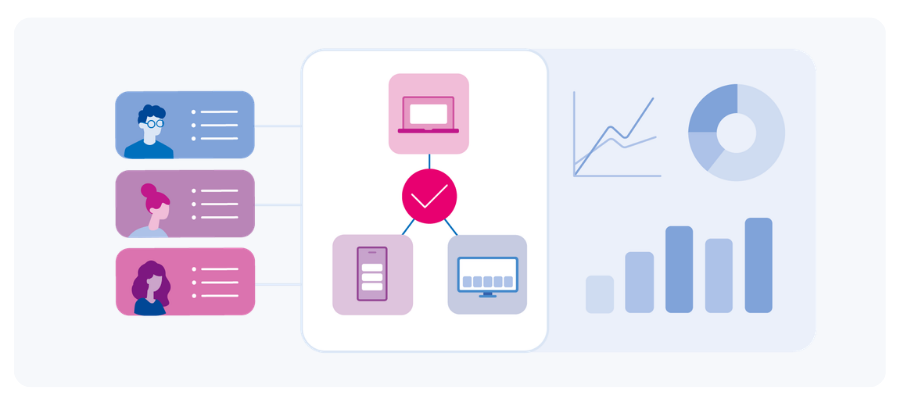
Pharma measurement requires more than knowing whether media ran. Brands need to connect exposure signals to permitted identity frameworks and partner-held outcomes in a way that is accurate, governed, and explainable. Those outcomes may include script lift, qualified HCP engagement, audience quality, and exposure-based HCP reporting where appropriate.
Clean rooms and partner-enabled workflows can help connect exposure, identity, and outcomes in a governed way. For DTC campaigns, this may involve linking tokenized audience or exposure data to a measurement partner environment. For HCP campaigns, this may involve resolving exposure back to HCP identity using NPI, professional address, specialty, practice location, partner identifiers, or measurement partner IDs.
When measurement is planned before activation begins, teams gain a clearer view of how audience strategy, media exposure, identity, and outcomes connect.
How does Experian help pharma marketing teams connect identity, activation, and measurement?
Experian helps pharma marketing teams connect identity, activation, and measurement by serving as a neutral, interoperable workflow layer across data, onboarding, approved destinations, and measurement partners. Experian helps teams keep DTC and HCP identity paths separate while preserving the connection between activation and outcomes. Our role centers on three practical needs. We help teams:
As a neutral, interoperable identity, data, and workflow layer, we help brands translate fragmented inputs into activation-ready audiences, connect those audiences to approved destinations, and preserve the structure needed to evaluate performance.
Download Experian’s pharma marketing playbook
These three priorities give pharma teams a place to start. Our full pharma marketing playbook goes deeper into how pharma brands can build privacy-first workflows across onboarding, activation, sequencing, and partner-enabled measurement. Inside the playbook, you’ll find a more detailed look at how to:
- Keep DTC and HCP identity strategies separate
- Prepare audiences for activation across channels
- Evaluate audience quality and governance
- Connect exposure to trusted outcomes through partner-enabled measurement
For pharma marketers working across fragmented data, platforms, and partner ecosystems, our playbook offers a framework for moving from fragmented inputs to more governed activation and stronger measurement readiness. Download our full playbook to learn how privacy-first identity workflows can help pharma brands connect onboarding, activation, and outcomes.
FAQs
Pharma marketers need separate DTC and HCP identity workflows because patients, caregivers, and healthcare professionals require different data signals, activation paths, and measurement methods. Keeping those paths separate helps teams maintain governance while coordinating both efforts toward the same brand objective.
Privacy-safe identity helps pharma marketers translate audience inputs into activation-ready audiences without treating DTC and HCP workflows as one system. It can support tokenized matching, cohort construction, verified HCP identity inputs, and the separation needed to connect activation with trusted outcomes.
Experian helps pharma brands connect data, identity, onboarding, activation, and measurement across a fragmented partner ecosystem. Experian’s identity foundation and workflow connectivity help teams prepare audiences for approved destinations while preserving the structure needed to evaluate trusted outcomes.
Measurement planning should happen before activation begins. When pharma teams define measurement early, they can connect audience strategy, media exposure, identity, and partner-held outcomes in a more accurate, governed, and explainable way.
Pharma marketers should look for audiences that can be matched accurately, activated across approved destinations, kept separate across DTC and HCP workflows, and connected back to verification and measurement. This gives teams a stronger foundation for audience quality, usable reach, and cross-channel activation.
Latest posts

Tapad’s digital identity resolution offering enables Gimbal’s platform to provide expanded insights for campaign optimization to U.S. brand and agency clients NEW YORK, Feb. 11, 2020 /PRNewswire/ — Tapad, part of Experian and a global leader in digital identity resolution, announced their partnership with Gimbal, a leader of location-powered marketing and advertising solutions. Gimbal now leverages Tapad’s global, privacy-safe digital cross-device solution, The Tapad Graph, to further enhance its footfall attribution solution, Arrival. Arrival delivers dwell-based attribution for in-store foot traffic and by leveraging the Tapad Graph, Gimbal provides customers with a more holistic, attributable understanding of consumers across multiple devices, like desktop, smartphone, and tablet. With this, Gimbal’s clients are enabled to make more informed media planning decisions for programmatic activations across the web, and mobile apps. “With the number of devices per individual rapidly increasing, understanding the customer decision journey is becoming more complex,” said Kyle Wendling, SVP of Product at Gimbal. “We’re excited to partner with Tapad to continue engaging consumers across multiple devices.” To learn more about Tapad and our digital identity resolution products, visit our identity solutions page. About TapadTapad, Inc. is a global leader in digital identity resolution. The Tapad Graph, and its related solutions, provide a transparent, privacy-safe approach connecting brands to consumers through their devices globally. Tapad is recognized across the industry for its product innovation, workplace culture, and talent, and has earned numerous awards including One World Identity’s 2019 Top 100 Influencers in Identity Award. Headquartered in New York, Tapad also has offices in Chicago, Denver, London, Oslo, Singapore, and Tokyo. About GimbalGimbal translates location data into intent, measurement, and insights to help organizations transform their businesses, maximize marketing relevance, and humanize messaging for consumers. Gimbal is headquartered in Los Angeles and provides advertising and marketing technologies to the world’s leading brands and retailers interested in understanding the physical world. To learn more, visit https://gimbal.com. Contact us today
Tapad, part of Experian, integrates with AcuityAds’ current offering will complement cross-channel capabilities for brands and agencies in the U.S. and Canada NEW YORK, Jan. 23, 2020 /PRNewswire/ — Tapad, a global leader in digital identity resolution, has partnered with AcuityAds, a technology leader that provides targeted digital media solutions for advertisers to connect intelligently with audiences. The partnership will enhance AcuityAds’ existing cross-device solution, especially with respect to its cross-channel Connected TV offering. Tapad’s global, privacy-safe digital cross-device solution, The Tapad Graph, will compliment AcuityAds’ own cross-device data set for enhanced marketing capabilities across their Demand Side Platform (DSP). For AcuityAds, this provides customers with unduplicated reach across desktop, tablet, mobile and CTV devices – while augmenting their video offering. Tom Woods, Vice President of Products at AcuityAds commented, “With increasing marketing complexities, consumer device usage and new data regulations, our decision regarding the partnership was an important one. The Tapad Graph’s privacy-safe identifiers for consumer notice and choice, as well as the ability to opt-out at any point, were critical factors in our decision who to partner with.” To learn more about Tapad and our digital identity resolution capabilities, visit our identity page. About Tapad Tapad, Inc. is a global leader in digital identity resolution. The Tapad Graph and its related solutions provide a transparent, privacy-safe approach connecting brands to consumers through their devices globally. Tapad is recognized across the industry for its product innovation, workplace culture, and talent, and has earned numerous awards including One World Identity’s 2019 Top 100 Influencers in Identity Award. Headquartered in New York, Tapad also has offices in Chicago, London, Oslo, Singapore, and Tokyo. About AcuityAds AcuityAds is a leading technology company that provides marketers a powerful and holistic solution for digital advertising across all ad formats and screens to amplify reach and Share of Attention® throughout the customer journey. Via its unique, data-driven insights, real-time analytics and industry-leading activation platform based on proprietary Artificial Intelligence technology, AcuityAds leverages an integrated ecosystem of partners for data, inventory, brand safety and fraud prevention, offering unparalleled, trusted solutions that the most demanding marketers require to be successful in the digital era. AcuityAds is headquartered in Toronto with offices throughout the U.S., Europe and Latin America. For more information, visit AcuityAds.com. Disclaimer in regards to Forward-looking Statements Certain statements included herein constitute “forward-looking statements” within the meaning of applicable securities laws. Forward-looking statements are necessarily based upon a number of estimates and assumptions that, while considered reasonable by management at this time, are inherently subject to significant business, economic and competitive uncertainties and contingencies. Investors are cautioned not to put undue reliance on forward-looking statements. Except as required by law, AcuityAds does not intend, and undertakes no obligation, to update any forward-looking statements to reflect, in particular, new information or future events. Contact us today
Tapad, a part of Experian and the future of cookies Earlier this week, Google announced plans to create “.. a path towards making third-party cookies obsolete”; which will result in the phasing out of support for third-party cookies in its Chrome browser within two years. While there has been much discussion and debate on the future of the third-party cookie, an announcement from Google has been anticipated for some time. As many have said this week, the use of cookies and other identifiers has and will continue to evolve. What will never change is the value exchange between publishers and consumers that is enabled by relevant advertising. Notably, the need for independent companies to develop solutions that enable this value exchange has never been greater to ensure that publishers, consumers, and advertisers derive the most value from their relationship. We are well-positioned for the future From the start, Tapad, a part of Experian has led with a consumer-first, privacy-centric approach to technology as the use and proliferation of devices and global privacy regulations continue to evolve. Over the past two years, Tapad, a part of Experian has gone through a technical overhaul. Calling on almost ten years of expertise in identity resolution, we have created a modern platform that is flexible in terms of identity input as well as output. Anticipated change in the identity landscape was the driver behind our architecture decisions and what enables us to be responsive to a dynamic market. Consumer behavior and device use continue to change, bringing additional digital IDs into the equation – namely across the mobile and CTV environments. Our technology, however, is not tied to any specific type of identifier, but rather is focused on associating disparate identifiers at the individual and household level. Where do we go from here? Google’s announcement has been characterized as a conversation starter, but we see it more as a call to action. With a timeline set, there is a need to converge on one or more solutions that can scale across the web. In a post cookie world, publishers and advertisers will continue to require ways to create fair marketplaces across platforms and devices. Further, the platforms that currently power the programmatic advertising ecosystem will need to be able to invest and differentiate to bring value to their customers. Scaled privacy-safe identity solutions will be needed not only for classic targeting, attribution, measurement, and frequency capping use cases but also to carry consumer preferences and consent. Tapad, a part of Experian will continue to play a leading role here. However, we are not going to do this alone. As solutions around Google’s Chrome browser evolve, we will continue to take a leadership position and will work with Google, key industry groups, partners and customers to meet current and future needs for an independent identity solution at scale. In the meantime, we will continue to support an independent ecosystem where consumers come first and privacy standards are a priority. It’s business as usual…for now. There will not be any changes to our graph products or services as a result of Google’s announcement in the near term. Any changes related to the Chrome third-party cookie will evolve and will no doubt be subject to significant industry participation and feed-back, indeed at the invitation of Google. We will proactively communicate any changes and product updates during this time period. We look forward to the opportunities resulting from these changes and ushering in a new era of identity resolution in digital advertising. Contact us today