Loading...

Three themes that defined CES 2026

Published: January 12, 2026 by Experian Marketing Services

At A Glance

CES 2026 showed that AdTech in 2026 will depend on strong data foundations, intentional media buying, and measurable outcomes. Agentic AI systems that can act, optimize, and transact on behalf of marketers emerged as a defining force, but only where data is accurate and privacy-first. Curation is becoming a standard buying approach as AI-powered systems prioritize quality and control. And activation and measurement are finally aligning through identity, allowing AI-driven decisions to be evaluated against real business results.

Year after year, CES signals where marketing is headed next. In 2026, the message was clear. Progress comes from connecting data, intelligence, and outcomes with discipline, not spectacle. Across AI, programmatic media, and measurement, the same priorities surfaced again and again.

Under the bright lights of Las Vegas, three themes cutthrough,and each one pointed to a future where data, intelligence, and outcomes move in lockstep.

Here are the three themes that defined CES 2026.

1. Agentic AI proved that it’s only as good as its data inputs

AI was once again the star of the show. At CES 2026, marketers focused less on demos and more on proof that AI improves decisions, reduces friction, and drives outcomes. Every credible use case traced back to accurate, privacy-first data.

What changed at CES was how that intelligence is being applied. Agentic AI systems designed to act autonomously are moving beyond insights and into execution. From media buying to optimization, these agents are increasingly expected to make decisions at speed and scale. That shift raises the stakes for data quality. When AI is operating campaigns, not just informing them, accuracy and privacy are non-negotiable.

“This year’s CES made agency priorities crystal clear. Efficiency, differentiation, and outcomes. As agentic AI takes on more responsibility across planning, activation, and measurement, Experian gives agencies a robust data and identity foundation they can trust to own the outcome for every client.”

ExperianGreg Williams, Chief Operating Officer

Without accurate, privacy-compliant data, AI agents struggle to reflect real behavior or support responsible personalization. A reliable, privacy-first data foundation is what turns AI from an interesting experiment into an operational advantage.

An icon of a woman with three icons next to her representing tennis, coupons, and electric vehicle.

That advantage gets even stronger when it’s anchored in an identity graph that understands people and households across channels. When identity and intelligence move together, AI becomes more accurate, accountable, and effective at driving outcomes.

In an AI first world, the strongest signal isn’t scale. It’s data quality.

2. Curation goes mainstream

Curation is no longer experimental. At CES, it showed up as a mandated capability for buyers and sellers navigating fragmented signals and complex supply paths. Marketers want intentional media buys they can explain, defend, and repeat.

AI is accelerating this shift. As AI systems take on more responsibility for planning, packaging, and optimization, curation provides the guardrails. It defines what “good” looks like (premium supply, trusted data, and clear performance goals), and allows AI to operate within those constraints driving the optimal outcomes for marketers.

“Our sell-side clients walked into CES asking how to stand out in a crowded landscape. The answer kept coming back to data-driven curation. With Experian Audiences and Curated Deals, SSPs and publishers can improve targeting within PMPs, package inventory more intelligently, and prove value with confidence. As we head into 2026, data is no longer a supporting input. It needs to be at the center of every conversation.”

ExperianChris Meredith, Head of Sell-Side

Rather than maximizing inventory access, curation prioritizes control, transparency, and performance. Buyers want premium supply aligned to specific goals. Sellers want clearer paths to demand. They can play the odds or own the outcome. When data leads, they own it. When curation is powered by high-fidelity audiences and a connected identity framework, it becomes even stronger. That’s what allows curated deals to deliver clarity, confidence, and repeatable performance.
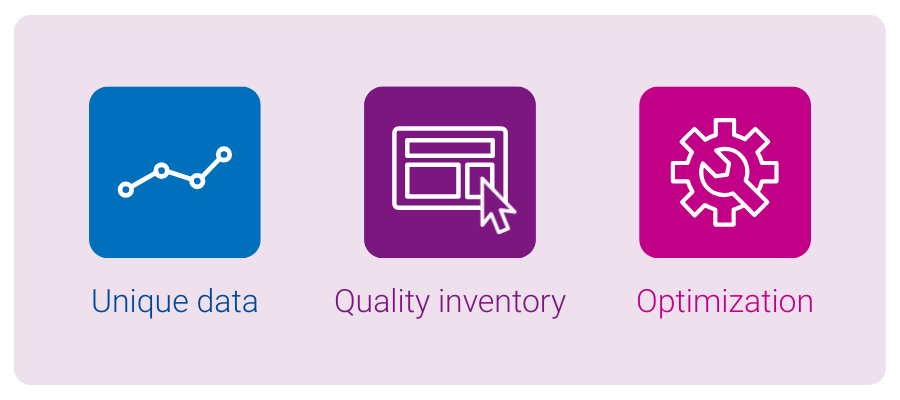
Unique data, quality inventory, and optimization.

This shift reflects a broader move away from probability-based buying toward outcome ownership, where AI-driven systems are measured not on activity, but on results.

3. Activation and measurement finally shared the same stage

Activation and measurement are now coming together around shared data and identity. CES 2026 marked a turning point where closing the loop felt achievable, not aspirational. Both the buy-side and sell-side face pressure to show that media investment drives outcomes.

Agentic AI was a quiet driver of this optimism. As AI agents increasingly manage activation decisions in real time, marketers need measurement systems that can keep up. That requires a shared data and identity foundation. One that allows AI-driven actions to be evaluated against outcomes consistently, across channels and partners.

In healthcare, accuracy is everything. Our clients need to reach patients and healthcare professionals in ways that respect privacy while driving meaningful outcomes. CES underscored that privacy, identity, and measurement must work in harmony. That’s how health marketers reduce risk and increase the likelihood that every message leads to better care.

ExperianSheila Wirick, Sales Director, Health

Achieving that requires a consistent identity spine that connects planning, activation, and outcomes across channels. And that spine is strongest when it’s built on accurate, privacy-first data and audiences that understand people and households. That connection allows marketers to move beyond proxy metrics and evaluate performance based on tangible results. When campaigns and measurement rely on the same data foundation, AI-driven platforms can optimize toward outcomes such as new customers, account growth, or in-store activity, not just delivery metrics.
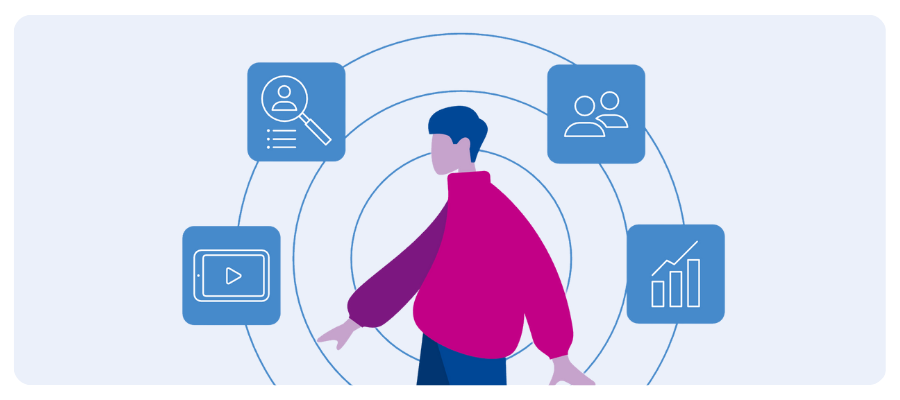
A man with four icons in a half circle around him that represent a tablet, magnifying glass, two people, and a chart.

That’s the connective layer that turns disconnected touch points into a measurable, outcomes-based system.

Three takeaways from CES 2026

  1. AI is maturing, but only for teams withaccurate, connected, privacy-first data that AI agents can act on responsibly.
  2. Curation is scaling, giving both humans and AI systems clearer paths to quality, control, and differentiation.
  3. Activation and measurement are aligning, allowing AI-driven decisions to be judged on outcomes, not assumptions.

We’re building for that world today. One where agentic AI operates on a trusted data and identity foundation, curation defines the rules, and outcomes determine success. With the right foundation and the deep data inputs, you can move faster, reduce risk, and let intelligence (human and artificial) work together to deliver results that last long after the neon lights fade.

Connect with us

This site is protected by reCAPTCHA and the Google Privacy Policy and Terms of Service apply.


FAQs

What was the biggest shift discussed at CES 2026 for marketers?

The biggest shift was the move from hype to accountability. Marketers focused on data quality, intentional media buying, and outcome-based measurement rather than experimental technology.

Why did AI discussions emphasize privacy-first data?

Privacy-first data supports accuracy, compliance, and trust. AI models built on unreliable or opaque data struggle to reflect real consumer behavior and create risk for brands. At Experian, privacy and compliance are built in. Every data signal, attribute, audience, and partner goes through our rigorous review process to meet federal, state, and local consumer privacy laws. With decades of experience in highly regulated industries, we’ve built processes that emphasize risk mitigation, transparency, and accountability.

How does curation help reduce programmatic complexity?

Curation simplifies buying by pairing premium inventory with specific audience and performance goals. This approach reduces waste and creates clearer, more repeatable buying paths. With the acquisition of Audigent, Experian is now more than just a premier data provider. We’re also a full-service curation partner. Together, we deliver end-to-end programmatic curation across data, inventory, and optimization, helping brands and publishers unlock smarter, more scalable media strategies.

What does it mean to align activation and measurement?

It means using the same identity and data foundation to plan campaigns and evaluate results. This alignment allows marketers to measure success based on business outcomes, not just delivery metrics. With Experian, marketers can plan, reach, and measure in a connected cycle. Every impression is measurable. Every audience is accurate. Every decision is powered by data ranked #1 in accuracy by Truthset.

Why is identity central to all three CES themes?

Identity connects data across channels and stages of the customer journey. It enables accurate AI, effective curation, and consistent measurement within one system. Experian delivers identity resolution at the scale, accuracy, and compliance required by the world’s largest enterprises. Our solutions are:
Built on trust: Backed by 40+ years as a regulated data steward and rated #1 in data accuracy by Truthset, so you can act with confidence.
Powered by our proprietary AI-enhanced identity graph: Combining breadth, accuracy, and recency across four billion identifiers, continuously refined by machine learning for maximum accuracy.
Seamlessly connected: Pre-built data integration with leading CDPs, DSPs, and MarTech platforms for faster time to value.
Always up to date: Frequent enrichment and near-real-time identity resolution through Activity Feed for timely personalization and more responsive customer engagement.
Privacy-first by design: Compliance with GLBA, FCRA, and emerging state regulations baked in at every step, supported by rigorous partner vetting.


Latest posts
Loading…
How accurate third-party data leads the way for advertisers

Experian continues to lead in data accuracy according to Truthset's latest analysis Advertisers, technology partners, and agencies are all chasing accurate data to power their marketing strategies. But not all data is created equal. Truthset’s latest findings confirm Experian's leadership in third-party data accuracy, giving brands and agencies confidence in every decision they make. Accurate data is the foundation for predictive insight, real-time intelligence, and AI-powered personalization. Experian’s AI-driven solutions help marketers move from data to action, delivering more relevant messages with less waste. Truthset's independent study found that up to 51% of ad targeting data is inaccurate, with accuracy rates ranging between 32% and 69% across providers. This reinforces the importance of validated, trusted data from partners like Experian. The data quality challenge Inaccurate data can lead to: Wasted ad spend Without accurate data at the start, marketers can’t reach the right audiences, resulting in wasted impressions. Privacy and compliance risks In an increasingly privacy-centric world, advertisers need to be especially mindful of accurate targeting to avoid putting their brand reputation at risk. Poor campaign performance Low-quality data skews metrics and attribution models, making it difficult to measure campaign success and optimize spend. Low-quality data can come in different forms, like inconsistent or outdated information – think demographics (age, gender) and interests (dog versus cat lover), or simply the wrong relationship can be made between data sets. Data records can be incomplete or duplicative, and data segments could be misclassified or inaccurate. For example, a kids' snack food company may think they’re targeting a 35-year-old man, who lives in the suburbs with his young family, when in fact it’s a 65-year-old woman who moved to the city after her kids went to college. That's wasted investment. As data ecosystems grow more complex, that's where Experian's AI-powered simplicity comes in. We can clean, enrich, and infer missing signals, helping you act on incomplete or imperfect data with greater confidence. Building a solid data foundation Accurate data is essential for personalization and trust. According to eMarketer, more than 75% of internet users worldwide are willing to share their email address, brand interest, and name in exchange for personalized experiences. Without accurate data, marketers won’t be able to provide the level of personalization that consumers desire.   But personalization at scale requires more than just data, it needs intelligence. Experian's AI-powered capabilities, including predictive models, transform clean, validated data into meaningful engagement strategies that balance performance with privacy. Independent validation from Truthset ensures that Experian’s data remains among the most accurate in the ecosystem. "As cookies and mobile ad identifiers continue to phase out, consented, durable identifiers (hashed email, postal addresses) are going to serve as the foundation for identity solutions of the future. And the only way to ensure you are transacting on the highest quality identity and demography data is to actively validate the data you rely on with a third party.” Chip Russo, President Experian's commitment to data accuracy Since joining the Truthset Data Collective in 2023, Experian continues to be the industry leader in data accuracy. Truthset's latest Q2 2025 analysis reaffirms our leadership in data accuracy: Experian is the #1 data provider of largest volume of high-accuracy hashed emails (HEMs) Experian ranks #1 in accuracy for eight marketing data attributes, including but not limited to Age, Geography, Presence of Children, and Education Experian ranks #1 or #2 for 22 of the 24 attributes, and #3 for the two others (out of 12 companies being analyzed) Experian consistently has the largest number of HEMs that are 90% or more likely to be accurate  “As a member of the Truthset Data Collective, Experian received top ranks across a variety of categories for its data. The entire digital advertising world runs on data, but focusing on data accuracy is going to drive the next phase of innovation for the industry, enhancing ROI for advertisers, CPMs for publishers, and relevant experiences for consumers.” Chip Russo, President As Truthset's recent study highlights, the data matched between hashed emails and postal addresses is crucial, underpinning everything from targeted ads to TV audience measurement. Highly accurate HEMs linked to high-quality demographic data should be the foundation of any marketing plan. Advertisers are able to overcome the complexities of identity resolution by tying online and offline touchpoints together to deliver a consistent message across channels. Real-time relevance, powered by ethical AIExperian combines validated identity data with intelligent technology to deliver marketing that works for people and brands. Companies are striving to eliminate marketing waste and provide consumers with personalized marketing and the advertising industry can have confidence that Experian’s marketing data has been externally validated as being highly accurate. The accuracy of our data will power better marketing initiatives, like insights, targeting, identity, and measurement. Whether you're optimizing for reach, relevance, or ROI, AI is changing how marketing works. Experian’s human-centered, privacy-first AI makes it easier to adapt, act faster, and connect with consumers in ways that are more meaningful. Let's start a conversation about how we can fully realize the potential of data-driven advertising together. Contact us today FAQs What is Truthset, and why does their validation matter? Truthset is an independent data validation company that reviews and ranks data providers based on accuracy. Their ratings help advertisers understand which data sources they can trust. Experian ranks #1 in data accuracy according to Truthset. How does Experian’s performance compare to others in Truthset’s study? Experian ranks #1 for accuracy in multiple categories, including Age, Geography, and Presence of Children, and holds the largest number of hashed emails that are 90% or more likely to be accurate. Why is data accuracy so important for marketers? Accurate data is important for marketers because it leads to more efficient targeting, reduced ad waste, and better campaign performance. It also reduces compliance risk by helping advertisers engage responsibly. Experian's data is ranked #1 in data accuracy according to Truthset. How does Experian use AI responsibly? Experian’s privacy-first, AI-driven models clean, enrich, and validate data while respecting consent and ethical standards. How can advertisers get started with Experian's data? Connect with the Experian team to learn how our validated data and AI-powered solutions can strengthen your targeting, insights, and ROI. Latest posts

Jan 05,2024 by Experian Marketing Services

Finding and buying cheap programmatic TV

In this article…Typical paths to programmatic TV ad buying What platforms can your programmatic ads show on?Where to get started with programmatic TV buying How to optimize your bids for smarter ad spend  In advertising, it’s crucial to maintain efficiency and cost-effectiveness through every campaign. Whether you’re a seasoned marketer or just starting with programmatic advertising, finding the best deal for programmatic TV ads is essential. In this blog post, you’ll learn about the intricacies of programmatic TV and how you can uncover the best paths, platforms, and strategies to maximize your advertising budget. Typical paths to programmatic TV ad buying  Programmatic advertising has revolutionized how businesses reach their target audience on television and has become an increasingly popular marketing approach. So far, in 2023, 87% of connected TV (CTV) ads have been bought using programmatic methods. That percentage is expected to continue rising as more advertisers take advantage of this buying method.  To find the best deal for cheap programmatic TV, it’s essential to understand the typical paths to programmatic media buying: direct deals and programmatic auctions.  Direct deals  One common route for programmatic ad buying is direct deals with publishers and broadcasters. This approach gives you more control over your ad placements, allowing you to negotiate pricing and secure prime time slots. However, this method can be expensive as premium placements often have a premium price tag.  Programmatic auctions  Another option is programmatic auctions, where advertisers bid on available ad inventory in real time. These auctions can be public or private, each with its own benefits.  Public auction Public auctions are the primary marketplace for cheap programmatic TV ad buying, and advertisers compete in real-time for available ad slots. This option can be cost-effective if you are strategic with bidding. However, it can be highly competitive, which could drive up prices.  Private auction  A private auction provides a more controlled bidding environment. These auctions offer access to premium inventory and the ability to negotiate directly with publishers and broadcasters. Prices are typically higher at private auctions, but they can lead to more exclusive, high-quality ad placements to better reach your target audiences.  Auction vs. direct  The auction vs. direct debate is crucial for finding the best deal in programmatic TV advertising. Direct programmatic ad buying involves establishing personal relationships with publishers and broadcasters. This approach offers more control over ad placements, creates the potential for long-term partnerships and premium positions, and allows for more negotiation power on pricing.  On the other hand, the auction route relies on real-time programmatic auctions that give advertisers more efficiency, dynamic pricing through competitive bidding, and access to diverse ad inventory. This approach also allows better data-driven decision-making to help advertisers with precise targeting and optimization.  What platforms can your programmatic ads show on? Programmatic ads are limited to traditional television. You can use various platforms to broaden your audience reach, including blogs, lifestreams, and more. Multiple platform options also let advertisers search around for cheap programmatic ad buys.  Some popular platforms include:  Display and video  YouTube videos  Custom publisher formats  Audio ads  Unexpected platforms where you can buy programmatic TV ads  Some unexpected platforms offer unique opportunities to find the best programmatic TV deals. Some of these examples include:  YouTube shorts Mobile games  Music streaming apps  Pinterest TikTok Try local  Local (linear) television advertising often flies under the radar, but it can be a goldmine for finding cheap programmatic ad buys. Customize your messages to local audiences by focusing on specific geographic regions. This level of specificity can lead to highly efficient ad campaigns with lower costs compared to national or global placements.  Where to get started with programmatic TV buying  When it comes to programmatic TV ad buying, you have two main options: using an agency or going directly to the marketplace.  Using an agency  Advertising agencies have the expertise to navigate the complexities of programmatic TV ad buying. By working with one, you may be able to find better deals and get help negotiating terms and optimizing your campaigns. However, remember that agency fees could take up a large portion of your budget.  Going to the marketplace  For a more hands-on approach, you can explore programmatic ad buying directly through the marketplace. This approach gives you direct control over your campaigns and the ability to explore different deals and platforms. However, you’ll want to understand programmatic advertising strongly to ensure you make the most of the marketplace.  How to optimize your bids for smarter ad spend  Finding the best deal doesn’t end with choosing the right options for programmatic buying. You need to focus on smart bidding strategies to optimize your advertising budget.  Choose placement based on segmentation  Segmentation is vital to maximizing your ad spend. By targeting the specific audience segments most likely to convert, you can make the most of your budget. Platforms often offer options to narrow your audience based on behavior, interests, and demographics.  Work with an identity resolution provider  Identity resolution is the process of matching online and offline customer data, giving you a comprehensive view of your target audience. By working with an identity resolution provider, you can make informed decisions about where and when to place your programmatic TV ads for the best results.  Create an omnichannel view of your campaign  To find the best deals on cheap programmatic ads, it’s essential to have an omnichannel view of your advertising campaign. By coordinating your programmatic media with other channels, you can create a seamless and cohesive brand experience for your audience.  Get started with programmatic TV today  Now that you better understand programmatic TV ad buying, you’re ready to get started. But how can Experian help you make the most of your programmatic advertising efforts?  At Experian, we offer a suite of data-driven solutions to enhance your programmatic TV advertising campaigns. Our extensive data and identity resolution capabilities empower you to make informed decisions to improve your targeting capabilities, optimize engagement, and more. By working together, you can unlock the potential of your programmatic TV ads and find the best deals to optimize your advertising budget.  Get started today Latest posts

Dec 28,2023 by Experian Marketing Services

Discover 2024 marketing trends in Experian’s digital audience report

As we approach 2024, marketers must grasp the evolving landscape of digital activation. Understanding emerging audience trends and activation strategies is key to developing impactful marketing initiatives and positioning your brand for success.   In Experian's 2024 Digital audience trends and predictions report you'll find:   Data-driven insights that will empower you to confidently develop marketing strategies that resonate with your audience and drive meaningful results.   Insights from Experian experts and our industry-leading data. Our outlook for 2024 marketing trends. In this blog post, we'll provide a sneak peek of the 2024 marketing trends you can expect in our full report. Digital activation  Digital activation grew by 63% between 2022 and 2023. We expect digital activation to increase in 2024 but at a slower rate than in 2023 due to economic uncertainty caused by high-interest rates, recent state privacy regulations, and work stoppages in the entertainment and automotive industries.  Top digital audiences  Which digital audiences are advertisers purchasing from Experian?  We are seeing growth in four major data categories: Automotive, Demographics, Lifestyle and Interests, and Retail Shoppers: Purchase Based audiences. Here are a few audiences within these categories that you can activate on-the-shelf of your preferred platform:   Automotive: Autos, Cars, and Trucks > In Market-Make and Models  Demographics: Demographics > Homeowners/Renters > Renter  Lifestyle and Interests: Lifestyle and Interests (Affinity) > Activities and Entertainment > Wine Lovers  Retail Shoppers: Purchase Based: Retail Shoppers: Purchase Based > Food and Drink > Restaurants: Fast Food/QSR Chicken Frequent Spenders  Top digital audiences by industry  What are the top digital audiences being activated by industry? Download our 2024 Digital audience trends and predictions report to discover the top digital audiences in the following industries:  Automotive  Health  Financial Services  Retail & CPG Download our new 2026 Digital trends and predictions report Marketing in 2026 will be defined by connection: between activation and measurement, data and AI, platforms and outcomes. These connections are what turn innovation into impact, and they’re where Experian helps marketers lead with confidence. What you'll learn AI is only as good as its data : Find out why the marketers who shape how AI works, with high-integrity, human-centered data, will be the ones who lead.   Activation and measurement are coming together: Explore how marketers are shifting from reporting after the fact to guiding performance in the moment. First-party data activation is becoming a foundational capability: See how it's now possible to onboard and activate privacy-compliant audiences across channels, all from a single system. Commerce media is no longer just a retail play: Understand why auto, CPG, financial services, and travel brands are now adopting retail-style models to connect data, media, and sales outcomes.    Curation is the new programmatic standard: Learn how curation brings identity, quality, and control together, allowing marketers to target confidently across connected TV (CTV), audio, and the open web. Download now Contact us Latest posts

Dec 19,2023 by Hayley Schneider, Sr. Manager, Content Marketing

Subscribe to our newsletter

Enter your name and email for the latest updates

This site is protected by reCAPTCHA and the Google Privacy Policy and Terms of Service apply.

About Experian Marketing Services

At Experian Marketing Services, we use data and insights to help brands have more meaningful interactions with people. As leaders in the evolution of the advertising landscape, Experian Marketing Services can help you identify your customers and the right potential customers, uncover the most appropriate communication channels, develop messages that resonate, and measure the effectiveness of marketing activities and campaigns.

Visit our website

Subscribe to our newsletter

Stay up to date on the latest industry news and receive expert tips from our marketing experts.
Subscribe now!