Loading...

Three themes that defined CES 2026

Published: January 12, 2026 by Experian Marketing Services

At A Glance

CES 2026 showed that AdTech in 2026 will depend on strong data foundations, intentional media buying, and measurable outcomes. Agentic AI systems that can act, optimize, and transact on behalf of marketers emerged as a defining force, but only where data is accurate and privacy-first. Curation is becoming a standard buying approach as AI-powered systems prioritize quality and control. And activation and measurement are finally aligning through identity, allowing AI-driven decisions to be evaluated against real business results.

Year after year, CES signals where marketing is headed next. In 2026, the message was clear. Progress comes from connecting data, intelligence, and outcomes with discipline, not spectacle. Across AI, programmatic media, and measurement, the same priorities surfaced again and again.

Under the bright lights of Las Vegas, three themes cutthrough,and each one pointed to a future where data, intelligence, and outcomes move in lockstep.

Here are the three themes that defined CES 2026.

1. Agentic AI proved that it’s only as good as its data inputs

AI was once again the star of the show. At CES 2026, marketers focused less on demos and more on proof that AI improves decisions, reduces friction, and drives outcomes. Every credible use case traced back to accurate, privacy-first data.

What changed at CES was how that intelligence is being applied. Agentic AI systems designed to act autonomously are moving beyond insights and into execution. From media buying to optimization, these agents are increasingly expected to make decisions at speed and scale. That shift raises the stakes for data quality. When AI is operating campaigns, not just informing them, accuracy and privacy are non-negotiable.

“This year’s CES made agency priorities crystal clear. Efficiency, differentiation, and outcomes. As agentic AI takes on more responsibility across planning, activation, and measurement, Experian gives agencies a robust data and identity foundation they can trust to own the outcome for every client.”

ExperianGreg Williams, Chief Operating Officer

Without accurate, privacy-compliant data, AI agents struggle to reflect real behavior or support responsible personalization. A reliable, privacy-first data foundation is what turns AI from an interesting experiment into an operational advantage.
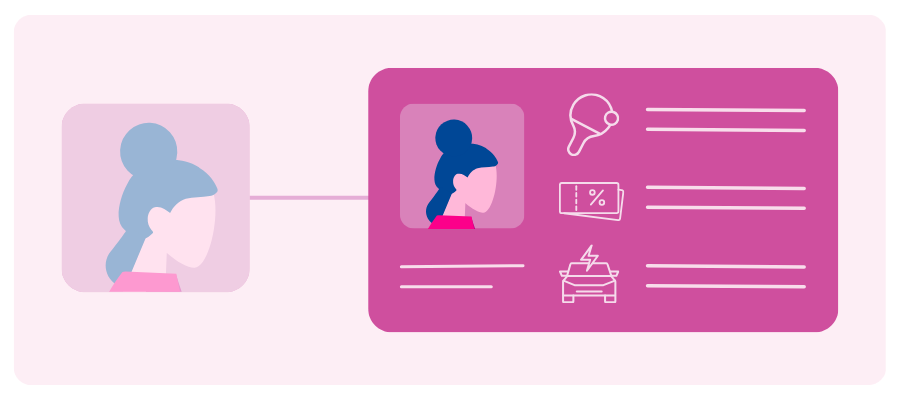
An icon of a woman with three icons next to her representing tennis, coupons, and electric vehicle.

That advantage gets even stronger when it’s anchored in an identity graph that understands people and households across channels. When identity and intelligence move together, AI becomes more accurate, accountable, and effective at driving outcomes.

In an AI first world, the strongest signal isn’t scale. It’s data quality.

2. Curation goes mainstream

Curation is no longer experimental. At CES, it showed up as a mandated capability for buyers and sellers navigating fragmented signals and complex supply paths. Marketers want intentional media buys they can explain, defend, and repeat.

AI is accelerating this shift. As AI systems take on more responsibility for planning, packaging, and optimization, curation provides the guardrails. It defines what “good” looks like (premium supply, trusted data, and clear performance goals), and allows AI to operate within those constraints driving the optimal outcomes for marketers.

“Our sell-side clients walked into CES asking how to stand out in a crowded landscape. The answer kept coming back to data-driven curation. With Experian Audiences and Curated Deals, SSPs and publishers can improve targeting within PMPs, package inventory more intelligently, and prove value with confidence. As we head into 2026, data is no longer a supporting input. It needs to be at the center of every conversation.”

ExperianChris Meredith, Head of Sell-Side

Rather than maximizing inventory access, curation prioritizes control, transparency, and performance. Buyers want premium supply aligned to specific goals. Sellers want clearer paths to demand. They can play the odds or own the outcome. When data leads, they own it. When curation is powered by high-fidelity audiences and a connected identity framework, it becomes even stronger. That’s what allows curated deals to deliver clarity, confidence, and repeatable performance.
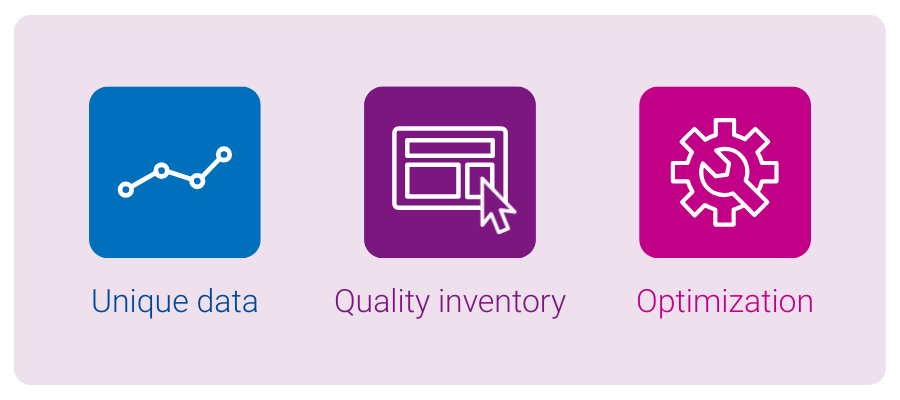
Unique data, quality inventory, and optimization.

This shift reflects a broader move away from probability-based buying toward outcome ownership, where AI-driven systems are measured not on activity, but on results.

3. Activation and measurement finally shared the same stage

Activation and measurement are now coming together around shared data and identity. CES 2026 marked a turning point where closing the loop felt achievable, not aspirational. Both the buy-side and sell-side face pressure to show that media investment drives outcomes.

Agentic AI was a quiet driver of this optimism. As AI agents increasingly manage activation decisions in real time, marketers need measurement systems that can keep up. That requires a shared data and identity foundation. One that allows AI-driven actions to be evaluated against outcomes consistently, across channels and partners.

In healthcare, accuracy is everything. Our clients need to reach patients and healthcare professionals in ways that respect privacy while driving meaningful outcomes. CES underscored that privacy, identity, and measurement must work in harmony. That’s how health marketers reduce risk and increase the likelihood that every message leads to better care.

ExperianSheila Wirick, Sales Director, Health

Achieving that requires a consistent identity spine that connects planning, activation, and outcomes across channels. And that spine is strongest when it’s built on accurate, privacy-first data and audiences that understand people and households. That connection allows marketers to move beyond proxy metrics and evaluate performance based on tangible results. When campaigns and measurement rely on the same data foundation, AI-driven platforms can optimize toward outcomes such as new customers, account growth, or in-store activity, not just delivery metrics.
A man with four icons in a half circle around him that represent a tablet, magnifying glass, two people, and a chart.

That’s the connective layer that turns disconnected touch points into a measurable, outcomes-based system.

Three takeaways from CES 2026

  1. AI is maturing, but only for teams withaccurate, connected, privacy-first data that AI agents can act on responsibly.
  2. Curation is scaling, giving both humans and AI systems clearer paths to quality, control, and differentiation.
  3. Activation and measurement are aligning, allowing AI-driven decisions to be judged on outcomes, not assumptions.

We’re building for that world today. One where agentic AI operates on a trusted data and identity foundation, curation defines the rules, and outcomes determine success. With the right foundation and the deep data inputs, you can move faster, reduce risk, and let intelligence (human and artificial) work together to deliver results that last long after the neon lights fade.

Connect with us

This site is protected by reCAPTCHA and the Google Privacy Policy and Terms of Service apply.


FAQs

What was the biggest shift discussed at CES 2026 for marketers?

The biggest shift was the move from hype to accountability. Marketers focused on data quality, intentional media buying, and outcome-based measurement rather than experimental technology.

Why did AI discussions emphasize privacy-first data?

Privacy-first data supports accuracy, compliance, and trust. AI models built on unreliable or opaque data struggle to reflect real consumer behavior and create risk for brands. At Experian, privacy and compliance are built in. Every data signal, attribute, audience, and partner goes through our rigorous review process to meet federal, state, and local consumer privacy laws. With decades of experience in highly regulated industries, we’ve built processes that emphasize risk mitigation, transparency, and accountability.

How does curation help reduce programmatic complexity?

Curation simplifies buying by pairing premium inventory with specific audience and performance goals. This approach reduces waste and creates clearer, more repeatable buying paths. With the acquisition of Audigent, Experian is now more than just a premier data provider. We’re also a full-service curation partner. Together, we deliver end-to-end programmatic curation across data, inventory, and optimization, helping brands and publishers unlock smarter, more scalable media strategies.

What does it mean to align activation and measurement?

It means using the same identity and data foundation to plan campaigns and evaluate results. This alignment allows marketers to measure success based on business outcomes, not just delivery metrics. With Experian, marketers can plan, reach, and measure in a connected cycle. Every impression is measurable. Every audience is accurate. Every decision is powered by data ranked #1 in accuracy by Truthset.

Why is identity central to all three CES themes?

Identity connects data across channels and stages of the customer journey. It enables accurate AI, effective curation, and consistent measurement within one system. Experian delivers identity resolution at the scale, accuracy, and compliance required by the world’s largest enterprises. Our solutions are:
Built on trust: Backed by 40+ years as a regulated data steward and rated #1 in data accuracy by Truthset, so you can act with confidence.
Powered by our proprietary AI-enhanced identity graph: Combining breadth, accuracy, and recency across four billion identifiers, continuously refined by machine learning for maximum accuracy.
Seamlessly connected: Pre-built data integration with leading CDPs, DSPs, and MarTech platforms for faster time to value.
Always up to date: Frequent enrichment and near-real-time identity resolution through Activity Feed for timely personalization and more responsive customer engagement.
Privacy-first by design: Compliance with GLBA, FCRA, and emerging state regulations baked in at every step, supported by rigorous partner vetting.


Latest posts

Loading…
2026 will be marketing’s 6-7 moment

Remember when “6-7” was all over your feed and no one really knew why, but somehow everyone got it? In 2025, the internet proved that connection doesn’t always make sense — at least not at first. The “6-7” meme was random, ridiculous, and everywhere. It spread because it felt connected; an inside joke everyone could share. Marketing in 2026 will have its own 6-7 moment. Experian's 2026 Digital trends and predictions report explores how 2026 will be defined by connection: between activation and measurement, data and AI, platforms and outcomes. After years of fragmentation, the industry is finally unifying around shared foundations: data accuracy, identity resilience, and measurable performance. Here are three connections to watch for in 2026. 1. AI is only as good as its data foundation AI’s performance depends on the quality, recency, and integrity of its inputs. In 2026, marketers will recognize that the differentiator is not the algorithm itself but the data that informs it. As AI becomes embedded into workflows (from audience discovery to media optimization) accurate identity and privacy-safe data become essential. Why it matters Good data fuels responsible automation, predictive insight, and personalization that feels human. Without it, even the most advanced models will simply automate bad decisions faster. What actions should marketers take to strengthen their data foundation? To make AI adaptive, ethical, and aligned with real-world context, marketers need to strengthen the data foundation beneath it. In 2026, that means taking four core actions: 1. Prioritize accuracy Verify data and anchor it in real human identity, rather than inferred or fragmented signals. 2. Keep data fresh Ensure inputs stay current through continuous updates that reflect real-time consumer behavior and conditions. 3. Maintain consent standards Source data responsibly and stay compliant with privacy regulations emerging across 20+ U.S. states. 4. Enable interoperability Connect data securely across platforms through a signal-agnostic identity framework that supports consistency and scale.    When these elements come together, AI becomes more than just automation: it becomes adaptive, ethical, and responsive to real-world context. 2. Commerce media expands beyond retail Commerce media is no longer just a retail play. What began as retailers monetizing their data and media has evolved into a multi-sector movement uniting data, media, and transaction insights. Auto, travel, CPG, and even financial brands are launching their own media networks or partnering with existing ones to close the loop between exposure and conversion. More than half (58%) of advertisers are interested in advertising on non-retail media networks. eMarketer Why it matters In 2026, commerce media becomes a strategy for any brand with first-party data, measurable outcomes, and the need for closed-loop insight. What should marketers do with this expansion? Activate beyond owned channels Extend audiences beyond owned inventory into addressable connected TV (CTV) and open-web environments where identity links every impression to real outcomes. Make identity the growth engine Privacy-first identity resolution increases data addressability and keeps media measurable across every channel. Collaborate for scale and consistency Partner with providers that deliver transparency, interoperability, and shared measurement – not just data volume. 3. Curation becomes the programmatic standard Curation is reshaping programmatic advertising into something more focused, efficient, and accountable. In an era shaped by privacy regulation and signal loss, curation brings identity, quality, and control together, allowing marketers to target confidently across CTV, audio, and the open web. More than 66% of open-exchange ad spend (over $100 billion annually) now runs through curated private marketplaces (PMPs). eMarketer Why it matters Curation aligns with the industry’s need for accurate identity, transparent supply, and stable outcomes, especially as traditional signals fluctuate. How can marketers use curation more effectively? Utilize supply-side innovation Use supply-side platform (SSP) curation tools from partners like Index Exchange and Magnite to optimize in real time and keep your supply paths transparent. Adopt curated marketplaces Work with agency-built marketplaces from groups like GroupM and Butler/Till to control data costs, maintain transparency, and improve performance. Activate with Experian Curated Deals Tap high-performing audience segments, including PurpleLab’s HIPAA-compliant health audiences, through curated PMPs in leading demand-side platforms (DSPs) such as Amazon DSP. Optimize and prove performance Combine Experian data with Audigent supply-path intelligence to adjust campaigns mid-flight using metrics like CPM, CTR, and video completion rate. 2026 will be the 6-7 era for marketing The “6-7” meme didn’t need to make sense to go viral. But your marketing does. 2026 will be the year marketers move from fragmentation to connection. Download Experian’s 2026 Digital trends and predictions report to explore all five digital marketing trends shaping 2026. Download now Ready to get started? Connect with a member of our team About the author Fred Cheung  Director, Partnership Sales, Audigent, a part of Experian  Fred Cheung has spent over a decade in the programmatic advertising space, with roles at Mindshare, Jounce Media, Twitter, and The Trade Desk. His deep experience in trading and product management helps in his current function on the Experian Marketing Services’ Sales team where he focuses on data growth and adoption across the industries’ leading buy-side platforms.  FAQs Why does Experian describe 2026 as marketing’s “6–7 moment”? Experian uses this phrase to describe the inflection point where AI, identity, commerce media, and programmatic curation finally connect in practical, scalable ways. It reflects the shift from fragmentation toward unified activation and measurement. Experian covers five digital marketing trends to watch for in 2026 in our 2026 Digital marketing trends and predictions report. How does Experian support AI strategies for marketers? Experian provides verified consumer data, identity resolution, and privacy-first frameworks that strengthen AI accuracy. AI tools require reliable inputs, and Experian’s data foundation helps marketers apply AI in predictive modeling, audience insight, and media optimization. Why is identity central to commerce media growth? Identity allows brands and media networks to connect exposure to conversion across sites, screens, and environments. Experian supports this through resilient identity frameworks that maintain recognition even as signals shift. How does Experian help marketers activate curated programmatic buys? Experian provides high-performing audience segments and outcome-based signals that improve curated PMP performance. These capabilities give buyers more control, more stability, and clearer pathways to measurable results. Where can marketers learn more about Experian’s 2026 predictions? Experian’s 2026 Digital trends and predictions report outlines the five forces shaping the year ahead, including AI’s dependence on data quality, commerce media expansion, and the rise of curation. Latest posts

Dec 15,2025 by Fred Cheung, Director, Partnership Sales

A deep dive with an Experian partner, M3 MI

In our Ask the Expert Series, we interview leaders from our partner organizations who are helping lead their brands to new heights in AdTech. Today’s interview is with Dan Lynch a Senior Manager, Insights and Analysis at M3 MI, the company behind the MARS Consumer Health Study and MARS Audiences. Audience impact across health vertical Which healthcare advertisers see the greatest impact from MARS audiences? Could you share an example of how health marketers have successfully utilized your data to achieve specific campaign goals, such as patient engagement, awareness, or adherence? We’re seeing a clear shift in healthcare advertising away from generic, one-size-fits-all campaigns. With MARS, advertisers from pharmaceuticals, over-the-counter (OTC), health insurance companies, and hospitals are seeing the greatest impact by defining highly specific patient and caregiver personas and using those insights to build personalized media plans and deliver unique messaging by segment. As a result, our partners are seeing stronger engagement, increased ad recall, and more effective outcomes because they’re speaking directly to what matters most to each audience.  Media agencies who utilize the MARS Consumer Health Study to build their strategic marketing plans are seeing a great impact by then taking those strategic targets and activating them. Those who are not activating those audiences are really missing out on bringing their strategy to consumer screens. Building stronger health campaigns with advanced segmentation What key health-related audience segments does MARS offer? While other competitors may offer caregiver segments by condition, we go further by  layering engagement levels, such as caregivers actively involved in medical decisions or those who regularly discuss care with physicians. Similarly, for patients, we don’t stop at identifying over 60 health conditions; we add behavioral dimensions like whether they’re proactive in managing their health or primarily doctor-led. These nuanced attributes allow advertisers to craft personalized campaigns that resonate on a much deeper level. We can also look at patients that are willing to pay more for an Rx not covered by their insurance, which has been a trend with GLP-1s.  How can health advertisers use these segments to craft more personalized and effective campaigns? Advertisers can use MARS’ advanced segmentation to move beyond simple demographics or condition-based targeting by layering behavioral and engagement attributes for greater relevance and impact. With MARS, a single condition can be the starting point for building multiple test-and-learn audiences to identify prime prospects. For example, GLP-1 patients have diverse treatment journeys; some pay out-of-pocket due to lack of insurance coverage, others switch brands for cost savings, and some purchase directly through patient websites. Each of these scenarios represents a distinct audience that can be created using MARS data, enabling highly personalized activation strategies. Data sourcing and quality How does MARS source and curate consumer data relevant to health audiences? Our audiences are survey-based, first-party data built from the MARS Consumer Health Study and Kantar’s trusted LifePoints Panel. We do not use medical claims, insurance data, or personal health records; our data is 100% self-reported. The study has over 5,000 different healthcare data points used to create syndicated and custom audiences. Our syndicated audiences are curated based on marketplace trends (e.g., we’ve added more information on GLP-1s), client feedback for enhancements to the MARS study, and reaching audiences medical claims data cannot (e.g., caregivers, treatment satisfaction, act based on healthcare advertising). What data quality standards do you follow, and how do you ensure consistency and reliability, especially for sensitive or regulated health-related data? M3 MI is part of M3 Global Research which is committed to transparency and high-quality data with ISO (International Organization for Standardization) certifications. These certifications demonstrate that our research practices align with international regulations. In a crowded data marketplace, what unique attributes set MARS apart, particularly for health advertisers? We don’t just identify patients or caregivers, we uncover their motivations, preferences, and behaviors, enabling advertisers to build highly targeted and meaningful audiences that competitors simply can’t replicate. The MARS Consumer Health Study offers an extensive range of data for audience building, spanning healthy living profiles, OTC, vitamins, and prescription purchasing behaviors, as well as media consumption habits and lifestyle activities.  How MARS ensures regulatory compliance What measures does MARS take to maintain data privacy and regulatory compliance?  We take a privacy-first approach to exceed all Network Advertising Initiative (NAI), Health Insurance Portability and Accountability Act (HIPAA), and California Consumer Privacy Act (CCPA) regulations. Since the data to build our audiences is self-reported via the MARS Consumer Health Study, we do not use PII data. We also take the following steps to maintain data privacy and compliance: State regulatory compliance: We proactively exclude survey respondents for audience seeds from certain states with consumer privacy laws that preclude audience data use Consent and transparency: Survey panelists are required to double-opt-in to all data usage terms before participating in the MARS study. Our panel partner’s privacy policy clearly explains use cases such as look-alike modeling and audience creation. Privacy-safe modeling: Data is scaled using propensity models built from an offline, people-based national consumer database. All seed survey data is removed from final models to eliminate any risk of re-identification, ensuring respondents are never targeted directly based on their survey responses. Click here for full details on M3 MI's privacy policy How do these efforts help advertisers navigate an evolving regulatory landscape while ensuring ethical standards? By relying solely on double opt-in, self-reported data, and removing identifiers, we guarantee that our approach is 100% privacy-safe and compliant. This gives advertisers confidence that our audiences are built on ethical, transparent practices without compromising consumer trust. Success stories Could you share a recent success story where a health advertiser achieved significant campaign improvements using M3 MI’s MARS data? What were the key factors behind that success, such as ROI, engagement lift, or conversion rates? One recent success story involved a diabetes medical device advertiser trying to breakthrough in a cluttered marketing landscape. Their initial broad, non-personalized media campaign delivered lower than expected digital engagement. To address this, the company conducted segmentation research and identified three distinct patient personas. However, the research lacked actionable media insights and a way to effectively reach these personas in the digital world.   That’s where MARS data came in. Using the MARS Consumer Health Study, M3 MI mapped the existing personas to uncover each group’s unique media habits. These insights enabled the media agency to design tailored strategies for each persona. Additionally, M3 MI built custom, propensity-modeled persona audiences for activation across CTV, social, and display channels, ensuring precise targeting and personalized messaging. This strategic shift to personalized persona marketing transformed the campaign from a one-size-fits-all approach to a patient-first model. The company saw a significant lift in website engagement and a measurable increase in ROI. Resources to maximize your campaigns Where can readers find additional resources, case studies, or insights to learn more about MARS audience solutions? Interested healthcare marketers can explore additional resources by visiting our Audience Solutions page. There, they’ll find a comprehensive overview, a detailed taxonomy of syndicated audiences, and other helpful materials. For personalized support or further information on customized audiences, they can also reach us directly at info@M3-MI.com. Contact us About our expert Dan Lynch Senior Manager, Insights and Analysis, M3 MI Dan Lynch is a seasoned leader in strategic marketing insights and activation with over 20 years at healthcare focused media agencies. At M3 MI, he helps pharmaceutical companies, media partners, and agencies leverage our syndicated research to address critical business needs. Dan is also a lead of the MARS addressable audience initiative, applying his expertise in developing unique audience personas from our data and activating them across programmatic channels. About M3 MI M3 MI, a division of M3 USA, is the leading provider of unbiased syndicated research for the healthcare industry. We specialize in media measurement, advertising intelligence, and audience insights and activation. Leveraging robust datasets, rigorous methodologies, and decades of healthcare expertise, M3 MI delivers a deeper understanding of patients, caregivers, and healthcare professionals, their behaviors, attitudes, media habits, and communication preferences. These insights empower marketers to make informed, data-driven decisions. Latest posts

Dec 11,2025 by Experian Marketing Services

What 2026 consumer insights mean for marketers

The 2026 consumer is reconsidering how they want to engage with businesses. Research from Nielsen anticipates that in 2026, people will spend more intentionally, think more critically, and expect more from the brands they invite into their lives. They want clear value, marketing experiences that make decisions easier, and personalization that respects their privacy and improves the moment they’re in. This change has big implications for marketers. Winning in 2026 will require understanding the motivations, concerns, and trust drivers behind consumer behavior. This means embracing a privacy-first identity foundation, deep audience intelligence, high-quality and ethically sourced data, omnichannel activation, and measurement that closes the loop across channels. Below, we break down consumer shifts shaping 2026 and how you can translate them into practical strategies for 2026. How will consumer behavior change in 2026, and how should marketers respond? Consumers are going into 2026 feeling deeply cautious. According to 2026 consumer outlook data, 32.8% of global shoppers say they’re financially worse off than last year, and 73% of those consumers cite rising cost-of-living pressures as the reason. Ultimately, people are spending, but they’re directing most of their dollars toward core categories like food, health, and household care. That mix of caution and restraint is shaping what they want from brands: clear value, relevant personalization, and simple, low-effort experiences that make choices feel easier and worthwhile. Want more details on how consumer caution shaped the peak buying season in 2025? Explore our 2025 Holiday spending trends and insights report for insights that can set the foundation for your 2026 strategy. Download the report Here are the consumer trends we expect to shape decision-making most in 2026 and how Experian can help you adapt. Economic stability will outweigh values Consumers are prioritizing the realities of their household budgets going into 2026. Global consumer research shows that environmental concerns fell from the #4 global worry to #9 in 2025, while financial pressures and geopolitical issues moved to the top of the list. People still care about brand values, but economic stability is becoming a stronger driver behind how they decide what to buy, where to shop, and which brands they trust. Consumers want brands to be responsible, fair, and transparent, but they also expect brand values to align with their financial reality. InsightData pointConsumers who feel financially worse off than last year32.8%Of those, consumers citing cost-of-living pressures73%Environmental concerns falling in priority (2024 to 2025)#4 to #9 in top global worries Source: Consumer Outlook: Guide to 2026 For your marketing, this means shifting from broad value messaging to audience-specific offers tailored to each group’s financial situation, understanding: Who feels financially stretched Who still has spending flexibility Who is shifting habits subtly (frequency, basket size, channel choice) How marketers should respond to this trend Experian helps brands read financial signals with accuracy. Using generational segments, income bands, lifestyle indicators, and geo-indexed audiences, you can distinguish between: Value-seeking shoppers who prioritize stretch, savings, and reliability Higher-income households motivated by sustainability, wellness, or premium experiences Multigenerational families with diverse influencers and decision drivers Urban vs. suburban households with different price sensitivities and convenience factors Paired with Experian’s privacy-first identity graph, your brand can activate audiences aligned with consumer insights across commerce media networks (CMNs), connected TV (CTV), social platforms, and programmatic channels using curated private marketplaces (PMPs). This ensures your messaging reflects the financial realities of consumers in 2026. Experian’s predictive insight capabilities also help forecast shifts in financial mindset, enabling you to anticipate change instead of reacting to it. As financial caution shapes everyday choices, the next question becomes how to remove friction and deliver value in ways that feel simple, relevant, and worth the spend. Consumers will prioritize value, simplicity, and relevance With everyday expenses still weighing on households, people will likely simplify their shopping habits in 2026. They want brands to make decisions easier, save them time, and offer clear value without extra effort. Instead of wading through endless choices or chasing promotions, shoppers are responding to experiences that feel straightforward and trustworthy, with: Transparent pricing Clear benefits Recommendations aligned to budget and needs Frictionless decision paths For your brand, it’ll be essential to deliver carefully crafted and targeted messages at the right moment, rather than overwhelming consumers with excessive messaging. Experian helps you pinpoint what value looks like for different audiences and tailor relevant experiences. How marketers should respond to this trend To meet consumers’ demand for value and simplicity, you’ll need to understand what “easy” and “worth it” mean to each audience before you activate a campaign. Experian enables this by identifying the moments, motivations, and household realities that shape how people simplify decisions. Using Experian’s lifestyle indicators, category affinities, geo-indexed spend patterns, and financial mindset segments, you can quickly pinpoint: Which audiences want streamlined choices (e.g., fewer SKUs, clearer value cues) Which shoppers expect premium quality without complexity Which households prioritize speed and convenience over price Which consumers prefer digital-first journeys vs. in-store simplicity Then, through Experian’s privacy-first identity graph, you can reliably reach these audiences across CMNs, CTV, social, and digital environments with: Product recommendations that reduce decision fatigue Promotions tuned to value drivers Creative that matches each audience’s expectations for ease Consistent messaging that aligns across all channels Experian’s AI-powered simplicity helps reduce manual effort in this process, enabling your team to uncover opportunities, streamline workflows, and focus more time on strategy and outcomes. And as Experian continues to explore agentic workflows, you’ll be able to move from manual audience setup to intelligent audience discovery — enabling strategies you may not have considered before. Once you’ve simplified the experience, consumers will expect the next layer of relevance: helpful, respectful personalization grounded in the data they choose to share. People want personalization on their terms According to Qualtrics’ 2026 Consumer Experience Trends Report, consumers still want personalization going into 2026, but they expect it to happen on their terms: InsightData pointPrefer personalized experiences64%Say benefits outweigh privacy trade-offs39%Feel uncomfortable with many data-driven personalization tactics32% Source: 2026 Consumer Experience Trends Report First-party data is now the foundation of meaningful, privacy-first engagement. Consumers are far more willing to share information when the value exchange is obvious and when they feel in control of how that data is used. They expect brands to: Use only necessary data Explain how personalization improves the experience Offer easy preference controls Demonstrate transparent, privacy-first data practices As your brand lives up to these expectations, trust grows, and consumers become more willing to share the first-party data you need for impactful, privacy-centric personalization in 2026. Experian helps you meet these needs with Audience Engine, a self-service activation tool that enables you to quickly and accurately view and activate your first-party data and partner segments across 200+ platforms without high operational overhead. And when you need deeper insight, it also connects 3,500+ syndicated audiences and 20+ trusted third-party providers, so you can enrich your first-party data with privacy-safe insights. This includes Experian’s most recent 2025 Syndicated Audiences release, which adds 400+ updated segments — including 62 Auto Loyalists — giving you a more granular, privacy-safe view of shifting values, lifestyle preferences, and intent signals for 2026. These segments break out characteristics by generation, income, gender, and urbanicity, so your brand can analyze where demand is rising and how behaviors differ across audience groups. For example: An automaker can target Auto Loyalists: Acura with model-specific offers A luxury brand can activate Auto Loyalists: Alfa Romeo and adjust messaging by income band, age, urbanicity, or lifestyle Used together, first-party data and enriched syndicated audiences allow you to personalize responsibly, target more effectively, and respond to 2026 consumer expectations while respecting their privacy wishes. How marketers should respond to this trend The future of personalization in 2026 is first-party and zero-party data, supported by a trustworthy identity framework. Experian enables this through: Identity resolution connected to 95% of U.S. households Privacy-first activation across digital, CTV, and CMNs Data modernization that maintains accuracy and compliance Responsible automation that delivers high-performance, human-centered personalization consumers want in 2026 Mosaic® USA, our household-level consumer classification system that provides a privacy-safe view of lifestyles and preferences so you can apply personalization intelligently across channels Audience Engine, which lets you activate and enrich your first-party data for richer, permission-based insights Marketing Attributes, which gives you access to thousands of demographic, behavioral, lifestyle, financial, and interest characteristics As soon as your brand earns permission to personalize, the next expectation is to apply that personalization across channels. Omnichannel behavior and real-time micro-moments will define how people shop Consumers don’t differentiate between channels anymore. They want a seamless, cohesive shopping journey. Consumer buying trends indicate that people are shopping more frequently but purchasing fewer items per trip. This suggests more small, mission-driven decisions, often triggered by digital or mobile discovery. As shoppers move fluidly between mobile, in-store, CTV, and social platforms, they rely on time-saving cues, simple comparisons, and contextual recommendations instead of complex decision-making processes. CMNs now influence choices across the digital shelf, in-store screens, and publisher networks, blurring the lines between media and commerce. Speed also matters; anything longer than next-day delivery reduces the likelihood of a purchase. These behaviors create more micro-moments: quick, intent-driven decisions shaped by life stage, financial mindset, household composition, real-time signals, and micro-behaviors like quick trips, small-basket missions, and mobile search checks. Meeting consumers in these moments requires contextual relevance, not broad targeting. How marketers should respond to this trend Experian helps you act on omnichannel and micro-moment behavior by unifying identity and audiences across: CMNs CTV Social platforms Programmatic partners Retail media publishers In-store digital environments Meanwhile, our audience assets give you the contextual accuracy these moments demand with: Geo-indexed spenders to understand financial posture and neighborhood patterns Generational household segments to reflect digital comfort and shopping rhythms Lifestyle and interest indicators aligned to real-life needs In-market and behavioral signals to reach consumers at the moment intent appears With privacy-first identity resolution anchoring it all, your brand can deliver consistent sequencing, informed personalization, and accurate measurement across channels. This is essential when omnichannel is the expectation and micro-moments decide who wins the sale. As these real-time behaviors shift, generational differences will further shape how consumers navigate channels, interpret value, and decide which brands earn their loyalty. What’s new with Experian Marketing Data? Explore hundreds of new and updated segments now available — auto, income, lifestyle, spend, TV, and more. Syndicated Audiences Marketing Attributes How are generational shifts shaping 2026 consumer behavior? Generational dynamics are also likely to play a significant role in how people discover, evaluate, and buy in 2026. While every age group is prioritizing value, simplicity, and trust, they express these priorities differently. Experian’s Syndicated Audiences updated for November 2025 include 61 new demographic segments — broken out by generation, income band, gender, and urbanicity — to help you reach each group with accuracy. These segments are informed by decades of responsible automation and predictive modeling, giving you a clearer view of how each group behaves, even as signals shift. For example, a retail brand can use the Gen X Dual-Income Households segment to reach value-driven, digitally engaged shoppers, while another brand might activate Millennial Urban Professionals to tailor offers based on lifestyle, income, or urbanicity. Here’s how key generations will shape buying and the Experian segments that can help you act on these customer insights. Gen Z expects transparency, authenticity, and digital ease Values: Transparency, authenticity, responsible data use Digital behavior: Always-on, mobile-first, social and creator-influenced Decision drivers: Trust, clarity, seamless digital experiences Relevant Experian segments: Gen Z Urban Households, Gen Z Renters Millennials seek value alignment, financial flexibility, and reliability Values: Fair pricing, quality, reliability Digital behavior: Efficiency-focused omnichannel shoppers Decision drivers: Time savings, cost relief, trust Relevant Experian segments: Millennial Urban Professionals, Millennial Parents Gen X is increasingly digital, highly value-conscious, and loyal Values: Reliability, clarity, long-term value Digital behavior: Digitally engaged but friction-averse Decision drivers: Practicality, stability, predictable service Relevant Experian segments: Gen X Dual-Income Households As these generational differences shape how people discover, evaluate, and buy, one theme unites every age group: trust now determines whether a brand earns attention, data, and loyalty. With today’s consumers scrutinizing how their information is used, that trust might just be what helps you succeed in 2026. Why is trust the new currency in data-driven marketing? In 2026, trust will differentiate the brands that flourish. Consumers want: Clear data practices Transparent value exchanges Confidence that brands are honoring their preferences And as signals decline, first-party data strategies supported by privacy-first identity resolution and responsible automation have become the reliable, transparent foundation for trust-driven marketing. Experian’s long-standing focus on data accuracy, modernization, and compliance — from quarterly releases and updates to our twice-yearly attribute retirement process — ensures you activate with the most current, ethical, and regulation-aligned data available. These practices strengthen consumer trust and drive more accurate targeting, better match rates, and measurable performance across channels. This focus on accuracy, governance, and transparency also underpins Experian’s approach to ethical AI, ensuring innovations serve people first while giving you confidence in every decision. How can marketers apply 2026 consumer insights today? As trust becomes the deciding factor in whether consumers engage, share data, or stay loyal, marketers need clear ways to operationalize that trust. Fortunately, the insights shaping 2026 translate directly into practical actions your team can take right now. Here’s where you can start: Audit your first-party data strategy and CRM hygiene Invest in scalable, privacy-first identity resolution Tailor messaging to financial attitudes, not just demographics Use Experian’s audience segments to match consumer values, generational traits, and urbanicity Build journey-based activation across mobile, CTV, social, and CMNs Implement measurement and closed-loop analytics so every activation feeds intelligence back into planning Evaluate where predictive insight and responsible automation can reduce manual work and improve outcomes With Experian, you can reach the right people with the right message at the right moment with accuracy they can trust. Teams gain the predictive insight and responsible automation needed to act on these shifts at scale. Looking for more insights into the year ahead? If you’re planning for 2026, consumer behavior is just the starting point. Experian’s 2026 Digital trends and predictions report takes you deeper into the forces reshaping marketing — from AI moving from hype to implementation and the evolution of commerce media beyond retail. Explore Experian’s 2026 Digital trends and predictions report What role does Experian play in helping brands activate data-driven marketing? As you put these 2026 consumer insights into practice, the challenge becomes turning strategy into scaled, privacy-safe execution. Experian’s data, identity, and activation infrastructure can make the difference: Identity as the foundation: Connect first-party data to 95% of U.S. households for a unified, privacy-first view. Privacy-first activation: Engage audiences safely across every channel with compliant targeting. Actionable data depth: Combine demographic, behavioral, contextual, and household-level attributes to enrich insights. Omnichannel reach: Activate at scale across CTV, CMNs, social, programmatic, and in-store environments. Closed-loop measurement: Tie exposure to outcomes across channels, enabling more effective optimization and continuous improvement. These capabilities provide your brand with the clarity, confidence, and control necessary for future success — powered by Experian’s human-centered approach to AI, which combines privacy-first clarity, predictive insight, AI-powered simplicity, real-time intelligence, and transparent innovation to deliver trust, accuracy, and measurable performance in 2026. Build your 2026 strategy with data you can trust Those who win in 2026 will be the ones who turn shifting consumer behavior into actionable intelligence rooted in trusted identity, accurate data, and measurement that proves what works. With economic caution shaping decisions, rising privacy expectations, and omnichannel journeys becoming the norm, brands that invest now in a strong data and identity foundation will be the ones that stay visible, relevant, and resilient. Experian gives you that foundation by unifying identity, high-quality data, activation, and closed-loop measurement through a human-centered approach to AI. With privacy-first clarity, predictive insight, AI-powered simplicity, real-time intelligence, and transparent innovation, Experian helps you understand your audiences deeply, reach them responsibly, and adapt in real time as the market evolves. 2026 is coming fast. Now’s the moment to build a high-performance strategy. Connect with us FAQs What are the biggest consumer trends for 2026? The biggest consumer trends for 2026 revolve around intentional spending, value-conscious choices, low-effort experiences, and personalization that feels transparent and trustworthy. Consumers are cautiously optimistic but still managing tight budgets, prioritizing essentials, and gravitating toward brands that simplify decisions with clear value and relevant experiences that meet them across channels. Personalization remains a differentiator when it’s rooted in responsible data use and clear benefits. How can marketers use 2026 consumer insights to drive next year’s strategies? You can use 2026 consumer insights to identify your highest-opportunity audiences, match your messaging and offers to their financial reality and values, and build journey-based activation across channels instead of working in silos. Experian’s identity graph and audiences help you connect online and offline behavior into a single, actionable view. How does Experian’s identity graph help marketers in 2026? Experian’s identity graph helps marketers in 2026 by providing a privacy-first, unified view of consumers across channels, connecting first-party data to 95% of U.S. households. This allows you to recognize individuals and households accurately, enrich their data with reliable attributes, and activate personalized experiences across digital, CTV, and CMNs with confidence.The result is better targeting, higher match rates, and more consistent, relevant engagement at every touchpoint. All of this is further strengthened by Experian’s human-centered approach to AI, which enhances clarity, accuracy, and real-time relevance. What is "privacy-first" marketing, and why is it important in 2026? Privacy-first marketing uses consumer data responsibly and transparently to improve the customer experience. In 2026, consumers still want personalization but are more selective about how their data is used.With privacy-first marketing, you build trust by explaining why data is collected, giving people control, and personalizing only with consented, high-quality data. Experian supports this through our Responsible Data Practices, which prioritize fairness, accuracy, transparency, security, and inclusion. Latest posts

Dec 11,2025 by Experian Marketing Services

Subscribe to our newsletter

Enter your name and email for the latest updates

This site is protected by reCAPTCHA and the Google Privacy Policy and Terms of Service apply.

About Experian Marketing Services

At Experian Marketing Services, we use data and insights to help brands have more meaningful interactions with people. As leaders in the evolution of the advertising landscape, Experian Marketing Services can help you identify your customers and the right potential customers, uncover the most appropriate communication channels, develop messages that resonate, and measure the effectiveness of marketing activities and campaigns.

Visit our website

Subscribe to our newsletter

Stay up to date on the latest industry news and receive expert tips from our marketing experts.
Subscribe now!