Loading...

Three themes that defined CES 2026

Published: January 12, 2026 by Experian Marketing Services

At A Glance

CES 2026 showed that AdTech in 2026 will depend on strong data foundations, intentional media buying, and measurable outcomes. Agentic AI systems that can act, optimize, and transact on behalf of marketers emerged as a defining force, but only where data is accurate and privacy-first. Curation is becoming a standard buying approach as AI-powered systems prioritize quality and control. And activation and measurement are finally aligning through identity, allowing AI-driven decisions to be evaluated against real business results.

Year after year, CES signals where marketing is headed next. In 2026, the message was clear. Progress comes from connecting data, intelligence, and outcomes with discipline, not spectacle. Across AI, programmatic media, and measurement, the same priorities surfaced again and again.

Under the bright lights of Las Vegas, three themes cutthrough,and each one pointed to a future where data, intelligence, and outcomes move in lockstep.

Here are the three themes that defined CES 2026.

1. Agentic AI proved that it’s only as good as its data inputs

AI was once again the star of the show. At CES 2026, marketers focused less on demos and more on proof that AI improves decisions, reduces friction, and drives outcomes. Every credible use case traced back to accurate, privacy-first data.

What changed at CES was how that intelligence is being applied. Agentic AI systems designed to act autonomously are moving beyond insights and into execution. From media buying to optimization, these agents are increasingly expected to make decisions at speed and scale. That shift raises the stakes for data quality. When AI is operating campaigns, not just informing them, accuracy and privacy are non-negotiable.

“This year’s CES made agency priorities crystal clear. Efficiency, differentiation, and outcomes. As agentic AI takes on more responsibility across planning, activation, and measurement, Experian gives agencies a robust data and identity foundation they can trust to own the outcome for every client.”

ExperianGreg Williams, Chief Operating Officer

Without accurate, privacy-compliant data, AI agents struggle to reflect real behavior or support responsible personalization. A reliable, privacy-first data foundation is what turns AI from an interesting experiment into an operational advantage.

An icon of a woman with three icons next to her representing tennis, coupons, and electric vehicle.

That advantage gets even stronger when it’s anchored in an identity graph that understands people and households across channels. When identity and intelligence move together, AI becomes more accurate, accountable, and effective at driving outcomes.

In an AI first world, the strongest signal isn’t scale. It’s data quality.

2. Curation goes mainstream

Curation is no longer experimental. At CES, it showed up as a mandated capability for buyers and sellers navigating fragmented signals and complex supply paths. Marketers want intentional media buys they can explain, defend, and repeat.

AI is accelerating this shift. As AI systems take on more responsibility for planning, packaging, and optimization, curation provides the guardrails. It defines what “good” looks like (premium supply, trusted data, and clear performance goals), and allows AI to operate within those constraints driving the optimal outcomes for marketers.

“Our sell-side clients walked into CES asking how to stand out in a crowded landscape. The answer kept coming back to data-driven curation. With Experian Audiences and Curated Deals, SSPs and publishers can improve targeting within PMPs, package inventory more intelligently, and prove value with confidence. As we head into 2026, data is no longer a supporting input. It needs to be at the center of every conversation.”

ExperianChris Meredith, Head of Sell-Side

Rather than maximizing inventory access, curation prioritizes control, transparency, and performance. Buyers want premium supply aligned to specific goals. Sellers want clearer paths to demand. They can play the odds or own the outcome. When data leads, they own it. When curation is powered by high-fidelity audiences and a connected identity framework, it becomes even stronger. That’s what allows curated deals to deliver clarity, confidence, and repeatable performance.
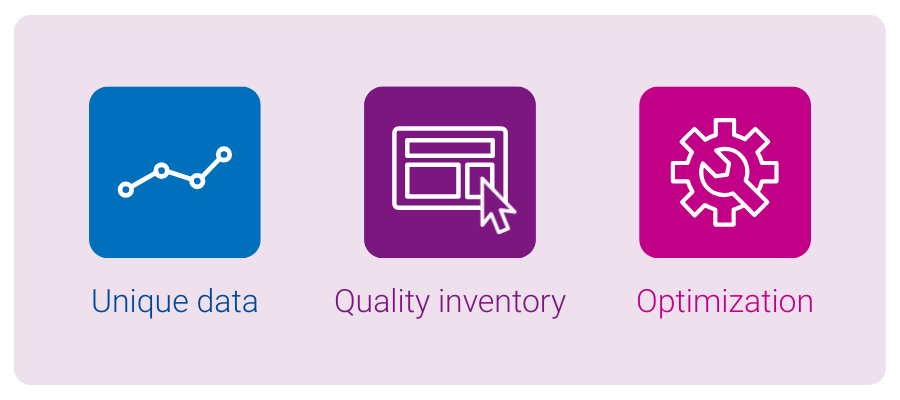
Unique data, quality inventory, and optimization.

This shift reflects a broader move away from probability-based buying toward outcome ownership, where AI-driven systems are measured not on activity, but on results.

3. Activation and measurement finally shared the same stage

Activation and measurement are now coming together around shared data and identity. CES 2026 marked a turning point where closing the loop felt achievable, not aspirational. Both the buy-side and sell-side face pressure to show that media investment drives outcomes.

Agentic AI was a quiet driver of this optimism. As AI agents increasingly manage activation decisions in real time, marketers need measurement systems that can keep up. That requires a shared data and identity foundation. One that allows AI-driven actions to be evaluated against outcomes consistently, across channels and partners.

In healthcare, accuracy is everything. Our clients need to reach patients and healthcare professionals in ways that respect privacy while driving meaningful outcomes. CES underscored that privacy, identity, and measurement must work in harmony. That’s how health marketers reduce risk and increase the likelihood that every message leads to better care.

ExperianSheila Wirick, Sales Director, Health

Achieving that requires a consistent identity spine that connects planning, activation, and outcomes across channels. And that spine is strongest when it’s built on accurate, privacy-first data and audiences that understand people and households. That connection allows marketers to move beyond proxy metrics and evaluate performance based on tangible results. When campaigns and measurement rely on the same data foundation, AI-driven platforms can optimize toward outcomes such as new customers, account growth, or in-store activity, not just delivery metrics.
A man with four icons in a half circle around him that represent a tablet, magnifying glass, two people, and a chart.

That’s the connective layer that turns disconnected touch points into a measurable, outcomes-based system.

Three takeaways from CES 2026

  1. AI is maturing, but only for teams withaccurate, connected, privacy-first data that AI agents can act on responsibly.
  2. Curation is scaling, giving both humans and AI systems clearer paths to quality, control, and differentiation.
  3. Activation and measurement are aligning, allowing AI-driven decisions to be judged on outcomes, not assumptions.

We’re building for that world today. One where agentic AI operates on a trusted data and identity foundation, curation defines the rules, and outcomes determine success. With the right foundation and the deep data inputs, you can move faster, reduce risk, and let intelligence (human and artificial) work together to deliver results that last long after the neon lights fade.

Connect with us

This site is protected by reCAPTCHA and the Google Privacy Policy and Terms of Service apply.


FAQs

What was the biggest shift discussed at CES 2026 for marketers?

The biggest shift was the move from hype to accountability. Marketers focused on data quality, intentional media buying, and outcome-based measurement rather than experimental technology.

Why did AI discussions emphasize privacy-first data?

Privacy-first data supports accuracy, compliance, and trust. AI models built on unreliable or opaque data struggle to reflect real consumer behavior and create risk for brands. At Experian, privacy and compliance are built in. Every data signal, attribute, audience, and partner goes through our rigorous review process to meet federal, state, and local consumer privacy laws. With decades of experience in highly regulated industries, we’ve built processes that emphasize risk mitigation, transparency, and accountability.

How does curation help reduce programmatic complexity?

Curation simplifies buying by pairing premium inventory with specific audience and performance goals. This approach reduces waste and creates clearer, more repeatable buying paths. With the acquisition of Audigent, Experian is now more than just a premier data provider. We’re also a full-service curation partner. Together, we deliver end-to-end programmatic curation across data, inventory, and optimization, helping brands and publishers unlock smarter, more scalable media strategies.

What does it mean to align activation and measurement?

It means using the same identity and data foundation to plan campaigns and evaluate results. This alignment allows marketers to measure success based on business outcomes, not just delivery metrics. With Experian, marketers can plan, reach, and measure in a connected cycle. Every impression is measurable. Every audience is accurate. Every decision is powered by data ranked #1 in accuracy by Truthset.

Why is identity central to all three CES themes?

Identity connects data across channels and stages of the customer journey. It enables accurate AI, effective curation, and consistent measurement within one system. Experian delivers identity resolution at the scale, accuracy, and compliance required by the world’s largest enterprises. Our solutions are:
Built on trust: Backed by 40+ years as a regulated data steward and rated #1 in data accuracy by Truthset, so you can act with confidence.
Powered by our proprietary AI-enhanced identity graph: Combining breadth, accuracy, and recency across four billion identifiers, continuously refined by machine learning for maximum accuracy.
Seamlessly connected: Pre-built data integration with leading CDPs, DSPs, and MarTech platforms for faster time to value.
Always up to date: Frequent enrichment and near-real-time identity resolution through Activity Feed for timely personalization and more responsive customer engagement.
Privacy-first by design: Compliance with GLBA, FCRA, and emerging state regulations baked in at every step, supported by rigorous partner vetting.


Latest posts

Loading…
Reach audiences with smarter contextual targeting

Contextual targeting is having a comeback, and it’s smarter, sharper, and more strategic than ever before. By 2030, annual contextual advertising spend is anticipated to reach $562 billion! As marketers move away from cookie-based targeting and adjust to a privacy-first digital world, contextual advertising is becoming one of the most effective ways to reach engaged audiences. Unlike the basic contextual keyword targeting of the past, today’s contextual strategies are built on data, machine learning, and deep audience insights. Experian, with Audigent, plays a key role in powering this evolution, enabling marketers to execute contextual campaigns with the precision, performance, and compliance needed for today’s environment. Let’s talk about how advertisers are reaching audiences in a changing advertising era with smarter contextual targeting. What is contextual targeting? Contextual targeting, by definition, is a cost-effective, privacy-safe way to engage audiences based on what they’re reading or watching in the moment without relying on personal identifiers. It places ads on webpages that contain content relevant to your product or service. Contextual targeting vs. behavioral targeting The concepts of contextual and behavioral targeting are commonly confused. Both aim to deliver relevant ads, but their methods differ significantly.  Let’s break it down. Behavioral: Based on online behaviors Behavioral targeting builds user profiles based on factors like browsing history, clicks, and purchases, tracking users across platforms using cookies and device IDs. For example, if someone researches new SUVs on multiple sites, they might see car-related ads long after they’ve stopped actively looking. While 68% of consumers say they’re concerned about how their data is used in advertising, marketers have the opportunity to build trust through better targeting with Experian. We help brands meet rising consumer expectations with responsible, privacy-forward behavioral data and targeting options that enable you to reach audiences effectively while aligning with your privacy and control needs. Contextual: Based on content and environment Behavioral targeting will continue to play a valuable role in personalized marketing strategies, but contextual targeting is a compelling alternative or complement for strong performance in a privacy-safe, scalable, cost-conscious way. Contextual targeting focuses on the ad environment. It analyzes the page's content, such as keywords, tone, and structure, and serves ads that align with that context without personal identifiers or user tracking.  With Experian Marketing Data, you can enhance contextual targeting further by layering in data about who’s likely to be on the page. That combination of content signals and audience intent creates smarter, more privacy-compliant campaigns that perform better. Innovations in contextual targeting In its early form, contextual targeting depended on simple keyword matches. While functional, it lacked nuance and often resulted in broad or irrelevant placements.  Today, the approach is far more intelligent. Thanks to AI, machine learning, and natural language processing (NLP), platforms can now assess the full context of a webpage, analyzing tone, sentiment, structure, and content depth to determine the best ad match. Contextually-Indexed Audiences Experian’s Contextually-Indexed Audiences take contextual targeting one step further by analyzing traffic from websites and mobile applications to identify the types of frequent visitors to those pages with the power of rich consumer insights. Instead of simply showing up on relevant pages, brands can reach pre-qualified audiences mapped to those environments, combining intent, content, and data-driven strategy in a single solution. This is where contextual targeting is headed and why it's no longer just an alternative to behavioral but a strategic advantage in its own right. A privacy-first future Even as third-party cookies remain in use, their long-term reliability is uncertain, and the industry continues moving toward solutions that don’t depend on personal identifiers. Laws like the General Data Protection Regulation (GDPR) and California Consumer Privacy Act (CCPA) have led advertisers to rethink how they engage audiences, shifting focus from individual tracking to content and context. With modern tools, advertisers can use contextual targeting programmatic strategies to reach audiences in privacy-compliant ways that still deliver high performance. Programmatic platforms like demand-side platforms (DSPs) now offer pre-built contextual segments by industry, interest, seasonality, and more.  In a few clicks, marketers can launch campaigns that align with content environments where consumers are already engaged without behavioral tracking. For brands looking to future-proof their media strategies, contextual is one of the few options that checks every box. Why more marketers are using contextual targeting Contextual targeting can help you grow your audience, drive web traffic, boost visibility, and increase conversions as data privacy regulations grow stricter worldwide.  Here’s a deeper dive into the benefits of this targeting strategy. Connect with ready-to-engage audiences One of contextual targeting's greatest advantages is the ability to meet consumers exactly where and when they’re most receptive. It places your ads on pages where they naturally add value to the user experience. When someone is actively reading or watching content about a specific topic, they’re already in the right mindset, which makes your ad feel more like a helpful recommendation than an interruption.  For example, if someone is reading a blog post comparing hiking backpacks, they’re far more likely to engage with an ad for outdoor apparel or trail shoes than one for an unrelated product like kitchenware. Drive sales and revenue while lowering costs Another draw of contextual targeting is its affordability for brands with limited budgets. It doesn’t require third-party data, identity graphs, or tracking infrastructure, so it’s easier on your media budget. By aligning ads with page context, brands can also see real business results, such as: Lower cost per thousand impressions (CPM): Since contextual ads are served based on the content of the page rather than user profiles, they often have a lower price tag — especially in verticals where access to behavioral segments may be more competitive. Reduced cost-per-acquisition (CPA): More relevant impressions mean fewer wasted clicks and better ROI. Lower cost-per-click (CPC): On networks like Google Display, CPCs for contextually targeted ads can be as low as $0.45, especially in e-commerce and consumer goods sectors. Higher conversion rates: Ads placed in relevant environments outperform generic placements, which increases the likelihood of action and conversion. Higher lifetime customer value (LTV): Users who arrive at your site from contextually aligned ads are more likely to convert and become repeat customers, driving long-term revenue. Quick and easy setup, built to perform Contextual campaigns can also be launched quickly, often within a day, and produce immediate results.  One powerful option is Experian’s Contextually-Indexed Audiences, which combines real-time analysis from over two million websites with access to more than 1,400 trusted audience segments. Available through top demand-side platforms’ contextual marketplaces and Audigent private marketplaces (PMPs), this solution offers a scalable way to reach high-intent consumers without cookies or IDs.  Getting started is simple. With a few inputs like relevant topics, keywords, or content categories, you can activate ads in environments where your audience is already engaged. And the best part? The ease and speed to launch doesn’t mean you’re sacrificing results. Because your ads show up alongside content your audience is already interested in, they feel timely and relevant, which leads to more clicks, stronger engagement, and better overall performance. Personalized experience based on known interest Consumers crave personalization. In fact, Deloitte conducted a 2024 study that found 80% of consumers want personalized brand experiences and spend 50% more with the ones that do. Contextual targeting meets that expectation by delivering relevance in the moment without tracking users’ online behavior.Experian’s Contextually-Indexed Audiences use contextual cues across the web to find common sets of audiences and identify where high-intent audience segments tend to show up. This helps advertisers deliver relevant, privacy-safe messaging to consumers who are more likely to engage, thereby building trust, capturing attention, and increasing performance while respecting user privacy. Brand safety Contextual targeting even helps brands avoid reputational pitfalls. With the help of AI and NLP, today’s contextual tools can assess what a page says and how it says it. That means you’re not just protecting user privacy but also your brand by ensuring your ads appear in relevant, trustworthy environments that reflect your values. Contextual targeting examples Contextual targeting works across nearly every industry, helping brands connect with audiences based on the content they’re consuming in the moment.  Here are a few examples of this in action across verticals. Contextual targeting for automotive buyers Most car buyers don’t just walk onto the lot. They arrive informed, having begun their journey online, researching makes, models, financing options, trade-in values, and credit requirements. It’s during this discovery phase that contextual targeting shines. Advertisers in the automotive space can serve ads alongside car reviews, dealership comparisons, or articles about electric vehicle tax credits, connecting with shoppers actively gathering information and signaling strong purchase intent. When your ad appears in the middle of that research journey, it feels like the next logical step. Contextual targeting also helps local dealerships and national brands stay top of mind during key decision-making moments without relying on third-party cookies. Contextual targeting for first-time parents New parents are one of the most information-hungry audiences online. From sleep training and stroller reviews to feeding schedules and baby-proofing tips, they consume a massive amount of content across various topics. That content provides a rich canvas for contextual targeting. Brands selling baby gear, wellness products, insurance plans, or parenting services can place ads on relevant articles and forums, connecting with parents when they’re researching their options and making purchase decisions. Contextual targeting for political campaigns Contextual targeting helps political advertisers connect with voters in relevant, mission-aligned environments. In a time when misinformation and divisiveness can influence public perception, maintaining this control is more critical than ever. With contextual targeting, campaigns can place their ads alongside trustworthy, high-quality content that addresses issues relevant to their supporters, whether it’s local policy, national news, or editorial commentary aligned with their platform. Advertisers can also avoid content that may contradict their message or brand values. The future of contextual targeting While Google no longer plans to fully deprecate third-party cookies, the industry has already moved forward. Most marketers have invested in cookieless solutions, and that momentum isn’t slowing down.  As contextual targeting becomes even more essential to future-proofing media strategies, its effectiveness depends on the quality and responsibility of the data behind it. That’s where Experian leads the way. Experian Marketing Data as the foundation At the core of Experian’s contextual targeting capabilities is Experian Marketing Data: a rich, privacy-compliant data set built from verified offline sources. This foundational data powers everything we do and fuels the full suite of Experian’s audience and targeting solutions. Marketing Attributes and Audiences One of the key products built from this data is Marketing Attributes, which transforms raw information into detailed, privacy-safe variables like lifestyle preferences, financial behaviors, and media habits. These attributes form the building blocks of Experian Audience solutions, allowing you to create highly specific segments tailored to your goals. When applied to contextual targeting, these segments help you align your messaging with the types of content your ideal audiences are consuming in real time. We’ll help you activate contextually relevant campaigns using real audience insight to place the right message in the proper environment at the ideal moment. Contextually-Indexed Audiences Powered by Experian Marketing Data, Contextually-Indexed Audiences brings a new level of precision to contextual targeting. By analyzing traffic from over two million websites and apps, we offer access to 1,400 audience segments (like luxury shoppers or frequent travelers) that are most likely to visit specific content. This lets you place your message in environments where your target customers already are, combining contextual relevance with data-driven intent. It’s a smarter, privacy-safe way to reach the right people without relying on cookies or user tracking. You can activate these audiences instantly through the top demand-side platform’s contextual marketplace or partner with Audigent to create a custom PMP. A PMP offers more control and flexibility and allows you to enhance campaign performance with additional performance optimization capabilities and activation across any media-buying platforms. Experian collaboration with Audigent and Peer39 Experian and Audigent partner to deliver SmartPMPs, or private marketplace deals that give advertisers access to premium inventory and privacy-first data activation in one streamlined solution. What makes this partnership unique is Audigent’s supply-side integration. Instead of only running audience segments through the DSP, SmartPMPs pair Experian’s high-performing audiences with curated inventory from thousands of publishers, all accessible through a single deal ID. This supply-side approach unlocks: Better reach across CTV, display, video, and more Stronger performance through real-time supply optimizations Personalized campaigns that don’t rely on cookies or user-level identifiers We’ve also partnered with Peer39 and Audigent to expand contextual targeting capabilities further. These partnerships make it possible to match Experian syndicated audience segments, including geo-indexed and behavioral data, to contextual signals in real time.  Advertisers can now run fully cookieless campaigns with exceptional scale and performance by indexing Experian Marketing Data through our identity graph and activating through platforms like Audigent’s Hadron ID or Peer39’s integrations.  In one beta test with Audigent, a major national advertiser used this solution to run a 15-day campaign that exceeded CTR benchmarks by 25% with no cookies or IDs. Talk to an Experian team member today The future of digital advertising is about trust as much as performance. Turn to Experian for help reaching your audience in the right environments using ethically sourced, privacy-first data. We help brands run scalable, contextually aligned campaigns built for today’s privacy landscape and tomorrow’s performance goals. With tools like Marketing Attributes, Contextually-Indexed Audiences, and Audigent PMPs, we make it possible to connect meaningfully without crossing privacy boundaries. Let’s talk about how we can help you lead the way. Latest posts

Jun 30,2025 by Experian Marketing Services

Inside Experian’s solutions for SSPs with Yieldmo

Supply-side platforms (SSPs) are expected to deliver more than inventory—they’re being asked to support sell-side targeting strategies, campaign results, and proof of performance. To meet that demand, SSPs need more than access to inventory. They need better data, better tools, and a way to bring it all together. Experian’s solutions for SSPs We built Experian’s solutions for SSPs with that demand in mind. By combining identity resolution, audience targeting, and third-party measurement, we help platforms move beyond basic transactions. Whether you’re doing sell-side targeting, supporting direct deals, or looking to support campaign validation, our tools make it easier to create value for buyers—and keep them coming back. Our solutions that help SSPs: Resolve identity across digital touchpoints using our industry-leading Digital Graph Build differentiated audiences using over 2,400 Experian Audiences and Partner Audiences in Audience Engine Support advertiser-direct relationships with tools to create, activate, and host custom segments Measure real outcomes like in-store visitation and sales through Outcomes, our third-party validated reporting suite Together, these capabilities allow SSPs to produce data-driven deals, increase addressability, and meet buyer demand for smarter, more measurable media. Campaign snapshot: Yieldmo + Experian Yieldmo, an advertising platform known for its creative formats and data-informed approach, has already put this solution to work. Here’s how they built a custom strategy for a major athletic retail client using Experian's solutions for SSPs. The challenge: Drive in-store traffic and reach new buyers Yieldmo supports a leading athletic retailer’s seasonal campaigns focused on in-store traffic. This advertiser wanted to reach new buyers—specifically those who might otherwise shop with a competitor. To do this, they needed access to strong audience segments with reliable data and the flexibility to act quickly across channels. This was the first time Yieldmo applied Experian Audiences to this retailer’s campaigns. The stakes were high: the client was looking for better in-store outcomes and a more streamlined activation workflow. The solution: Experian's activation solution for SSPs Using Experian’s Audience Engine, which includes our proprietary and third-party data marketplace, Yieldmo built a flexible, high-performing media plan that spanned display inventory and included both conquesting and primary in-store shopper segments. The team selected and activated: Apparel and footwear audiences built from Experian and partner data providers In-store shopper segments targeting retail behavior signals Competitive purchasers to capture likely buyers from other athletic brands Our data marketplace allowed Yieldmo to combine Experian Audiences with Partner Audiences from providers like Alliant, Circana, Sports Innovation Lab, and Webbula—all in one place. Manual audience creation used to take days. Now, Yieldmo can build and activate campaigns through a streamlined, self-serve workflow. By working in the Audience Engine platform, Yieldmo was able to avoid multiple contracts and manual requests. They filtered audiences by brand, tailored segments to their goals, and launched without delays. “Experian’s data marketplace in Audience Engine fills a critical gap—letting us quickly search by brand, build smarter conquest segments, and activate custom audiences fast.”Abby Littlejohn, Director of Sales Planning, Yieldmo The results: Expected lift in store visits While final in-store lift results are pending, the early performance metrics are promising: Click-through rates are at and above historical benchmarks across both conquesting and primary shopper segments. Using Audience Engine’s self-serve tools, Yieldmo created audiences faster and more easily. They reduced their workload by minimizing the need for manual data wrangling. “We include Experian audience segments in 80% of formal RFPs. Between contract simplicity, data quality, and campaign results, Experian has become our go-to for third-party audience targeting.”Nelson Montouchet, AVP, Strategic Partnerships, Yieldmo Download the full case study Bring this to your platform Whether you’re looking to monetize more effectively, build deeper advertiser relationships, or stand out with sell-side targeting offerings, we designed Experian’s solutions for SSPs to do exactly that. With our industry-leading Digital Graph, over 2,400 syndicated audiences, partner data, flexible self-serve tools, and outcome-based measurement, SSPs can now move faster and go further—without compromising scale or precision. Get in touch with our team Latest posts

Jun 25,2025 by Experian Marketing Services

Less hype, more action: Three trends from Cannes Lions 2025

After another week under the sun at Cannes Lions 2025, one thing is abundantly clear: our industry is done talking about possibilities — it’s ready to act. From speaking engagements to packed suite meetings, and even stateside through our “Can’t Cannes” activations, the appetite for change was real — and we were right at the center of it. A front-row seat to innovation Experian made a powerful impact across the Croisette, partnering with Audiostack, Basis, Infillion, IQVIA, Magnite, NextRoll, Odeeo, OpenX, The Female Quotient, and the Unplugged Collective x The Digital Marketer, to contribute to some of the week’s most insightful conversations. Our thought leaders were everywhere—on stage, in studio interviews, at executive roundtables—offering a clear voice on retail media growth, pharma advertising disruption, AI innovation, and identity-driven personalization. Three themes that defined the week 1. AI gets real If 2024 was the year of AI buzz, then 2025 is the year AI found its footing. Conversations shifted from “what if” to “what now.” While the promise of AI was front and center, conversations with clients and partners highlighted that we’re still in the foundational phase. Real-world applications—from creative optimization to predictive segmentation—are gaining traction, but long-term value will depend on robust data architecture and trustworthy identity frameworks. MiQ and PMG debuted AI-integrated platforms that demonstrated how AI can automate creative, optimize budget allocation, and personalize media in real time. AI has moved from sidekick to strategist. "Last year it was all about AI, but in a very general sense. This year, it’s about specific applications — a clear sign AI is evolving from a talking point into product.”Budi Tanzi, VP, Product 2. Outcomes > impressions Outcomes may have been a buzzword at Cannes, but as several industry leaders pointed out, simply saying “we drive outcomes” isn’t enough—it risks sounding like table stakes. In today’s performance-driven environment, what matters is how companies define and deliver those outcomes in unique ways. The most compelling conversations weren’t about generic promises, but about clear strategies: challenging assumptions, leaning into strengths, and making specific choices that tie data, media, and technology to measurable impact. "By using consistent identity across planning, activation, and measurement, marketers can connect ad exposure to real-world outcomes—whether that’s an online conversion, an in-store visit, or a new customer relationship."Chris Feo, Chief Business Officer 3. Curation isn't just a tactic Curation is quickly becoming the industry’s preferred approach to cutting through complexity. As marketers contend with signal loss and inconsistent inventory quality, the shift from broad access to intentional activation is gaining momentum. At Experian, we see curation not just as packaging, but as strategic alignment—where identity, data, and inventory come together in purpose-built environments that reduce waste, enhance safety, and drive performance. "Supply-side data activation and optimization, aka “curation,” is an alternative to the traditional approach to data activation. Unlike the traditional DMP-to-DSP activation flow, curation allows buyers to leverage supply-path data more directly. The upshot? Improved performance and pricing for media agencies and brand advertisers."Drew Stein, Managing Director, Audigent Bringing the Cannes experience stateside Not everyone can make it to the South of France—so we brought Cannes to them. Our “Can’t Cannes” events in the U.S. offered local clients a first-class experience filled with insights and networking, minus the jet lag. Final takeaways This year’s festival made one thing clear: real progress requires more than innovation; it requires integration. And that’s where Experian is focused—connecting identity to activation, and data to outcomes, in ways that are practical, scalable, and privacy-resilient. If I had to sum it up? AI is progressing from abstract to application Curation beats clutter Partnership is power And everyone’s aligned around performance We’re grateful to have been part of these conversations and even more excited about where they’ll lead next. Let’s continue the conversation If you're exploring how to connect identity to performance, or simplify the way you activate, measure, and grow, we’d love to talk. Latest posts

Jun 25,2025 by Dave Rosner, VP, Marketing, Audigent

Subscribe to our newsletter

Enter your name and email for the latest updates

This site is protected by reCAPTCHA and the Google Privacy Policy and Terms of Service apply.

About Experian Marketing Services

At Experian Marketing Services, we use data and insights to help brands have more meaningful interactions with people. As leaders in the evolution of the advertising landscape, Experian Marketing Services can help you identify your customers and the right potential customers, uncover the most appropriate communication channels, develop messages that resonate, and measure the effectiveness of marketing activities and campaigns.

Visit our website

Subscribe to our newsletter

Stay up to date on the latest industry news and receive expert tips from our marketing experts.
Subscribe now!