At A Glance
Agentic AI is moving faster through media planning than most organizations can define what it means for their business. Vendors are pitching it, conferences are built around it, and marketing teams feel pressure to move now. Before automation reallocates budget or reshapes a customer journey, marketers need three things in place: a shared definition of agentic AI, an identity foundation the system can trust, and independent measurement that keeps buying and performance separate.Originally published in The Current
Agentic media planning has gone from emerging idea to assumed industry direction in a single cycle. The instinct to move fast on new technology makes sense. When a whole industry agrees on something quickly, though, the definitions, limits, and trade-offs that matter most tend to get skipped, and “agentic AI” still means very different things to different teams. Organizations building toward it without a shared definition, risk creating incompatible systems under the same label. There’s foundational work to do before automation takes the wheel.
What does agentic AI mean in media?
Much of the current enthusiasm around agentic AI conflates the technology with a specific tool. In many conversations, “agentic” has become shorthand for highly autonomous generative AI, as though large language models (LLMs) were the entire system rather than one component within it.
That framing understates what agentic systems are. Agentic systems are decision frameworks, not models. They coordinate predictive models, generative tools, and non-AI logic to move from signal to recommendation to action.

This pattern already exists outside media. Starbucks’ “Deep Brew” connects real-time purchase signals with personalized offers while informing what products stores stock and promote. The system coordinates customer demand with operational decisions across the business. Layering prompt engineering onto an LLM is a different thing entirely.
Without a shared definition of what “agentic” means for your organization, teams risk optimizing different visions of the same idea:
All may qualify as agentic, but without a shared definition, you can’t build toward the same goal. That’s why defining the problem statement comes first, not last.
Why do acting systems raise the stakes?
Here’s what sets agentic systems apart from earlier waves of automation: they don’t just inform decisions; they execute them. Programmatic has always operated within guardrails, executing and optimizing based on defined parameters. Agentic systems work more like navigation. They determine direction and weigh trade-offs against a wider set of context. When an agent reallocates budget mid-flight, suppresses an audience segment, or swaps creative, the quality of the identity and business logic behind that decision determines the outcome.
Here’s what sets agentic systems apart from earlier waves of automation: they don’t just inform decisions; they execute them.
Apply that framework to media. An agentic system operating on incomplete identity data or stale signals won’t slow down to account for the gap. It optimizes faster in the wrong direction. The coordination layer needs to weigh reach, incrementality, audience fatigue, and margin before it shifts spend, and that requires inputs that are accurate, current, and governed. Accountability and oversight aren’t optional anymore; they need to be built into the design from the start.
Watch our Curated Couch session on agentic media planning
Why should measurement stay separate from buying logic?
As autonomy grows in media systems, a structural problem emerges: the system shouldn’t measure its own performance.
When buying logic and measurement logic live in the same loop, performance numbers can look strong simply because they’re optimized to the system’s own signals. Success stops being defined externally and starts being defined internally. Agentic models trained on this pattern learn from the signals they favor, optimizing toward the outcomes they’re best equipped to observe. Performance looks good inside the system, and reflects a narrower view of what’s actually happening.

Independent measurement gets framed as friction on automation more often than not. In reality, it’s what lets automation to scale responsibly. Incorporating independent measurement signals into agentic decision-making, while maintaining meaningful separation from buying logic, produces an objective view of performance, one that can be compared consistently across systems rather than optimized within a single one. That distinction matters when you need to explain results to a client, stakeholder, or regulator.
AI as coordination layer, not an infrastructure replacement
Nothing here slows down automation. Independent measurement doesn’t add friction to execution but builds confidence in the outcomes those decisions generate. The organizations that will benefit most from agentic media won’t necessarily be the ones that adopt it fastest, but those that take the time to define where trusted autonomy creates measurable value and where human judgment needs to stay in the loop.
Before automation reallocates dollars or reshapes customer journeys, the data model has to hold up under scrutiny.
Trust in data, systems, and decision-making processes becomes the real constraint as agentic systems move from insight to action. That trust doesn’t come from autonomy alone, but it comes from governed data and decisions that can be explained, audited, and defended. Every brand that has operationalized automation at scale has learned the same lesson: before automation reallocates dollars or reshapes customer journeys, the data model has to hold up under scrutiny.
How does Experian help you build a defensible foundation?
Experian’s approach to AI in marketing starts from the same principle: intelligence is only as reliable as the foundation it’s built on.
We have spent decades building and governing data in regulated industries. That experience is what makes our foundation AI-ready: not just technically capable but built to withstand the scrutiny that responsible automation requires.
2026 State of advertising report
Our 2026 State of advertising report brings together perspectives from 14 leaders operating across key parts of the advertising ecosystem to show how shifts in AI, commerce media, healthcare, and more, are taking shape in practice.
Download our 2026 State of advertising report and hear from Scott Bender, Head of Publisher & Platform Partnerships, Newton Research, on how AI in advertising is reshaping planning, activation, and measurement.
The data foundation comes first
Agentic AI will reshape how media is planned and bought. That shift is happening now, and the opportunity is significant. But the advantage belongs to organizations that build on a foundation their systems, partners, and stakeholders can trust. Before automation runs, the inputs must be defensible, identity must be accurate, measurement must be independent, and the problem statement must be clear. Get those things right, and automation becomes more powerful. Skip them, and you’re simply moving faster in the wrong direction.
About the author

Budi Tanzi
SVP, Product, Experian
Budi Tanzi is the Senior Vice President of Product at Experian Marketing Services, overseeing all identity products. Prior to joining Experian, Budi worked at various stakeholders of the ad-tech ecosystem, such as Tapad, Sizmek, and StrikeAd. During his career, he held leadership roles in both Product Management and Solution Engineering. Budi has been living in New York for almost 11 years and enjoys being outdoors as well as sailing around NYC whenever possible.
FAQs
Agentic AI refers to systems that move from signal to recommendation to action with a high degree of autonomy. In media, this means an agent can reallocate budget, adjust audience targeting, or swap creative mid-flight based on real-time signals. Unlike standard programmatic systems that execute within predefined guardrails, agentic systems function more like a navigation layer, coordinating across data inputs, predictive models, and business rules to make directional decisions.
Data quality matters more as media automation becomes more autonomous because autonomous systems don’t slow down to account for bad inputs. If an agentic media system operates on incomplete identity data or stale audience signals, it optimizes faster toward the wrong outcomes. The quality of the identity foundation, the accuracy of audience attributes, and the reliability of measurement inputs all become more consequential, not less, as human oversight is reduced.
Programmatic executes and optimizes within defined parameters whereas agentic systems function at a higher level of abstraction, weighing reach, incrementality, fatigue, and margin before determining where and how to shift spend. Programmatic is the engine. Agentic AI, when built correctly, is the navigation layer that determines direction based on wider context and business objectives.
Measurement should be kept separate from buying logic in agentic systems because when a system measures its own performance, it optimizes toward outcomes it’s best equipped to observe. The definition of success becomes internal rather than external, and performance numbers may look strong while reflecting a narrower view of what’s working. Independent measurement, kept meaningfully separate from buying logic, produces results that can be compared across systems and explained to stakeholders without ambiguity.
Experian’s Offline Graph and Digital Graph provide a privacy-first identity foundation covering more than 250 million U.S. consumers and 4.2 billion digital IDs. Experian’s Marketing Data adds more than 5,000 attributes per audience, and Experian’s outcomes measurement keeps performance signals independent from buying logic.
Latest posts
Just as our dinner plans are growing more ambitious, so are our data strategies. Today’s data marketplace operators are cooking up a complex menu of campaigns.
Outcome-based TV measurement ties ad performance to business results. Discover its benefits and applications for smarter media planning.
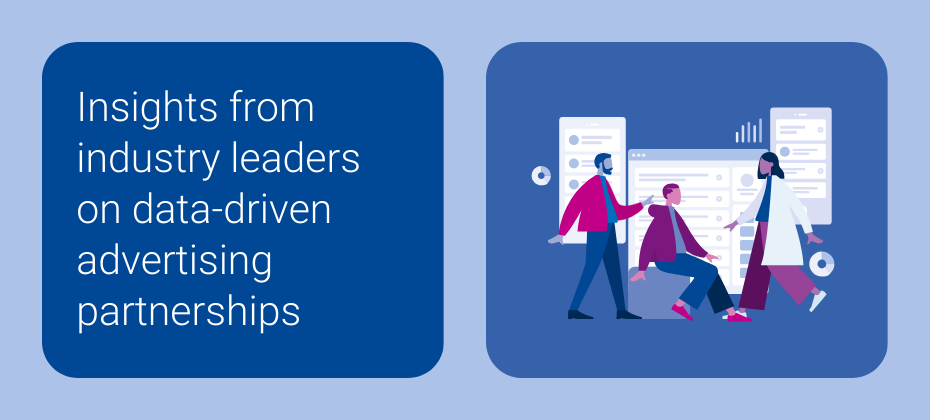
We spoke with industry leaders from Ampersand, AppsFlyer, Audigent, Comcast Advertising, Fox, ID5, and Snowflake to gather insights on how strategic collaboration can expand audience reach, improve targeting precision, and drive measurable advertising success.