Loading...

The end of the Wild West in third-party data 

Published: October 30, 2025 by Jeremy Meade, VP, Marketing Data Product & Operations

At A Glance

Third-party data has moved from a fast-growth, loosely governed environment into one defined by trust, transparency, and compliance. Marketers are now looking for partners with institutional experience and rigorous data standards—not opportunistic providers chasing short-term gains. The brands that win will treat responsible data sourcing as the foundation of their customer strategy.

How third-party data has changed and why it matters in 2025

For years, third-party data operated in an expansive, lightly regulated marketplace: fast-moving, high-growth, and filled with players eager to capitalize on digital marketing’s demand for audience insights.

That era is over. Regulatory scrutiny, stricter compliance standards, and rising consumer expectations have already transformed the market. Today, third-party data belongs to partners with proven expertise and built-in compliance. This isn’t a space for opportunistic newcomers; it’s one that rewards long-term commitment and trust.

Even the rapid rise of retail media networks (RMNs) reflects this shift. These platforms are built on long-standing, trusted relationships between brands, retailers, and data partners, utilizing that foundation in new ways to reach audiences responsibly and effectively.

The best providers have already made this transition; those still “shifting” are catching up.

From growth to governance: A market defined by accountability

The third-party data ecosystem has matured. After years of rapid expansion and recalibration, the market has stabilized around a new standard: data quality and regulatory accountability.

Third-party data enriches first-party insights with attributes such as income, gender, and interests that round out the customer view. But when the industry grew unchecked, unreliable providers diluted quality and trust. This resulted in a decline in the overall value and reliability of the third-party data marketplace.
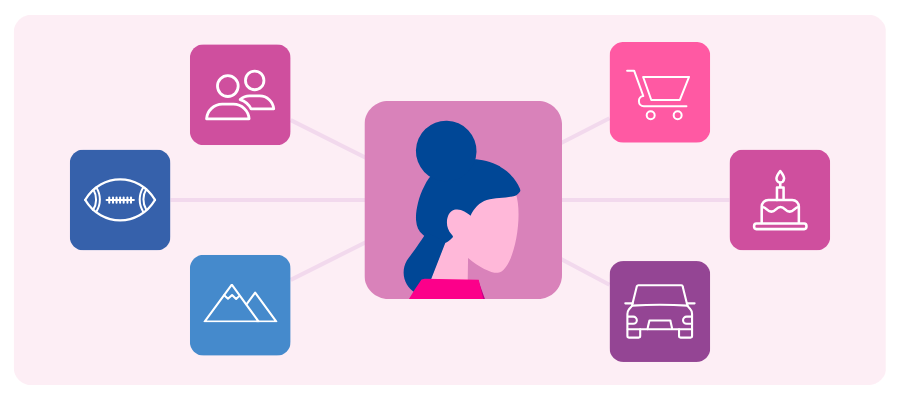
Third-party data enriches first-party insights with attributes such as income, gender, and interests that round out the customer view.

That breakdown led directly to today’s privacy laws, now active across more than 20 U.S. states and numerous countries worldwide. These regulations reflect a permanent consumer expectation: relevance delivered responsibly. Consumers aren’t rejecting personalization; they’re rejecting how it’s been done in the past. They still want relevant, tailored experiences, but they expect brands to deliver them through ethical, transparent data practices.

Does third-party data still matter in a privacy-first era?

Third-party data isn’t disappearing, if anything, it’s become more important. Brands will always need additional insight to deepen customer understanding; first-party data alone only reflects what’s already known.

The industry has entered a mature phase where data quality and compliance are table stakes. The companies leading today built their data infrastructure on rigorous standards, regulatory foresight, and transparent governance.

That same foundation powers the next wave of innovation, including the explosive growth of RMNs. RMNs rely on responsibly sourced third-party data to enrich shopper insights, validate audiences, and extend addressability beyond their own walls. Trusted data partners make that expansion possible, connecting retail environments with broader media ecosystems while maintaining privacy and accuracy.

High-quality, compliant third-party data remains essential because it:

A magnifying glass icon

Fills knowledge gaps

Good third-party marketing data complements first-party insights with demographic, behavioral, and transactional context, providing the missing puzzle pieces to complete the full customer profile.

A target icon

Improves accuracy

Filling in gaps in customer understanding helps you identify, reach, and engage your customers more effectively. This helps improve the delivery of relevant messages and offers to your customers and prospects across channels.

An icon that represents interoperability

Builds connections

Third-party data helps brands build loyalty with consumers by speaking to their interests, and intent behind purchases.

An icon that shows an outline of three people with a star on top of the person in the middle

Fuels prospecting

Third-party data can help you find your best prospects. By enriching customer files, you can understand who your best customers are, and how to find more of them. By modeling this data, you can determine who your best customers are and source prospects similar to them.

Advancements in AI and machine learning are reshaping how this data is used across the ecosystem. What was once primarily a buy-side tactic is now expanding into the sell-side, where publishers and platforms are using data to curate, package, and activate audiences more intelligently. As AI enhances modeling accuracy and automation, third-party data will play an even greater role in connecting brands and consumers in more meaningful, privacy-conscious ways.

The bottom line: it’s not about having more data; it’s about having better, verified data you can trust.

How can you spot a trustworthy data partner?

The strongest third-party data partners demonstrate accountability through experience, infrastructure, and integrity.

Look for providers that:

A shield icon

Operate with clear data principles

Trustworthy partners publish and follow codified data principles that guide every step of data handling. Experian adheres to a set of global data principles designed to ensure ethical practices and consumer protection across all our operations.

A lock icon

Treat new privacy regulations as routine

For mature providers, evolving privacy laws are routine, not disruptive. At Experian, privacy and compliance have long been built in. Every partner and audience goes through Experian’s rigorous review process to meet federal, state, and local consumer privacy laws. Decades of experience have shaped processes that emphasize risk mitigation, transparency, and accountability.

Shaking hands icon

Stay deeply connected

Leading data companies maintain deep relationships with technology partners and industry and regulatory groups to ensure that ethical data practices are put into practice and their customers are aware of platform-specific regulations. Experian’s relationships with demand-side platforms (DSPs), supply-side platforms (SSPs), and even social platforms like Meta, ensures we are aware of any platform-specific initiatives that may impact audience targeting. We’re also active participants in many trade groups to ensure that the industry puts ethical data practices in place to ensure consumers still receive personalized experiences but their data usage and collection is opt-in, transparent and handled with their privacy at the center of the transaction.

Trophy icon

Have a proven track record in the industry

Longevity matters in a regulated and compliance-driven industry. Providers that have thrived through economic cycles and regulatory shifts are the ones equipped for the future. The ability to source high-quality third-party data is core to their business, not an afterthought. Our data is ranked #1 in accuracy by Truthset, giving our clients confidence that every decision they make is backed by the industry’s most reliable insights.

Why the future of third-party data depends on accountability

The third-party data industry has already crossed the threshold from expansion to accountability. The companies leading this era have established their credibility through governance and proof. The future belongs to providers that:

  • Build with regulatory foresight
  • Maintain rigorous quality assurance
  • Prioritize partnership over profit

The Wild West days are long gone. The third-party data ecosystem is now defined by stability, transparency, and shared responsibility.

Partner with Experian for data you can trust and results you can prove

When accuracy and accountability define success, you need a partner built on both. Work with the company that’s setting the standard for responsible data-driven marketing and helping brands connect with people in meaningful, measurable ways.

Get started

This site is protected by reCAPTCHA and the Google Privacy Policy and Terms of Service apply.


About the author

Jeremy Meade, VP, Marketing Data & Product Operations

Jeremy Meade

VP, Marketing Data Product & Operations, Experian

Jeremy Meade is VP, Marketing Data Product & Operations at Experian Marketing Services. With over 15 years of experience in marketing data, Jeremy has consistently led data product, engineering, and analytics functions. He has also played a pivotal role in spearheading the implementation of policies and procedures to ensure compliance with state privacy regulations at two industry-leading companies.


Third-party data FAQs

What is third-party data?

Third-party data is information collected by organizations that don’t have a direct relationship with the consumer. It supplements first-party data by adding demographic, behavioral, and interest-based insights.

Why are privacy regulations reshaping data practices?

Privacy regulations are reshaping data practices because consumers expect control over how their information is used. That expectation led directly to today’s privacy laws, now active across more than 20 U.S. states and numerous countries worldwide. These regulations reflect a permanent consumer expectation: relevance delivered responsibly. Consumers aren’t rejecting personalization; they’re rejecting how it’s been done in the past. They still want relevant, tailored experiences, but they expect brands to deliver them through ethical, transparent data practices. Laws like the CCPA and state-level privacy acts enforce this expectation, holding brands and data providers accountable for the ethical use of data.

Can brands still use third-party data safely?

Yes, brands can still use third-party data safely when sourced responsibly. Partnering with established, compliant providers like Experian ensures both legal protection and data accuracy. 

How does Experian ensure compliance with evolving privacy regulations?

Experian adheres to a set of global data principles designed to ensure ethical practices and consumer protection across all our operations. At Experian, privacy and compliance have long been built in. Every partner and audience goes through Experian’s rigorous review process to meet federal, state, and local consumer privacy laws. Decades of experience have shaped processes that emphasize risk mitigation, transparency, and accountability. Experian’s relationships with demand-side platforms (DSPs), supply-side platforms (SSPs), and even social platforms like Meta, ensures we are aware of any platform-specific initiatives that may impact audience targeting. We’re also active participants in many trade groups to ensure that the industry puts ethical data practices in place to ensure consumers still receive personalized experiences but their data usage and collection is opt-in, transparent and handled with their privacy at the center of the transaction.

What should marketers look for in a data partner?

Marketers should look for transparency, longevity, and evidence of compliance when looking for a data partner. The best partners can clearly explain how their data is sourced, validated, and maintained. Read Experian’s guide on how you can swipe right on the perfect data partner here.


Latest posts

Loading…
Syndicated audiences update: August 2023

Over the last few months, Experian has released new syndicated audiences to most major platforms supporting retail and travel. In this blog post, we’ll highlight some of these new audiences and how they can be used with other data from Experian to build the perfect audience to reach your customers and prospects. What separates Experian's syndicated audiences Experian’s 2,400+ syndicated audiences are available directly on over 30 leading television, social, programmatic advertising platforms, and directly within Audigent for activation within private marketplaces (PMPs).   Reach consumers based on who they are, where they live, and their household makeup. Experian ranked #1 in accuracy by Truthset for key demographic attributes.  Access to unique audiences through Experian’s Partner Audiences available on Experian’s data marketplace, within Audigent for activation in PMPs and directly on platforms like DirectTV, Dish, Magnite, OpenAP, and The Trade Desk. Household Expenditure audiences We’ve created new predictive audiences to help retailers reach consumers across 35 categories likely to spend within that category. A few categories include Apparel, DIY, Health, and more.  With the launch of these new audiences, we will retire our existing Household Consumer Expenditure, Online and Retail category audiences in the November Digital Master update. Who these audiences are for Our Household Expenditure audiences use data from multiple sources, providing brands with highly accurate purchase predictions and data that scales for digital execution. Household Expenditure audiences are an excellent solution for brands with new product lines or where targeting based on historical purchases lack signal brands seek. Building data from multiple data sources helps ensure high performance and accuracy and can illuminate trends in consumer shopping patterns. These trends can be used to help predict future shopping behaviors. How to refine our Household Expenditure audiences To refine your audience, you can combine this data with Experian’s demographic and household expenditure audiences to ensure you are reaching consumers. For example, suppose you’re an apparel brand launching a new line aimed toward women over the age of 40. In that case, you can use Experian’s demographic data to reach those women and layer in our household expenditure purchase predictor segment for women's apparel to reach their new target audience. Mobile Location audiences We’ve expanded our location database to include more locations and points of interest. With this new data, we could strengthen our existing mobile location audiences to broaden the reach, improve accuracy, and increase performance. We’ve created 11 new mobile location audiences with our new dataset that supports the retail and travel verticals. These new audiences include new shopping behaviors, including high-income and high-end shoppers and travel and entertainment behaviors, including visiting sporting arenas like MLB, NBA, NFL, and university stadiums. Who these audiences are for These audiences are for brands that want to reach consumers based on their location behaviors. Often valid for retail, travel, and entertainment brands, Mobile Location audiences provide brands with highly accurate data that shows previous intent and interest in critical locations. How to refine our Mobile Location audiences To refine your audience, you can combine your Mobile Location audience with Lifestyle and Interest data. For example, if you are creating an advertising campaign for a hotel near a university stadium for the largest game in the season, you could combine university stadium visitors with sports enthusiasts and in-market for travel to find consumers most likely to be interested in your campaign and staying at the hotel. Purchase-Based Transaction audiences For use cases where predictive audiences aren’t the best fit to reach the right consumer, such as targeting consumer’s historical purchases, we’ve created new purchase-based transaction audiences that utilize opt-in consumer transaction data across 29 retail categories, including apparel, home, lifestyle, health, food and beverage, and more. Who these audiences are for These audiences are a perfect fit for brands trying to reach consumers based on previous purchases. These audiences can be broken out by their spending patterns –   frequency of purchase and high spenders – and their response to advertising, including direct mail, email, inserts, and digital. How to refine our Purchase-Based Transaction audiences Combine these new audiences with Mosaic to fine-tune your audience based on their purchasing and lifestyle patterns.  Suppose you are a brand with a new line of home décor products launching and will utilize influencers to endorse your product line. In that case, you can use Experian’s purchase-based transaction audiences for high spenders in home décor and layer our Mosaic audience Influenced by Influencers to find consumers who are most likely to purchase and trust an influencer. We can help you discover and activate your perfect audience Our audiences are available in most major data and execution platforms. Visit our partner page for more information. Don’t see our audiences on your platform of choice? We can help you build and activate an Experian audience on the platform of your choice. Contact us Latest posts

Sep 08,2023 by James Esquivel, Product Marketing Manager

Identity resolution: A key ingredient for success in data clean rooms

The AdTech industry is buzzing with discussions about cookie deprecation and effective strategies to tackle it. One of the commonly suggested solutions is the utilization of clean rooms alongside responsibly sourced first-party data. Above all else, the industry recognizes the importance of respecting consumer data and complying with all privacy laws. Additionally, the industry acknowledges the need for a change in our historical practices. This shift benefits everyone involved, as consumer data is more secure than ever. Tremendous investments have been made to ensure the utmost security of consumer information. Clean rooms are one of the tools that enable companies to use data securely, ensuring the content that you see is as relevant as possible. Two ways the AdTech industry is addressing cookie deprecation The days of sending data directly to partners for usage or for using only third-party data for marketing efforts are gone. Now, the emphasis is on responsibly collecting first-party data and using clean rooms to enrich first-party data to enhance marketing efforts. First-party data The industry is starting to lean into first-party data gained through transparent means. This valuable information provides organizations with deeper insights into their customers, allowing for more personalized and effective interactions. By embracing the power of first-party data, either on its own or enriched via partner collaboration, you can cultivate stronger relationships, build trust, and deliver tailored experiences that resonate with your customers on a deeper level. Clean rooms Many data lakes and warehouses offer this service, ensuring their clients can not only store their data with them but can connect it with other partners in a secure environment and extract more information through the combined data sets versus their data on its own. Brands and their partners recognize that they need to work together, and a clean room provides a secure environment to share their first-party data without exposing their sensitive data to their partner. So, while we're losing third-party cookies, brands and partners can still get value from first-party data by using a clean room to generate audience insights, segmentation strategies, personalized experiences and offers, media plans, and measurement and attribution. Three ways data clean rooms can improve Data clean rooms are a great way to facilitate data collaboration while ensuring sensitive data is not exposed. Data clean rooms are not yet easy to use nor are they inexpensive. They require investment, both financially and resource allocation-wise, and you are not guaranteed to yield great match results. Let’s dive into three areas for data clean room improvement. High cost According to the IAB's State of Data 2023, nearly two-thirds of data clean room users spent at least $200K on the technology in 2022. In addition, one-third of data clean room users expect the price of data clean rooms to rise in 2023. The high cost of this solution can make it inaccessible to smaller companies in the advertising space. Resource intensive Nearly half of the companies using data clean rooms have a team of six or more dedicated to the technology, according to the IAB’s State of Data 2023, while nearly a third of companies using data clean rooms have 11 or more employees focused on the technology. Data clean rooms are not turnkey solutions. Inefficient matching Even if companies are using clean rooms does not mean that they are automatically going to achieve great success. Identity fragmentation, data hygiene, and differing identifiers can suppress client match rates in clean rooms, leading to significant investment and a lackluster output. How to get the most return on your clean room investment The finish line for data collaboration in clean rooms is not just having a relationship with a clean room. Instead, you should incorporate an identity resolution solution in your clean room. By adding an identity solution to your clean room, you can: Resolve and match all your identity data, regardless of the identity data that you or your partner have, giving you a larger data foundation to analyze. Generate more valuable insights and information, leading to a better experience for your customers. Join data sets to create smarter activation and targeting strategies and produce more holistic measurement. Experian can help you get started with identity resolution and data clean rooms If you are investing in data clean rooms, that means you are committed to the best in data practices. Experian recommends going the extra step and that you also invest in finding an identity resolution solution. By doing this, you can see better match rates. Experian offers this capability and has existing relationships with three clean room partners, Amazon Web Services, InfoSum, and Snowflake. In addition to collaborating in clean rooms, we offer collaboration in two other secure environments. Contact us today to discuss how we enable identity resolution in clean rooms or to chat about our other collaboration capabilities. Get in touch Latest posts

Sep 07,2023 by Dylan Rothenberg, Product Marketing Manager

Maximize ad targeting with supply-side advertising

Ongoing signal loss is driving marketers, agencies, and platforms to turn to supply-side advertising. By using first-party data from publishers and platforms, supply-side advertising has the potential to deliver high-quality audience and context for more effective ad targeting. The supply-side refers to the publishers and platforms that sell advertising inventory. These companies have access to first-party data about their users, which can be used to target ads more effectively. By tapping into supply-side advertising, you can overcome the challenges of signal loss and target ads more effectively. To shed light on this topic, we hosted a panel discussion at Cannes, featuring industry leaders from Audigent, Captify, Newsweek, Pubmatic, Truthset, and Experian. In this blog post, we'll explore how partnerships between supply-side channels and publishers are working to enhance advertising opportunities while balancing the need for transparency and control in programmatic ad buying. Shift toward supply-side advertising Traditionally, the demand-side dominated the programmatic media buying chain due to an abundance of supply. However, with the emergence of finite data and its interpretation, collaboration between supply-side technology companies and publishers is required to redefine these economics. It's no longer sufficient for the demand-side to blindly negotiate prices based on limited knowledge. Marketers can still define their target audience, but effective communication is key. This presents an opportunity for premium journalistic outlets to guide the industry's understanding of how data from the supply-side impacts media buying economics in the future. "Supply-side technology partnerships with publishers are now in a position to shape the economics of programmatic media buying as there is a finite amount of data. It’s crucial for supply-side technology companies to collaborate with publishers to shape these new economics. This presents an opportunity for premium journalistic outlets to provide guidance on how data from the supply-side can affect the future of media buying." matthew papa, svp, business & corporate development, captify Democratizing data from the supply-side Cookies haven't brought significant benefits to premium publishers. They mainly serve to retarget users from sites like The Wall Street Journal to advertising sites. This approach primarily serves the purpose of generating revenue. The elimination of third-party cookies presents an opportunity for premium publishers to shift this dynamic. By using their knowledge of first-party audiences, and using identifiers like Experian's LUID, publishers can own and understand their audience data, which can then be modeled. Here’s how publishers can win Establishing a connection with consumers and emphasizing the value exchange is essential to building trust. Determining what incentives and benefits consumers find meaningful will be crucial in gaining their opt-in. With consumers The Apple tracking transparency initiative, specifically the deprecation of IDFA signals, had significant implications for mobile app developers. Overnight, opt-in rates plummeted, causing a drastic decline in iOS ad monetization. To combat this, developers focused on demonstrating the value exchange to consumers—better ad experiences and personalized content. By articulating the benefits over a couple of years, opt-in rates increased from 10-15% to 30-40%. The key takeaway is the need to effectively communicate the value exchange to consumers. With partners Trust plays a crucial role in planning your first-party data strategy. Publishers, advertisers, and data partners highly value their proprietary data. However, there are concerns about how it's used, mishandled, or leaked in the ecosystem. Building trust between partners is essential. It's important to work with trustworthy partners who are agnostic, committed to innovative solutions, and globally oriented. These partners can help navigate the complexities of laws and regulations. Choosing the right partners is crucial in a world where first-party data is a key asset. "Power is shifting toward brands that have strong relationships with customers and possess first-party data. As the ownership of customer data becomes more important, it is crucial to establish a first-party data strategy to better serve customers and adapt to changing market dynamics."chip russo, president, truthset Balance probabilistic and deterministic data Focus on building trust with consumers and collaborating with reliable companies to share data. However, it's important to remember that achieving a 100% opt-in rate is unlikely. The cookie, which has become omnipresent, requires us to shift our strategic thinking. We need to consider both deterministic and probabilistic approaches instead of viewing them as mutually exclusive. The landscape will be fragmented, with some consumers opting in and others not. "Probabilistic and predictive audience data holds immense potential. With the power of AI, we can expect enhanced performance and efficacy in media campaigns. At Audigent, we firmly believe that this data will outperform deterministic data, making it an integral part of our strategy." drew stein, ceo, audigent Premium content Trust plays a crucial role in leading to premium content. By placing trust in the best media brands, data, and technology partners, we can expect to see improvements in media, journalism, and advertising. This shift may have a direct impact on the long tail of free natural resources, making it more challenging for them to thrive. However, this change is ultimately beneficial since it promotes higher-quality media experiences overall. "The homepage surface is making a comeback in the publishing industry, proving its value in establishing a direct connection with readers. While we acknowledge the importance of technology partnerships for addressability and identity, our core competency as a publisher remains outstanding journalism that captures and engages great audiences." kevin gentzel, cco, newsweek Watch our Cannes panel for more on supply-side advertising We hosted a panel in Cannes that covered supply-side advertising. Check out the full recording below to hear what leaders from Audigent, Captify, Newsweek, Pubmatic, Truthset, and Experian had to say. Watch now Check out more Cannes content: Our key takeaways from Cannes Lions 2023 Insights from a first-time attendee Four new marketing strategies for 2023 Exploring the opportunities in streaming TV advertising The future of identity in cookieless advertising Follow us on LinkedIn or sign up for our email newsletter for more informative content on the latest industry insights and data-driven marketing. Contact us today Latest posts

Aug 22,2023 by Hayley Schneider, Sr. Manager, Content Marketing

Subscribe to our newsletter

Enter your name and email for the latest updates

This site is protected by reCAPTCHA and the Google Privacy Policy and Terms of Service apply.

About Experian Marketing Services

At Experian Marketing Services, we use data and insights to help brands have more meaningful interactions with people. As leaders in the evolution of the advertising landscape, Experian Marketing Services can help you identify your customers and the right potential customers, uncover the most appropriate communication channels, develop messages that resonate, and measure the effectiveness of marketing activities and campaigns.

Visit our website

Subscribe to our newsletter

Stay up to date on the latest industry news and receive expert tips from our marketing experts.
Subscribe now!