Loading...

The end of the Wild West in third-party data 

Published: October 30, 2025 by Jeremy Meade, VP, Marketing Data Product & Operations

At A Glance

Third-party data has moved from a fast-growth, loosely governed environment into one defined by trust, transparency, and compliance. Marketers are now looking for partners with institutional experience and rigorous data standards—not opportunistic providers chasing short-term gains. The brands that win will treat responsible data sourcing as the foundation of their customer strategy.

How third-party data has changed and why it matters in 2025

For years, third-party data operated in an expansive, lightly regulated marketplace: fast-moving, high-growth, and filled with players eager to capitalize on digital marketing’s demand for audience insights.

That era is over. Regulatory scrutiny, stricter compliance standards, and rising consumer expectations have already transformed the market. Today, third-party data belongs to partners with proven expertise and built-in compliance. This isn’t a space for opportunistic newcomers; it’s one that rewards long-term commitment and trust.

Even the rapid rise of retail media networks (RMNs) reflects this shift. These platforms are built on long-standing, trusted relationships between brands, retailers, and data partners, utilizing that foundation in new ways to reach audiences responsibly and effectively.

The best providers have already made this transition; those still “shifting” are catching up.

From growth to governance: A market defined by accountability

The third-party data ecosystem has matured. After years of rapid expansion and recalibration, the market has stabilized around a new standard: data quality and regulatory accountability.

Third-party data enriches first-party insights with attributes such as income, gender, and interests that round out the customer view. But when the industry grew unchecked, unreliable providers diluted quality and trust. This resulted in a decline in the overall value and reliability of the third-party data marketplace.
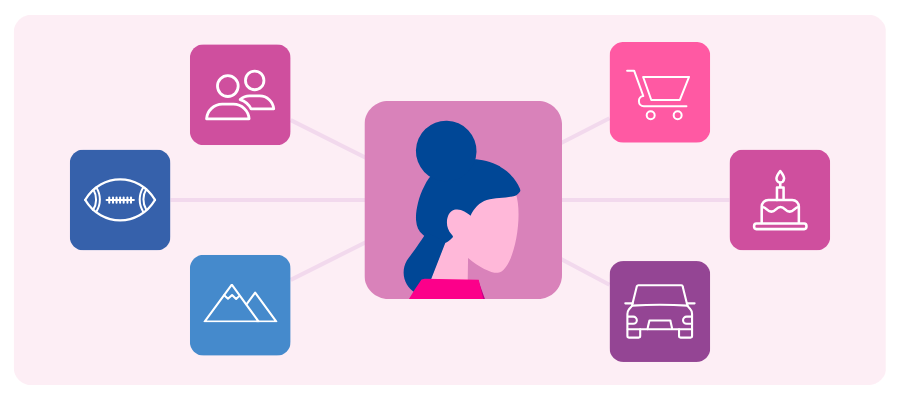
Third-party data enriches first-party insights with attributes such as income, gender, and interests that round out the customer view.

That breakdown led directly to today’s privacy laws, now active across more than 20 U.S. states and numerous countries worldwide. These regulations reflect a permanent consumer expectation: relevance delivered responsibly. Consumers aren’t rejecting personalization; they’re rejecting how it’s been done in the past. They still want relevant, tailored experiences, but they expect brands to deliver them through ethical, transparent data practices.

Does third-party data still matter in a privacy-first era?

Third-party data isn’t disappearing, if anything, it’s become more important. Brands will always need additional insight to deepen customer understanding; first-party data alone only reflects what’s already known.

The industry has entered a mature phase where data quality and compliance are table stakes. The companies leading today built their data infrastructure on rigorous standards, regulatory foresight, and transparent governance.

That same foundation powers the next wave of innovation, including the explosive growth of RMNs. RMNs rely on responsibly sourced third-party data to enrich shopper insights, validate audiences, and extend addressability beyond their own walls. Trusted data partners make that expansion possible, connecting retail environments with broader media ecosystems while maintaining privacy and accuracy.

High-quality, compliant third-party data remains essential because it:

A magnifying glass icon

Fills knowledge gaps

Good third-party marketing data complements first-party insights with demographic, behavioral, and transactional context, providing the missing puzzle pieces to complete the full customer profile.

A target icon

Improves accuracy

Filling in gaps in customer understanding helps you identify, reach, and engage your customers more effectively. This helps improve the delivery of relevant messages and offers to your customers and prospects across channels.

An icon that represents interoperability

Builds connections

Third-party data helps brands build loyalty with consumers by speaking to their interests, and intent behind purchases.

An icon that shows an outline of three people with a star on top of the person in the middle

Fuels prospecting

Third-party data can help you find your best prospects. By enriching customer files, you can understand who your best customers are, and how to find more of them. By modeling this data, you can determine who your best customers are and source prospects similar to them.

Advancements in AI and machine learning are reshaping how this data is used across the ecosystem. What was once primarily a buy-side tactic is now expanding into the sell-side, where publishers and platforms are using data to curate, package, and activate audiences more intelligently. As AI enhances modeling accuracy and automation, third-party data will play an even greater role in connecting brands and consumers in more meaningful, privacy-conscious ways.

The bottom line: it’s not about having more data; it’s about having better, verified data you can trust.

How can you spot a trustworthy data partner?

The strongest third-party data partners demonstrate accountability through experience, infrastructure, and integrity.

Look for providers that:

A shield icon

Operate with clear data principles

Trustworthy partners publish and follow codified data principles that guide every step of data handling. Experian adheres to a set of global data principles designed to ensure ethical practices and consumer protection across all our operations.

A lock icon

Treat new privacy regulations as routine

For mature providers, evolving privacy laws are routine, not disruptive. At Experian, privacy and compliance have long been built in. Every partner and audience goes through Experian’s rigorous review process to meet federal, state, and local consumer privacy laws. Decades of experience have shaped processes that emphasize risk mitigation, transparency, and accountability.

Shaking hands icon

Stay deeply connected

Leading data companies maintain deep relationships with technology partners and industry and regulatory groups to ensure that ethical data practices are put into practice and their customers are aware of platform-specific regulations. Experian’s relationships with demand-side platforms (DSPs), supply-side platforms (SSPs), and even social platforms like Meta, ensures we are aware of any platform-specific initiatives that may impact audience targeting. We’re also active participants in many trade groups to ensure that the industry puts ethical data practices in place to ensure consumers still receive personalized experiences but their data usage and collection is opt-in, transparent and handled with their privacy at the center of the transaction.

Trophy icon

Have a proven track record in the industry

Longevity matters in a regulated and compliance-driven industry. Providers that have thrived through economic cycles and regulatory shifts are the ones equipped for the future. The ability to source high-quality third-party data is core to their business, not an afterthought. Our data is ranked #1 in accuracy by Truthset, giving our clients confidence that every decision they make is backed by the industry’s most reliable insights.

Why the future of third-party data depends on accountability

The third-party data industry has already crossed the threshold from expansion to accountability. The companies leading this era have established their credibility through governance and proof. The future belongs to providers that:

  • Build with regulatory foresight
  • Maintain rigorous quality assurance
  • Prioritize partnership over profit

The Wild West days are long gone. The third-party data ecosystem is now defined by stability, transparency, and shared responsibility.

Partner with Experian for data you can trust and results you can prove

When accuracy and accountability define success, you need a partner built on both. Work with the company that’s setting the standard for responsible data-driven marketing and helping brands connect with people in meaningful, measurable ways.

Get started

This site is protected by reCAPTCHA and the Google Privacy Policy and Terms of Service apply.


About the author

Jeremy Meade, VP, Marketing Data & Product Operations

Jeremy Meade

VP, Marketing Data Product & Operations, Experian

Jeremy Meade is VP, Marketing Data Product & Operations at Experian Marketing Services. With over 15 years of experience in marketing data, Jeremy has consistently led data product, engineering, and analytics functions. He has also played a pivotal role in spearheading the implementation of policies and procedures to ensure compliance with state privacy regulations at two industry-leading companies.


Third-party data FAQs

What is third-party data?

Third-party data is information collected by organizations that don’t have a direct relationship with the consumer. It supplements first-party data by adding demographic, behavioral, and interest-based insights.

Why are privacy regulations reshaping data practices?

Privacy regulations are reshaping data practices because consumers expect control over how their information is used. That expectation led directly to today’s privacy laws, now active across more than 20 U.S. states and numerous countries worldwide. These regulations reflect a permanent consumer expectation: relevance delivered responsibly. Consumers aren’t rejecting personalization; they’re rejecting how it’s been done in the past. They still want relevant, tailored experiences, but they expect brands to deliver them through ethical, transparent data practices. Laws like the CCPA and state-level privacy acts enforce this expectation, holding brands and data providers accountable for the ethical use of data.

Can brands still use third-party data safely?

Yes, brands can still use third-party data safely when sourced responsibly. Partnering with established, compliant providers like Experian ensures both legal protection and data accuracy. 

How does Experian ensure compliance with evolving privacy regulations?

Experian adheres to a set of global data principles designed to ensure ethical practices and consumer protection across all our operations. At Experian, privacy and compliance have long been built in. Every partner and audience goes through Experian’s rigorous review process to meet federal, state, and local consumer privacy laws. Decades of experience have shaped processes that emphasize risk mitigation, transparency, and accountability. Experian’s relationships with demand-side platforms (DSPs), supply-side platforms (SSPs), and even social platforms like Meta, ensures we are aware of any platform-specific initiatives that may impact audience targeting. We’re also active participants in many trade groups to ensure that the industry puts ethical data practices in place to ensure consumers still receive personalized experiences but their data usage and collection is opt-in, transparent and handled with their privacy at the center of the transaction.

What should marketers look for in a data partner?

Marketers should look for transparency, longevity, and evidence of compliance when looking for a data partner. The best partners can clearly explain how their data is sourced, validated, and maintained. Read Experian’s guide on how you can swipe right on the perfect data partner here.


Latest posts

Loading…
Discover 2024 marketing trends in Experian’s digital audience report

As we approach 2024, marketers must grasp the evolving landscape of digital activation. Understanding emerging audience trends and activation strategies is key to developing impactful marketing initiatives and positioning your brand for success.   In Experian's 2024 Digital audience trends and predictions report you'll find:   Data-driven insights that will empower you to confidently develop marketing strategies that resonate with your audience and drive meaningful results.   Insights from Experian experts and our industry-leading data. Our outlook for 2024 marketing trends. In this blog post, we'll provide a sneak peek of the 2024 marketing trends you can expect in our full report. Digital activation  Digital activation grew by 63% between 2022 and 2023. We expect digital activation to increase in 2024 but at a slower rate than in 2023 due to economic uncertainty caused by high-interest rates, recent state privacy regulations, and work stoppages in the entertainment and automotive industries.  Top digital audiences  Which digital audiences are advertisers purchasing from Experian?  We are seeing growth in four major data categories: Automotive, Demographics, Lifestyle and Interests, and Retail Shoppers: Purchase Based audiences. Here are a few audiences within these categories that you can activate on-the-shelf of your preferred platform:   Automotive: Autos, Cars, and Trucks > In Market-Make and Models  Demographics: Demographics > Homeowners/Renters > Renter  Lifestyle and Interests: Lifestyle and Interests (Affinity) > Activities and Entertainment > Wine Lovers  Retail Shoppers: Purchase Based: Retail Shoppers: Purchase Based > Food and Drink > Restaurants: Fast Food/QSR Chicken Frequent Spenders  Top digital audiences by industry  What are the top digital audiences being activated by industry? Download our 2024 Digital audience trends and predictions report to discover the top digital audiences in the following industries:  Automotive  Health  Financial Services  Retail & CPG Download our new 2026 Digital trends and predictions report Marketing in 2026 will be defined by connection: between activation and measurement, data and AI, platforms and outcomes. These connections are what turn innovation into impact, and they’re where Experian helps marketers lead with confidence. What you'll learn AI is only as good as its data : Find out why the marketers who shape how AI works, with high-integrity, human-centered data, will be the ones who lead.   Activation and measurement are coming together: Explore how marketers are shifting from reporting after the fact to guiding performance in the moment. First-party data activation is becoming a foundational capability: See how it's now possible to onboard and activate privacy-compliant audiences across channels, all from a single system. Commerce media is no longer just a retail play: Understand why auto, CPG, financial services, and travel brands are now adopting retail-style models to connect data, media, and sales outcomes.    Curation is the new programmatic standard: Learn how curation brings identity, quality, and control together, allowing marketers to target confidently across connected TV (CTV), audio, and the open web. Download now Contact us Latest posts

Dec 19,2023 by Hayley Schneider, Sr. Manager, Content Marketing

Our top five 2023 AdTech blog posts

2023 has been an unprecedented year for AdTech. With new challenges arising every day — from ongoing signal loss to changing consumer privacy regulations– staying on top of trends is more important than ever before.   To help you stay informed on successful tactics from across our ecosystem we’ve compiled a list of our top five 2023 AdTech blog posts. Keep reading to learn about the top themes from CES and Cannes this year, why contextual targeting is so popular, and more – so you can remain competitive in today's rapidly changing environment.  #5 CES 2023: Clean rooms, activation, and more  Experian attended CES in January to kick off the AdTech year, connecting with partners, clients, and industry leaders to understand their challenges and goals. Discussions were focused on clean rooms and digital activation to address data deprecation and consumer privacy.   Clean rooms have the potential to standardize data and address interoperability issues.  Digital activation was predicted to increase significantly in 2023, with more focus on demand-side, video, and supply-side platforms. Did digital activation increase in 2023? Download our 2024 Digital audience trends and predictions report to find out.  Read our full 2023 CES recap here. #4 Experian identity resolution now available in AWS Clean Rooms  Earlier this year, Experian announced that our identity resolution solution is now available in AWS Clean Rooms. Through this new partnership, customers can pair Experian's identity capabilities with AWS Clean Rooms to safely collaborate and access deeper insights without exposing sensitive data.  Check out the full announcement to hear from Kalyani Koppisetti, Principal Partner Solution Architect at AWS, Matt Miller, Business Development Principal at AWS, and Tyler Middleton, Sr. Partner Marketing Manager at Experian.  #3 Four key themes from Cannes Lions 2023  At Cannes Lions 2023, discussions revolved around four main themes:  Signal loss: Experts discussed the importance of adapting paid media strategies to align with consumer behaviors. Collaboration: Discussions highlighted the need for industry players to collaborate and focus on solutions that benefit all stakeholders in the ecosystem. Personalization: This was a key topic and emphasized the growing significance of tailored content, data-driven insights, and first-party data solutions for advertisers adapting to cookie deprecation and the evolving consumer privacy landscape. Balancing AI and creativity: Attendees explored how to balance AI capabilities and nurture creativity while maintaining a human touch. Cannes 2024 will be here before we know it and Experian will be there. To get ready, check out this post by Tyler Middleton, Sr. Partner Marketing Manager, to hear from a first-time Cannes attendee,   #2 Three key insights from our 2023 Holiday spending report  Experian's annual Holiday spending trends and insights report analyzed recent trends, consumer spending habits, and anticipated what was to come in the 2023 holiday shopping season. This blog post covered three key insights from our report:  Consumers are starting their holiday shopping earlier, particularly with online sales.  Online sales have been increasing year-over-year, surpassing in-store sales. Spending during the 2022 holiday season was lower than in previous years but is expected to be on par with what was seen in 2023. For advice from our experts and access to all of our predictions for this year’s holiday shopping season, download our 2023 Holiday spending trends and insights report today.  #1 How contextual ad targeting addresses signal loss  Our most viewed blog post of 2023 was How contextual ad targeting addresses signal loss. Marketers are seeking new solutions due to signal loss caused by the phasing out of third-party cookies. Contextual ad targeting offers a way to combine contextual signals with machine learning for more accurate targeting.  Experian's Jason Andersen and Yieldmo's Alex Johnston discuss the challenges of signal loss, addressability, the importance of good creative, and tips for digital ad success in this blog post. By understanding contextual advertising, marketers can create powerful and effective campaigns to reach target audiences.  Subscribe to our newsletter  Sign up for our email newsletter to receive our latest blog posts, product and partnership announcements, thought leadership, and more straight to your inbox. Subscribe Contact us today Latest posts

Dec 15,2023 by Hayley Schneider, Sr. Manager, Content Marketing

How AI is transforming connected TV advertising

In this article…Why AI and CTV are a great matchThe rising popularity of CTVHow is AI already being used in CTV?Demand-side platforms Artificial intelligence (AI) and connected TV (CTV) have a perfect synergy that’s revolutionizing how advertisers connect with their audiences. CTV serves as a medium for streaming content, while AI acts as a sophisticated technology that improves the performance of CTV advertising campaigns. The integration of these two technologies has paved the way for advertisers to reach their target audience more effectively, making CTV advertising a powerful and efficient tool.  In this blog post, we’ll dive into how these technologies work together — and why you should jump on board with AI for CTV advertising if you haven’t already. Why AI and CTV are a great match  CTV and AI are transforming how advertisers connect with their audiences and improving the performance of their advertising campaigns in the CTV space. They work together to make advertising smarter and more enjoyable for everyone involved. AI uses sophisticated computer programs to analyze and understand data, while CTV refers to the streaming services that consumers use at home. But what makes them a great match in advertising?  AI uses data to determine which TV ads are most exciting and relevant to certain people, and it can even adjust ads in real time to ensure viewers are always getting the most personalized experience. AI can provide suggestions to viewers based on previously watched content to help them find what they’d enjoy watching next. To sum it up, AI allows for: Precise targeting: AI uses data to determine which TV ads are most exciting and relevant to certain people. Personalization: AI can adjust ads in real time to ensure viewers are always getting the most personalized experience. Effective ad insertion: AI can provide suggestions to viewers based on previously watched content to help them find what they’d enjoy watching next. CTV facilitates these AI-driven strategies for enhanced user engagement and satisfaction. The rising popularity of CTV CTV has become increasingly popular as people change the way they watch TV. Instead of the traditional approach, more viewers are now choosing CTV platforms for their entertainment. One of the main reasons for this shift is that CTV offers greater flexibility and lets viewers watch content at their convenience. The ability to skip ads on many CTV platforms also improves the experience.  CTV offers a great opportunity to interact with your target audience in a more engaging way. CTV allows for highly targeted advertising capabilities so you can reach specific demographics and households with tailored messages. Additionally, CTV provides valuable data insights that enable you to measure campaign effectiveness accurately.  If you haven’t embraced this advertising channel yet, you may be missing out on a growing and engaged audience. Here are three reasons you should add CTV to your advertising strategy. Global video ad impressions As a global platform, CTV has the unique ability to reach audiences worldwide. Unlike traditional TV, CTV transcends geographical boundaries and brings marketers a global audience, which makes it an ideal channel for global ad campaigns. No matter your target audience, they’re consuming content on CTV. In fact, a recent study showed that 51% of global video ad impressions came from CTV in 2022.  This abundance of global video ad impressions generates vast amounts of data, which AI can process in real time to help you make data-driven decisions and optimize your campaigns for diverse international audiences. AI can analyze viewer data from various regions, identify audience preferences and behaviors across borders, and tailor ad content accordingly. These data analysis capabilities ensure your ads get in front of the right viewers.  Viewers prefer ad-supported CTV In 2020, the viewing time of ad-supported CTV surged by 55% while subscription video on demand decreased by 30%, according to TVision Insights. Viewers have a well-established preference for ad-supported CTV due, in part, to cost-effective access to premium content. Viewers are more engaged and less resistant to ads, as AI tailors ad content to viewer preferences and behavior to enhance ad relevance.  AI-powered insights can also aid in viewer retention and help you optimize your CTV campaigns. By accommodating viewers’ preference for ad-supported CTV and harnessing AI to improve the ad experience, you’re more likely to be successful in your marketing efforts. CTV outpaces mobile and desktop for digital video viewing eMarketer recently reported that U.S. adults spend 7.5+ hours each day on CTV — more than half of their digital video viewing time. Comparatively, they only spend 37.5% of their viewing time on mobile and 10% on desktops and laptops. These statistics demonstrate that CTV has become the preferred platform for digital video consumption, as viewers enjoy larger screens with superior quality for an immersive experience. It's important to note that AI is an essential CTV marketing tool, as it allows for precise targeting and content optimization. By utilizing AI on CTV, you can take advantage of this trend and deliver more engaging and effective campaigns to a growing and engaged audience. How is AI already being used in CTV? CTV has been integrated with AI across various facets and has revolutionized the television landscape. Here's a look at how AI is already shaping the CTV experience: Generative AI ads  Generative AI ads are taking CTV personalization to a whole new level. These innovative ads are customized versions of the same CTV ad to suit individual viewers. Some AI tools can generate several versions of the same CTV ad — swapping the actor’s clothing and voiceover elements like store locations, local deals, promo codes, and more — and can create up to thousands of personalized iterations in just a few seconds. Such capabilities are a game-changing approach to connecting with your audience.  Next, we dive into the advantages and impact of generative AI ads, and explore their transformative role in CTV advertising. Contextual ads vs personal data Generative AI ads use personal data, such as viewing history and demographics, to create highly personalized ad experiences. This sets them apart from contextual ads, which rely solely on the content being viewed. Using AI to harness this data, you can move beyond traditional contextual targeting and ensure your ads connect with viewers on a more individualized level. Generative AI ads can be used to A/B test Generative AI ads are not just about personalization; they also open the door to A/B testing. Being able to create several versions of one ad quickly allows you to experiment with various ad elements, such as messaging, visuals, and calls to action, to identify what works best for different segments of your audience and drives the best performance. This flexibility is especially valuable for refining ad campaigns and maximizing their impact. What’s next for AI-generated ads like this? The potential of AI-generated ads is exciting. As AI technologies constantly advance, we can expect even more personalized and automated CTV advertising. It’s a good idea to keep up with the latest AI-driven innovations to create more effective ad campaigns in the fast-evolving CTV space. The possibilities are endless, and you’ll likely find the most success when you embrace AI in CTV advertising. Optimize streaming quality AI helps viewers enjoy more seamless CTV experiences. By assessing network speed and user preferences, AI optimizes video quality in real time to reduce buffering interruptions. For instance, streaming platforms use AI to adjust video settings based on a user's connection speed. This guarantees an uninterrupted and enjoyable viewing experience. Review content for compliance AI also has a part to play in quality assurance and compliance management. It assesses content alignment with technical parameters and moderates compliance with local age restrictions and privacy regulations. This means AI can identify and filter out unsuitable content to provide a safer and more enjoyable viewing environment for audiences while safeguarding brands from association with undesirable material. Voice command AI-powered voice command technology is increasingly used to control CTV viewing. This technology is embedded in streaming devices and smart TVs and allows viewers to interact with their CTV content through voice-activated commands. This personalizes the viewing experience and improves convenience, as it eliminates the need for remote controls.  CTV-integrated voice assistants like Google Assistant, Amazon Alexa, Apple Siri, and Samsung Bixby offer a more human-like interaction with the television, allowing users to give commands and receive tailored responses.  Content recommendations AI can offer content recommendations that provide viewers a more personalized and engaging experience. Major over-the-top (OTT) services like Netflix, Hulu, and Amazon Prime use AI-driven data analysis to deliver tailored content suggestions to their audiences. By analyzing user habits in detail, AI can recommend content based on factors such as actors, genres, reviews, and countries of origin. This personalized approach helps viewers discover content that matches their preferences and enhances their viewing experience. Advertising  Programmatic ad buying, driven by AI, automatically matches ad placements to specific audience segments based on behavioral patterns. It improves ad delivery by moving away from gross rating points (GRP) to more intelligent and targeted placements. This benefits marketers by ensuring ads are seen by the right people at the right time. It’s also cost-effective for publishers, as it maximizes the sale of ad spots to suitable buyers. Automatic content recognition (ACR) technology, which AI powers, is integrated into smart TVs and streaming devices to improve ad relevance. It provides contextual targeting and extends the reach of ads across multiple devices. For example, platforms like Roku use ACR data to display ads to viewers who haven’t seen them on traditional TV. Similarly, Samba TV retargets mobile users based on IP address and aligns their viewing habits with their smart TVs. Demand-side platforms CTV advertising relies heavily on demand-side platforms (DSPs) to efficiently manage and optimize ad campaigns. These platforms use machine learning and AI in several important ways: Using machine learning and AI to address data fragmentation Data is abundant but fragmented when it comes to CTV advertising. DSPs are flooded with a massive amount of data, including information about households, viewer behavior, and viewing patterns. This data is far too much for manual analysis to handle effectively, which is where AI comes in. By integrating machine learning algorithms into DSPs, AI can harmonize this fragmented data and provide valuable insights and a holistic view of your audience. AI can process zettabytes of data in real time, which streamlines the decision-making process and empowers you to compete quickly for limited CTV impression opportunities. Predicting advertising outcomes with AI AI is quickly changing the way we predict and optimize advertising outcomes. TV buying and optimization platforms are now using AI to improve ad performance. With machine learning, these platforms can anticipate which ad creatives will produce the best results based on various non-creative factors. These include the context of the ad, the audience's profiles, the time of day it is displayed, and the frequency of the ad display.  By relying on AI to make these predictions, you can make sure your campaigns are highly optimized for success and deliver more relevant, compelling ads to viewers. Optimizing generative ads AI is also driving optimization in generative ads. These personalized versions of the same CTV ad can be tailored to suit individual viewers. By utilizing AI-driven analytics, DSPs can process extensive amounts of data in real time and optimize generative ads to ensure they align with viewers' preferences and behaviors. This level of personalization is a game-changer in CTV advertising that boosts engagement and delivers content that truly resonates with the audience. Add AI to your CTV strategy today Integrating AI into your CTV strategy can help you stay competitive and ensure your ad campaigns are effective and engaging.  At Experian, we’re ready to help you elevate your CTV advertising and implement AI as part of your strategy. Our solutions, such as Consumer View and Consumer Sync, provide valuable audience insights, enhance targeting capabilities, and optimize engagement on TV. Plus, our partnerships with leading media marketing solutions can help you achieve greater success through effective advanced television advertising.  As you incorporate AI into your CTV strategy, you’ll be able to make more data-driven decisions, deliver more relevant content, and reach the right audience at the right time. Explore Experian's TV solutions and empower your CTV advertising with AI today. Start exploring Latest posts

Dec 14,2023 by Experian Marketing Services

Subscribe to our newsletter

Enter your name and email for the latest updates

This site is protected by reCAPTCHA and the Google Privacy Policy and Terms of Service apply.

About Experian Marketing Services

At Experian Marketing Services, we use data and insights to help brands have more meaningful interactions with people. As leaders in the evolution of the advertising landscape, Experian Marketing Services can help you identify your customers and the right potential customers, uncover the most appropriate communication channels, develop messages that resonate, and measure the effectiveness of marketing activities and campaigns.

Visit our website

Subscribe to our newsletter

Stay up to date on the latest industry news and receive expert tips from our marketing experts.
Subscribe now!