Loading...

Swipe right on the perfect data and identity partner

by Scott Kozub, VP, Product Management 7 min read February 19, 2025

Here's your guide to finding the perfect match

Originally appeared in AdExchanger

Navigating the world of data and identity partners feels like scrolling through a dating app: a sea of options, but only a select few worth swiping right. To find your perfect match, look for a partner who ticks all the right boxes. Here’s your guide to finding your perfect match.

1. Identity resolution: It all starts with a strong foundation

An image that represents a person's offline data - their name, address, and email

Great identity resolution depends on a rock-solid foundation. The best partners rely on offline data—like names, addresses, and emails—that rarely change, ensuring a consistent view of households, individuals, and their devices over time. You want someone who gives you the same understanding of your audience across every stage of a campaign.

2. In search of: A well-rounded, reliable identity partner

When evaluating identity graphs, it’s essential to distinguish between digital-only graphs, offline graphs, and those rare gems who combine both. Digital graphs rely on digital identifiers, while offline graphs are grounded in persistent identifiers like name, address, and phone number. A partner who offers both creates a more complete and reliable view of consumers across channels, resulting in more effective targeting and measurement.
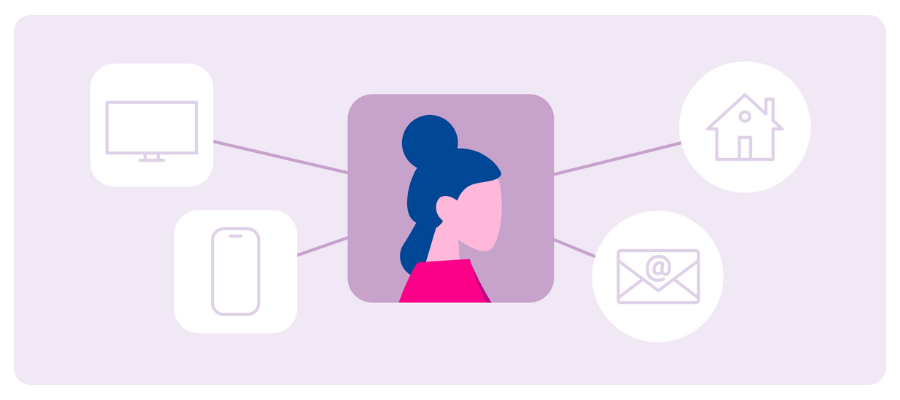
A picture of a woman with four icons surrounding her that represent a TV, cell phone, house, and email

3. Match rates are like dating profiles—don’t be fooled by the numbers

The number 60% appears in a circle, but a magnifying glass hovers over it showing that the real number is 16%

Match rates can look impressive, but they’re often misleading. They can also vary widely depending on the methodology and the IDs being tested. Some providers inflate match rates by limiting the scope of comparison or tweaking their standards. The real indicators of quality are the depth of the data, the quality of matches, and how often the graph is refreshed. Ideally, your partner updates their graph weekly or monthly. The inclusion of inactive IDs may inflate the perceived scale without reflecting the true addressable audience. It’s like having a profile photo from ten years ago–a major no-no.

4. Authentic origins: Is their data genuine or just a catfish?

Look into your partner’s data sources and place a premium on those with public records or direct to consumer relationships. Ask if they have the experience and expertise when it comes to all aspects of data processing from accuracy to privacy and security. Look for some clear third-party indicators for accuracy, like ratings from Truthset, but there is also a basic reality: either your partner is focused on privacy and accuracy, or they are just playing the scale game. Swipe left on those playing games.

An "x" icon represents inauthentic data and a checkmark icon represents authentic, reliable, data verified by third-party sources, like Truthset

5. The breadth to impress

A car icon, tennis icon, and shopping bag icon

Depth matters as much as quality. Seek a partner with wide-ranging attributes that span key audience categories like demographics, interests, and purchase behavior. They should offer the flexibility to deliver both granular data scores and broad audience segments, empowering you to reach the right consumers across channels effectively.

6. The total package: Does your partner really have it all?

A true, lifelong partner connects the dots seamlessly, offering a blend of data and identity that link households to devices while layering in rich marketing insights. This approach helps advertisers better understand their customers, reach the right audiences across channels, and measure the impact of their campaigns. The right partner is well-connected and ensures that all the pieces—identity, data, and activation—work in harmony.
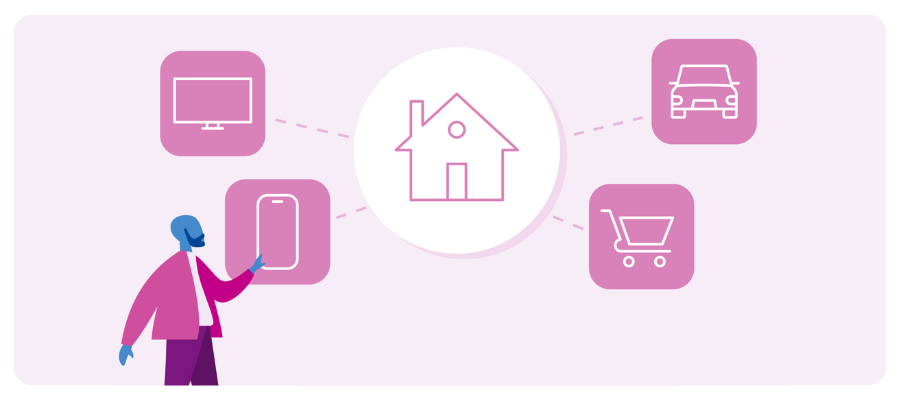
A man stands by an icon of a house surrounded by four icons that represent a TV, cell phone, car, and shopping cart

7. Future-proof charm: Will they ghost you when cookies crumble?

A cookie icon with a bite taken out of it

With the Identifier for Advertisers (IDFAs) gone, cookies on the wane, and IP addresses under scrutiny, a partner’s ability to adapt is critical. The most future-proofed solutions are based on offline identifiers like names and addresses, which are user provided and consented data points–making them more resistant to privacy changes. Additionally, look for partners who have made the necessary investments and are prepared to support the new wave of addressable IDs emerging as alternatives to traditional signals.

8. Privacy savvy: Do they respect boundaries?

As privacy laws evolve, you need a partner with a strong history in privacy compliance and proactive leadership in navigating new regulations. Strong and transparent privacy policies and participation in privacy organizations are a good indicator of trustworthiness, especially as new rules emerge across different states. Look for a partner who takes data privacy as seriously as you do and gives you peace of mind when handling sensitive information.

An icon with a lock on it representing data privacy and security

9. Seamless connectivity: Do they play well with others?

An icon of a man on the left and a megaphone icon on the right with 3 icons in between them that represent a TV, cell phone, and laptop

Data is only as useful as it is actionable. Connectivity across platforms is essential, so choose a partner with seamless integrations into the major platforms you rely on for advertising. This ensures your data quality and identity resolution remain intact throughout your campaigns, avoiding loss from multiple handoffs.

10. Killer customer service: Are they in it for the long haul?

A great partner collaborates to solve challenges, not just to sell or upsell. Long-standing partnerships and testimonials about strong customer service are key indicators of reliability. Choose a partner who educates and guides you through technical and strategic challenges, fostering an environment where problem-solving and innovation thrive.

Two people shaking hands

Keep your standards high

Only a handful of companies can meet these rigorous criteria, and you should refuse to settle for a partner that lacks any of these key dimensions. Successfully navigating signal loss, privacy compliance, and seamless omnichannel integration requires extensive resources, robust infrastructure, and years of expertise.

So, swipe right on a partner who can handle the complexities of modern marketing and deliver consistent, scalable successful marketing outcomes. Could we be your perfect match?


Find out if it’s a match today

This site is protected by reCAPTCHA and the Google Privacy Policy and Terms of Service apply.


Latest posts

Loading…
A deep dive with an Experian partner, Yieldmo

Discover how Yieldmo utilizes Experian’s identity and audience data to drive personalized, omnichannel ad campaigns with precision, privacy, and measurable results.

Published: Feb 04, 2025 by Experian Marketing Services

How the buy-side is approaching data and identity challenges

Learn how the buy-side can use Experian’s advanced data and identity solutions to be their guide through the jungle and emerge as winners.

Published: Feb 03, 2025 by Allison O’Mealia, Head of Customer Success, Demand & Supply Partnerships

Five considerations for the future of consumer connection

We spoke with industry leaders from Ampersand, Basis Technologies, Captify, Cuebiq, CvE, Fetch, Madhive, MiQ, and Samsung to gather insights on how innovations in data and identity are creating stronger consumer connections. Here are five key insights to consider. 1. Build on trust with first-party data Stricter privacy regulations and growing customer expectations mean businesses must rethink how they gather and use data. A robust first-party data strategy centers on gathering high-quality data, such as behavioral and transactional data. By using behavioral, lifestyle, and purchasing data, brands can craft personalized strategies that align with their goals. This approach balances effective targeting with building trust and complying with privacy rules. Integrating identity solutions like Unified I.D. 2.0 (UID2) and ID5 into existing data strategies improves interoperability across platforms while keeping user privacy intact. These tools help create more effective campaigns. "We've been preparing and leaning into educating our clients around the value of first-party data. These are very important and primary considerations in any of our campaigns."April Weeks, Basis Technologies 2. Align metrics with business goals To demonstrate clear value, campaigns need to tie their outcomes to broader goals. Relying only on click-through rates or CPMs won’t cut it. Metrics that measure meaningful results, like driving sales or increasing customer retention, provide greater transparency than surface level data, like clicks or impressions. A continuous feedback loop between targeting and measurement ensures campaigns can be refined to better align with business objectives. This feedback helps marketers understand who they are targeting and how those audiences are driving key business results. Shifting focus to metrics that resonate with stakeholders ensures that marketing efforts are evaluated based on their true contribution to the company's objectives. "The television industry has access to more data than ever before, and at Samsung Ads, our ACR technology helps us provide valuable insights about what content and ads are being viewed. This abundance of data enables us to support clients in aligning their campaigns with business objectives effectively."Justin Evans, Samsung Ads 3. Personalize experiences to boost engagement Personalization drives stronger customer relationships by delivering tailored experiences to individual customer needs. Using data-driven insights to fine-tune offers and messaging makes interactions more relevant, strengthening brand loyalty. Combining behavioral, lifestyle, and transactional data provides a comprehensive understanding of the customer journey and ensures each touchpoint feels personal. Testing and iterating on personalization strategies also helps identify which data and approaches yield the best results. Scaling these efforts means customers receive the right messaging at the right time, and businesses see better outcomes. "Every business should be building a data strategy that thinks about the different versions of data that exist and how they bring that together. They don't necessarily need to own all of it but have a clear rationale and strategy about where you're using which data sets."Paul Frampton, CvE 4. Utilize advanced measurement tools for smarter decisions Improving the effectiveness of campaigns starts with using sophisticated measurement tools to gain actionable insights. Using analytics like brand lift studies, foot traffic analysis, app download tracking, incrementality, and share of search allows marketers to understand the full impact of their efforts. With these resources, teams can pinpoint what’s working, make real-time adjustments, and refine their approach. This adaptability ensures budgets are used as effectively as possible. Learn how Swiss Sense measured marketing outcomes using Mosaic® "We are playing a leading role in democratizing new tools for local advertisers. By mimicking the marketing funnel mentality, we've introduced solutions ranging from measuring brand lift to tracking foot traffic and app downloads."Luc Dumont, Madhive 5. Adapt quickly to stay competitive The only constant in advertising is change. Adapting quickly to new technologies and consumer behaviors keeps businesses competitive. A culture of agility fosters innovation, making it easier to respond to industry shifts and discover new opportunities. Companies that anticipate change and invest in modern data solutions position themselves for long-term growth. Whether it’s adjusting to privacy updates, exploring emerging tech, or staying flexible, businesses must continuously invest in adapting their platforms and strategies. "Falling behind is not really an option. There's always a change in advertising and in data where there's a new horizon. The people who stay close to that and innovate will always follow it."Amelia Waddington, Captify Shaping the future Building meaningful consumer connections requires advertisers to combine robust data strategies with flexibility and innovation. By focusing on these five considerations, marketers can adapt to today’s challenges while preparing for what’s ahead. Connect with our experts Latest posts

Published: Jan 30, 2025 by Experian Marketing Services

Subscribe to our newsletter

Enter your name and email for the latest updates

This site is protected by reCAPTCHA and the Google Privacy Policy and Terms of Service apply.

About Experian Marketing Services

At Experian Marketing Services, we use data and insights to help brands have more meaningful interactions with people. As leaders in the evolution of the advertising landscape, Experian Marketing Services can help you identify your customers and the right potential customers, uncover the most appropriate communication channels, develop messages that resonate, and measure the effectiveness of marketing activities and campaigns.

Visit our website

Subscribe to our newsletter

Stay up to date on the latest industry news and receive expert tips from our marketing experts.
Subscribe now!