At A Glance
Gaming audiences move across mobile, console, personal computer (PC), retail, and publisher environments, often using more than one platform. Marketers need to account for gaps in purchaser visibility, differences in player value, and wide variation in how people play, spend, and use devices. Experian Audiences helps marketers address these complexities with demographic and behavioral audiences that reflect gaming and purchase preferences, supporting campaign goals.In this article…
Why gaming audience planning needs a more complete view
Gaming audience planning requires a more complete view of how consumers play, purchase, and engage across platforms. Gaming audiences span mobile, console, personal computer (PC), retail, and publisher environments, with 73% of weekly gamers playing across multiple platforms. Players also vary in how they engage, what they spend, the devices they use, and even how they identify. Only 42% of players identify as gamers, and 77% of mobile-dominant players reject that label, making broad audience definitions less useful for campaign planning.
Audience selection is becoming more important as competition for attention grows. Gaming advertising spend reached more than $8.7 billion during 2025, average mobile game downloads declined, and one in five mobile gamers left a game after encountering low-quality advertising. Marketers need audience strategies that reflect how people discover, buy, play, and spend across the gaming ecosystem.
Three audience challenges shaping gaming advertising
Three audience challenges shape gaming advertising strategies today. Marketers can build a more focused audience strategy around three challenges:
- Title targeting and spend capacity
- Engagement and long-term player value
- Moving beyond the broad “gamer” label
Together, these challenges help marketers align audience strategies with campaign goals by considering:
- How people discover and purchase games
- How engagement and spending develop over time
- How gaming behaviors and play styles influence campaign performance
1. Title targeting and spend capacity: How incomplete purchaser visibility changes prospecting
Incomplete purchaser visibility changes how marketers approach title targeting and prospecting. Game publishers distribute titles, downloadable content, and subscriptions through console marketplaces, app stores, PC storefronts, and retail partners. While publishers have valuable insight into their own players, retailers often have a broader view of gaming purchases across titles, platforms, and consumer spending. Those additional signals help marketers identify prospective players based on the games they buy, the platforms they prefer, and whether their broader spending patterns suggest they have the budget to purchase new games, subscriptions, or gaming hardware.
Experian and Partner Audiences help marketers reach prospects beyond known player files using audiences based on game title interest, retailer purchase behavior and household spending signals.
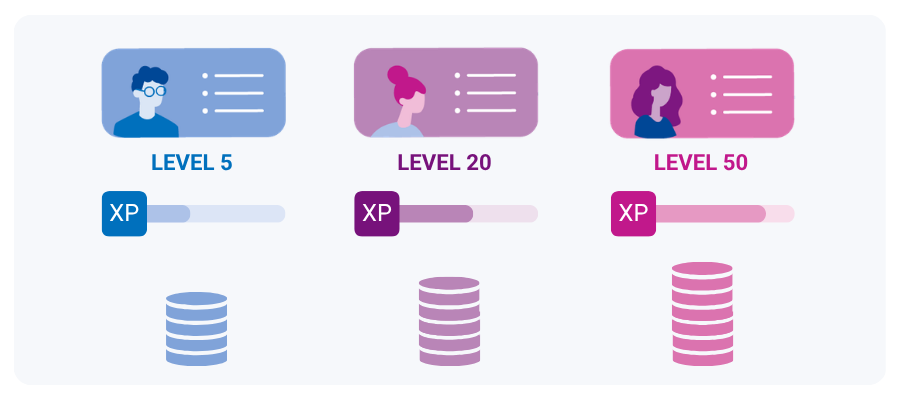
Experian and Partner Audiences you can activate to target title and platform proximity
Affinity Answers
- NBA Live
- Resident Evil
- Super Mario
Attain
- GameFly
- GameStop
Experian
- Consumer Electronics: In Store High Spenders
- Consumer Electronics: Online High Spenders
- Household Electronics Annual Spend $2500 Plus
- Gaming (Gamers): Video Gaming Online High Spenders
- Video Game Supplies High Spend
Overwolf
- Brawlhalla
- Street Fighter 6
- The Sims 4
- Tower of Fantasy
How to use these audiences
Activate game title audiences such as Resident Evil or The Sims 4 to reach consumers interested in similar franchises or upcoming releases. Layer in GameStop and GameFly purchaser audiences, then refine prospecting with Video Game Supplies High Spend or Household Electronics Annual Spend $2,500 Plus to identify households with the budget to purchase new games, subscriptions, or gaming hardware.
2. Engagement and long-term player value: How player value changes acquisition strategy
Player value changes acquisition strategy because gaming marketers need more than an install or first purchase. With more games competing for attention than ever, marketers need to reach players who are likely to stay engaged by returning for new seasons, subscribing, purchasing downloadable content (DLC) or virtual items, and continuing to play over time.
Audience signals such as gaming frequency, subscription behavior, genre preferences, and early adoption help marketers cut through the noise by reaching players whose interests align with a game’s genre and experience. These insights help marketers tailor creative and messaging to players who are more likely to engage beyond the initial download, whether they’re hardcore gamers, subscription users, or early adopters.
Experian and Partner Audiences help marketers reach players who are more likely to engage beyond the initial download using audiences based on gaming frequency, subscription behavior, genre preferences, and early adoption.
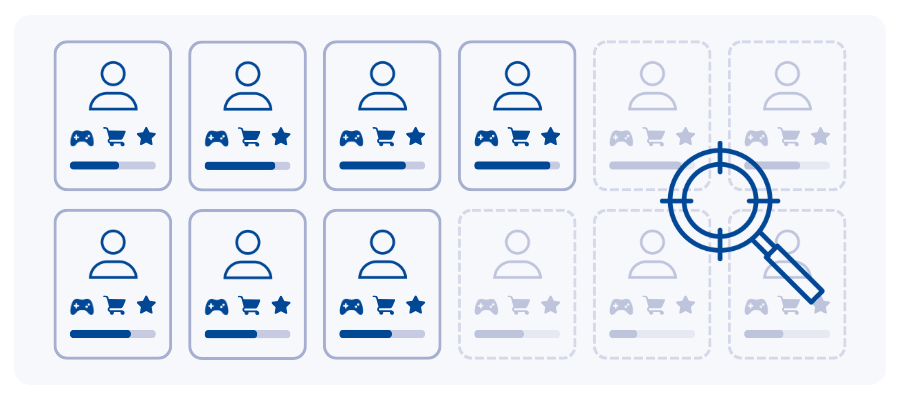
Experian and Partner Audiences you can activate to reach high-value and highly engaged players
AnalyticsIQ
- Hardcore Gamers
- Plays Any Type of Video Game Using Virtual Reality
- Plays Card and Board Video Games
- Plays or Competed in Esports Games
- Plays Video Games 21+ Hours a Week
- Spends $50+ in Online Game Shops
Experian
- Early Adopter Gamers
- Gaming Subscription High Spenders
Overwolf
- Action Horror
- Classic Arcade
- Gaming Subscription Services
- Walking Simulator
How to use these audiences
Activate audiences such as Hardcore Gamers, Gaming Subscription High Spenders, and Early Adopter Gamers to reach players who are more likely to stay engaged beyond the initial download. Layer in genre-based audiences like Action Horror, Classic Arcade, or Walking Simulator to tailor creative to players with demonstrated interests and deliver more relevant messaging.
3. Move beyond the broad “gamer” label: How player differences shape campaign planning
Player differences shape campaign planning because not all gamers play the same way. Players differ by platform, play style, genre preferences, gaming frequency, and motivation, and many move among mobile, console, and PC based on the game, occasion, or time of day. Someone who plays casual mobile games during short breaks has different interests and behaviors than a dedicated PC player, a console franchise fan, or a player who juggles multiple games at once.
Broad “gamer” targeting can overlook these differences, leading marketers to rely on generic creative, mismatch the platform or genre, or miss opportunities to connect with specific player types. Understanding how people play, not just whether they play, helps marketers tailor creative, messaging, and media strategies to better align with different gaming behaviors and preferences.
Experian and Partner Audiences help marketers move beyond broad gamer targeting by identifying the types of players they want to reach using audiences based on platform preference, gaming behaviors, play style, and game interests.

Experian and Partner Audiences you can activate to target beyond the “gamer” label
Affinity Answers
- Platformer Games
AnalyticsIQ
- Just for Fun Gamers
- Plays 3+ Video Games at a Time
- Weekend Only Gamers
Attain
- Oculus
- Papaya Gaming
- Playrix
Experian
- Fandom Mobile Gamers
- Fandom PS4 Gamers
- Game Console Users
- Massively Multiplayer Online Gamers
- Video Games: Mobile Gaming App Intenders
Overwolf
- High Index Console Gamers
- PC Gamer
How to use these audiences
Activate platform-specific audiences such as PC Gamers, Console Gamers, Mobile Gamers, or Game Console Users to reach players where they spend their gaming time, then layer in behavioral audiences like Just for Fun Gamers, Weekend Only Gamers, or Plays 3+ Video Games at a Time to distinguish between casual and more dedicated players.
When are gaming audiences the most receptive to outreach?
Gaming audiences are most receptive to outreach during holiday shopping periods and major retail events. Holiday shopping, Black Friday, Cyber Monday, and the weeks leading up to the holidays are some of the strongest periods for gaming purchases. During this time, consumers are actively shopping for consoles, accessories, games, gift cards, and subscriptions, making it an ideal opportunity to reach both dedicated gamers and gift buyers. These moments are especially valuable for promoting new game releases, gaming hardware, and holiday offers.

Experian and Partner Audiences you can activate to reach holiday gaming shoppers
AnalyticsIQ
- Black Friday Electronics Shoppers
- Black Friday Gaming Shoppers
Experian
- Black Friday/Cyber Monday Big Box Shoppers
- Black Friday/Cyber Monday: Online Shoppers
- Consumer Electronics: In Store High Spenders
- Consumer Electronics: Online High Spenders
- Holiday Shoppers: Big Box Stores: Amazon
- Holiday Shoppers: Big Box Stores: Costco Online
- Holiday Shoppers: Big Box Stores: Walmart Online
- Holiday Shoppers: Consumer Electronics
What sets Experian Audiences apart?
Custom audiences
Need a custom audience? Reach out to our audience team, and we can help you build and activate an Experian audience on the platform of your choice.
Partner Audiences
Explore some of our Partner Audiences that complement Experian Audiences across key gaming use cases, with flexible activation through Experian’s data marketplace or leading activation platforms.
For a full list, download our syndicated audiences guide.
Leading activation platforms
Whether you want to activate audiences directly or build a customized media strategy, Experian gives you flexible ways to reach the right consumers.
Our 3,500+ syndicated audiences are available at over 200 leading activation platforms, including programmatic, social, and TV.
Choose the activation path that works best for your campaign:
- Activate syndicated audiences directly through your preferred platform.
- Work with our team to build a curated media strategy tailored to your goals.
Want to activate an Experian Audience on Meta, Pinterest, Snap, TikTok, or on a platform not listed above? Contact us today.
Premium inventory through Curated Deals
Looking for a more customized solution? Curated Deals combine trusted audiences with premium inventory into a private marketplace built specifically for your campaign objectives. Our experts help you design, activate, and optimize a strategy that fits your audience and campaign needs.
Looking for a deal? We have ready-to-activate deals available on Simpli.fi, Google, and Basis, including:
- CTV – Console Gaming – Paramount, Warner Bros Discovery
- CTV – Simon Malls Data – Gaming Shopper Audience
- OLV – Playstation Gamers Audience
- OLV – Fantasy Sports and Sports Gamers Audience
- Video – Console Gaming – IGN, PC Gamer
- Video – Mobile Gaming – Fandom, Gamespot
Reach the right audiences for your industry
Reach gaming audiences based on real-world play, spend, and device behavior with Experian Audiences
Gaming audiences don’t behave as one market. Experian and Partner Audiences helps marketers account for differences in title interest, platform access, engagement, spending, and device ownership, then reach likely players across programmatic, social, connected TV, open web, and curated media environments. Grounding audience strategy in how people play, shop, subscribe, and spend gives each campaign a clearer path from audience selection to action.
Connect with our audience experts
FAQs
Experian Audiences are pre-built, privacy-compliant consumer segments that help marketers target based on verified demographic, financial, and behavioral data. They’re designed for flexibility across channels and can be activated on 200+ platforms, including major social, CTV, and programmatic partners. Marketers can choose from 3,500+ syndicated audiences that capture signals such as income, spending behavior, household structure, financial attitudes, and ability to pay. These same audiences are also available through partnerships on platforms like DirecTV, Dish, Magnite, OpenAP, and The Trade Desk. For a deeper look at our audience catalog, explore our syndicated audience guide.
You can activate Experian Audiences across 200+ digital and connected TV (CTV) platforms, including Meta, Pinterest, The Trade Desk, and Audigent private marketplace (PMPs).
Yes, you can combine your own first-party data with Experian’s 3,500+ syndicated audiences and additional segments from multiple partner data providers, as a custom audience within a Curated Deal or self-service via Audience Engine.
Appendix
Title and platform proximity
- Affinity Answers
- Affinity Answers > Intent > Video Games (Gaming) > NBA Live
- Affinity Answers > Intent > Video Games (Gaming) > Resident Evil
- Affinity Answers > Intent > Video Games (Gaming) > Super Mario
- Attain
- Attain > Entertainment > Gaming > Game Retail > GameFly
- Attain > Entertainment > Gaming > Game Retail > GameStop
- Experian
- Experian > Retail Shoppers: Purchase Based > Shopping Behavior > Consumer Electronics: In Store High Spenders
- Experian > Retail Shoppers: Purchase Based > Shopping Behavior > Consumer Electronics: Online High Spenders
- Experian > Consumer Financial Insights > Discretionary Spend – Electronics > Household Electronics Annual Spend $2500 Plus
- Experian > Retail Shoppers: Purchase Based > Entertainment > Gaming (Gamers): Video Gaming Online High Spenders
- Experian > Purchase Predictors > Shoppers All Channels > Video Game Supplies High Spend
- Overwolf
- Overwolf > Gamer Grid > Interest > Video Gaming > Content Consumption and Game Play Data > Title > Brawlhalla
- Overwolf > Gamer Grid > Interest > Video Gaming > Content Consumption and Game Play Data > Title > Street Fighter 6
- Overwolf > Gamer Grid > Interest > Video Gaming > Content Consumption and Game Play Data > Title > The Sims 4
- Overwolf > Gamer Grid > Interest > Video Gaming > Content Consumption and Game Play Data > Title > Tower of Fantasy
High-value and highly engaged players
- AnalyticsIQ
- AnalyticsIQ > Interest > Video Games > Dedication Spectrum > Hardcore Gamers
- AnalyticsIQ > Interest > Video Games > Game Preferences > Plays Any Type of Video Game Using Virtual Reality
- AnalyticsIQ > Interest > Video Games > Game Preferences > Plays Card and Board Video Games
- AnalyticsIQ > Interest > Video Games > Game Preferences > Plays or Competed in Esports Games
- AnalyticsIQ > Interest > Video Games > Gaming Frequency > Plays Video Games 21+ Hours a Week
- AnalyticsIQ > Interest > Video Games > Online Gaming > Spends $50+ in Online Game Shops
- Experian
- Experian > Lifestyle and Interests (Affinity) > Personas (US) Early Adopters > Early Adopter Gamers
- Experian > Retail Shoppers: Purchase Based > Entertainment > Gaming Subscription High Spenders
- Overwolf
- Overwolf > Gamer Grid > Interest > Video Gaming > Content Consumption and Game Play Data > Genre > Horror Games > Action Horror
- Overwolf > Gamer Grid > Interest > Video Gaming > Content Consumption and Game Play Data > Genre > Action Games > Classic Arcade
- Overwolf > Gamer Grid > Interest > Video Gaming > Content Consumption > Gaming Subscription Services
- Overwolf > Gamer Grid > Interest > Video Gaming > Content Consumption and Game Play Data > Genre > Adventure Games > Walking Simulator
Move beyond the broad “gamer” label
- Affinity Answers
- Affinity Answers > Intent > Video Games (Gaming) > Platformer Games
- AnalyticsIQ
- AnalyticsIQ > Interest > Video Games > Gaming Motivation > Just for Fun Gamers
- AnalyticsIQ > Interest > Video Games > Game Preferences > Plays 3+ Video Games at a Time
- AnalyticsIQ > Interest > Video Games > Gaming Frequency > Weekend Only Gamers
- Attain
- Attain > Entertainment > Gaming > Gaming Hardware > Oculus
- Attain > Entertainment > Gaming > Mobile and Social Gaming > Papaya Gaming
- Attain > Entertainment > Gaming > Mobile and Social Gaming > Family > Playrix
- Experian
- Experian > Publisher Derived > Media & Entertainment > Fandom Mobile Gamers
- Experian > Publisher Derived > Media & Entertainment > Fandom PS4 Gamers
- Experian > Lifestyle and Interests (Affinity) > Over The Top And Gaming > Game Console Users
- Experian > Publisher Derived > IAB Games > Massively Multiplayer Online Gamers
- Experian > Lifestyle and Interests (Affinity) > In-Market > Video Games: Mobile Gaming App Intenders
- Overwolf
- Overwolf > Gamer Grid > Interest > Video Gaming > Content Consumption and Game Play Data > High Index Console Gamers
- Overwolf > Gamer Grid > Deterministic > Video Gaming > PC Gamer
Seasonal Audiences
- AnalyticsIQ
- Seasonal > Black Friday/Cyber Monday Shoppers > Black Friday Electronics Shoppers
- Seasonal > Black Friday/Cyber Monday Shoppers > Black Friday Gaming Shoppers
- Experian
- Retail Shoppers: Purchase Based > Seasonal > Black Friday/Cyber Monday Big Box Shoppers
- Retail Shoppers: Purchase Based > Seasonal > Black Friday/Cyber Monday: Online Shoppers
- Retail Shoppers: Purchase Based > Shopping Behavior > Consumer Electronics: In Store High Spenders
- Retail Shoppers: Purchase Based > Shopping Behavior > Consumer Electronics: Online High Spenders
- Retail Shoppers: Purchase Based > Seasonal > Holiday Shoppers: Big Box Stores: Amazon
- Retail Shoppers: Purchase Based > Seasonal > Holiday Shoppers: Big Box Stores: Costco Online
- Retail Shoppers: Purchase Based > Seasonal > Holiday Shoppers: Big Box Stores: Walmart Online
- Retail Shoppers: Purchase Based > Seasonal > Holiday Shoppers: Consumer Electronics
Latest posts

Reach your shoppers with a back-to-school campaign tailored to their needs. Discover five audiences to include in your upcoming back-to-school campaign.

As the AdTech industry adjusts to the impacts of data deprecation and privacy regulations, learn how to optimize your marketing mix in a recession.
Super Users are a subset of customers who can have an influential impact on ROI. Find out how to target them for a successful marketing targeting strategy.