At A Glance
OpenAP and Experian are making identity interoperable across premium video, connecting brands, platforms and publishers to OpenAP’s common framework for resolving household identity using Experian’s Offline Graph and Digital Graph as a key data input. The approach supports household and individual-level TV planning, flexible curation for buyers and sellers, and measurement that stays consistent from activation through reporting.Key takeaways
- OpenAP powers consistent audience and identity across the entire premium video ecosystem for advanced advertising.
- OpenAP uses Experian’s identity graphs to keep audiences consistent across every state of the campaign life cycle.
- Experian Curated Deals package Experian Audiences and Experian Partner Audiences with premium video supply under a single Deal ID, giving buyers and sellers room to keep their preferred demand-side platform (DSP) or supply-side platform (SSP).
- Marketers planning a premium video campaign should map how many steps separate their audience from the inventory it’s meant to reach, since fewer hops of how the identity is translated preserves more of that audience’s value.
Premium video brings together publishers, platforms, and screens,with each partner and endpoint having itsown identity framework. OpenAP and Experian are helping connect these environments so audiences can move more directly from brands to the inventory they are meant to reach.
OpenAP and Experian help connect those steps. Experian’s Offline and Digital Graphs provide a foundation for understanding households, people, and digital identifiers. Through OpenAP’s Open Identity, identity data is resolved consistently and accurately, enabling Experian identity data to support both audience building and campaign exposure measurement.
Matthew Papa, VP of Partnerships and Business Development at OpenAP, joined us to discuss how a consistent identity foundation, using Experian’s Digital Graph and Offline Graph, helps audiences move from marketer to programmer and supports reliable measurement.
Identity collaboration streamlines premium video buying
Identity collaboration streamlines premium video buying by giving every brand, platform, and publisher in the supply chain a shared way to recognize the same audience. Each party brings its own data and identity systems to the process, and aligning those systems gives advertisers a more direct path for audiences to move from marketer to programmer.
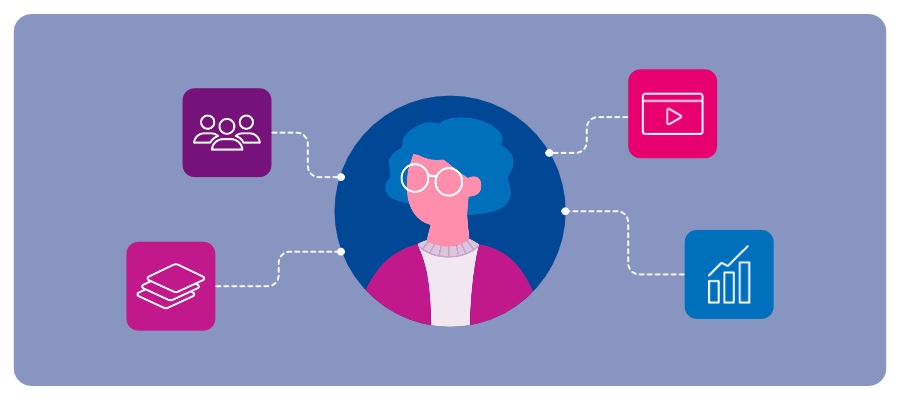
The industry is making progress. Platforms are working more closely with the suppliers behind them, including TV makers, and marketers are setting clearer standards for how the data they pay for is delivered to supply. OpenAP and Experian build on that momentum, bringing consistency and accuracy to audiences at every step from brand to inventory.
Why TV needs households and people together
TV needs both households and individuals: buying, forecasting, and planning across a market close to $100 billion start with household data, then get sharper with individual-level detail layered on top. Experian’s Offline Graph connects people to the households they live in, giving TV teams a household foundation for planning and forecasting. Experian Marketing Attributes can add details about income, preferences, and vehicle ownership. Those details can inform the creative a brand produces and how it shows up in search, social, and display, where TV’s halo can extend.
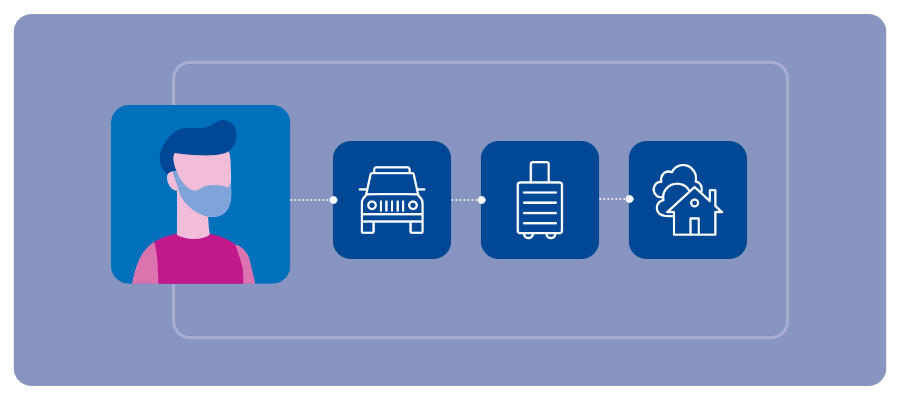
Experian’s Digital Graph is signal-agnostic, connecting hashed emails (HEMs), IP addresses, device IDs, and universal IDs to individuals and households to support one-to-one marketing across screens. Pairing the Digital Graph with the Offline Graph connects offline accuracy with digital scale. For OpenAP, offline identity can validate identity across its Open Identity framework, support other onboarding initiatives, and connect to other transaction data sets. That broader view helps advertisers plan for high-consideration purchases with longer sales cycles. Marketers often start with what they need to measure and work backward to the identity and activation approach that can support those goals.
“Bringing together both of those graphs is very important when it comes to activation, but they’re almost more important when it comes to measurement.”
OpenAPMatthew Papa, VP of Partnerships and Business Development
How Experian’s identity solutions support premium video
Curation gives buyers and sellers more flexibility
Experian Curated Deals bring trusted audiences and premium video supply together under a Deal ID while giving advertisers and content owners the flexibility to work with the partners they already use. Because the data targeting happens on the supply side, a deal can involve more technology partners or fewer, depending on what the transaction needs.
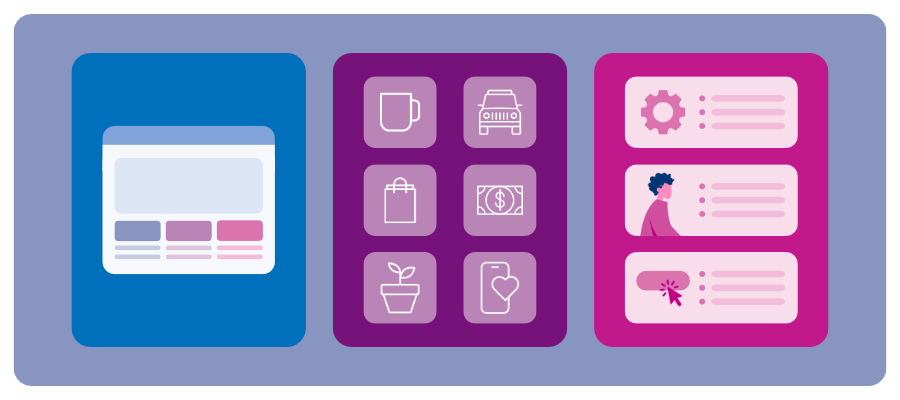
That flexibility matters in premium video, where many inventory owners want to sell more of their inventory directly, so they keep control over pricing, who they sell to, and the audience it’s sold against. A curated deal can be set up between one publisher and one buyer, across a network of publishers that shares pricing power, or with a buyer across an entire SSP. OpenAP was built to make it simple to transact across many premium video partners, with Experian identity used for buying and measurement.
Consistent identity is what makes measurement consistent
Identity consistency is what makes measurement consistent: it lets the same audience definition carry from activation through reporting.
Agencies and publishers are looking for efficient processes that can scale with their teams. Consistent identity across activation and measurement supports dependable outcomes for the brands and publishers OpenAP represents.
“It’s very important to have consistency of identity when it comes to activation, because that is going to inform consistency of measurement and outcomes.”
OpenAPMatthew Papa, VP of Partnerships and Business Development
Four planning questions for your next premium video campaign
If you’re planning across streaming and TV, start with four questions:
When audiences move directly from brand to publisher, more of their value carries through the campaign.
Ready to simplify how your audiences move through premium video? Contact us
Click here to view Experian’s U.S. Consumer Data Privacy Notice.
This site is protected by reCAPTCHA and the Google Privacy Policy and Terms of Service apply.
About our expert

Matthew Papa
VP of Partnerships and Business Development, OpenAP
Based in New York City, Matthew is VP of Partnerships at OpenAP, the industry’s leading audience platform for the premium video ecosystem. He leads strategic collaboration and business development with data and identity partners to advance audience driven video advertising for the world’s leading media brands and advertisers.
FAQs
OpenAP is a technology company powering the data-driven video workflow of the future. Rooted in their mission of bringing simplicity and scale to audience-based advertising, their Open Audience Platform powers a more streamlined audience creation, planning, buying and measurement process for TV, spanning data-driven linear, programmatic and streaming channels. OpenAP makes it easier for buyers to work across multiple publishers and platforms, while bringing transparency and consistency to how identity is resolved across every stage of the campaign. Their technology is open and interoperable, allowing publishers, agencies, and brands to harness operational efficiencies to scale.
Experian powers much of the identity behind OpenAP’s partners and is integrated with the Open Identity framework, pairing Experian’s Digital Graph and Offline Graph, to connect people, households, and devices across streaming and TV. This foundation lets OpenAP’s audiences access high-quality data to help carry the same identity from activation through measurement, keeping results consistent across the campaign.
Experian’s Offline Graph, a deterministic identity foundation rooted in decades of data stewardship, connects people to the households they live in, giving TV teams a stable household foundation for planning and forecasting. Experian’s Digital Graph links digital identifiers such as hashed emails, IP addresses, and device IDs to those same people and households, supporting one-to-one marketing across streaming and digital screens.
Curation lets buyers and inventory owners keep working with the platforms they already use, such as a preferred DSP or SSP, while still reaching premium, audience-matched supply. Experian Curated Deals packages Experian Audiences and Experian Partner Audiences with that supply under a single Deal ID, and the deal can be optimized while the campaign is running.
Marketers should start with having a deep understanding of the audience they want to reach, as well as KPIs that the campaign performance will be measured by. From there, they should decide whether they’re planning around households, individuals, or both, and then partner with OpenAP and Experian to ensure identity is managed consistently across the lifecycle and partners of the campaign.
Latest posts
Joint solution will enhance accuracy and reach across North America, EMEA and APAC NEW YORK, April 17, 2019 /PRNewswire/ — Tapad, a global marketing technology company and leader in digital identity resolution solutions, today announced a new joint capability with Arm®Treasure DataTM , a leader in enterprise customer data management. The partnership combines The Tapad GraphTM technology with Arm Treasure Data’s robust enterprise Customer Data Platform (CDP), enabling advertisers in the Arm Treasure Data marketplace to access Tapad’s datasets. With the integration of Tapad’s Graph and Arm Treasure Data’s existing first party data, marketers will be able to deliver scalable, cross-device messaging with precision. In addition, marketers can benefit from anonymous customer journey analysis, audience expansion and online and offline attribution. Arm Treasure Data’s APAC market customers will have access to expanded audience reach by leveraging Tapad’s global, proprietary datasets. While Tapad will be able to extend its presence into the APAC region, tapping into Arm Treasure Data’s existing footprint. “The Tapad GraphTM is a trusted and established platform with a history of innovation,” said Stephen Lee, Senior Director, Business Development, Arm Treasure Data. “Integrating Tapad’s technology into the Arm Treasure Data CDP will allow for streamlined experiences across markets, achieving global scalable reach.” For more information about The Tapad GraphTM, or to request a demo, visit our identity page. About Tapad Tapad, Inc. is a global marketing technology company and leader in digital identity resolution solutions. The Tapad GraphTM, and related solutions, provide a privacy-safe approach to connecting device identifiers to brand and marketer data, thereby allowing for enhanced measurement, attribution, reach and ROI of marketing campaigns. The Tapad GraphTM enables marketers around the world to maximize campaign effectiveness and drive business results. Tapad is recognized across the industry for its innovation, growth and workplace culture, and has earned numerous awards, including the TMCnet Tech Culture Award. Based in New York, Tapad also has offices in Chicago, London, Oslo, Singapore and Tokyo, and is a wholly owned subsidiary of Telenor Group. About Treasure Data Arm Treasure Data enterprise Customer Data Platform (CDP) unifies data from multiple sources – online, offline, IoT and device generated data – and empowers enterprises to disrupt their markets with superior customer experiences. Our customers are creating transformational customer relationships by connecting the data dots with our CDP. Arm Treasure Data is fully owned by Arm Holdings and has a global customer base of over 300 enterprises including Fortune 500 and Global 2000 companies. Our clients manage over 130 trillion records, resulting in more predictable and profitable business results. Contact us today

Leading global marketing technology company, Tapad, a part of Experian, adopts The Trade Desk’s streamlined cookie ID into its identity resolution solutions to increase global cookie coverage across the internet April 03, 2019 09:00 AM Eastern Daylight Time LOS ANGELES & NEW YORK–(BUSINESS WIRE)–Global marketing technology company, Tapad, a part of Experian, has partnered with The Trade Desk to onboard The Trade Desk’s unified ID solution into its digital identity driven solutions. The Trade Desk’s unified ID solution is free for all parties spanning the digital advertising supply chain, including SSPs, DSPs, DMPs and data providers. With leading players onboarding the unified ID solution, such as Tapad, streamlined cookie syncs make ad viewing experiences better for consumers, increase match rates for all parties, and expand cookie coverage on a global-scale. Adoption of The Trade Desk’s global cookie footprint enables Tapad customers to benefit from greater precision and potentially higher performing digital marketing campaigns. “Identity is critical in the ecosystem and as a long-standing leader in the space, Tapad has shown a strong commitment to building digital identity resolution solutions that help marketers launch more effective campaigns on a global scale,” said Ed Chater, VP of Data Partnerships, The Trade Desk. “We are thrilled for their participation and look forward to solving the digital identity narrative across the industry through this partnership. The continued widespread adoption of the unified ID solution validates our collective mission to improve the effectiveness of digital advertising.” About Tapad Tapad, Inc. is a global marketing technology company and leader in digital identity resolution solutions. The Tapad Graph™, and related solutions, provide a privacy-safe approach to connecting device identifiers to brand and marketer data, thereby allowing for enhanced measurement, attribution, reach and ROI of marketing campaigns. The Tapad Graph™ enables marketers around the world to maximize campaign effectiveness and drive business results. Tapad is recognized across the industry for its innovation, growth and workplace culture, and has earned numerous awards, including the TMCnet Tech Culture Award. Based in New York, Tapad also has offices in Chicago, London, Oslo, Singapore and Tokyo, and is a wholly owned subsidiary of Telenor. About The Trade Desk, Inc. The Trade Desk™ is a technology company that empowers buyers of advertising. Through its self-service, cloud-based platform, ad buyers can create, manage, and optimize more expressive data-driven digital advertising campaigns across ad formats, including display, video, audio, native and, social, on a multitude of devices, such as computers, mobile devices, and connected TV. Integrations with major data, inventory, and publisher partners ensure maximum reach and decisioning capabilities, and enterprise APIs enable custom development on top of the platform. Headquartered in Ventura, CA, The Trade Desk has offices across North America, Europe, and Asia Pacific. To learn more, visit thetradedesk.com or follow us on Facebook, Twitter, and LinkedIn. Contact us today
by AdExchanger // Friday, March 15th, 2019 – 12:06 am “Data-Driven Thinking” is written by members of the media community and contains fresh ideas on the digital revolution in media. Today’s column is written by Preethy Vaidyanathan, chief product officer at Tapad, a part of Experian For years marketers asked, “How do we get more data?” Now that they’ve mastered data mining, marketers want to know what’s next. The time has come for organizations to make their abundance of digital data actionable, increase ROI and reach consumers with consistent, personalized experiences across all touchpoints. A seamless consumer experience can only be achieved by consolidating digital data. Organizations, however, are finding that consolidating data silos is more time-consuming and complicated than initially expected. The challenges One of the most pervasive obstacles companies face in when consolidating data is adopting inefficient and costly tactics that quickly become outdated. For instance, over the last couple of years, many companies turned to enterprise data warehouses to consolidate data silos, but some were too expensive or poorly suited for raw, unstructured and semi-structured data. This led companies to adopt data management initiatives, which bogged down many enterprises. Perception among senior level executives is another challenge. Many still question the need for digital transformation – achieving greater efficiencies through updating business and organizational processes with new technologies. Gartner found that more than half (54%) of senior executives say their digital business objective is transformational, while 46% say their objective is optimization. Digital transformation and data consolidation require time and effort. So, many large organizations work to overcome data silos as part of a multiyear digital transformation versus an immediate action item, delaying the benefits the company sees from taking on this project. All of these challenges make delaying progress in data consolidation easy, but companies should remember the impetus for doing so: creating a seamless customer experience that, in turn, drives business results. Brands with higher quality customer experience grow revenue faster than direct competitors with lower quality customer experience. The approach Many brands go into the digital transformation process assuming they have massive amounts of customer data, and that much of it is valuable or will be in the future. They might spend months aggregating that data in data stores or data lakes – at great expense. The trouble is that their data was scattered across multiple databases, which means it’s highly fragmented. As a result of this fragmentation, marketers can’t activate their data in ways that enhance the customer experience. To do so, companies must ensure their digital data is highly flexible so it can provide a holistic view of the consumer journey across every digital, in-store, in-venue and offline channel. I’d recommend that organizations taking on data centralization initiatives prioritize use cases that offer the company the greatest benefit. This is where organizations should establish a “crawl, walk, run” approach to data centralization to ensure key executives buy into the process. Starting with a subset of use cases, such as customer retention or upsell, or with a campaign, which is an even smaller starting point, allows executives to see the benefits of data consolidation projects relatively quickly. Once they validate these initial benefits, they can expand the range of use cases or campaigns, as well as the marketing ROI for their business. While data centralization is a long-term project that may take several years to complete, it doesn’t mean a business can’t get started now and see measurable results quickly. Break down data consolidation into stages so the organization can experience wins along the way. At the end of the day, data consolidation will help organizations deliver more effective marketing campaigns that drive business growth. Contact us today