Marketers aren’t thinking in channels anymore: they’re thinking in audiences.
As consumer media habits have scattered across devices, platforms and formats, brands have shifted their focus from managing one channel at a time to delivering a connected experience. That’s the core of omnichannel marketing: meeting people where they are and making each touchpoint feel like part of a larger narrative.
However, most brands still encounter the same roadblocks: siloed data, fragmented planning and tools that don’t integrate. And while the industry talks a great deal about omnichannel marketing, few are actually doing it well. The brands that figure it out won’t just reach more people; they’ll improve brand perception while improving the customer journey, achieving better outcomes, and optimizing their media spend more efficiently.
Learn more about this trend in our 2025 Digital trends and predictions report.
Why omnichannel is no longer optional
Omnichannel marketing has long been a goal, but recent shifts in media and technology now make it a necessity. According to Forrester, 21% of global B2C business and tech professionals identified enhancing omnichannel or cross-channel customer experiences as a top priority for their organization today.
Connected TV (CTV) and commerce media networks are emerging as dominant channels, necessitating the coordination of messaging across an expanding ecosystem of streaming, programmatic display, and commerce-driven environments in addition to the multitude of other addressable (and non-addressable) channels. Fortunately, identity solutions continue to evolve, enabling marketers to maintain audience addressability in digital channels even as traditional signals decline and privacy regulations intensify.
Consumers expect this kind of cohesion. They don’t see “channels” – they just see a brand. A member of your loyalty program might browse a product online, see the exact item later on their socials, and then receive an email offer. If those messages feel disconnected or out of sync, this will not be a good customer experience, and a brand risks wasting impressions and losing conversions.
Omnichannel isn’t about showing up in more places. It’s about showing up with a consistent message.
The opportunities inherent in true omnichannel execution
Despite the industry’s movement toward omnichannel marketing strategies, there are a few untapped opportunities brands would benefit from pursuing.
The opportunity? Shift toward integrated media planning and measurement. By aligning teams and KPIs across channels, marketers can optimize frequency, coordinate creative sequencing, and better attribute business outcomes. Breaking down internal silos improves the customer experience and drives more effective performance. With two-thirds of North American CMOs naming siloed data as their biggest obstacle, those who solve it stand to gain a clear advantage.
The opportunity? Invest in interoperable systems that give you control over your data and privacy-safe solutions like clean rooms or universal IDs that enable consistent audience activation across platforms.
The opportunity? Advocate for a centralized, privacy-conscious identity framework that bridges fragmented data sources. This would allow marketers to recognize consumers across platforms and deliver cohesive messaging.
Marketers need solutions that enable connected audience activation while respecting privacy requirements and platform-specific constraints. Without this, omnichannel remains an aspiration rather than a reality.
Data and identity: The tools you need in your toolkit to make omnichannel work
Implementing omnichannel right starts with establishing identity. Brands need a foundation that lets them connect the dots: across data, platforms and channels. Here’s how:
Build a unified identity foundation
“A single view of the customer is the foundation of a successful omnichannel program,” says Forrester in a December 2023 report on omnichannel. This begins by connecting disparate data sources, including persistent offline information, such as addresses, emails, names, and phone numbers, with digital signals, in a privacy compliant way. And this, in turn, creates a strong identity foundation. Solutions that integrate hashed email addresses (HEMs), mobile ad IDs (MAIDs), IP addresses, CTV IDs, and universal IDs enable brands to resolve customer identities across different platforms, ensuring that campaigns remain addressable as users transition between channels.

Activate audiences everywhere, without the hassle
Brands should be able to define an audience once and activate it across all addressable channels without unnecessary complexity. Interoperability between demand-side platforms (DSPs), supply-side platforms (SSPs), clean rooms, and private marketplaces (PMPs) ensures that high-quality audiences are matched with premium inventory in a targeted, transparent, and efficient manner. This connectivity helps maintain consistent audience targeting—even as consumers engage in different environments. By working with a partner that seamlessly integrates with major platforms, marketers ensure that data quality and identity resolution remain intact throughout campaigns, avoiding data loss that occurs when data is transferred between different, disparate platforms.
Measure across channels, and the customer journey
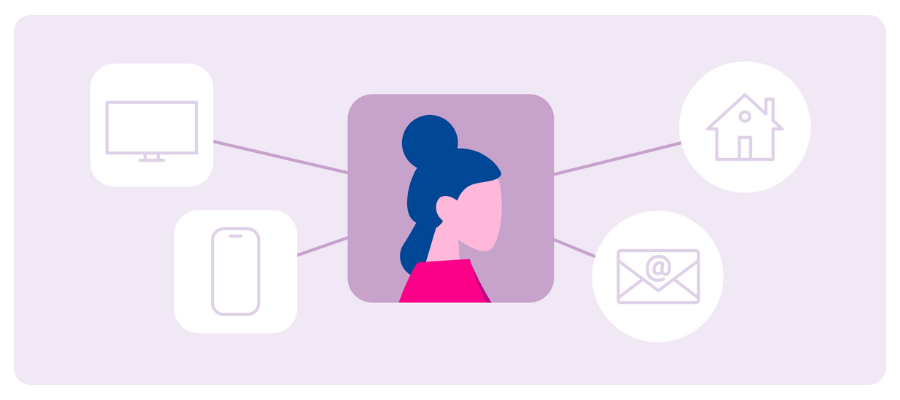
Effective omnichannel marketing isn’t just about reaching audiences—it’s about understanding how different touchpoints contribute to conversions. Advanced attribution models, incrementality testing, and cross-platform frequency management enable brands to use consistent identity across campaign planning, activation and measurement so they connect ad exposures to real-world outcomes. Achieving this requires a strong identity resolution partner—one that can unify audience data across environments and power accurate, privacy-compliant measurement at scale.
The future of omnichannel marketing
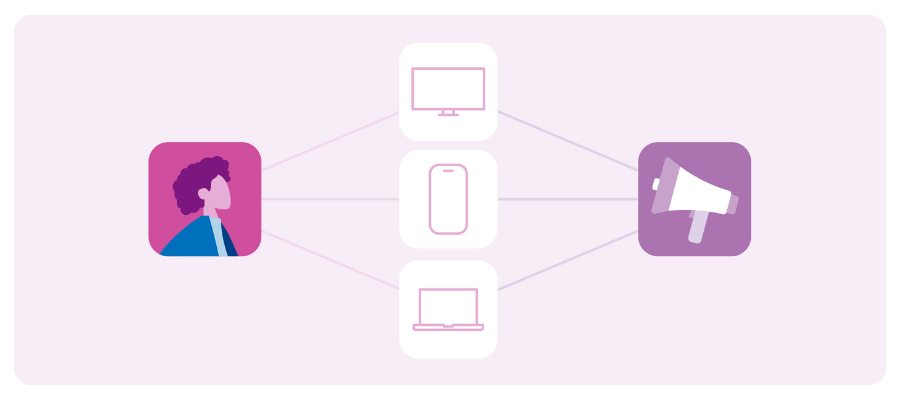
Omnichannel is becoming the baseline expectation for modern marketing. The brands that figure out how to connect the dots across the increasingly disparate media landscape will drive better performance and build stronger customer relationships.
By working with a partner that can offer you an end-to-end data and identity solution focused on consumers, not channels, you can better understand your best customers (and your next customers), reach them across channels, and measure cross-channel campaigns more effectively, making true omnichannel execution more achievable.
Get started today
About the author

Kimberley Klevstad
Account Director, Retail, Experian
Kimberley Klevstad is 25-year industry veteran with a wide range of experience driving strategic growth for global accounts across print, online, mobile, location-based and streaming audio platforms. Kimberley is currently a member of the Experian Marketing Services Retail team, advising top retail brands on data and identity strategies that will deepen loyalty and drive acquisition in an increasingly competitive landscape.
Latest posts

Marketers Can Now Harness The Tapad Graph In Concert With Twine’s Vetted, Verified TrueData™ Identity Graph. Los Angeles and New York – August 2, 2018 – Tapad, now part of Experian, is reinventing personalization for the modern marketer, today announced that it is partnering with mobile data leader Twine Data (now TrueData) to bring Twine’s hundreds of millions of deterministic mobile identity connections to The Tapad Graph. Together, the two companies will create one of the largest portable identity graph & CRM onboarding services in the U.S., through the integration of Tapad’s best in class cross-device capability and Twine’s deterministic identity graph. At the core of one-to-one marketing and true personalization is identity resolution. For marketers, the ability to accurately and safely connect customer activity across desktop/laptop, mobile, CTV, tablets, as well as CRM and offline touchpoints is ultimately what enables informed and personalized future conversations with each customer. Tapad is known for the precision, accuracy, and scale of their cross device connections, setting them up as an ideal partner for Twine’s TrueData deterministic identity graph. “We believe that by combining Tapad’s renowned cross-device connectivity and our deterministic identity graph, marketers will finally be able to seamlessly segment users based on digital and offline behaviors as well as easily distribute those audiences to both DMP and DSP environments for personalized messaging,” said Elliott Easterling, CEO of Twine Data. With this partnership, Tapad will build a client's cross-device graph off of identities onboarded by Twine from a client's offline CRM. The resulting identity graph can either be delivered directly to brands looking to host their own identity graph, or can be leveraged in a managed fashion for marketers looking for simple connectivity of their offline CRM audiences to their DSPs. To date, Twine & Tapad have seen full connectivity rates* for CRM segments from advertisers at between 259 percent and 322 percent at major DSPs. *Full Connectivity Rate is defined as {total unique desktop, laptop, and mobile devices active at DSP} / {unique CRM users in original audience post cleansing}. It represents the final match rate of the clean audience in CRM format to onboarded audience at a client’s DSP instance. This metric encompasses Twine’s onboarding & linkage validation and Tapad’s cross-device amplification. About TapadTapad, Inc. is the marketing technology company reinventing personalization for the modern marketer through its identity-driven solutions. The company's signature Tapad Graph connects millions of consumers across billions of devices. The world's largest brands and most effective marketers entrust Tapad to provide an accurate, privacy-conscious and unified approach to connecting with consumers across screens. In 2018, Tapad introduced its Tapad Customer Data Platform (CDP), purpose-built to offer marketers a highly personalized and privacy-safe platform to convert first-, second- and third-party data into actionable, results-driven campaigns. Tapad is based in New York and has offices in Chicago, London, Oslo, Singapore and Tokyo. Tapad's numerous awards include: Forbes' Most Promising Companies, Deloitte's Technology Fast 500, Crain's Fast 50, TMCnet Tech Culture Award and Global Startup Award's "Startup Founder of the Year." Tapad was acquired by the Telenor Group in 2016. Telenor Group is one of the world's largest mobile operators across Scandinavia and Asia. About TwineTwine is a mobile data platform that believes true, honest, accurate data is the fuel that helps our partners grow their businesses efficiently and effectively; Twine’s TrueData is used by brands, agencies, and ad tech partners across the country and across the globe. Twine’s app publisher partners generate revenue while maintaining control over their data; their marketer partners get comprehensive, high quality mobile targeting and intelligence. To learn more about Twine, visit their website. Contact us today

Marketers Using Centro’s DSP Basis Can Leverage Tapad’s Technology for Extended Cross-device Reach Chicago – May 15, 2018 – Centro, a provider of enterprise-class software for digital advertising, today announced that its Basis programmatic ad platform has licensed cross-device marketing technology from Tapad, a part of Experian, the company reinventing personalization for the modern marketer. Media professionals using Basis can now drive better performance by identifying a person across the different devices he or she uses, serving ads in the most optimum environment, then analyzing performance to see what ad worked best based on creative, device, location and time of day. Today’s digital media ecosystem is fragmented. People consume content on their multiple devices from multiple locations. According to digital analytics firm GlobalWebIndex, a typical consumer owns three digital devices and has seven digital ID’s active in the last 60 days. Advertising technology that treats every device as a single user would not be able to guide customers down the marketing funnel according to how users jump from one device to the next. Furthermore, they wouldn’t see when conversions occur on a device different from that in which the ad was first shown to the user. The Tapad Graph identifies the point of conversion across all screens – smartphones, tablets, home computers, and smart TVs – so that marketers can better gauge the efficiency and return on ad spend. Centro’s Basis enables advertisers to plan, buy and analyze real-time bidding (RTB), direct, search and social campaigns in a single platform. It is the only platform that combines all of these elements with cross-device conversion attribution and advanced reporting features in a DSP. With the Tapad Graph integrated into Basis, marketers can now identify consumers across all of their devices during any point of the consumer journey. This can help marketers determine ad spend effectiveness for optimizing campaigns in real-time or for the future. Other cross-device marketing capabilities for Basis users include: Frequency Capping: Apply frequency caps at a unique person-level rather than at a device-level to prevent saturating users with ads and showing them more impressions than desired. Audience extension: Expand the reach of a campaign by learning what other devices a single user may have, then deliver ads to single users’ other devices. Reporting insights: Learn how users interact with ads across their devices. Gain insight about how consumers respond on devices to improve targeting parameters. Conversion attribution: Record conversions on devices different from that in which the ad was displayed to learn the true effectiveness of advertising efforts. “Cross-device analytics and optimization aligns with our vision that converging the different parts of digital media to create a holistic view of campaigns will drive performance,” said Katie Risch, EVP of customer experience, Centro. “Having Tapad’s powerful capability of personalized marketing gives our advertisers high-quality data to cultivate relationships with customers, wherever they are in digital channels.” About Tapad Tapad Inc. is the marketing technology company reinventing personalization for the modern marketer through its identity-driven solutions. The company's signature Tapad Graph connects millions of consumers across billions of devices. The world's largest brands and most effective marketers entrust Tapad to provide an accurate, privacy-conscious and unified approach to connecting with consumers across screens. In 2018, Tapad introduced its Tapad Customer Data Platform (CDP), purpose-built to offer marketers a highly personalized and privacy-safe platform to convert first and third-party data into actionable, results-driven campaigns. Tapad is based in New York and has offices in Chicago, London, Oslo, Singapore and Tokyo. Tapad's numerous awards include: Forbes' Most Promising Companies, Deloitte's Technology Fast 500, Crain's Fast 50, TMCnet Tech Culture Award and Global Startup Award's "Startup Founder of the Year." Tapad was acquired by the Telenor Group in 2016. Telenor Group is one of the world's largest mobile operators. About Centro Centro is a provider of enterprise-class software for digital advertising organizations. Its technology platform, Basis, is the first of its kind SaaS advertising solution unifying programmatic and direct media buying, along with workflow automation, cross-channel campaign planning, universal reporting and business intelligence. It boosts media, team and business performance by enabling advertisers to plan, buy and analyze real-time bidding (RTB), direct, search and social campaigns in a single platform. Contact us today

The concept of identity resolution has emerged over the years as a strategic imperative among marketers and technology vendors. A report by Forrester contends that accurately establishing and maintaining customer identity is one of the most perplexing challenges facing marketers today. Customers have footprints in the offline and online worlds and tend to seamlessly transition across various channels and devices – presenting a unique challenge to truly understand who they are. But the ability to stitch these disparate components of information together means marketers can make better decisions and have more meaningful interactions with their customers. And for customers, this means an experience with personalized advertising content more likely to resonate with them. Why should marketers prioritize identity? The ability to accurately identify customers is the most basic prerequisite for marketing analytics, orchestration and execution. As such, it is becoming increasingly important for brands and marketers planning to link together disparate systems of audience insights and engagement to foster a more seamless and personalized omnichannel customer experience. For example, if an advertiser can identify a customer’s interests, as well as how that person prefers to consume information, then the advertiser can create and deliver messaging that will resonate with the customer. However, like most competitive differentiators, the mission critical components to accurately determine an identity reside within the suite of identity management tools at the marketers’ disposal and the expertise required for proper execution – a struggle for most marketers. But when properly implemented, a comprehensive customer identity strategy can be among a brand or marketer’s most valuable and proprietary assets. Where to begin with identity resolution? With the convergence of CRM platform data, cross-channel online touchpoints, offline record linkage management, probabilistic cross-device graphs, and data onboarding—evolving from point solutions to unified platforms—marketers are faced with an increasingly complex set of challenges in addressing and solving for customer identity management. To properly implement from the get go, and to avoid having to bolt on disparate technologies down the road, emerging industry trends and success stories suggest marketers need a neutral technology service provider that can provide each of these solutions via a single, unified platform. A vendor that can build a solid identity management foundation comprised of omni-channel targeting and attribution, cross-device resolution, online-offline linkage management, and data onboarding form the nexus of a cohesive identity strategy, built to last. Experian helps connect consumer identity As a trusted name in data and information services for more than 40 years, we are committed to privacy by design and the responsible usage and security of data. Whether you’re a brand, agency, or publisher, Experian has the wide-ranging toolset to help you put people at the heart of your business and make better marketing decisions. By harnessing the power of the sum of these parts, fusing both offline and online identifiers and attributes, Experian has established a leadership position in identity management. If you're ready to begin building your identity foundation, contact us and get started today! Learn more about why identity matters to marketers and consumers, here! Contact us today