Originally appeared in The Current
Forget the cookie delay — AI is already rewriting the rules of advertising.
While the industry was busy debating yet another postponement of Chrome’s third-party cookie phaseout, AI quietly became the most disruptive force in marketing. But here’s the twist: AI doesn’t work without identity. If marketers want results — real outcomes, not just impressions — they need to prioritize the data that makes AI go.
First-party data strategies are now mainstream. Interoperable identity solutions like Unified I.D. 2.0 (UID2) and ID5 are gaining adoption across the open web. Connected TV (CTV) has grown into a performance-focused, cookieless channel. Contextual and geo-based targeting have become smarter and more scalable. Identity graphs are helping marketers stitch together signals across devices, platforms, and channels.
The foundation for a better ecosystem isn’t being built — it’s already here.
The AI hype is over — and the stakes are higher
It’s no longer buzz. AI is here, and it’s already reshaping how we plan, activate, and measure advertising.
We’re seeing the rise of agentic AI: systems that don’t just surface insights but act on them. These AI agents are identifying patterns, building audiences, optimizing media buys, and analyzing performance. AI is helping marketers stop guessing and start improving.
But there’s a catch — one we can’t afford to overlook.

AI is only as good as the data it works with. “Garbage in, garbage out.” as the saying goes. And in advertising, that means if you don’t know who you’re reaching, even the smartest AI won’t drive results. To unlock AI’s full potential, marketers need a strong, privacy-safe identity foundation.
Identity is the fuel that makes AI work
AI can personalize creative, optimize in-flight campaigns, and even recommend which channels to prioritize — but it can’t do any of that well without context. And context starts with identity.
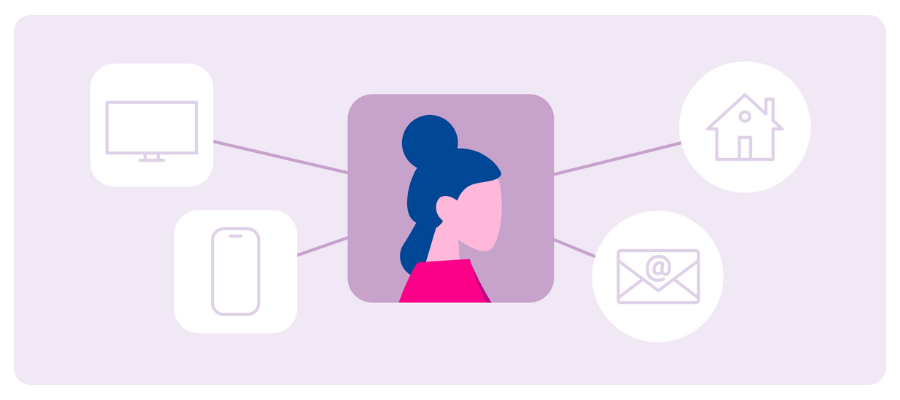
Identity connects signals from different devices, logins, channels, and interactions to real people. It tells your AI models who you’re talking to — not just what they clicked. That kind of clarity gives AI the power to make smarter predictions, uncover insights, and deliver relevance at scale. Without identity, AI is guessing. With identity, it’s delivering.
Identity is the foundation of the outcomes era
We’re living in a performance-driven age. Impressions and clicks are no longer enough. Marketers today are being judged by real outcomes: incremental sales, customer acquisition, revenue lift, and long-term value.
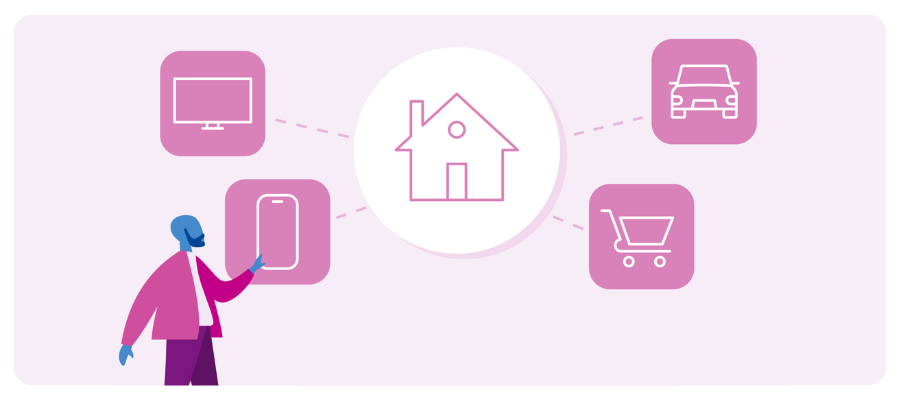
To measure those outcomes, you need to know who you reached — and whether they took action. Identity makes that connection possible. It links ad exposure to real-world results. It enables accurate attribution across channels. It powers personalization at every stage of the journey, making every impression more valuable.
This is the outcomes era, and identity is what makes it measurable.
Commerce media and CTV show what’s possible
Two of the fastest-growing channels — commerce media and CTV — are great examples of identity in action.
At Experian, we’ve invested in this future. Our recent acquisition of Audigent brings together data, identity, and activation — under one roof — built to support both AI-driven planning and outcome-based performance.
How marketers can win now
To stay ahead in a world defined by AI and outcomes, marketers need to:
It’s not about rebuilding everything. It’s about building on what’s already working.
Final thought: Identity is the bridge
AI is raising the bar, and outcomes are the new standard. But neither works without identity. The marketers who win won’t treat identity as a compliance checkbox — they’ll treat it as their competitive edge.
Get started with us today
Latest posts

Up next in our Ask the Expert series, Ben Rothke, Senior Information Security Manager, reviews two certifications that should be part of your information security strategy: Service Organization Control (SOC) 2 Type 2 and International Organization for Standardization (ISO) 27001. Tapad, a part of Experian, is 27001 and SOC 2 Type 2 compliant. Two information security certifications you can trust Seals from Good Housekeeping and Underwriters Laboratories give consumers confidence that they can trust the product that they’re buying. For IT solutions or service providers, what, or who can you turn to for that seal of approval? There are many equivalent third-party attestations you can use. But which should you trust? The International Organization for Standardization (ISO) 27001 The American Institute of Certified Public Accountants (AICPA) System and Organization Controls (SOC) International Organization for Standardization (ISO) 27001 is an international standard for information security from the ISO. ISO 27001 is globally acknowledged and sets requirements for controls, maintenance, and certification of an information security management system (ISMS). This international standard provides organizations with a framework to identify, manage and reduce risks related to the security of information System and Organization Controls (SOC) The SOC, as defined by the AICPA, is a set of audit reports. SOC reports, like 27001 certificates, are used by service organizations to give their customers the confidence they have adequate information security controls in place to protect the data that they handle. SOC 2 is an assessment of controls at a service organization regarding security, availability, processing integrity, confidentiality, and privacy. The purpose of the report is to provide extensive information and assurance to a broad range of users about the controls at a service organization that are relevant to the security, availability, and processing integrity of the systems that process user data, as well as the confidentiality and privacy of the information processed by these systems. Why ISO 27001 and SOC 2 are important The value of these third-party attestations is two-fold: Organizations can show they have passed an independent external audit Third-party attestations save organizations the time of having to do their own audits In addition to 27001 and SOC 2 Type 2 compliance, we are also certified with ISO 27017 and 27018, which are add-ons to 27001 that are specific to cloud computing. We take the security and privacy of our customers’ data as seriously as they do. Every cloud service provider (CSP) has a responsibility matrix that details what security and privacy tasks they are responsible for and which ones the customer is responsible for. Any cloud customer that needs to be made aware of what their security tasks are is putting themselves at risk. So, when you want to engage a CSP, ask them for their attestations. They worked hard for them and will be proud to share their compliance. We’re powered by decades of setting standards in marketing services At Experian, we’re a privacy-first business. We’re highly focused on respecting people, their data, and their privacy. We continue to show our dedication to information security by completing these security audits every year. The constant changes to data compliance regulations can be challenging to navigate, but you don’t have to do it alone. Contact us today. We will be your guide so you can ethically and confidently reach your customers. Contact us today Contact us today About our expert Ben Rothke, Senior Information Security Manager Ben Rothke, CISSP, CISA, is a Senior Information Security Manager at Tapad, a part of Experian. He has over 25 years of industry experience in information systems security and privacy. His areas of expertise are in risk management and mitigation, security and privacy regulatory issues, cryptography, and security policy development. Ben is the author of Computer Security – 20 Things Every Employee Should Know (McGraw-Hill), and writes security and privacy book reviews for the RSA Conference Blog and Security Management magazine. Latest posts

Experian kicks off the AdTech year at CES What better way to jump-start start 2023 than a trip to Las Vegas for the Consumer Electronics Show (CES). Our team was thrilled to participate in this annual kick-off with the AdTech community. The uniqueness of what CES has become for our industry can be defined as the intersection between technology brands, digital, television, and AdTech. CES creates the space necessary for marketing and advertising leaders to collaborate to drive rewarding outcomes for the year ahead. Our goal in attending CES was to connect with our partners, clients, and industry leaders to build relationships, form strategic plans, and listen. The opportunity to learn about our industry’s challenges and goals enables us to develop initiatives, drive success, and support our clients and partners. Keep reading for our 2023 CES AdTech recap. “I have been to CES too many times to mention the number; this year was as energetic, collaborative, engaged, and effective as I can ever recall. Our presence was first-class and meticulously organized, which made our interactions as robust as possible. It's a team effort, and we appreciate all the work that goes into this event. “ – Greg Koerner, Vice President of Digital Advertising Sales Our CES AdTech recap Supporting publishers and advertisers is top of mind for us. Many of our conversations focused on the technologies we deliver or collaborate with our partners to provide. Clean rooms and activation were two common themes throughout our discussions. Clean rooms Consumer privacy, regulatory requirements, and data deprecation are driving the AdTech industry to talk about and explore clean rooms. There’s a need to address data collection, storage, analysis, and sharing. Clean rooms are a potential solution that can standardize data and address interoperability issues. Activation In 2023, we predict that digital activation will increase. We continue to see increased demand for environments where alternative identifiers are being transacted (like demand side platforms and video). Social platforms will continue to experience volatility and advertisers will shift their focus to demand-side, video, and supply-side platforms. Download our 2023 Digital audience trends and predictions report to learn where you should activate your audiences in 2023. We can help plan your 2023 digital activation strategy. How we support clean rooms and activation Our Consumer Sync and Consumer View products support these areas and can help you understand people better–so you and your customers can connect with confidence. What is Consumer Sync? Consumer Sync, our consumer identity product, enables signal agnostic collaboration across marketers and technologies, bringing together digital devices, IDs, households, and attributes. Consumer Sync’s Resolution and Collaboration solutions can help you gain a better understanding of your consumers and make identities actionable in any environment. What is Consumer View? Consumer View, our data discovery product, offers marketers a robust, privacy-first understanding of their customers and prospects. Grounded in consumer identity, Consumer View provides the data foundation to engage consumers where, when, and how they want. Consumer View’s Audience and Attribution solutions provide expansive coverage so that you can fill in the gaps to better understand your prospects. Additionally, our collaborative efforts with strong partnerships across the clean room ecosystem and with our activation partners help our clients serve the best ads, at the best times, to the right audience. “CES is back and was a great way to kick off the new year! We were able to meet with a high volume of clients to eagerly talk about building new solutions for the TV space. We are excited to see where these conversations lead in the next few months.” – Ali Mack, Senior Director of TV Advertising Sales Let’s navigate what’s new in our industry, together We can help you connect with your consumers in innovative, impactful ways. Contact us to continue the conversation and learn more about our Consumer Sync and Consumer View products. We can help you take advantage of the opportunities on the horizon. Get in touch

2022 was a year of adjustment. Consumers adjusted to a post-pandemic world and returned to pre-pandemic shopping behaviors. Consumers adjusted their budgets as the price of goods skyrocketed, as a result of high inflation. To combat inflation, the U.S. Federal Reserve adjusted interest rates. This further restricted consumer buying power. The AdTech ecosystem also experienced adjustments. Google adjusted the date of cookie deprecation. Federal legislation forced technology companies to adjust their consumer privacy practices. Marketers and advertisers adjusted how they address interoperability issues by investing in clean room solutions. This year of adjustment makes it harder to predict where consumers will spend and how marketers should plan their digital audience strategies. What will 2023 bring to AdTech? Download our 2023 AdTech trends and predictions report to access our forecast to help you plan for 2023. Our report will answer: How has digital activation changed over the last four years? What are the top advertising platforms? Which digital audiences are advertisers buying? Do digital audience strategies vary by vertical? Our AdTech trends forecast In 2023, digital activation will increase. Digital audience activation continues to grow at a significant rate despite market shocks like the pandemic, inflation, and higher interest rates. Given the current economic uncertainty, we predict that marketers will look toward tried and true channels where they are confident they will have quality audiences, inventory, and be able to drive ROI. What will digital activation look like in 2023? Between 2018-2021, digital audience activation increased annually by 46%. Using projected 2022 results, between 2018-2022, it will increase annually by 34%. We anticipate continued growth in 2023. Top advertising platforms in 2023 2023 will see increased digital activation, but which platforms will advertisers use to serve their ads? Advertisers will shift their focus to demand-side, video, and supply-side platforms. Social media platforms will continue to experience volatility. Advertisers will place bigger bets on the combination of addressable and CTV. Our report will also reveal which platforms are creating a path toward a post-cookie future and where data-sharing relationships will become the strongest. The most popular advertiser audiences trending now in AdTech Which digital audiences are advertisers buying? Demographics Modeled Lifestyles Behavioral Custom Audiences Traditional targeting methods like Demographics and Modeled Lifestyles are the baseline of many marketing strategies. We predict that we will continue to see marketers activate against these data sets. Digital audience strategies by vertical Digital audience strategies vary by vertical. Download our report to uncover the digital audiences purchased by advertisers in the following industries: Financial Services Health Retail & CPG Technology & Communication Download our new 2025 Digital trends and predictions report Marketers, agencies, and platforms are facing new challenges as privacy regulations evolve, AI technology advances, and consumer behaviors shift. Our latest report highlights actionable strategies for navigating these changes and improving how you connect with audiences, measure impact, and deliver results. What you’ll learn Navigating signal loss: Explore the rise of alternative IDs and contextual targeting as privacy regulations and signal loss reshape data-driven advertising. Connected TV (CTV): Understand the growth of connected TV (CTV), the importance of frequency capping, and strategies for effective audience activation. Omnichannel campaigns: Learn how marketers are moving from channel-specific strategies to audience-led omnichannel campaigns that tell a more cohesive story. Retail media networks: Learn how retail media networks (RMNs) are capitalizing on enriched first-party data to learn more about their customers and reach them across on-site and off-site inventory. Curation: Examine how curation is transforming programmatic campaigns by combining audience, contextual, and supply chain signals to deliver premium inventory packages that maximize addressability, efficiency, and performance. Download now Get in touch