Loading...

How to build a stronger identity framework in a multi-signal world

Published: January 9, 2026 by Henry Schenker, Group Product Manager

At A Glance

The challenge facing marketers today is not the decline of a single identifier, but the fragmentation of signals across browsers, devices, apps and platforms. A resilient identity framework unifies these signals into a consistent, privacy-safe view of the consumer, allowing marketers to reach, measure and optimize across environments that expose different identifiers.

Why an identity framework matters more than any single identifier

The challenge facing marketers today isn’t a single identifier on a deprecation timeline; it’s the increasing fragmentation of signals and identifiers across browsers, devices, apps, and platforms. This shift introduces complexity into how audiences are reached and measured, as signals behave differently in every environment, and it becomes more complex to piece together a complete view of the consumer.
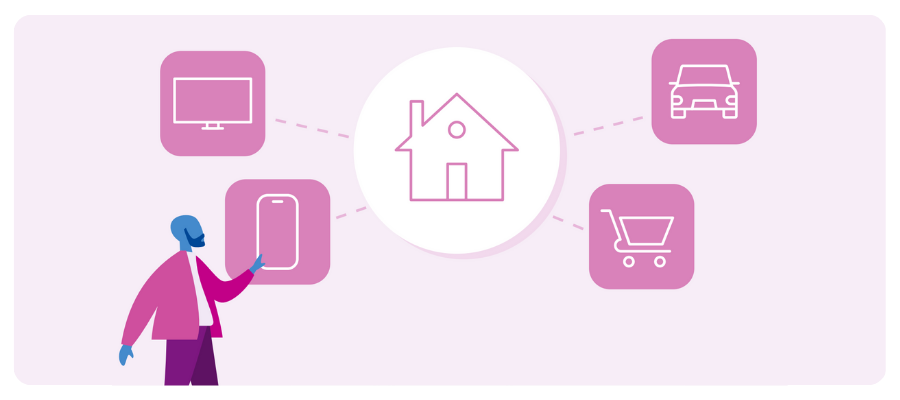
An icon of a house in the center with icons around it that represent a TV, mobile phone, shopping cart, and car with a man on the bottom left-hand side.

Each environment contributes to its own set of visibility gaps, making identity less predictable and more uneven. The result is a patchwork of inconsistent identity signals rather than a single, predictable decline.

While you can’t control how platforms evolve, you can control how you respond to fragmentation. The future won’t be defined by the loss of any single identifier, but by your ability to unify, interpret, and activate the many signals that remain. Marketers who adopt a flexible, identity framework will be best positioned to create consistency in an otherwise fragmented landscape.

At Experian, we believe flexibility starts with intelligence. For decades, we’ve used AI and machine learning to help marketers understand people’s behavior more clearly, respect their privacy, and deliver messages that drive business outcomes. Our technology brings identity, insight, and intelligence together, so even as the number of signals grows and becomes more varied across environments, marketers can reach the right people with relevance, respect, and simplicity. This intelligence acts as the connective tissue across fragmented ecosystems, ensuring marketers can recognize and reach audiences consistently wherever they appear.

What forces are driving fragmentation in identity and signals?

Changes to traditional IDs

Since Apple introduced App Tracking Transparency (ATT), access to the Identifier for Advertisers (IDFA) has become inconsistent across apps and devices. Google’s evolving Android privacy roadmap adds another layer of variability, fragmenting mobile addressability. Safari and Firefox have long restricted third-party cookies, while Chrome continues to support them for now. This creates different signal availability across browsers, contributing to an uneven and increasingly fragmented identity landscape on the open web.

Shifts in signals

IPv4 to IPv6 migration introduces mismatched identity structures that complicate continuity across environments.

Platform-driven fragmentation

Closed ecosystems and uneven adoption of evolving RTB standards (like OpenRTB 2.6 updates designed to support new identifiers and consent signals) create differences in which identifiers and consent signals are shared in the bidstream. At the same time, the rise of alternative or “universal” IDs—often developed by individual platforms, publishers, or technology companies—means that multiple ID types can appear within the same auction, each with its own structure, rules, and level of support. These differences reduce interoperability across platforms and contribute to a more fragmented activation landscape.

Each change creates an identity silo. Together, they form an ecosystem defined by fragmentation rather than absence. Without an identity framework, these environments operate as disconnected identity islands.

A multi-ID world requires a unified identity framework

Alternative IDs play an important role, but they also expand the number of signals marketers must reconcile. Without a consistent identity layer, more IDs often mean more complexity—not more clarity. Common alternative IDs in use today:

  • UID2: The Trade Desk’s Unified I.D. 2.0, an iteration of their original Unified ID 1.0, which was still reliant on third-party cookies, creates persistent IDs with user-provided email addresses and phone numbers.
  • ID5: This independent identity provider builds an identity infrastructure that powers addressable advertising across channels. It can create an ID based on both deterministic and probabilistic data.
  • Hadron ID: Hadron ID is a unique, interoperable identity system (including first-party, audience-based, contextual, deterministic, and probabilistic) developed by Audigent, now part of Experian, to drive revenue for publishers by making their audience data and inventory actionable for media buyers.

Industry reports suggest roughly one-third to two-fifths of open-auction traffic carries alternative IDs, sometimes multiple per request. Among Experian clients, adoption of alternative IDs rose 50% year over year, with a 30% increase in IDs resolved to individuals via our Digital Graph.

Identity isn’t disappearing; it’s multiplying. A modern identity framework resolves these identifiers into a single, privacy-safe consumer view.

Why CTV makes an identity framework essential

Beyond alternative IDs, device-level identifiers also play a major role in today’s ecosystem and add to the fragmentation marketers must navigate. Connected TV (CTV) environments introduce additional fragmentation.

CTV IDs

A CTV ID is an identifier used to deliver, target, and measure ads on CTV devices, including smart TVs, streaming devices, gaming consoles, and more. Unlike MAIDs, which act as universal device identifiers across apps, CTV environments often generate multiple, platform-specific IDs for the same physical device. Different operating systems, publishers, or streaming platforms may each assign their own identifier—such as Roku ID for Advertisers, Amazon Fire Advertising ID, Samsung TIFA, or Apple IDFA for CTV. As a result, a single household or TV can appear under several distinct IDs, making cross-app or cross-platform recognition more complex and further reinforcing the need for a unified identity framework.

Experian’s identity framework is powered by predictive and generative intelligence that makes resolution faster and more human-centered. Our AI models fill gaps where data signals are missing, infer behaviors responsibly, and continuously optimize for accuracy, so marketers can personalize ads responsibly, even in a fragmented ecosystem. More importantly, our framework normalizes signals across disconnected environments, creating a consistent identity spine that follows the consumer through their fragmented digital journey.

An identity framework connects online and offline signals

Fragmentation extends beyond digital environments. Marketers manage offline data from in-store transactions, loyalty programs, household identifiers, and phone numbers that rarely align cleanly with digital signals.
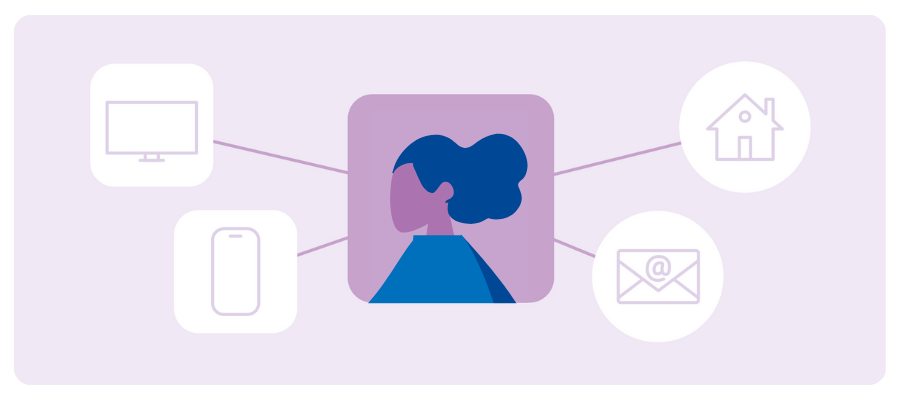
An icon of a woman in the center with icons around her for TV, mobile phone, email, and home.

As consumers move between online and offline touch points, an identity framework connects these signals into a coherent view of the individual. This foundation allows marketers to recognize the same consumer across environments that expose different identifiers.

Four keys to future-proofing your media with an identity framework

1. Know your customer: Unify and enrich your first-party data

First-party data is a marketer’s most durable asset, but it’s often scattered and incomplete.

  • Unify it: Bring CRM records, site interactions, and loyalty data into a single platform to build a holistic customer view. Use Offline Identity Resolution to resolve your first-party offline personally identifiable information (PII) back to a consolidated consumer profile, removing duplication of users in your data set.
  • Enrich it: Append Experian Marketing Attributes to uncover demographics, lifestyle markers, and purchase behaviors you can’t see on your own, and use Offline Identity Append to fill in missing offline data points (such as name, address, phone, etc.) to create a more complete and actionable customer profile.
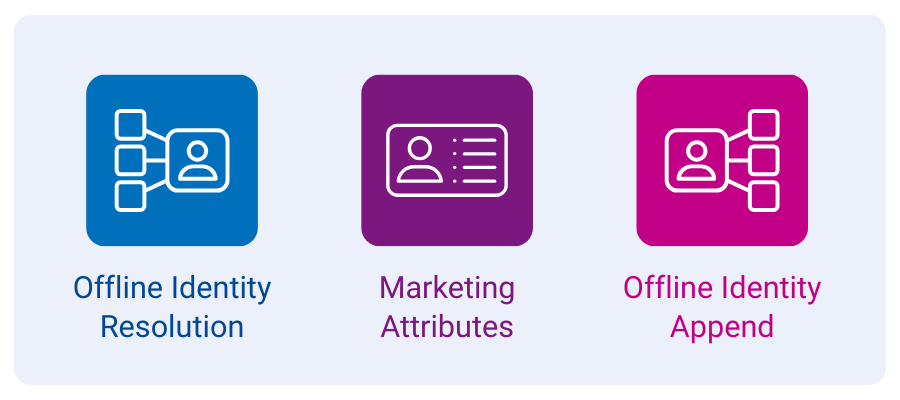
Experian's Offline Identity Resolution, Marketing Attributes, and Offline Identity Append

This gives you richer profiles that drive more personalized targeting and messaging. Fragmented ecosystems make unified first-party data even more essential. A connected view allows marketers to anchor identity against a stable, proprietary foundation. As identifiers vary across environments, marketers need flexible, privacy-first ways to understand where their audiences are and how to reach them.

2. Find your customer: Expand how you discover and reach audiences in a fragmented landscape

As identifiers vary across environments, marketers need flexible, privacy-first ways to understand where their audiences are and how to reach them.

  • Contextual signals: Experian’s Contextually-Indexed Audiences map content to consumer insights, so you can target intent-rich environments.
  • Geographic insights: Our Geo-Indexed Audiences help you find regions that over-index for specific traits and activate them across your preferred platforms.
  • Syndicated and Partner Audiences: Choose from 3,500+ prebuilt segments or 30+ partner data sources spanning health, retail, travel, and more.
  • Curation: As a full-service curation partner, we enable private marketplace (PMP) deals that are privacy-safe, identity-agnostic, and performance-optimized.
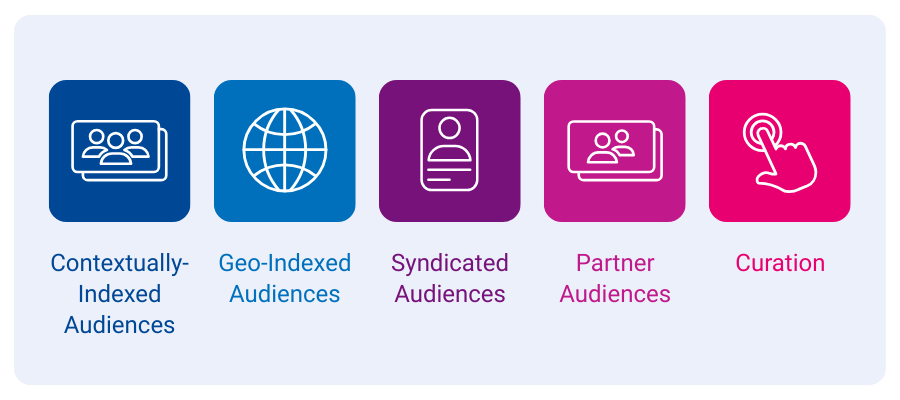
Icons that represent Experian's Contextually-Indexed Audiences, Geo-Indexed Audiences, Syndicated Audiences, Partner Audiences, and Curation.

Together, these approaches help you confidently reach your audiences – using multiple types of signals that complement your identity strategy and create a clearer picture across fragmented environments.

3. Reach your customer: Maximize scale through interoperability

As signals and identifiers proliferate across environments, interoperability is essential to maintain consistent reach. Experian’s Offline and Digital Graphs unify disparate signals (MAIDs, CTV IDs, alternative IDs, IP, and more) so marketers can recognize and engage audiences reliably across channels, devices, and platforms.
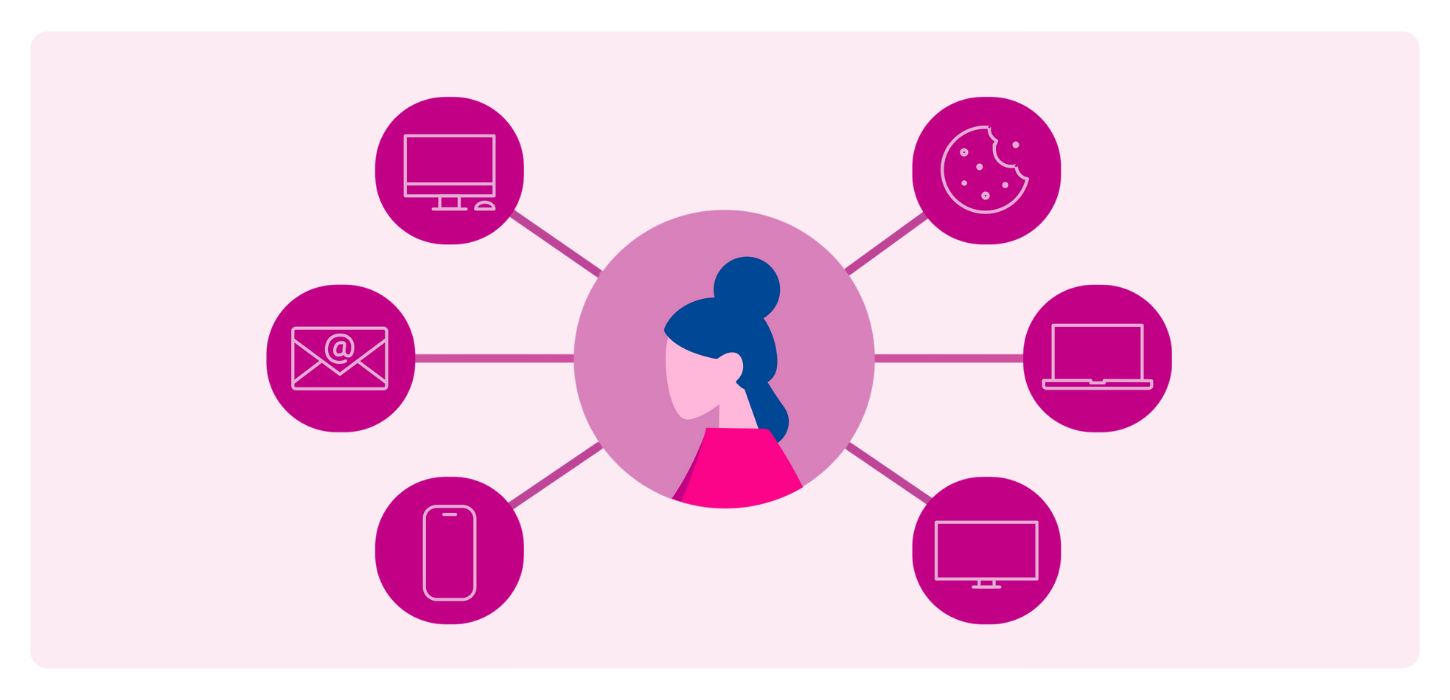
An icon of a woman in a center circle with different cirlces around her with icons for a desktop computer, email, mobile phone, TV, laptop, and cookie.

Interoperability matters because it turns a collection of disconnected identifiers into a coherent identity framework that can actually be activated. The following capabilities demonstrate how that comes to life.

  • Unified identity: Create a consistent view of your audience, even when different environments expose different identifiers. Experian’s identity framework connects these signals into a single, actionable identity spine.
  • Expanded reach: OpenX enriched its supply-side identity graph with Experian’s audiences, making our data available directly across OpenX supply and formats. By matching more of the starting audience and identifying more users in the bidstream, marketers see higher match and activation rates, extending reach in hard-to-address environments like Safari and mobile web.

Measure success: Optimize based on outcomes

If you can’t measure your marketing, you can’t improve it. Experian Outcomes, powered by our holistic understanding of the user across online and offline touch points, closes the loop by connecting media exposures to real-world actions (store visits, purchases, or site conversions).

An icon of a person with graphs and charts on their left and right sides.

With these insights, you can:

  • Prove ROI across digital and TV
  • Attribute success to the right channels and tactics
  • Continuously refine targeting, creative, and spend allocation

Outcome-based measurement makes your strategy adaptive, so dollars flow to what drives results.

As signals multiply across environments, connecting exposures to outcomes requires a unified identity foundation. Experian closes the loop by unifying exposures across disconnected touch points, enabling holistic attribution and optimization. Our AI-powered simplicity drives continuous improvement. From predictive modeling to agentic workflows that automate optimization, we’re investing in generative AI to help marketers spend less time on manual setup and more time on strategy and outcomes.

The Experian identity framework advantage

Experian connects fragmented signals into a single, actionable identity framework built for long-term resilience.

What our identity framework delivers

  • Interoperability: We support all major identifiers, including alternative IDs, IP address (v4 and v6), contextual signals, and both first- and third-party data.
  • Flexibility: Whether you’re activating syndicated audiences, tapping into partner audiences from 30+ data providers, or curating custom segments through Audigent, our solutions meet you where you are.
  • Scale: With four billion IDs resolved in our Digital Graph and 280 million telephones in our Offline Graph, we deliver unmatched reach across digital and offline environments.
  • AI that makes marketing more human: We bring together identity, insight, and automation through responsible AI, helping marketers see audiences clearly, act with intelligence, and optimize with respect for privacy.

Our approach is delivering results across a range of programmatic players. These outcomes demonstrate how a unified identity framework delivers performance in environments where signals, identifiers, and devices operate in silos.

Proven results powered by Experian’s identity framework

  • Sonobi increased programmatic addressability across the mobile web by 25% and delivered a 20% lift in impression value through our identity graph, driving stronger campaign connections and greater publisher returns.
  • One DSP used our Digital Graph to match more MAIDs, CTV IDs, and IP addresses to online conversions, enabling increased accuracy of their attribution and measurement. They achieved an 84% synced ID rate and a 9% increase in match rate.
  • For Cuebiq, we significantly increased match rates and resolved data from cookieless environments, such as Safari. By combining separate data streams and resolving 85% of total events to a household, Cuebiq expanded on the household IDs to identify MAIDs that are observed in-store, enabling accurate cross-channel measurement.
  • Our Digital Graph allowed MiQ and their clients to expand the reach of their seed audiences across devices by 51% and cookieless IDs by 64%. As a result, MiQ can provide marketers with future-proofed connected planning, advanced targeting, and precise measurement.

We’re your partner in building identity framework that lasts: resilient to change, adaptive to new signals, and focused on outcomes.

What comes next for signals and identity?

The future isn’t defined by any single identifier. It’s defined by the ability to unify and activate across a fragmented identity ecosystem. The winners will be those who adopt interoperable, outcome-driven identity frameworks today.

Those strategies will increasingly be powered by responsible AI, systems that simplify workflows, predict opportunity, and optimize in real time while keeping people at the center. At Experian, we see AI not as automation for its own sake, but as a way to make marketing more human, relevant, and respectful.

Your playbook for navigating fragmentation

Experian connects the fragmented identity ecosystem, unifying alternative IDs, IP signals, contextual data, and first- and third-party assets into a consistent, actionable identity foundation. With proven lift across partners like Sonobi and new offerings like Contextually-Indexed Audiences, we help you build campaigns that perform in a fragmented landscape.

Download our 2026 Digital trends and predictions report to explore how identity, interoperability, and measurement will define the future of advertising.


About the author

Henry Schenker, Group Product Manager, Experian

Henry Schenker

Group Product Manager, Experian

Henry has nearly 15 years of experience in Digital Advertising, Social Media Marketing, Data Licensing & Analytics, Front-End Engineering, Technical Architecture & Integrations, Profit & Loss Management, and Enterprise-Level Contract Negotiation across the U.S., EMEA, and Asia Pacific regions.

Prior to re-joining Experian, Henry held critical go-to-market and product roles at noted industry-disruptors Media.Monks and Attain. From 2018 – 2020, he served as the Vice President, APAC of Innovid (now publicly traded, NYSE:CTV), leading the company’s expansion into Japan, Singapore, and Australia. The preceding 4 years with Tapad (acquired by Experian), allowed Henry to become a seasoned Sales Engineer, grow and lead a global Technical Integrations team, and relocate to Singapore, leading sales and operations in the APAC region. Before beginning his career and learning front-end engineering on-the-job at Wyng (formerly Offerpop), Henry received a dual-major (BA/BS) in Sociology and Economics & Finance from Bard College in New York.


FAQs

Why is signal and identity fragmentation increasing across digital and offline channels?

Signal and identity fragmentation is increasing across digital and offline channels because consumers now engage across more devices, platforms, and environments. Each environment introduces its own identifiers and privacy rules. This growth creates more signals overall, which increases the need for unification rather than reliance on a single ID.

How should marketers think about alternative IDs in a multi-signal ecosystem?

Alternative IDs add reach and coverage when they connect through a common identity framework. They work best alongside first-party data, device identifiers, and contextual signals. Resolution turns multiple IDs into one consistent view of the consumer.

What role does unified identity play in CTV and cross-device media?

CTV environments often assign multiple platform-specific identifiers to the same household or device. A unified identity layer links those identifiers together. This approach supports consistent audience recognition across streaming apps, devices, and digital channels.

How does unified identity support accurate measurement and attribution?

Unified identity connects media exposure to outcomes across digital, TV, and offline touch points. It enables marketers to see how different channels contribute to real actions like visits or purchases. Measurement improves when identity remains consistent across the full journey.

Why does an identity strategy matter beyond digital advertising?

Identity extends into offline signals such as transactions, loyalty activity, and household data. A unified foundation aligns online and offline interactions into one coherent profile. This connection supports planning, activation, and measurement across the entire customer experience.


Latest posts

Loading…
Experts discuss five key considerations for integrating linear and connected TV in 2024

With U.S. brands expected to invest over $28 billion in connected TV (CTV) in 2024, balancing linear TV and CTV is now a top priority. Advertisers need to integrate these platforms as the TV landscape evolves to reach audiences with various viewing habits. A successful strategy requires both linear and CTV approaches to effectively reach audiences at scale. We interviewed experts from Comcast Advertising, Disney, Fox, Samsung Ads, Snowflake, and others to gain insights on the evolving landscape of linear and CTV. In our video, they discuss audience fragmentation, data-driven targeting, measurement challenges, and more. Watch now to hear their perspectives. Five considerations for connecting with linear TV and CTV audiences 1. Adapt to audience fragmentation With consumers' rapid shift toward streaming, it's easy to overlook the enduring significance of linear TV, which still commands a large portion of viewership. According to Jamie Power of the Walt Disney Company, roughly half of the current ad supply remains linear, highlighting the need for brands to adapt their strategies to target traditional TV viewers and cord-cutters. As streaming continues to rise, ensuring your strategy integrates both CTV and linear TV is crucial for reaching the full spectrum of audiences. "I don't think that we thought the world would shift so quickly to streaming, but it's not always just all about streaming; there's still such a massive audience in linear."Jamie Power, Disney 2. Combine linear TV’s reach with CTV’s precision Blending the reach of linear TV with the granular targeting capabilities of CTV allows advertisers to engage both broad and niche audiences. Data is critical in understanding audience behavior across these platforms, enabling brands to create highly relevant campaigns tailored to specific audience segments. This strategic use of data enhances engagement and ensures that the right viewers see advertising campaigns. "The future of TV is really around managing the fragmentation of audiences and making sure that you can reach those audiences addressably wherever they're watching TV."Carmela Fournier, Comcast Advertising 3. Manage frequency across platforms Cross-platform campaigns require managing ad frequency to avoid oversaturation while ensuring adequate exposure. With a variety of offline and digital IDs resolved to consumers, our Digital and Offline Graphs can help maintain consistent messaging across linear TV and CTV. This approach allows advertisers to strike the right balance, preventing ad fatigue and delivering the right audience reach for campaign impact. "You've got to make sure that you're not reaching the same homes too many times, that you're reaching everybody the right amount of times."Justin Rosen, Ampersand 4. Focus on consistent measurement Linear TV and CTV offer different data granularities, necessitating tailored approaches for accurate cross-platform campaign measurement. Bridging these data gaps requires advanced tools that streamline reporting for both mediums. As the industry moves toward consistent measurement standards, advertisers must adopt solutions that provide a comprehensive view of campaign performance, enabling them to optimize their cross-platform efforts. "Where I think there are pitfalls are with the measurement piece, it's highly fragmented, there's more work to be done, we're not necessarily unified in terms of a consistent approach to measurement."April Weeks, Basis 5. Align with shifts in audience behavior The success of cross-platform campaigns hinges on staying agile and responsive to shifting audience preferences. As CTV adoption grows, advertisers must proactively adjust their strategies to align with how viewers engage across linear and streaming platforms. Ideas include: Regularly updating creative Adjusting the media mix Utilizing real-time data insights to ensure campaigns remain relevant "At Fox we were a traditional linear company, and essentially what we're trying to do is merge the reach and the scale of TV as well as the reach and the scale of all the cord-cutters and cord-nevers that Tubi possesses." Darren Sherriff – FoxDarren Sherriff, Fox As streaming TV rapidly changes, brands must stay ahead of trends and shifts in consumer behavior to tap into CTV's growing potential. By focusing on these opportunities, advertisers can blend linear TV and CTV, ensuring their campaigns reach audiences wherever they watch. Connect with Experian's TV experts As a trusted leader in data and identity services, Experian offers the expertise to help you succeed in television marketing. With our strong partnerships with key players in the TV industry, we provide access to unique marketing opportunities. Learn how Experian’s data and identity solutions can deliver outstanding results in advanced TV advertising. Partner with us today to enhance your marketing strategies using our Consumer View and Consumer Sync solutions. Connect with our TV experts Contact us Latest posts

Sep 17,2024 by Experian Marketing Services

How the AI revolution is transforming the future of commerce

In this article…Understanding the AI revolution in commerceFour benefits of the AI revolution coming to commerceFuture trends and predictionsChart the future of commerce with Experian Technology is pushing the boundaries of commerce like never before. Artificial intelligence (AI) is one of the primary driving technologies at the forefront of the commerce evolution, using advanced algorithms to revolutionize marketing and personalize customer experiences. As of 2024, AI adoption in e-commerce is skyrocketing, with 84% of brands already using it or gearing up to do so.  This article explores the AI revolution coming to commerce, focusing on what makes AI a driving force for e-commerce in particular, and the ways it's reshaping how businesses engage with consumers. Understanding the AI revolution in commerce AI is quickly reshaping commerce as we know it by democratizing access to sophisticated tools once reserved for large corporations, breaking down functional silos within organizations, and integrating data from multiple sources to achieve deeper customer understanding. It’s paving the way for a future where every brand interaction is uniquely crafted for the individual, powered by AI systems that anticipate preferences proactively.  AI is a broad term that encompasses: Data mining: The gathering of current and historical data on which to base predictions Natural language processing (NLP): The interpretation of human language by computers   Machine learning: The use of algorithms to learn from past experiences or examples to enhance data understanding The capabilities of AI have significantly matured into powerful tools that can improve operational efficiency and boost sales, even for smaller businesses. They have also fundamentally changed how businesses interact with customers and handle operations. As AI continues to develop, it has the potential to provide even more seamless, personalized, and ethically informed commerce experiences and establish new benchmarks for engagement and efficiency in the marketplace. Four benefits of the AI revolution coming to commerce Major commerce players like Amazon have benefited from AI and related technologies for a while. Through machine learning, they’ve optimized logistics, curated their product selection, and improved the user experience. As this technology quickly expands, businesses have unlimited opportunities to see the same efficiency, growth, and customer satisfaction as Amazon. Here are four primary benefits of AI adoption in commerce. 1. Data-driven decision making AI gives businesses powerful tools to analyze large amounts of data more quickly and accurately than a person. Through advanced algorithms and machine learning, AI can sift through historical sales data, customer behavior patterns, and market trends to uncover insights and suggest actions that might not be immediately obvious to human analysts. By transforming raw data into actionable insights, AI empowers businesses to make more informed decisions, reduce risks, and capitalize on opportunities. As a real-world example, Foxconn, the largest electronics contract manufacturer worldwide, worked with Amazon Machine Learning Solutions Lab to implement AI-enhanced business analytics for more accurate forecasting. This move improved forecasting accuracy by 8%, saved $533,000 annually, reduced labor waste, and improved customer satisfaction through data-driven decisions. 2. A better customer experience AI is set to make customer interactions smoother, faster, and more personalized by recommending products based on preferences and behaviors, making it easier for customers to find what they need. When consumers visit an online store, AI also provides instantaneous help via a chatbot that knows their order history and preferences. These AI-powered assistants offer real-time help like a knowledgeable store clerk. They give the appearance of higher-touch support and can answer basic questions at any hour, provide personalized product recommendations, and even troubleshoot issues. Chatbots free up human customer service agents for more complicated matters, and these agents can then use AI to obtain relevant information and suggestions for the customer during an interaction. 3. Personalized marketing Data-driven personalization of the customer journey has been shown to generate up to eight times the ROI, as data shows 71% of consumers now expect personalized brand interactions. Until AI came around, personalization at scale was complex to achieve. Now, gathering and processing data about a customer’s shopping experience is easier than ever based on lookalike customers and past behavior. Many businesses have adopted AI to glean deeper insights into purchase history, web browsing, and social media interactions to drive better segmentation and targeting. With AI, advertisers can analyze behavioral and demographic data to suggest products someone is likely to love. Consumers can now browse many of their favorite online stores and see product recommendations that perfectly match their tastes and needs.  AI can also offer special discounts based on purchasing habits, and send personalized emails with products and content that interest customers to make their shopping experience more engaging and relevant. This personalization helps businesses forge stronger customer relationships. Personalization across digital storefronts Retail media involves placing advertisements within a retailer's website, app, or other digital platform to help brands target consumers based on their behavior and preferences within that environment. Retail media networks (RMNs) expand this capability across multiple retail platforms to create seamless advertising opportunities throughout the customer journey.  Integrating AI into RMNs can improve personalization across digital storefronts with personalized, relevant ads and custom offers in real time that improve the customer experience. 4. Operational efficiency AI can also be beneficial on the back end, enabling more efficient resource allocation, pricing optimization, efficiency, and productivity. Customers can be frustrated when they visit a store for a specific product only to find it out of stock or unavailable in a particular size. With AI, these situations can be prevented through algorithms that forecast demand for certain items. Retailers like Amazon and Walmart both use AI to predict demand, with Walmart even tracking inventory in real time so managers can restock items as soon as they run out.  AI can automate and streamline operational tasks to help businesses run smoother, faster, and more cost-effective operations. It can: Offload tedious data entry, scheduling, and order processing tasks for greater fulfillment accuracy.  Analyze historical data and market trends, predicting demand to help businesses optimize inventory, reduce waste, track online and in-store sales, and prevent shortages. Forecast demand levels, transit times, and shipment delays to make better predictions about logistics and supply chains. Improve data quality using machine learning algorithms that find and correct product information errors, duplicates, and inconsistencies. Adjust prices based on competitor pricing, seasonal fluctuations, and market conditions to maximize profits. Pinpoint bottlenecks, identify issues before they escalate, and provide improvements for suggestions. Future trends and predictions If you want to stay ahead in e-commerce, it’s just as important to know what’s coming as it is to understand where things are today. Here are some of the trends expected to shape the rest of 2024 and beyond. Conversational commerce Conversational commerce allows real-time, two-way communication through AI-based text and voice assistants, social messaging apps, and chatbots. Generative AI advancements may soon enable more seamless, personalized interactions between customers and online retailers. This technology can improve customer engagement and satisfaction while providing helpful insights into preferences and behaviors for better personalization and targeting. Delivery optimization AI-driven delivery optimization uses AI to predict ideal routes for each individual delivery, boosting efficiency, reducing costs, promoting sustainability, and improving customer satisfaction throughout the delivery process. Visual search AI-driven visual search is quickly improving in accuracy, speed, and contextual understanding. Future developments may integrate seamlessly with augmented reality (AR) so shoppers can search for products by pointing their devices at physical objects. Social media and e-commerce platforms may soon incorporate visual search more prominently, allowing users to find products directly from images. AI content creation AI is already automating and optimizing aspects of content production: Algorithms can generate product descriptions, blog posts, and social media captions personalized to specific customer segments.  AI tools also enable the creation of high-quality visuals and videos.  NLP advancements ensure content is compelling and grammatically correct.  AI-driven content strategies analyze consumer behavior and refine messaging to meet changing preferences and trends. This automation speeds up content creation while freeing resources for strategic planning and customer interaction. IoT integration Integrating AI with Internet of Things (IoT) devices could help make the ecosystem more interconnected in the future. AI algorithms can use data from IoT devices like smart appliances, wearables, and sensors to gather real-time insights into consumer behavior, preferences, and product usage patterns. This data enables personalized marketing strategies, predictive maintenance for products, and optimized inventory management. AI-driven IoT data analytics can also streamline supply chain operations to reduce costs and inefficiencies. Fraud detection and security There will likely be an increased focus on the ethical use of AI and data privacy regulations to strengthen consumer trust and transparency. AI-powered systems will get better at detecting and preventing fraud in e-commerce transactions, which will heighten security measures for both businesses and consumers. Chart the future of commerce with Experian AI has changed how marketers approach e-commerce in 2024. With AI-driven analytics and predictive capabilities, marketers can extract deeper insights from extensive data sets to gain a clearer understanding of consumer behavior. This enables refined segmentation, precise targeting, and real-time customization of messages and content to fit individual preferences. Beyond insights, AI automates routine tasks like ad placement, content creation, and customer service responses, freeing marketers to concentrate on strategic planning and creativity. Through machine learning, marketers can predict trends, optimize budgets, and fine-tune strategies faster and more accurately than ever. The time to embrace AI is now.  At Experian, we’re here to help you make more data-driven decisions, deliver more relevant content, and reach the right audience at the right time. Using AI in your commerce marketing strategy with our Consumer View and Consumer Sync solutions can help you stay competitive with effective, engaging campaigns.  Contact us to learn how we can empower your commerce advertising strategy today. Contact us Latest posts

Sep 10,2024 by Experian Marketing Services

An interview with Ampersand’s Rachel Herbstman and Anastasia Dukes-Asuen

In our Ask the Expert Series, we interview leaders from our partner organizations who are helping lead their brands to new heights in AdTech. Today’s interview is with Rachel Herbstman, VP of Data Innovation, and Anastasia Dukes-Asuen, Senior Director of Advanced TV Data & Insights at Ampersand. Could you introduce us to Ampersand and discuss your approach to TV advertising? Ampersand, a joint venture between Comcast, Charter, and Cox, is a media sales organization that offers a unified footprint, unlocking unparalleled scale and unique data/insights for local and national advertisers. Ampersand gives advertisers true audience first planning, scale in execution, and advanced measurement of their TV investments, representing 117 million multiscreen households and over 75% of addressable households in the U.S. (64 million households). We help clients reach their unique target audience and deliver their stories – anytime, anywhere, and on whatever device. How does adding streaming to a linear campaign, or vice versa, enhance overall campaign performance for marketers?  Herbstman: Marketers have recognized that multiscreen media strategies are the strongest as viewership continues to fragment. Unique audiences exist in traditional TV and streaming, and failure to include either media channel will reduce the total reach opportunity. These channels have proven to validate unduplicated audiences. In our local business, adding streaming to a historically traditional linear-only media strategy increased campaign reach by 33%. Conversely, adding linear TV to a historically streaming-only media strategy increased reach by 209%. These metrics are validated by matching media exposures to an authenticated households subscriber ID and represent mass opportunities to reach new audiences with a multiscreen media strategy. When considering reallocating media investments, how does Ampersand help clients determine the most effective channels for specific campaigns?  Herbstman: For a brand that historically invested in traditional TV, either national or local broadcast, we can provide insights to analyze the performance of any media campaign. The insights can include high-level metrics like reach and frequency and more granular metrics like unique reach per network. By seeing both the high-level results and more detailed granularity, we can provide optimization recommendations for funding other activation opportunities. Our database of past campaigns consistently demonstrates that gaining new eyeballs with a national TV campaign usually plateaus after a few weeks. In other words, if most of your intended audience is reached after about three or four weeks of national television, reaching any new viewers can be exponentially more expensive. We’ve built an Addressable Simulator tool for national advertisers that shows the potential impact of shifting a portion of the national media weight, specifically from the latter part of a flight, into addressable TV. Using our licensed Experian data set, we can measure any standard age/gender target or any advanced target to understand the complementary impact that addressable audience has on national media. This tool has dynamic inputs of CPMs and incidence rates, flight lengths, and budgets to simulate different scenarios and give marketers some intelligence on what holistic reach against that Experian segment they could expect with one given budget using brand-safe, traditional, and streaming inventory with an addressable activation. Additionally, we've developed an interactive eCPM calculator that helps national advertisers assess the cost efficiency of adding addressable TV to their traditional campaigns. By dynamically inputting CPMs, marketers can evaluate tradeoffs between media types for upcoming campaigns. Are there audience demographics that benefit from these combined media strategies, and what indicators or data points guide your recommendations to add cable to a local broadcast campaign versus other reallocations? Herbstman: By including cable or streaming in a local effort, a client can use a data-driven approach to find more intended viewers in other premium content. Utilizing the vast library of Experian audience segments paired with our robust sample of 64 million data-enabled homes enables Ampersand to provide insights into the most valuable networks and dayparts that the intended viewer will likely watch on either platform.  With identity and viewing insights at scale, we can understand how consumers watch TV, even for inventory we have yet to sell. Our goal is to help marketers understand what’s happening as a result of their investments at a holistic level. We can analyze a campaign running across hundreds of designated market areas to quickly and simply understand the holistic delivery of their broadcast and cable weight by pulling back set-top-box exposures on broadcast and Ampersand-purchased cable on our measurable footprint. Then, we can determine the share of measurable reach that each portion’s media weight contributes to. We recommend optimizing towards a more balanced approach, where the reach levels for broadcast and cable mirror each other, creating a more effective market media mix. Once we confirm cable's potential in a market, we analyze network and daypart metrics to adjust key areas to optimize the campaign. We invite marketers to use these insights to measure their local or national TV campaign performance and garner unique perspectives to re-balance investments to drive reach and optimal frequencies. Are there common missteps to avoid? Dukes-Asuen: Ampersand's decades of experience with media and data insights have allowed us to create an extensive database complete with targeting and measurement benchmarks. We use this database to curate best practices for brands and help set them up for success, keeping their goals and objectives for reach and frequency in mind.  Some clients spread their investment levels too thin, whether through short flight windows, low weekly frequencies, or targeting overly niche audiences that don't fully support KPI goals. One way to avoid these missteps is to set up a test-and-learn plan to validate a hypothesis and refine media strategies, ensuring campaigns are structured to garner meaningful insights. Ampersand can help ensure the test itself is constructed and supported to yield statistically relevant results, and the learnings can then be applied to the next campaign. How does Experian’s data enhance your campaigns at Ampersand?  Dukes-Asuen: Within our Experian license, we can map the Experian Consumer View databases against our multichannel video programming distributors subscriber base in a privacy-compliant way to plan and activate them seamlessly. Experian has a rich set of audience targets and segmentation that we utilize to identify households that can be used for audience-based media execution with Ampersand. By defining the right audience—whether consumers are likely to purchase a product, exhibit certain behaviors, or demonstrate specific values—we enhance campaign performance and improve media spending efficiency for our advertisers. Additionally, how do you believe AI and other new technologies will impact your media buying approaches in the future, and how might these innovations improve campaign effectiveness and provide value to your clients? Herbstman: We have a strong use case on the measurement and analytics end. Using AI, we can aggregate a massive amount of historical data—viewership and exposure data. AI helps us understand overarching market trends and media performance to analyze campaign results and inform future campaign optimizations. The value of AI is in its role as an additional technology layer, enriching our insights portfolio and providing faster intelligence that enhances campaign effectiveness and delivers greater value to our clients. Can you share an example of how precise audience targeting and segmentation, powered by Experian, have led to significantly better media spend reallocations and campaign performance for marketers? One great example is how a national cruise brand dramatically improved its media spend and campaign performance by utilizing precise audience targeting and segmentation through Experian. By combining Ampersand’s addressable TV with Experian’s data-driven insights, they achieved a 14% incremental reach, a 3.1x higher frequency, and a 24% lower effective CPM. This strategic approach allowed them to reallocate their media spending more effectively, ensuring every impression reached their custom target audience. Thanks for the interview. For those interested in learning more about Ampersand, reach out for a personalized consultation. Contact us Latest posts

Sep 05,2024 by Experian Marketing Services

Subscribe to our newsletter

Enter your name and email for the latest updates

This site is protected by reCAPTCHA and the Google Privacy Policy and Terms of Service apply.

About Experian Marketing Services

At Experian Marketing Services, we use data and insights to help brands have more meaningful interactions with people. As leaders in the evolution of the advertising landscape, Experian Marketing Services can help you identify your customers and the right potential customers, uncover the most appropriate communication channels, develop messages that resonate, and measure the effectiveness of marketing activities and campaigns.

Visit our website

Subscribe to our newsletter

Stay up to date on the latest industry news and receive expert tips from our marketing experts.
Subscribe now!