At A Glance
Omnichannel marketing only works when a consumer’s journey across TV, social, and in-store moments builds one connected story instead of scattered impressions. In this conversation, Experian and MiQ discuss how marketers can use connected identity and richer audience data, including MiQ Sigma, to plan and activate campaigns that reach the right people across channels and markets.Key takeways
- MiQ Sigma uses Experian’s Digital Graph inside MiQ’s Identity Spine to resolve audiences consistently across devices, channels, and data feeds.
- Sigma’s Planning Agent turns a single brief into an omnichannel plan, with Experian Marketing Attributes enriching the demographic and behavioral signals behind its recommendations.
- Experian WorldView delivers a geographic unit smaller and more consistent than a postal code across more than 130 countries, helping marketers hold local relevance at global scale.
- Before the next plan, marketers should check whether it’s connected (not just everywhere), data led, built on portable first-party data, and consistent in signal depth across markets.
One consumer might see an ad on TV Sunday night, scroll past a social post on Monday, and buy in-store by Friday. Each moment happens on a different platform with its own identifiers and data, and together they form one continuous journey. Planning for that journey starts with connecting the signals behind it.
Lara Koenig, Global VP of Strategy and Partnerships at global programmatic media partner MiQ, joined us to discuss how a connected identity foundation and richer consumer attributes help marketers plan omnichannel campaigns with insight instead of assumptions and reach the right people across markets.
What makes a plan omnichannel, not just everywhere
A connected omnichannel plan carries one story across platforms. Each message builds on what a consumer has already seen, so reach adds up to a consistent experience across TV, social, digital, and in-store moments.

Connecting those moments takes work. First-party data varies in depth from brand to brand, platforms use different identifiers, and for global campaigns, the signals that explain behavior in one country often look different in the next.
Planning with data before the dollars move
MiQ uses data and artificial intelligence (AI) to give marketers a fuller view of their audiences, combining age and gender with the attributes and behaviors that shape intent. One consumer might be a parent, a retail shopper, and a sports fan at once, and each signal adds to the plan. That fuller picture helps MiQ plan around the moments when intent is highest.
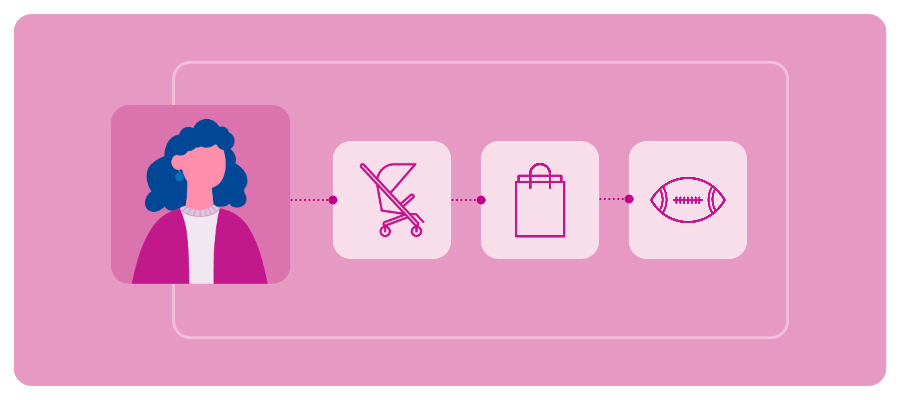
To make that practical, MiQ built MiQ Sigma, a platform that puts data in marketers’ hands so they can explore it and find the audiences they hadn’t thought to look for.
Where Experian fits inside MiQ Sigma
MiQ integrated Experian’s Digital Graph into its Identity Spine, which connects dozens of data feeds and ID solutions. That gives MiQ cross-device and cross-channel resolution it can apply consistently, whatever the signal.
Sigma’s Planning Agent turns a single brief into an omnichannel plan with audience, channel, and tactical recommendations. Experian Marketing Attributes enrich the demographic and behavioral signals that feed the Planning Agent, adding TV viewing and purchase behavior to data marketers already trust, so its recommendations reflect what audiences watch and buy.
“We’ve built a platform called MiQ Sigma. Experian is a core element of the identity spine behind that which helps us enrich a lot of other data partners we license to tell a really connected universe story across the world.”
MiQLara Koenig, Global VP of Strategy and Partnerships
Identity is the foundation
A marketer’s first-party data is their richest asset, and it varies widely: deep email-based insight for some brands, a name and address for others, and very little for consumer-packaged goods (CPG) brands whose sales usually happen at the retailer. Identity resolution makes that data addressable. It works like a translation layer, connecting a marketer’s customer data to the identifiers media platforms accept, such as hashed emails (HEMS), and mobile ad IDs (MAIDS).
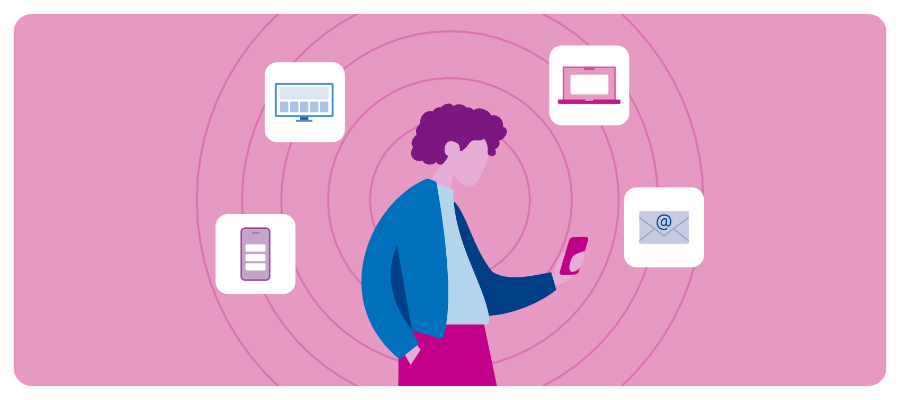
Experian keeps the foundation consistent while the inputs vary. Our identity foundation is signal-agnostic and platform-agnostic, so MiQ can plug in local retailer, broadcaster, and device data and still resolve it to the same person and household view. MiQ saw this in practice when it brought Experian’s Digital Graph into its Identity Spine, expanding reach and scale across screens.
Why scale and local relevance pull against each other
Scale and relevance can pull against each other when the data behind a plan change from one market to the next. Retailers, broadcasters, and TV manufacturers differ by country, and in some regions, privacy rules shape how identifiers like IP addresses and hashed emails can be used, which makes location a practical unit for planning. Experian WorldView provides demographic and location data in consistent 250-meter grids, a unit smaller than most postal codes, across global markets. That shared framework helps marketers compare markets and sharpen local planning in categories such as quick-service restaurants, CPG, and retail.
Beyond reach: Making the hard question simple
Reach is the starting point. From there, marketers need to understand audiences in the context of their goals, activate through privacy-forward, governed identity, measure what happened, and keep improving..
“There’s a lot of complex stitching that happens just to answer that basic question: who do you want to target and why, and how do you reach them? There are 30 different platforms, 60 different seats behind that, identity resolution partners, TV viewership partners. We want to make that question really simple to answer.”
MiQLara Koenig, Global VP of Strategy and Partnerships
Four questions to ask before your next omnichannel plan
Before you build your next omnichannel plan, start with four questions:
Together, MiQ and Experian help marketers connect identity, insight, activation, and measurement across channels and markets.
Ready to plan with more connected data? Contact us
Click here to view Experian’s U.S. Consumer Data Privacy Notice.
This site is protected by reCAPTCHA and the Google Privacy Policy and Terms of Service apply.
About our expert

Lara Koenig
Global VP of Strategy and Partnerships, MiQ
Lara Koenig is Vice President of Global Strategy & Partnerships at MiQ, where she leads product strategy and partnership development for the company’s omnichannel advertising capabilities. Over her decade-long tenure at MiQ, Lara has led high-scale teams across Programmatic Trading and Product Development, managing departments of more than 50 people and helping deliver innovative advertising solutions and best-in-class service for global marketers.
Lara brings deep expertise across programmatic trading, product development, identity, data collaboration and the broader ad tech ecosystem. In her current role, she works with global and enterprise clients and partners to help turn fragmented consumer signals into more connected, actionable media strategies across channels and markets. Her perspective centers on giving marketers a clearer understanding of audiences, the data behind consumer behavior and the partnerships needed to plan, activate and measure more effectively.
A recognized voice in the industry, Lara also contributes to cross-industry working groups and advocates for publisher development, education and stronger standards around buy-side supply path optimization. She regularly speaks on omnichannel strategy, retail media, AI-enabled planning, identity and the evolution of advertising partnerships.
FAQs
MiQ Sigma is MiQ’s AI-powered platform that gives marketers direct access to audience data, so they can find audiences they hadn’t considered instead of relying on a single demographic persona. Experian’s Digital Graph sits inside MiQ’s Identity Spine, which powers Sigma’s cross-device and cross-channel resolution, and Experian Marketing Attributes enrich the signals behind Sigma’s Planning Agent.
Experian’s identity foundation is signal-agnostic and platform-agnostic, so MiQ can plug in local retailer, broadcaster, and device data and still resolve it to the same person and household view. Experian’s Digital Graph expanded MiQ’s reach and scale across screens, and Experian WorldView adds consistent socio-demographic and location data across more than 130 countries for markets where postcodes aren’t precise or available enough for activation.
A connected plan carries one cohesive story and accounts for what a consumer has already seen, so each message builds on the last. A plan that simply runs across many channels often repeats the same message in different places and calls that reach, without the identity and data work needed to link those channels together.
First-party data varies widely in depth, from deep email-based insight to just a name and address, and on its own it often can’t be used across every platform a marketer buys on. Identity resolution works like a translation layer, connecting that data to the identifiers platforms accept, such as a hashed email, mobile ad ID, or phone number, so marketers can activate consistently across channels.
Global omnichannel plans don’t need identical data in every country, but the data needs to resolve to a consistent, comparable view across markets, since retailers, broadcasters, and privacy rules differ by country. Experian WorldView addresses this by providing a geographic unit smaller and more consistent than a postal code across more than 130 countries, giving marketers a way to keep local targeting accurate without losing global scale.
Latest posts
Tom Rolph, VP EMEA at Tapad, part of Experian, says that ad-sponsored streaming services can be successful if they can deliver a higher quality viewer experience than other streaming services. Last week, Hulu, the streaming service acquired by Fox and now owned 60 per cent by Disney, announced it will be regularising its ad loads. The streaming service will be bringing ad breaks down to 90 seconds in an effort to deliver a better viewer experience. This is a positive move from Hulu and one which other ad-supported streaming services should follow in order to be successful in a competitive market. Previously ad breaks on Hulu could vary wildly, from 180 seconds to 240 seconds, due to existing deals with its three owners: Disney, Comcast and AT&T. Over in the UK, we haven’t suffered from quite as inconsistent an approach as in the US, but there is still viewer frustration with the ad experience on ITV Hub and All4, where the problem tends to be over exposure of the same ad. Therefore, this move to standardise ad break lengths for streaming platforms is one that should be embraced on both sides of the pond. An important shift in this space will be to limit the number of ads during each show, but have better ad targeting to minimise repetitive advertising and increase the ROI of ad spend. All of which can be accomplished by investing in identity resolution products that can support CTV devices. Last year Ofcom found that in the UK subscriptions to Netflix, Amazon and NOW TV have risen above those to traditional pay TV services. With Netflix and Amazon both ad-free and NOW TV only a limited ad funded model, it’s clear that there is a growing appetite for ad-free viewing models. A fact that is only further supported when you consider the role of the BBC and BBC iPlayer. But the picture isn’t entirely negative for ad-funded models. There is demand for great content on ad-funded services in the UK, with ITV Hub boasting over 1bn requests and 540m hours of TV watched. The ITV Hub mobile app has also been downloaded on over 27m devices across the country – with over 22m people now registered to ITV Hub database, including more than half of Britain’s 16-24 year olds. However, to continue to attract and retain younger viewers, the experience will have to improve. There are several areas where ad-supported streaming providers need to improve in order to remain top players in this space: Ad experienceAs explored above, both volume and repetition of ads can be a turn off for viewers, but with Brits already spending a total of £303.16m every month on TV streaming services, according to Finder.com, there is potential for free, ad-funded models to flourish as people hit a limit on what they are willing to spend. There are already signs of improvement with the ad experience, with ITV just signing a deal with Amobee to allow for addressable ads on ITV Hub, while Sky’s AdSmart technology remains best in class and has now crossed over the pond to be used by Comcast stablemate NBC. Server reliabilityA cursory search finds little evidence of ongoing reliability problems with Netflix, but much evidence of problems with ITV Hub and All4, which are both prone to crashing. To compete with bigger players with massive server farms, server capacity needs to be tackled. This is especially true when it comes to live events, where many people will recall ITV Hub’s famous fails during the World Cup. While even some of the larger players have had similar streaming issues (for example, Amazon’s move into live sports streaming when they had to pull UK streaming of the US Open Tennis due to user complaints), viewing experience should be prioritised as the space gets increasingly competitive. Getting the content rightAmazon and Netflix have huge content budgets, but UK broadcasters remain strong in this regard, Channel 4 has enjoyed viewing figures of 7.5m for the Great British Bake Off, while ITV pulled in 13.7m for I’m A Celebrity. By building on UK-specific content that speaks to UK audiences, ad-supported streaming services can continue to pull in more viewers. Mobile accessMore and more Brits are choosing to watch TV content on their smartphone or tablet, according to UKOM-approved comScore data. In fact, 6.5m adults visited the BBC iPlayer app to watch video on either a smartphone or tablet, edging out Netflix which attracted 5.8m Getting the experience right on mobile, with the option to download content so it can be viewed in areas of low or no signal, is key.If UK ad-supported TV stations can crack these key areas for their Connected TV offering then they will be set up to succeed and offer a true home-grown alternative to the US streaming giants. Full article here. Contact us today

Tapad’s, part of Experian, SVP of Identity shows us how marketers might communicate seamlessly through emerging channels like voice, the smart home, and, yes, podcasts.In his relatively new role as senior vice president of identity at Tapad, a part of Experian, Ajit Thupil keeps a close eye on the evolution of marketing as it becomes more intent on using data and identity technology to track ROI. Here he sits with Chris Wood at Tapad’s New York offices to discuss the future of identity. (To capture the inventive atmosphere at this location, the room they chatted in was named after Leonardo da Vinci.) For Thupil, it all comes back to the customer, whether it’s a brand client or a consumer. Brands want measurability and customers demand a seamless experience across the many devices they use in a day. While consumers are understandably reticent about giving up personally identifiable information (PII), current identity solutions use anonymous data profiles to connect the dots at the individual or household level. Given the frequency that users switch devices, along with their tendency to share bigger screens like TVs, there’s no dearth of challenges for this “head of problem solving” to solve. Contact us today
Joint solution will enhance accuracy and reach across North America, EMEA and APAC NEW YORK, April 17, 2019 /PRNewswire/ — Tapad, a global marketing technology company and leader in digital identity resolution solutions, today announced a new joint capability with Arm®Treasure DataTM , a leader in enterprise customer data management. The partnership combines The Tapad GraphTM technology with Arm Treasure Data’s robust enterprise Customer Data Platform (CDP), enabling advertisers in the Arm Treasure Data marketplace to access Tapad’s datasets. With the integration of Tapad’s Graph and Arm Treasure Data’s existing first party data, marketers will be able to deliver scalable, cross-device messaging with precision. In addition, marketers can benefit from anonymous customer journey analysis, audience expansion and online and offline attribution. Arm Treasure Data’s APAC market customers will have access to expanded audience reach by leveraging Tapad’s global, proprietary datasets. While Tapad will be able to extend its presence into the APAC region, tapping into Arm Treasure Data’s existing footprint. “The Tapad GraphTM is a trusted and established platform with a history of innovation,” said Stephen Lee, Senior Director, Business Development, Arm Treasure Data. “Integrating Tapad’s technology into the Arm Treasure Data CDP will allow for streamlined experiences across markets, achieving global scalable reach.” For more information about The Tapad GraphTM, or to request a demo, visit our identity page. About Tapad Tapad, Inc. is a global marketing technology company and leader in digital identity resolution solutions. The Tapad GraphTM, and related solutions, provide a privacy-safe approach to connecting device identifiers to brand and marketer data, thereby allowing for enhanced measurement, attribution, reach and ROI of marketing campaigns. The Tapad GraphTM enables marketers around the world to maximize campaign effectiveness and drive business results. Tapad is recognized across the industry for its innovation, growth and workplace culture, and has earned numerous awards, including the TMCnet Tech Culture Award. Based in New York, Tapad also has offices in Chicago, London, Oslo, Singapore and Tokyo, and is a wholly owned subsidiary of Telenor Group. About Treasure Data Arm Treasure Data enterprise Customer Data Platform (CDP) unifies data from multiple sources – online, offline, IoT and device generated data – and empowers enterprises to disrupt their markets with superior customer experiences. Our customers are creating transformational customer relationships by connecting the data dots with our CDP. Arm Treasure Data is fully owned by Arm Holdings and has a global customer base of over 300 enterprises including Fortune 500 and Global 2000 companies. Our clients manage over 130 trillion records, resulting in more predictable and profitable business results. Contact us today