
Audio platforms that overcome consumer identity challenges are winning new advertisers and driving higher ROAS. In this article, you’ll hear from leading audio platforms that are solving these challenges—and seeing results.
Digital audio is evolving fast. What was once a niche channel of host-read sponsorships and direct buys is now a must-have in the modern media mix. Streaming platforms, podcasts, and digital radio are drawing more ad dollars thanks to audio’s ability to capture attention and connect with listeners.
But with growth comes new pressure. Advertisers expect accuracy, scale, and to see results. At the same time, listeners want more relevant content and more personalized ad experiences. That’s where identity becomes essential.
With Experian’s identity and audience solutions, audio platforms can:
- Bolster addressable audience targeting and personalization capabilities.
- Gain a comprehensive view of listeners’ digital identity to reach audiences across channels.
- Better understand consumer preferences, enabling advertisers to reach audiences with greater accuracy.
- Enhance the listening experience with more relevant content.
Let’s break down the key challenges in audio—and how Experian can help solve them.
Challenge 1: Anonymous listening limits addressability
Most listening happens in environments where people aren’t logged in—via apps, smart speakers, and mobile devices. Without logged-in data, platforms struggle to know who’s listening and advertisers are unable to reach those anonymous listeners who don’t have an addressable ID.
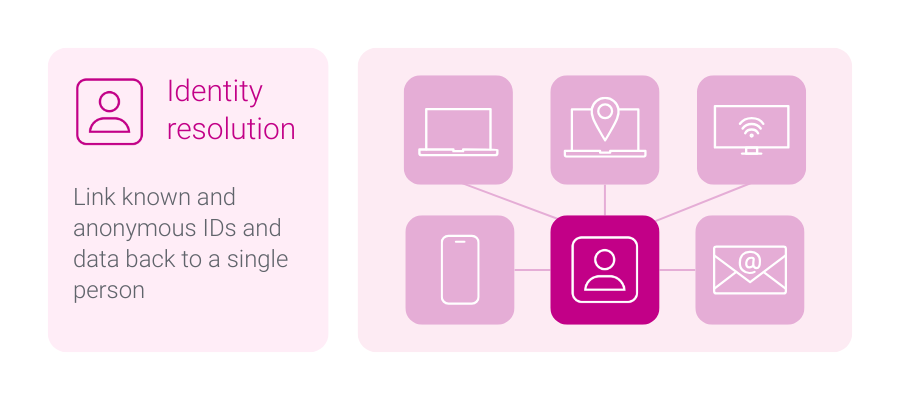
To overcome the identity gap in unauthenticated listening environments, leading audio platforms are turning to partners that connect fragmented signals—like device type, location, and behavioral patterns—to broader household and individual profiles. By using hashed emails and other alternative identifiers, platforms can begin to make anonymous sessions more addressable. This increase in addressability ensures the platform’s entire userbase can be reached, which leads to an increase in revenue.
Experian’s solution
Experian’s identity spine, comprised of our Digital and Offline Graphs, helps you recognize listeners even when they’re outside your ecosystem. Platforms like Audacy are already leading the way. By integrating Experian’s Digital Graph, they’re gaining a more complete view of listeners’ digital identifiers—enhancing the experience across their app and website. With a better audience understanding, Audacy can deliver personalized content while helping advertisers reach specific groups with greater accuracy.
Challenge 2: IP-based targeting falls short
Audio has traditionally relied on IP addresses, but that’s no longer enough. A single IP could represent an entire household—or a public setting like a coffee shop. It’s not precise.
Forward-thinking platforms are moving beyond IP-based targeting by integrating identity resolution technologies that combine household-level data with device-level intelligence. These solutions help distinguish between shared devices and individual listeners, allowing advertisers to serve more relevant messages without over-reliance on a single signal like an IP address. This layered approach improves precision—especially in dynamic listening environments like vehicles or communal spaces.
Experian’s solution
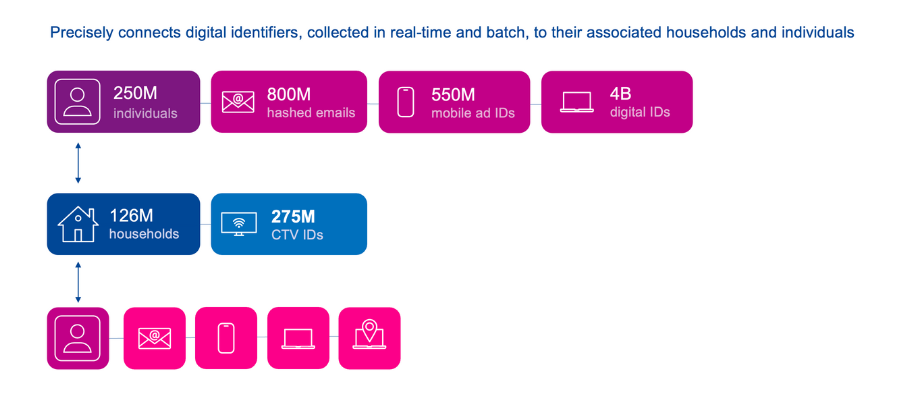
Our identity spine links home IPs to households, then connects them to specific devices and individuals. This helps platforms move beyond basic IPs and target real people based on accurate signals—even in shared listening environments like smart speakers and cars.
We also help platforms and advertisers integrate alternative IDs—like Unified I.D. 2.0 (UID2)—into their programmatic audio campaigns. That means more reach, without compromising consumer trust.
Challenge 3: Audio buying is fragmented
From podcasts to streaming to radio, audio lacks consistency in how inventory is packaged and bought. It’s hard for advertisers to run scaled campaigns across channels—and harder still to measure performance.
Plus, advertisers don’t think in silos—they think in strategies. If audio can’t connect to their display, connected TV (CTV), and social buys, it loses ground. What they need is a way to define audiences once and activate everywhere.
To reduce friction in audio ad buying, platforms are investing in infrastructure that unifies audience insights across formats. By building a centralized view of the listener—regardless of whether they’re tuning in via podcast, stream, or radio—publishers can offer advertisers consistent targeting parameters, clearer reporting, and better campaign orchestration. Identity graphs and audiences are playing a growing role in streamlining this complexity and unlocking scale.
Experian’s solution
Experian helps simplify audio buying. Experian audiences are built on top of our identity graph and are expanded to a deep set of digital identifiers, ensuring accuracy, scale and maximum addressability across channels. Platforms can blend their first-party data with advertiser data and our audiences—then deploy those audiences onsite or activate programmatically across open web and CTV.
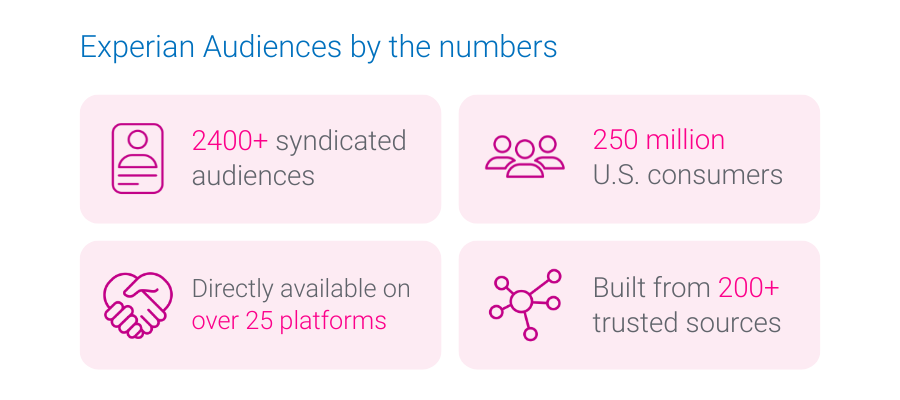
DAX is doing just that. DAX’s partnership with Experian combines Experian’s 2,400+ audiences for targeting and activation with DAX’s innovative audio advertising approach. We’re helping advertisers connect with passionate and engaged listeners nationwide.
“Through our partnership with Experian Marketing Services, advertisers can unlock deeper audience insights and execute more impactful digital audio campaigns. By combining our shared market presence, knowledge, and forward-thinking approach, we’re strengthening our digital audio network offering and delivering value to all our advertising partners.”
Brian Conlan, President of DAX United States
In addition to integrating Experian’s Digital Graph, Audacy is also integrating Experian’s syndicated audiences to unlock accurate insights like demographics, shopping behavior, and interests – providing listeners with a more personalized advertising experience and advertisers with a higher return on investment.
“Historically, audio advertising lacked precise targeting capabilities, making it challenging for advertisers to reach specific audiences. By integrating our digital identity graph and syndicated audiences with Audacy’s platform, we’re transforming how advertisers connect with listeners. This collaboration enables more effective audience targeting and delivers personalized, impactful audio experiences across all channels.”
Chris Feo, Chief Business Officer, Experian
Privacy is non-negotiable
Everything we do is privacy-forward by design. Backed by Experian’s Global Data Principles and decades as a regulated institution, we rigorously vet every data source to ensure compliance with all federal and state laws.
Build an audio strategy that performs with Experian
Your advertisers want more from their audio investments. With Experian, you can give it to them. We help you:
Audio has always been a powerful way to connect. Now, it’s ready to perform.
Let’s connect
Latest posts
Experian is excited to introduce our new Geo-Indexed audiences. Our Geo-Indexed audiences use a new advanced indexing classification technology to identify and reach consumers based on their geo-regional attributes. These audiences can help you discover, segment, and craft messaging for consumers without the use of sensitive personal information, so you can confidently reach your target audience without sacrificing data privacy. In this blog post, we’ll review how our new Geo-Indexed audiences can help you reach your audience while balancing data privacy and accuracy. How we collect and use data is changing The AdTech industry is undergoing a transformation as various forces shape its trajectory. One significant factor is legislation, with as many as 26 states currently considering data privacy laws. Consumer preferences also play a crucial role, as more individuals look to brands for responsible and ethical data handling practices. According to Forbes, 82% of people view brands positively when they consciously opt to refrain from using personal data for personalized ads. Major players in the field such as Apple and Google are actively pushing for a shift away from traditional methods like cookies and other identifiers in data collection and usage. These developments mark a considerable shift in how we use data. Many brands are seeking a few solutions to continue to find and reach their target audience online, but at Experian, we see a great opportunity for innovation and impact within geo-based targeting solutions. “We predict that over the next year, you will begin to see innovations in geo-based targeting methodologies that satisfy the industry's need for audience targeting with responsible data strategies. By embracing innovations in geo-based targeting and adhering to responsible data strategies, you can not only comply with these laws but continue to reach your intended audiences effectively.”jeremy meade, vp, marketing data & operations Introducing Experian’s Geo-Indexed audiences Geo-Indexed audiences from Experian allow brands to reach consumers and households based on geographic regions that over-index for a common set of attributes. Our Geo-Indexed audiences give brands the ability to: Stay connected: Maintain a touchpoint with consumers as other audience targeting solutions disappear or reduce scale due to new legislation. Expand your audience reach: With our sophisticated geo-indexing methodology, you will be reaching your target audience’s circle of influence within the geo-region. Execute where you want: By linking our Geo-Indexed audiences to Experian’s persistent identifiers, you can activate these audiences on the shelf of your platform of choice. As a part of the release of Geo-Indexed audiences, we will be rolling out three main categories: Language Ethnic Group Demographics which include: Education Household Income Marital Status Occupation Presence of Children Over the next year, we will continue to release new audiences within Geo-Indexed audiences. How you can use Geo-Indexed audiences An Auto brand has a new corporate policy restricting the use of sensitive personal information in audience targeting but would like to reach high-income earners. To reach their target audience they use the Geo-Indexed audiences to reach households who are in geographic regions that index highly for income ranges ‘$175,000 – $199,999’ and ‘$200,000+.’ Prioritize privacy without sacrificing accuracy with Experian’s Geo-Indexed audiences Our Geo-Indexed audiences are available in most major data and demand-side platforms. Visit our partner page for more information. Don’t see our audiences on your platform of choice? We can help you build and activate an Experian audience on the platform of your choice. Connect with our audience team Latest posts

In this article…What is a walled garden?Integrated marketing is more important than everPerspectives on walled gardens from Cannes Lions 2023Walled gardens aren’t going away in the near futureThe fuure of walled gardens Digital marketers face an ongoing challenge in the form of "walled gardens," closed online ecosystems where it is difficult to access user data. As we get ready for 2024, it's more important than ever for marketers to evaluate the current challenges and opportunities surrounding walled gardens and to take stock of the impact of walled gardens in marketing as an industry. What is a walled garden? A walled garden is a closed online ecosystem controlled entirely by one tech company. Advertising on these ecosystems is fairly locked down, as major tech companies with walled gardens tend to tightly control access to the user data, content, and advertising that appears within the ecosystems. Some examples of walled garden ecosystems include Google, Facebook, Amazon, and Apple. These walled gardens have particular advantages, like access to massive user bases and precise targeting within the individual ecosystems. It can also be difficult to reach said audiences outside of the ecosystems, reducing the amount of control you have over your advertising strategies. Learn more about walled gardens. Learn the differences between walled gardens and hedged gardens. Integrated marketing is more important than ever Today, it's become more crucial to connect with consumers over multiple touchpoints, which can be done from tech like connected TV (CTV) to websites, mobile devices, and even shopping in a physical store. However, as integrated marketing gains utility, many platforms with walled garden ecosystems have increased, making a truly integrated and personalized marketing strategy more difficult in many situations. As a result, many marketers have realized the value of a more streamlined marketing approach, emphasizing the importance of fully integrated advertising strategies. Though there are surely marketing advantages to gain from walled garden ecosystems, especially in audience size, the challenges they pose will require you to innovate and find more creative ways to engage with your audience from platform to platform. Perspectives on walled gardens from Cannes Lions 2023 Offering a poignant view of industry trends and ideas, the Cannes Lions International Festival of Creativity of 2023 had much to say about the significance of walled gardens in the marketing world. Let's look at two key takeaways from this year's festival. Retail media In recent years, many retail companies have started selling ad space within their own walled garden shopping platforms, dubbed "retail media." Platforms like Amazon and Walmart have developed their own particular advertising ecosystems where they sell ads to marketers within the shopping environment itself. Navigating the sell-side of retail media’s walled gardens While retail media offers marketers unique opportunities, it's not without its challenges. For one, ad space in these environments is limited, so the competition can be difficult on the sell-side, leading to higher ad costs. Additionally, this shift in dynamic also forces marketers to change how they prioritize their marketing channels, looking closer at the results of their efforts rather than focusing on particular channels within the platforms themselves. Opportunities in the buy-side of retail media’s walled gardens Brands on the buy-side see various benefits from advertising within retail media channels and walled gardens. By browsing in an online shopping environment, the users in these ecosystems are likely high-intent shoppers, people who are further down the sales funnel and who are ready to make a purchase soon. Shoppers can also be precisely targeted within these environments, as marketers are given the ability to access very specific audience segments based on details like shopping behavior, preferences, and even purchase history. Omnichannel marketing To more effectively engage audiences even among an abundance of walled garden ecosystems, speakers at the 2023 Cannes Lions Festival discussed the importance of omnichannel marketing. By emphasizing strategies that reach the consumer through multiple touchpoints, marketers can deliver a unified brand experience across channels. This allows marketers to focus more on results than specific advertising channels, including walled garden platforms. Walled gardens aren’t going away in the near future Though various challenges are associated with walled gardens in advertising, they aren't going anywhere. So, what's the current state of these environments throughout the industry? Efforts are being made to break down walled gardens in tech In a handful of countries, regulatory actions have been put forward to address how dominant many major tech companies are in their respective markets. One major example of this is Meta and Google's entanglements in Canada. Currently, neither company can display news on their websites in the Canadian market. This decision was reached to give Canadian news agencies more control over their advertising revenue since, previously, the tech giants received more views and, therefore, gained the ad revenue. Though relatively small, this does indicate a certain shift in dynamic. Why companies are resisting Despite their challenges, walled gardens in 2023 persisted, mainly because they are particularly adept at generating revenue for the tech companies that control them. In 2022, 78 percent of global digital advertising revenue came from these closed ecosystems, and projections expect that figure to rise to 83 percent by 2027. From the viewpoint of a company that operates in a walled garden, the idea of releasing their control over their environment represents losing out on a stream of vast revenue, making letting go of a walled garden ecosystem an unattractive prospect. The future of walled gardens As time progresses, what can digital marketers like you expect from walled garden ecosystems in the near future? A cookieless future A huge element to consider is the transition to a cookieless future. Many major browsers have begun phasing out the use of third-party cookies. In the wake of this decision, many are looking for reasonable alternatives that allow for behavior tracking and more personalized advertising experiences. Solutions like Experian's identity resolution can provide a strong alternative option, allowing marketing strategies to adapt to the current landscape. An influx of mini gardens You should also anticipate the proliferation of various smaller, specialized walled garden ecosystems in the future. These so-called "mini gardens" specialize in more niche audiences and industries, and they can present their own challenges and opportunities. Alternative IDs As you search for new identification methods outside cookies, various alternatives have presented themselves, requiring further exploration and experimentation. Among these are privacy-compliant solutions like Unified ID 2.0, which allow you to serve more personalized ads without compromising the consumer's privacy. Navigating the evolving landscape of walled gardens in 2024 As we begin 2024, you will continue facing opportunities and challenges regarding walled gardens. The 2023 Cannes Lions International Festival of Creativity re-emphasized how important it is for marketers to stress omnichannel marketing within walled garden environments and become well acquainted with identity resolution solutions as we move into a cookie-less future. All of this requires you to become comfortable with walled gardens being here to stay and innovate to navigate an evolving and developing landscape. We’re here to help you navigate the evolving landscape of walled gardens in 2024. Contact us today. Get in touch Latest posts

A few weeks ago, Experian and OpenX hosted a supply-side think tank at our New York City office. Over 70 industry leaders met to talk about targeting in a cookieless future and how we can reach consumers in intentional ways. Publishers and supply-side partners shared what challenges they face, what solutions they’re considering, and what the future holds once the third-party cookie begins to deprecate in 2024. In this blog post, we’ll cover the top challenges, cookieless solutions, and actionable strategies we discussed at the event that can help publishers, their partners, and agencies make informed decisions about how to navigate tomorrow’s digital ecosystem. Four main challenges Four main challenges were discussed at the event: First-party data monetization Publishers possess a wealth of first-party data, but collecting and centralizing this information can be difficult for actionable insights. Streamlining data centralization and organizing first-party data is crucial for effective decision-making. Even with a wealth of first-party data, it's important to be aware of any blind spots in your data and enrich those gaps with data partners rooted in offline connections. “We appreciate the opportunity to participate in the supply-side think tank led by OpenX and Experian, two industry leaders in navigating a cookieless future. We're excited to collaborate with them on testing privacy sandbox APIs, identity resolution products, and audience development tools to enhance creator monetization and support an open internet amidst rapid technological and regulatory shifts.” Patrick McCann, SVP, Research, Raptive Lack of authenticated data and persistent IDs The deprecation of third-party cookies means there will be a shortage of authenticated user data and persistent identifiers. Without this information, targeting and personalization become more challenging. Participants discussed the need to find alternative ways to gather and use personal data responsibly. It’s time to start evaluating data partners who have accurate, multi-source compiled, privacy-compliant data with the dedication to reach and recency. Fragmentation and scale with alternative IDs currently in the market The multitude of alternative identifiers in the market poses a challenge for publishers. Each of these identifiers comes with its own set of rules and integration processes, leading to fragmentation and complexity. Publishers must find ways to navigate this landscape. Look to ID agnostic partners who provide a way to access multiple IDs at scale. “The industry needs a more streamlined standard to integrate alternative IDs, given the ongoing challenges of third-party cookie deprecation, measurement, and clean rooms. This burden falls heavily on product and engineering teams, who must prioritize and address these issues one at a time.” Ryan Boh, Head of Identity, Lockr Time Cookie deprecation is almost here. It is crucial to organize your legal, engineering, and product resources, and align internal go-to-market strategies. Establish partnerships that work with your team to follow these timelines and help build phased or cohesive strategies to prepare for a path to monetization. It is imperative to establish a sense of urgency and not wait for others to take the lead. Start testing now to determine if your infrastructure is ready and capable. Many partners who attended the think tank offered insights on how they’ve been tackling challenges to help their industry peers. Solutions and action plans for a cookieless future Participants discussed ways they are starting to prepare for a cookieless future and other approaches on their roadmaps: Work with data partners heavily rooted in offline data across the ecosystem Enriching your first-party data with partners who rely on offline IDs can help bridge gaps in your audience knowledge. This approach allows you to build a more complete audience profile while third-party cookies are still operational. Experian is rooted in deterministic offline data and has decades of experience managing it safely. We have insights on over 250 million U.S. consumers and 126 million U.S. households. With our digital technology assets, we bring in 4 billion devices and 1 trillion device signals to definitively connect offline records to online identifiers. With Experian identity widespread adoption throughout the industry, we're able to provide a common language for us all to collaborate. Experian identity organizes people into households, links their digital devices and IDs to them, enriches their identity with behavioral attributes, and then makes this data actionable in any environment, all while maintaining consumer privacy and data regulations. “Experian’s supply-side think tank provided a platform for publishers and AdTech companies to discuss the challenges posed by cookie deprecation, privacy regulation updates, and identity restrictions. It highlighted the need for AdTech companies to assist publishers in addressing anonymous users without requiring a value exchange — fostering a mutually beneficial and privacy-compliant open web solution.”Anthony Caccioppoli, Head of AdTech & Solutions, Insider Develop your own persistent ID Creating and maintaining a proprietary persistent ID can be a valuable cookieless solution. It provides control and independence in the new environment post cookie, giving publishers the ability to maintain a consistent user profile. Use your data to expand contextual targeting opportunities Contextual targeting involves placing ads based on the content of the web page rather than user data. In the absence of cookies, this strategy can prove effective in reaching relevant audiences. “The masking or deprecation of IP addresses will eventually impact the availability of addressable IDs in non-authenticated web environments. In addition to ensuring maximum resiliency of our Graph and increasing support for authentication-based IDs, we are also investing in research and development around the use of other signals, such as contextual data, to maintain behavioral targeting inside non-authenticated environments. We will be sharing our findings and future plans in this space in the coming months.”Budi Tanzi, VP, Product, Experian Facilitate a knowledge exchange Reach out to your network to find out what others are testing and what’s working. Start collaborating with agencies and brands across the buy-side to meet their needs. “The collaborative spirit displayed by our partners constantly inspires me. Listening to the obstacles our industry faces allows this community to build strong relationships, create action plans, and deliver true value.”Carly Allcorn, Account Executive, Publisher & Supply-Side Partnerships, Experian Invest in an identity graph Invest in an identity graph provider to sync first-party cookies and addressable IDs. This ensures that your data remains accessible and actionable in a cookieless world. “Many participants at our think tank with Experian expressed the need to find an identity solution while also exploring other ways they can start to address cookie deprecation while maintaining business as usual.” Callie Askenas, Director of Publisher Development, OpenX How Experian and OpenX can help Graph from Experian captures all available digital identifiers in real-time and resolves them back to individuals and households. We’re signal agnostic, continuously expand the IDs we support, and futureproof identity resolution through a combination of deterministic, probabilistic, and cookieless identifiers. Experian is a key player in OpenX’s OpenAudience solution and helps to power many of their data segments as well as their identity graph. While OpenX collaborates with a variety of providers and operates a fully interoperable platform, Experian remains valuable to the core technology within OpenX’s supply-side platform (SSP). Experian can help you prepare for the cookieless future It’s clear that the cookieless future poses some unique challenges for publishers, but there are solutions. Publishers and their supply-side partners can come up with strategies to target consumers in intentional ways by continually testing multiple identifiers and cookieless solutions, developing their own persistent ID, creating velvet rope content, and returning to contextual targeting. Collectively, these actionable strategies can help ensure that publishers have a more successful transition into a cookieless future. Experian has been preparing for signal loss for quite some time and we continue to make substantial investments to ensure our resiliency and the resiliency of our customers. We continue to diversify our signal creating profiles with more persistent identifiers which allows us to pair authentication-based universal identifiers such as UID2 into our Graph seamlessly. Experian is ready and we are here to navigate the future of privacy together. To find out more about how Experian can help you prepare for the cookieless future, get in touch with a member of our team today. Get ready for the cookieless future with Experian Latest posts