
Setting sail
For hospitality and travel marketers, understanding which marketing efforts lead to actual bookings can be a tidal shift. Windstar Cruises—renowned for its intimate yachts and off-the-beaten-path itineraries—wanted data-driven visibility into how digital media placements translated into confirmed reservations. Windstar turned to the strategic media expertise of MMGY, a leading integrated marketing company dedicated to the travel, tourism, and hospitality industries and Experian’s marketing data and identity solutions to bridge this gap. Together, they developed a closed-loop attribution system that directly tied digital campaigns to offline passenger bookings.
The challenge: Blind spots in the booking journey
Windstar Cruises had plenty of top-of-funnel metrics—impressions, clicks, website sessions, cruise quote requests—but struggled to connect these indicators to confirmed reservations. Without that link, it wasn’t easy to pinpoint which audience segments were most valuable in their marketing campaigns or accurately measure return on ad spend (ROAS). Traditional attribution methods and limited booking system data painted an incomplete picture, leaving Windstar to wonder which media channels and audience strategies were truly driving revenue.
MMGY and Experian: Bridging data gaps to power attribution
Comprehensive pixel tag
MMGY designed an online-offline measurement strategy and coordinated with Experian to deploy pixels across Windstar’s digital media placements. These pixels captured valuable event-level data—ad exposures, clicks, site visits, and more—so that every interaction could be matched back to a future booking if it occurred.
Identity resolution and data enrichment
Using the Experian identity graph, Experian matched Windstar’s reservation data with its extensive consumer database. This approach provided a precise, individual-level view of how digital interactions translated into real-world sales. By combining pixel data (which identifies who viewed specific ads) with reservation data (which shows who ultimately made a booking), the solution delivered a comprehensive, end-to-end, multi-touch perspective on the customer journey.
Advanced audience segmentation
Utilizing MMGY’s powerful Terminal audience modeling platform—which integrates MMGY Travel Intelligence performance and intent data, Experian’s consumer intent data, and the client’s first-party data— MMGY in conjunction with Experian’s marketing analytics team developed custom audiences designed to drive incremental traveler growth.
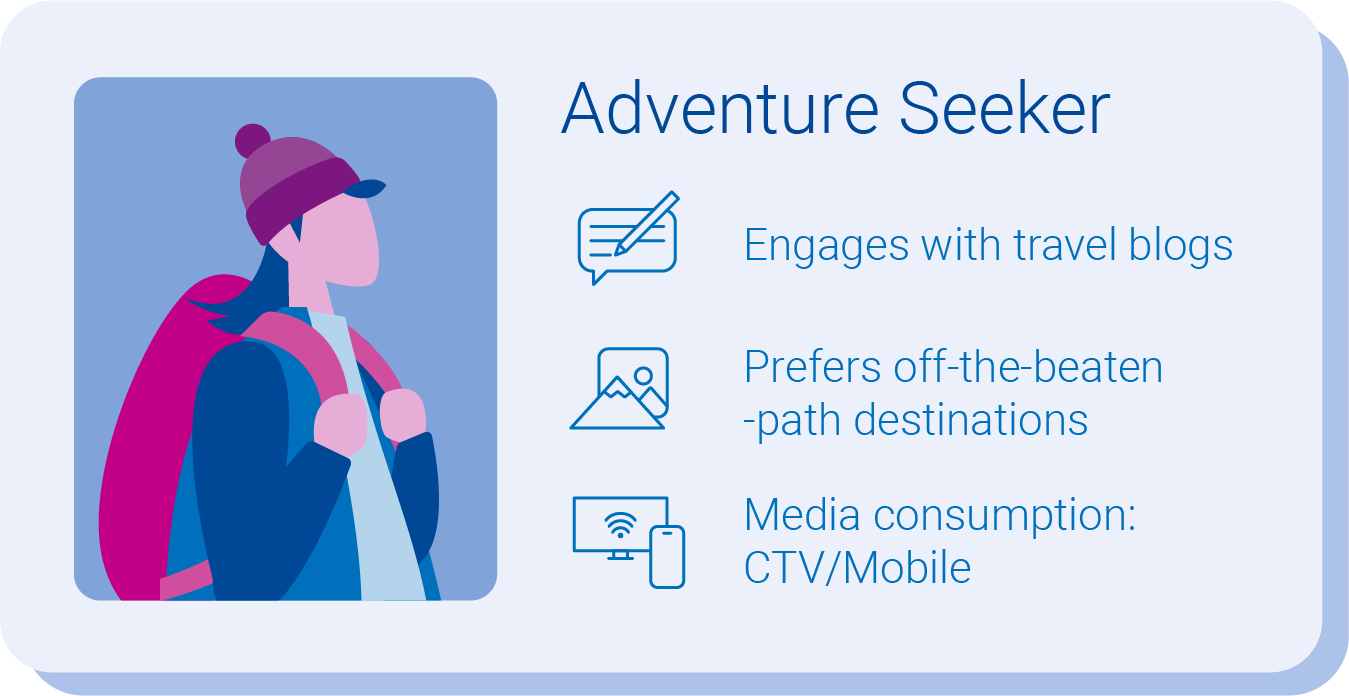
These audience segments identified travelers most likely to engage in the unique travel experiences Windstar offers. The insights revealed not only who these travelers are, but also where they consume media, how they make travel decisions, and what influences their purchasing behavior. This data guided the development of hyper-targeted media buys, ensuring Windstar’s messaging reached the right people on the right platforms at the right time—maximizing engagement and driving qualified leads.
The results: Mapping spend to bookings
By utilizing data connectivity and measurement, Windstar gained the insights needed to optimize every aspect of its marketing—audiences, media placements, channels, and more. This data-driven approach revealed which tactics were most effective and enabled Windstar to refine campaigns in real-time for maximum impact.
- 6,500+ bookings attributed to digital efforts: Over 6,500 bookings—valued at over $20 million—were tied to specific MMGY-managed placements, demonstrating which data-driven tactics led passengers to book. This level of attribution was only possible because we helped Windstar measure and connect the right data points.
- 13:1 ROAS: By investing $1.48 million in highly trackable, data-informed media, Windstar achieved an impressive 13:1 return on ad spend. Data connectivity gave Windstar the clarity needed to target the right audiences and channels—turning every $1 of spend into $13 of bookings.
- Actionable cost per booking benchmark: Armed with the ability to map ad spend to individual bookings, Windstar’s average cost per booking settled at $236. With insight into which audiences and placements performed best, Windstar adjusted its strategy in real-time, lowering acquisition costs across the board.
- High-value reservations: Attributed bookings were, on average, $500 higher in value than non-attributed bookings. By focusing on the right customer segments and messages—determined through precise measurement and segmentation—Windstar secured more bookings and maximized revenue per guest.
- Terminal Audiences outperformed: For Terminal-targeted segments, the ROAS soared to 28:1 with nearly half the cost per booking compared to non-Terminal audiences. This outcome illustrates how advanced data segmentation and connectivity deliver more profitable guests at lower acquisition costs—further proof that continuous optimization grounded in real data pays off.
What this means for travel and hospitality
Windstar’s success story illuminates a bigger truth for the travel and hospitality industry: closing the attribution loop is no longer optional. In a fiercely competitive marketplace, brands need concrete proof that their marketing investments drive awareness and translates into real revenue. By marrying MMGY’s travel-specific marketing acumen with Experian’s marketing data and identity solutions, travel brands can:
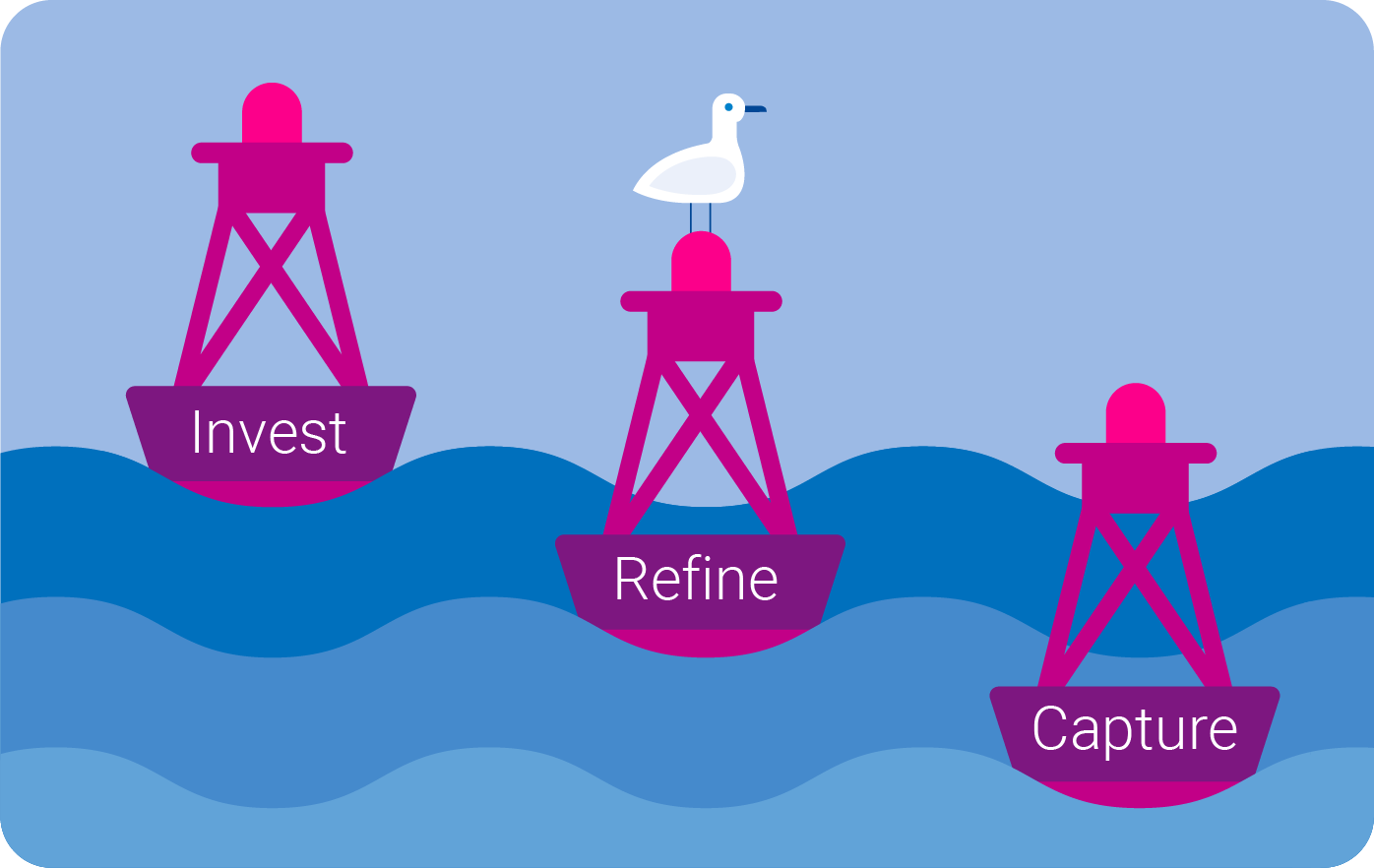
- Invest with confidence: Marketing investment flows to the most effective channels and placements based on actual bookings, not superficial metrics.
- Refine strategies: Real-time attribution data creates a feedback loop marketers can use to iterate on messaging, creativity, and targeting for even stronger results.
- Capture higher-value guests: Pinpointing and appealing to likely travelers allows marketers to increase booking volume and total revenue per booking.
Charting a course for data-driven success
By seamlessly linking digital exposure to confirmed reservations, Experian and MMGY gave Windstar Cruises the compass they needed to navigate the complexities of digital marketing confidently. This new level of insight is empowering Windstar to double down on the campaigns, creatives, and segments that move the needle the most.
For travel and hospitality brands worldwide, data-driven attribution goes beyond simply understanding what happened—it’s about shaping what comes next. When marketing decisions are guided by real customer journeys and precise ROI metrics, brands can make more innovative investments, foster stronger guest relationships, and chart a course toward sustainable growth. Ready to embark on your own data-driven journey?
Contact us to learn how Experian and MMGY can help you create impactful, measurable marketing strategies.
Contact us
About MMGY
MMGY is a leading integrated marketing company dedicated to the travel, tourism, and hospitality industries. With deep expertise spanning research, brand strategy, media planning, and creative execution, MMGY helps global travel brands forge meaningful connections with consumers. By utilizing data-driven insights, cutting-edge technology, and decades of experience, MMGY delivers strategic programs that capture attention and drive measurable results for its clients—ensuring that every marketing investment is tied to clear business outcomes.
Latest posts

Magnite and Experian have formed a strategic integration to enhance cross-device audience targeting in the advertising industry. Magnite, the largest independent sell-side platform, and Experian, a leader in consumer data and identity solutions, aim to optimize advertising capabilities by activating Experian’s Consumer View in Magnite Access, an omnichannel audience product suite. This marks one of Experian’s first forays into a direct sell-side integration, a crucial step for the cookieless era. This collaboration offers targeting and efficiency across digital channels, providing advertisers and agencies with a more effective way to reach consumers. With Experian’s robust deterministic offline data, generated from consumer purchase activity, enriched with insights on over 250 million U.S. consumers and 126 million U.S. households, advertisers can look forward to a new benchmark in targeted advertising available through Magnite Access. Thriving in a cookieless world With the looming deprecation of third-party cookies, audience, and identity solutions using first-party data are shifting to the sell-side. To that end, Magnite developed Magnite Access, a suite of omnichannel audience products that make it easier for media owners and their advertising partners to maximize the value of their first-party data assets. Access is adept at thriving in a post-cookie world through its effective utilization of sell-side first-party data, including within Magnite Streaming and SpringServe. Magnite Access’ deterministic and probabilistic tools provide sellers and buyers with a comprehensive solution to leverage their first-party data for audience targeting and insights. Experian’s solutions are built to work efficiently in offline environments, making them well-equipped to thrive in a cookieless world. Brands can benefit from Experian’s deep integrations within the ecosystem, providing data and audience solutions designed to perform in cookieless environments. “We’re excited about the collaborative approach between Magnite and Experian. This off-the-shelf integration of Experian’s syndicated audiences and the streamlined ability to receive custom audiences will provide a more accurate and cohesive consumer view, allowing us to reach our target audience and enhance campaign performance seamlessly.”sam bloom, ceo, camelot Reach and impact As companies continue to rely on data-driven insights to make smarter, more efficient business decisions, partnerships between leading data and technology providers are becoming increasingly valuable. Strengthening foundations within streaming Magnite’s cutting-edge streaming solutions, integrated with Experian’s robust data, facilitate a connection between data and inventory, providing enhanced targeting capabilities and consumer insights. “By integrating Experian’s Consumer View capabilities into our platform, we are enabling advertisers to unlock improved targeting capabilities while benefiting from Experian’s wealth of consumer insights. Our collaboration with Experian amplifies the value of our streaming solutions and enhances the overall advertising ecosystem by seamlessly connecting data, identity, and inventory.”kristen williams, svp, strategic partnerships, magnite Precision and innovation: A new advertising era The synergistic partnership between Magnite and Experian is paving the way for a new era in advertising, offering targeting efficiency across digital channels. This collaboration is not merely a confluence of technologies but a testament to both companies’ relentless pursuit of excellence in creating a consumer-conscious advertising ecosystem. By harnessing the wealth of consumer insights and integrating state-of-the-art technologies, Magnite and Experian are contributing to shaping the future of advertising, emphasizing accuracy and efficiency. It’s a revolutionary stride toward understanding and reaching the consumer in more meaningful and impactful ways, setting new benchmarks in the advertising world. In a rapidly evolving digital landscape, this collaboration stands as a beacon, guiding brands toward intelligent, informed, and innovative advertising solutions, redefining the possibilities in targeted advertising and audience solutions. Connect with us to learn more about how you can access Experian’s Consumer View data solutions in Magnite Access. To learn more about our partner Magnite, visit their website. Latest posts

Experian’s Chief Product Officer, Kimberly Gilberti, shares her insights on the potential of advertising on connected TV (CTV).

Samsung’s demand-side platform (DSP) is now equipped with Experian’s data insights to improve campaign targeting, reach, and more.