Loading...

How contextual advertising addresses signal loss

Published: February 28, 2023 by Experian Marketing Services

At A Glance

Experian and Yieldmo collaborate to help marketers navigate signal loss with privacy-safe contextual advertising. By combining Experian’s identity solutions with Yieldmo’s advanced targeting, this collaboration enables effective audience engagement in a world with fewer traditional signals.

Note: While third-party cookies are no longer being phased out, this webinar was recorded in 2023 when cookie deprecation was still a key industry focus. The strategies discussed reflect that time frame and remain relevant for addressing broader signal loss challenges.

With major browsers discontinuing support for third-party cookies, marketers must rethink how to identify and engage their audiences. Contextual advertising offers a privacy-safe solution by combining contextual signals with machine learning to deliver highly targeted campaigns. In a Q&A with our experts with eMarketer, Jason Andersen, Senior Director of Strategic Initiatives and Partner Solutions at Experian, and Alex Johnston, Principal Product Manager at Yieldmo, we discuss how contextual advertising addresses signal loss, improves addressability, and delivers better outcomes for marketers.

A thumbnail image taken from our webinar

The macro trends impacting marketers

How important is it for digital marketers to stay informed about the changes coming to third-party cookies, and what challenges do you see signal loss creating?

Jason (Experian): Third-party cookies have already been eliminated from Firefox, Safari, and other browsers, while Chrome has held out. It’s just a matter of time before Chrome eliminates them too. Being proactive now by predicting potential impacts will be essential for maintaining growth when the third-party cookie finally disappears.

An illustration of three people with charts in the background

Alex (Yieldmo): Third-party cookie loss is already a reality. As regulations like the General Data Protection Regulation (GDPR) and the California Consumer Privacy Act (CCPA) take effect, more than 50% of exchange traffic lacks associated identifiers. This means that marketers have to think differently about how they reach their audiences in an environment with fewer data points available for targeting purposes. It’s no longer something to consider at some point down the line – it’s here now! Also, as third-party cookies become more limited, reaching users online is becoming increasingly complex and competitive. Without access to as much data, the CPMs (cost per thousand impressions) that advertisers must pay are skyrocketing because everyone is trying to bid on those same valuable consumers. It’s essential for businesses desiring success in digital advertising now more than ever before.

Solving signal loss with contextual advertising

How does contextual advertising help marketers engage audiences with new strategies like machine learning and artificial intelligence (AI)?

Jason (Experian): Contextual advertising helps marketers engage audiences by combining advanced machine learning with privacy-safe strategies. We focus on using AI and machine learning to better understand behavior, respect privacy, and deliver insights. As third-party cookies go away, alternative identifiers are coming to market, like Unified I.D. 2.0 (UID2). These are going to be particularly important for marketers to be able to utilize them. As cookie syncing becomes outdated, marketers will have to look for alternative methods to reach their target audiences. It’s essential to look beyond cookie-reliant solutions and use other options available regarding advertising.
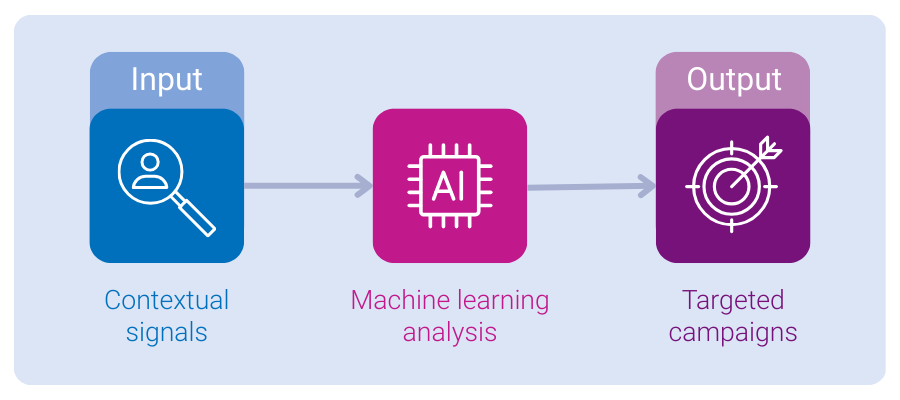
Input: Contextual signals, then AI machine learning analysis, then the output is targeted campaigns

Alex (Yieldmo): There’s been a renaissance in contextual advertising over the last couple of years. Three key drivers are shaping this shift:

  1. The loss of identity signals is forcing marketers to rethink how they reach audiences.
  2. Advances in machine learning allow us to analyze more granular contextual signals, identifying patterns that are most valuable to advertisers.
  3. Tailored models now use these signals to deliver more effective campaigns. This transformation is occurring because of our ability to capture and operate on richer, more detailed data.

Reach consumers with advanced addressability

How does advanced contextual advertising help marketers reach non-addressable audiences?

Jason (Experian): Advanced contextual advertising helps marketers reach non-addressable audiences by taking a set of known data (identity) and drawing inferences from it with all the other signals we see across the bidstream. It’s about using a small seed set of customers, those who have transacted with you before or match your target audience, and training contextual models to make the unknown known. Now we can go out and find users surfing on any of the other sites that traditionally don’t have that identifier for that user or don’t at that moment in time and start to be able to advertise to them based on the contextually indexed data.

An illustration that shows three icons of three different people with a cloud of connected people over their heads

Alex (Yieldmo): I think the exciting opportunity for many people in the industry is figuring out how to reach your known audience in a non-addressable space, that is based on environmental and non-identity based signals, that helps your campaign perform. Machine learning advancements allow you to take your small sample audience and uncover those patterns in the non-addressable space. High-quality, privacy-resilient data sets are critical for building these campaigns. Companies like Experian, with deep, rich training data, are well positioned to support advertisers in building extension audiences.

Creative strategies that improve ad performance

Why does creative strategy remain essential for digital advertising success?

Jason (Experian): Creative strategy remains essential because it provides valuable signals for targeting and engages audiences effectively. In this advanced contextual world, good creative in the proper ad format that you can test and learn from is paramount. It comes back to that feedback loop. We can use that as another signal in this equation to develop and refine the right set of audiences for your targeting needs.
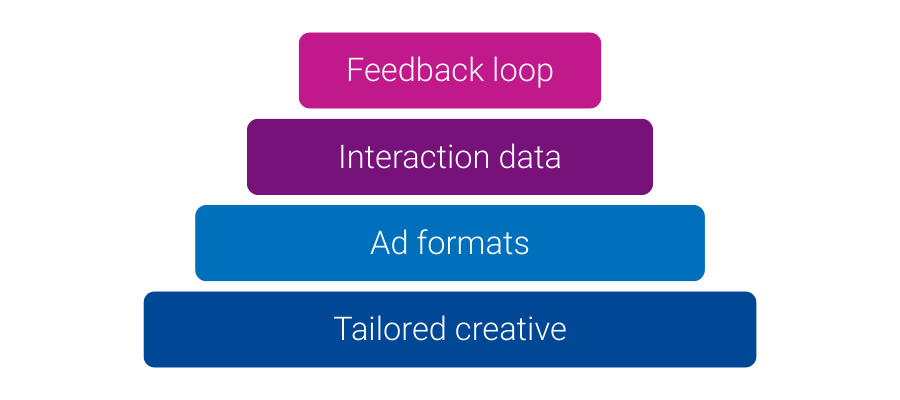
A hierarchy that shows feedback loop, interaction data, ad formats, and tailored creative

Alex (Yieldmo): Creative and ad formats are powerful signals for understanding audience engagement. At Yieldmo, we collect interaction data every 200 milliseconds, such as scrolling behavior or time spent on an ad. This data fills the gap between clicks and video completions, helping us build models that predict downstream actions. Tailoring creative to specific audience groups has always been one of the best ways to improve performance, and it remains essential in this new era of contextual advertising. Throughout my career, I learned that designing or tailoring your creative to different audience groups is one of the best ways to improve performance. We ran many lift studies with analysis to understand how you can tailor creative customized for individual audiences. That capability and the ability to do that on an identity basis is.

Our recommendations for actionable marketing strategies

Do you have recommendations for marketers building out their yearly strategies or a campaign strategy?

Jason (Experian): My recommendation for marketers building out their yearly strategies is to be proactive and start testing and learning these new solutions now. I mentioned addressability and being in the right place at the right time. That’s easier in today’s third-party cookie world. But as traditional identity is further constricted, you will have these first-party solutions that will not be at scale, so you’re less likely to find your user at the scale you want. It would be best if you thought about how to reach that user at the right place at the right time. They may not be seen from an identity basis. They might not be at the right place at the right time when you were delivering or trying to deliver an ad. But you increase your chance of reaching them by building these advanced contextual targeting audiences using this privacy-safe seed ‘opted-in’ user set; this is a way to cast that wider net and achieve targeted scale.

Alex (Yieldmo): Build your seed lists, test your formats with different audiences, and understand what’s resonating with whom. Take advantage of some of the pretty remarkable advances in machine learning that are allowing us, really, for the first time to fully uncork the potential and the opportunity with contextual in a way that we’ve never done before.

Contact us

This site is protected by reCAPTCHA and the Google Privacy Policy and Terms of Service apply.


About our experts

Jason Andersen, Senior Director, Strategic Initiatives and Partner Solutions, Experian headshot

Jason Andersen

Senior Director, Strategic Initiatives and Partner Solutions, Experian

Jason Andersen heads Strategic Initiatives and Partner Enablement for Experian Marketing Services. He focuses on addressability and activation in digital marketing and working with partners to solve signal loss. Jason has worked in digital advertising for 15+ years, spanning roles from operations and product to strategy and partnerships.

Alex Johnston, Principal Product Manager, Yieldmo headshot


Alex Johnston

Principal Product Manager, Yieldmo

Alex Johnston is the Principal Product Manager at Yieldmo, overseeing the Machine Learning and Optimization products. Before joining Yieldmo, Alex spent 13 years at Google, where he led the Reach & Audience Planning and Measurement products, overseeing a 10X increase in revenue. During his time, he launched numerous ad products, including YouTube’s Google Preferred offering. To learn more about Yieldmo, visit www.yieldmo.com.

Yieldmo logo

About Yieldmo

Yieldmo is an advertising platform that fuses media and creative to meet audiences in the moments that matter. Using proprietary data and AI, Yieldmo uses advanced targeting to deliver context-aware creative when and where it’s most effective, all while respecting user privacy. The result: ads that belong on inventory brands trust. For more information, please visit www.yieldmo.com.


Contextual advertising FAQs

What is contextual advertising, and how does it work?

Contextual advertising works by targeting audiences based on the content they’re engaging with, rather than relying on personal identifiers or traditional tracking methods. Yieldmo’s platform uses advanced contextual signals and machine learning to deliver relevant ads in privacy-safe ways.

How does contextual advertising address signal loss?

Contextual advertising addresses signal loss by focusing on environmental and content-based signals instead of relying on thir-dparty cookies or other traditional identifiers. Experian’s identity solutions complement this approach by enabling marketers to connect with audiences in a compliant and scalable way.

Why is creative important in contextual advertising?

Creative is important in contextual advertising because it engages audiences and provides valuable signals for targeting. Yieldmo’s platform collects interaction data, such as scrolling and time spent on ads, to refine campaigns and improve performance.

How can marketers reach non-addressable audiences?

Marketers can reach non-addressable audience through advanced contextual targeting, which uses known data, like seed audiences, to identify patterns and extend reach. Experian’s identity solutions and contextual data from, Audigent, a part of Experian, help marketers connect with these audiences in privacy-safe and effective ways.


Latest posts

Loading…
Convergent TV and attribution with 605, an iSpot.tv Company

As technology reshapes our media experience, TV remains a powerful channel for content consumption. In our next Ask the Expert series, we dive into a pivotal subject – the convergence of TV, linear (conventional broadcast and cable TV), and digital marketplaces. In this Q&A segment, we’re joined by two industry experts, Dan Hickox, VP of Development & Partnerships at 605, an iSpot.tv Company, and Chris Feo, Experian’s SVP of Sales & Partnerships, who guide us through an engaging discussion on convergent TV, attribution, measurement, and safeguarding personal data in the evolving landscape of TV advertising. How convergent TV is changing the future of advertising The convergence of traditional TV and digital streaming platforms presents an innovative opportunity for advertisers to engage their target audience. With convergent TV, you can create campaigns that bridge the gap between linear and streaming, ensuring your message reaches your target audience while avoiding ad fatigue. Along with high-quality content, extensive inventory, and targeting capabilities, convergent TV offers advanced measurement and attribution tools that will empower you to optimize advertising campaigns for maximum impact. You can make better decisions regarding when and where to strategically allocate your advertising budgets with effective TV measurement and attribution. Attribution in converged TV TV attribution involves tracing consumer actions and uncovering valuable insights into their behavior. With these insights, you can gain a clear understanding of the audience exposed to your ads and their actions in response. Lean into data attribution tools to track your target audience throughout the customer buying journey. Measurement in converged TV In contrast, TV measurement enables the tracking of performance TV advertising campaigns to assess campaign effectiveness. Through converged TV measurement solutions, you can rely on a singular data source, unifying different channels, devices, and metrics for actionable insights. This analysis will give you insights into the audience reached, their location, and the resulting actions taken. TV attribution’s impact on cross-channel media Embracing an omnichannel advertising approach is vital. Evaluating advertising campaigns across various platforms and devices – including linear, TV, and digital channels – is essential for identifying the channels that drive revenue for your businesses. Converged TV and digital streaming enable you to control ad frequency across all channels, enhancing the cross-screen experience. This convergence paves the way for a more comprehensive and holistic future in advertising. Here are three ways TV attribution impacts cross-channel media. Identify the most effective channels TV attribution offers a significant advantage in determining the channels that generate the most conversions. By using this data, you can make informed choices about budget allocation to achieve maximum impact. Deliver a seamless customer experience Consumers demand consistency in their brand interactions. TV attribution can help you by guiding the optimal timing and placement of ads, resulting in a more seamless viewing experience. This synchronization can significantly enhance customer loyalty and retention. Enhance marketing effectiveness By identifying the most effective channels and refining campaign strategies, TV attribution can significantly improve the success of marketing campaigns. The outcome is a measurable increase in sales and revenue, demonstrating the impact of informed and data-driven advertising. Audience-based targeting across linear and digital ecosystems It's crucial to comprehend and connect with the appropriate audience. The emergence of linear and digital platforms has required the development of audience targeting. Across these two ecosystems, audience-based targeting aims to enhance this process by concentrating on specific audience segments rather than general demographics or programming. Benefits of audience-based targeting There are four key benefits of audience-based targeting across the TV ecosystem. Personalization at scale Digital platforms have conditioned users to expect tailored experiences. Audience-based targeting ensures ads resonate with individual preferences and behaviors, even within the vastness of linear TV. Combining data from both linear and digital sources makes it possible to segment audiences more precisely. This results in advertising content tailored to each individual, making it more relevant and personalized. Optimized ad spend Improve your return on investment by targeting specific audience segments more likely to convert, ensuring your messages reach suitable viewers. In contrast to traditional TV purchasing, where advertisement slots are bought based on a show's overall demographic, audience-based targeting focuses on the viewers' behavior and interests, regardless of the program they are watching. Unified measurement and analytics When combining traditional and digital methods of reaching target audiences, it is essential to have a consistent approach to measuring success. By doing this, you can gain insight into how well your ad campaigns perform across different platforms and the frequency with which they are being seen. By comprehensively understanding audiences within different ecosystems, you can adjust your strategies in real time, guaranteeing that your campaigns remain flexible and successful. Enhancing the viewer experience Audience-based targeting benefits viewers by reducing the number of irrelevant ads they see. As a result, viewers can have a more pleasant experience while watching content, which may discourage them from skipping ads and increase their engagement with the content. Future-proofing and safeguarding data Businesses are focusing on future-proofing for data privacy, and safeguarding individual data is becoming more significant than ever before. Now’s the time to embrace new methods that protect your data privacy while ensuring that measurement remains accurate. Experian offers privacy-safe solutions to help businesses preserve precise measurement, even with fewer cookies. "What we're working toward is future-proofing ourselves. To do that, we work with partners like Experian who are already thinking forward, and with your pixel technology, we can capture and resolve the identifiers that we know will be around for a while."Dan Hickox, VP, Solutions Consulting, Development & Partnerships, 605 How Experian and 605 work together 605 is an independent TV measurement and analytics company providing solutions for advertising, content measurement, attribution, planning, optimization, and media transactions. “We partner with great identity partners, such as Experian, that really help us act as the connecting glue across different data touch points. So what it really is, is the ability to have holistic measurement across the different channels, across the different audiences and it starts out with the ability to be able to take disparate data sources and match them together.”Dan Hickox, VP, Solutions Consulting, Development & Partnerships, 605 605 and Experian have a strong partnership that enables 605 to enhance its data through Experian’s Consumer Sync and Pixel solutions. Consumer Sync – 605 utilizes Experian’s Consumer Sync to ensure their data is privacy-compliant and deterministic across all sources. Experian identity organizes people into households, links their digital devices and IDs to them, enriches their identity with behavioral attributes, and then makes this data actionable in any environment, all while maintaining consumer privacy and data regulations. Web Pixel Attribution – 605 utilizes Experian’s pixel solutions to generate web pixel attribution reports on a client-by-client basis – for linear, TV, and cross-platform reporting. 605’s reporting capabilities allow customers to understand their marketing campaigns' true impact and precisely identify high-performing strategies. With the Experian pixel, partners like 605 can learn more about anonymous website visitors by linking associated demographics and behavior attributes, build audience segments based on the highest cart value customers, and more. The 605 and Experian partnership work hand in hand to make linear TV as actionable as digital media for you. Customers can prove the effectiveness of their marketing tactics and gain actionable insights to deliver highly impactful campaigns. Watch the full Q&A Visit our Ask the Expert content hub to watch Dan and Chris's full conversation about TV measurement, data analytics, privacy regulations, and the evolving landscape of TV advertising in the digital age. Contact us About our experts Dan Hickox, VP, Solutions Consulting, Development & Partnerships, 605 As the Vice President of the Solutions Consulting team, Dan collaborates with sellers to turn prospective opportunities into long-term client relationships. He leads new initiatives and drives partnerships that expand 605 capabilities and improve marketplace positioning. Dan brings over a decade of cross-channel media experience in advanced analytics, media optimization, data integration and statistical analysis to 605. Chris Feo, SVP, Sales & Partnerships, Experian As SVP of Sales & Partnerships, Chris has over a decade of experience across identity, data, and programmatic. Chris joined Experian during the Tapad acquisition in November 2020. He joined Tapad with less than 10 employees and has been part of the executive team through both the Telenor and Experian acquisitions. He’s an active advisor, board member, and investor within the AdTech ecosystem. Outside of work, he’s a die-hard golfer, frequent traveler, and husband to his wife, two dogs, and two goats! Latest posts

Sep 12,2023 by Experian Marketing Services

Syndicated audiences update: August 2023

Over the last few months, Experian has released new syndicated audiences to most major platforms supporting retail and travel. In this blog post, we’ll highlight some of these new audiences and how they can be used with other data from Experian to build the perfect audience to reach your customers and prospects. What separates Experian's syndicated audiences Experian’s 2,400+ syndicated audiences are available directly on over 30 leading television, social, programmatic advertising platforms, and directly within Audigent for activation within private marketplaces (PMPs).   Reach consumers based on who they are, where they live, and their household makeup. Experian ranked #1 in accuracy by Truthset for key demographic attributes.  Access to unique audiences through Experian’s Partner Audiences available on Experian’s data marketplace, within Audigent for activation in PMPs and directly on platforms like DirectTV, Dish, Magnite, OpenAP, and The Trade Desk. Household Expenditure audiences We’ve created new predictive audiences to help retailers reach consumers across 35 categories likely to spend within that category. A few categories include Apparel, DIY, Health, and more.  With the launch of these new audiences, we will retire our existing Household Consumer Expenditure, Online and Retail category audiences in the November Digital Master update. Who these audiences are for Our Household Expenditure audiences use data from multiple sources, providing brands with highly accurate purchase predictions and data that scales for digital execution. Household Expenditure audiences are an excellent solution for brands with new product lines or where targeting based on historical purchases lack signal brands seek. Building data from multiple data sources helps ensure high performance and accuracy and can illuminate trends in consumer shopping patterns. These trends can be used to help predict future shopping behaviors. How to refine our Household Expenditure audiences To refine your audience, you can combine this data with Experian’s demographic and household expenditure audiences to ensure you are reaching consumers. For example, suppose you’re an apparel brand launching a new line aimed toward women over the age of 40. In that case, you can use Experian’s demographic data to reach those women and layer in our household expenditure purchase predictor segment for women's apparel to reach their new target audience. Mobile Location audiences We’ve expanded our location database to include more locations and points of interest. With this new data, we could strengthen our existing mobile location audiences to broaden the reach, improve accuracy, and increase performance. We’ve created 11 new mobile location audiences with our new dataset that supports the retail and travel verticals. These new audiences include new shopping behaviors, including high-income and high-end shoppers and travel and entertainment behaviors, including visiting sporting arenas like MLB, NBA, NFL, and university stadiums. Who these audiences are for These audiences are for brands that want to reach consumers based on their location behaviors. Often valid for retail, travel, and entertainment brands, Mobile Location audiences provide brands with highly accurate data that shows previous intent and interest in critical locations. How to refine our Mobile Location audiences To refine your audience, you can combine your Mobile Location audience with Lifestyle and Interest data. For example, if you are creating an advertising campaign for a hotel near a university stadium for the largest game in the season, you could combine university stadium visitors with sports enthusiasts and in-market for travel to find consumers most likely to be interested in your campaign and staying at the hotel. Purchase-Based Transaction audiences For use cases where predictive audiences aren’t the best fit to reach the right consumer, such as targeting consumer’s historical purchases, we’ve created new purchase-based transaction audiences that utilize opt-in consumer transaction data across 29 retail categories, including apparel, home, lifestyle, health, food and beverage, and more. Who these audiences are for These audiences are a perfect fit for brands trying to reach consumers based on previous purchases. These audiences can be broken out by their spending patterns –   frequency of purchase and high spenders – and their response to advertising, including direct mail, email, inserts, and digital. How to refine our Purchase-Based Transaction audiences Combine these new audiences with Mosaic to fine-tune your audience based on their purchasing and lifestyle patterns.  Suppose you are a brand with a new line of home décor products launching and will utilize influencers to endorse your product line. In that case, you can use Experian’s purchase-based transaction audiences for high spenders in home décor and layer our Mosaic audience Influenced by Influencers to find consumers who are most likely to purchase and trust an influencer. We can help you discover and activate your perfect audience Our audiences are available in most major data and execution platforms. Visit our partner page for more information. Don’t see our audiences on your platform of choice? We can help you build and activate an Experian audience on the platform of your choice. Contact us Latest posts

Sep 08,2023 by James Esquivel, Product Marketing Manager

Identity resolution: A key ingredient for success in data clean rooms

The AdTech industry is buzzing with discussions about cookie deprecation and effective strategies to tackle it. One of the commonly suggested solutions is the utilization of clean rooms alongside responsibly sourced first-party data. Above all else, the industry recognizes the importance of respecting consumer data and complying with all privacy laws. Additionally, the industry acknowledges the need for a change in our historical practices. This shift benefits everyone involved, as consumer data is more secure than ever. Tremendous investments have been made to ensure the utmost security of consumer information. Clean rooms are one of the tools that enable companies to use data securely, ensuring the content that you see is as relevant as possible. Two ways the AdTech industry is addressing cookie deprecation The days of sending data directly to partners for usage or for using only third-party data for marketing efforts are gone. Now, the emphasis is on responsibly collecting first-party data and using clean rooms to enrich first-party data to enhance marketing efforts. First-party data The industry is starting to lean into first-party data gained through transparent means. This valuable information provides organizations with deeper insights into their customers, allowing for more personalized and effective interactions. By embracing the power of first-party data, either on its own or enriched via partner collaboration, you can cultivate stronger relationships, build trust, and deliver tailored experiences that resonate with your customers on a deeper level. Clean rooms Many data lakes and warehouses offer this service, ensuring their clients can not only store their data with them but can connect it with other partners in a secure environment and extract more information through the combined data sets versus their data on its own. Brands and their partners recognize that they need to work together, and a clean room provides a secure environment to share their first-party data without exposing their sensitive data to their partner. So, while we're losing third-party cookies, brands and partners can still get value from first-party data by using a clean room to generate audience insights, segmentation strategies, personalized experiences and offers, media plans, and measurement and attribution. Three ways data clean rooms can improve Data clean rooms are a great way to facilitate data collaboration while ensuring sensitive data is not exposed. Data clean rooms are not yet easy to use nor are they inexpensive. They require investment, both financially and resource allocation-wise, and you are not guaranteed to yield great match results. Let’s dive into three areas for data clean room improvement. High cost According to the IAB's State of Data 2023, nearly two-thirds of data clean room users spent at least $200K on the technology in 2022. In addition, one-third of data clean room users expect the price of data clean rooms to rise in 2023. The high cost of this solution can make it inaccessible to smaller companies in the advertising space. Resource intensive Nearly half of the companies using data clean rooms have a team of six or more dedicated to the technology, according to the IAB’s State of Data 2023, while nearly a third of companies using data clean rooms have 11 or more employees focused on the technology. Data clean rooms are not turnkey solutions. Inefficient matching Even if companies are using clean rooms does not mean that they are automatically going to achieve great success. Identity fragmentation, data hygiene, and differing identifiers can suppress client match rates in clean rooms, leading to significant investment and a lackluster output. How to get the most return on your clean room investment The finish line for data collaboration in clean rooms is not just having a relationship with a clean room. Instead, you should incorporate an identity resolution solution in your clean room. By adding an identity solution to your clean room, you can: Resolve and match all your identity data, regardless of the identity data that you or your partner have, giving you a larger data foundation to analyze. Generate more valuable insights and information, leading to a better experience for your customers. Join data sets to create smarter activation and targeting strategies and produce more holistic measurement. Experian can help you get started with identity resolution and data clean rooms If you are investing in data clean rooms, that means you are committed to the best in data practices. Experian recommends going the extra step and that you also invest in finding an identity resolution solution. By doing this, you can see better match rates. Experian offers this capability and has existing relationships with three clean room partners, Amazon Web Services, InfoSum, and Snowflake. In addition to collaborating in clean rooms, we offer collaboration in two other secure environments. Contact us today to discuss how we enable identity resolution in clean rooms or to chat about our other collaboration capabilities. Get in touch Latest posts

Sep 07,2023 by Dylan Rothenberg, Product Marketing Manager

Subscribe to our newsletter

Enter your name and email for the latest updates

This site is protected by reCAPTCHA and the Google Privacy Policy and Terms of Service apply.

About Experian Marketing Services

At Experian Marketing Services, we use data and insights to help brands have more meaningful interactions with people. As leaders in the evolution of the advertising landscape, Experian Marketing Services can help you identify your customers and the right potential customers, uncover the most appropriate communication channels, develop messages that resonate, and measure the effectiveness of marketing activities and campaigns.

Visit our website

Subscribe to our newsletter

Stay up to date on the latest industry news and receive expert tips from our marketing experts.
Subscribe now!