At A Glance
First-party data delivers its greatest value when marketers can activate it. Leading brands are moving beyond data collection by connecting, enriching, and activating their first-party data across channels. With identity as the foundation, first-party data activation improves relevance, efficiency, and measurement. Experian helps marketers turn static records into scalable audiences that perform across media.In this article…
What is first-party data?
First-party data is consented information a brand collects directly through interactions with customers and prospects across its owned touchpoints — unlike third-party data, which is licensed or aggregated from external providers. First-party data can include customer relationship management (CRM) records, purchase history, loyalty program activity, website and app behavior, email engagement, and other information generated through the brand’s relationship with its audience.
In the activation context, first-party data can help you build addressable audiences for paid and owned channels. Identity resolution connects fragmented records and identifiers, enabling more consistent audience creation, activation, and measurement across the media ecosystem. This is likely why, in 2026 and beyond:
- 70% of B2B marketers plan to increase their use of first-party data, more than any other data strategy.
- 67% of brands and 80% of publishers expect to grow their first-party data sets in the next year.
First-party data vs. zero-party, second-party, and third-party data
While it’s often the foundation of an activation strategy, first-party data isn’t the only useful data type. Depending on the campaign goal, other data sources can add declared preferences, extend reach beyond known customers, or provide helpful context for targeting and modeling.
- Zero-party data is information that customers intentionally and proactively share with a brand, such as interests, purchase intentions, or survey responses. It tends to be narrower in scale and coverage than first-party data, but it can still help you personalize messaging and experiences to customers’ stated needs.
- First-party data is what a brand collects through direct customer interactions and observed activity, such as account activity, responses to brand campaigns, customer service encounters, and so on. It helps you build known audiences, suppress existing customers, and support lifecycle and cross-channel campaigns.
- Second-party data is another organization’s first-party data shared through a direct partnership. It can extend audience reach beyond a brand’s known customer base or enrich existing profiles with complementary partner data, while maintaining a connection to the original data source.
- Third-party data comes from external providers and can add demographic, behavioral, lifestyle, and other insights. It helps you enrich first-party audience data, extend reach, support prospecting, and build modeled audiences at a greater scale.
First-party data tends to be the strongest starting point for activation since it provides a broader view of a brand’s direct customer relationships.
Why does activation expand the value of first-party data?
On its own, first-party data can reveal who customers are, how they behave, and what they value. It supports insight, personalization, and engagement through owned touchpoints. But in 2026, you can expand that value by activating first-party data across owned and paid media channels. Activation is how existing data investments scale beyond CRMs into broader audience strategies.
When you resolve fragmented records and create addressable audiences, you can put audience insights to work at a greater scale. However, the value you unlock through activation depends on the quality of the data beneath it. Incomplete, outdated, or duplicate records can weaken match rates, audience accuracy, and measurement.
Accurate data and persistent identity resolution, on the other hand, help you reach the right audiences, reduce waste, and connect activation to outcomes. Once you have a strong data and identity foundation, the next step is activating it across the ecosystem.
How are marketers shifting from data collection to data connection?
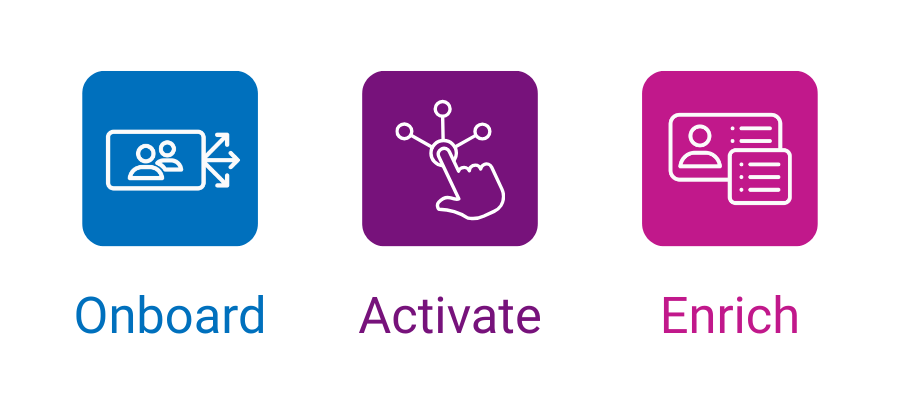
As signals fragment, marketers are shifting from data collection to data connection to make first-party data usable across channels. We support this shift by helping you onboard and resolve your data into a clean, connected foundation using our identity graphs.
Connecting offline and online interactions allows you to unify customer data across touchpoints to make it actionable. That connection enables a wider range of use cases, from audience activation and measurement to personalization and cross-channel optimization.
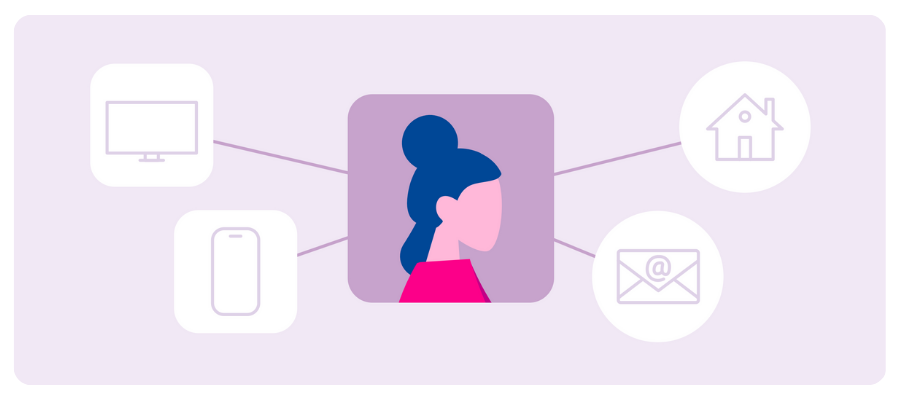
With our identity foundation in place, first-party data becomes more widely usable. You can enrich your first-party data with behavioral, demographic, and lifestyle insights from trusted partner data, then activate it across social, programmatic, and TV from a single environment.
Common challenges in first-party data activation
While building a connected foundation can make first-party data more broadly useful, several factors can also make that foundation difficult to build and maintain, determining how effectively you can activate first-party data across channels.
Disconnected data silos
First-party data often lives across CRM systems, point-of-sale platforms, email tools, websites, apps, and analytics environments. Without a shared identity foundation, those systems may treat the same customer as multiple people, which makes it challenging to create a consistent audience view or coordinate cross-channel activation. We help connect fragmented online and offline signals through identity resolution to give you a more unified data foundation for audience creation, activation, and measurement.
Incomplete or outdated records
Customer data changes over time. Email addresses become inactive, contact details change, and behavioral signals lose relevance. Without ongoing data maintenance and identity resolution, match rates can decline, reducing the accuracy of activated audiences and measurement.
Inconsistent identifiers across channels
Various platforms rely on different identifiers, so a customer recognized in one environment may not be recognized in another. Identity resolution helps connect fragmented signals, reduce duplicate profiles, and improve consistency throughout the activation process.
Limited reach and audience scale
A brand’s first-party data may not be extensive or detailed enough to support every campaign objective. Experian’s Enrichment can add demographic, behavioral, and lifestyle attributes to help you better understand known audiences and create more informed segments. When you need to reach beyond your existing customer base, our syndicated audiences can help extend prospecting reach with relevant, privacy-forward audience data.
Privacy and governance requirements
Activating first-party data requires you to account for permissions, opt-outs, data-use policies, and applicable privacy regulations. Building those considerations into the activation process from the start helps you maintain control of your data while supporting responsible use across partners and platforms.
Fragmented measurement
It can be difficult to connect media exposure and outcomes when audience identity varies across activation and measurement environments. A consistent identity foundation helps link the audiences you activate with the outcomes you measure, supporting more complete, cross-channel performance measurement.
The importance of first-party data in media planning
As media environments fragment, first-party data gives you a more durable foundation for planning audiences, personalizing campaigns, and measuring performance.
At the same time, first-party data isn’t the only input to an effective media strategy. You can combine it with trusted partner and syndicated data to enrich known audiences, extend reach, and fill gaps in your customer insights. We help make those data sources more usable across activation and measurement environments with a consistent identity foundation.
2026 Digital trends and predictions report
Our 2026 Digital trends and predictions report reveals five trends that will define 2026. From curation becoming the standard in programmatic to AI moving from hype to implementation, each trend reflects a shift toward more connected, data-driven marketing. The interplay between them will define how marketers will lead in 2026.
What business impact does first-party data activation deliver?
First-party data activation can improve campaign efficiency and performance by helping you reach more relevant audiences, reduce wasted media spend, and connect marketing activity to measurable business outcomes. It also helps you use existing customer relationships more strategically — for example, by suppressing current customers from acquisition campaigns, personalizing outreach, and prioritizing audiences that are more likely to respond.
That shift can have a meaningful business impact. Research suggests that activating first-party data can reduce customer acquisition costs by up to 50% and drive a 10–15% lift in revenue by helping you prioritize more relevant audiences and avoid spending against people you already know or are unlikely to convert.
Those outcomes depend on making first-party data usable beyond the CRM. When fragmented records are connected into more complete, addressable audiences, you can apply customer insights more consistently across planning, targeting, personalization, activation, and measurement.
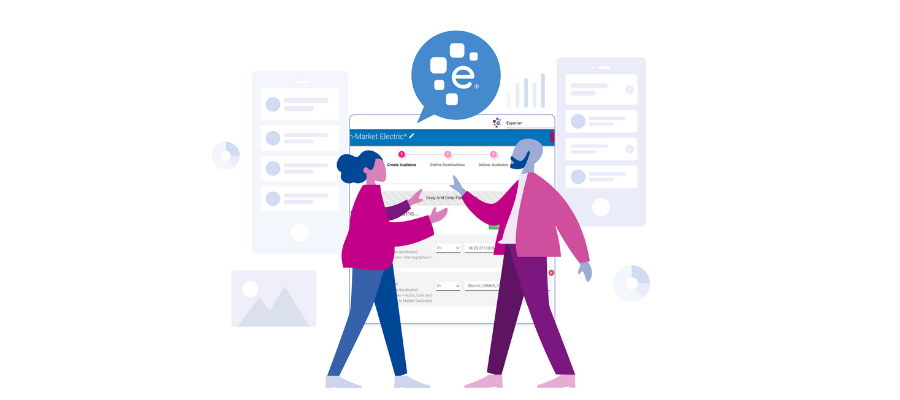
Audience Engine helps you put this strategy into practice by bringing together first-party data, audience insights, and activation in a single workflow. You can build custom audiences, activate them across 200+ platforms, and use 3,500+ syndicated audiences and partner data to enrich your strategy or extend reach when needed.
Key channels and strategies for first-party data activation
To drive business impact, you need to activate addressable audiences in the places where you reach and engage customers. First-party data activation can support both paid media and owned experiences. The right mix depends on your audience, campaign objective, available identifiers, and the platforms you use to reach and measure customers.
Email and direct mail
Email and direct mail are core first-party activation channels for retention, loyalty, and lifecycle marketing. You can use customer data to tailor messages, suppress irrelevant outreach, and coordinate communications based on purchase history, engagement, or customer status.
Programmatic display
When you onboard first-party audiences to compatible programmatic platforms for targeting, suppression, and measurement, you can extend customer insights into paid media, reduce wasted spend on existing customers, and support more relevant prospecting strategies.
Connected TV
Identity-resolved first-party data can support audience activation across compatible connected TV (CTV) environments. This gives you another way to reach customers and high-value prospects with more relevant messaging while connecting household-level exposure to broader campaign measurement.
Social platforms
First-party audiences can be matched to supported social platforms for targeting, suppression, audience expansion, and measurement. Used alongside platform signals, first-party data gives you more control over who you reach and how campaigns align with existing customer relationships.
Modeled audiences and prospecting
Use high-value first-party segments, such as repeat purchasers or high-lifetime-value customers, as the foundation for modeled audiences. Partner and syndicated data can add scale and context, helping you identify new prospects who share characteristics with your best customers.
Owned websites and apps
Activation isn’t limited to paid media. First-party data can also inform personalized website and app experiences, product recommendations, offers, and messaging based on known customer behavior and preferences.
The best activation strategies connect these channels through a consistent identity foundation, helping you coordinate audiences, reduce duplication, and support more consistent measurement.
What should marketers plan for first-party data activation in 2026?
Once you know where first-party audiences can be activated, the next question is how to build an activation approach that can scale across those channels.
In 2026, it’s important to plan for first-party data to operate across onboarding, activation, and measurement as a connected workflow. Planning now centers on interoperability, scalable activation tools, and privacy-forward enrichment rather than isolated data use cases. Identity underpins each of these shifts.
1. First-party onboarding is table stakes
Onboard CRM and other first-party data into compatible programmatic and connected TV environments to make known audiences more usable across channels. You can then combine those audiences with trusted syndicated and partner data when additional scale is needed.
2. Unified activation tools accelerate execution
A unified activation tool like Audience Engine helps you bring first-party data and partner audiences into a single workflow, supporting first-party data activation across 200+ platforms, including display, connected TV, and social.
This reduces the operational friction of managing separate, platform-specific audience views. With identity-resolved data connected to activation, you can create more complete audiences and apply first-party data targeting more consistently across platforms.
For smaller teams, start with a focused onboarding and test use case, such as customer suppression, retargeting, or prospecting from a high-value customer segment. You can then expand activation as your data, measurement needs, and channel strategy mature.
3. AI-driven enrichment enhances performance
Machine learning can identify patterns, predict behavior, model lookalikes, and uncover actionable insights to increase reach and relevance, even as traditional signals fragment.
With our in-house modeling capabilities, you gain faster access to advanced machine learning and the ability to define your own model parameters. This gives you direct control over how audiences are built and optimized, allowing you to activate insights quickly, iterate as strategies evolve, and avoid the limitations of black-box third parties and long development cycles.
Best practices for getting started with first-party data activation
A successful activation strategy starts with a clear use case, reliable data, and a foundation that can scale over time. You don’t need to activate every record or channel at once. Starting with a focused audience and measurable objective makes it easier to test performance, refine the approach, and confidently expand.
Start with a clear business objective
Define what you want the activation effort to accomplish, whether that’s improving retention, reducing acquisition waste, reaching high-value prospects, or increasing cross-sell performance. Your objective should guide the data, audience, channels, and metrics you prioritize.
Prioritize high-value audiences
Begin with segments tied to a meaningful business outcome, such as repeat purchasers, high-lifetime-value customers, recent converters, or lapsed customers. Starting with a focused audience can produce clearer insights than deploying an entire customer database at once.
Build suppression into prospecting campaigns
Use first-party data to exclude existing customers from acquisition campaigns when appropriate. Suppression can reduce wasted spend, limit repetitive messaging, and protect the customer experience.
Test before expanding
Start with one or two activation destinations and establish benchmarks for reach, engagement, efficiency, or conversion. Use the results to refine audience definitions, messaging, and channel strategy before expanding across the broader media mix.
Refresh audiences regularly
First-party data changes as customer behavior, contact information, and preferences evolve. Review and refresh audiences regularly to keep activation relevant and accurate over time.
Choose a flexible activation approach
Look for partners and tools that can support your first-party data alongside partner and syndicated audiences across the platforms you already use. A flexible, interoperable approach makes it easier to add use cases, extend reach, and connect activation with measurement as your strategy matures.
Why first-party data activation matters to marketers in 2026
First-party data activation turns customer records into connected audiences you can use across the media ecosystem. Audience Engine enables you to onboard, enrich, and activate first-party data through a secure, interoperable platform that supports more relevant targeting and measurable outcomes.
To explore this trend and the others shaping marketing in 2026, download our 2026 Digital trends and predictions report.
Ready to connect with our team?
About the author

Doug McLennan
Sr. Director, Product Management, Experian
Doug McLennan is the Senior Director of Product Management at Experian Marketing Services where he is focused on product strategy for activation. His past work includes managing syndicated audiences at Oracle Data Cloud and building personalized video ad products at an agency. Doug lives in Colorado and skis as much as his family will allow.
Frequently asked questions about first-party data activation
First-party data is information collected directly from a brand’s own audience with consent, including purchase history, CRM records, and site or app behavior. Experian helps marketers resolve this data against our identity graphs for activation.
First-party data matters because it gives marketers a direct, controlled foundation for understanding and engaging their audiences as signals and media environments fragment. While it can support customer insights and personalization on its own, activation and identity resolution make that data usable at scale for audience targeting, suppression, cross-channel engagement, and measurement.
First-party data activation means using a brand’s own customer data to build addressable audiences across paid and owned channels. Our identity spine connects, enriches, and activates that first-party data consistently while preserving control and privacy.
First-party data needs identity to connect customer records across devices, platforms, and environments into a unified view. Experian identity resolution makes it possible to activate, measure, and manage frequency consistently across paid and owned media.
First-party data activation improves efficiency by reducing waste and increasing relevance. Marketers focus spend on known and modeled audiences, suppress existing customers in prospecting, and optimize toward outcomes rather than impressions.
We support first-party data activation by resolving, enriching, and activating customer data using identity as the foundation. Through Audience Engine, we enable onboarding, audience creation, cross-channel activation, and measurement within one environment.
Latest posts

Tapad’s TV analytics solutions now include premium national cable inventory– Travelocity asserts industry need, praises partnership — NEW YORK, February 28, 2017 — Tapad, a part of Experian, has announced its partnership with clypd, the leading audience-based sales platform for television advertising. By integrating clypd’s national cable network inventory, the partnership will expand Tapad’s extensive supply of TV inventory to include premium national cable inventory. Tapad is the leading provider of privacy-safe, cross-screen marketing technology solutions and was first-to-market with a device graph. Clypd’s robust sell-side advertising platform was one of the first built exclusively for the television industry, empowering media owners with solutions that deliver workflow automation, data-enhanced decisioning and, overall, maximize TV campaign performance. Through this partnership, Tapad’s Device Graph-powered TV tools will work in tandem with clypd’s sales platform to enable more precise audience engagement for TV ad buys. This will enable marketers to integrate their customer data or third-party digital segments into Tapad’s TV platform and use them to precisely engage their audience across clypd’s industry-leading footprint of national TV inventory. Campaigns are then optimized using Tapad’s graph-powered TV attribution, ensuring ads are aligned with the best context for each brand’s message. “Clypd is a pioneer in building TV marketplaces,” says Marshall Wong, SVP of TV market development at Tapad. “They were quick to recognize the benefits a device graph could bring to TV so that advertisers can activate linear inventory curated for any digital audience.” “Tapad’s TV activation platform increases the efficiency in which marketers can reach their intended audience on traditional linear TV,” says Doug Hurd, co-founder and EVP of business development at clypd. “Their customized, data-driven campaigns launch with precision and really increase the value marketers can extract from linear TV inventory.” “At Travelocity, we are always looking for ways to more efficiently reach our target audiences,” says Ashley Parker, head of brand marketing at Travelocity. “The combination of traditional linear TV and solutions like this offering from Tapad and clypd are bringing both the tools and the supply to make this vision a reality.” Contact us today
Dextro clients to achieve increased accuracy in cross-device consumer measurement and engagement NEW YORK, Feb. 6, 2017 /PRNewswire/ — Dextro Analytics, a pure play analytics company that harnesses the power of human learning and artificial reasoning to drive more informed and effective consumer marketing, is partnering with Tapad, the leading provider of unified, cross-screen marketing technology solutions and now a part of Experian. The deal is effective immediately and the scope of the partnership covers North America. Additional terms were not disclosed. Leveraging Tapad’s privacy-safe Device Graph™, Dextro Analytics will be able to significantly bolster its insight engine to decode complex customer journeys. Armed with more relevant, actionable insights, marketers can use Dextro’s cross-screen, closed-loop measurement systems to reach and engage the right customer at the right time through the right channel. “Being able to accurately map consumer preferences, behaviors and journeys in a privacy-safe and unified way across devices is still one of the biggest pain points for marketers,” said Ajith Govind, co-founder of Dextro Analytics. “At the same time, this partnership engages customers with the right message at the right time.” “Detecting latent patterns and signals, and tracing backward- and forward-looking behavioral characteristics, are keys to sustaining a competitive advantage in a crowded space,” said Manmit Shrimali, co-founder of Dextro Analytics. “With the proliferation of data and devices, connecting the dots is of paramount importance.” “Dextro is solving some of the biggest challenges in analytics today,” said Pierre Martensson, GM of Tapad’s data division. “Our partners consistently see notable improvements in both budget allocation and device optimizations after integrating with the Tapad Device Graph, and I have every confidence that Dextro will be among them.” For more information about Dextro Analytics’ revolutionary approach to using human learning and artificial intelligence algorithms to solve business and analytical problems, please visit http://dextroanalytics.com/. For more information about Tapad’s cross-platform advertising solutions, please visit https://www.experian.com/marketing/consumer-sync. Contact us today

NEW YORK & LOS ANGELES / BUSINESS WIRE / Jan. 30, 2017– Tapad, part of Experian, and Rubicon Project (NYSE: RUBI) announced today a new global partnership offering a unified, cross-device campaign delivery solution within an automated advertising marketplace. Tapad is the leading provider of unified, cross-screen marketing technology solutions and Rubicon Projectoperates one of the largest advertising marketplaces in the world. The Tapad Device Graph™, which enables buyers to expand their high-value display data signals to associated mobile devices, will be integrated across Rubicon Project’s leading advertising exchange and Orders platform, significantly improving consumer mobile reach. The new global partnership will empower Buyers within Rubicon Project’s exchange to find and engage audiences across their entire digital experience. Rubicon Project operates one of the world’s largest mobile exchanges connecting to approximately 1 billion unique mobile devices globally. “We’re excited to partner with Tapad to continue to provide our customers the very best data for managing their advertising businesses,” said Harry Patz, Chief Revenue Officer, Rubicon Project. “Cross-device delivery is crucial for buyers today with more than 81% of internet users currently relying on more than one device for digital access[1]. Through our partnership, buyers will be able to extend their desktop private marketplace campaigns to mobile, allowing them to find and engage their audience across devices, anywhere in the world. The net result will also benefit sellers; the increase in mobile reach will better position publishers and app developers to strategically capitalize on their inventory, ultimately increasing bid rates and mobile revenue across the board.” “Our partnership with Rubicon Project marks the first time advertisers and publishers alike are able to use cross-device solutions at significant scale outside of Google and Facebook,” said Pierre Martensson, GM of Tapad’s Data Division and APAC. “Our Device Graph will help Rubicon Project’s advertisers make more informed buying decisions and find the audiences who matter most.” Barry Adams, VP of Commercial Development at Bidswitch, said, “As digital advertising moves away from desktop and increasingly toward a mobile-first model, cross device data becomes critical to finding consumers. The rich data buyers will now be able to leverage at scale through the Tapad and Rubicon Project integration will enable us to provide a state-of-the-art cross-screen solution for the 150+ buying platforms that use our service, and the tens of thousands of advertisers they represent.” For more information about Rubicon Project’s inventory, please visit www.rubiconproject.com. For more information about Tapad’s cross-platform advertising solutions, please visit https://www.experian.com/marketing/consumer-sync. Contact us today