Loading...

Three eco-conscious audiences for Earth Day

Published: April 18, 2023 by Experian Marketing Services

As Earth Day approaches, it’s the perfect opportunity for marketers to explore innovative ways to engage with eco-conscious customers. With a strong and growing interest in sustainable business practices worldwide, green audiences are becoming increasingly influential. In addition to being good for the planet, engaging these customers is great for any brand or organization striving to become more eco-friendly and socially responsible. By taking advantage of this timely event and using appropriate tools, you can create personalized campaigns that will both promote your brand and increase customer loyalty.

Eco-conscious audiences

In this blog post, we’ll cover three eco-conscious audiences to target this Earth Day:

  1. Solar energy
  2. GreenAwareTM
  3. Electric vehicles

Solar energy

Our first eco-conscious audience is Solar energy. Consumers in this audience show an inclination toward harnessing the power of the sun as a clean, renewable energy source. Our audience data can provide valuable insights into the Solar energy consumer base, including their age, education level, occupation, household income, and communication preferences. Let’s explore these metrics to better understand how to reach this group effectively.

Age and living situation

Consumers in our Solar energy audience are more likely to live in a home with two or more adults and are between the ages of 45-74.
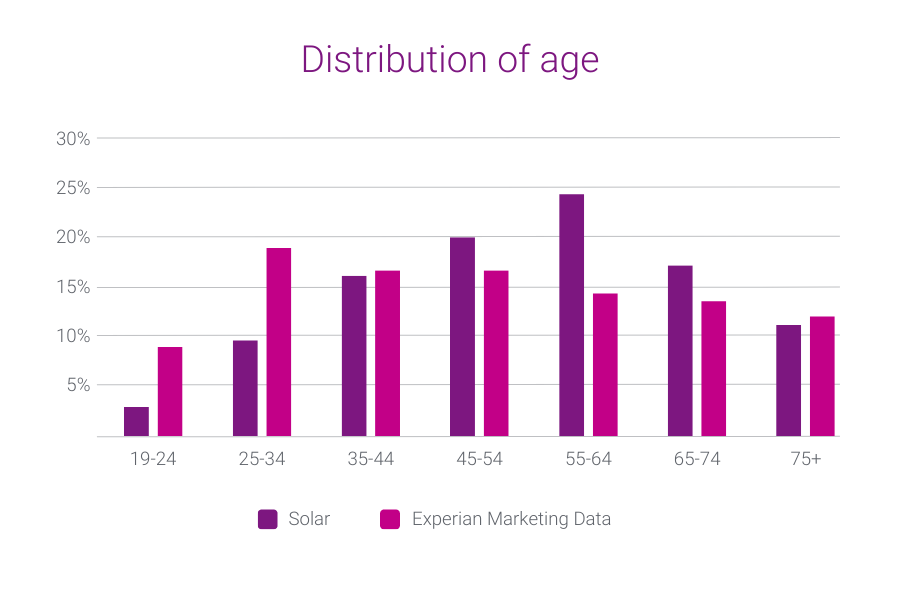
consumers in the eco-conscious solar energy audience are more likely to be between ages 45-74

Education level and occupation

Consumers in our Solar energy audience are more likely to have graduated from college or graduate school and work in management-level occupations.
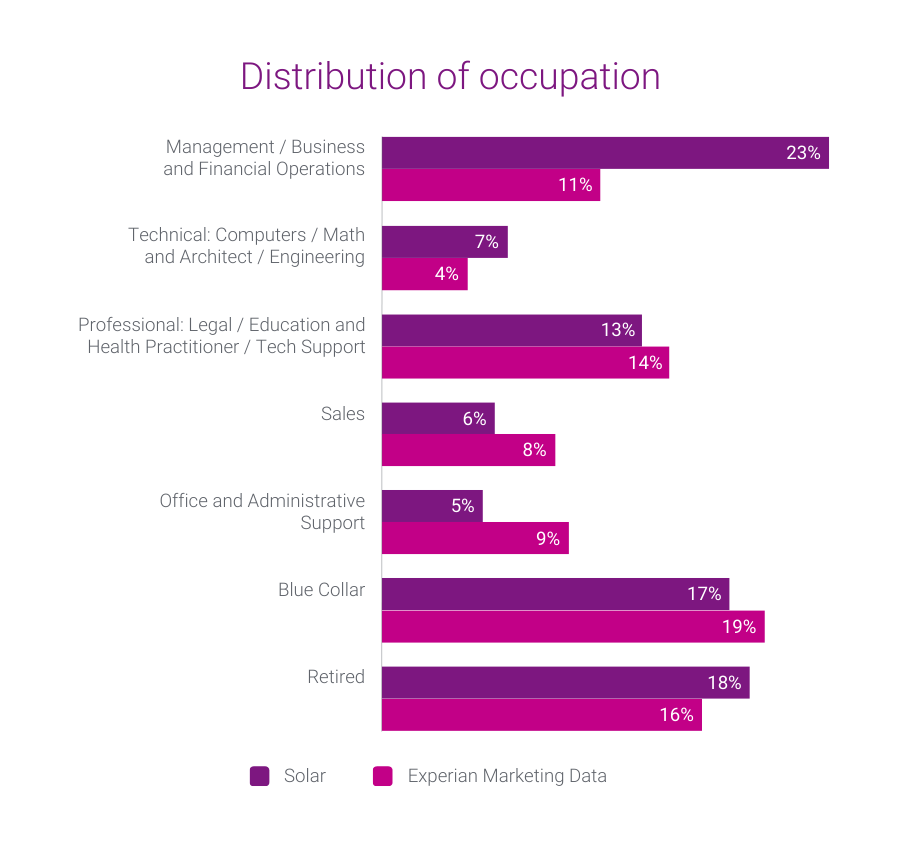
consumers in the eco-conscious solar energy audience are more likely to work in management-level occupations

Household income

Consumers in our Solar energy audience have household incomes of more than $75,000 and their homes are valued at over $550,000.
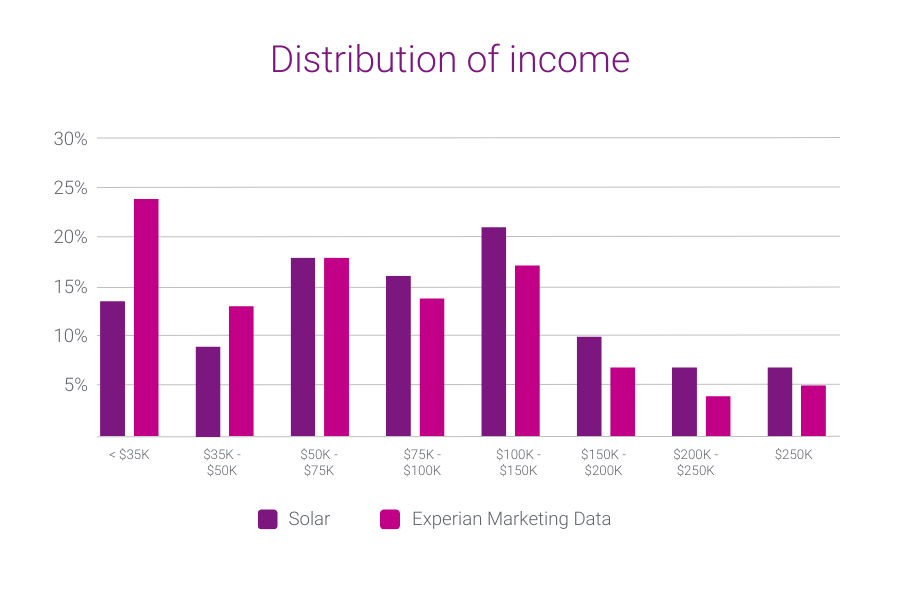
consumers in the eco-conscious solar energy audience have household incomes of more than $75,000

Preferred engagement channels

Consumers in our Solar energy audience are most receptive to ads served through digital channels like digital newspapers and email.
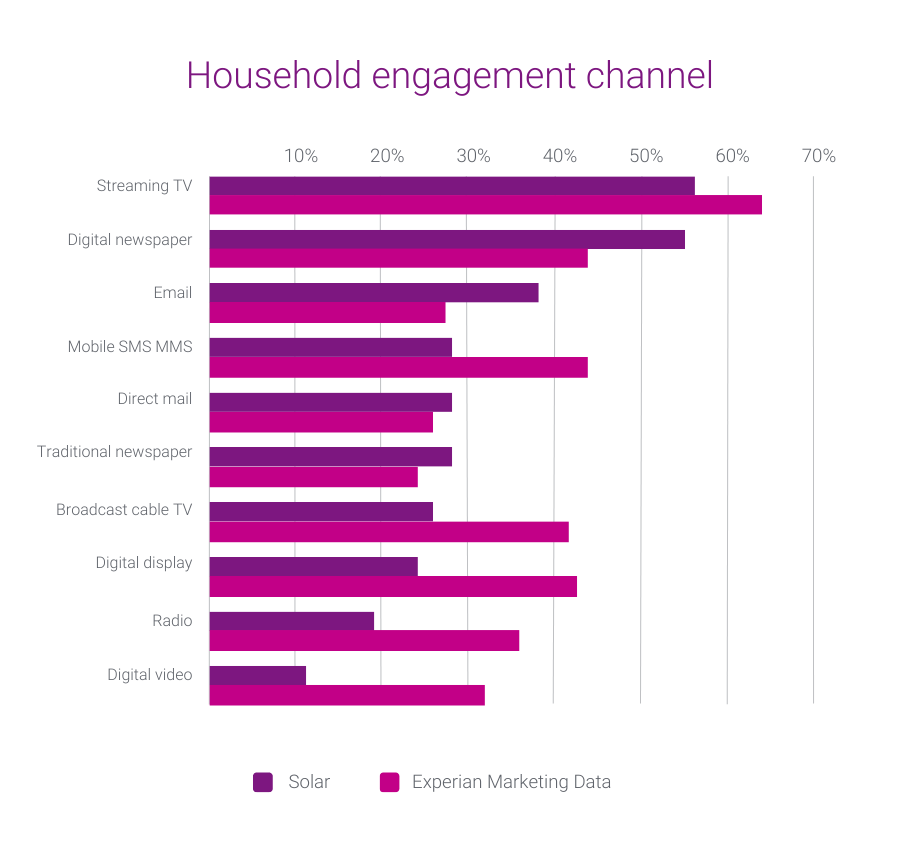
consumers in the eco-conscious solar energy audience are most receptive to ads through streaming tv and digital newspaper

Solar energy audience pairings

Consumers in our Solar energy audience also belong to three of our Mosaic® USA groups:

  1. Power Elite
  2. Flourishing Families
  3. Booming with Confidence

Our consumer segmentation portal of 126 million households and 650 lifestyle and interest attributes empowers marketers like you to precisely target your ideal audience and communicate with them on a personal level. Mosaic’s data segments the U.S. into 19 overarching groups and 71 underlying types, giving you the insights needed to anticipate the behavior, attitudes, and preferences of your most profitable customers and communicate with them on their preferred channels, with messaging that resonates.

GreenAware

Our second eco-conscious audience is GreenAware.

GreenAware segments the 126 million U.S. households within Experian Marketing Data into four distinct groups. Each group differs in their attitudes and behaviors toward purchasing products that are environmentally safe and working with companies that are eco-conscious. We created these groups using an enhanced application of traditional statistical clustering techniques based on environmentally relevant measurements in Simmons’ National Consumer Study.

Based on the distinctive mindset of consumers toward the environment, you can learn how environmental concerns fit into their lives through four major consumer segments:

  1. Eco-Friendly Enthusiasts
  2. Sustainable Spectators
  3. Passive Greenies
  4. Eco Critics

Let’s dive deeper into each group to understand their unique perspective on the environment and how this impacts their attitudes and behaviors.

Eco-Friendly Enthusiasts

This eco-conscious segment prioritizes a green lifestyle and takes pride in avoiding products that harm the planet. With traditional and liberal values, they embrace optimism and prioritize family. With their children out of the house, they take the time for some well-deserved rejuvenation and are committed to a healthy lifestyle. Some members of this group are transitioning into retirement and welcoming a new chapter in their life.

  • Mature adults and retirees
  • College graduate or more
  • Above average income
  • May be married or single
  • Typically own their homes

Sustainable Spectators

This segment aspires to be more sustainable, but they struggle with translating their green ideas into action. They have a soft spot for a cozy home. While their love for interior design and taking care of their own space is evident, they’re always looking for new experiences and opportunities to learn. Staying healthy and active is a top priority for this group, so it’s no surprise that they’re always looking for ways to stay fit and feel their best.

  • Established and mid-life adults
  • College graduate or more
  • High income
  • Typically married
  • Likely to own their homes

Passive Greenies

This is the largest and one of the most youthful groups. Known for their love of exploration and self-discovery, they may not have fully embraced eco-conscious behaviors yet, but they are eager to stay current with the latest technology and trends. With their incredible ability to multitask, they’re always on-the-go, and constantly seek the next best thing.

  • Mainly young adults and diverse
  • Education ranges from high school through some college
  • Below average income
  • More likely to be single or divorced
  • Typically rent

Eco Critics

This group is not likely to be eco-conscious and may have negative attitudes about the environment. They are confident, driven, and focused on their personal growth. They crave instant gratification, seeking out quick and easy solutions to their everyday decisions. They place a high value on entertainment, their social life, and carefully curate their image.

  • Young and established adults
  • Education ranges from high school through post-graduate studies
  • High income
  • Married or single
  • Typically own their homes

Let’s take a look at how the GreenAware segments stack up against each other in terms of age, household income, education level, and media preference. How do they compare? Let’s find out.

Age

Consumers in the Eco-Friendly Enthusiasts segment are the oldest of the four GreenAware segments – about half of the consumers are 65 or older. Eco Critics are the youngest segment, with over half of consumers in this group between ages 25-44.
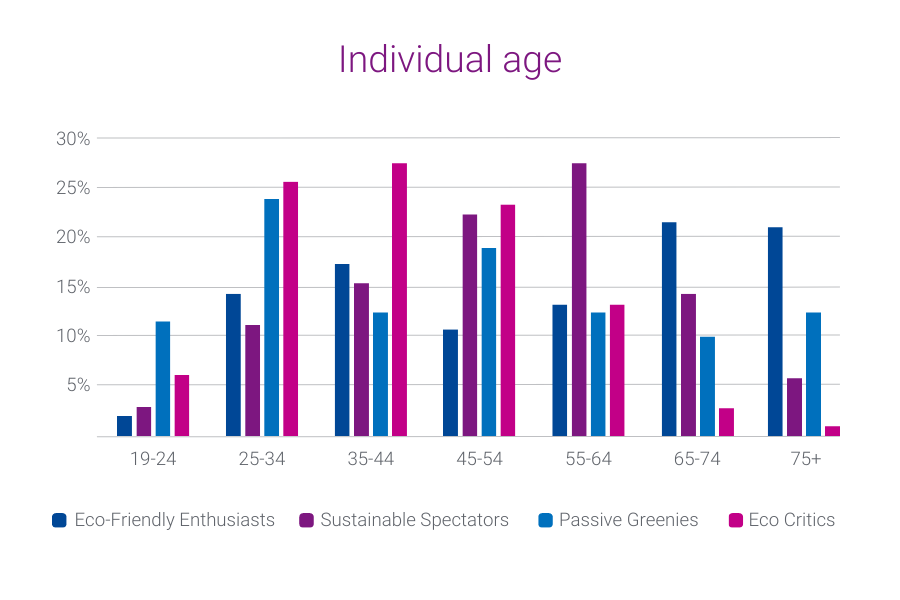
consumers in the "eco-friendly enthusiasts" audience are the oldest of the eco-conscious audience segments

Household income

Sustainable Spectators and Eco Critics are the wealthiest GreenAware segments. The average household income of consumers in these segments is above $100,000. Passive Greenies have the lowest household income, with a majority below $50,000.
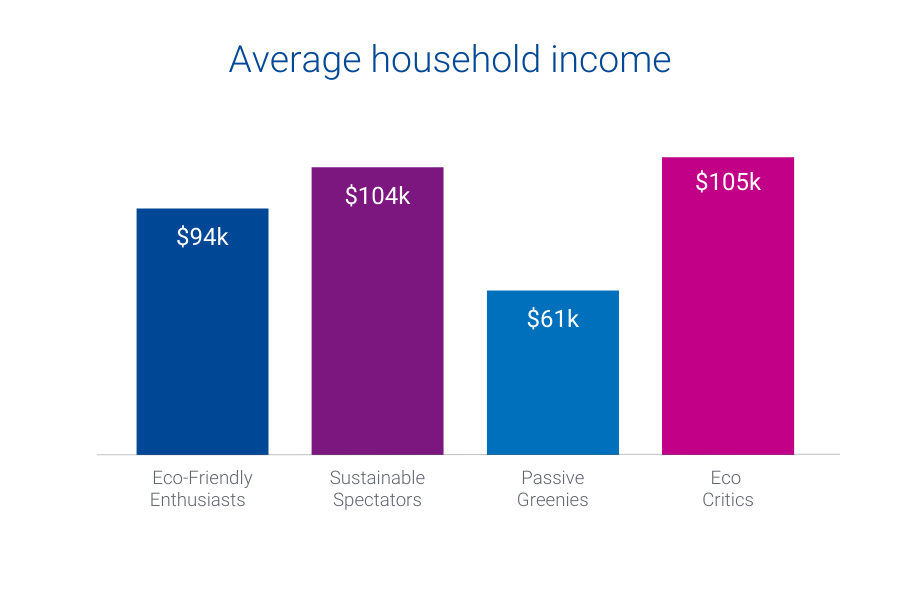
sustainable spectators and eco critic consumers are the wealthiest of the eco-conscious audiences

Education level and occupation

Passive Greenies are more likely to work Blue Collar jobs and have the lowest level of education. As the wealthiest segments, Sustainable Spectators and Eco Critics have the highest levels of college degrees and work in management, business, and financial operations. Eco-Friendly Enthusiasts are the most likely to be retired and out of the workforce.
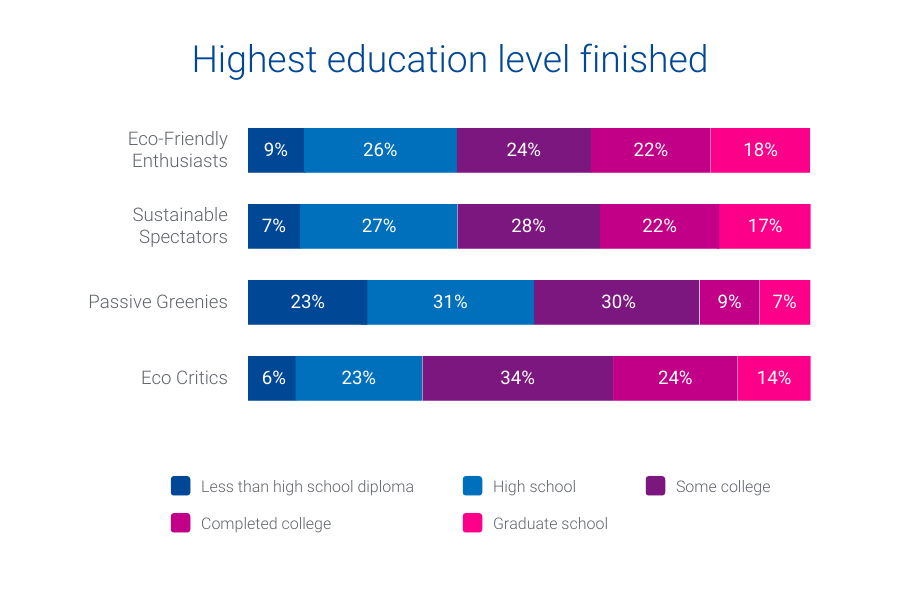
graph of eco-conscious audiences and the highest education level they have finished

Preferred engagement channels

  • Streaming TV is the preferred engagement channel for all GreenAware segments.
  • Eco-Friendly Enthusiasts prefer digital channels like digital newspapers, mobile SMS, and email. They also engage with traditional channels like direct mail and newspaper.
  • Passive Greenies have a high preference for digital display, mobile SMS, digital video, broadcast cable TV, and radio.
  • Eco Critics have a high preference for digital channels like digital newspapers, mobile SMS, and digital display.
  • Sustainable Spectators strongly prefer digital newspapers. They don’t show as strong of a preference for mobile SMS and digital display as Eco Critics and Passive Greenies.
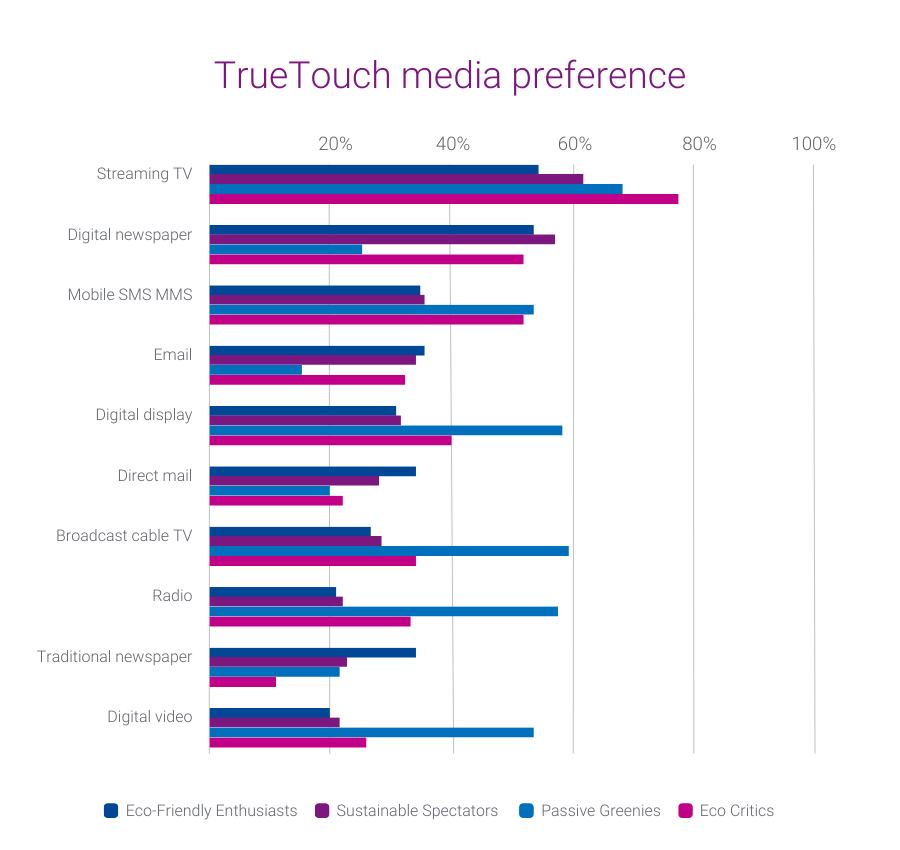
graph of the eco-conscious audiences' preferred engagement channels

GreenAware audience pairings

Six of our Mosaic groups have at least one GreenAware segment with 10% or more of the population. For more precise targeting, below are suggested Mosaic audiences you can pair with each GreenAware segment:

Eco-Friendly EnthusiastsSustainable SpectatorsPassive GreeniesEco Critics
Booming with ConfidencePower EliteSingles and StartersPower Elite
Autumn YearsBooming with ConfidenceGolden Year GuardiansSuburban Style
Golden Year GuardiansSingles and Starters

Electric vehicles

Our third eco-conscious audience is electric vehicles.

Electric vehicles (EVs) are having a major moment in the automotive industry. This is no surprise given that new EV models are being released and an increasing number of charging stations are popping up around the country. As EVs become more prominent, it’s essential to stay up to date on relevant trends to make informed decisions about what lies ahead.

The demand for electric vehicles (EVs) is on the rise

Consumers are embracing the EV revolution, showing their desire for a cleaner, greener future. Automotive marketers are increasingly looking to reach in-market EV shoppers and current alternative fuel vehicle owners due to the growing availability of electric vehicles, improved infrastructure, and rising popularity. In 2022, EVs charged up the market and accounted for a remarkable 6% of new retail registrations.

While Tesla continues to dominate the EV market, Ford, Chevrolet, and Hyundai are starting to compete, each holding more than 3% of the market share of new retail EV registrations.
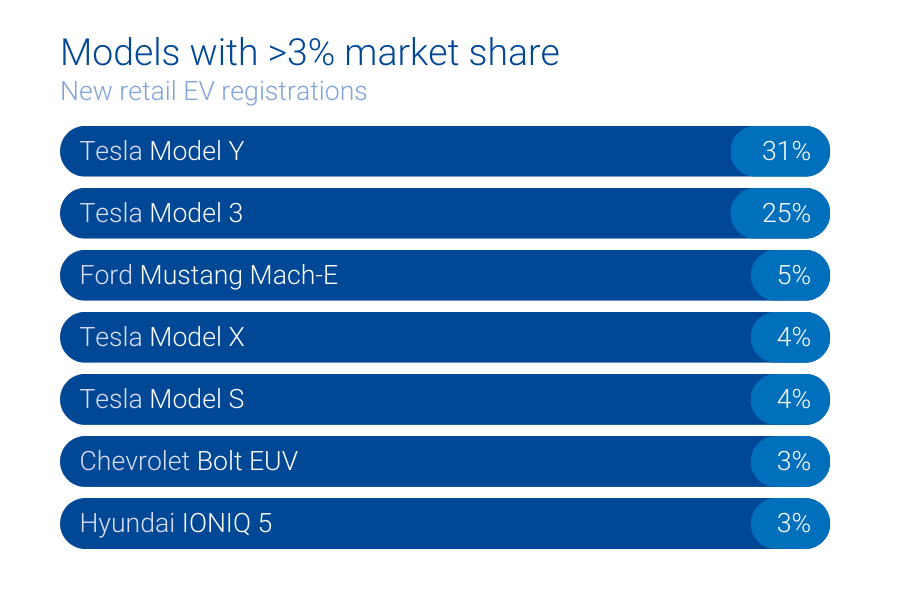
graph showing the demand for electric vehicles by model

Geography

Where are we seeing the most new retail EV registrations? The top designated market areas (DMAs) for new retail EV registrations are mostly located in heavily populated, coastal cities like Los Angeles, CA and New York, NY.
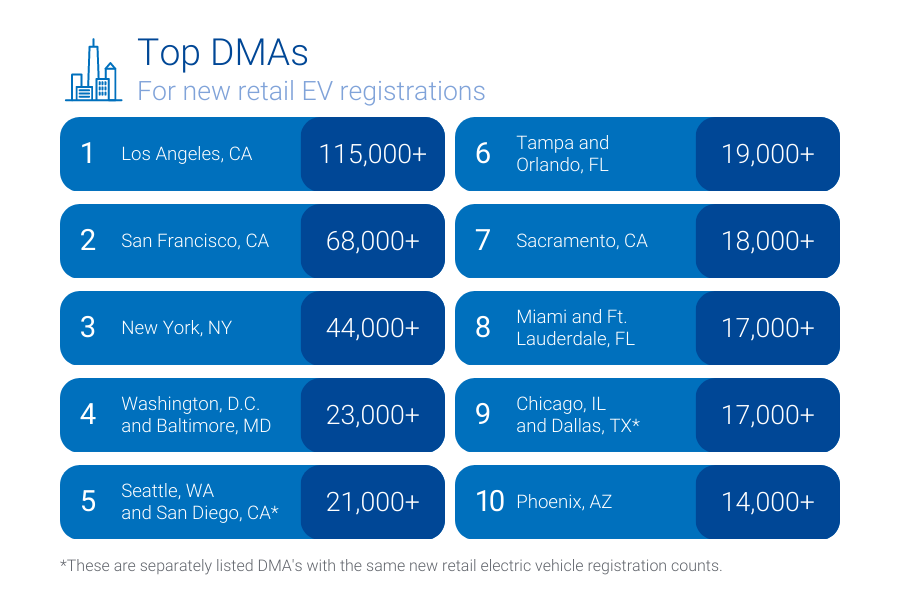
graphic showing the top designated market areas for new retail EV registrations

The fastest growing DMAs, however, are in smaller cities like Tucson, AZ and Oklahoma City, OK.

Generational demographics

Gen X and Millennials make up the largest percentage of new retail EV buyers at 37.5% and 34.4%. Gen Z and the Silent generation represent the smallest shares at 5% and 2.1%. Boomers hover between Gen X and Millennials’ share and account for 20.6% of new EV retail purchases.

EV audience pairings

Our top five Mosaic groups for new EV buyers include:

  1. American Royalty
  2. Cosmopolitan Achievers
  3. Philanthropic Sophisticates
  4. Couples with Clout
  5. Fast Track Couples

How to target consumers in-market for electric vehicles

We offer 70+ audiences that are focused on likely buyers and owners of EV and plug-in hybrid (PHEV) vehicles. We also offer a subset of 28 audiences focused on individual EV/PHEV vehicle models.

Below is how you can find a few of these audiences on-the-shelf of most trusted advertising platforms:

  • Autos, Cars, and Trucks > In Market-Fuel Type > Electric
  • Autos, Cars, and Trucks > In Market-Fuel Type > Used Electric
  • Autos, Cars, and Trucks > In-Market Make and Models > Tesla
  • Autos, Cars, and Trucks > In-Market Make and Models > Chevrolet Bolt EV

We can help you reach eco-conscious consumers

Earth Day is a great opportunity to get creative with your marketing efforts with our three eco-conscious audiences: Solar energy, GreenAware, and electric vehicles. To find out how you can add eco-conscious audiences to your marketing plan, contact us.

Get in touch

This site is protected by reCAPTCHA and the Google Privacy Policy and Terms of Service apply.


Latest posts

Loading…
The current climate of ad-supported TV

In this article…A history of ad-supported TVThe resurgence of ad-supported TV models Free ad-supported streaming vs paid ad-supported TV What FAST popularity means for marketersThe future of ad-supported TV In the early days, streaming services were presented to viewers as convenient alternatives to cable that allowed you to get content whenever you wanted it — without ads. But as standalone streaming platforms have grown in number and prominence, often charging high monthly costs for subscription-based content and continually hiking their rates, many are warming back up to the idea of ads if it means lower monthly fees. Cue free ad-supported TV (FAST) streaming services: free video content with no paid subscription requirement.  These services generate revenue through advertising and deliver content with periodic commercial breaks to support their free model. This option has become popular as viewers have sought out cost-effective alternatives to traditional scheduled television. Free streaming TV platforms such as the Roku Channel, Tubi, and Pluto TV are growing, with one in three U.S. viewers subscribing to free ad-supported TV streaming services. If premium streaming platforms keep raising their monthly costs, we can predict that FAST will continue to grow.  In this article, we’ll talk about the current state of the ad-supported TV climate, including the opportunities and challenges it poses for marketers. A history of ad-supported TV Historical context is crucial to understanding the current climate of ad-supported TV and its implications for your marketing. Before the rise of cable TV, television was free for viewers, with advertisers covering the costs. The first TV commercial, a 10-second spot for the Bulova Watch Company, aired in 1941 during a baseball game and cost the company $9. This ad kickstarted the era in which advertisements funded the TV model, which quickly surpassed radio in popularity and led to an explosion of content. From 1956 to 1988, commercials became embedded in culture, giving rise to marketing icons like Ronald McDonald and memorable campaigns like Nike's “Just Do It.” From 1989 to 2006, the world saw the rise of online entertainment and advertising with the invention of the World Wide Web — and subsequently, online video broadcasting and advertising emerged. But between 2007 and 2014, over-the-top (OTT) broadcasting and connected television (CTV) innovation disrupted traditional broadcasting, with ad-supported streaming gaining greater prominence. Platforms like Netflix and Hulu allowed viewers new freedom from the confines of scheduled programming. By 2022, CTV advertising thrived thanks to programmatic advertising, which allowed businesses to reach targeted audiences with relevant campaigns. Ad-supported streaming became widespread as platforms like Netflix and Disney+ incorporated advertising into their models. Free ad-supported TV (FAST) emerged as a form of advanced television that displaced traditional cable and satellite TV. Recent years have witnessed a notable shift back to ad-supported streaming television due to the proliferation of streaming services, subscription fatigue, and the desire for cost-effective content consumption.  Looking ahead to the future, TV advertising is expected to continue growing with the potential to be influenced by innovations like virtual reality and artificial intelligence.  Why did the popularity fade? Ad-supported TV waned in popularity due to the introduction of cable TV and subscription-based models. Cable TV offered ad-free content for a subscription fee, which reduced the appeal of traditional ad-supported broadcasts. Uninterrupted content became a critical selling point for cable providers, but it created fragmentation for advertisers and made it more challenging for them to reach their target audience. With cable and, later, satellite TV dominating the market, advertisers had to adapt their strategies. The decline in the popularity of ad-supported TV led to a decreased reliance on traditional advertising methods, and marketers began exploring alternative avenues to connect with consumers effectively. The recent resurgence of ad-supported TV, particularly in streaming services, indicates a shift in viewer preferences. You can utilize targeted advertising cost-effectively, as viewers prefer free, ad-supported content over subscription-based models. The resurgence of ad-supported TV models  The resurgence of ad-supported TV models can be partly attributed to the COVID-19 pandemic and changing viewer preferences. In 2020, stay-at-home measures led to a surge in media consumption, and people turned to streaming for entertainment. This shift provided a unique opportunity for ad-supported models to regain popularity. But as viewers explored various streaming options, subscription fatigue set in. Paid streaming proliferation increased costs, and people began reconsidering spending on multiple subscriptions.  The pandemic triggered a fundamental shift in TV consumption and caused viewers to favor ad-supported streaming models that offered free content with occasional commercial breaks. In fact, LG Ad Solutions research revealed that 80% of American TV viewers use free ad-supported streaming services — and 63% express a preference for this model. This finding challenges assumptions made during the initial stages of the pandemic, where subscription-based consumption seemed dominant. The study suggests that as subscription fees accumulated, viewers sought more content without increasing costs, driving a preference for ad-supported streaming. Furthermore, the landscape of ad-supported TV saw notable entries from major streaming platforms: HBO launched its ad-supported model in June 2021. Netflix and Disney+ introduced their ad-supported tiers in late 2022. Amazon announced in September 2023 that they would be launching their ad-supported service in 2024. These developments emphasize the industry's recognition of the demand for ad-supported content and further contribute to the prominence and endurance of this model. Most popular platforms A report from Samba TV showed that one in three U.S. viewers subscribes to free ad-supported TV streaming services, such as Pluto TV, Tubi, or the Roku Channel. The report highlights Amazon's Freevee as a standout due to its high viewership growth in the first half of 2023 compared to competitors. Here are some details to note about Freevee and its major competitors: Freevee (Amazon Prime) With a focus on bringing diverse content to its audience, including thousands of premium TV shows and movies, Freevee has positioned itself as a go-to destination for those looking for quality programming without subscription fees. In early 2022, Freevee had 65 million monthly active users, and their ad prices, similar to competitor costs, range between $13 and $24 per day — around $400 and $720 per month, respectively. Pluto TV (Paramount) As a pioneer in the FAST streaming space, Pluto TV, now under Paramount, boasts a diverse range of 250+ channels. According to Statista data from November 2022, 8% of Americans watched TV on Pluto on a daily basis, with men watching more often than women. You can strategically engage with Pluto TV's varied audience for around $999 a month, with advertising costs influenced by factors like viewership and channel prominence. Tubi (Fox) Surpassing many competitors in viewership, Tubi, owned by Fox, offers an extensive collection of free content (200,000 movies and TV episodes) and enjoys 74 million active monthly users. Tubi has experienced the fastest growth among young, diverse audiences and has produced or acquired 200 titles that almost 54 million viewers have watched. You can market to viewers on Tubi for $10 to $45 daily or $300 to $1,350 monthly. The Roku Channel With over 350 channels and premium original content, The Roku Channel has become an important player in the FAST space. Approximately 38% of streaming hours in U.S. households are spent on the Roku Channel. With Roku Ads Manager, you can get started with only $500. New players The FAST industry is seeing an influx of new players all the time, which is contributing to the industry's growth and innovation. As traditional subscription-based models adapt to include ad-supported tiers, the competition in the ad streaming sphere has intensified, prompting both established and emerging platforms to explore the FAST model. Statista reports that the number of users in the FAST market is expected to reach 1.1 billion by 2028! The recent entry of industry giants like Netflix into the ad-supported realm has set the stage for significant shifts. When Netflix announced and launched its ad-supported tier in late 2022, the industry experienced a notable spike in CPMs (cost per mille/cost per thousand impressions). This reflected the initial scarcity of users on this tier.  As more subscribers embraced the ad-supported offering, CPMs decreased. Subscription video-on-demand (SVOD) platforms, including Disney+, are also incorporating ad-supported tiers into their models to cater to viewers' preferences for cost-effective streaming options. Industry reports illustrate a decrease in CPMs as more users engage with ad-supported tiers, which creates a vibrant, competitive environment for advertisers like you. Free ad-supported streaming vs paid ad-supported TV  The affordability of free ad-supported streaming services is attractive for viewers seeking cost-effective alternatives to traditional cable or non-ad-supported streaming platforms. Platforms like Pluto TV and Tubi provide viewers with a wealth of content without the financial commitment of a subscription. Free ad-supported streaming services like these have gained traction for their cost-effectiveness. In contrast, paid ad-supported TV models present a unique proposition — pay for the service and enjoy reduced subscription costs by opting for an ad-supported plan. These models provide users with a middle ground between subscription-based and free ad-supported streaming. The future popularity of free ad-supported streaming versus paid ad-supported streaming is likely to be influenced by a combination of viewer preferences, content strategies, ad experiences, and broader industry dynamics. As both models evolve, streaming services will continue to experiment and adapt to meet the diverse needs of their audiences. What FAST popularity means for marketers The shift towards FAST aligns with changing viewer preferences. This makes things easier for your marketing, as you can: Engage a broader audience: Without the barriers of subscription fees, and the ability to place ads in front of diverse demographics, you can customize campaigns for specific audiences and ensure your messages resonate with viewer interests. Convey your message to a captive audience: The rise of FAST also implies an increased viewership of commercials, as these services typically feature ad-supported models with limited options for viewers to skip or fast-forward through ads, creating a more captive and engaged audience.  Expand your brand exposure: The cost-effectiveness of ad-supported models provides a valuable avenue for brand exposure without the hefty price tags associated with traditional TV advertising. As a marketer, it’s essential for you to understand the dynamics of ad-supported TV platforms so you can recognize unique advertising formats, optimize campaign frequency to prevent ad fatigue, and embrace the potential for localization and personalization. As advertising evolves with the growing popularity of FAST, you have an opportunity to stay ahead of the curve, craft compelling campaigns, and maximize your reach at a time when ad-supported streaming is at the forefront of entertainment. The future of ad-supported TV The re-emergence of ad-supported TV, along with recent innovations, indicates that the future of this model is bright.  Teevee Corporation, a hardware startup led by the co-founder of Pluto TV, is an excellent example. It is set to unveil a groundbreaking ad-supported physical television that won’t cost consumers a single cent — as long as they’re okay with a second integrated screen that displays ads while they watch the main screen. This TV is distinct from streaming services and uses automatic content recognition (ACR) for contextually relevant ad delivery. Teevee's approach introduces a new dimension to viewer engagement that combines traditional broadcasting with targeted advertising. Major streaming platforms are actively contributing to the evolution of ad-supported TV as well. Amazon made the strategic move to bring Amazon Original titles and additional ad-supported channels to Freevee to demonstrate its commitment to the ad-supported market. The platform introduced 23 new ad-supported TV channels from major entertainment players such as Warner Bros. Discovery and MGM. As a result, Amazon's Freevee experienced tremendous growth in viewership in the first half of 2023, up 11% year-over-year.  These recent advances illustrate what the future of streaming with ad-supported TV may look like moving forward, where hardware innovation meets strategic content integration, and major platforms compete to enhance their ad-supported offerings.  How Experian can help Although the FAST industry is rapidly evolving, Experian stands at the forefront with powerful data-driven solutions that empower you to take advantage of this valuable marketing opportunity.  Consumer Sync is a robust identity solution that empowers advertisers by facilitating collaboration and offering insights that contribute to more effective and targeted FAST campaigns. Audience segmentation, attribution, and campaign optimization play vital roles in FAST advertising. Our Consumer View solution provides industry-leading data solutions for audience segmentation, which allows marketers to predict buying behaviors and deliver personalized experiences. Connect with Experian's TV experts As you explore the possibilities of ad-supported TV, Experian offers the expertise and solutions you need to elevate your marketing strategies. Connect with our TV experts today to gain a deeper consumer understanding, refine your targeting, and ensure the success of your campaigns.  Connect with our TV experts today Latest posts

Jan 10,2024 by Experian Marketing Services

How accurate third-party data leads the way for advertisers

Experian continues to lead in data accuracy according to Truthset's latest analysis Advertisers, technology partners, and agencies are all chasing accurate data to power their marketing strategies. But not all data is created equal. Truthset’s latest findings confirm Experian's leadership in third-party data accuracy, giving brands and agencies confidence in every decision they make. Accurate data is the foundation for predictive insight, real-time intelligence, and AI-powered personalization. Experian’s AI-driven solutions help marketers move from data to action, delivering more relevant messages with less waste. Truthset's independent study found that up to 51% of ad targeting data is inaccurate, with accuracy rates ranging between 32% and 69% across providers. This reinforces the importance of validated, trusted data from partners like Experian. The data quality challenge Inaccurate data can lead to: Wasted ad spend Without accurate data at the start, marketers can’t reach the right audiences, resulting in wasted impressions. Privacy and compliance risks In an increasingly privacy-centric world, advertisers need to be especially mindful of accurate targeting to avoid putting their brand reputation at risk. Poor campaign performance Low-quality data skews metrics and attribution models, making it difficult to measure campaign success and optimize spend. Low-quality data can come in different forms, like inconsistent or outdated information – think demographics (age, gender) and interests (dog versus cat lover), or simply the wrong relationship can be made between data sets. Data records can be incomplete or duplicative, and data segments could be misclassified or inaccurate. For example, a kids' snack food company may think they’re targeting a 35-year-old man, who lives in the suburbs with his young family, when in fact it’s a 65-year-old woman who moved to the city after her kids went to college. That's wasted investment. As data ecosystems grow more complex, that's where Experian's AI-powered simplicity comes in. We can clean, enrich, and infer missing signals, helping you act on incomplete or imperfect data with greater confidence. Building a solid data foundation Accurate data is essential for personalization and trust. According to eMarketer, more than 75% of internet users worldwide are willing to share their email address, brand interest, and name in exchange for personalized experiences. Without accurate data, marketers won’t be able to provide the level of personalization that consumers desire.   But personalization at scale requires more than just data, it needs intelligence. Experian's AI-powered capabilities, including predictive models, transform clean, validated data into meaningful engagement strategies that balance performance with privacy. Independent validation from Truthset ensures that Experian’s data remains among the most accurate in the ecosystem. "As cookies and mobile ad identifiers continue to phase out, consented, durable identifiers (hashed email, postal addresses) are going to serve as the foundation for identity solutions of the future. And the only way to ensure you are transacting on the highest quality identity and demography data is to actively validate the data you rely on with a third party.” Chip Russo, President at Truthset Experian's commitment to data accuracy Since joining the Truthset Data Collective in 2023, Experian continues to be the industry leader in data accuracy. Truthset's latest Q2 2025 analysis reaffirms our leadership in data accuracy: Experian is the #1 data provider of largest volume of high-accuracy hashed emails (HEMs) Experian ranks #1 in accuracy for eight marketing data attributes, including but not limited to Age, Geography, Presence of Children, and Education Experian ranks #1 or #2 for 22 of the 24 attributes, and #3 for the two others (out of 12 companies being analyzed) Experian consistently has the largest number of HEMs that are 90% or more likely to be accurate  “As a member of the Truthset Data Collective, Experian received top ranks across a variety of categories for its data. The entire digital advertising world runs on data, but focusing on data accuracy is going to drive the next phase of innovation for the industry, enhancing ROI for advertisers, CPMs for publishers, and relevant experiences for consumers.” Chip Russo, President at Truthset As Truthset's recent study highlights, the data matched between hashed emails and postal addresses is crucial, underpinning everything from targeted ads to TV audience measurement. Highly accurate HEMs linked to high-quality demographic data should be the foundation of any marketing plan. Advertisers are able to overcome the complexities of identity resolution by tying online and offline touchpoints together to deliver a consistent message across channels. Real-time relevance, powered by ethical AIExperian combines validated identity data with intelligent technology to deliver marketing that works for people and brands. Companies are striving to eliminate marketing waste and provide consumers with personalized marketing and the advertising industry can have confidence that Experian’s marketing data has been externally validated as being highly accurate. The accuracy of our data will power better marketing initiatives, like insights, targeting, identity, and measurement. Whether you're optimizing for reach, relevance, or ROI, AI is changing how marketing works. Experian’s human-centered, privacy-first AI makes it easier to adapt, act faster, and connect with consumers in ways that are more meaningful. Let's start a conversation about how we can fully realize the potential of data-driven advertising together. Contact us today FAQs What is Truthset, and why does their validation matter? Truthset is an independent data validation company that reviews and ranks data providers based on accuracy. Their ratings help advertisers understand which data sources they can trust. Experian ranks #1 in data accuracy according to Truthset. How does Experian’s performance compare to others in Truthset’s study? Experian ranks #1 for accuracy in multiple categories, including Age, Geography, and Presence of Children, and holds the largest number of hashed emails that are 90% or more likely to be accurate. Why is data accuracy so important for marketers? Accurate data is important for marketers because it leads to more efficient targeting, reduced ad waste, and better campaign performance. It also reduces compliance risk by helping advertisers engage responsibly. Experian's data is ranked #1 in data accuracy according to Truthset. How does Experian use AI responsibly? Experian’s privacy-first, AI-driven models clean, enrich, and validate data while respecting consent and ethical standards. How can advertisers get started with Experian's data? Connect with the Experian team to learn how our validated data and AI-powered solutions can strengthen your targeting, insights, and ROI. Latest posts

Jan 05,2024 by Experian Marketing Services

Finding and buying cheap programmatic TV

In this article…Typical paths to programmatic TV ad buying What platforms can your programmatic ads show on?Where to get started with programmatic TV buying How to optimize your bids for smarter ad spend  In advertising, it’s crucial to maintain efficiency and cost-effectiveness through every campaign. Whether you’re a seasoned marketer or just starting with programmatic advertising, finding the best deal for programmatic TV ads is essential. In this blog post, you’ll learn about the intricacies of programmatic TV and how you can uncover the best paths, platforms, and strategies to maximize your advertising budget. Typical paths to programmatic TV ad buying  Programmatic advertising has revolutionized how businesses reach their target audience on television and has become an increasingly popular marketing approach. So far, in 2023, 87% of connected TV (CTV) ads have been bought using programmatic methods. That percentage is expected to continue rising as more advertisers take advantage of this buying method.  To find the best deal for cheap programmatic TV, it’s essential to understand the typical paths to programmatic media buying: direct deals and programmatic auctions.  Direct deals  One common route for programmatic ad buying is direct deals with publishers and broadcasters. This approach gives you more control over your ad placements, allowing you to negotiate pricing and secure prime time slots. However, this method can be expensive as premium placements often have a premium price tag.  Programmatic auctions  Another option is programmatic auctions, where advertisers bid on available ad inventory in real time. These auctions can be public or private, each with its own benefits.  Public auction Public auctions are the primary marketplace for cheap programmatic TV ad buying, and advertisers compete in real-time for available ad slots. This option can be cost-effective if you are strategic with bidding. However, it can be highly competitive, which could drive up prices.  Private auction  A private auction provides a more controlled bidding environment. These auctions offer access to premium inventory and the ability to negotiate directly with publishers and broadcasters. Prices are typically higher at private auctions, but they can lead to more exclusive, high-quality ad placements to better reach your target audiences.  Auction vs. direct  The auction vs. direct debate is crucial for finding the best deal in programmatic TV advertising. Direct programmatic ad buying involves establishing personal relationships with publishers and broadcasters. This approach offers more control over ad placements, creates the potential for long-term partnerships and premium positions, and allows for more negotiation power on pricing.  On the other hand, the auction route relies on real-time programmatic auctions that give advertisers more efficiency, dynamic pricing through competitive bidding, and access to diverse ad inventory. This approach also allows better data-driven decision-making to help advertisers with precise targeting and optimization.  What platforms can your programmatic ads show on? Programmatic ads are limited to traditional television. You can use various platforms to broaden your audience reach, including blogs, lifestreams, and more. Multiple platform options also let advertisers search around for cheap programmatic ad buys.  Some popular platforms include:  Display and video  YouTube videos  Custom publisher formats  Audio ads  Unexpected platforms where you can buy programmatic TV ads  Some unexpected platforms offer unique opportunities to find the best programmatic TV deals. Some of these examples include:  YouTube shorts Mobile games  Music streaming apps  Pinterest TikTok Try local  Local (linear) television advertising often flies under the radar, but it can be a goldmine for finding cheap programmatic ad buys. Customize your messages to local audiences by focusing on specific geographic regions. This level of specificity can lead to highly efficient ad campaigns with lower costs compared to national or global placements.  Where to get started with programmatic TV buying  When it comes to programmatic TV ad buying, you have two main options: using an agency or going directly to the marketplace.  Using an agency  Advertising agencies have the expertise to navigate the complexities of programmatic TV ad buying. By working with one, you may be able to find better deals and get help negotiating terms and optimizing your campaigns. However, remember that agency fees could take up a large portion of your budget.  Going to the marketplace  For a more hands-on approach, you can explore programmatic ad buying directly through the marketplace. This approach gives you direct control over your campaigns and the ability to explore different deals and platforms. However, you’ll want to understand programmatic advertising strongly to ensure you make the most of the marketplace.  How to optimize your bids for smarter ad spend  Finding the best deal doesn’t end with choosing the right options for programmatic buying. You need to focus on smart bidding strategies to optimize your advertising budget.  Choose placement based on segmentation  Segmentation is vital to maximizing your ad spend. By targeting the specific audience segments most likely to convert, you can make the most of your budget. Platforms often offer options to narrow your audience based on behavior, interests, and demographics.  Work with an identity resolution provider  Identity resolution is the process of matching online and offline customer data, giving you a comprehensive view of your target audience. By working with an identity resolution provider, you can make informed decisions about where and when to place your programmatic TV ads for the best results.  Create an omnichannel view of your campaign  To find the best deals on cheap programmatic ads, it’s essential to have an omnichannel view of your advertising campaign. By coordinating your programmatic media with other channels, you can create a seamless and cohesive brand experience for your audience.  Get started with programmatic TV today  Now that you better understand programmatic TV ad buying, you’re ready to get started. But how can Experian help you make the most of your programmatic advertising efforts?  At Experian, we offer a suite of data-driven solutions to enhance your programmatic TV advertising campaigns. Our extensive data and identity resolution capabilities empower you to make informed decisions to improve your targeting capabilities, optimize engagement, and more. By working together, you can unlock the potential of your programmatic TV ads and find the best deals to optimize your advertising budget.  Get started today Latest posts

Dec 28,2023 by Experian Marketing Services

Subscribe to our newsletter

Enter your name and email for the latest updates

This site is protected by reCAPTCHA and the Google Privacy Policy and Terms of Service apply.

About Experian Marketing Services

At Experian Marketing Services, we use data and insights to help brands have more meaningful interactions with people. As leaders in the evolution of the advertising landscape, Experian Marketing Services can help you identify your customers and the right potential customers, uncover the most appropriate communication channels, develop messages that resonate, and measure the effectiveness of marketing activities and campaigns.

Visit our website

Subscribe to our newsletter

Stay up to date on the latest industry news and receive expert tips from our marketing experts.
Subscribe now!