Loading...

A deep dive with an Experian partner, Microsoft Advertising

by Experian Marketing Services 8 min read May 19, 2026

At A Glance

Microsoft is moving curation toward an operating system for premium media buys, bringing deal packaging, transparency, and audience intelligence into one workflow. In this Ask the Expert conversation, Microsoft Advertising’s Erik Zamkoff shares how curated packages help buyers assess supply, help publishers track where inventory appears, and support AI-assisted planning with Experian.

A closer look at media curation

Media buying depends on dependable inventory, clear package details, and results that justify spend. In this Ask the Expert session, Erik Zamkoff, Global Packaging Lead at Microsoft Advertising, joins Matt Petiton, Director of Partnership Sales at Experian, to discuss how media curation is expanding from deal packaging into a more complete system for premium buying and how inventory and audience intelligence work together to drive stronger outcomes.

How does curation solve discovery and scale challenges?

Curation helps media buyers access reliable information faster, compare packages, and reduce manual work. What started as a way to organize deal discovery has become a system for structuring supply, managing updates, and responding to buyer needs at scale.
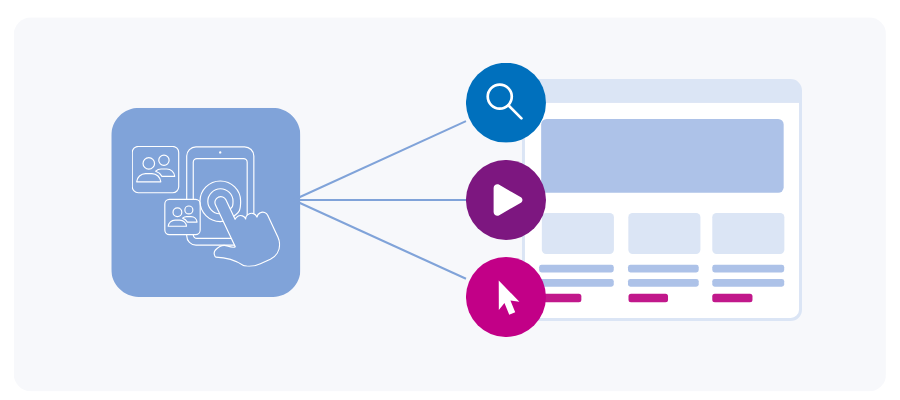
Curated audience activation across search, video, and native

Curation helps teams:

  • Consolidate deal information in one place, so buyers have the detail they need to evaluate a package
  • Act as a decisioning layer, organizing supply in a way that makes comparison easier
  • Automate real-time updates, so buyers are working from current options rather than static documents
  • Respond faster to custom requests, turning repeat asks into repeatable packages
  • Bring speed and structure to a process that has often been manual

How does total transparency set winning curators apart?

Total transparency is becoming a baseline expectation in premium media buying. For buyers, that means knowing what inventory is inside a deal, how it’s sourced, and it’s expected to perform. For publishers, transparency means seeing how inventory is packaged, where it appears in market, and how those packages are represented back to buyers.
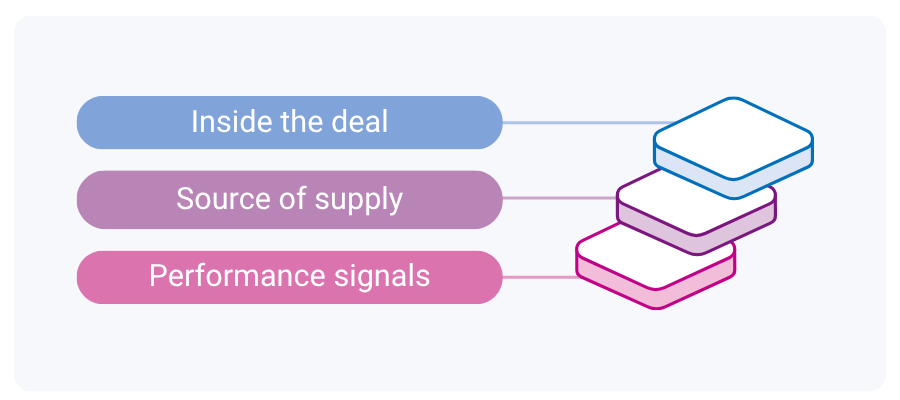
Inside the deal, source of supply, performance signals

The strongest curation platforms build that visibility into the system itself. A source deal can be traced through its naming, packaging, and downstream use, giving publishers a clear view of where their inventory shows up and gives buyers more confidence in the information they use to make decisions.

That clarity strengthens working relationships on both sides. Publishers want partners who can show how supply is being used. Buyers want curators who stand behind the accuracy of their deal data. When that level of visibility is present, curated transactions feel more trustworthy, more organized, and easier to act on.

“The value proposition for publishers is straightforward: total transparency. I can sit down with a publisher and clearly identify which packages their specific deals appear in, ensuring clarity and trust.”

Microsoft AdvertisingErik Zamkoff, Global Packaging Lead

Why does curation clarity matter to publishers?

Publishers need a clear view of how their inventory is distributed, who has access to it, and where it appears across a fast-moving market. Gaps in that visibility make it harder to manage pricing, plan inventory strategy, and protect the value of supply.

Personalized audience insights for retail marketers

A transparent curation system gives publishers a clearer view of how each source deal is merchandised across packages and campaigns. With that visibility, they can spot overlap, have more informed conversations with buy-side teams, and take a more active role in how their inventory is presented.

For publishers in premium marketplaces, that level of clarity matters. It supports stronger planning, control, and more confidence that supply is being used in a way that aligns with business goals.

How does audience intelligence make curation more effective?

Audience intelligence makes curated media more useful by connecting premium supply to the audiences marketers need to reach. Most campaign briefs require both quality inventory and relevant audiences to succeed, which is why curation works better when it’s connected to trusted data.

The next major shift in media buying is the move from standard inventory curation to a model that combines premium supply with audience intelligence. To bridge this gap, solutions like Experian’s act as a critical intelligence layer. Experian turns standard inventory into highly targeted, data-rich media packages. By pairing powerful data and identity with premium properties, advertisers can reach the exact people they want to connect with.

Cross-device identity and analytics illustration

Experian Marketing Data plays an important role in this model. For example, if a marketplace offers an inventory package for professional sports, Experian audience data can augment that package by bringing in verified sports fans. This strategy adds richness and depth to campaigns, making the media buy more relevant to the audience. It allows clients to pick a category and extend it to reach a highly relevant audience. Bringing premium supply and audience intelligence together gives buyers a more complete solution for their advertising needs.

How is artificial intelligence changing the media curation interface?

Artificial intelligence (AI) is changing how buyers search, compare, and package curated media supply. It can turn natural-language campaign requirements into recommended opportunities, helping teams move faster without replacing human strategy.

AI is poised to change how buyers interact with curated media supply, serving as both a facilitator and connective tissue across the entire transaction process. Human expertise remains essential for interpreting campaign goals and making strategic decisions. AI supports that work by automating routine, data-heavy tasks, accelerating the planning process.

“From an artificial intelligence perspective, it has been an amazing journey. We are now exploring an agentic pivot on the front end, allowing natural language search applications to simplify how buyers find supply.”

Microsoft AdvertisingErik Zamkoff, Global Packaging Lead

Tasks that previously required hours of manual effort, such as sorting through multiple audience taxonomies, cross-referencing deal details, and compiling package comparisons, are now automated. Buyers use platform interfaces in a natural language. They quickly describe campaigning requirements. AI instantly proposes new opportunities that correspond to stated objectives. This simplifies planning and drives a more consistent delivery from campaign to campaign or client to client. Reduced manual oversight allows teams to spend less time on repetitive steps. Teams can focus on client relationships, campaign strategy, and overall performance.

AI-powered audience targeting and campaign optimization

At Experian, AI integration is powered by our high-quality data, ranked #1 by Truthset, that meets critical standards of accuracy, freshness, consent, and interoperability. Our data is accurate, continuously updated, and human-centered. Our commitment to data quality enables AI to deliver real-time package recommendations, optimize campaigns with predictive insights, and surface opportunities that reflect current consumer behavior. By combining automation with human expertise, AI helps buyers make faster, more confident decisions.

Learn what’s possible with curated media solutions

For marketers planning premium buys, curated media solutions can help connect quality supply, audience relevance, and clearer decision-making in one workflow. Experian and Microsoft Advertising can help you solve your advertising challenges and find the right media solutions for your goals.

This site is protected by reCAPTCHA and the Google Privacy Policy and Terms of Service apply.


About our experts

Erik Zamkoff, Global Packaging Lead at Microsoft Advertising

Erik Zamkoff

Global Packaging Lead, Microsoft

Erik Zamkoff is currently the Global Packaging Lead at Microsoft, where he drives strategy and innovation across the company’s programmatic advertising and media marketplace offerings. He brings over a decade of experience spanning digital marketing, marketplace development, and product management, with prior roles at Microsoft, Xandr, and other technology firms.

Matt Petiton, Director of Partnership Sales at Experian

Matt Petiton

Director of Partnership Sales, Experian

Matt Petiton is a senior revenue and go-to-market leader with over a decade of experience scaling strategic partnerships and driving revenue growth within CTV, digital and programmatic channels. Currently, Matt operates within the Partnership Sales org where he leads revenue generation and manages the end-to-end go-to-market strategy for some of Experian’s most strategic, enterprise-level platform partners.


FAQs

Curation in media buying is the process of organizing premium supply into structured packages that buyers can evaluate, compare, and activate more easily. It helps reduce manual work, improve deal clarity and connect inventory to campaign goals.

Transparency matters in curated deals since buyers and publishers both need confidence in how inventory is packaged and represented. Buyers want accurate deal data, and publishers want visibility into where their supply appears and how it is used.

Experian’s data, ranked #1 in accuracy by Truthset, helps make curation more effective by connecting premium inventory with audience intelligence. Experian’s identity foundation and marketing data can help buyers move from broad inventory packages to media opportunities tied to more relevant audiences.

A marketer would use curation to find a media package that combines quality inventory with the audience needed for a campaign goal. For example, a professional sports package can become more relevant when paired with Experian audience data for verified sports fans.

AI can make media curation faster by helping buyers search supply, compare deal details and identify packages using natural language. Human expertise is still needed to interpret goals, evaluate recommendations, and make the final strategic decision.


Latest posts

Loading…
Be prepared for the next era of digital marketing

  Identified in The 2021 Digital Advertising Trends Report published by Postclick, marketers are striving to improve and enhance their segmentation and targeting strategies in their digital ad campaigns. Carlos Lopez, SVP of Brand Planning at Digitas Health predicted that in 2021, the challenge will be to overcome the death of third-party cookies and still deliver a personalized advertising experience. It’s fair to say that his prediction will still be impacting marketers past 2021 with the delay of cookie deprecation. These goals along with the constantly changing digital landscape paint a challenging picture for even the most advanced marketers. Marketers can be prepared for the next era of digital marketing by finding the right mix of partners that offer privacy-safe, cookie-free solutions. Smart marketers will employ these solutions and compare these results with data from cookies. The Tapad + Experian Take The Tapad Graph enables brands, agencies, and ad tech platforms to identify and target individuals and households across their digital touchpoints. With this data, they can personalize messages across devices, measure and optimize throughout the customer journey, and then report back on conversions at the individual and household levels. Tapad, now part of Experian, leverages a machine learning algorithm that determines these connections at scale by using probabilistic models with authenticated, privacy-safe, real-time data. There are a myriad of cookieless IDs emerging in the marketplace, and it’s not likely going to be a one size fits all situation. In order to be prepared for the next era of digital marketing, marketers should diversify ID partners and be proactive with testing while the cookie is still around to benchmark against. With Switchboard, a module within The Tapad Graph, we’ve been able to develop connections between traditional digital identifiers (IP Addresses, MAIDs, CTV IDs) and the new wave of cookieless IDs (UID2.0, Panorama ID, ID5 ID) that will be utilized in the future. Here’s an example of what The Tapad Graph and Switchboard looks like at the Household level with various traditional digital identifiers and cookieless IDs.         Get in touch

Published: September 28, 2021 by Experian Marketing Services
Forrester Study—how identity resolution can help marketers prepare for data deprecation and improve data quality

Marketers are under more pressure than ever before to prove ROI and efficiency of marketing activities in relation to business performance. On top of that, there are new privacy regulations and uncertainty around what new technologies will have to be implemented in order to replace the granular level targeting and measurement the industry historically has used third-party cookies for. It’s clear marketers are going to need the right tech stack and partners to continue to prove their team’s efficacy. We recently partnered with Forrester Consulting to evaluate the current state of customer data-driven marketing and surveyed over 300 global marketing decision makers at the brand and agency levels. We found that marketing is facing increased demands today, insights from the study include:Consumers expect brands to deliver engaging experiences across highly fragmented journeys. Seventy-two percent of decision-makers reported that customers demand more relevant, personalized experiences at the time and place of their choosing. Marketing runs on data, but the rules governing customer data usage are changing quickly. More than 70% of study participants stated that consumer data is the lifeblood of their marketing strategies, fueling the personalized, omnichannel experiences customers demand. These demands paint a challenging picture. Just as marketers are poised (and tasked) with delivering greater value to their organizations and customers, the ground rules are changing and threatening their ability to deliver. Indeed, 62% of respondents said that the forces of data deprecation will have either a “Significant” (40%) or “Critical” (21%) impact on their marketing strategies over the next two years. Effective identity resolution can help brands prepare for data deprecation challenges Marketers face a daunting landscape, but they can leverage the data, technology, and processes that comprise identity resolution to address business objectives, combat ecosystem complexity, and future-proof customer engagement efforts. By utilizing identity resolution, marketers will be able to match and connect multiple identifiers across devices and touchpoints. This allows for a cohesive, omnichannel view that enables brands to continue to deliver personalized and contextually relevant messages throughout the customer journey and without the use of cookies. The identity graph is the underlying infrastructure that defines connections between the numerous, fluid, and disparate identifiers created during moments of consumer engagement, turning disparate signals into addressable and actionable steps. These connections enable brands to bolster their ability to gain deeper customer insights and power audience building, attribution, and connected measurement. Identity resolution encompasses a wide range of capabilities that support an equally diverse set of marketing use cases. These include the targeting, personalization, and measurement of both known and pseudonymous audiences in the offline and digital worlds, which enables marketers to improve customer data management, drive more effective personalization, and gain insights and efficiencies through measurement across touchpoints. By taking the time to vet the privacy procedures and data collection processes of identity solutions you can reduce your regulatory risk and maintain customer trust. In an open-ended survey response, a marketer shared, “We’ve found that users are willing to volunteer data when they understand what it’s being used for and are asked for clear consent.” Finding the right partners to help navigate the changes The scramble to find an alternative to third-party cookies has slowed down since Google announced they will be delaying their cookie removal until late 2023. However, this gives marketers a unique opportunity to take advantage of the additional time and feel more prepared and confident in their solutions. With the delay, marketers can now test ID solutions and compare apples to apples with data from the third-party cookie while it’s still active and addressable. Test and find a solution that works now, so there are no surprises once cookies have finally made their way out the door in 2023. At Tapad, a part of Experian, we’ve developed a solution that provides agnostic interoperability for the myriad of cookieless identifiers emerging in the market. As a new module in the Tapad Graph, Switchboard will connect traditional digital identifiers to cookieless IDs to support the entire ad ecosystem with privacy-safe future-proof identity resolution. Get in touch 

Published: September 23, 2021 by Experian Marketing Services
Uncovering hashed email: you may be sitting on a goldmine of customer data and don’t even know it

Email hashing was originally intended to be used as an email security feature that has ended up being a very powerful marketing tool. A hashed email is a cryptographic function that changes an email address to a random code which can be used as an anonymous customer identifier. This code is privacy-safe and cannot be traced back to the customer’s email address. However, this hashed email can function like a digital passport that traces every behavior and action a customer takes when logged into an account that is authenticated with an email, making hashed emails a goldmine for customer data. Today emails are used across traditional publishers and within the CTV ecosystem; tying them to more consumer touch points than ever before. Why the emphasis now? Cookies are on their way out the door and have been the primary way that many marketers have tracked their existing and potential customers. In order to replace this granular level of data, marketers are likely going to need multiple solutions. With so many cookieless solutions and IDs appearing in the marketplace, the mapping of the customer journey is bound to be fragmented. Relying on first-party data, such as hashed email, is just one way to reduce that fragmentation; as it can serve as an authenticated starting point for cross-device identity resolution that can be leveraged for targeting, personalization and measurement. How can Tapad + Experian help? Tapad + Experian’s Hashed Email Onboarding is a privacy-safe way to connect consumer email addresses to their related digital devices and other digital identifiers through high precision probabilistic identity. By onboarding hashed emails and incorporating them within your Tapad Graph file you can: Build a more holistic view of individuals and households and their relationship to email addresses in your first-party data set Leverage these relationships for increased cross-device scale for targeting Employ personalization tactics at the household or individual level across devices Create new audience segments and look-alike models for cross-channel activation Design more inclusive measurement and attribution for customer journey mapping Tapad, a part of Experian has built a hashed email onboarding product feature that works with the existing flexibility of The Tapad Graph to deliver the most holistic consumer view, combined with the attributes you need, in the structure that works best for your business objectives. Get in touch

Published: August 25, 2021 by Experian Marketing Services

Subscribe to our newsletter

Enter your name and email for the latest updates

This site is protected by reCAPTCHA and the Google Privacy Policy and Terms of Service apply.

About Experian Marketing Services

At Experian Marketing Services, we use data and insights to help brands have more meaningful interactions with people. As leaders in the evolution of the advertising landscape, Experian Marketing Services can help you identify your customers and the right potential customers, uncover the most appropriate communication channels, develop messages that resonate, and measure the effectiveness of marketing activities and campaigns.

Visit our website

Subscribe to our newsletter

Stay up to date on the latest industry news and receive expert tips from our marketing experts.
Subscribe now!