AdTech has enough tools. Now they need to work together.

by Ali Mack, VP, AdTech Sales 5 min read September 17, 2026

Interoperability is the thread typing AdTech together

Key takeaways:

  • Strong partnerships align audiences, capabilities, and commercial goals, with the flexibility to add or change partners as needs shift.
  • Interoperable identity creates companies and environments, with trust and governance providing clarity around how data and identity are used.
  • Consumer intelligence creates more value when enrichment, planning, activation, curation, and measurement work together within the systems marketers already use.
  • Better decisioning helps marketers navigate an abundance of data and find what’s relevant to their objectives, with AI helping support discovery and selection.

AdTech has built a range of technology for understanding audiences, resolving identity, activating media, and measuring performance. The opportunity now is to make those capabilities work together.

Data sits in different systems, identity changes between environments, and campaigns move across platforms and companies before anyone can tie media activity back to an outcome. Each capability serves a purpose. Greater interoperability creates a more consistent path from planning through measurement.

Interoperability brings those capabilities into alignment across systems, environments, and companies. For brands, agencies, publishers, and platforms, that can mean less complexity and greater continuity from one stage of the advertising workflow to the next.

Partnerships are becoming part of the operating model

Strong AdTech partnerships start by finding where companies fit together, from the audiences they serve to the capabilities and commercial goals they share.

That alignment creates room to build something more valuable together, including more relevant ad experiences that draw on what each company does best. It also creates optionality. Companies can bring in new partners or capabilities as needs change without rebuilding the strategy from the ground up. This is what turns a partnership into part of the operating model.

Companies align around shared goals, build on each other’s strengths, and create a structure that can adapt as the advertising ecosystem changes.

Connected advertising needs identity that works across companies

Consistent identity gives companies a shared foundation across planning, activation, and measurement, even when those activities happen across different platforms and environments.

Interoperable identity connects people, households, devices, data, media exposure, and outcomes across those environments without requiring every company to use the same technology stack.

That interoperability also requires trust. As identity moves across companies and environments, each participant needs clarity around how data and identity are used. Strong governance creates that clarity and gives companies a more reliable foundation for working together.
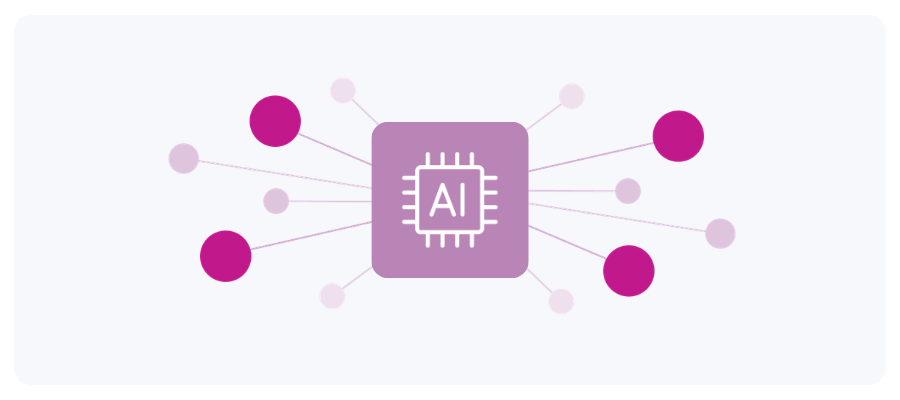
An AI icon surrounded by a web of lines and circles

AI-powered identity resolution can interpret changing digital signals and connect them with more stable identity information, creating a more consistent view across environments. With AI increasingly informing advertising decisions, the quality of the data, identity, and governance behind those systems will shape the quality of their decisions.

Consumer intelligence should meet marketers where decisions happen

Consumer intelligence creates more value when it becomes part of the systems marketers already use to make decisions. Bringing enrichment, audience planning, activation, curation, and measurement closer together gives marketers a clearer path from understanding people to putting that understanding to work.

That consolidation matters. When the same system carries more of the workflow, marketers can enrich their data, build and activate audiences, curate media, and measure outcomes with greater consistency. The intelligence gained from measurement can then inform the decisions that come next. AI makes those connections even more valuable.

When AI supports audience selection, media choices, and measurement, reliable consumer intelligence across the workflow gives it the context needed to make informed decisions.

Better decisioning turns more data into value

AdTech has made huge amounts of data accessible, which creates a new challenge: helping marketers decide what to use. Making thousands of audiences available solved the access problem. But the next question is how marketers determine which options fit a particular objective.

Business users collaborating with marketing analytics dashboards

AdTech companies can make that abundance easier to navigate by helping marketers find, evaluate, and apply relevant data within the systems they already use. AI can help interpret large catalogs and surface useful options, but those recommendations still depend on accurate data, consistent identity, and enough context to inform the decision.

What this shift means for AdTech

Interoperability gives AdTech a way to bring together what the industry has already built. Partnerships align companies, identity creates continuity across environments, consumer intelligence turns data into context, and better decisioning helps marketers find what matters for the objective at hand.

Together, those capabilities create an ecosystem where specialized companies and technologies can work together without passing complexity on to the customer. As more advertising decisions become AI-assisted, that connectivity becomes even more important.

AdTech has spent years building the pieces. Now the focus is removing the seams between them.

Connect with us

This site is protected by reCAPTCHA and the Google Privacy Policy and Terms of Service apply.


About the author

Ali Mack, VP, AdTech Sales

Ali Mack

VP, AdTech Sales

Ali Mack leads Experian’s AdTech business, overseeing global revenue across the company’s expansive tech and media portfolio. With over a decade of experience in digital and TV advertising, Ali drives strategic growth by aligning sales, customer success, and solutions teams to deliver impactful outcomes for clients and partners.

She has successfully guided teams through two major acquisitions, integrating sales organizations and product portfolios into unified go-to-market strategies. Under her leadership, Experian has consistently exceeded revenue targets while fostering collaborative, results-driven teams and mentoring emerging leaders. Working closely with finance, product, and marketing, Ali develops strategies that support a diverse ecosystem of publishers, brands, and technology partners, positioning Experian at the forefront of data-driven advertising and identity resolution.


Latest posts
A deep dive with an Experian partner, Psympl

Learn how Psympl and Experian use psychographic data to improve financial marketing, audience targeting, messaging, and engagement.

May 13, 2026 by Experian Marketing Services
The activation gap: Why good identity still falls short in market

Learn how brands can close the activation gap by carrying audience intelligence from identity to execution and outcomes across channels.

A deep dive with an Experian partner, ARF

In our Ask the Expert series, we interview leaders from our partner organizations who are helping lead their brands to new heights in AdTech. Today’s interview is with Samantha Zhang, Senior Data Scientist, and Jim Meyer, General Manager of the DASH TV Universe Study at the Advertising Research Foundation (ARF). DASH is an annual tracking study conducted by the ARF to define and better understand TV audience behavior and household dynamics. What does DASH measure, and how does it help the industry understand TV consumption today?  By capturing hundreds of individual- and household-level data points from each respondent in a rigorous and nationally projectable sample, DASH creates a comprehensive picture of U.S. consumer TV “infrastructure” – how America watches.  Core elements in DASHElements that create context in DASHTV setsLocation | brand | smartness | service modes | sources DemographicsConnected devices Game consoles |video players | streaming devicesYesterday viewing Daypart | TV/device genre | Out-of-home viewingMobile devicesOwners | sharing usersShoppingOnline and in-store | Exposure to major RMNsInternet serviceModes | ISPs | connectivity by device Streaming audio Streaming TVSVOD/AVOD tiers and sharing | FAST Email accounts and apps Live TV Modes of access | including casting from devices Social media For example, DASH gathers: Data on every TV set, including brand, room location, age, “smartness,” and connection devices and modes  Household connectivity and video service data, even in homes with no TV set Internet Service Providers (ISP) and TV service usage, including Multichannel Video Programming Distributors (MVPDs), virtual vMVPDs, streamers (ad-supported and premium), and Free Ad-Supported Television (FAST) channels  Person-level ownership and usage of video-capable mobile devices, including smartphones, tablets, and laptops  Measures of viewing and co-viewing across dayparts, devices, and services  Additional modules covering shopping and retail media networks, streaming audio, social media, email, and apps Broad coverage and granularity make DASH a uniquely robust source of truth for practitioners across the industry, including measurement experts and ad programming strategists. DASH also reports regularly (and publicly) on key industry dynamics. DASH identified a growing segment of device-only viewers – now nearly 9 million households that watch TV, but do not own a TV set – and highlighted the implications of that trend for traditional ratings systems based only on households with TV sets.  Households (HHs – million)2025 HHs (M) U.S. penetrationChange vs. 2024 (M)Total US134.8100%+2.7Connected TV (CTV)114.685%+2.1TV (Set)124.292.2%+1.1Device-only8.86.6%+1.6TV-Accessible133.198.7%+2.7 DASH called out the rise in app-based pay TV and proposed a new connection framework that better represents the modern TV world, in which linear and streaming overlap. DASH also defines the universes of households reachable with advertising. This graphic, for example, shows how all ad-supported linear and streaming properties in aggregate define the true scale of TV advertising. While 35 million households (and growing) are reachable only with streaming ads and 13 million (and falling) only with linear ads, most households are reachable with both, underscoring the importance of understanding the “overlap.” Who uses DASH data, and what decisions does it help inform? There are three primary users of DASH, each with its own use cases: Measurement providers, including Nielsen, use DASH to calibrate viewership data, turn household data into persons data (and vice versa) and estimate potential reached audiences–what the providers call media-related universe estimate (MRUEs)–for the calculation of ratings. Not surprisingly, measurement companies were the first to see the value that an independent TV universe study could provide. Media companies, including major broadcasters and streamers, use DASH to add context and color to their ad sales presentations – and to track the measurement providers, whose ratings play a major role in valuing ad inventory. AdTech companies, including Experian, use DASH to create high-value audience segments for activation. The recent accreditation of DASH by the Media Rating Council (MRC) and adoption by Nielsen as an input to its TV ratings have generated interest from a broad range of companies. We are actively pursuing new licensees and partners to make DASH more useful within, and even outside, the TV ecosystem. What does MRC accreditation signify, and why is it meaningful for DASH?  MRC accreditation means DASH passed a rigorous audit conducted by Ernst & Young over many months, which validated our methodology, controls, and data quality. MRC accreditation establishes that DASH is an industry-standard dataset.  While the service provider normally announces its own accreditation, the MRC took the unusual step of issuing its own release on DASH, announcing the accreditation of DASH for TV universe estimation and endorsing the study for broader, cross-media use. How does Experian use DASH data to build audiences?  The segments combine specific TV usage habits and behaviors from DASH with Experian data on demographics, spending, and other contextual inputs to create a fuller view of consumer viewing behavior. They are designed to be valuable to advertisers in many categories and planning contexts – and to be customizable to fit advertisers’ media targets. The segments can be used to: Apply or suppress audiences to improve target coverage across a campaign  Better align media and creative  Reach elusive but high-value viewers, such as Ad Avoiders  Drive valuable consumer behavior  Achieve specific advertising objectives What are some practical use cases for DASH-based audiences?  Here are some practical use cases for four different kinds of DASH segments in five different advertiser categories.  Travel Co-WatchersA couples-only resort uses TV Co-Watching Households without Children to strengthen target reach and ad memory recallA big theme park destination uses TV Co-Watching Households with Children to reach families in moments of togetherness Home Entertainment TV Owners and Brand LoyalistsA premium TV manufacturer uses the overlap of Multi Brand TV Owners and Single Brand TV Loyalist Households to market its newest TV model to its most loyal consumers. Fast Food Screen Size ViewersA fast food chain with a high-impact new brand campaign uses Large Screen TV Viewers to better align the media and  creativeThat same fast food chain uses Small-Screen TV Viewers to drive store traffic by increasing exposure of its retail campaign among on-the-go viewers Financial Services Cord Cutters A personal cost management app and a cash-back credit card target Streaming-First Cord Cutter Households to reach young, tech-savvy, cost-conscious consumers Thanks for the interview. Where can readers learn more about DASH? We started work on DASH seven years ago, and it’s been fun to watch it “grow up.” Our partnership with Experian is a big step toward putting DASH to work for advertisers and agencies. To learn more, visit our site at https://theARF.org/DASH or contact us at DASH@theARF.org. Contact us About our experts Samantha Zhang, Senior Data Scientist at ARF Samantha Zhang is a Senior Data Scientist at the Advertising Research Foundation working on the DASH TV Universe Study, with additional research spanning areas including attention measurement, digital privacy, and artificial intelligence.  Jim Meyer, General Manager, DASH, at ARF Jim Meyer is general manager and co-founder of the ARF DASH TV Universe Study and managing partner of Golden Square, LLC, which advises media and research technology companies on growth strategy and development. Latest posts

April 30, 2026 by Experian Marketing Services