At A Glance
Audigent, Dun & Bradstreet, and Experian simplify B2B marketing by combining trusted business data, curated audience activation, and advanced identity resolution. This partnership helps marketers reach verified decision-makers across channels like CTV and display, ensuring accurate targeting, consistent audience identity, and measurable results while maintaining privacy compliance.Audigent, a part of Experian, Dun & Bradstreet, and Experian are collaborating to help business-to-business (B2B) marketers target more effectively. Now, B2B marketers can reach verified decision-makers, keep the same audience across channels, and activate on connected TV (CTV) and digital via the Experian data marketplace. Together, Dun & Bradstreet’s trusted business data, Audigent’s curation and Deal ID activation, and Experian’s identity resolution drive efficient, measurable results.

Unify identity and engage B2B audiences
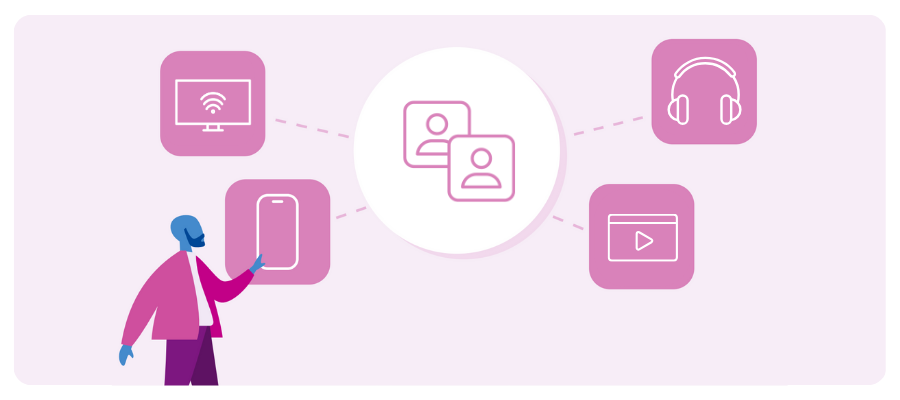
With Audigent, Dun & Bradstreet, and Experian working together, you get one dependable way to recognize the same companies and roles everywhere you run. Dun & Bradstreet’s D-U-N-S® Number, serves as a stable company identifier, so offline business details map to the right digital profiles, and you can reach verified decision-makers with confidence.
Through Audigent and Experian, you can access 400+ Dun & Bradstreet B2B audience segments, matched to a Deal ID and activated via Audigent’s curation engine and Experian’s data marketplace. This provides real-time B2B targeting across connected television (CTV), display, native, audio, and online video (OLV).
Utilize differentiated data
Dun & Bradstreet audiences are built on verified offline signals (e.g., company, industry, size, role, seniority) linked to the proprietary D-U-N-S® Number for deterministic matching. High-quality firmographic attributes become actionable segments you can activate in leading programmatic platforms. The result: privacy-compliant, performance-driven campaigns with omnichannel B2B targeting.
Three ways unified B2B identity improves media performance
- Target with accuracy: Use deterministic firmographics. Dun & Bradstreet’s D-U-N-S® Number anchors a consistent way to recognize the same company, linking offline signals to authenticated business entities.
- Reduce waste: Activate curated PMPs for efficient spend. Audigent’s curation engine packages those audiences into Deal IDs and routes through cleaner, more predictable supply paths, so more budget reaches the buyers that matter. Publishers see up to 75% net revenue increase after fees, while brands save 36–81% on data segments and achieve 10–30% higher video completion rates.
- Stay consistent: Maintain identity across all channels. Use the same audience criteria across CTV, display, native, audio, social, and OLV to improve match consistency without relying solely on third-party cookies.
Improve addressability with Experian’s Digital Graph
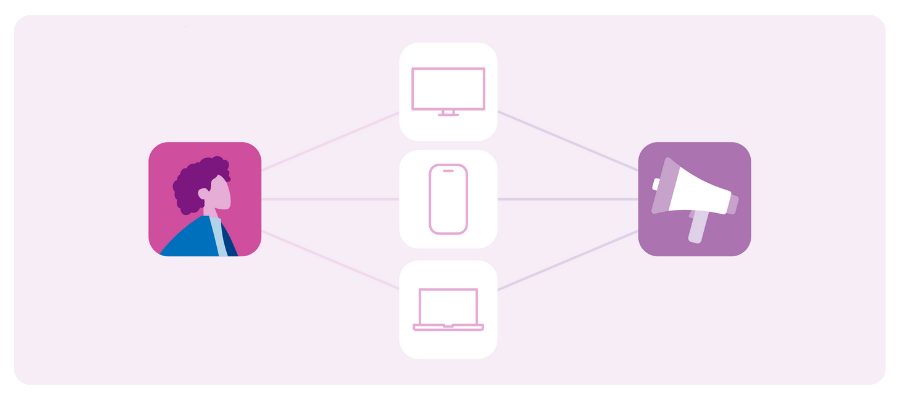
Advertisers can use Dun & Bradstreet’s off-the-shelf segments to target specific audiences accurately across channels. By connecting Experian’s Digital Graph with Dun & Bradstreet’s company and contact data, marketers gain a clear advantage: one durable identity that improves match rates, keeps reach consistent across CTV and digital, and aligns targeting with measurement.
What that means in practice:
- Higher match rates without third-party cookies.
- Expect consistent reach across CTV and digital with one audience anchored to the same identity.
- Cleaner measurement because activation and identity stay in sync.
Suggested use cases
Below are simple ways to put this to work, using Dun & Bradstreet business data and Audigent Deal IDs so the same audience runs and measures the same everywhere.
Achieve more with Audigent, Dun & Bradstreet, and Experian
Together, Audigent, Dun & Bradstreet, and Experian allow marketers to activate high-quality B2B audiences with confidence, delivering relevant and efficient campaigns. By pairing Dun & Bradstreet’s trusted business data and proprietary D-U-N-S® Number with Audigent’s curation engine, you get deterministic, privacy-compliant targeting at scale, now boosted by Experian’s identity for consistent cross-channel reach.
Ready to activate your next B2B audience? Talk to an Experian expert today
FAQs
Dun & Bradstreet’s data is anchored by the D-U-N-S® Number, a persistent business identifier that links offline signals like company size, industry, and role to digital environments. This ensures accurate, scalable, and privacy-compliant targeting.
Experian’s Digital Graph connects devices and IDs at the household level, enabling consistent audience identity across channels, even in cookieless environments. This ensures higher match rates and reliable measurement.
Audigent’s curation engine creates audience-aligned Deal IDs and PMPs, optimizing supply paths for efficient media buying. This reduces waste and improves campaign performance with cleaner, more predictable targeting.
Marketers can build role-based segments (e.g., IT Directors at mid-sized companies) and activate them across CTV and digital channels. Sequential messaging tailored to buying stages helps accelerate pipeline and drive engagement.
Latest posts
Discover our top five 2023 AdTech blog posts so you can remain competitive in today’s rapidly changing market.
AI is working its way into all aspects of marketing. AI will soon be used to personalize ads for viewers while optimizing based on data.
Magnite and Experian have formed a strategic integration to enhance cross-device audience targeting in the advertising industry. Magnite, the largest independent sell-side platform, and Experian, a leader in consumer data and identity solutions, aim to optimize advertising capabilities by activating Experian's Consumer View in Magnite Access, an omnichannel audience product suite. This marks one of Experian’s first forays into a direct sell-side integration, a crucial step for the cookieless era. This collaboration offers targeting and efficiency across digital channels, providing advertisers and agencies with a more effective way to reach consumers. With Experian's robust deterministic offline data, generated from consumer purchase activity, enriched with insights on over 250 million U.S. consumers and 126 million U.S. households, advertisers can look forward to a new benchmark in targeted advertising available through Magnite Access. Thriving in a cookieless world With the looming deprecation of third-party cookies, audience, and identity solutions using first-party data are shifting to the sell-side. To that end, Magnite developed Magnite Access, a suite of omnichannel audience products that make it easier for media owners and their advertising partners to maximize the value of their first-party data assets. Access is adept at thriving in a post-cookie world through its effective utilization of sell-side first-party data, including within Magnite Streaming and SpringServe. Magnite Access’ deterministic and probabilistic tools provide sellers and buyers with a comprehensive solution to leverage their first-party data for audience targeting and insights. Experian's solutions are built to work efficiently in offline environments, making them well-equipped to thrive in a cookieless world. Brands can benefit from Experian's deep integrations within the ecosystem, providing data and audience solutions designed to perform in cookieless environments. "We're excited about the collaborative approach between Magnite and Experian. This off-the-shelf integration of Experian's syndicated audiences and the streamlined ability to receive custom audiences will provide a more accurate and cohesive consumer view, allowing us to reach our target audience and enhance campaign performance seamlessly."sam bloom, ceo, camelot Reach and impact As companies continue to rely on data-driven insights to make smarter, more efficient business decisions, partnerships between leading data and technology providers are becoming increasingly valuable. Strengthening foundations within streaming Magnite's cutting-edge streaming solutions, integrated with Experian's robust data, facilitate a connection between data and inventory, providing enhanced targeting capabilities and consumer insights. "By integrating Experian's Consumer View capabilities into our platform, we are enabling advertisers to unlock improved targeting capabilities while benefiting from Experian's wealth of consumer insights. Our collaboration with Experian amplifies the value of our streaming solutions and enhances the overall advertising ecosystem by seamlessly connecting data, identity, and inventory."kristen williams, svp, strategic partnerships, magnite Precision and innovation: A new advertising era The synergistic partnership between Magnite and Experian is paving the way for a new era in advertising, offering targeting efficiency across digital channels. This collaboration is not merely a confluence of technologies but a testament to both companies' relentless pursuit of excellence in creating a consumer-conscious advertising ecosystem. By harnessing the wealth of consumer insights and integrating state-of-the-art technologies, Magnite and Experian are contributing to shaping the future of advertising, emphasizing accuracy and efficiency. It's a revolutionary stride toward understanding and reaching the consumer in more meaningful and impactful ways, setting new benchmarks in the advertising world. In a rapidly evolving digital landscape, this collaboration stands as a beacon, guiding brands toward intelligent, informed, and innovative advertising solutions, redefining the possibilities in targeted advertising and audience solutions. Connect with us to learn more about how you can access Experian’s Consumer View data solutions in Magnite Access. To learn more about our partner Magnite, visit their website. Latest posts