Loading...

Activate B2B audiences across every screen with Audigent, Dun & Bradstreet, and Experian

Published: December 2, 2025 by Experian Marketing Services

At A Glance

Audigent, Dun & Bradstreet, and Experian simplify B2B marketing by combining trusted business data, curated audience activation, and advanced identity resolution. This partnership helps marketers reach verified decision-makers across channels like CTV and display, ensuring accurate targeting, consistent audience identity, and measurable results while maintaining privacy compliance.

Audigent, a part of Experian, Dun & Bradstreet, and Experian are collaborating to help business-to-business (B2B) marketers target more effectively. Now, B2B marketers can reach verified decision-makers, keep the same audience across channels, and activate on connected TV (CTV) and digital via the Experian data marketplace. Together, Dun & Bradstreet’s trusted business data, Audigent’s curation and Deal ID activation, and Experian’s identity resolution drive efficient, measurable results.

Three scenes showing people engaging with media: watching TV, using a mobile phone outdoors, and working on a laptop with headphones

Unify identity and engage B2B audiences
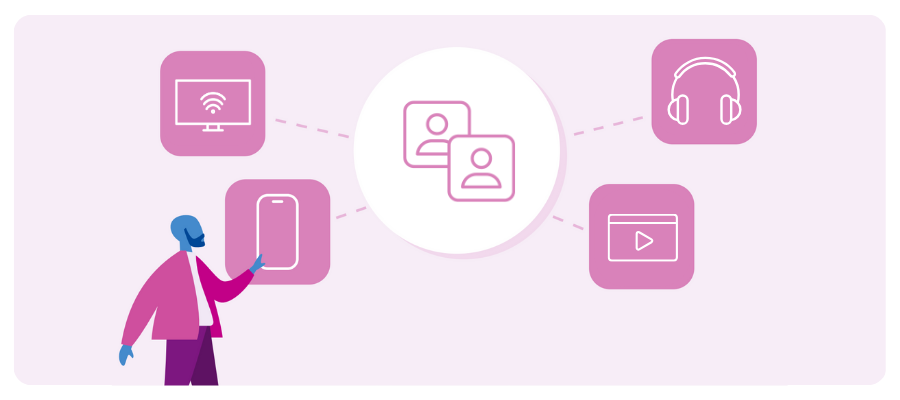
Illustration of an audience icon connected to multiple channels, including TV, mobile, audio, and video

With Audigent, Dun & Bradstreet, and Experian working together, you get one dependable way to recognize the same companies and roles everywhere you run. Dun & Bradstreet’s D-U-N-S® Number, serves as a stable company identifier, so offline business details map to the right digital profiles, and you can reach verified decision-makers with confidence.

Through Audigent and Experian, you can access 400+ Dun & Bradstreet B2B audience segments, matched to a Deal ID and activated via Audigent’s curation engine and Experian’s data marketplace. This provides real-time B2B targeting across connected television (CTV), display, native, audio, and online video (OLV).

Utilize differentiated data

Dun & Bradstreet audiences are built on verified offline signals (e.g., company, industry, size, role, seniority) linked to the proprietary D-U-N-S® Number for deterministic matching. High-quality firmographic attributes become actionable segments you can activate in leading programmatic platforms. The result: privacy-compliant, performance-driven campaigns with omnichannel B2B targeting.

multiple upward arrows icon

Unmatched scale

Dun & Bradstreet’s Data Cloud spans over 600 million businesses across industries and regions, offering unparalleled depth for B2B targeting.

hashtag symbol icon

Verified business identity

The D-U-N-S® Number links verified offline business data to digital environments, enabling accurate and scalable activation.

secure padlock with a checkmark icon

Privacy-first design

Data undergoes rigorous validation and is compliant with major global regulations (General Data Protection Regulation (GDPR), California Consumer Privacy Act (CCPA)), enabling responsible activation.

commercial building icon

Trusted by the enterprise

Over 85% of Fortune 500 companies rely on Dun & Bradstreet B2B data for its depth, accuracy, and broad coverage of small and medium-sized businesses (SMBs).

Three ways unified B2B identity improves media performance

  1. Target with accuracy: Use deterministic firmographics. Dun & Bradstreet’s D-U-N-S® Number anchors a consistent way to recognize the same company, linking offline signals to authenticated business entities.
  2. Reduce waste: Activate curated PMPs for efficient spend. Audigent’s curation engine packages those audiences into Deal IDs and routes through cleaner, more predictable supply paths, so more budget reaches the buyers that matter. Publishers see up to 75% net revenue increase after fees, while brands save 36–81% on data segments and achieve 10–30% higher video completion rates.
  3. Stay consistent: Maintain identity across all channels. Use the same audience criteria across CTV, display, native, audio, social, and OLV to improve match consistency without relying solely on third-party cookies.

Improve addressability with Experian’s Digital Graph
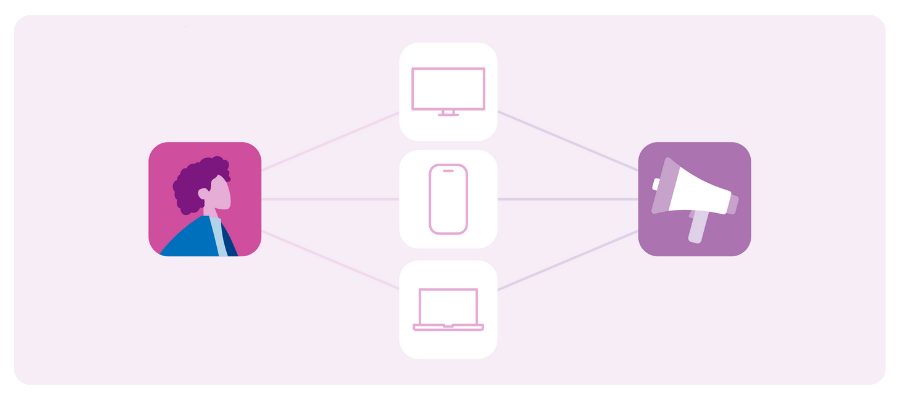
Illustration showing a person connected to devices like TV, mobile, and laptop, leading to a megaphone icon

Advertisers can use Dun & Bradstreet’s off-the-shelf segments to target specific audiences accurately across channels. By connecting Experian’s Digital Graph with Dun & Bradstreet’s company and contact data, marketers gain a clear advantage: one durable identity that improves match rates, keeps reach consistent across CTV and digital, and aligns targeting with measurement.

What that means in practice:

  • Higher match rates without third-party cookies.
  • Expect consistent reach across CTV and digital with one audience anchored to the same identity.
  • Cleaner measurement because activation and identity stay in sync.

Suggested use cases

Below are simple ways to put this to work, using Dun & Bradstreet business data and Audigent Deal IDs so the same audience runs and measures the same everywhere.

briefcase icon

Target key decision-makers

Reach professionals in Finance, Sales, Healthcare, and IT/Technology by job role, company size, and industry, driving awareness and consideration across complex buying committees.

briefcase icon

Reach SMB owners

Target companies with fewer than 50 employees to connect with small-business owners and operators. Activate across channels via Audigent Deal IDs for consistent delivery and measurement.

Achieve more with Audigent, Dun & Bradstreet, and Experian

Together, Audigent, Dun & Bradstreet, and Experian allow marketers to activate high-quality B2B audiences with confidence, delivering relevant and efficient campaigns. By pairing Dun & Bradstreet’s trusted business data and proprietary D-U-N-S® Number with Audigent’s curation engine, you get deterministic, privacy-compliant targeting at scale, now boosted by Experian’s identity for consistent cross-channel reach.

Ready to activate your next B2B audience? Talk to an Experian expert today

This site is protected by reCAPTCHA and the Google Privacy Policy and Terms of Service apply.


FAQs

What makes Dun & Bradstreet’s data unique for B2B targeting?

Dun & Bradstreet’s data is anchored by the D-U-N-S® Number, a persistent business identifier that links offline signals like company size, industry, and role to digital environments. This ensures accurate, scalable, and privacy-compliant targeting.

How does Experian enhance cross-channel reach?

Experian’s Digital Graph connects devices and IDs at the household level, enabling consistent audience identity across channels, even in cookieless environments. This ensures higher match rates and reliable measurement.

What is Audigent’s role in this collaboration?

Audigent’s curation engine creates audience-aligned Deal IDs and PMPs, optimizing supply paths for efficient media buying. This reduces waste and improves campaign performance with cleaner, more predictable targeting.

How does this solution support ABM strategies?

Marketers can build role-based segments (e.g., IT Directors at mid-sized companies) and activate them across CTV and digital channels. Sequential messaging tailored to buying stages helps accelerate pipeline and drive engagement.


Latest posts
Loading…
Three steps to maximize your data collaboration strategies for 2023 and 2024

In this article…How data collaboration is evolving from 2023 to 2024How to create efficient data collaboration strategies We live in a data-driven world, and businesses need effective data collaboration strategies to remain successful. Before you determine your 2023 and 2024 data collaboration options, it’s essential to understand what data collaboration is. In short, it involves sharing and combining data from multiple sources to better understand a customer base and make informed marketing decisions. Read on to learn more about our three-step plan to create new data collaboration strategies, how it’s evolving, and what we do to ensure our solutions help maintain your company’s data privacy. How data collaboration is evolving from 2023 to 2024 Data collaboration strategies continually evolve thanks to changing industry dynamics and new technologies. As we move from 2023 to 2024, we’ll likely see collaboration extending outside businesses, meaning data can be shared with external partnerships in the form of a data ecosystem. A data ecosystem is a platform that combines numerous information points, including packages, algorithms, and cloud-computing services, to allow businesses to store, analyze, and use the data they’ve collected. To ensure you’re ready for 2024 data collaboration, you’ll need to take a forward-thinking approach toward new data strategies. How to create efficient data collaboration strategies Here are our three steps for efficient collaboration to make the most of 2023 data collaboration and prepare for 2024. Identify your collaboration goal What are you hoping to gain from data collaboration? Do you understand the audience you’re trying to target and what you want regarding outcomes? To measure your success, you should set short- and long-term goals surrounding data collaboration in 2023 and 2024. Maximize the value of your data One of the most important reasons to gather data is to discover in-depth insights into your audience and the effectiveness of your marketing efforts. You’ll be able to identify hidden patterns and pinpoint trends you may not have noticed before. With this information, you can make more strategic marketing decisions to stay competitive in your industry. Resolve digital identities Collaborating on data with trusted partners can help you gain a more complete view of your customers by building comprehensive digital profiles. Resolving digital identities can provide greater insight into online and offline behavior of individual consumers, allowing you to better connect with your target audience and boost brand loyalty. Find an alternative to third-party cookies Digital privacy regulations are getting more strict, which is why it’s so important to find more secure alternatives to third-party cookies. By collaborating on data, you can gather essential insights without relying on cookies. This means you’ll still get the information you want while complying with privacy regulations. Choose the right collaboration partner Before you choose a data collaboration partner, it’s essential to ensure their privacy standards align with yours. How do they collect data and use it ethically and responsibly? At Experian, we are dedicated to protecting consumers and delivering responsible and transparent data practices. We focus on five Global Data Principles — security, accuracy, fairness, transparency, and inclusion — to ensure we treat data carefully and respectfully while boosting economic growth and resilience in the marketing environment. When you partner with us for data collaboration, you can trust that your data is protected in a system built for 2023 data collaboration needs — both known and unknown — while still evolving for 2024 and beyond. Choose a secure environment for collaboration Data collaboration security is vital to safeguard your business and consumers’ information. You can make sure your new data collaboration options are protected in several ways. We’ve outlined three options below. Collaboration in clean rooms Clean rooms are secure, private environments where data is shared and analyzed without exposing the underlying raw data. This ensures that sensitive information remains protected and insights are discovered securely. Experian has vetted clean room partners if this is an option you prefer while still getting industry-leading identity resolution. Collaboration directly Collaborating directly with your partner can be a good option if you have robust security measures. Encryption, access controls, and regular audits are essential to maintain data security in direct collaborations. Collaboration with Experian We excel at meeting our clients where they are and accommodating their technical capabilities and how they manage their data. We offer a secure and compliant environment for data collaboration. Our data collaboration solutions are designed to protect your data while enabling deeper insights. At Experian, we understand the importance of data privacy, and our platform reflects our commitment to safeguarding your information. Enable deeper insights and activation with Experian’s data collaboration solution Data collaboration is crucial in today’s business world, and Experian’s solutions are designed to help you bring together your 2023 and 2024 data collaboration strategies securely and efficiently. With Experian, you can unlock deeper insights, resolve digital identities, and confidently navigate the evolving data privacy landscape. If you’re looking for the right partner to enhance data collaboration to drive growth and innovation in your business, you’ll find a secure environment and the right partner with Experian. Contact us today to get started. Contact us Latest posts

Oct 17,2023 by Experian Marketing Services

Experian’s Census Area Projections & Estimates Data (CAPE): 2023 release

We are excited to announce that we’ve updated our CAPE data with 2020 Census data. This release updates estimates and projections from 2010 and replaces all previous CAPE data attributes.  U.S. Census data offers a great opportunity for data enrichment  The U.S. Census is conducted every 10 years to determine the number of people living in the U.S. in addition to collecting data on dozens of topics across 130+ surveys and programs.  U.S. Census data is already broken out into regional groups and covers 100k+ different geographies: States, counties, places, tribal areas, zip codes, and congressional districts.   Block groups are the smallest geographic area for which the Bureau of the Census collects and tabulates data. They are formed by streets, roads, railroads, streams, other bodies of water, and other visible physical and cultural features.  What is CAPE?  Census Area Projections & Estimates data (CAPE) data from Experian utilizes a proprietary methodology to make the data easy to action on for marketing use cases. Made from U.S Census and Experian consumer data, CAPE data sets are developed at the block group and zip code level and targetable at the household level.  CAPE 2020 updates  CAPE 2020 uses the 2020 Census data blended with other Experian data to update CAPE’s unique attributes for data enrichment and licensing. Multiple sources are used and data is delivered at a block group level or zip code. Experian provides unique CAPE attributes not available through other sources that provide Census data. These include our Ratio and Percentages attributes, Score Factors/Segments, and Mosaic. CAPE 2020 use cases  Our CAPE 2020 data sets enable strategic marketing analysis and decision-making.  You can use CAPE 2020 data to understand the differences in the markets you serve as they relate to core demographics, housing attributes, education, income, employment, spending, and more. You can do this to:  Find populations that are not typically captured in standard demographics.  Cross-reference Census demographics data with other behavioral and shopper data.  Understand supply and demand for products sold.  Get started with our CAPE 2020 data today If you are using Experian’s CAPE 2010 data, please work with your Experian representative to migrate to CAPE 2020. If you are interested in learning more about our CAPE data, get in touch with us today. Latest posts

Oct 03,2023 by James Esquivel, Product Marketing Manager

Exploring data ownership and its role in advertising with Merkle

Centralized data access is emerging as a key strategy for advertisers. In our next Ask the Expert segment, we explore this topic further and discuss the importance of data ownership and the concept of audience as an asset. We're joined by industry leaders, Andy Fisher, Head of Merkury Advanced TV at Merkle, and Chris Feo, Experian’s SVP of Sales & Partnerships who spotlight Merkle's commitment to centralized data access and how advertisers can use our combined solutions to navigate industry shifts while ensuring consumer privacy. Watch our Q&A to learn more about these topics and gain insights on how to stay ahead of industry changes. The concept of audience as an asset In order to gain actionable marketing insights about your audience, you need to identify consumers who are actively engaged with your brand and compare them against non-engaged consumers, or consumers engaged with rival brands. Audience ownership Audience ownership is a fundamental marketing concept where marketers build, define, create, and own their audience. This approach allows you to use your audiences as an asset and deliver a customized journey to the most promising prospects across multiple channels. With this strategy, you enhance marketing effectiveness and ensure ownership over your audience, no matter the platform or channel used. Merkle enables marketers to own and deploy said asset (audience) so that marketers can have direct control over their audience. With audience strategy, you can tie all elements together – amplify your marketing reach, while maintaining control of your audience. Merkle connects customer experiences with business results. Data ownership Data ownership refers to the control organizations have over data they generate, including marketing, sales, product, and customer data. This data is often scattered across multiple platforms, making it difficult to evaluate their effectiveness. Alternatively, owning this data, which is typically housed in a data warehouse, allows the creation of historical overviews, forecasting of customer trends, and cross-channel comparisons. With advertisers and publishers both claiming ownership over their respective data and wanting to control its access, there has been a growing interest in data clean rooms. Data clean rooms The growing interest in data clean rooms is largely due to marketers increasing preference to maintain ownership over their audience data. They provide a secure environment for controlled collaboration between advertisers and publishers while preserving the privacy of valuable data. Data clean rooms allow all parties to define their usage terms – who can access it, how it is used, and when it is used. The rise in the use of data clean rooms strengthens data privacy and creates opportunities for deeper customer insights, which leads to enhanced customer targeting. Data clean rooms unlock new data sets, aiding brands, publishers, and data providers in adapting to rapidly changing privacy requirements. Why is centralized data access important? Centralized data access is crucial for the effective organization and optimization of your advertising campaigns. It involves consolidating your data in one place, allowing for the identification of inconsistencies. Merkle’s Merkury platform The concept of centralized data is a key component of Merkle’s Merkury platform, an enterprise identity platform that empowers brands to own and control first-party identity at an individual level. A common use case involves marketers combining their first-party data with Merkury's data assets and marketplace data assets to build prospecting audiences. These are later published to various endpoints for activation. The Merkury platform covers three classes of data: Proprietary data set – Permissioned data set covering the entire United States, compiled from about 40 different vendors Marketplace data – Includes contributions from various vendors like Experian First-party data from marketers – Allows marketers to bring in their own data Merkury's identity platform empowers brands to own and control first-party identity at an individual level, unifying known and unknown customer and prospect records, site and app visits, and consumer data to a single, person ID. This makes Merkury the only enterprise identity platform that combines the accuracy and sustainability of client first-party data, quality personally identifiable information (PII) data, third-party data, cookie-less media, and technology platform connections in the market. End-to-end management of data Data ownership and management enables you to enhance the quality of your data, facilitate the exchange of information, and ensure privacy compliance. The Merkury platform provides a comprehensive, end-to-end solution for managing first-party data, all rooted in identity. Unlike data management platforms (DMPs) that are primarily built on cookies, the Merkury platform is constructed on a person ID, allowing it to operate effectively in a cookie-free environment. A broader perspective with people-based views The Merkury platform is unique because it contains data from almost every individual in the United States, providing a broader perspective compared to customer data platforms (CDPs) which only contain consumer data. The platform provides a view of the world in a people-based manner, but also offers the flexibility to toggle between person and household views. This enables you to turn data into actionable insights and makes it possible to target specific individuals within a household or consider the household as a whole. How Experian and Merkle work together Experian and Merkle have established a strong partnership that magnifies the capabilities of Merkle's Merkury platform. With Experian’s robust integration capabilities and extensive connectivity opportunities, customers can use this technology for seamless direct integrations, resulting in more effective onboarding to various channels, like digital and TV. "Experian's role in Merkury's data marketplace is essential as they are considered the gold standard for data. It significantly contributes to our connectivity through direct integrations and partnerships. Experian's presence in various platforms and technologies ensures easy connections and high match rates. Our partnership is very important to us."andy fisher, head of merkury advanced tv Through this partnership, Merkle can deliver unique, personalized digital customer experiences across multiple platforms and devices, highlighting their commitment to data-driven performance marketing. Watch the full Q&A  Visit our Ask the Expert content hub to watch Andy and Chris's full conversation about data ownership, innovative strategies to empower you to overcome identity challenges, and navigating industry shifts while protecting consumer privacy. Tune into the full recording to gain insights into the captivating topics of artificial intelligence (AI), understanding how retail networks can amplify the value of media, and the growing influence of connected TV (CTV). Dive into the Q&A to gain rich insights that could greatly influence your strategies. Contact us today About our experts Andy Fisher, Head of Merkury Advanced TV As the Head of Merkury Advanced TV, Andy's primary responsibility is driving person-based marketing and big data adoption in all areas of Television including Linear, Addressable, Connected, Programmatic, and X-channel planning and Measurement. Andy has held several positions at Merkle including Chief Analytics Officer and he ran the Merkle data business. Prior to joining Merkle, Andy was the EVP, Global Data & Analytics Director at Starcom MediaVest Group where he led the SMG global analytics practice. In this role, he built and managed a team of 150 analytics professionals across 17 countries servicing many of the world’s largest advertisers. Prior to that role, Andy was Vice President and National Lead, Analytics at Razorfish, where he led the digital analytics practice and managed a team of modeling, survey, media data, and business intelligence experts. He and his team were responsible for some of the first innovations in multi-touchpoint attribution and joining online/offline data for many of the Fortune 100. Andy has also held leadership positions at Personify and IRI.  Andy holds a BA in mathematics from UC Berkeley and an MA in statistics from Stanford. Chris Feo, SVP, Sales & Partnerships, Experian As SVP of Sales & Partnerships, Chris has over a decade of experience across identity, data, and programmatic. Chris joined Experian during the Tapad acquisition in November 2020. He joined Tapad with less than 10 employees and has been part of the executive team through both the Telenor and Experian acquisitions. He’s an active advisor, board member, and investor within the AdTech ecosystem. Outside of work, he’s a die-hard golfer, frequent traveler, and husband to his wife, two dogs, and two goats! Latest posts

Sep 28,2023 by Experian Marketing Services

Subscribe to our newsletter

Enter your name and email for the latest updates

This site is protected by reCAPTCHA and the Google Privacy Policy and Terms of Service apply.

About Experian Marketing Services

At Experian Marketing Services, we use data and insights to help brands have more meaningful interactions with people. As leaders in the evolution of the advertising landscape, Experian Marketing Services can help you identify your customers and the right potential customers, uncover the most appropriate communication channels, develop messages that resonate, and measure the effectiveness of marketing activities and campaigns.

Visit our website

Subscribe to our newsletter

Stay up to date on the latest industry news and receive expert tips from our marketing experts.
Subscribe now!