The average credit union manages between 100-300 vendor relationships, and nearly a third have no dedicated staff managing them. What was supposed to drive efficiency is stunting growth and compromising the member experience.
Application volume is continuing to rise, and consumers expect a loan decision at digital speed. But for credit unions, meeting that expectation isn't the only goal. They must also continue to make the right lending decisions while also prioritizing risk management.
The institutions pulling ahead aren't the ones with the most tools. They're the ones that have turned credit, fraud and decisioning into a single, coordinated system.
A single loan decision touches:
Credit data
Identity verification
Fraud signals
Decisioning logic
Reporting
Rarely does all of that live in one place. More often, it’s stitched together across separate platforms, each with its own contract and its own support line.
When a credit view and a fraud view are generated separately, they must be reconciled instead of read together in the same instant. Every handoff is a place where a decision slows down and a signal gets missed. It's why a fraud pattern that would be obvious next to the credit file often surfaces only after the funds are already gone.
Fragmentation also makes it harder to optimize lending strategies over time. When data, analytics and decisioning are disconnected, credit unions have less visibility into what's working, what's changing and where strategies need to be adjusted.
An integrated decisioning ecosystem closes those seams by design, with credit, fraud and lending strategy running on one platform and accessed through a single Application Programming Interface (API). Identity and compliance capabilities can be an integrated decisioning flow. The data doesn't need to be reconciled after the fact because it was never separated in the first place.
Stop overengineering, start removing friction
When decisioning underperforms, the instinct is to build something more custom: a proprietary model, tighter segmentation, more configuration.
Custom modeling has its place for institutions with the scale and data to justify it. But often, for small or mid-sized credit unions, the bigger opportunity is a flexible decisioning strategy that uses a strong, continuously refreshed model. This shouldn't be either/or. The right approach gives credit unions a strong decisioning strategy today, with the ability to introduce more customized analytics and modeling as their needs evolve.
The same principle applies to strategy management: credit unions can gain greater control through self-service capabilities as they build a more sophisticated data science team.
That kind of flexibility is important as credit unions modernize their decisioning infrastructure. Research surveying more than 2,000 senior credit risk and fraud decision-makers across 11 countries found that organizations investing in unified platforms and modern infrastructure are moving faster and realizing the greatest Return on Investment (ROI).
As their needs evolve, credit unions can adjust decisioning strategies without introducing another layer of technology or relying on third parties to make every change. Until self-service is the right fit, choose a partner that understands what makes your credit union’s membership and risk appetite different from others.
Same member, same afternoon, faster answer
Consider a credit union growing its auto and personal loan originations.
A member applies for an auto loan on Saturday afternoon. Credit data, identity and fraud signals are read together in a single real-time pass instead of separate reviews:
Most applications resolve immediately, approved or declined based on a more comprehensive view of the applicant.
A smaller number are flagged for quick step-up verification and cleared within minutes.
Only genuinely ambiguous cases reach an underwriter, who is working from one complete picture instead of reconciling multiple signals.
The member has an answer before the weekend is over. The credit union books the loan before competitors even open on Monday.
Built to scale
This kind of process holds up today. However, the better test is whether it holds up eighteen months from now when application volume has grown, new products are live and the data flowing through the system looks nothing like it does right now.
Future-proofing isn't only about handling more volume. It's about having room to be nimbler and make adjustments as quickly as the market changes. A credit union that relies on standard models within a decisioning strategy may want more customized analytics and greater control over its strategies tomorrow.
Connect with us
With more than three decades of credit expertise and one of the industry's largest data footprints, Experian helps credit unions do more than solve this year's friction. We're helping to build a decisioning foundation that scales, so growth becomes something the system absorbs, rather than something it must be rebuilt around.
Explore More
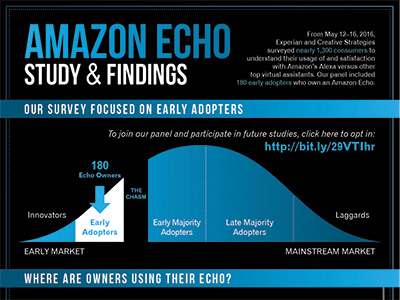 Smartphones offer brands a ubiquitous, continuous and contextual delivery channel, and yet it requires us all to learn a new language of taps and swipes to navigate through apps. Often this poses more complexity that manifests in friction for the consumer who must wade through a series of screens to have a question answered. Messaging and conversational interfaces offer the possibility of a clean and simple user experience without having to learn a new syntax.