Why Does Big Data Matter
Join our upcoming #DataTalk on Twitter as we discuss big data and how it can be leveraged to benefit businesses and consumers. Our big data tweet chats are hosted by @ExperianDataLab and occur every other Thursday at 5 p.m. ET.
Here are details about our next event:
TOPIC: What is Big Data? And Why Does it Matter?
WHEN: Thursday, April 9, 2015 at 5 p.m. ET
Easy ways to chat with us on Twitter: Twubs or Tchat
In this chat, we’ll be talking with Kevin Busby – Vice President of Analytics and Product Management at Experian and Jorge Lopez – Head of Big Data Product Marketing at Syncsort.
If you have questions or suggestions for future topics and guests, please tweet @MikeDelgado.
Questions We Discussed:
- Q1: What does big data mean to you?
- Q2: Why does big data matter?
- Q3: How is big data analyzed?
- Q4: What are some misconceptions about big data?
- Q5: What do you wish more people knew about big data?
- Q6: How can companies do a better job of analyzing data faster?
- Q7: Is big data worth the cost?
- Q8: How can big data help my customers?
- Q9: After companies have made investments to analyze data, what are next steps?
- Q10: Any final tips for businesses that want to leverage big data better?
Highlights from the Chat:
Featured Tweets:
Information is the oil of the 21st century and analytics is the combustion engine. – Peter Sondergaard [Retweet]
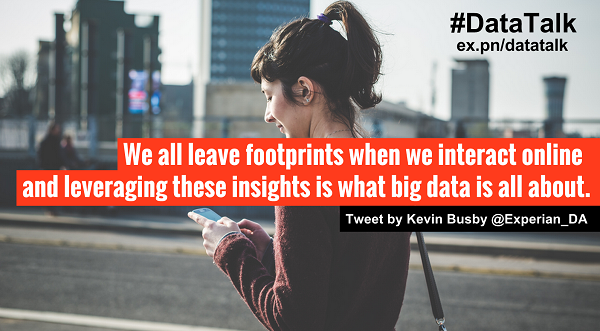
We all leave footprints when we interact online and leveraging these insights is what big data is all about. [Retweet]
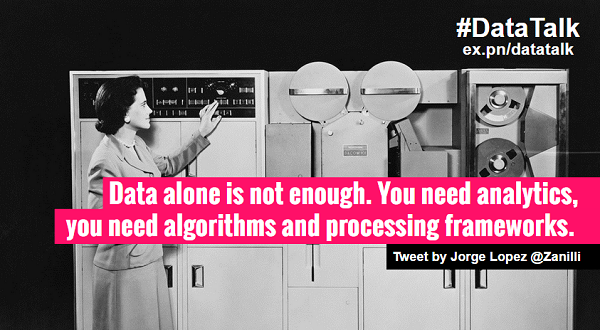
Data alone is not enough. You need analytics, algorithms and processing frameworks. [Retweet]
Big data isn’t just for nerds. It’s about solving real problems using data to guide objective decision-making. [Retweet]
Don’t let Hadoop become another data silo within your organization. [Retweet]
Big data matters because it’s an imperative not only to succeed, but even just to compete. [Retweet]
95% of companies feel driven to turn data into insight. [Retweet]
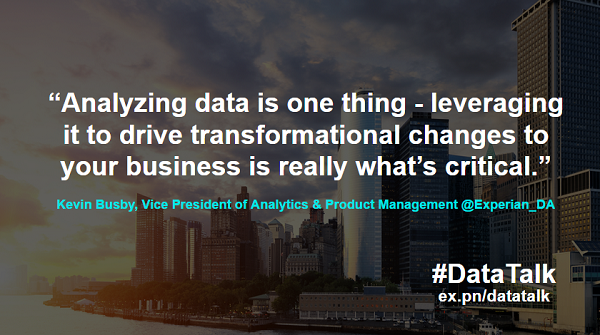
Analyzing data is one thing – leveraging it to drive transformational changes to your business is really what’s critical. [Retweet]