At A Glance
Curation is changing how media is bought and sold, moving beyond open auctions and static site lists to more efficient deals. By combining unique data, real-time supply connections, and continuous optimization, curated PMPs reduce waste and improve results. Audigent's, a part of Experian, solutions help marketers achieve measurable outcomes with curated strategies that deliver better targeting, higher engagement, and improved ROI.If you buy media today, you’re already feeling the shift: the best results don’t always come from broad, open auctions or static “safe site” lists; they’re coming from deals that combine the right data with the right inventory and let algorithms optimize in real time. That’s curation. And when it’s done right, it reduces data and media waste for buyers and raises eCPMs (effective cost per thousand impressions) and win rates for publishers.
As part of our Cannes Content Studio series, leaders from Butler/Till, Index Exchange, OpenX, PubMatic, and Yieldmo discuss how curation cuts waste and lifts results.
What is real curation?
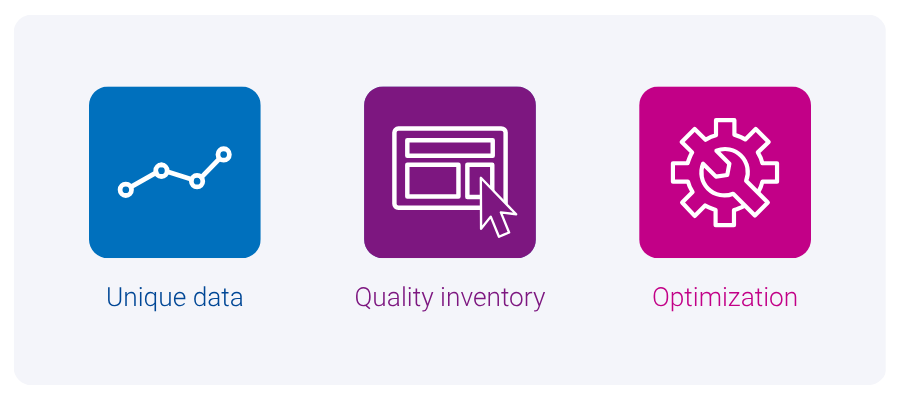
Real curation isn’t “packaging inventory.” It’s a strategic framework built on three pillars:
Why it matters: Manual approaches hit a ceiling. They can’t react quickly to shifting content, identity signals, or auction dynamics. That’s where technology partners come in, keeping the optimization loop running continuously.
Intelligence at every touchpoint
Curation isn’t about shifting control between platforms. It’s about better brand decisions, connecting opportunity-rich supply to the brand’s preferred buying platform and enriching each buy with audience data.In practice, supply-side platforms (SSPs) are ingesting richer signals to route inventory more effectively and support frequency caps and deal prioritization, in collaboration with demand-side platforms (DSPs).
“I think we’re seeing a shift toward bringing more DSP capabilities into the SSP, like supply-side targeting and data driven curation. Advancements in areas like CTV are enabling targeting based on content signals, and SSPs are pulling in more data to inform which supply is sent to the DSP, helping with things like frequency caps.”
OpenXMatt Sattel
Why page-level targeting beats static lists
Static domain lists were a useful first step for quality control. The intent was sound, but the approach was too cumbersome for today’s signal-rich buying. Today, AI and contextual engines read the page, not just the site, and adapt in real time.

Page-level logic delivers three key benefits:
- Accuracy by targeting high-intent, page-level content.
- Relevance by matching the creative to both the content and the audience context.
- Speed by enabling campaigns to move away from underperforming pages in real time, without waiting for a manual trafficking change.
“AI-driven contextual engines evaluate the page, not just the domain, to curate inventory in real time. That moves curation from static allowlists to adaptive logic for greater accuracy, relevance, and speed.”
YieldmoSophia Su
Partnerships broaden who influences the buy

Curation works when publishers, agencies, data partners, and platforms share signals and KPIs.
- Horizontal curation (across multiple SSPs) assembles broader, higher-quality reach and resilience, ideal for scale and diversity of supply.
- Vertical curation (an SSP’s in-house product) provides deep controls within a single exchange, useful for specific inventory strategies.
- Creative and data now shape supply and demand: better creative decisioning, tested against richer signals, improves outcomes.
DSPs remain central for activation and pacing. But the sell-side’s growing intelligence means more accurate inventory routing and signal application before a bid ever fires.
“Curation will continue to evolve through deeper data partnerships and expanded use across publishers and agencies, with more sophisticated types of optimization. DSPs will remain critical to activation, even as sell-side decisioning plays a larger role in identifying and shaping the supply to select.”
Index ExchangeMike McNeeley
Curation delivers access and measurable performance
Here’s what curated deals are delivering.
For buyers
| Result | Type of result |
| 36-81% | savings on data segments |
| 10-70% | lower cost per click (CPCs) |
| 1.5-3x | higher click-through rates (CTRs) |
| 10-30% | higher video completion rates |
For publishers
| Result | Type of result |
| 20% | bid density |
| 118% | win rate |
| 10% | revenue on discovered inventory |
| 25% | eCRM on incremental impressions |
Why it works: When data, supply, and optimization are integrated, you reduce waste, surface better impressions, and let algorithms compound your advantage. That’s why curated private marketplaces (PMPs) have grown at ~19% compound annual growth rate (CAGR) since 2019.
“Publishers using supply-side curation see ~15% more diverse buyers and 20–25% better performance than buy-side-only targeting. Smarter packaging and signal application tighten auctions and strengthen outcomes.”
PubmaticHoward Luks
Holistic curation streamlines planning and outcomes
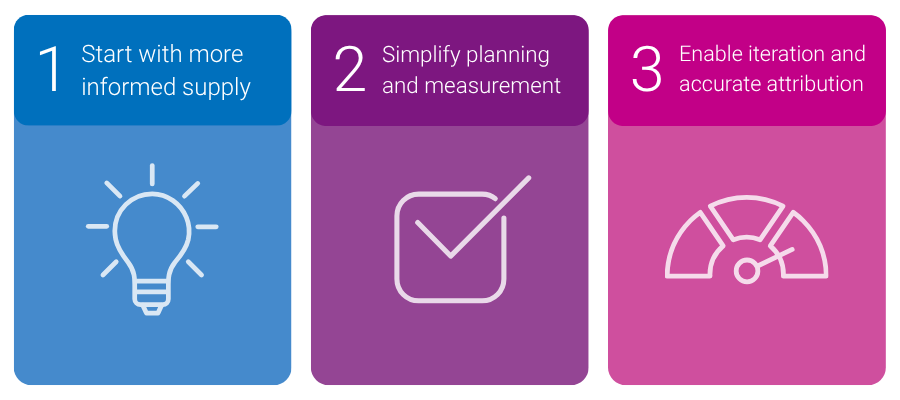
Curation adds the data layer earlier in the buying process, starting at the supply-side. This creates more opportunities to reach the right audience and improves scale and performance. By replacing multiple line items with a single curated deal, campaign setup becomes faster and less error-prone. Curated deals also simplify measurement by including the necessary context for accurate attribution, while dynamic adjustments ensure campaigns remain optimized without requiring manual updates.
“Publishers using supply-side curation see ~15% more diverse buyers and 20–25% better performance than buy-side-only targeting. Smarter packaging and signal application tighten auctions and strengthen outcomes.”
Butler/TillGina Whelehan
It’s much more streamlined, bringing more pieces together so we’re thoughtful and holistic. Adding the audience and data element creates more scale and strategy in how we curate supply and data, and ultimately better results for clients.
The bottom line
Curation has matured from buzzword to performance system. DSPs still anchor activation and pacing, but better sell-side pipes now pre-route inventory and apply signals before any bid starts, making the whole system faster and more accurate. When you combine unique signals, tight supply connections, and always-on optimization, you gain addressability, reduce waste, and achieve better business outcomes for both buyers and sellers.
Curation isn’t just a trend; it’s where programmatic advertising is headed. Start testing curated PMPs today to see the difference for yourself.
Explore curated PMPs with Audigent
Curation FAQs
Curation in performance marketing is the process of combining data, inventory, and optimization to deliver better results. Audigent supports curated strategies through privacy-safe data and advanced integrations.
Curation reduces wasted spend by targeting high-quality impressions and optimizing campaigns in real time. Audigent’s solutions help marketers achieve higher click-through rates, lower costs, and better engagement across channels.
Curated PMPs are deals that use curated data and inventory to deliver measurable results. They help buyers save on data costs, improve ad performance, and achieve better video completion rates, while publishers see higher win rates and revenue.
Audigent provides unique data assets, privacy-safe integrations, and optimization tools that help marketers and publishers create curated deals. Our solutions ensure campaigns are more efficient, targeted, and effective from start to finish.
Horizontal curation combines inventory across multiple platforms for broader reach and diversity, while vertical curation focuses on deep control within a single platform. Both approaches can be tailored to specific campaign goals with Audigent’s expertise.
Latest posts

NEW YORK, Oct. 16, 2019 /PRNewswire/ — Tapad, part of Experian and a global leader in digital identity resolution, and The Trade Desk, a global advertising technology leader, partnered to integrate The Trade Desk’s unified ID solution in April 2019. The Trade Desk’s unified ID solution’s objective is to serve as a standardized cookie ID to help marketers reach more of their audience on the open internet. After an initial six month period, Tapad reports significant adoption rates and enhanced customer results since their joint integration in April. As a result of the partnership, client brands, agencies, DMPs/ DSPs, Data Providers, Mobile Networks and Measurement/Analytics Providers, saw increased match rates up to 38% and more global coverage without compromising precision. With this combined offering, Tapad’s global, privacy-safe digital cross-device solution, The Tapad Graph, connects brands with consumers over 4 billion devices globally. Over 25 companies who license The Tapad Graph, such as Annalect, Semasio, Retargetly, and ThinkCX, have also included The Trade Desk’s unified ID solution as a key identifier in their graph output. “The vast improvement in scale that Tapad has seen illustrates the value digital identity resolution products can bring for brands,” said Nate Gawel, General Manager of Data Partnerships at The Trade Desk. “We’re looking forward to continuing work with Tapad to prove that the open internet can deliver the very same benefits many reserve for large platforms.” Adoption of the unified ID solution allows all parties across the supply chain (SSPs, DSPs, DMPs and data providers) to utilize The Trade Desk’s cookie footprint to increase their own cookie coverage across the global independent internet. For more information, please visit The Trade Desk’s unified ID solution site, or https://www.experian.com/marketing/consumer-sync to learn more about Tapad’s digital identity resolution products. About Tapad:Tapad, Inc. is a global leader in digital identity resolution. The Tapad Graph, and its related solutions, provide a transparent, privacy-safe approach connecting brands to consumers through their devices globally. Our one-of-a-kind Graph Select offering enables marketers the flexibility and freedom of choice to correlate devices to varied objectives, driving campaign effectiveness and business results. Tapad is recognized across the industry for its product innovation, workplace culture and talent, and has earned numerous awards including One World Identity’s 2019 Top 100 Influencers in Identity Award. Headquartered in New York, Tapad also has offices in Chicago, London, Oslo, Singapore and Tokyo. About The Trade Desk:The Trade Desk™ is a technology company that empowers buyers of advertising. Through its self-service, cloud-based platform, ad buyers can create, manage, and optimize digital advertising campaigns across ad formats and devices. Integrations with major data, inventory, and publisher partners ensure maximum reach and decisioning capabilities, and enterprise APIs enable custom development on top of the platform. Headquartered in Ventura, CA, The Trade Desk has offices across North America, Europe, and Asia Pacific. To learn more, visit thetradedesk.com or follow us on Facebook, Twitter, LinkedIn and YouTube. Contact us today

Gen Z is ready to be noticed and become a force to be reckoned with in the market. In the auto market alone, Gen Z made up 3.8 percent of all new vehicle registrations in the first quarter of 2019.

As ever, marketers have to be strategic to reach the right customers. Ensure seasonal messaging reaches the right customers with audience optimization.