At A Glance
In 2026, marketing activation and measurement will operate as a single, connected system. Identity allows insights to guide decisions while campaigns run, not after they end. Experian helps marketers unify planning, activation, and outcome validation so performance signals inform action in real time and business impact stays visible throughout the campaign lifecycle.For years, marketers have worked around a familiar disconnect. Campaigns go live first. Measurement follows later. Insights arrive after audiences are reached, and budgets are committed.
That gap has slowed decisions, blurred performance signals, and limited marketers’ ability to respond when it counts.
In 2026, that model changes. Activation and measurement no longer operate as separate steps. They function as a single system, where insight informs action as campaigns unfold. Consistency across identity, data, and decision-making sits at the center of this shift, connecting the full campaign lifecycle from planning through outcomes.
How is marketing measurement shifting from post-campaign reporting to in-flight intelligence in 2026?
Marketing measurement in 2026 is moving from retrospective reporting to real-time input that shapes campaigns while they run. Instead of explaining performance after delivery, measurement now guides creative, audience, and channel decisions as verified outcomes appear.
Historically, measurement worked like a post-mortem. Dashboards showed what happened after campaigns ended, or weeks after impressions were delivered. Those insights supported long-term planning but rarely influenced performance in the moment.
That dynamic has changed.
Today, marketers embed measurement directly into activation. Campaigns adapt while they run. Creative evolves based on engagement quality. Audience strategies adjust as verified outcomes come into view. Channel investments respond to performance signals, not assumptions.
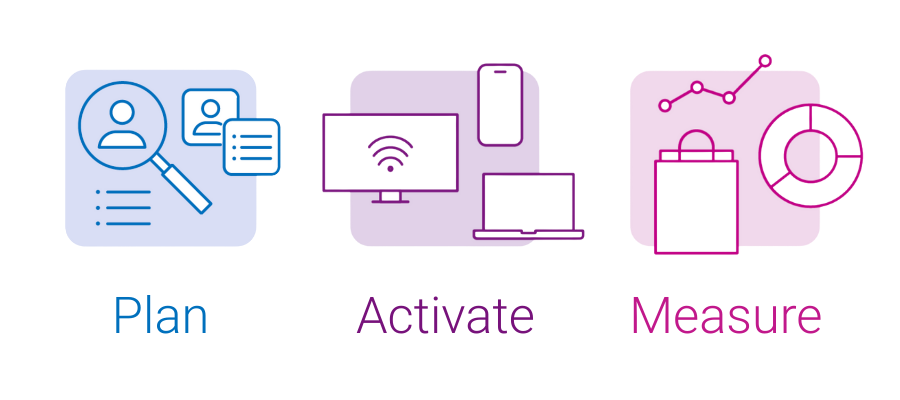
Connected ecosystems make this possible. Experian helps marketers plan, activate, and measure within a single framework by linking audiences, identity, and outcomes. When planning and performance live in the same environment, insight becomes actionable in the moment.
Why is identity the connective layer between activation and measurement?
Identity provides the consistent thread that links planning, activation, and outcomes into a unified system. Without it, marketers rely on proxy signals and disconnected views of performance.
For years, fragmented identity frameworks made it difficult to connect media exposure to real-world outcomes. Without a consistent way to recognize audiences across planning, activation, and measurement, marketers relied on proxy metrics and modeled assumptions.
That’s changing as identity becomes interoperable across the ecosystem.
Experian’s Digital and Offline Graphs help marketers onboard and resolve their data into a clean, connected foundation that supports everything that follows. From building audiences enriched with behavioral, demographic, and lifestyle insights, to activating those audiences across channels like connected TV (CTV), social, and programmatic through direct integrations with more than 200 platforms.
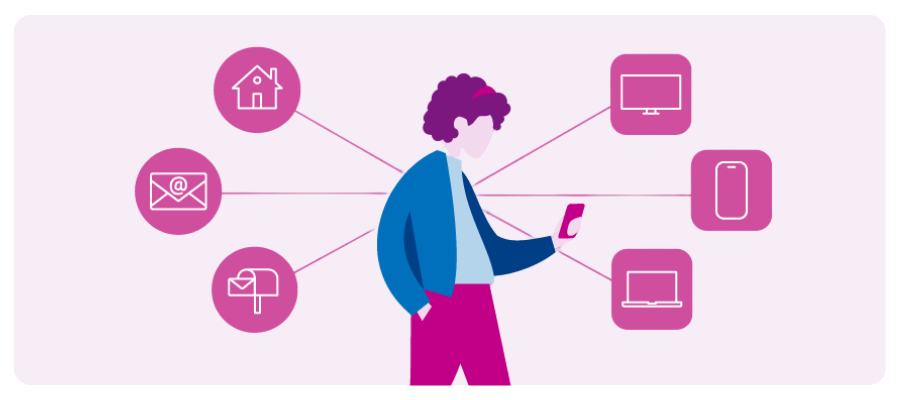
When identity stays consistent from the first impression through final outcome, marketers gain a clearer view of what drives performance and where to act next.

2026 Digital trends and predictions report
Our 2026 Digital trends and predictions report is available now and reveals five trends that will define 2026. From curation becoming the standard in programmatic to AI moving from hype to implementation, each trend reflects a shift toward more connected, data-driven marketing. The interplay between them will define how marketers will lead in 2026.
How does closed-loop measurement become standard in 2026?
Closed-loop measurement is becoming the default as activation and measurement come together. Marketers now tie exposure directly to verified business outcomes instead of relying on inferred signals.
In partnership with MMGY Global, we helped Windstar Cruises connect digital impressions directly to bookings. The result was more than 6,500 verified bookings and $20 million in revenue tied back to campaign exposure. That translated to a 13:1 return on ad spend.
This level of accountability changes how marketers optimize. Instead of relying on clicks or inferred intent, teams can measure outcomes that reflect business impact. Store visits. Purchases. Site activity. These signals now guide decisions while campaigns are live.
Through curated private marketplace deals and supply-path optimization, Experian also helps reduce cost, and improve reach and performance. With Experian and Audigent operating as one, marketers gain access to scalable, privacy-conscious data solutions that support both addressability and accountability across the supply chain.
What should marketers plan for as activation and measurement connect in 2026?
Marketing teams should prepare for an operating model built around continuous feedback, unified systems, and verified outcomes. This shift changes how success is defined and managed.
Marketers should plan for:
Whether you’re activating your own data or reaching new audiences, Experian connects every stage of the campaign. From early planners to last-minute buyers, we help you show up in the moments that matter and prove what is working.
The takeaway
Marketing’s next chapter centers on connection.
As data systems unify, activation and measurement operate as one. Insight flows directly into action. Decisions are guided by intelligence, not delayed reporting.
With Experian, marketers plan, reach, and measure in a connected cycle. Every impression is measurable. Every audience is accurate. Every decision is powered by data ranked #1 in accuracy by Truthset.
To explore this trend and the others shaping marketing in 2026, download our 2026 Digital trends and predictions report.
Ready to connect with our team?
About the author

Ali Mack
VP, AdTech Sales, Experian
Ali Mack leads Experian’s AdTech business, overseeing global revenue across the company’s expansive tech and media portfolio. With over a decade of experience in digital and TV advertising, Ali drives strategic growth by aligning sales, customer success, and solutions teams to deliver impactful outcomes for clients and partners.
She has successfully guided teams through two major acquisitions, integrating sales organizations and product portfolios into unified go-to-market strategies. Under her leadership, Experian has consistently exceeded revenue targets while fostering collaborative, results-driven teams and mentoring emerging leaders. Working closely with finance, product, and marketing, Ali develops strategies that support a diverse ecosystem of publishers, brands, and technology partners, positioning Experian at the forefront of data-driven advertising and identity resolution.
FAQS
Marketing measurement in 2026 is moving from retrospective reporting to real-time input that shapes campaigns while they run. Instead of explaining performance after delivery, measurement now guides creative, audience, and channel decisions as verified outcomes appear. Connected ecosystems make this possible. Experian helps marketers plan, activate, and measure within a single framework by linking audiences, identity, and outcomes. When planning and performance live in the same environment, insight becomes actionable in the moment.
Identity provides the consistent thread that links planning, activation, and outcomes into a unified system. Without it, marketers rely on proxy signals and disconnected views of performance. Experian’s Digital and Offline Graphs help marketers onboard and resolve their data into a clean, connected foundation that supports everything that follows. From building audiences enriched with behavioral, demographic, and lifestyle insights, to activating those audiences across channels like connected TV (CTV), social, and programmatic through direct integrations with more than 200 platforms.
Closed-loop measurement is becoming the default as activation and measurement come together. Marketers now tie exposure directly to verified business outcomes instead of relying on inferred signals. In partnership with MMGY Global, we helped Windstar Cruises connect digital impressions directly to bookings. The result was more than 6,500 verified bookings and $20 million in revenue tied back to campaign exposure. That translated to a 13:1 return on ad spend.
Marketers should plan for: always-on feedback loops, unified planning, activation, and outcome validation, outcome-based performance signals, and greater use of first-party data. Whether you’re activating your own data or reaching new audiences, Experian connects every stage of the campaign. From early planners to last-minute buyers, we help you show up in the moments that matter and prove what is working.
Latest posts

Tapad,a part of Experian, partners with clypd to expand industry-leading programmatic TV inventory
FeaturedTapad’s TV analytics solutions now include premium national cable inventory– Travelocity asserts industry need, praises partnership — NEW YORK, February 28, 2017 — Tapad, a part of Experian, has announced its partnership with clypd, the leading audience-based sales platform for television advertising. By integrating clypd’s national cable network inventory, the partnership will expand Tapad’s extensive supply of TV inventory to include premium national cable inventory. Tapad is the leading provider of privacy-safe, cross-screen marketing technology solutions and was first-to-market with a device graph. Clypd’s robust sell-side advertising platform was one of the first built exclusively for the television industry, empowering media owners with solutions that deliver workflow automation, data-enhanced decisioning and, overall, maximize TV campaign performance. Through this partnership, Tapad’s Device Graph-powered TV tools will work in tandem with clypd’s sales platform to enable more precise audience engagement for TV ad buys. This will enable marketers to integrate their customer data or third-party digital segments into Tapad’s TV platform and use them to precisely engage their audience across clypd’s industry-leading footprint of national TV inventory. Campaigns are then optimized using Tapad’s graph-powered TV attribution, ensuring ads are aligned with the best context for each brand’s message. “Clypd is a pioneer in building TV marketplaces,” says Marshall Wong, SVP of TV market development at Tapad. “They were quick to recognize the benefits a device graph could bring to TV so that advertisers can activate linear inventory curated for any digital audience.” “Tapad’s TV activation platform increases the efficiency in which marketers can reach their intended audience on traditional linear TV,” says Doug Hurd, co-founder and EVP of business development at clypd. “Their customized, data-driven campaigns launch with precision and really increase the value marketers can extract from linear TV inventory.” “At Travelocity, we are always looking for ways to more efficiently reach our target audiences,” says Ashley Parker, head of brand marketing at Travelocity. “The combination of traditional linear TV and solutions like this offering from Tapad and clypd are bringing both the tools and the supply to make this vision a reality.” Contact us today
Dextro Analytics partners with Tapad, a part of Experian, to deliver persistent measurement across devices
FeaturedDextro clients to achieve increased accuracy in cross-device consumer measurement and engagement NEW YORK, Feb. 6, 2017 /PRNewswire/ — Dextro Analytics, a pure play analytics company that harnesses the power of human learning and artificial reasoning to drive more informed and effective consumer marketing, is partnering with Tapad, the leading provider of unified, cross-screen marketing technology solutions and now a part of Experian. The deal is effective immediately and the scope of the partnership covers North America. Additional terms were not disclosed. Leveraging Tapad’s privacy-safe Device Graph™, Dextro Analytics will be able to significantly bolster its insight engine to decode complex customer journeys. Armed with more relevant, actionable insights, marketers can use Dextro’s cross-screen, closed-loop measurement systems to reach and engage the right customer at the right time through the right channel. “Being able to accurately map consumer preferences, behaviors and journeys in a privacy-safe and unified way across devices is still one of the biggest pain points for marketers,” said Ajith Govind, co-founder of Dextro Analytics. “At the same time, this partnership engages customers with the right message at the right time.” “Detecting latent patterns and signals, and tracing backward- and forward-looking behavioral characteristics, are keys to sustaining a competitive advantage in a crowded space,” said Manmit Shrimali, co-founder of Dextro Analytics. “With the proliferation of data and devices, connecting the dots is of paramount importance.” “Dextro is solving some of the biggest challenges in analytics today,” said Pierre Martensson, GM of Tapad’s data division. “Our partners consistently see notable improvements in both budget allocation and device optimizations after integrating with the Tapad Device Graph, and I have every confidence that Dextro will be among them.” For more information about Dextro Analytics’ revolutionary approach to using human learning and artificial intelligence algorithms to solve business and analytical problems, please visit http://dextroanalytics.com/. For more information about Tapad’s cross-platform advertising solutions, please visit https://www.experian.com/marketing/consumer-sync. Contact us today

Tapad, part of Experian, and Rubicon Project launch automated global cross-device campaign solution
FeaturedNEW YORK & LOS ANGELES / BUSINESS WIRE / Jan. 30, 2017– Tapad, part of Experian, and Rubicon Project (NYSE: RUBI) announced today a new global partnership offering a unified, cross-device campaign delivery solution within an automated advertising marketplace. Tapad is the leading provider of unified, cross-screen marketing technology solutions and Rubicon Projectoperates one of the largest advertising marketplaces in the world. The Tapad Device Graph™, which enables buyers to expand their high-value display data signals to associated mobile devices, will be integrated across Rubicon Project’s leading advertising exchange and Orders platform, significantly improving consumer mobile reach. The new global partnership will empower Buyers within Rubicon Project’s exchange to find and engage audiences across their entire digital experience. Rubicon Project operates one of the world’s largest mobile exchanges connecting to approximately 1 billion unique mobile devices globally. “We’re excited to partner with Tapad to continue to provide our customers the very best data for managing their advertising businesses,” said Harry Patz, Chief Revenue Officer, Rubicon Project. “Cross-device delivery is crucial for buyers today with more than 81% of internet users currently relying on more than one device for digital access[1]. Through our partnership, buyers will be able to extend their desktop private marketplace campaigns to mobile, allowing them to find and engage their audience across devices, anywhere in the world. The net result will also benefit sellers; the increase in mobile reach will better position publishers and app developers to strategically capitalize on their inventory, ultimately increasing bid rates and mobile revenue across the board.” “Our partnership with Rubicon Project marks the first time advertisers and publishers alike are able to use cross-device solutions at significant scale outside of Google and Facebook,” said Pierre Martensson, GM of Tapad’s Data Division and APAC. “Our Device Graph will help Rubicon Project’s advertisers make more informed buying decisions and find the audiences who matter most.” Barry Adams, VP of Commercial Development at Bidswitch, said, “As digital advertising moves away from desktop and increasingly toward a mobile-first model, cross device data becomes critical to finding consumers. The rich data buyers will now be able to leverage at scale through the Tapad and Rubicon Project integration will enable us to provide a state-of-the-art cross-screen solution for the 150+ buying platforms that use our service, and the tens of thousands of advertisers they represent.” For more information about Rubicon Project’s inventory, please visit www.rubiconproject.com. For more information about Tapad’s cross-platform advertising solutions, please visit https://www.experian.com/marketing/consumer-sync. Contact us today