At A Glance
In 2026, marketing activation and measurement will operate as a single, connected system. Identity allows insights to guide decisions while campaigns run, not after they end. Experian helps marketers unify planning, activation, and outcome validation so performance signals inform action in real time and business impact stays visible throughout the campaign lifecycle.For years, marketers have worked around a familiar disconnect. Campaigns go live first. Measurement follows later. Insights arrive after audiences are reached, and budgets are committed.
That gap has slowed decisions, blurred performance signals, and limited marketers’ ability to respond when it counts.
In 2026, that model changes. Activation and measurement no longer operate as separate steps. They function as a single system, where insight informs action as campaigns unfold. Consistency across identity, data, and decision-making sits at the center of this shift, connecting the full campaign lifecycle from planning through outcomes.
How is marketing measurement shifting from post-campaign reporting to in-flight intelligence in 2026?
Marketing measurement in 2026 is moving from retrospective reporting to real-time input that shapes campaigns while they run. Instead of explaining performance after delivery, measurement now guides creative, audience, and channel decisions as verified outcomes appear.
Historically, measurement worked like a post-mortem. Dashboards showed what happened after campaigns ended, or weeks after impressions were delivered. Those insights supported long-term planning but rarely influenced performance in the moment.
That dynamic has changed.
Today, marketers embed measurement directly into activation. Campaigns adapt while they run. Creative evolves based on engagement quality. Audience strategies adjust as verified outcomes come into view. Channel investments respond to performance signals, not assumptions.
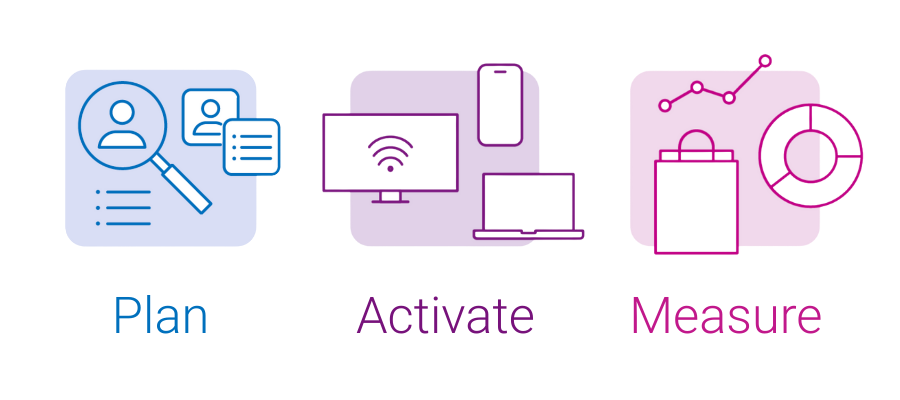
Connected ecosystems make this possible. Experian helps marketers plan, activate, and measure within a single framework by linking audiences, identity, and outcomes. When planning and performance live in the same environment, insight becomes actionable in the moment.
Why is identity the connective layer between activation and measurement?
Identity provides the consistent thread that links planning, activation, and outcomes into a unified system. Without it, marketers rely on proxy signals and disconnected views of performance.
For years, fragmented identity frameworks made it difficult to connect media exposure to real-world outcomes. Without a consistent way to recognize audiences across planning, activation, and measurement, marketers relied on proxy metrics and modeled assumptions.
That’s changing as identity becomes interoperable across the ecosystem.
Experian’s Digital and Offline Graphs help marketers onboard and resolve their data into a clean, connected foundation that supports everything that follows. From building audiences enriched with behavioral, demographic, and lifestyle insights, to activating those audiences across channels like connected TV (CTV), social, and programmatic through direct integrations with more than 200 platforms.
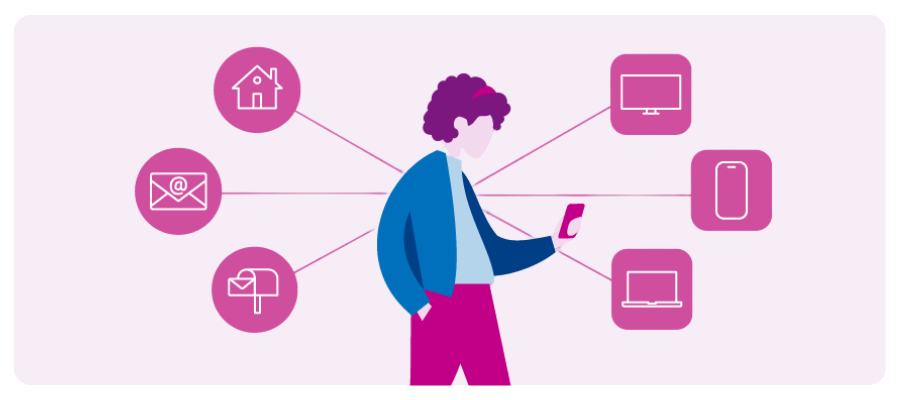
When identity stays consistent from the first impression through final outcome, marketers gain a clearer view of what drives performance and where to act next.

2026 Digital trends and predictions report
Our 2026 Digital trends and predictions report is available now and reveals five trends that will define 2026. From curation becoming the standard in programmatic to AI moving from hype to implementation, each trend reflects a shift toward more connected, data-driven marketing. The interplay between them will define how marketers will lead in 2026.
How does closed-loop measurement become standard in 2026?
Closed-loop measurement is becoming the default as activation and measurement come together. Marketers now tie exposure directly to verified business outcomes instead of relying on inferred signals.
In partnership with MMGY Global, we helped Windstar Cruises connect digital impressions directly to bookings. The result was more than 6,500 verified bookings and $20 million in revenue tied back to campaign exposure. That translated to a 13:1 return on ad spend.
This level of accountability changes how marketers optimize. Instead of relying on clicks or inferred intent, teams can measure outcomes that reflect business impact. Store visits. Purchases. Site activity. These signals now guide decisions while campaigns are live.
Through curated private marketplace deals and supply-path optimization, Experian also helps reduce cost, and improve reach and performance. With Experian and Audigent operating as one, marketers gain access to scalable, privacy-conscious data solutions that support both addressability and accountability across the supply chain.
What should marketers plan for as activation and measurement connect in 2026?
Marketing teams should prepare for an operating model built around continuous feedback, unified systems, and verified outcomes. This shift changes how success is defined and managed.
Marketers should plan for:
Whether you’re activating your own data or reaching new audiences, Experian connects every stage of the campaign. From early planners to last-minute buyers, we help you show up in the moments that matter and prove what is working.
The takeaway
Marketing’s next chapter centers on connection.
As data systems unify, activation and measurement operate as one. Insight flows directly into action. Decisions are guided by intelligence, not delayed reporting.
With Experian, marketers plan, reach, and measure in a connected cycle. Every impression is measurable. Every audience is accurate. Every decision is powered by data ranked #1 in accuracy by Truthset.
To explore this trend and the others shaping marketing in 2026, download our 2026 Digital trends and predictions report.
Ready to connect with our team?
About the author

Ali Mack
VP, AdTech Sales, Experian
Ali Mack leads Experian’s AdTech business, overseeing global revenue across the company’s expansive tech and media portfolio. With over a decade of experience in digital and TV advertising, Ali drives strategic growth by aligning sales, customer success, and solutions teams to deliver impactful outcomes for clients and partners.
She has successfully guided teams through two major acquisitions, integrating sales organizations and product portfolios into unified go-to-market strategies. Under her leadership, Experian has consistently exceeded revenue targets while fostering collaborative, results-driven teams and mentoring emerging leaders. Working closely with finance, product, and marketing, Ali develops strategies that support a diverse ecosystem of publishers, brands, and technology partners, positioning Experian at the forefront of data-driven advertising and identity resolution.
FAQS
Marketing measurement in 2026 is moving from retrospective reporting to real-time input that shapes campaigns while they run. Instead of explaining performance after delivery, measurement now guides creative, audience, and channel decisions as verified outcomes appear. Connected ecosystems make this possible. Experian helps marketers plan, activate, and measure within a single framework by linking audiences, identity, and outcomes. When planning and performance live in the same environment, insight becomes actionable in the moment.
Identity provides the consistent thread that links planning, activation, and outcomes into a unified system. Without it, marketers rely on proxy signals and disconnected views of performance. Experian’s Digital and Offline Graphs help marketers onboard and resolve their data into a clean, connected foundation that supports everything that follows. From building audiences enriched with behavioral, demographic, and lifestyle insights, to activating those audiences across channels like connected TV (CTV), social, and programmatic through direct integrations with more than 200 platforms.
Closed-loop measurement is becoming the default as activation and measurement come together. Marketers now tie exposure directly to verified business outcomes instead of relying on inferred signals. In partnership with MMGY Global, we helped Windstar Cruises connect digital impressions directly to bookings. The result was more than 6,500 verified bookings and $20 million in revenue tied back to campaign exposure. That translated to a 13:1 return on ad spend.
Marketers should plan for: always-on feedback loops, unified planning, activation, and outcome validation, outcome-based performance signals, and greater use of first-party data. Whether you’re activating your own data or reaching new audiences, Experian connects every stage of the campaign. From early planners to last-minute buyers, we help you show up in the moments that matter and prove what is working.
Latest posts

by AdExchanger // Friday, March 15th, 2019 – 12:06 am “Data-Driven Thinking” is written by members of the media community and contains fresh ideas on the digital revolution in media. Today's column is written by Preethy Vaidyanathan, chief product officer at Tapad, a part of Experian For years marketers asked, “How do we get more data?” Now that they've mastered data mining, marketers want to know what’s next. The time has come for organizations to make their abundance of digital data actionable, increase ROI and reach consumers with consistent, personalized experiences across all touchpoints. A seamless consumer experience can only be achieved by consolidating digital data. Organizations, however, are finding that consolidating data silos is more time-consuming and complicated than initially expected. The challenges One of the most pervasive obstacles companies face in when consolidating data is adopting inefficient and costly tactics that quickly become outdated. For instance, over the last couple of years, many companies turned to enterprise data warehouses to consolidate data silos, but some were too expensive or poorly suited for raw, unstructured and semi-structured data. This led companies to adopt data management initiatives, which bogged down many enterprises. Perception among senior level executives is another challenge. Many still question the need for digital transformation – achieving greater efficiencies through updating business and organizational processes with new technologies. Gartner found that more than half (54%) of senior executives say their digital business objective is transformational, while 46% say their objective is optimization. Digital transformation and data consolidation require time and effort. So, many large organizations work to overcome data silos as part of a multiyear digital transformation versus an immediate action item, delaying the benefits the company sees from taking on this project. All of these challenges make delaying progress in data consolidation easy, but companies should remember the impetus for doing so: creating a seamless customer experience that, in turn, drives business results. Brands with higher quality customer experience grow revenue faster than direct competitors with lower quality customer experience. The approach Many brands go into the digital transformation process assuming they have massive amounts of customer data, and that much of it is valuable or will be in the future. They might spend months aggregating that data in data stores or data lakes – at great expense. The trouble is that their data was scattered across multiple databases, which means it’s highly fragmented. As a result of this fragmentation, marketers can’t activate their data in ways that enhance the customer experience. To do so, companies must ensure their digital data is highly flexible so it can provide a holistic view of the consumer journey across every digital, in-store, in-venue and offline channel. I’d recommend that organizations taking on data centralization initiatives prioritize use cases that offer the company the greatest benefit. This is where organizations should establish a “crawl, walk, run” approach to data centralization to ensure key executives buy into the process. Starting with a subset of use cases, such as customer retention or upsell, or with a campaign, which is an even smaller starting point, allows executives to see the benefits of data consolidation projects relatively quickly. Once they validate these initial benefits, they can expand the range of use cases or campaigns, as well as the marketing ROI for their business. While data centralization is a long-term project that may take several years to complete, it doesn’t mean a business can’t get started now and see measurable results quickly. Break down data consolidation into stages so the organization can experience wins along the way. At the end of the day, data consolidation will help organizations deliver more effective marketing campaigns that drive business growth. Contact us today

Tapad's technology enhances Bidtellect clients frequency capping and audience extension capabilities cross device. NEW YORK, Feb. 28, 2019 /PRNewswire/ — Tapad, part of Experian, is a global marketing technology company and leader in digital identity resolution solutions, today announced a new partnership with Bidtellect (now Simpli.fi), a leading native Demand-Side Platform (DSP). Bidtellect's paid content distribution platform will leverage The Tapad Graph™ as its first cross-device partner. The integration will offer Bidtellect's clients in the U.S. and Canada cross-device frequency capping and enhanced audience extension capabilities. The combination of Tapad's leading cross-device technology, with Bidtellect's unparalleled scale and optimization capabilities, will allow content marketers within brands and agencies to develop even more strategic, effective content marketing campaigns. The Tapad Graph™ will allow content marketers to gain greater reach and create more relevant, unified messaging with targeted delivery, when used in conjunction with Bidtellect's technology. Marketers can expect to benefit from amplified reach, and enhanced, privacy-safe engagement with desired audiences as a result of this partnership. "Partnering with Tapad, the leaders in cross-device data, provides Bidtellect with a complete solution that leverages both probabilistic and deterministic mapping strategies," said Mike Conway, Chief Technology Officer at Bidtellect. "The Tapad relationship expands our audience size by providing the opportunity to reach the same user across multiple devices and, when used in conjunction with our frequency capping functionality, ensures increased reach, reduced ad saturation, and elimination of wasted ad spend." As the partnership progresses, Tapad will also work with Bidtellect to provide advanced attribution for conversions and engagement metrics including connectivity and amplification. These advanced insights will help brands and agencies develop a more holistic approach to content marketing, so they can build audiences and influence bidding algorithms that directly impact their business. Contact us today
The Tapad Graph Now Offered in Adobe Audience Manager, part of Adobe Analytics Cloud New York, NY — August 7, 2018 — Tapad, now part of Experian, is advancing personalization for the modern marketer, announced today that its proprietary Tapad Graph is now integrated with Adobe Audience Manager, part of Adobe Analytics Cloud, helping marketers expand their view of consumers and boost results through Tapad’s probabilistic solution. Tapad has been working closely with the Adobe Audience Manager team on this integration. With the Tapad Graph integration, customers based in the U.S. and Canada can use the Tapad Device Graph to expand the reach of audiences defined and activated in Adobe Audience Manager to extend first- and third-party data and deliver personalization across paid, earned and owned channels, publisher sites, programmatic, and more. Tapad worked closely with Adobe to develop the integration, allowing marketers to enable first-party data that has been previously tied to cookies and mobile. This offering has been beta-tested by leading organizations across retail, financial services, telecom providers, and more. Tapad has repeatedly proven its ability to provide marketers with a unified view of the customer across channels and screens. With the Tapad Graph, a global identity graph that currently supports more than 100 enterprise customers and 200 integration partners, marketers can extend their reach and customize messages based on user and household-level data. Contact us today