At A Glance
In 2026, marketing activation and measurement will operate as a single, connected system. Identity allows insights to guide decisions while campaigns run, not after they end. Experian helps marketers unify planning, activation, and outcome validation so performance signals inform action in real time and business impact stays visible throughout the campaign lifecycle.For years, marketers have worked around a familiar disconnect. Campaigns go live first. Measurement follows later. Insights arrive after audiences are reached, and budgets are committed.
That gap has slowed decisions, blurred performance signals, and limited marketers’ ability to respond when it counts.
In 2026, that model changes. Activation and measurement no longer operate as separate steps. They function as a single system, where insight informs action as campaigns unfold. Consistency across identity, data, and decision-making sits at the center of this shift, connecting the full campaign lifecycle from planning through outcomes.
How is marketing measurement shifting from post-campaign reporting to in-flight intelligence in 2026?
Marketing measurement in 2026 is moving from retrospective reporting to real-time input that shapes campaigns while they run. Instead of explaining performance after delivery, measurement now guides creative, audience, and channel decisions as verified outcomes appear.
Historically, measurement worked like a post-mortem. Dashboards showed what happened after campaigns ended, or weeks after impressions were delivered. Those insights supported long-term planning but rarely influenced performance in the moment.
That dynamic has changed.
Today, marketers embed measurement directly into activation. Campaigns adapt while they run. Creative evolves based on engagement quality. Audience strategies adjust as verified outcomes come into view. Channel investments respond to performance signals, not assumptions.
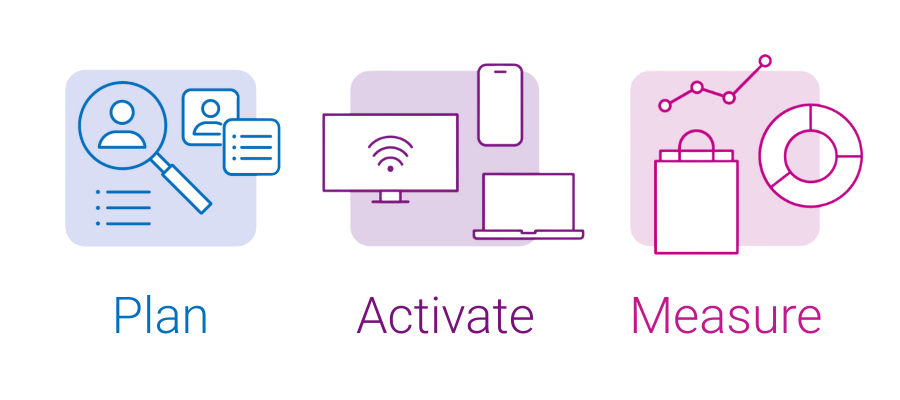
Connected ecosystems make this possible. Experian helps marketers plan, activate, and measure within a single framework by linking audiences, identity, and outcomes. When planning and performance live in the same environment, insight becomes actionable in the moment.
Why is identity the connective layer between activation and measurement?
Identity provides the consistent thread that links planning, activation, and outcomes into a unified system. Without it, marketers rely on proxy signals and disconnected views of performance.
For years, fragmented identity frameworks made it difficult to connect media exposure to real-world outcomes. Without a consistent way to recognize audiences across planning, activation, and measurement, marketers relied on proxy metrics and modeled assumptions.
That’s changing as identity becomes interoperable across the ecosystem.
Experian’s Digital and Offline Graphs help marketers onboard and resolve their data into a clean, connected foundation that supports everything that follows. From building audiences enriched with behavioral, demographic, and lifestyle insights, to activating those audiences across channels like connected TV (CTV), social, and programmatic through direct integrations with more than 200 platforms.
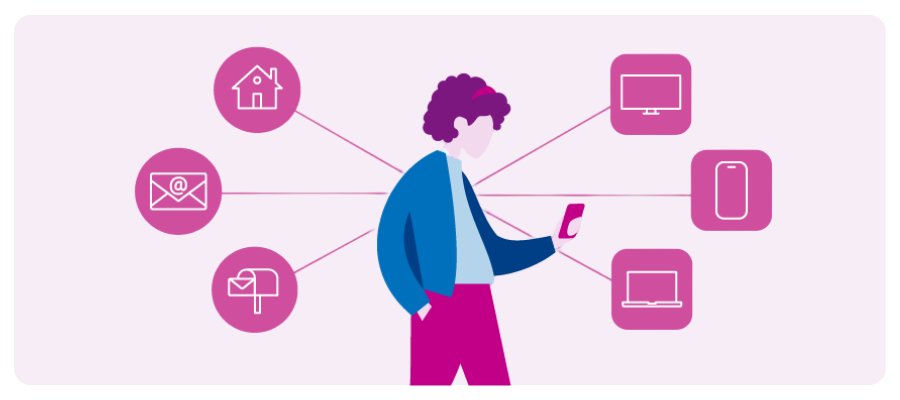
When identity stays consistent from the first impression through final outcome, marketers gain a clearer view of what drives performance and where to act next.

2026 Digital trends and predictions report
Our 2026 Digital trends and predictions report is available now and reveals five trends that will define 2026. From curation becoming the standard in programmatic to AI moving from hype to implementation, each trend reflects a shift toward more connected, data-driven marketing. The interplay between them will define how marketers will lead in 2026.
How does closed-loop measurement become standard in 2026?
Closed-loop measurement is becoming the default as activation and measurement come together. Marketers now tie exposure directly to verified business outcomes instead of relying on inferred signals.
In partnership with MMGY Global, we helped Windstar Cruises connect digital impressions directly to bookings. The result was more than 6,500 verified bookings and $20 million in revenue tied back to campaign exposure. That translated to a 13:1 return on ad spend.
This level of accountability changes how marketers optimize. Instead of relying on clicks or inferred intent, teams can measure outcomes that reflect business impact. Store visits. Purchases. Site activity. These signals now guide decisions while campaigns are live.
Through curated private marketplace deals and supply-path optimization, Experian also helps reduce cost, and improve reach and performance. With Experian and Audigent operating as one, marketers gain access to scalable, privacy-conscious data solutions that support both addressability and accountability across the supply chain.
What should marketers plan for as activation and measurement connect in 2026?
Marketing teams should prepare for an operating model built around continuous feedback, unified systems, and verified outcomes. This shift changes how success is defined and managed.
Marketers should plan for:
Whether you’re activating your own data or reaching new audiences, Experian connects every stage of the campaign. From early planners to last-minute buyers, we help you show up in the moments that matter and prove what is working.
The takeaway
Marketing’s next chapter centers on connection.
As data systems unify, activation and measurement operate as one. Insight flows directly into action. Decisions are guided by intelligence, not delayed reporting.
With Experian, marketers plan, reach, and measure in a connected cycle. Every impression is measurable. Every audience is accurate. Every decision is powered by data ranked #1 in accuracy by Truthset.
To explore this trend and the others shaping marketing in 2026, download our 2026 Digital trends and predictions report.
Ready to connect with our team?
Click here to view Experian’s U.S. Consumer Data Privacy Notice.
This site is protected by reCAPTCHA and the Google Privacy Policy and Terms of Service apply.
About the author

Ali Mack
VP, AdTech Sales, Experian
Ali Mack leads Experian’s AdTech business, overseeing global revenue across the company’s expansive tech and media portfolio. With over a decade of experience in digital and TV advertising, Ali drives strategic growth by aligning sales, customer success, and solutions teams to deliver impactful outcomes for clients and partners.
She has successfully guided teams through two major acquisitions, integrating sales organizations and product portfolios into unified go-to-market strategies. Under her leadership, Experian has consistently exceeded revenue targets while fostering collaborative, results-driven teams and mentoring emerging leaders. Working closely with finance, product, and marketing, Ali develops strategies that support a diverse ecosystem of publishers, brands, and technology partners, positioning Experian at the forefront of data-driven advertising and identity resolution.
FAQS
Marketing measurement in 2026 is moving from retrospective reporting to real-time input that shapes campaigns while they run. Instead of explaining performance after delivery, measurement now guides creative, audience, and channel decisions as verified outcomes appear. Connected ecosystems make this possible. Experian helps marketers plan, activate, and measure within a single framework by linking audiences, identity, and outcomes.
When planning and performance live in the same environment, insight becomes actionable in the moment.
Identity provides the consistent thread that links planning, activation, and outcomes into a unified system. Without it, marketers rely on proxy signals and disconnected views of performance. Experian’s Digital and Offline Graphs help marketers onboard and resolve their data into a clean, connected foundation that supports everything that follows.
From building audiences enriched with behavioral, demographic, and lifestyle insights, to activating those audiences across channels like connected TV (CTV), social, and programmatic through direct integrations with more than 200 platforms.
Closed-loop measurement is becoming the default as activation and measurement come together. Marketers now tie exposure directly to verified business outcomes instead of relying on inferred signals. In partnership with MMGY Global, we helped Windstar Cruises connect digital impressions directly to bookings. The result was more than 6,500 verified bookings and $20 million in revenue tied back to campaign exposure. That translated to a 13:1 return on ad spend.
Marketers should plan for: always-on feedback loops, unified planning, activation, and outcome validation, outcome-based performance signals, and greater use of first-party data. Whether you’re activating your own data or reaching new audiences, Experian connects every stage of the campaign. From early planners to last-minute buyers, we help you show up in the moments that matter and prove what is working.
Latest posts

Buyers can now put Experian’s audience and contextual intelligence to work in Google Ad Manager Curation in two ways: through off-the-shelf solutions available directly in Google Ad Manager, or through Custom Curation packages that Experian builds using Google Ad Manager’s inventory supply. Together, these options bring Experian’s consumer data foundation closer to the Google supply agencies already buy, with the flexibility to choose between a ready-to-use solution and an Experian package tailored to specific campaign goals. Why targeting at the source matters Many audience strategies still apply targeting on the buy side, which means signals pass through multiple systems before an impression is evaluated. Each step can shrink the pool of requests where the audience is still recognizable, so a carefully built strategy can reach the auction at a fraction of the scale it started with. Google Ad Manager Curation moves segment evaluation closer to the ad request. When a request matches the selected Experian segment, Ad Manager sends the bid request with the associated Deal ID to the buyer’s DSP. This more direct path can support stronger match and deal-transaction rates, more accurate forecasting, and better access to the audience defined in the strategy. As AI shapes more media decisions, the quality and provenance of the data feeding those systems matter more. Evaluating audience or contextual criteria closer to the source helps preserve the connection between the strategy and the impression being considered. Two ways to get started The right entry point depends on how much customization the campaign requires. Buyers can access Experian solutions off-the-shelf directly in Google Ad Manager or work with Experian to build a Custom Curation package using Google Ad Manager inventory supply. Start off-the-shelf For buyers who want direct, self-service access to Experian audience and contextual solutions. Experian solutions are available off-the-shelf in Google Ad Manager, giving buyers a straightforward way to select the data or contextual strategy that fits their campaign and create packages through Google Ad Manager’s Curation capabilities. Experian Audiences Experian Audiences draw on a deterministic offline identity foundation that represents more than 250 million U.S. consumers and 126 million U.S. households. Buyers can choose from Experian’s Audiences spanning demographics, lifestyle, financial signals, media habits, and household characteristics. That depth adds real-world consumer context beyond digital behavior alone. Contextual Experian contextual solutions give buyers a way to reach relevant environments without relying on identity. Buyers can select contextual audiences aligned to specific interests, categories, and content to inform where media appears. Experian also offers Predictive Indexed, which uses Experian audiences to predict the contextual categories and pages to target based on the likelihood that consumers visiting those environments fall within the selected audience. This gives buyers an audience-informed way to approach contextual activation without requiring identity at the point of activation. Build a Custom Curation package For buyers who need a strategy tailored to specific audience, contextual, and inventory requirements. Experian can build Custom Curation packages using Google Ad Manager’s inventory supply based on the targeting criteria that matter for a campaign. Where off-the-shelf solutions draw on Experian data, custom packages can also incorporate partner audiences and a brand’s own first-party audiences. Packages can combine Experian audiences, partner audiences, a brand’s own first-party audiences, contextual signals, and inventory or site criteria. Experian applies those criteria against Google Ad Manager inventory supply and brings the data, targeting, and inventory together into a single curated deal. This gives buyers a way to combine audience and supply decisions rather than managing each component separately. The approach can be tailored to the campaign. A buyer might start with a defined audience and add contextual or inventory criteria, bring a brand’s established first-party audience into the strategy, or build around specific supply and audience-quality requirements. Choose the path that fits the campaign Both paths do the same underlying thing: they move the audience or contextual decision closer to the ad request, before signal loss builds across the path. Whether a campaign calls for something ready to use or a package built to spec, the result is a more direct line from strategy to impression. Ready to get started? Explore Experian solutions available off-the-shelf in Google Ad Manager or contact your Experian representative to request a Custom Curation package. Latest posts

See how Experian helped FanThreeSixty clean, match, and enrich 7.6 million fan records through data enrichment and identity resolution.
What commerce media networks should look for in commerce media data partners, and how to test a provider’s structural neutrality.