Loading...

What happens when first-party, third-party, contextual, and geographic data work together

Published: January 28, 2026 by Scott Kozub, VP, Product Management

At A Glance

Your audience strategy works like a story. First-party data sets the outline, but scale and relevance come from connecting additional signals such as contextual, geographic, and behavioral data. Experian helps CMOs unify these inputs through identity, enabling consistent activation, privacy-forward targeting, and measurable outcomes as marketing strategies evolve in 2026.

How should CMOs think about data as part of their audience strategy?

The best digital marketers possess excellent storytelling capabilities—and they fuel the plot with data.

When you think about it, your audience strategy is the whole story, and the type of data you use helps create each chapter. Just as any good book incorporates numerous literary devices, you must use more than one type of data to develop a dynamic, relevant, and timely narrative that captures your target users’ attention.

In 2026, marketers should prioritize and invest in data and targeting strategies beyond just first-party to drive growth, improve efficiency, and strengthen customer relationships.

Our 2026 Digital trends and predictions report is available now and reveals five trends that will define 2026. From curation becoming the standard in programmatic to AI moving from hype to implementation, each trend reflects a shift toward more connected, data-driven marketing. The interplay between them will define how marketers will lead in 2026.

Why is first-party data not sufficient on its own?

First-party data provides a strong foundation for targeting and measurement. It reflects information consumers have shared directly through brand interactions. That makes it reliable and central to audience strategy.

That foundation alone does not tell the full story. First-party data defines known customers, but limits reach and frequency. Growth depends on expanding beyond existing relationships.

Think of first-party data as a way to create an outline, not the whole story, about your target audiences—the main characters in your marketing. To flesh out the entire narrative about them, you must source, connect, and activate additional data.

The ability to unify different data sources with accuracy, scale, and privacy at the forefront sits at the core of Experian’s business. We unify household, individual, device, demographic, behavioral, and first-party signals, along with contextual and geographic data points, to build a reliable view of consumers, even when specific signals are missing. This clarity helps you personalize, target, activate, and measure with confidence.
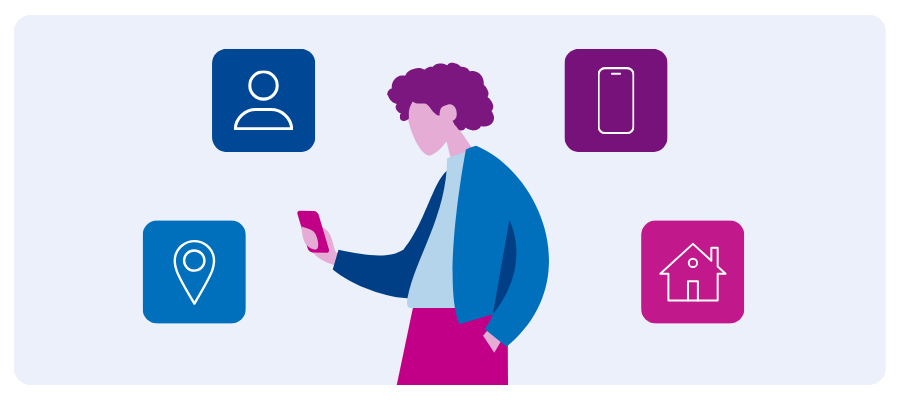
A person looking at their phone with icons for location, individual, phone, and house around them in a circle

By layering third-party data, contextual data, and geolocation data onto your first-party data foundation, your advertising strategies become stronger than if you used any of these sources as standalone solutions.

How do different types of third-party data add depth to audience profiles?

Third-party data expands understanding beyond known customers. If first-party data is the outline, third-party data helps with “character development”—a.k.a., addingdetailto your audience profiles. Good third-party marketing data complements first-party insights with demographic, behavioral, and transactional context, providing the missing puzzle pieces to complete the full customer profile. Filling in gaps in customer understanding helps youidentify, reach, and engage current and new customers more effectively. Third-party data allows brands to build loyalty with consumers by speaking to their interests and intent behind purchases.

Third-party data opens up new targeting tactics for advertisers, such as:

Behavioral

How people engage with brands or how they use social media

Demographic

Age, gender, education, income, and religion

Health

A combination of demographics, behaviors, and health needs

Interest

Delivering ads based on interests, hobbies, or online activities

Location

Where people live, work, or spend large amounts of time

Psychographics

Shared characteristics like attitudes, lifestyles, and interests

Purchases

Using previous purchase behavior to identify the right audiences

In addition to targeting, third-party data also remains critical to AI models, which must train on both structured and unstructured data. At Experian, our AI-powered technology interprets live bidstream data, device activity, content, and timing to optimize in the moment, ensuring campaigns deliver meaningful relevance, not just broader reach.

How are contextual and geographic approaches reshaping audience targeting?

Contextual and geographic approaches to targeting focus on environment and behavior rather than identifiers. Regulatory scrutiny, stricter and more fragmented compliance standards, and rising consumer expectations are transforming how marketers approach third-party data targeting. Evolving privacy laws and inconsistent identifiers across environments require new approaches that balance performance and privacy.

Contextual and geographic targeting help marketers reach relevant audiences while maintaining privacy.

What is data-informed contextual targeting?

Contextual targeting connects audience attributes to the content environments people choose. It helps determine the setting of your story—where your characters spend their time.

Solutions like Experian’s Contextually-Indexed Audiences harness advanced machine learning technology to combine contextual signals (a tried–and-true targeting tactic) with third-party targeting to ensure marketers reach their target audiences on the content they tend to consume, regardless of environment or location. What’s excellent about data-informed contextual targeting is that it moves beyond traditional keyword-based strategies to reach consumers on websites that over-index for visitors with the demographics, behaviors, or interests they are looking to target.

What is data-informed geotargeting?

Geotargeting uses shared location patterns to support relevance at scale. Geotargeting is another possibility for further developing the scene of your story.

People with similar behaviors and interests tend to live in similar areas, which is why so much effort goes into location planning for brick-and-mortar stores. Data-informed geotargeting combines geos with third-party data to make more informed media buys based on common behaviors within a geographic location.

We launched our Geo-Indexed audiences, which use advanced indexing technology to identify and reach consumers based on their geographic attributes. These audiences help marketers discover, segment, and craft messaging for consumers without relying on sensitive personal information, enabling them to reach target audiences while maintaining data privacy confidently.

What role does AI play in third-party data targeting?

AI acts like an automated editor of your book, refining and finding new ways to put valuable third-party audiences and data to work without relying on segments linked to known or disparate identifiers.

We’ve used AI and machine learning at Experian for decades to bring identity, insight, and generative intelligence together so brands and agencies can reach the right people, with relevance, respect, and simplicity.

Why does a balanced, integrated approach that combines first-party, third-party, contextual, and geo-targeting data matter?

The combined effects of integrating third-party, contextual, and geotargeting data (and the marketing tactics it underpins) with first-party data will drive your success.

Think of how any good author crafts a story. Regardless of whether it’s fiction or non-fiction, they draw on both first-person experience and external research and sources to develop their plot. No single data source tells the full story. Integration allows marketers to understand audiences more completely and act with confidence.

Pooling these inputs together moves you closer to your goal of understanding the whole story about your target customers. In fact, an almost even number of marketers plan to use contextual targeting (41%) and first-party data (40%) as their main targeting strategies, amid privacy laws and the loss of persistent advertisers.

Primary data strategyPercent of marketers that plan to use this data strategy
Contextual targeting41%
First-party data40%

A brand with strong first-party insights can extend reach by layering in additional signals. For example, a nutrition brand that knows who purchases protein supplements can expand prospecting by combining:

First-party signals

Customers who purchase protein supplements

Contextual signals

Engagement with fitness blogs, healthy recipe content, or workout apps

Geographic signals

Consumers located in the Greater Philadelphia area

By connecting these inputs, the brand can identify new health-conscious audiences with similar interests and behaviors. This approach supports privacy-safe targeting while improving engagement and performance.

How can marketers build an integrated data strategy in 2026?

An integrated data strategy reduces friction and supports scale. The right data partner offers a unified solution that helps unify data, activate audiences, and adapt as the ecosystem evolves. Here’s how:

Organize data

Create a clean, usable data foundation by eliminating fragmented silos. Experian’s solutions unify disparate data, enabling identity resolution and a single customer view.

Create a complete profile

Experian links a persistent offline core of personally identifiable information (PII) data with fresh digital signals, giving you a high-fidelity view of consumers to decorate with marketing data. This allows for improved customer understanding and personalized marketing that competitors struggle to replicate.

Build addressable audience segments

Create audiences using a mixture of signals, including first-party data, third-party behavioral, interest, and demographic data, as well as contextual signals. If you partner with Experian, you can use audiences built on our identity graph to guarantee accuracy, scale, and maximum addressability.

Drive innovation

Look for partners and platforms that prioritize innovation in finding new ways to reach target audiences across the ecosystem. You don’t want a vendor or a system that can’t keep pace and adapt with our rapidly evolving industry.

Marketers who want to create and activate campaigns more efficiently and effectively in 2026 need an integrated approach that combines first-party, third-party, contextual, and geotargeting data. Streamlining data integration and activation positions brands and agencies for sustainable growth and stronger consumer relationships in a privacy-conscious marketplace.

Build your next chapter on a connected data foundation

As audience strategies evolve, connection and interoperability matter more than ever. Connect with our team to learn how Experian helps marketers unify data, identity, and activation across channels.

This site is protected by reCAPTCHA and the Google Privacy Policy and Terms of Service apply.


About the author

Scott Kozub headshot, VP, Product, Experian

Scott Kozub

VP, Product Management, Experian

Scott Kozub is the Vice President of the Product Management team at Experian Marketing Services working across the entire product portfolio. He has over 20 years of product experience in the marketing and advertising space. He’s been with a few startups and spent many years at FICO and Oracle Data Cloud heavily focused on loyalty marketing and advertising technology.


FAQs

How should CMOs think about data as part of their 2026 audience strategy?

In 2026, CMOs should prioritize and invest in data and targeting strategies that combine first-party, third-party, contextual, and geographic data to drive growth, improve efficiency, and strengthen customer relationships. 

Why is first-party data not sufficient on its own? 

First-party data is not sufficient on its own because first-party data defines known customers but limits reach and frequency. Growth depends on expanding beyond existing relationships. The ability to unify different data sources with accuracy, scale, and privacy at the forefront sits at the core of Experian’s business. We unify household, individual, device, demographic, behavioral, and first-party signals, along with contextual and geographic data points, to build a reliable view of consumers, even when specific signals are missing. This clarity helps you personalize, target, activate, and measure with confidence.

How do different types of third-party data add depth to audience profiles?

Third-party data expands understanding beyond known customers. Third-party data opens up new targeting tactics for advertisers, such as:  
Location: Where people live, work, or spend large amounts of time
Health: A combination of demographics, behaviors, and health needs
Purchases: Using previous purchase behavior to identify the right audiences 
Behavioral: How people engage with brands or how they use social media 
– Interest: Delivering ads based on interests, hobbies, or online activities
Psychographics: Shared characteristics like attitudes, lifestyles, and interests
Demographic: Age, gender, education, income, and religion 
 
In addition to targeting, third-party data also remains critical to AI models, which must train on both structured and unstructured data. At Experian, our AI-powered technology interprets live bidstream data, device activity, content, and timing to optimize in the moment, ensuring campaigns deliver meaningful relevance, not just broader reach. 

What is data-informed contextual targeting?

Data-informed contextual targeting connects audience attributes to the content environments people choose. It helps determine the setting of your story—where your characters spend their time. Experian’s Contextually-Indexed Audiences harness advanced machine learning technology to combine contextual signals (a tried–and-true targeting tactic) with third-party targeting to ensure marketers reach their target audiences on the content they tend to consume, regardless of environment or location.

What is data-informed geotargeting?

Data-informed geotargeting uses shared location patterns to support relevance at scale. Experian launched our Geo-Indexed audiences, which use advanced indexing technology to identify and reach consumers based on their geographic attributes. These audiences help marketers discover, segment, and craft messaging for consumers without relying on sensitive personal information, enabling them to reach target audiences while maintaining data privacy confidently.

What role does AI play in third-party data targeting?

In third-party data targeting, AI refines and finds new ways to put valuable third-party audiences and data to work without relying on segments linked to known or disparate identifiers. We’ve used AI and machine learning at Experian for decades to bring identity, insight, and generative intelligence together so brands and agencies can reach the right people, with relevance, respect, and simplicity. 


Latest posts

Loading…
10 political personas to use in political digital marketing campaigns

In this blog post…What is political campaign marketing?Benefits of digital marketing in political campaignsExperian's political personasHow to combine our political personas with other audiences In the American political landscape, understanding the intricacies of voters' attitudes and behaviors has never been more crucial. With the 2024 election season on the horizon, the challenge lies in moving beyond broad categorizations like "Democrat," "Republican," or "Independent." Voters seek candidates who resonate with their beliefs and values. To meet this challenge, Experian has created political personas that offer a nuanced understanding of American voters. In this blog post, we’ll explore how these Experian audiences can help you tailor your engagement strategies for the upcoming election cycle. Before we dive into our political personas, let's break down what political campaign marketing is and six benefits of using digital marketing in political campaigns. What is political campaign marketing? Political campaign marketing is the strategic engine that drives candidates toward electoral success. It involves crafting and sending out tailored messages to effectively reach constituents to inform them about candidates’ stances on key issues. Think of it as the art of narrative construction, using various communication channels—from traditional media to digital platforms—to engage and mobilize supporters. In an era marked by information saturation, effective campaign marketing serves to cut through the noise to deliver compelling messages that inform, inspire, and spur action. Benefits of digital marketing in political campaigns As the 2024 election approaches, using digital marketing in political campaigns becomes paramount to effectively reach and influence voters where they spend a significant portion of their time—online. Kamala Harris's entry into the race has shifted spending priorities, particularly in critical states such as Ohio, where the Senate race has already attracted $300 million in ad spending. Political ad spend on connected TV (CTV) is expected to rise significantly, from 2.7% in 2020 to 12.8% this year. The Harris campaign is spearheading this trend, dedicating $200 million to digital ads, with a substantial portion directed toward streaming platforms. Embracing digital marketing can help campaigns effectively shape opinions and mobilize support. Here are five key benefits of integrating digital marketing strategies into political campaigns: Unparalleled reach with targeted advertising: A well-connected digital platform partner can help you reach your target audiences across the ecosystem – from social to the open web. Optimization flexibility: Digital marketing allows for quick adjustments in response to real-time data and evolving circumstances. Interactive engagement: The interactive nature of digital channels creates meaningful engagement and dialogue between candidates and voters, building connections and community. Insights: Robust analytics provide valuable insights into audience behavior and preferences, facilitating continuous optimization and refinement of outreach efforts. Amplified messaging: Through digital marketing, political campaigns can amplify their message, mobilize support, and forge deeper connections with voters. Data serves as the foundation for these benefits. Interactivity hinges on data to deliver the right message and creative for engagement. Insights are gained through pre-campaign research, analyzing audience attributes to grasp their interests and behaviors. Flexibility relies on real-time campaign data, a unique advantage in digital marketing. In an era where audiences are available readily on most major activation platforms, advertisers need to understand how audiences are built to be privacy conscious and consistent in a cookieless environment. Experian’s political personas Digital marketing in political campaigns is crucial to reach and influence voters online. Integrating Experian's political personas into your political campaign strategy can help you grasp the complexities of today's American voter landscape and craft tailored engagement strategies. These personas offer invaluable insights into voter viewpoints on key political issues, enriching digital marketing efforts and empowering campaigns to connect with constituents more effectively. Experian has created 10 political personas to help you better understand today’s American voter so you can reach consumers based on their viewpoints into key political issues.  Our political personas group voters along the political spectrum from most “committed” on the ends of the spectrum. Let’s walk through how we define each persona starting from the most “committed” personas on the ends of the spectrum. Committed Democrats This audience contains consumers who are likely to have a "very liberal” outlook on political issues. They have strong liberal opinions on various topics including key issues and the economy and are very involved in their communities. Committed Republicans This audience contains consumers who are likely to have a "very conservative” outlook on political issues. They are well-informed, community-minded individuals with strong opinions that reflect their conservatism. They have very conservative attitudes regarding key social issues. Moderate Democrats This audience contains consumers who are likely to have a “somewhat liberal” outlook on political issues. Moderate Republicans This audience contains consumers who are likely to have a “somewhat conservative” outlook on political issues. Political Leaning Liberals This audience contains consumers who are likely to have strong opinions on key issues that may not align with the traditional Democrat point of view. Political Leaning Conservatives This audience contains consumers who are likely on-the-fence on traditional Republican points of view on key issues. Liberal Leaning Independents This audience contains consumers who are registered independents and who are likely to have a “middle of the road” outlook on political issues while tending to lean more liberal. Conservative Leaning Independents This audience contains consumers who are likely registered independents and likely have a "middle-of-the-road” outlook on political issues while tending to lean more conservative. Political Unregistered Liberal Leaning This audience contains consumers who are not likely to have aligned with a specific party, but have a more liberal attitude. They are well-informed and are aware of important political issues. They frequently align with but are not necessarily completely aligned with liberal points of view. Political Unregistered Conservative Leaning This audience contains consumers who are not likely to have aligned with a specific party, but have a more conservative attitude. They are well-informed and are aware of important political issues. They frequently align with but are not necessarily completely aligned with conservative points of view.    These 10 personas can help you better understand who the American voter is, but when combined with our 200 politically relevant audiences, such as watches political TV, donations to charitable causes, engagement channel preferences, hobbies, and more, the ability to study and improve engagement for each persona is considerably magnified. How to combine our political personas with other audiences If you're a political candidate looking to reach an important population, Experian audiences are available on-the-shelf of major platforms. For example, if you want to reach unregistered voters and independent voters to influence green initiatives within your community, you can focus on unregistered and moderate personas in the area and combine that with audiences interested in green initiatives, like our GreenAware segments – which predict a consumer’s attitude and point of view on environmental issues. You can use our "Political Unregistered Liberal Leaning", "Liberal Leaning Independents," and GreenAware “Think Greens” audience segments to reach constituents who are likely to be most interested in your message. To reach voters based on their regional voting patterns, you can use our new battleground counties and district audiences: Affiliation Switcher Counties   Battleground Counties  House Battleground Districts  Democrat Counties Republican Counties Independent Counties Add Experian’s audiences to your 2024 election strategy Political advertising spend is projected to surpass $12 billlion in the 2024 election cycle, generating the largest amount of voter outreach in the history of American elections. Experian’s audiences are available on major activation platforms allowing you to strategically reach constituents who would be most impacted and interested in your initiatives. As we approach a cookieless future, Experian’s political personas are cookie resilient. Our data is rooted in both offline and online data that doesn’t rely on third-party cookies. The personas do not rely on an individual’s browsing behavior. Experian can help our partners understand and engage with these political audiences. Over 200 politically relevant Experian audiences are available for activation on-the-shelf of the leading TV, demand, and supply platforms. Here are the platforms where you can find our political audiences: ArcSpan Audigent Cadent Eyeota Magnite Microsoft Nexxen Pandora Permutive Samsung Ads The Trade Desk Verizon Media Viant Videoamp Yieldmo Can’t find the audience you’re looking for or need a custom audience? Connect with our audience team for more information. Connect with our audience team Contact us Latest posts

Apr 23,2024 by Experian Marketing Services

TV measurement 2024: Navigating identity, impressions, and interoperability

As audiences shift from linear TV to streaming and digital platforms, measurement is becoming more complex and critical. In 2024, brands that can unify impressions across channels, resolve identity, and connect measurement to business outcomes will gain a significant advantage.   Here’s what advertisers and platforms need to know.  Why TV measurement is under pressure One name has long stood as the bedrock in TV measurement: Nielsen.  Nielsen Nielsen is a leading provider of TV audience measurement and analytics. It is known for its TV rating system, which tracks viewership across various demographics and time slots. Nielsen’s data is used by media companies, advertisers, and broadcasters to understand audience preferences, develop, and plan advertising campaigns, and monitor program performance. Nielsen’s recent global expansion Nielsen has continued to expand its global coverage and now fully represents 100% of TV households in the continental U.S., delivering comprehensive and accurate audience measurement. Through this expansion, Nielsen has remained a go-to resource for domestic and international television analytics. In 2021, Nielsen faced a significant setback when it was stripped of its MRC (Media Rating Council) accreditation, sending shockwaves through the industry. While the accreditation was eventually reinstated in 2023, the incident underscored the need for diversification and alternatives within TV measurement. TV measurement competitor outlook For decades, advertisers and agencies have relied on Nielsen's metrics as the gold standard, a trusted source of data guiding ad spending and campaign strategies. However, recent developments have shaken this foundation, prompting a reevaluation of the TV measurement landscape. One notable trend emerging in TV measurement in 2024 is the increasing interest in alternative measurement providers. As advertisers seek greater transparency, accuracy, and flexibility in measurement, many are exploring options beyond Nielsen. These providers offer distinct advantages and drawbacks, presenting advertisers and agencies with a wealth of options and considerations. Panel-based TV measurement providers Panel-based TV measurement has long been a staple in the industry, relying on representative samples of viewers to extrapolate audience behavior. In 2024, several providers offer panel-based solutions, each with different strengths. Comscore Comscore is a key player in panel-based TV measurement, offering comprehensive audience measurement solutions for both linear and digital television. With its massive panel of opted-in households, Comscore provides advertisers with detailed demographic and behavioral insights, enabling targeted advertising strategies. Comscore recently earned MRC accreditation for total household and average audience measurement in national and local TV reports. Kantar Media Kantar Media offers a range of panel-based TV measurement services, including audience measurement, ad effectiveness measurement, and competitive intelligence. With its global footprint and deep expertise in media analytics, Kantar Media helps advertisers understand audience trends and optimize their media investments. Kantar Media is currently working to create a cross-media measurement panel similar in size to what Nielsen offers. While Kantar Media does not presently operate in the U.S. TV measurement market, it would be a formidable competitor should it move into the arena. ACR-based TV measurement providers Automatic content recognition (ACR) technology has revolutionized TV measurement, allowing for real-time monitoring of content consumption across devices. In 2024, several providers use ACR technology to deliver innovative measurement solutions. iSpot.TV iSpot.TV has emerged as a leading provider of ACR-based TV measurement, using its advanced technology stack to capture and analyze TV ad exposures in real-time. Through its acquisition of 605, iSpot.TV strengthens its position in the market, offering advertisers enhanced audience targeting and attribution capabilities. iSpot.tv’s ad catalog and ad occurrence data are fully accredited by the MRC, which is one of its strongest assets. Watch our Ask the Expert with 605 here Samba TV Samba TV offers a comprehensive ACR-based TV measurement platform, providing advertisers with insights into audience behavior across linear, streaming, and connected TV environments. With its robust data infrastructure and machine learning algorithms, Samba TV enables advertisers to optimize their TV advertising campaigns for maximum impact. Samba has recently partnered with HyphaMetrics to create an alternative panel to compete with others in the market. TVision TVision is a smaller competitor in this group that blends ACR-based TV measurement solutions with a panel-based approach, offering advertisers and networks real-time visibility into viewer engagement and attention metrics. By tracking viewer attention and emotional response, TVision helps advertisers understand the effectiveness of their TV ad campaigns and make data-driven decisions. Four common misconceptions in CTV advertising Advantages of alternative measurement providers  As the TV measurement landscape evolves in 2024, alternative providers present compelling advantages over traditional approaches, with three key benefits to consider.  Diverse data sources: Alternative providers use a wide array of data sources, including set-top boxes, smart TVs, streaming platforms, and digital devices, offering a more comprehensive view of audience behavior.  Granular insights: Many alternative providers offer granular insights into viewer demographics, preferences, and engagement metrics, allowing for more targeted and effective advertising strategies.  Real-time analytics: Some providers deliver real-time insights that let advertisers optimize campaigns on the fly and quickly act on emerging trends.  Learn how our Digital Graph creates a unified view across TV and digital Challenges with alternative measurement providers Alternative providers face several key challenges that need to be addressed before they are widely adopted. Let's dive into each challenge in more detail. Fragmentation With multiple providers using different methodologies and metrics, achieving standardization and comparability across campaigns can be a daunting task. With the proliferation of over-the-top (OTT) services, the TV measurement landscape has become increasingly complex, with new platforms emerging regularly. While ACR technology has enhanced data collection directly from televisions, the market remains highly fragmented, with many manufacturers (like Vizio, LG, and Samsung) building their own ACR solutions. We've teamed up with both LG and Samsung to make our identity and audience solutions available directly within their platforms, enhancing targeting, activation, and measurement capabilities for advertisers in the CTV space. Data privacy concerns As TV measurement becomes increasingly data-driven, concerns around consumer privacy and data ethics loom large, necessitating robust privacy protocols and compliance measures. We’ve already seen lawsuits around the ACR approach to TV measurement. Education and adoption Shifting away from the familiar territory of Nielsen requires education and buy-in from stakeholders, including advertisers, agencies, and media buyers, which can be a gradual and iterative process. See how we help Optimum Media connect every screen to real results Next steps for an identity graph in TV measurement As the TV measurement landscape trends toward a blend of options instead of singular approaches, the ability to identify and target audiences across platforms is crucial. An identity graph serves as a foundational tool that can enable brands and advertisers to resolve disparate data sources into a unified view of the consumer. Experian’s Digital Graph includes more than 4 billion digital identifiers in the U.S., such as mobile ad IDs (MAIDs), universal IDs, connected TV (CTV) IDs, third-party cookies, and hashed emails (HEMs). Representing 250 million individuals and 275 million CTV IDs, it helps advertisers maintain consumer connections as signals fade. Our ability to merge offline and digital data delivers stronger ID resolution, cross-channel attribution, and clearer insights into audiences across streaming, linear, and digital environments.  And because identity is only as powerful as the activation it enables, Experian’s data marketplace makes these audiences directly addressable across TV platforms. Advertisers can seamlessly activate custom audience segments for CTV, streaming, and linear partners – all while maintaining the same identity foundation across planning, targeting, and measurement.  As advertisers navigate the complexities of the TV measurement landscape in 2024, combining Experian’s Digital Graph, Offline Graph, and data marketplace will be essential for building effective cross-channel advertising strategies and maximizing ROI.  Learn how our Digital Graph strengthened MiQ's Identity Spine How Experian supports TV measurement Experian has been in the TV measurement space for decades and offers flexible attribution reports that can attribute media spend on TV to real actions or outcomes, such as website visits, physical location visits, and online and offline sales. We also have unique data through our automotive and financial databases that can be used for attribution. Through our Consumer Sync solutions, you can elevate your attribution quality to understand the true path to conversion by linking all digital touchpoints to a single person. The next frontier of TV measurement TV measurement in 2024 presents both challenges and opportunities for understanding audience behaviors and preferences. We anticipate a continued migration toward alternative providers as advertisers seek greater flexibility and accuracy in measurement. We expect a fragmented future for TV measurement, where data sources extend beyond traditional giants like Nielsen to include numerous smaller players. Despite the entrenched role of linear TV measurement, advertisers must adapt to a blend of data from diverse sources to navigate the evolving landscape. Read our playbook on how to capture future buyers on FAST At Experian, we have the solutions to help you tackle 2024 marketing trends and make the most of your consumer marketing data. Our Graph enables seamless tracking across devices and channels, allowing us to implement first-touch, last-touch, and multi-touch attribution models with unparalleled accuracy. By harnessing the capabilities of our Graph, our attribution solutions can assign value to every crucial touchpoint in the customer journey, giving you a more holistic and comprehensive view of your campaign performance. Connect with an Experian expert to learn more about how we can help you succeed in your marketing efforts. Connect with us today Latest posts FAQs What is TV measurement? TV measurement is the process of tracking how viewers consume content across linear, streaming, and connected TV (CTV), and connecting those impressions to advertising outcomes. Who is TV measurement designed for?  TV measurement is built for advertisers, agencies, media owners, and platforms that need to understand reach, frequency, and ROI across fragmented TV and digital ecosystems. What types of TV measurement solutions exist today? There are panel-based providers (like Nielsen and Comscore), ACR-based providers (like iSpot.TV, Samba TV, and TVision), and hybrid or identity-based approaches that unify signals across channels. How do alternative providers ensure accuracy and performance? Many rely on diverse data sources (set-top boxes, smart TVs, streaming platforms) and identity graphs to improve match rates, reduce duplication, and deliver a more complete view of audiences. Is TV measurement privacy-compliant?  Yes. Leading providers, including Experian, build privacy and compliance into their solutions.  What makes Experian’s approach different from other providers?  Experian uniquely combines offline and digital data within its identity graph, enabling precise ID resolution, cross-channel attribution, and outcome-based measurement that connects media spend to real actions. Where can I learn more or get started? You can explore Experian’s measurement solutions or connect with an Experian expert for a personalized walkthrough.

Apr 16,2024 by Experian Marketing Services

Top 10 audiences for Q2

At Experian, we understand the critical role that audience targeting plays in the success of marketing campaigns. That's why we're excited to share this curated list, aimed at helping agencies and media buyers plan their campaigns and effectively reach their audiences with precision and confidence. What separates Experian's syndicated audiences Experian’s 2,400+ syndicated audiences are available directly on over 30 leading television, social, programmatic advertising platforms, and directly within Audigent for activation within private marketplaces (PMPs). Reach consumers based on who they are, where they live, and their household makeup. Experian ranked #1 in accuracy by Truthset for key demographic attributes. Access to unique audiences through Experian’s Partner Audiences available on  Experian’s data marketplace, within Audigent for activation in PMPs and directly on platforms like DirectTV, Dish, Magnite, OpenAP, and The Trade Desk. Here's a look at the Experian audiences that were the most popular in Q2 2023. Which ones will you add to your Q2 campaign planning? Our top 10 audiences for Q2 Fitness enthusiast Lifestyle and Interests (Affinity) > Health & Fitness > Fitness Enthusiast In-store high spender on baby products Retail Shoppers: Purchase Based > Shopping Behavior > Baby Products: In Store High Spenders Has a bachelor’s degree Demographics > Education > Bachelor Degree In-market for an SUV and CUV Autos, Cars and Trucks > In Market-Body Styles > SUV and CUV In-market for a mid-size truck Autos, Cars and Trucks > In Market-Body Styles > Mid-Size Truck Homeowner Demographics > Homeowners/Renters > Homeowner In-market for a small, mid-size SUV Autos, Cars and Trucks > In Market-Body Styles > Small Mid-Size SUV In-market for a full-size truck Autos, Cars and Trucks > In Market-Body Styles > Full-Size Trucks In-market for a full-size SUV Autos, Cars and Trucks > In Market-Body Styles > Full-Size SUVs Household income level Demographics > Household Income (HHI) > $75,000+ Our top 5 audiences by vertical Which audience segments were the most popular by advertiser vertical? Advanced TV Household income level Demographics > Household Income (HHI) > $75,000-$99,999 Interested in dogs Lifestyle and Interests (Affinity) > Pets > Dogs (FLA / Fair Lending Friendly)1 Homeowner Demographics > Homeowner/Renter > Homeowner Household income level Demographics > Household Income (HHI) > $100,000-$124,999 Interested in arts and entertainment Lifestyle and Interests (Affinity) > Art and Entertainment > Visual Art and Design (FLA / Fair Lending Friendly) Agency Dog owner Lifestyle And Interests (Affinity) > Pets > Dog Owners Cat owner Lifestyle And Interests (Affinity) > Pets > Cat Owners Active investor Lifestyle And Interests (Affinity) > Investors > Active Investor Mutual fund investor Lifestyle And Interests (Affinity) > Investors > Mutual Fund Investor In-market for a full-size SUV Autos, Cars and Trucks > In Market-Body Styles > Full-Size SUVs Auto In-market for a new car Autos, Cars and Trucks > In Market-New/Used > New Car In-market for a used car Autos, Cars and Trucks > In Market-New/Used > Buyer Used In-market for a Honda Autos, Cars And Trucks > In Market-Make And Models > Honda In-market for an auto loan Financial FLA Friendly > In Market Auto Loan In-market for an auto lease Financial FLA Friendly > In Market Auto Lease Did you know? Consumers looking to buy a new vehicle prefer streaming TV, digital newspapers, and email for communication2. By merging our TrueTouchTM engagement channel audiences with our Auto in-market audiences, you can effectively target these consumers through their preferred channels. TrueTouch facilitates personalized advertising campaigns by predicting consumer preferences, ensuring messaging styles align with the right channels and calls to action. By understanding what types of media people prefer, you can match the best way to talk to them with what to offer, using the right channels for personalized ads. No consumer is the same – and you need to engage with them on their terms to successfully market to them. Financial Active in the military Lifestyle And Interests (Affinity) > Occupation > Military – Active In-market for a credit union loan Financial FLA Friendly > In Market Credit Union Loan 40-49 years old Demographics > Ages > 40-49 30-39 years old Demographics > Ages > 30-39 Small business owner Consumer Behaviors > Occupation: Small Business Owners Health 25-29 years old Demographics > Ages > 25-29 30-34 years old Demographics > Ages > 30-34 Weight conscious Lifestyle and Interests (Affinity) > Health & Fitness > Weight Conscious Moms interested in fitness Lifestyle and Interests (Affinity) > Moms, Parents, Families > Fitness Mothers High spenders at vitamin/supplement stores Retail Shoppers: Purchase Based > Health and Fitness > Vitamins/Supplements: Vitamins/Supplements Retail & CPG Dog owners Lifestyle And Interests (Affinity) > Pets > Dog Owners Cat owners Lifestyle And Interests (Affinity) > Pets > Cat Owners Fitness enthusiast Lifestyle and Interests (Affinity) > Health & Fitness > Fitness Enthusiast Interested in healthy living Lifestyle and Interests (Affinity) > Health & Fitness > Healthy Living High spenders at vitamin/supplement stores Retail Shoppers: Purchase Based > Health and Fitness > Vitamins/Supplements: Vitamins/Supplements Activate the right audiences with Experian When you choose Experian’s syndicated audiences, you gain access to over 2,400 audiences that span across 15 verticals and categories. These audiences are directly available for activation on over 30 platforms and can be sent to over 200 media platforms. Experian is ranked #1 for data accuracy (as validated by Truthset) and Experian Marketing Data is the foundation for successful targeting, enrichment, and activation. For a full list of Experian's syndicated audiences and activation destinations, download our syndicated audiences guide. Need a custom audience? We can help you build and activate an Experian audience on the platform of your choice. Connect with our audience team Check out other seasonal audiences you can activate today. Contact us Footnotes Fair Lending Act Friendly audiences: “Fair Lending Friendly” indicates data fields that Experian has made available without use of certain demographic attributes that may increase the likelihood of discriminatory practices prohibited by the Fair Housing Act (“FHA”) and Equal Credit Opportunity Act (“ECOA”). These excluded attributes include, but may not be limited to, race, color, religion, national origin, sex, marital status, age, disability, handicap, family status, ancestry, sexual orientation, unfavorable military discharge, and gender. Experian’s provision of Fair Lending Friendly indicators does not constitute legal advice or otherwise assure your compliance with the FHA, ECOA, or any other applicable laws. Clients should seek legal advice with respect to your use of data in connection with lending decisions or application and compliance with applicable laws. Experian looked at our Auto and TrueTouch audience data to understand media preference trends over the past year. Latest posts

Apr 09,2024 by Experian Marketing Services

Subscribe to our newsletter

Enter your name and email for the latest updates

This site is protected by reCAPTCHA and the Google Privacy Policy and Terms of Service apply.

About Experian Marketing Services

At Experian Marketing Services, we use data and insights to help brands have more meaningful interactions with people. As leaders in the evolution of the advertising landscape, Experian Marketing Services can help you identify your customers and the right potential customers, uncover the most appropriate communication channels, develop messages that resonate, and measure the effectiveness of marketing activities and campaigns.

Visit our website

Subscribe to our newsletter

Stay up to date on the latest industry news and receive expert tips from our marketing experts.
Subscribe now!