At A Glance
Your audience strategy works like a story. First-party data sets the outline, but scale and relevance come from connecting additional signals such as contextual, geographic, and behavioral data. Experian helps CMOs unify these inputs through identity, enabling consistent activation, privacy-forward targeting, and measurable outcomes as marketing strategies evolve in 2026.How should CMOs think about data as part of their audience strategy?
The best digital marketers possess excellent storytelling capabilities—and they fuel the plot with data.
When you think about it, your audience strategy is the whole story, and the type of data you use helps create each chapter. Just as any good book incorporates numerous literary devices, you must use more than one type of data to develop a dynamic, relevant, and timely narrative that captures your target users’ attention.
In 2026, marketers should prioritize and invest in data and targeting strategies beyond just first-party to drive growth, improve efficiency, and strengthen customer relationships.

Our 2026 Digital trends and predictions report is available now and reveals five trends that will define 2026. From curation becoming the standard in programmatic to AI moving from hype to implementation, each trend reflects a shift toward more connected, data-driven marketing. The interplay between them will define how marketers will lead in 2026.
Why is first-party data not sufficient on its own?
First-party data provides a strong foundation for targeting and measurement. It reflects information consumers have shared directly through brand interactions. That makes it reliable and central to audience strategy.
That foundation alone does not tell the full story. First-party data defines known customers, but limits reach and frequency. Growth depends on expanding beyond existing relationships.
Think of first-party data as a way to create an outline, not the whole story, about your target audiences—the main characters in your marketing. To flesh out the entire narrative about them, you must source, connect, and activate additional data.
The ability to unify different data sources with accuracy, scale, and privacy at the forefront sits at the core of Experian’s business. We unify household, individual, device, demographic, behavioral, and first-party signals, along with contextual and geographic data points, to build a reliable view of consumers, even when specific signals are missing. This clarity helps you personalize, target, activate, and measure with confidence.
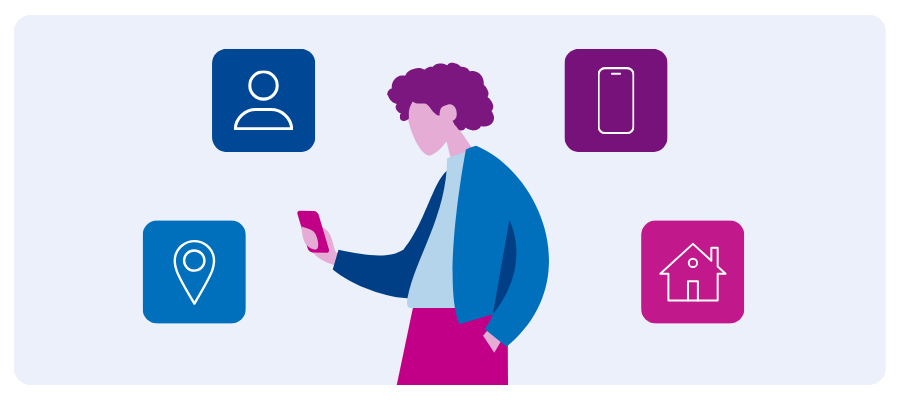
By layering third-party data, contextual data, and geolocation data onto your first-party data foundation, your advertising strategies become stronger than if you used any of these sources as standalone solutions.
How do different types of third-party data add depth to audience profiles?
Third-party data expands understanding beyond known customers. If first-party data is the outline, third-party data helps with “character development”—a.k.a., addingdetailto your audience profiles. Good third-party marketing data complements first-party insights with demographic, behavioral, and transactional context, providing the missing puzzle pieces to complete the full customer profile. Filling in gaps in customer understanding helps youidentify, reach, and engage current and new customers more effectively. Third-party data allows brands to build loyalty with consumers by speaking to their interests and intent behind purchases.
Third-party data opens up new targeting tactics for advertisers, such as:
In addition to targeting, third-party data also remains critical to AI models, which must train on both structured and unstructured data. At Experian, our AI-powered technology interprets live bidstream data, device activity, content, and timing to optimize in the moment, ensuring campaigns deliver meaningful relevance, not just broader reach.
How are contextual and geographic approaches reshaping audience targeting?
Contextual and geographic approaches to targeting focus on environment and behavior rather than identifiers. Regulatory scrutiny, stricter and more fragmented compliance standards, and rising consumer expectations are transforming how marketers approach third-party data targeting. Evolving privacy laws and inconsistent identifiers across environments require new approaches that balance performance and privacy.
Contextual and geographic targeting help marketers reach relevant audiences while maintaining privacy.
What is data-informed contextual targeting?
Contextual targeting connects audience attributes to the content environments people choose. It helps determine the setting of your story—where your characters spend their time.
Solutions like Experian’s Contextually-Indexed Audiences harness advanced machine learning technology to combine contextual signals (a tried–and-true targeting tactic) with third-party targeting to ensure marketers reach their target audiences on the content they tend to consume, regardless of environment or location. What’s excellent about data-informed contextual targeting is that it moves beyond traditional keyword-based strategies to reach consumers on websites that over-index for visitors with the demographics, behaviors, or interests they are looking to target.
What is data-informed geotargeting?
Geotargeting uses shared location patterns to support relevance at scale. Geotargeting is another possibility for further developing the scene of your story.
People with similar behaviors and interests tend to live in similar areas, which is why so much effort goes into location planning for brick-and-mortar stores. Data-informed geotargeting combines geos with third-party data to make more informed media buys based on common behaviors within a geographic location.
We launched our Geo-Indexed audiences, which use advanced indexing technology to identify and reach consumers based on their geographic attributes. These audiences help marketers discover, segment, and craft messaging for consumers without relying on sensitive personal information, enabling them to reach target audiences while maintaining data privacy confidently.
What role does AI play in third-party data targeting?
AI acts like an automated editor of your book, refining and finding new ways to put valuable third-party audiences and data to work without relying on segments linked to known or disparate identifiers.
We’ve used AI and machine learning at Experian for decades to bring identity, insight, and generative intelligence together so brands and agencies can reach the right people, with relevance, respect, and simplicity.
Why does a balanced, integrated approach that combines first-party, third-party, contextual, and geo-targeting data matter?
The combined effects of integrating third-party, contextual, and geotargeting data (and the marketing tactics it underpins) with first-party data will drive your success.
Think of how any good author crafts a story. Regardless of whether it’s fiction or non-fiction, they draw on both first-person experience and external research and sources to develop their plot. No single data source tells the full story. Integration allows marketers to understand audiences more completely and act with confidence.
Pooling these inputs together moves you closer to your goal of understanding the whole story about your target customers. In fact, an almost even number of marketers plan to use contextual targeting (41%) and first-party data (40%) as their main targeting strategies, amid privacy laws and the loss of persistent advertisers.
| Primary data strategy | Percent of marketers that plan to use this data strategy |
| Contextual targeting | 41% |
| First-party data | 40% |
A brand with strong first-party insights can extend reach by layering in additional signals. For example, a nutrition brand that knows who purchases protein supplements can expand prospecting by combining:
By connecting these inputs, the brand can identify new health-conscious audiences with similar interests and behaviors. This approach supports privacy-safe targeting while improving engagement and performance.
How can marketers build an integrated data strategy in 2026?
An integrated data strategy reduces friction and supports scale. The right data partner offers a unified solution that helps unify data, activate audiences, and adapt as the ecosystem evolves. Here’s how:
Marketers who want to create and activate campaigns more efficiently and effectively in 2026 need an integrated approach that combines first-party, third-party, contextual, and geotargeting data. Streamlining data integration and activation positions brands and agencies for sustainable growth and stronger consumer relationships in a privacy-conscious marketplace.
Build your next chapter on a connected data foundation
As audience strategies evolve, connection and interoperability matter more than ever. Connect with our team to learn how Experian helps marketers unify data, identity, and activation across channels.
About the author

Scott Kozub
VP, Product Management, Experian
Scott Kozub is the Vice President of the Product Management team at Experian Marketing Services working across the entire product portfolio. He has over 20 years of product experience in the marketing and advertising space. He’s been with a few startups and spent many years at FICO and Oracle Data Cloud heavily focused on loyalty marketing and advertising technology.
FAQs
In 2026, CMOs should prioritize and invest in data and targeting strategies that combine first-party, third-party, contextual, and geographic data to drive growth, improve efficiency, and strengthen customer relationships.
First-party data is not sufficient on its own because first-party data defines known customers but limits reach and frequency. Growth depends on expanding beyond existing relationships. The ability to unify different data sources with accuracy, scale, and privacy at the forefront sits at the core of Experian’s business. We unify household, individual, device, demographic, behavioral, and first-party signals, along with contextual and geographic data points, to build a reliable view of consumers, even when specific signals are missing. This clarity helps you personalize, target, activate, and measure with confidence.
Third-party data expands understanding beyond known customers. Third-party data opens up new targeting tactics for advertisers, such as:
– Location: Where people live, work, or spend large amounts of time
– Health: A combination of demographics, behaviors, and health needs
– Purchases: Using previous purchase behavior to identify the right audiences
– Behavioral: How people engage with brands or how they use social media
– Interest: Delivering ads based on interests, hobbies, or online activities
– Psychographics: Shared characteristics like attitudes, lifestyles, and interests
– Demographic: Age, gender, education, income, and religion
In addition to targeting, third-party data also remains critical to AI models, which must train on both structured and unstructured data. At Experian, our AI-powered technology interprets live bidstream data, device activity, content, and timing to optimize in the moment, ensuring campaigns deliver meaningful relevance, not just broader reach.
Data-informed contextual targeting connects audience attributes to the content environments people choose. It helps determine the setting of your story—where your characters spend their time. Experian’s Contextually-Indexed Audiences harness advanced machine learning technology to combine contextual signals (a tried–and-true targeting tactic) with third-party targeting to ensure marketers reach their target audiences on the content they tend to consume, regardless of environment or location.
Data-informed geotargeting uses shared location patterns to support relevance at scale. Experian launched our Geo-Indexed audiences, which use advanced indexing technology to identify and reach consumers based on their geographic attributes. These audiences help marketers discover, segment, and craft messaging for consumers without relying on sensitive personal information, enabling them to reach target audiences while maintaining data privacy confidently.
In third-party data targeting, AI refines and finds new ways to put valuable third-party audiences and data to work without relying on segments linked to known or disparate identifiers. We’ve used AI and machine learning at Experian for decades to bring identity, insight, and generative intelligence together so brands and agencies can reach the right people, with relevance, respect, and simplicity.
Latest posts
Experian, the leader in powering data-driven advertising through connectivity, is thrilled to unveil our latest solution, Digital Graph and Marketing Attributes. This joint solution supplies marketers and platforms with the insights and connectivity needed to understand who their customers are and reach them across digital channels. The uncertainty around third-party cookies in Chrome and the overall decline in signal complicates the industry’s ability to reach the right consumer. Omnichannel media consumption results in scattered data, making it harder for marketers and platforms to understand consumer behavior and reach them across channels. These challenges call for a comprehensive solution. Our Digital Graph and Marketing Attributes solution addresses these challenges by providing identifiers for seamless cross-channel engagement. By adding Marketing Attributes, like demographic and behavioral data, marketers and platforms also gain a better understanding of their customers. This solution uses Experian’s Living Unit ID (LUID) to combine offline and digital data, giving customers deeper insights into consumer behavior, greater audience reach, and improved cross-channel visibility. Benefits of Digital Graph and Marketing Attributes Both our Digital Graph and Marketing Attributes provide value to clients as standalone products. When clients license our Digital Graph and Marketing Attributes joint solution, they have more data at their fingertips, unlocking: Consumer connectivity: When clients license Experian’s Digital Graph, they get access to digital identifiers like mobile ad IDs (MAIDs), connected TV (CTV) IDs, hashed emails (HEMs), and universal IDs so they can target the right consumers with the relevant messages across all digital media channels. Consumer insights: Experian’s 5,000 Marketing Attributes provide our clients with detailed consumer information and insights, such as age, gender, purchase behaviors, and content consumption habits. Marketing Attributes help clients create more relevant messaging and informed audience segmentation. Client examples How OpenX offers richer targeting and more connectivity with Experian OpenX is an independent omni-channel supply-side platform (SSP) and a global leader in audience, data, and identity-targeting. With industry-leading technology, exceptional client service, and extensive scalability across all formats, including CTV, app, mobile web, and desktop, OpenX has a legacy of innovating products that enhance buyer outcomes and publisher revenue while addressing complex challenges in programmatic. In recent years, OpenX has licensed Experian’s Digital Graph with identifiers, contributing to the SSP’s largest independent supply-side identity graph, which offers advanced audiences to buyers and improved data resolution to content owners. More recently, OpenX licensed Experian’s Marketing Attributes to enrich its supply-side identity graph, which includes IPs, MAIDs, and client IDs, with a variety of attributes. This strategic move has helped OpenX’s clients benefit from enhanced consumer insights and addressability, in turn delivering greater reach to the demand side and higher revenue for publishers, despite industry signal loss. "We built on our long-term partnership with Experian to enrich our digital IDs with Experian’s Marketing Attributes, which help provide buyers better insights to audiences, thereby helping our publishers monetize their inventory. With partners like Experian, OpenX effectively facilitates the value exchange between demand and supply, ensuring our partners are able to drive results for their business in the era of signal loss"Craig Golaszewski, Sr. Director of Strategic Partnerships, OpenX How StackAdapt licenses our product bundle to address three different use cases StackAdapt is the multi-channel programmatic advertising platform trusted by marketers to deliver exceptional campaigns. They drive superior results through a variety of solutions, like contextual and first-party targeting, brand lift measurement, and optimization through insights. StackAdapt licensed a similar yet unique product combination, our Digital Graph and our Audiences. StackAdapt uses the Digital Graph to allow clients to onboard their first-party data in a seamless, self-serve manner that allows them to further segment their data using Experian Audiences. “StackAdapt has been recognized as the most trusted programmatic platform by marketers, and with the integration of Experian’s Digital Graph and Audiences, we are strengthening our leadership in the space. This partnership improves our ability to deliver precise cross-channel segmentation, reach, and measurement, helping advertisers run more successful campaigns. Our collaboration with Experian allows us to offer a differentiated solution in the market and ensure our clients can deliver the most precise and impactful ads to their audiences.”Denis Loboda, Senior Director of Data, StackAdapt We recently announced a new partnership with StackAdapt. This collaboration brings the power of Experian's identity graph, syndicated and custom audiences directly to the StackAdapt platform. Read the full details in our press release here. Four ways to use Digital Graph and Marketing Attributes When these two products come together, our clients have a 360-degree view of their consumers, which helps them power four critical use cases: Analytics and insights: Learn more about your consumers by connecting our Marketing Attributes with our Digital Graph's identifiers. For example, a retailer can discover that their recent customers over-index as pickleball fans and players, leading the retailer to sponsor a professional pickleball event. Inventory monetization: When supply-side partners know their audience better, they can attract advertisers in search of that audience. For example, a publisher might find out that their audience is full of pickleball fans, leading them to reach out to brands that want to reach this audience. Activation: Companies with access to more digital identifiers from our Digital Graph can reach more people, while controlling frequency across channels. A company might know that they want to reach pickleball fans. Now, they have the digital identifiers needed to reach pickleball fans across all digital channels where they consume content, leading to increased reach. Measurement and attribution: Use the Digital Graph’s support for various digital identifiers to understand all consumer touchpoints, from media impressions to conversions. Then, lean on our Marketing Attributes to determine who your messaging resonated with. For example, a company uses our Digital Graph to know if it was the same individual who was exposed to an ad on CTV and converted via e-commerce. On top of that, the company can use our Marketing Attributes data to find out that the people who purchased were overwhelmingly pickleball fans. Connect with us to learn more about how our Digital Graph and Marketing Attributes joint solution can provide the data and insights you need to create, activate, and measure cross-channel media campaigns. Get in touch with us Latest posts

After a six-month beta period, collaboration in Snowflake Data Clean Rooms using Experian's offline or digital graph is now generally available for all clients. As part of this, Experian is excited to announce that Experian's identity graph will be integrated into Snowflake's Data Clean Rooms. With the growing importance of data privacy and marketing efficiency, this partnership builds off of Experian's previously-announced integration into Snowflake's AI Data Cloud for Media. Adding Experian's identity graph to Snowflake Data Clean Rooms helps advertisers, advertising platforms, and measurement partners work more effectively. Built upon Experian’s rich offline and digital identity foundation, with support for various identifiers across platforms, collaboration in Snowflake Data Clean Rooms helps clients maximize the value of their data and meet the diverse needs of modern business: Collaborate with partners for richer data insights Achieve higher match rates Improve audience building Produce more accurate and complete reports Ensure data privacy Seamless integration of AdTech and MarTech platforms Regardless of the identifier type you are looking to collaborate on, Experian has the identity data in Snowflake Data Clean Rooms to support you and your partner. This leads to higher match rates and more resolved data for you to use to benefit your media initiatives. "Integrating Experian's identity graph into Snowflake Data Clean Rooms marks a transformative leap for digital marketing. This collaboration empowers advertisers, programmatic platforms, and measurement partners with unparalleled accuracy, privacy, and efficiency. Together, we are excited to provide innovative solutions to meet the evolving needs of our clients."Kamakshi Sivaramakrishnan, Head of Data Clean Rooms at Snowflake The Experian and Snowflake partnership showcases how collaboration can enhance scalability and cost-efficiency. Data clean rooms provide a secure environment where multiple parties can share, join, and analyze their data assets without leaving the clean room or exposing the underlying data. By integrating Experian's identity graph within Snowflake's secure platform businesses of all sizes can receive advanced data collaboration and identity tools without the high costs usually involved. The integration prioritizes consumer privacy and data security. Backed by Experian’s Global Data Principles, Experian's deep roots in data protection and security provide customers with the most trusted way to share data and protect consumer privacy. With Experian's graph in Snowflake Data Clean Rooms, customers will get a solution that respects customer consent, safeguards sensitive data, and ensures that processing occurs with the utmost respect for user confidentiality and preferences. Further, Snowflake Data Clean Rooms uses advanced methods to preserve privacy, such as differential privacy and secure computations on encrypted data, enabling data security and integrity. Together, these methods prevent unauthorized access by keeping sensitive data within the secure confines of the cleanroom on a strict, collaboration-to-collaboration basis. The collaboration between Experian and Snowflake significantly enhances data matching and identity resolution within the Snowflake Data Cleanroom. Experian’s identity solution uses digital identifiers like hashed emails, MAIDs, and CTV IDs and offline identifiers like name and address. This allows advertisers to reach more consumers and enrich their data. Marketers can easily use their first-party data in the cleanroom, and with Experian's Graph, they get higher match rates for more accurate targeting and campaign measurement. The continued partnership between Snowflake and Experian provide advertisers, platforms, and measurement providers a secure and effective way to collaborate. This sets the stage for continued innovation in programmatic advertising, ensuring that our solutions evolve in step with our clients' needs. If you're not utilizing clean rooms for collaboration but have advanced identity needs, you can license our Graph and seamlessly integrate it into your Snowflake account. Reach out to our team to learn more Latest posts

With U.S. brands expected to invest over $28 billion in connected TV (CTV) in 2024, balancing linear TV and CTV is now a top priority. Advertisers need to integrate these platforms as the TV landscape evolves to reach audiences with various viewing habits. A successful strategy requires both linear and CTV approaches to effectively reach audiences at scale. We interviewed experts from Comcast Advertising, Disney, Fox, Samsung Ads, Snowflake, and others to gain insights on the evolving landscape of linear and CTV. In our video, they discuss audience fragmentation, data-driven targeting, measurement challenges, and more. Watch now to hear their perspectives. Five considerations for connecting with linear TV and CTV audiences 1. Adapt to audience fragmentation With consumers' rapid shift toward streaming, it's easy to overlook the enduring significance of linear TV, which still commands a large portion of viewership. According to Jamie Power of the Walt Disney Company, roughly half of the current ad supply remains linear, highlighting the need for brands to adapt their strategies to target traditional TV viewers and cord-cutters. As streaming continues to rise, ensuring your strategy integrates both CTV and linear TV is crucial for reaching the full spectrum of audiences. "I don't think that we thought the world would shift so quickly to streaming, but it's not always just all about streaming; there's still such a massive audience in linear."Jamie Power, Disney 2. Combine linear TV’s reach with CTV’s precision Blending the reach of linear TV with the granular targeting capabilities of CTV allows advertisers to engage both broad and niche audiences. Data is critical in understanding audience behavior across these platforms, enabling brands to create highly relevant campaigns tailored to specific audience segments. This strategic use of data enhances engagement and ensures that the right viewers see advertising campaigns. "The future of TV is really around managing the fragmentation of audiences and making sure that you can reach those audiences addressably wherever they're watching TV."Carmela Fournier, Comcast Advertising 3. Manage frequency across platforms Cross-platform campaigns require managing ad frequency to avoid oversaturation while ensuring adequate exposure. With a variety of offline and digital IDs resolved to consumers, our Digital and Offline Graphs can help maintain consistent messaging across linear TV and CTV. This approach allows advertisers to strike the right balance, preventing ad fatigue and delivering the right audience reach for campaign impact. "You've got to make sure that you're not reaching the same homes too many times, that you're reaching everybody the right amount of times."Justin Rosen, Ampersand 4. Focus on consistent measurement Linear TV and CTV offer different data granularities, necessitating tailored approaches for accurate cross-platform campaign measurement. Bridging these data gaps requires advanced tools that streamline reporting for both mediums. As the industry moves toward consistent measurement standards, advertisers must adopt solutions that provide a comprehensive view of campaign performance, enabling them to optimize their cross-platform efforts. "Where I think there are pitfalls are with the measurement piece, it's highly fragmented, there's more work to be done, we're not necessarily unified in terms of a consistent approach to measurement."April Weeks, Basis 5. Align with shifts in audience behavior The success of cross-platform campaigns hinges on staying agile and responsive to shifting audience preferences. As CTV adoption grows, advertisers must proactively adjust their strategies to align with how viewers engage across linear and streaming platforms. Ideas include: Regularly updating creative Adjusting the media mix Utilizing real-time data insights to ensure campaigns remain relevant "At Fox we were a traditional linear company, and essentially what we're trying to do is merge the reach and the scale of TV as well as the reach and the scale of all the cord-cutters and cord-nevers that Tubi possesses." Darren Sherriff – FoxDarren Sherriff, Fox As streaming TV rapidly changes, brands must stay ahead of trends and shifts in consumer behavior to tap into CTV's growing potential. By focusing on these opportunities, advertisers can blend linear TV and CTV, ensuring their campaigns reach audiences wherever they watch. Connect with Experian's TV experts As a trusted leader in data and identity services, Experian offers the expertise to help you succeed in television marketing. With our strong partnerships with key players in the TV industry, we provide access to unique marketing opportunities. Learn how Experian’s data and identity solutions can deliver outstanding results in advanced TV advertising. Partner with us today to enhance your marketing strategies using our Consumer View and Consumer Sync solutions. Connect with our TV experts Contact us Latest posts