At A Glance
Your audience strategy works like a story. First-party data sets the outline, but scale and relevance come from connecting additional signals such as contextual, geographic, and behavioral data. Experian helps CMOs unify these inputs through identity, enabling consistent activation, privacy-forward targeting, and measurable outcomes as marketing strategies evolve in 2026.How should CMOs think about data as part of their audience strategy?
The best digital marketers possess excellent storytelling capabilities—and they fuel the plot with data.
When you think about it, your audience strategy is the whole story, and the type of data you use helps create each chapter. Just as any good book incorporates numerous literary devices, you must use more than one type of data to develop a dynamic, relevant, and timely narrative that captures your target users’ attention.
In 2026, marketers should prioritize and invest in data and targeting strategies beyond just first-party to drive growth, improve efficiency, and strengthen customer relationships.

Our 2026 Digital trends and predictions report is available now and reveals five trends that will define 2026. From curation becoming the standard in programmatic to AI moving from hype to implementation, each trend reflects a shift toward more connected, data-driven marketing. The interplay between them will define how marketers will lead in 2026.
Why is first-party data not sufficient on its own?
First-party data provides a strong foundation for targeting and measurement. It reflects information consumers have shared directly through brand interactions. That makes it reliable and central to audience strategy.
That foundation alone does not tell the full story. First-party data defines known customers, but limits reach and frequency. Growth depends on expanding beyond existing relationships.
Think of first-party data as a way to create an outline, not the whole story, about your target audiences—the main characters in your marketing. To flesh out the entire narrative about them, you must source, connect, and activate additional data.
The ability to unify different data sources with accuracy, scale, and privacy at the forefront sits at the core of Experian’s business. We unify household, individual, device, demographic, behavioral, and first-party signals, along with contextual and geographic data points, to build a reliable view of consumers, even when specific signals are missing. This clarity helps you personalize, target, activate, and measure with confidence.
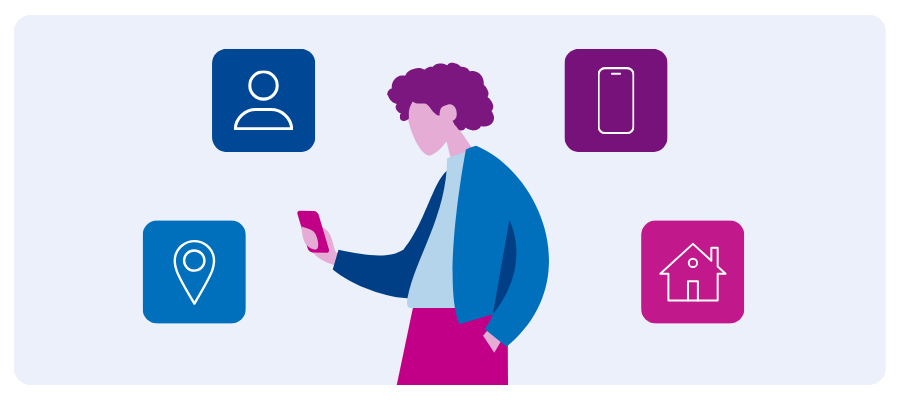
By layering third-party data, contextual data, and geolocation data onto your first-party data foundation, your advertising strategies become stronger than if you used any of these sources as standalone solutions.
How do different types of third-party data add depth to audience profiles?
Third-party data expands understanding beyond known customers. If first-party data is the outline, third-party data helps with “character development”—a.k.a., addingdetailto your audience profiles. Good third-party marketing data complements first-party insights with demographic, behavioral, and transactional context, providing the missing puzzle pieces to complete the full customer profile. Filling in gaps in customer understanding helps youidentify, reach, and engage current and new customers more effectively. Third-party data allows brands to build loyalty with consumers by speaking to their interests and intent behind purchases.
Third-party data opens up new targeting tactics for advertisers, such as:
In addition to targeting, third-party data also remains critical to AI models, which must train on both structured and unstructured data. At Experian, our AI-powered technology interprets live bidstream data, device activity, content, and timing to optimize in the moment, ensuring campaigns deliver meaningful relevance, not just broader reach.
How are contextual and geographic approaches reshaping audience targeting?
Contextual and geographic approaches to targeting focus on environment and behavior rather than identifiers. Regulatory scrutiny, stricter and more fragmented compliance standards, and rising consumer expectations are transforming how marketers approach third-party data targeting. Evolving privacy laws and inconsistent identifiers across environments require new approaches that balance performance and privacy.
Contextual and geographic targeting help marketers reach relevant audiences while maintaining privacy.
What is data-informed contextual targeting?
Contextual targeting connects audience attributes to the content environments people choose. It helps determine the setting of your story—where your characters spend their time.
Solutions like Experian’s Contextually-Indexed Audiences harness advanced machine learning technology to combine contextual signals (a tried–and-true targeting tactic) with third-party targeting to ensure marketers reach their target audiences on the content they tend to consume, regardless of environment or location. What’s excellent about data-informed contextual targeting is that it moves beyond traditional keyword-based strategies to reach consumers on websites that over-index for visitors with the demographics, behaviors, or interests they are looking to target.
What is data-informed geotargeting?
Geotargeting uses shared location patterns to support relevance at scale. Geotargeting is another possibility for further developing the scene of your story.
People with similar behaviors and interests tend to live in similar areas, which is why so much effort goes into location planning for brick-and-mortar stores. Data-informed geotargeting combines geos with third-party data to make more informed media buys based on common behaviors within a geographic location.
We launched our Geo-Indexed audiences, which use advanced indexing technology to identify and reach consumers based on their geographic attributes. These audiences help marketers discover, segment, and craft messaging for consumers without relying on sensitive personal information, enabling them to reach target audiences while maintaining data privacy confidently.
What role does AI play in third-party data targeting?
AI acts like an automated editor of your book, refining and finding new ways to put valuable third-party audiences and data to work without relying on segments linked to known or disparate identifiers.
We’ve used AI and machine learning at Experian for decades to bring identity, insight, and generative intelligence together so brands and agencies can reach the right people, with relevance, respect, and simplicity.
Why does a balanced, integrated approach that combines first-party, third-party, contextual, and geo-targeting data matter?
The combined effects of integrating third-party, contextual, and geotargeting data (and the marketing tactics it underpins) with first-party data will drive your success.
Think of how any good author crafts a story. Regardless of whether it’s fiction or non-fiction, they draw on both first-person experience and external research and sources to develop their plot. No single data source tells the full story. Integration allows marketers to understand audiences more completely and act with confidence.
Pooling these inputs together moves you closer to your goal of understanding the whole story about your target customers. In fact, an almost even number of marketers plan to use contextual targeting (41%) and first-party data (40%) as their main targeting strategies, amid privacy laws and the loss of persistent advertisers.
| Primary data strategy | Percent of marketers that plan to use this data strategy |
| Contextual targeting | 41% |
| First-party data | 40% |
A brand with strong first-party insights can extend reach by layering in additional signals. For example, a nutrition brand that knows who purchases protein supplements can expand prospecting by combining:
By connecting these inputs, the brand can identify new health-conscious audiences with similar interests and behaviors. This approach supports privacy-safe targeting while improving engagement and performance.
How can marketers build an integrated data strategy in 2026?
An integrated data strategy reduces friction and supports scale. The right data partner offers a unified solution that helps unify data, activate audiences, and adapt as the ecosystem evolves. Here’s how:
Marketers who want to create and activate campaigns more efficiently and effectively in 2026 need an integrated approach that combines first-party, third-party, contextual, and geotargeting data. Streamlining data integration and activation positions brands and agencies for sustainable growth and stronger consumer relationships in a privacy-conscious marketplace.
Build your next chapter on a connected data foundation
As audience strategies evolve, connection and interoperability matter more than ever. Connect with our team to learn how Experian helps marketers unify data, identity, and activation across channels.
About the author

Scott Kozub
VP, Product Management, Experian
Scott Kozub is the Vice President of the Product Management team at Experian Marketing Services working across the entire product portfolio. He has over 20 years of product experience in the marketing and advertising space. He’s been with a few startups and spent many years at FICO and Oracle Data Cloud heavily focused on loyalty marketing and advertising technology.
FAQs
In 2026, CMOs should prioritize and invest in data and targeting strategies that combine first-party, third-party, contextual, and geographic data to drive growth, improve efficiency, and strengthen customer relationships.
First-party data is not sufficient on its own because first-party data defines known customers but limits reach and frequency. Growth depends on expanding beyond existing relationships. The ability to unify different data sources with accuracy, scale, and privacy at the forefront sits at the core of Experian’s business. We unify household, individual, device, demographic, behavioral, and first-party signals, along with contextual and geographic data points, to build a reliable view of consumers, even when specific signals are missing. This clarity helps you personalize, target, activate, and measure with confidence.
Third-party data expands understanding beyond known customers. Third-party data opens up new targeting tactics for advertisers, such as:
– Location: Where people live, work, or spend large amounts of time
– Health: A combination of demographics, behaviors, and health needs
– Purchases: Using previous purchase behavior to identify the right audiences
– Behavioral: How people engage with brands or how they use social media
– Interest: Delivering ads based on interests, hobbies, or online activities
– Psychographics: Shared characteristics like attitudes, lifestyles, and interests
– Demographic: Age, gender, education, income, and religion
In addition to targeting, third-party data also remains critical to AI models, which must train on both structured and unstructured data. At Experian, our AI-powered technology interprets live bidstream data, device activity, content, and timing to optimize in the moment, ensuring campaigns deliver meaningful relevance, not just broader reach.
Data-informed contextual targeting connects audience attributes to the content environments people choose. It helps determine the setting of your story—where your characters spend their time. Experian’s Contextually-Indexed Audiences harness advanced machine learning technology to combine contextual signals (a tried–and-true targeting tactic) with third-party targeting to ensure marketers reach their target audiences on the content they tend to consume, regardless of environment or location.
Data-informed geotargeting uses shared location patterns to support relevance at scale. Experian launched our Geo-Indexed audiences, which use advanced indexing technology to identify and reach consumers based on their geographic attributes. These audiences help marketers discover, segment, and craft messaging for consumers without relying on sensitive personal information, enabling them to reach target audiences while maintaining data privacy confidently.
In third-party data targeting, AI refines and finds new ways to put valuable third-party audiences and data to work without relying on segments linked to known or disparate identifiers. We’ve used AI and machine learning at Experian for decades to bring identity, insight, and generative intelligence together so brands and agencies can reach the right people, with relevance, respect, and simplicity.
Latest posts

The concept of the "hedged garden" is gaining traction in the AdTech space as a promising new approach. It offers a more controlled and protected environment for advertisers, reshaping how digital advertising operates. But what exactly is a hedged garden, and could it be the solution we've been looking for? Let's dive into the details and explore its implications. Walled gardens vs. the open web Walled gardens continue to disrupt the advertising industry to stay relevant. Google, Meta (Facebook), and Amazon, the largest walled gardens, offer consumer privacy and rich first-party data to advertisers. But, time spent within these platforms, Google and Meta specifically, continues to decrease. Open web: Pros and cons On the other hand, the open web allows for more transparency, scale, and constant diversification. Yet, this has not led to increased spending. As a result, the open web continues to lag behind walled gardens. With a heavy reliance on third-party data and growing concerns over signal loss, the open web faces significant challenges. Under these circumstances, advertisers turn to easy activation channels like walled gardens, even as they become less effective to marketers. Consumers are increasingly focused on privacy, pushing the industry toward alternatives to third-party cookies. As Google rethinks its cookie deprecation plans, channels like connected TV (CTV) and mobile apps, which don't rely on cookies, are gaining traction. “A significant portion of web traffic does not support cookies today — and that number will grow as Google rolls out [its] new solution. This means that the industry shouldn't slow down investments in cookieless solutions, including alternative IDs, first-party data and data-driven contextual targeting.”kimberly gilberti, general manager, experian This shift emphasizes first-party data and user choice as a potential solution that balances privacy with effective advertising sources. Enter the hedged garden So, what is a hedged garden? The “hedged garden” is a new industry concept where a network of publishers works together to activate first-party data sets in a privacy-compliant way across many partners at scale. These publishers run their businesses with large amounts of first-party consumer data. But they are not big enough on their own. What does a hedged garden look like? Hedges are more permeable and not as tall as walls. This idea is key to the success of the hedged garden. Data protection and privacy regulations As hedged gardens grow, staying compliant with privacy laws like the General Data Protection Regulation (GDPR) and California Consumer Privacy Act (CCPA) is vital. These rules focus on protecting user data by requiring clear consent and transparency. Hedged gardens help publishers share first-party data in a safe, privacy-compliant way. By working together, they ensure data is used responsibly, aligning with strict privacy regulations. This not only keeps marketers compliant but also builds trust with consumers at a time when data protection is more important than ever. Opportunities for marketers in hedged gardens Hedged gardens offer unique opportunities for marketers to enhance their strategies. Unlike walled gardens, hedged gardens offer the ability to work with a wider array of data sources and provide more diverse insights into audience behavior. This flexibility lets marketers develop more tailored, cross-platform campaigns that reach users in different ways. Additionally, hedge gardens encourage collaboration with multiple partners, allowing for new partnerships and innovative strategies. With data from several sources, marketers can create more precise and privacy-compliant targeting methods to deliver better results. With the right approach, hedged gardens give marketers the freedom to break away from restrictive ecosystems and drive creative and impactful growth. How Experian navigates through hedged gardens As our ecosystem moves toward a hedged garden solution, how do we get involved? We are already a key ingredient for this type of solution within the TV landscape. Below, we walk through how we partner with one of our current TV media clients. Organize our client’s data and provide a Living Unit ID (LUID) First, we work with our client to clean and enhance their data, matching individual personal identifiable information (PII), such as an email address, to a household through a LUID. Our Digital Graph, which includes hashed emails (HEMs), cookies, mobile ad IDs (MAIDs), IPs, universal IDs, and CTV IDs, is rebuilt weekly to create accurate, refreshed connections. This consistent linkage creates precise targeting and measurement over time. Our interconnected Offline and Digital Graphs organize identity into households and devices, enriched with marketing data for deeper insights and better addressability. With partnerships across major platforms, we improve match rates, helping you activate audiences seamlessly for optimal reach and measurement. Enrich data through Experian Marketing Data Next, our TV media client licenses our Marketing Attributes. This data is the most comprehensive resource for both traditional and digital marketing campaigns. With its multi-channel availability and addressable capabilities, our Marketing Attributes allow our clients to develop insights and build audiences based on a wide range of attributes within their segment set, ensuring they reach relevant audiences across all channels. Activate audiences across the ecosystem Finally, we help our client execute their audiences across the full digital and TV ecosystem. We enable the connection that allows these audiences to be activated by matching partner LUIDs (example: LUID123 = LUIDABC). By using client-specific LUIDs to match up data in a privacy-first manner, we can continue to build strong partnerships within the fast-growing ecosystem. Are hedged gardens the future of advertising? Have we found the perfect bridge between walled gardens and the open web? We’re hedging our bets. Our vote is yes, but only time will tell. The future of advertising is shifting, and hedged gardens appear to be a promising model that balances the scale of walled gardens with the flexibility of the open web. We’re using what we learned from the TV industry to support other hedged garden verticals (retail media networks, audio, and gaming). Now that we know what a hedged garden is, we should consider what the future holds for both walled and hedged gardens. What’s next for walled gardens Increased privacy regulations: Walled gardens will face stricter regulations on data use, pushing them to adapt for compliance and trust. Reduced market dominance: As advertisers want more control, reliance on walled gardens could decline, shifting focus to hedged gardens. Diversified ad spend: Brands may spread their budgets across multiple platforms instead of being locked into walled gardens. The future of hedged gardens Greater industry collaboration: Expect more publishers and platforms to join forces in hedged gardens for better data activation. Expansion into new channels: Hedged gardens will expand into emerging channels like gaming and connected devices. Improved data integration: Privacy-first data sharing in hedged gardens will lead to smoother, more secure ad targeting. Data collaboration in a post-cookie world As signal loss becomes a growing concern, the need for secure, privacy-first data collaboration will rise. Hedged gardens offer a pathway forward, allowing advertisers to activate first-party data across multiple partners while complying with data regulations. This is where Experian Collaboration shines. By enabling data sharing without exposing raw consumer data, clients and partners can collaborate at Experian in their own environment or in clean rooms. Each of these environments allows partners to exchange data and gain insights without compromising privacy. Maximize your advertising reach with Experian As the advertising landscape changes, one thing remains clear: successful campaigns will require flexible, privacy-first solutions. At Experian, we are at the forefront of this shift. With our data expertise and advanced collaboration solutions, we’re here to help you navigate through both walled and hedged gardens to maximize your advertising reach. Together, we can navigate across the walled and hedged garden ecosystems. Contact us to learn how. Contact us Latest posts

Originally appeared on Adweek The advertising industry is experiencing a significant shift resulting from Oracle's market exit. Over the years, Oracle’s advertising tools—built through key acquisitions like Crosswise, BlueKai, Datalogix, and Grapeshot—have become essential for many marketers, data providers, and platforms. With Oracle’s departure, stakeholders are left searching for reliable alternatives to maintain their data-driven strategies. While this transition may seem daunting, it presents a unique opportunity to reassess audience and identity solutions. With the growing importance of adaptability and interoperability, now is the perfect time for advertisers, agencies, publishers, and platforms to adopt future-focused strategies. Oracle’s legacy: A combination of acquisitions Oracle’s advertising business wasn’t a unified solution but a collection of acquired technologies. Crosswise provided a cross-device identity graph; BlueKai offered a robust data management platform (DMP); Datalogix specialized in offline purchase data; and Grapeshot was known for its contextual targeting. Together, these tools powered a comprehensive offering for advertisers, data providers, and platforms. Yet, much of Oracle’s advertising success stemmed from the external data it used. For example, many of Oracle’s automotive audiences relied heavily on third-party data, largely powered by Experian data. This means that while Oracle may no longer be an option, many of the services marketers depended on through Oracle are still available from Experian, ensuring continuity. What this means for advertisers and agencies For advertisers and agencies, Oracle’s exit means losing access to its syndicated audiences. Fortunately, this doesn’t have to cause a major disruption. As one of Oracle’s primary data providers, we've mapped Oracle’s audiences to our own, ensuring marketers can easily maintain their targeting strategies without losing performance or efficiency. With access to over 2,400 syndicated audiences across key verticals such as demographics, automotive, retail purchases, or financial data, advertisers can continue their campaigns with confidence and precision. What sets us apart? Powered by data ranked #1 in accuracy by Truthset, our audiences are built on reliable, offline, deterministic data — like name, address, phone number, and email. This means advertisers can be confident that they are reaching the right audiences across all channels. With our audiences available across 30+ ad platforms, including programmatic, TV, and social media, advertisers and agencies have easy access to keep their campaigns running. For advertisers that ran audience targeting using Grapeshot's Contextual Platform, our new Contextually-Indexed Audiences are a replacement built for the evolving digital media landscape. By combining the precision of audience targeting with the flexibility of contextual targeting, marketers get a privacy-safe, yet scalable way to target audiences that is not reliant on cookies or other user identifiers. Marketers can activate these audiences through leading demand-side platforms (DSPs) or through Audigent private marketplaces (PMPs). A new opportunity for data providers Oracle’s marketplace has long been a crucial distribution channel for third-party data providers, particularly through BlueKai. With its closure, providers have an opportunity to explore new onboarding services and marketplaces that offer similar or even better reach and effectiveness. New alternative onboarding solutions are emerging, particularly in areas like TV and digital, ensuring that the loss of Oracle’s services does not leave a significant gap. These solutions are being built to overcome the challenges typically present with data onboarding — complicated integration processes, limited ID matching capabilities, and opaque pricing structures. One such solution is Experian’s new Third-Party Onboarding. What sets us apart? With our digital and offline identity capabilities embedded within this solution, data providers receive superior programmatic and connected TV (CTV) reach and addressability compared to the competition. The first data providers – Adentro, Kontext, L2, and Webbula – are already using this solution to increase the adoption of their audiences and maximize their revenue. Additionally, new marketplaces are emerging that aim to fill the void left by Oracle, offering distribution to key destinations and providing data providers with continued access to advertisers who require high-quality, third-party data. Platforms shift to new audience solutions Platforms that relied on Oracle for third-party data and audience onboarding are now facing challenges in maintaining their ability to target specific audiences. This could affect their inventory's attractiveness to buyers. However, we offer a seamless solution for platforms looking to replace Oracle’s capabilities. As one of Oracle’s primary data providers, we've already mapped Oracle’s audiences to our catalog of over 2,400 syndicated audiences. Platforms can continue providing precise audience targeting and ensure advertisers receive the performance that they demand. Additionally, Third-Party Onboarding builds upon the investment and infrastructure used to distribute our own audience segments, providing platforms with audiences from leading third-party data providers. Moving forward: Embracing connectivity We're dedicated to powering data-driven advertising through connectivity. With best-in-class syndicated audiences, new Contextually-Indexed Audiences, and an easy-to-use Third-Party Onboarding solution, we're enabling advertisers, agencies, data providers, and ad platforms to improve their marketing operations. Oracle’s departure marks the end of one era, but it also opens the door to a future where collaboration, interoperability, and connectivity define the landscape. By choosing partners like us, advertisers, agencies, and platforms can ensure they remain agile, innovative, and well-equipped to thrive in this new era of data-driven marketing. Reach out to your account representative or our audience team for information about our comprehensive audience mapping and finding the right audiences for your campaigns. Download our audience lookbook to discover more about Experian’s audiences. Contact us Latest posts

It's almost the start of a new year, so it's time to plan your marketing strategy. One-third of U.S. adults planned to make a New Year's resolution in 2024, with adults under 30 being the most likely to do so. From living healthier lifestyles to traveling more often, there is an opportunity to capture customers with well-targeted messaging. But how do you know which audiences are most interested in these goals? In this blog post, we’ll reveal audience segments designed for you to reach the most relevant shoppers for your New Year’s resolutions campaigns according to shoppers' goals and resolution categories. You can find the complete audience segment name in the appendix. Start the year strong with Experian's audience insights With the New Year almost upon us, it’s the perfect time for a fresh start. Utilize Experian’s syndicated audiences to ensure your marketing messages resonate with your ideal customers. Experian’s 2,400+ syndicated audiences are available directly on over 30 leading television, social, programmatic advertising platforms, and directly within Audigent for activation within private marketplaces (PMPs). Reach consumers based on who they are, where they live, and their household makeup. Experian ranked #1 in accuracy by Truthset for key demographic attributes. Access to unique audiences through Experian’s Partner Audiences available on Experian’s data marketplace, within Audigent for activation in PMPs and directly on platforms like DirectTV, Dish, Magnite, OpenAP, and The Trade Desk. Five New Year's resolution audience categories to embrace this new year There are many different types of New Year's Resolutions that people set come January 1st. Here are five common New Year's Resolutions: Healthy habits Get organized Explore new experiences Live life to the fullest New Year’s budgeteers Let's break down each resolution category and which audiences you can use to target consumers based on their New Year’s resolutions. Healthy habits A significant portion of consumers set their sights on adopting healthier lifestyles and maintaining newfound habits. Target audiences could include those who have recently purchased gym memberships and are shopping at health stores, demonstrating a commitment to their resolutions. Here are five audience segments that you can activate to target consumers focused on healthy habits in the new year: NEW! New Year's Health/Fitness/Gym Membership Shoppers NEW! Frequent Gym Goers Vitamins/Supplements Shoppers New Year's Food/Healthy Food Shoppers New Year's Vitamins/Diet Supplement Shoppers By strategically targeting these segments, your marketing efforts are more likely to resonate with those determined to make a year of lasting, healthy change. Get organized Many consumers pledge to declutter and get organized. One key target audience could consist of those who have recently purchased organizational tools or storage solutions. Additionally, consider reaching out to homeowners or individuals in the midst of a major life change, such as moving or expanding their families, as they often seek ways to simplify and organize their spaces. Here are seven audience segments that you can activate to target consumers focused on getting organized in the new year: NEW! Furniture and Home Decor: Deals Discounts Affordable High Spend Spenders Shoppers NEW! Post Holiday Shoppers Household Goods: Frequent Spenders Home Improvement/DIY: Frequent Spenders Furniture & Home Decor In Store: Frequent Spenders Garden & Landscaping Stores: Frequent Spenders Hardware & Home Improvement Stores: In Store Frequent Spenders To expand or reach new audiences, you can layer in purchase predictors to reach those who are likely to spend on home maintenance and improvement products or are expanding their families. Home Maintenance and Improvement Explore new experiences Many consumers want to embark on a journey of self-improvement by exploring new experiences, whether it's picking up a new hobby or visiting a place they've never been. One primary target audience could be vacation and leisure travelers, as they often seek new destinations and opportunities to make the most of their seasonal getaways. Additionally, sports enthusiasts are always looking to boost their outdoor adventures through fresh experiences and specialized equipment. Here are six audience segments that you can activate to target consumers focused on exploring new experiences in the new year: Play Golf Pickleball Enthusiast Wilderness Sports and Camping Enthusiasts Activities: Camping Summer Airline Travel Summer Travel: Vacation/Leisure Live life to the fullest A considerable number of individuals make resolutions aimed at embracing life to the fullest. One prime target audience includes those who have recently booked travel experiences or adventures, showcasing their commitment to exploring new horizons. Additionally, consider reaching out to individuals who are likely to visit sports stadiums and arenas. Here are seven audience segments that you can activate to target consumers focused on living life to the fullest in the new year: NEW! Budget Savvy Air Travelers Air Travel: Frequent Spenders Cruises: Frequent Spend NFL Stadium Visitors Ski Resort Visitors Vacation/Leisure Travelers: Weekend Getaways Culinary Experience To expand or reach new audiences, you can layer in purchase predictors to reach consumers who are likely to spend on travel and travel-related products. Travel New Year's budgeteers As the new year begins, many consumers are rethinking their finances and seeking smarter ways to spend and save. These audiences are focused on achieving their financial goals by utilizing budgeting tools, finding flexible payment options, and taking control of their debt. With financial wellness top of mind, they are ready to explore solutions that align with their resolution to be more financially savvy. Here are seven key audience segments that reflect the mindset of consumers eager to make 2024 a year of financial empowerment: In market for Buy Now Pay Later In market for Mortgage Refinance In market for Auto Loan Refinance Credit Card High Utilization Likely to Transfer Credit Card Balance Loyal Rewards Enthusiast, Low Credit Card Balance Secure, Savvy Credit User, High Home Equity Balance We can help you reach consumers in the new year Connect with consumers pursuing their New Year's resolutions to kick off 2025. Whether your audience seeks to embrace healthy habits, get organized, explore new experiences, budget their personal finances, or live life to the fullest, Experian Marketing Data provides a solid foundation for targeting, enrichment, and activation As we get ready for 2025, let the power of Experian’s data-driven insights guide your marketing strategies, helping consumers turn their resolutions into reality. Connect with our audience team Need a custom audience? Reach out to our audience team and we can help you build and activate an Experian audience on the platform of your choice. Additionally, work with Experian’s network of data providers to build audiences and send to an Audigent PMP for activation. You can activate our syndicated audiences on-the-shelf of most major platforms. For a full list of Experian’s syndicated audiences and activation destinations, download our syndicated audiences guide. Explore our other seasonal audiences that you can activate today. View now Contact us Appendix Here are the complete audience segment names (taxonomy path) for all audience segments discussed in this blog post. Healthy habits NEW! Retail Shoppers: Purchase Based > Seasonal > New Year's Health/Fitness/Gym Membership Shoppers NEW! Retail Shoppers: Purchase Based > Health and Fitness > Frequent Gym Goers Retail Shoppers: Purchase Based > Health and Fitness > Vitamins/Supplements: Vitamins/Supplements Retail Shoppers: Purchase Based > Seasonal > New Year's Food/Healthy Food Shoppers Retail Shoppers: Purchase Based > Seasonal > New Year's Vitamins/Diet Supplement Shoppers Get organized NEW! Retail Shoppers: Purchase Based > Home Furnishings > Furniture and Home Decor: Deals Discounts Affordable High Spend Spenders Shoppers NEW! Retail Shoppers: Purchase Based > Seasonal > Holiday Shoppers: Post Holiday Shoppers Purchase Transactions > Household Goods > Frequent Spenders Purchase Transactions > Home Improvement/DIY > Frequent Spenders Retail Shoppers: Purchase Based > Home Improvement & DIY > Furniture & Home Decor In Store: Frequent Spenders Retail Shoppers: Purchase Based > Home Improvement & DIY > Garden & Landscaping Stores: Frequent Spenders Retail Shoppers: Purchase Based > Home Improvement & DIY > Hardware & Home Improvement Stores: In Store Frequent Spenders Purchase Predictors > Shoppers All Channels > Home Maintenance and Improvement Explore new experiences Lifestyle and Interests (Affinity) > Activities and Entertainment > Play Golf Retail Shoppers: Purchase Based > Sporting Goods, Apparel > Pickleball Enthusiast Retail Shoppers: Purchase Based > Outdoor Activities > Wilderness Sports and Camping Enthusiasts Travel Intent > Activities > Camping Retail Shoppers: Purchase Based > Seasonal > Summer Airline Travel Retail Shoppers: Purchase Based > Seasonal > Summer Travel: Vacation/Leisure Retail Shoppers: Purchase Based > Travel > Vacation/Leisure Travelers: Summer Trips Live life to the fullest NEW! Retail Shoppers: Purchase Based > Seasonal > Budget Savvy Air Travelers Retail Shoppers: Purchase Based > Travel > Air Travel: Frequent Spenders Retail Shoppers: Purchase Based > Travel > Cruises: Frequent Spend Mobile Location Models > NFL Stadium Visitors Mobile Location Models > Ski Resort Visitors Retail Shoppers: Purchase Based > Travel > Vacation/Leisure Travelers: Weekend Getaways Travel Intent > Activities > Culinary Experience Purchase Predictors > Shoppers All Channels > Travel New Year’s budgeteers Financial > In Market > Buy Now Pay Later Financial FLA Friendly > In Marketing Mortgage Refinance Financial FLA Friendly > In Market Auto Loan Refinance Financial FLA Friendly > Credit Card High Utilization Financial FLA Friendly > Likely to Transfer Credit Card Balance Financial Personalities > Credit Card Financial Personality > Loyal Rewards Enthusiast, Low Credit Card Balance Financial Personalities > Home Equity Financial Personality > Secure, Savvy Credit User, High Home Equity Balance Latest posts