Loading...

What “good data” really means in the age of AI

Published: October 29, 2025 by Budi Tanzi, VP, Product

At A Glance

AI learns what your data teaches in 2025, "good data" in AI means accurate, current, consented, and easy to connect, or your models lose relevance and your investments underperform. Experian is leading this next era of responsible data where trust, transparency, and innovation come together to make marketing more human, not less.

What makes data “good” in the age of AI?

In AI-driven marketing, data quality now defines success. “Good data” in AI isn’t about volume; it’s about the balance of accuracy, freshness, consent, and interoperability. As algorithms guide decisions, they must learn from data that’s both accurate and ethical.

At Experian, we believe good data must meet four conditions:

Target icon

1. Accurate

Verified and anchored in real human identity.

Growing plant icon

2. Fresh

Continuously updated to reflect today’s consumers.

Shield icon

3. Consented

Collected and governed transparently.

Interoperable icon

4. Interoperable

Easily integrated across platforms through a secure, signal-agnostic identity spine, enabling seamless data activation.

This is the data AI can trust and the data that keeps marketing relevant, predictive, and privacy-first.

Why does data accuracy matter more than ever?

AI models are only as intelligent as their inputs. Incomplete or inconsistent data leads to bad predictions and wasted spend. As the industry moves toward agentic advertising, where autonomous systems handle campaign buying and optimization, data accuracy becomes even more critical. If your ad server or audience data is flawed, these new AI agents will simply automate bad decisions faster.

Experian applies rigorous quality filters and conflict resolution rules to ensure our data is both deterministic and accurate. Deterministic signals alone don’t guarantee accuracy; they must be verified, deduplicated, and contextualized. Our identity resolution process anchors every attribute to real people, giving brands and platforms the confidence that every insight stems from truth, not noise.
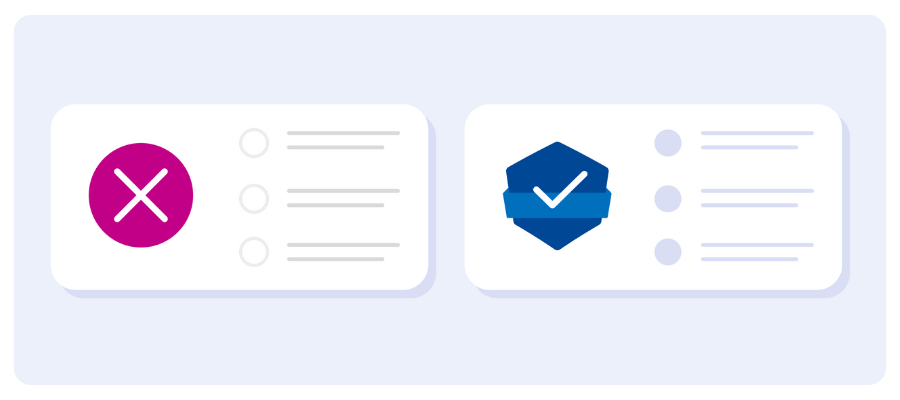
An "x" icon represents inauthentic data and a checkmark icon represents authentic, reliable, data verified by third-party sources, like Truthset

Our data is ranked #1 in accuracy by Truthset, giving our clients confidence that every decision they make is backed by the industry’s most reliable insights.

Just because it is deterministic, doesn’t mean it’s highly accurate. You still need to refine and validate your data to make sure it tells a consistent story. You need to anchor your data around real people.

Why does AI need fresh data?

Outdated data can’t predict tomorrow’s behavior. AI thrives on recency.

At Experian, our audiences are refreshed continuously to mirror real-world signals, from purchase intent to media habits, so every campaign reflects what’s happening now, not six months ago.

And we don’t just advocate for fresh data, we rely on it ourselves. Our own AI-powered models, used across our audience and identity platforms, are continuously retrained on the most current, consented signals. This allows us to see firsthand how freshness drives better accuracy, faster optimization cycles, and more relevant outcomes.

But freshness alone isn’t enough. With predictive insights, our models go beyond describing the past. They forecast behaviors, fill gaps with inferred attributes, and recommend next-best audiences, helping you anticipate opportunity before it happens.

Fresh and predictive data means you’re reaching people in the moment that matters and shaping what comes next. With AI, that’s what defines performance.

How do consent and governance build trust in AI?

Responsible AI starts with responsible data. With 20 U.S. states now enforcing privacy laws, data compliance isn’t optional, it’s operational.

At Experian, privacy and compliance are built in. Every data signal, attribute, audience, and partner goes through our rigorous review process to meet federal, state, and local consumer privacy laws. With decades of experience in highly regulated industries, we’ve built processes that emphasize risk mitigation, transparency, and accountability.

What does privacy-first identity look like now?

Governance isn’t just about regulation, it’s also about innovation done right. We drive transparent and responsible innovation through safe, modular experimentation, from generative applications to agentic workflows. By balancing bold ideas with ethical guardrails and staying ahead of evolving legislation, we ensure our innovations protect consumers, brands, and the broader ecosystem while moving the industry forward responsibly.

Compliance and governance aren’t just boxes to check; they’re the foundation that gives AI its license to operate.

How does interoperability enable AI’s full potential?

AI delivers its best insights when data connects seamlessly across fragmented environments. Our signal-agnostic identity spine allows data to move securely between platforms (connected TV, retail media networks, and demand-side platforms) without losing context or compliance.
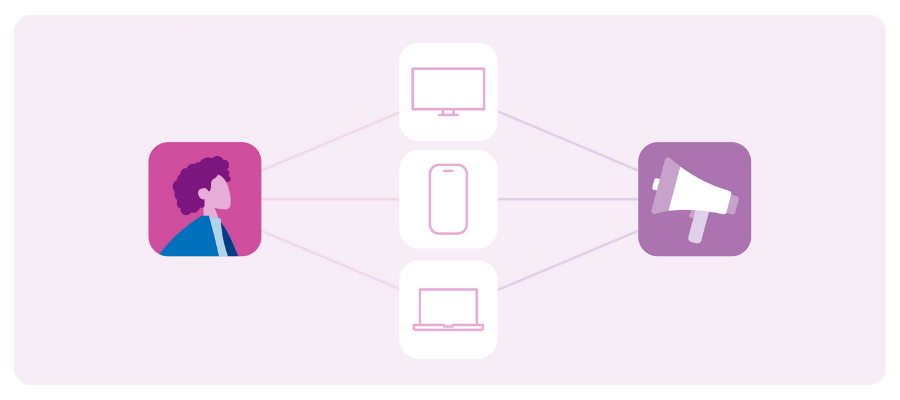
Navigating complexity in digital advertising

Interoperability isn’t just about moving data between systems; it’s about connecting insights across them. When signals connect across environments, AI gains a more complete view of the customer journey revealing true behavior patterns, intent signals, and cross-channel impact that would otherwise remain hidden.

This unified perspective allows AI to connect insights in real time, improving predictions, performance, and personalization while protecting privacy.

Where do AI and human oversight meet?

AI can make marketing more predictive, but people make it meaningful. At Experian, our technology brings identity, insight, and generative intelligence together so brands, agencies, and platforms can reach the right people with relevance, respect, and simplicity.

Index Marketplaces use cases explained

Our AI-powered models surface connections, recommend audiences, and uncover insights that would take humans months to find. But our experts shape the process, crafting the right inputs, ensuring data quality, reviewing model outputs, and refining recommendations based on industry knowledge and client goals. It’s this partnership between advanced AI and experienced people that turns predictions into actionable, trustworthy solutions.

What “good data” looks like in action

“Good data” becomes most powerful when it’s put to work. At Experian, our marketing data and identity solutions help brands and their partners connect accurate, consented, and interoperable data across the ecosystem, turning insight into measurable outcomes.

When Windstar Cruises and their agency partner MMGY set out to connect digital media spend to real-world bookings, they turned to Experian’s marketing data and identity solutions to close the attribution loop. By deploying pixels across digital placements and using Experian’s identity graph to connect ad exposure data with reservation records, we created a closed-loop attribution system that revealed the full traveler journey, from impression to confirmed booking.

The results were clear: 6,500+ bookings directly tied to digital campaigns, representing more than $20 million in revenue, with a 13:1 ROAS and $236 average cost per booking. Attributed audiences booked $500 higher on average, and MMGY’s Terminal audience segments powered by Experian data achieved a 28:1 ROAS.

This collaboration shows that responsible, high-quality data and AI-driven insights don’t just tell a better story; they deliver measurable business performance.

Why the future of AI depends on “good” data

The next phase of AI-driven marketing won’t be defined by who has the most data, but by who has the best. Leaders will:

Build and settings icon

Operate with clear data principles grounded in transparency and truth

Check mark inside a lock icon

Build consent and compliance into every workflow

Star inside a scalloped circle icon

Keep data accurate, current, and interoperable

Shaking hands icon

Pair automation with human oversight

AI success starts with good data. And good data starts with Experian, where accuracy, privacy, and purpose come together to make marketing more human, not less.


Partner with Experian for AI you can trust

This site is protected by reCAPTCHA and the Google Privacy Policy and Terms of Service apply.


About the author

Budi Tanzi headshot

Budi Tanzi

VP, Product, Experian

Budi Tanzi is the Vice President of Product at Experian Marketing Services, overseeing all identity products. Prior to joining Experian, Budi worked at various stakeholders of the ad-tech ecosystem, such as Tapad, Sizmek, and StrikeAd. During his career, he held leadership roles in both Product Management and Solution Engineering. Budi has been living in New York for almost 11 years and enjoys being outdoors as well as sailing around NYC whenever possible.


“Good” data in AI FAQs

What defines “good data” according to Experian?

At Experian, we define “good data” as the balance of accuracy, consent, freshness, and interoperability. We apply rigorous governance, validation, and cleansing across every signal to ensure that AI systems learn from real-time behaviors, not assumptions. This approach turns data into a foundation for reliable, ethical, and high-performing intelligence.

How does Experian ensure AI-ready data accuracy?

Experian ensures AI-ready data accuracy through advanced cleansing, conflict resolution, and human anchoring. Experian ensures AI models rely on verified, high-quality inputs. Experian’s data is ranked #1 in accuracy by Truthset.

Can Experian help brands stay compliant with privacy laws?

Yes, Experian can help brands stay compliant with privacy laws. Experian’s privacy-first governance framework integrates ongoing audits, legal oversight, and consent management to ensure compliance with all federal, state, and global privacy laws. Compliance isn’t an afterthought; it’s embedded in every step of our data lifecycle.

How does Experian make AI more human?

Experian makes AI more human by pairing innovation with human oversight to ensure AI helps marketers understand people, not just profiles. At Experian, we believe the future of marketing is intelligent, respectful, and human-centered. AI has long been part of how we help brands connect identity, behavior, and context to deliver personalization that balances privacy with performance. Our AI-powered solutions combine predictive insight, real-time intelligence, and responsible automation to make every interaction more relevant and ethical.

Where can marketers access Experian’s high-quality data?

Marketers can activate Experian’s high-quality data directly in Experian’s Audience Engine, or on-the-shelf of our platform partners where Experian Audiences are ready to activate. Built on trusted identity data and enhanced with partner insights, it’s where accuracy meets accessibility, helping brands power campaigns with confidence across every channel.


Latest posts

Loading…
Audigent, a part of Experian, brings its premium first-party audiences to Nexxen

1,000+ ready-made segments, available for activation within Nexxen Audigent, a part of Experian, has officially launched its audiences in the Nexxen demand-side platform (DSP), pairing premium publisher audiences with Nexxen’s streamlined connected television (CTV) and omnichannel buying workflow. Audigent transforms real engagement from premium publishers into over 1,000 ready-to-activate segments—spanning beauty, finance, travel, and more. Three key benefits Signal quality Verified publisher data drives higher match rates and wider look-alike reach. Media impact Reach up to 92 million entertainment fans, 78 million retail shoppers, or 71 million finance intenders across CTV, online video (OLV), and display without guesswork. Privacy and compliance Every segment is built from opt-in, first-party data and delivered through Audigent’s privacy-by-design framework. How Audigent and Nexxen boost your campaigns Now live in the Nexxen DSP, Audigent’s premium audiences plug directly into your existing buying workflow—making it easier than ever to plan, activate, and optimize at scale. Audigent utilizes cookieless, first-party IDs sourced directly from its premium publisher network, allowing advertisers to future-proof campaigns and continue to reach real people across browsers, devices, and CTV. Vertical use cases Auto Target auto intenders as they research new models, then retarget them on CTV during primetime motorsports broadcasts. Retail and CPG Engage retail shoppers with dynamic product ads ahead of peak sales weekends, bridging display and CTV for sequential storytelling. Travel and Hospitality Reach travel planners with destination-specific offers the moment they begin searching for flights. Finance Serve relevant credit card or fintech messaging to finance enthusiasts researching personal finance content. Premium audiences, measurable performance As a part of Experian, Audigent’s audience solution complements our broader identity resolution and activation capabilities, ensuring consistency across every channel. Together with Nexxen’s unified tech stack, advertisers can launch ads faster while respecting consumer privacy. Audience data, targeting, and media all sit in one workflow, making results easy to see and optimize. Contact us Latest posts

Aug 18,2025 by Experian Marketing Services

Four segmentation methods and when to use them in marketing

Marketing without segmentation is a lot like shouting into a crowded room and hoping the right person hears you. Without a clear way to communicate in a noisy marketing environment, your message gets lost in the mix. With segmentation, you can identify your target audience, speak to their needs, and deliver the right message at the right moment. Companies that use segmentation are 130% more likely to understand customer motivations, resulting in more effective campaigns and deeper audience relationships. In this article, we’ll break down four of the most effective customer segmentation methods, when to use each, and how Experian’s audience solutions can help. What is segmentation in marketing? Segmentation is the process of splitting a large audience into smaller groups that share similar traits, like demographics, location, behavior, or firmographic characteristics. As a marketer, these segments enable you to choose channels, messaging, and offers that resonate with each group. Whether you’re targeting new homeowners in Texas, loyalty shoppers in retail, or small business decision-makers in finance, segmentation helps you stand out to them and get results. Why should marketers segment their audiences? Effective audience segmentation fuels accuracy, performance, and personalization at scale. Here's why you should invest your time and marketing budget in honing your audience segments. Maximize your marketing ROI Nobody wants to waste money talking to the wrong crowd. Using various methods of segmentation, you can focus on those who want to hear from you — and the payoff can be huge. For marketing channels like email, segmentation can drive up to 760% more revenue than non-segmented campaigns. The more targeted your message, the better the return. Create a unified omnichannel strategy Segmentation helps ensure that every channel, from email and social media to display, SMS, and direct mail, operates from the same playbook. Once you define your target audience segments, you also need a trusted identity partner to sync them across platforms and environments. This ensures you can deliver consistent, personalized experiences at every touchpoint and your audience receives the same message in the proper context, regardless of where they engage. Strengthen customer loyalty Roughly 75% of consumers are loyal to brands that “get” them. When you strive to understand your customers, they’re more likely to stay. Segmentation enables you to personalize communications based on your target segment’s values, behaviors, or preferences, encouraging repeat business. Expand into new markets With segmentation, you can analyze existing customers to identify common traits and use that data to pinpoint similar groups in new regions or markets. For example, if your top customers are middle-class parents in suburban areas, you can target lookalike segments in other cities with tailored messaging. This makes it easier to expand with confidence, knowing you're reaching people who are more likely to convert. Lower customer acquisition costs Rather than forcing you to cast a wide net, segmentation enables you to focus your budget on high-potential audiences across channels, reduce acquisition costs, and minimize wasted spend on low-intent audiences. Four segmentation methods and examples Let’s look at four different methods of market segmentation. We’ll define each, share when to use them, and give real-world examples to help you apply them. 1. Demographic segmentation Demographic segmentation breaks your audience into groups based on gender, income, age, education, marital status, occupation, and household size. It’s one of the most foundational segmentation methods because it’s easy to implement and often tied directly to buying behavior. Demographic data makes it easier to get the tone, offer, and channel right from the start. And when you combine demographic segmentation with other segmentation methods, such as behavior or location, the impact multiplies. When to use it Use demographic segmentation when your product or service is clearly more relevant to people in a specific life stage, income bracket, or household type. Among all methods of market segmentation, demographic data is often the easiest starting point. It’s especially effective for industries such as financial services, healthcare, education, retail, and others, where consumer needs change based on demographics. Examples As a real-world example, a health supplement company used Experian data to segment its ambassador program audience into four demographic groups based on lifestyle and household makeup. These included younger singles, value-seeking families, high-income spenders, and older empty nesters. Applying these insights at registration allowed the brand to deliver personalized, channel-specific communications that boosted acquisition and retention. The approach led to stronger engagement and more meaningful customer connections. 2. Geographic segmentation This method of market segmentation categorizes people by location, including country, region, state, city, zip code, or even climate. It’s a simple yet effective way to tailor your marketing, as location often influences everything from lifestyle and language to shopping habits and product needs. It’s most often used among brands with physical locations or region-specific campaigns. Whether you're promoting snow boots in Colorado or sunscreen in California, geographic segmentation helps you stay relevant to the local context. When to use it Geographic segmentation is ideal when your offer or message changes depending on climate, culture, availability, or local regulations. It’s also helpful for planning market expansion or testing the performance of different methods of market segmentation across regions. Examples One home furnishings retailer partnered with Experian to understand how customer needs varied across store locations. Using a mix of client data and Experian demographics, we segmented stores based on their surrounding customer base, like urban, white-collar shoppers in metro centers versus lower-income households in more remote cities. These insights enabled the retailer to tailor inventory, marketing strategies, and ad copy for each store type, resulting in more relevant customer experiences. 3. Behavioral segmentation Behavioral segmentation centers on how people live their lives — their interests, habits, and decision-making patterns. It includes factors like past purchases, engagement frequency, brand loyalty, product usage, browsing patterns, and responsiveness to offers or promotions. Among all of the segmentation methods, this one provides insight into intent, helping you go beyond who your audience is to understand what they do. You can use behavioral insights to re-engage former customers with relevant offers, reward loyal buyers with personalized perks, or guide high-intent shoppers toward conversion with timely nudges. When to use it Behavioral segmentation is best when you want to personalize based on intent, habits, or engagement stage. It's particularly useful for retention, reactivation, or cross-selling strategies. Examples In practice, a national big-box retailer partnered with Experian to better understand customer behavior during grocery store visits. The goal was to identify distinct “trip missions” that could drive category trial and increase basket size. We analyzed everything from basket contents to customer composition and segmented visits into 11 unique missions. For example, the “All Aisles Online” segment represented large households (often homeowners with families) stocking up on household staples through online orders. In contrast, the “Marketable Mission” segment captured smaller, likely renter households making quick trips for non-essentials. These behavioral insights empowered the retailer to adjust promotions based on the intent behind each visit, strengthen customer relationships, and drive growth. 4. Firmographic segmentation (B2B) Firmographic segmentation is like demographic segmentation for businesses. It groups B2B audiences based on attributes such as annual revenue, location, company size, industry, and organizational structure. You can also segment by job title or decision-maker role to better target key stakeholders. This method is great for aligning your messaging, sales strategy, or product offerings with the unique needs of various business types. A startup in the tech sector will likely respond to a very different pitch than an enterprise manufacturer, and firmographic data helps you speak to both with precision. When to use it Use firmographic segmentation when marketing to other businesses, especially when your product or service has different benefits depending on business size or sector. Examples Recently, a B2B client partnered with Experian to gain a deeper understanding of the revenue potential of their existing business customers. Using firmographic data, we segmented the client’s customers into distinct groups based on the characteristics most strongly tied to spending behavior. For each segment, we calculated potential spend, defined as the 80th percentile of annual spend within that segment. This allowed the client to identify high-value accounts with untapped growth potential. For example, one customer, ABC Construction, had spent $4,750. But based on their segment’s profile, their annual potential was $9,000. That insight revealed a $4,250 opportunity to deepen the relationship through more targeted marketing and sales efforts. Best practices for market segmentation Regardless of the segmentation method you use, the following best practices will help you maximize the benefits of your efforts. Start with clean, reliable data Segments are only as good as the data behind them. If your data is outdated, inaccurate, or incomplete, your segments will result in ineffective targeting and a wasted budget. Utilize accurate, compliant, up-to-date sources like Experian Marketing Data, ranked #1 in accuracy by Truthset, to ensure your targeting is on point. Test and refine segments continuously Business goals, market conditions, and behaviors are constantly changing. What worked last month or even last week might not work today. By adjusting your segments over time, you make sure your marketing stays relevant, focused, and effective. Use A/B testing, performance metrics, and audience analytics to iterate on your segments and improve results over time. Align segments with personalized messaging and offers Each segment has distinct needs, preferences, and motivations, which means generic messaging won’t resonate effectively. Once you’ve built your segments, personalize your creative, copy, and offers to appeal to each group and increase the likelihood of engagement and conversions. Integrate segmentation across all platforms If someone sees one message in an email and a completely different one in an ad or on your website, it creates confusion and weakens trust. From CRMs and email platforms to ad tech and analytics tools, make sure your segmentation method is applied consistently across every channel to improve performance and build a cohesive brand experience. Segment your audiences with Experian Effective audience segmentation is at the heart of every successful marketing strategy, but in this fragmented, privacy-conscious landscape, grouping your audience into meaningful, actionable subgroups is more challenging than ever. That’s where we come in. With coverage of the entire U.S. population, Experian helps marketers define and categorize broad audiences into precise segments using rich data on demographics, behaviors, financial profiles, and lifestyle traits. These insights make it easier to personalize messaging, optimize media spend, and drive better outcomes. From ready-to-use syndicated audiences to custom segments and even Contextually-Indexed Audiences that align targeting with content, Experian offers flexible segmentation solutions that perform across digital, TV, programmatic, and social channels. In our most recent release, we introduced over 750 new and updated audience segments across key categories, including a brand-new category for Experian, giving marketers more accurate, behavior-based targeting options than ever before. 135+ new CPG audiences, a brand-new category for Experian, built from opt-in loyalty card and receipt scan data 240+ new automotive audiences covering ownership and in-market shoppers 100+ new high-spending behavior audiences focused on specific merchant categories 24 new wealth and income segments with refined household net worth tiers 13 new lifestyle-based housing audiences for family- and household-focused targeting 250+ refreshed financial segments with improved naming conventions for better discoverability and clarity Together, these segments give marketers more accuracy  to reach high-intent consumers based on real-world behaviors, spending patterns, and financial capacity. Audience solutions powered by consumer insights Experian Marketing Data, one of the most comprehensive and accurate consumer databases in the U.S., is the core of our segmentation capabilities. Backed by over 5,000 demographic and behavioral attributes, it helps you understand not just who your customers are but how they live, shop, spend, and engage, too. Each audience segment is built with privacy and precision in mind, using a blend of demographic data, financial behaviors, lifestyle signals, and media habits. With these consumer insights, we’ll help you uncover meaningful patterns that lead to smarter strategy. Experian’s pre-built audiences Our syndicated audiences are pre-built, ready-to-activate segments based on shared characteristics from age and income to purchase behavior and lifestyle indicators. When speed and scale are a priority, these segments offer a fast, effective way to reach your target audience. Experian’s 2,400+ syndicated audiences are available directly on over 30 leading television, social, and programmatic advertising platforms, as well as within Audigent for activation within private marketplaces (PMPs). Here’s what’s new from our August 2025 release: CPG shoppers by category (e.g., Frozen Food Shoppers, Multi-Vitamin Shoppers) Luxury EV owners and auto brand shoppers (e.g., Rivian, Polestar, Cadillac) High spenders in specific categories (e.g., men's grooming and women's accessories) Ultra high-net-worth households (e.g., Net Worth $50M+) and likely home sellers Young Family Homeowners and Growing Family Apartment Renters Custom audiences for specialized targeting Need a custom audience? Reach out to our audience team, and we can help you build and activate an Experian audience on your preferred platform. Additionally, work with Experian’s network of data providers to build audiences and send to an Audigent PMP for activation. Contextually-Indexed Audiences Experian’s Contextually-Indexed Audiences offer a privacy-safe way to reach relevant consumers in the moments that matter without relying on identity signals or third-party cookies. These segments combine Experian’s consumer insights with page-level content signals, enabling you to align targeting with intent and mindset, even in cookieless or ID-constrained environments. Want to take your segmentation strategy to the next level? Let’s talk. We’ll help you define your audience in ways that drive real results. Talk to our team about your segmentation methods today Latest posts

Aug 14,2025 by Experian Marketing Services

Komodo Health and Experian: Uniting clinical and lifestyle data to improve patient outcomes

Healthcare and Life Sciences teams map the patient journey to spot care gaps and guide interventions. However, clinical records cover only what happens inside clinics, not the forces driving patient decisions. Enriching these records with lifestyle, socioeconomic, and consumer-behavior insights reveals the “why” behind health outcomes. That’s where non-clinical insights step in – revealing the real-world forces that shape patient results. To address these blind spots, Experian and Komodo Health have teamed to integrate de-identified insights from millions of patient journeys with Experian’s socioeconomic and lifestyle data. This enriched view lets enterprises see each journey in full, identify care disparities, and craft smarter strategies – while rigorously protecting privacy. Driving tangible outcomes and better patient care This collaboration focuses on turning insights into action. With Experian and Komodo's integrated clinical, socioeconomic, and lifestyle data, Healthcare and Life Sciences teams can move from insight to accuracy, building adherence programs, finding hard-to-reach patients, and demonstrating treatment success. They can: Layer Komodo’s de-identified patient-level medical and pharmacy insights and analytics with Experian lifestyle and socioeconomic attributes Segment patient populations by condition, treatment history, and socioeconomic status Prioritize outreach – reducing waste and focusing resources where care is needed most For instance: Neighborhood-level gaps Identify opportunities to capture untreated patients and improve clinical trial inclusion. Income-related support Flag populations most likely to benefit from cost-saving programs, ensuring communications highlight co-pay assistance or financial relief options. Inside the data stack At the core of Komodo Health's AI-enabled healthcare analytics platform is its Healthcare Map®. This innovative tool integrates de-identified patient-level medical and pharmacy claims data from the patient journeys of over 330 million unique individuals – providing insights on diagnoses, treatments, outcomes, and care patterns across the United States. Experian enhances this data by adding socioeconomic and lifestyle characteristics that influence up to 80% of health outcomes. Together, this combined data effectively addresses essential questions such as: Which neighborhoods face the highest diabetes risk? Where is therapy abandonment spiking? When should co-pay assistance messages drop? How can we accelerate HCP outreach or clinical-trial recruitment? Experian's socioeconomic and lifestyle insights: Fueling data-driven care decisions In this context, Experian provides valuable insights into socioeconomic factors and lifestyle patterns, covering everything from household composition and income ranges to psychographics and other attributes that help build a broader understanding of an individual's circumstances. Where deep patient understanding, health engagement, and real-world evidence converge As healthcare marketing, patient engagement, and real-world data converge, the Experian and Komodo collaboration is empowering Healthcare and Life Sciences teams with fast, actionable insights. Fusing de-identified patient-level clinical data with socioeconomic and lifestyle attributes helps teams engage the right patients, and fuels research from product launches to community programs. It elevates experiences while proving impact with real-world evidence. Ready to utilize these insights? Latest posts

Aug 12,2025 by Experian Marketing Services

Subscribe to our newsletter

Enter your name and email for the latest updates

This site is protected by reCAPTCHA and the Google Privacy Policy and Terms of Service apply.

About Experian Marketing Services

At Experian Marketing Services, we use data and insights to help brands have more meaningful interactions with people. As leaders in the evolution of the advertising landscape, Experian Marketing Services can help you identify your customers and the right potential customers, uncover the most appropriate communication channels, develop messages that resonate, and measure the effectiveness of marketing activities and campaigns.

Visit our website

Subscribe to our newsletter

Stay up to date on the latest industry news and receive expert tips from our marketing experts.
Subscribe now!