At A Glance
Pharma marketers need privacy-first identity workflows that keep DTC and HCP paths separate while connecting activation and measurement. Experian’s pharma marketing playbook shows how brands can prepare audiences, coordinate approved destinations, and build measurement into the workflow so teams can connect media exposure to trusted outcomes.From onboarding to outcomes
Pharma marketing teams need identity workflows that can support accurate audience creation, governed activation, and partner-enabled measurement without combining DTC and HCP identity paths.
Download our pharma marketing playbook to help your team:
- Plan DTC and HCP identity strategies with clearer separation
- Prepare audiences for activation across approved channels and partners
- Evaluate audience quality, usable reach, and governance
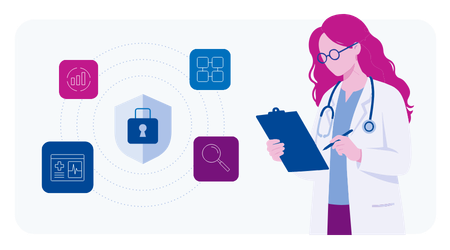
Pharma marketers need to build more meaningful relationships with patients (DTC), caregivers, and healthcare professionals (HCP) across a health journey that spans many channels, partners, and decision moments.
That creates an operational challenge. Data, activation, and measurement often sit with different vendors, each with its own rules, IDs, and handoffs. DTC and HCP campaigns need separate identity paths, but both still need to support the same brand objective. Pharma marketing teams need a clearer way to connect audience strategy, media exposure, and outcomes without adding risk or confusion. That starts with identity, not as a single system for every audience, but as a governed workflow that keeps DTC and HCP paths separate and coordinated.
In our pharma marketing playbook, “From onboarding to outcomes: The privacy-first independent identity workflow for pharma marketing,” we show pharma brands how to build privacy-first workflows that connect identity, activation, and measurement across the healthcare ecosystem.
Here are three priorities pharma marketing teams can use to build more governed, measurable engagement.
1. Why should pharma marketers keep DTC and HCP identity workflows separate?
Pharma marketers should keep DTC and HCP identity workflows separate because each audience requires different data signals, activation paths, and measurement methods. Separate workflows give teams clearer governance controls while helping DTC and HCP campaigns support the same brand objective.

DTC and HCP campaigns often support the same brand objective, but they need separate ways to manage data, reach audiences, and measure results. That’s where identity plays a central role. It gives pharma teams a governed way to keep DTC and HCP data, activation, and measurement separate while coordinating both toward the same goal, like driving drug awareness and impacting prescribing behavior.
The missing layer in pharma marketing. Watch our Q&A
DTC activation depends on privacy-safe identity, which can include tokenization, aggregated audience logic, and non-clinical consumer context. This helps brands better understand patients and caregivers as people, not only as condition-defined audiences.
HCP activation depends on a different foundation. It may use signals such as National Provider Identifier (NPI), specialty, practice location, partner identifiers, and other verified attributes. When DTC and HCP workflows are treated as one system, you can create governance risk, weaken audience logic, and make measurement harder to defend. Keeping them separate gives teams clearer controls, audience planning, and a stronger way to show how both efforts support the same brand goal.
2. How can pharma marketing teams make audiences activation-ready with privacy-safe identity?
Pharma teams can make audiences activation-ready by translating fragmented inputs into governed audience workflows that can be matched, activated, separated, and measured. Privacy-safe identity helps prepare DTC and HCP audiences for approved channels and partners while maintaining the separation each workflow requires.
Privacy-safe identity helps prepare DTC and HCP audiences for approved channels and partners while maintaining the separation each workflow requires.
After separating DTC and HCP data, activation, and measurement, the next step is making each audience ready to use across approved channels and partners. Pharma audiences rarely start in a format that is ready for activation across platforms, publishers, and partners. Inputs may come from partner audiences, platform identifiers, CRM systems, privacy-safe consumer signals, HCP attributes, or partner-provided data.
Those inputs need to be translated into usable audiences through governed identity workflows. For DTC campaigns, activation readiness may include cohort construction, non-clinical enrichment, caregiver logic, tokenized matching, and exclusion rules. For HCP campaigns, it may include verified identity inputs such as NPI, specialty, practice location, and professional address.
A strong workflow answers four questions:
- Can the audience be matched accurately?
- Can it be activated across approved destinations?
- Can DTC and HCP separation be maintained?
- Can the audience connect back to verification and measurement?
When the answer is yes, pharma brands have a stronger foundation for audience quality, usable reach, and cross-channel activation.
3. Why should pharma marketers build measurement into the workflow from the start?
Pharma marketers should build measurement into the workflow from the start because campaign exposure needs to connect back to permitted identity frameworks and partner-held outcomes. Planning measurement before activation gives teams a clearer, more explainable way to evaluate how audience strategy, media exposure, and outcomes work together.
Making audiences ready for activation is only one part of the job. Pharma teams also need a clear way to connect media exposure to outcomes, and that measurement plan needs to be in place before a campaign goes live.
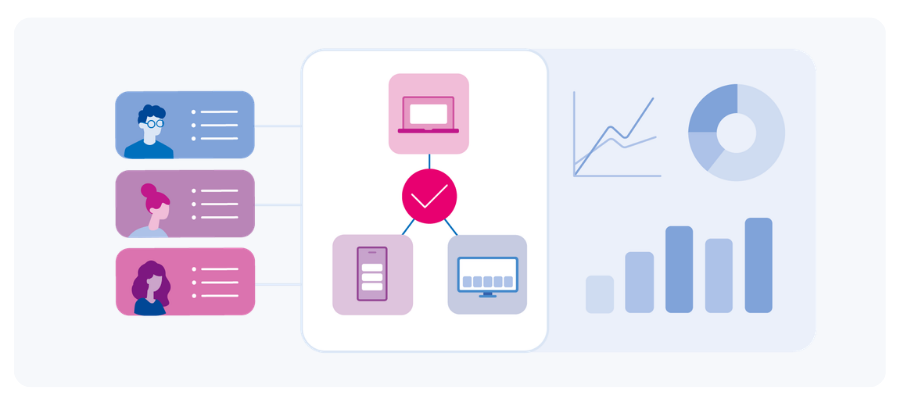
Pharma measurement requires more than knowing whether media ran. Brands need to connect exposure signals to permitted identity frameworks and partner-held outcomes in a way that is accurate, governed, and explainable. Those outcomes may include script lift, qualified HCP engagement, audience quality, and exposure-based HCP reporting where appropriate.
Clean rooms and partner-enabled workflows can help connect exposure, identity, and outcomes in a governed way. For DTC campaigns, this may involve linking tokenized audience or exposure data to a measurement partner environment. For HCP campaigns, this may involve resolving exposure back to HCP identity using NPI, professional address, specialty, practice location, partner identifiers, or measurement partner IDs.
When measurement is planned before activation begins, teams gain a clearer view of how audience strategy, media exposure, identity, and outcomes connect.
How does Experian help pharma marketing teams connect identity, activation, and measurement?
Experian helps pharma marketing teams connect identity, activation, and measurement by serving as a neutral, interoperable workflow layer across data, onboarding, approved destinations, and measurement partners. Experian helps teams keep DTC and HCP identity paths separate while preserving the connection between activation and outcomes. Our role centers on three practical needs. We help teams:
As a neutral, interoperable identity, data, and workflow layer, we help brands translate fragmented inputs into activation-ready audiences, connect those audiences to approved destinations, and preserve the structure needed to evaluate performance.
Download Experian’s pharma marketing playbook
These three priorities give pharma teams a place to start. Our full pharma marketing playbook goes deeper into how pharma brands can build privacy-first workflows across onboarding, activation, sequencing, and partner-enabled measurement. Inside the playbook, you’ll find a more detailed look at how to:
- Keep DTC and HCP identity strategies separate
- Prepare audiences for activation across channels
- Evaluate audience quality and governance
- Connect exposure to trusted outcomes through partner-enabled measurement
For pharma marketers working across fragmented data, platforms, and partner ecosystems, our playbook offers a framework for moving from fragmented inputs to more governed activation and stronger measurement readiness. Download our full playbook to learn how privacy-first identity workflows can help pharma brands connect onboarding, activation, and outcomes.
FAQs
Pharma marketers need separate DTC and HCP identity workflows because patients, caregivers, and healthcare professionals require different data signals, activation paths, and measurement methods. Keeping those paths separate helps teams maintain governance while coordinating both efforts toward the same brand objective.
Privacy-safe identity helps pharma marketers translate audience inputs into activation-ready audiences without treating DTC and HCP workflows as one system. It can support tokenized matching, cohort construction, verified HCP identity inputs, and the separation needed to connect activation with trusted outcomes.
Experian helps pharma brands connect data, identity, onboarding, activation, and measurement across a fragmented partner ecosystem. Experian’s identity foundation and workflow connectivity help teams prepare audiences for approved destinations while preserving the structure needed to evaluate trusted outcomes.
Measurement planning should happen before activation begins. When pharma teams define measurement early, they can connect audience strategy, media exposure, identity, and partner-held outcomes in a more accurate, governed, and explainable way.
Pharma marketers should look for audiences that can be matched accurately, activated across approved destinations, kept separate across DTC and HCP workflows, and connected back to verification and measurement. This gives teams a stronger foundation for audience quality, usable reach, and cross-channel activation.
Latest posts

Ensure you understand privacy compliance pitfalls with special attention on shopping cart abandonment emails.

Partnership combines customer connections and cross-device scale to deliver more strategic customer insights NEW YORK AND CHICAGO — March 16, 2017 — Signal, the global leader in customer identity, today announced a partnership with Tapad, now part of Experian and the leading provider of unified, cross-screen marketing technology solutions. This global integration extends device connectivity for Signal’s clients across North America, APAC and EMEA by leveraging Tapad’s proprietary Device GraphTM. With Signal’s Customer Identity Solution, brands benefit from more visibility of known customers, lower costs to reach those customers and decreased expenses and data loss that often results from using multiple vendors. Integrating with Tapad’s Device Graph, which connects billions of devices, enables Signal clients to build an even broader view of their known customers across multiple devices. This integration combines Signal’s customer identity scale with Tapad’s device scale to expand the reach of addressable media channels and enhance customer journey insights across touchpoints. Tapad and Signal were able to drive incremental device connections for more than 65 percent of customer profiles, linking an average of 6.8 browsers and devices per customer. With this combined data set, Signal clients can expand their authenticated view of a customer to all associated devices and realize more strategic insights into their high-value users. The partnership also allows Signal’s clients to integrate in real-time with Tapad’s media platform, Unify. This proprietary technology enables advertisers to make real-time activation and buying decisions with maximum scale, as well as automated reporting and measurement. “Continuously recognizing customers across devices instantly and in a privacy-safe way is essential for marketers to stay competitive,” said Marc Kiven, founder and CRO of Signal. “We are thrilled to enter this unique, global partnership with Tapad, enabling our clients to access their technology and more effectively reach customers in real-time and at scale.” “Being able to leverage a persistent view of customer connections across devices is a huge challenge for brands,” said Pierre Martensson, SVP and GM of Tapad’s global data division. “With Tapad, Signal is now able to connect with the billions of existing data points in our device graph to help clients better understand customer behavior and realize even stronger customer engagement.” Contact us today

Early successes include revenue increases, global partnerships and fundraising NEW YORK, March 16, 2017 /PRNewswire/ — Tapad’s entrepreneurial mentorship initiative, the Propeller Program, has seen extremely positive results since it began in September 2016. The five early-stage startups selected from Norway have gained momentum in establishing a U.S. presence. Tapad, now a part of Experian, is the leader in unified cross-device marketing technology. The company was acquired by the Telenor Group in 2016. Among the successes within Propeller: Xeneta, the leading ocean freight price comparison platform and contracted rate database, has raised an additional $12M in funding since beginning the Propeller Program. Before the end of 2016, the company had exceeded its revenue expectations by nearly 30 percent, proving the European-focused business could succeed in the American market. “Aside from directly impacting our revenue, the Propeller Program has provided us with incredible access to a countless number of external resources, including subject matter experts from the fields of fundraising, public speaking, corporate structuring and immigration law,” said William Di Ieso, GM of North America for Xeneta. “We remain extremely grateful for the opportunity and exposure the program has provided for Xeneta.” Bubbly, an in-store real-time engagement tool for non-buyers, now has clients on four continents. After only a few months in the U.S. market, Bubbly has signed deals with one major retail brand, one major toy manufacturer and a major global consulting firm. The Propeller Program has also opened doors for greater opportunities in Scandinavia and EMEA. After an introduction to Telenor Group’s President and CEO Sigve Brekke, Bubbly is currently piloting its IoT kiosk with the company. “The mentoring sessions have been very valuable and have given us guidance as to how to best enter the U.S. market,” said Marianne Haugland Hindsgaul, Bubbly CEO and co-founder. “Learning to do business in the U.S. is not something you can necessarily learn from a book. The most impactful lessons are based on real-world experience, and that is what the Propeller Program has given us.” BylineMe, a marketplace for freelancers, publishers and brands to connect for content creation and distribution services, has built an extensive network of potential clients and investors. The company has tested its product in the U.S. market and gained valuable feedback for further development. Eventum, a property-sharing group that digitally assists in securing venues for meetings and corporate events, has closed a seed round of funding for nearly $1M. Eventum has also made key hires in the areas of business development and engineering “It is so rewarding to be able to support these Norwegian startups in a meaningful way,” said Are Traasdahl, CEO and founder at Tapad. “Mentor relationships are critical for strategic growth, and I am proud to be able to pay forward the experiences I have gained as an entrepreneur. To me, the Propeller Program is a shining example of the magic that can happen when Norwegian innovation meets American opportunity.” Contact us today