At A Glance
Pharma marketers need privacy-first identity workflows that keep DTC and HCP paths separate while connecting activation and measurement. Experian’s pharma marketing playbook shows how brands can prepare audiences, coordinate approved destinations, and build measurement into the workflow so teams can connect media exposure to trusted outcomes.From onboarding to outcomes
Pharma marketing teams need identity workflows that can support accurate audience creation, governed activation, and partner-enabled measurement without combining DTC and HCP identity paths.
Download our pharma marketing playbook to help your team:
- Plan DTC and HCP identity strategies with clearer separation
- Prepare audiences for activation across approved channels and partners
- Evaluate audience quality, usable reach, and governance

Pharma marketers need to build more meaningful relationships with patients (DTC), caregivers, and healthcare professionals (HCP) across a health journey that spans many channels, partners, and decision moments.
That creates an operational challenge. Data, activation, and measurement often sit with different vendors, each with its own rules, IDs, and handoffs. DTC and HCP campaigns need separate identity paths, but both still need to support the same brand objective. Pharma marketing teams need a clearer way to connect audience strategy, media exposure, and outcomes without adding risk or confusion. That starts with identity, not as a single system for every audience, but as a governed workflow that keeps DTC and HCP paths separate and coordinated.
In our pharma marketing playbook, “From onboarding to outcomes: The privacy-first independent identity workflow for pharma marketing,” we show pharma brands how to build privacy-first workflows that connect identity, activation, and measurement across the healthcare ecosystem.
Here are three priorities pharma marketing teams can use to build more governed, measurable engagement.
1. Why should pharma marketers keep DTC and HCP identity workflows separate?
Pharma marketers should keep DTC and HCP identity workflows separate because each audience requires different data signals, activation paths, and measurement methods. Separate workflows give teams clearer governance controls while helping DTC and HCP campaigns support the same brand objective.

DTC and HCP campaigns often support the same brand objective, but they need separate ways to manage data, reach audiences, and measure results. That’s where identity plays a central role. It gives pharma teams a governed way to keep DTC and HCP data, activation, and measurement separate while coordinating both toward the same goal, like driving drug awareness and impacting prescribing behavior.
The missing layer in pharma marketing. Watch our Q&A
DTC activation depends on privacy-safe identity, which can include tokenization, aggregated audience logic, and non-clinical consumer context. This helps brands better understand patients and caregivers as people, not only as condition-defined audiences.
HCP activation depends on a different foundation. It may use signals such as National Provider Identifier (NPI), specialty, practice location, partner identifiers, and other verified attributes. When DTC and HCP workflows are treated as one system, you can create governance risk, weaken audience logic, and make measurement harder to defend. Keeping them separate gives teams clearer controls, audience planning, and a stronger way to show how both efforts support the same brand goal.
2. How can pharma marketing teams make audiences activation-ready with privacy-safe identity?
Pharma teams can make audiences activation-ready by translating fragmented inputs into governed audience workflows that can be matched, activated, separated, and measured. Privacy-safe identity helps prepare DTC and HCP audiences for approved channels and partners while maintaining the separation each workflow requires.
Privacy-safe identity helps prepare DTC and HCP audiences for approved channels and partners while maintaining the separation each workflow requires.
After separating DTC and HCP data, activation, and measurement, the next step is making each audience ready to use across approved channels and partners. Pharma audiences rarely start in a format that is ready for activation across platforms, publishers, and partners. Inputs may come from partner audiences, platform identifiers, CRM systems, privacy-safe consumer signals, HCP attributes, or partner-provided data.
Those inputs need to be translated into usable audiences through governed identity workflows. For DTC campaigns, activation readiness may include cohort construction, non-clinical enrichment, caregiver logic, tokenized matching, and exclusion rules. For HCP campaigns, it may include verified identity inputs such as NPI, specialty, practice location, and professional address.
A strong workflow answers four questions:
- Can the audience be matched accurately?
- Can it be activated across approved destinations?
- Can DTC and HCP separation be maintained?
- Can the audience connect back to verification and measurement?
When the answer is yes, pharma brands have a stronger foundation for audience quality, usable reach, and cross-channel activation.
3. Why should pharma marketers build measurement into the workflow from the start?
Pharma marketers should build measurement into the workflow from the start because campaign exposure needs to connect back to permitted identity frameworks and partner-held outcomes. Planning measurement before activation gives teams a clearer, more explainable way to evaluate how audience strategy, media exposure, and outcomes work together.
Making audiences ready for activation is only one part of the job. Pharma teams also need a clear way to connect media exposure to outcomes, and that measurement plan needs to be in place before a campaign goes live.
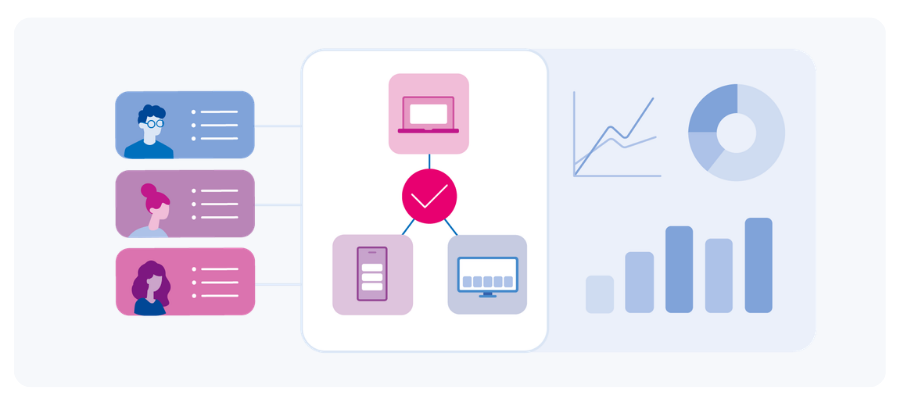
Pharma measurement requires more than knowing whether media ran. Brands need to connect exposure signals to permitted identity frameworks and partner-held outcomes in a way that is accurate, governed, and explainable. Those outcomes may include script lift, qualified HCP engagement, audience quality, and exposure-based HCP reporting where appropriate.
Clean rooms and partner-enabled workflows can help connect exposure, identity, and outcomes in a governed way. For DTC campaigns, this may involve linking tokenized audience or exposure data to a measurement partner environment. For HCP campaigns, this may involve resolving exposure back to HCP identity using NPI, professional address, specialty, practice location, partner identifiers, or measurement partner IDs.
When measurement is planned before activation begins, teams gain a clearer view of how audience strategy, media exposure, identity, and outcomes connect.
How does Experian help pharma marketing teams connect identity, activation, and measurement?
Experian helps pharma marketing teams connect identity, activation, and measurement by serving as a neutral, interoperable workflow layer across data, onboarding, approved destinations, and measurement partners. Experian helps teams keep DTC and HCP identity paths separate while preserving the connection between activation and outcomes. Our role centers on three practical needs. We help teams:
As a neutral, interoperable identity, data, and workflow layer, we help brands translate fragmented inputs into activation-ready audiences, connect those audiences to approved destinations, and preserve the structure needed to evaluate performance.
Download Experian’s pharma marketing playbook
These three priorities give pharma teams a place to start. Our full pharma marketing playbook goes deeper into how pharma brands can build privacy-first workflows across onboarding, activation, sequencing, and partner-enabled measurement. Inside the playbook, you’ll find a more detailed look at how to:
- Keep DTC and HCP identity strategies separate
- Prepare audiences for activation across channels
- Evaluate audience quality and governance
- Connect exposure to trusted outcomes through partner-enabled measurement
For pharma marketers working across fragmented data, platforms, and partner ecosystems, our playbook offers a framework for moving from fragmented inputs to more governed activation and stronger measurement readiness. Download our full playbook to learn how privacy-first identity workflows can help pharma brands connect onboarding, activation, and outcomes.
FAQs
Pharma marketers need separate DTC and HCP identity workflows because patients, caregivers, and healthcare professionals require different data signals, activation paths, and measurement methods. Keeping those paths separate helps teams maintain governance while coordinating both efforts toward the same brand objective.
Privacy-safe identity helps pharma marketers translate audience inputs into activation-ready audiences without treating DTC and HCP workflows as one system. It can support tokenized matching, cohort construction, verified HCP identity inputs, and the separation needed to connect activation with trusted outcomes.
Experian helps pharma brands connect data, identity, onboarding, activation, and measurement across a fragmented partner ecosystem. Experian’s identity foundation and workflow connectivity help teams prepare audiences for approved destinations while preserving the structure needed to evaluate trusted outcomes.
Measurement planning should happen before activation begins. When pharma teams define measurement early, they can connect audience strategy, media exposure, identity, and partner-held outcomes in a more accurate, governed, and explainable way.
Pharma marketers should look for audiences that can be matched accurately, activated across approved destinations, kept separate across DTC and HCP workflows, and connected back to verification and measurement. This gives teams a stronger foundation for audience quality, usable reach, and cross-channel activation.
Latest posts

The concept of identity resolution has emerged over the years as a strategic imperative among marketers and technology vendors. A report by Forrester contends that accurately establishing and maintaining customer identity is one of the most perplexing challenges facing marketers today. Customers have footprints in the offline and online worlds and tend to seamlessly transition across various channels and devices – presenting a unique challenge to truly understand who they are. But the ability to stitch these disparate components of information together means marketers can make better decisions and have more meaningful interactions with their customers. And for customers, this means an experience with personalized advertising content more likely to resonate with them. Why should marketers prioritize identity? The ability to accurately identify customers is the most basic prerequisite for marketing analytics, orchestration and execution. As such, it is becoming increasingly important for brands and marketers planning to link together disparate systems of audience insights and engagement to foster a more seamless and personalized omnichannel customer experience. For example, if an advertiser can identify a customer’s interests, as well as how that person prefers to consume information, then the advertiser can create and deliver messaging that will resonate with the customer. However, like most competitive differentiators, the mission critical components to accurately determine an identity reside within the suite of identity management tools at the marketers’ disposal and the expertise required for proper execution – a struggle for most marketers. But when properly implemented, a comprehensive customer identity strategy can be among a brand or marketer’s most valuable and proprietary assets. Where to begin with identity resolution? With the convergence of CRM platform data, cross-channel online touchpoints, offline record linkage management, probabilistic cross-device graphs, and data onboarding—evolving from point solutions to unified platforms—marketers are faced with an increasingly complex set of challenges in addressing and solving for customer identity management. To properly implement from the get go, and to avoid having to bolt on disparate technologies down the road, emerging industry trends and success stories suggest marketers need a neutral technology service provider that can provide each of these solutions via a single, unified platform. A vendor that can build a solid identity management foundation comprised of omni-channel targeting and attribution, cross-device resolution, online-offline linkage management, and data onboarding form the nexus of a cohesive identity strategy, built to last. Experian helps connect consumer identity As a trusted name in data and information services for more than 40 years, we are committed to privacy by design and the responsible usage and security of data. Whether you’re a brand, agency, or publisher, Experian has the wide-ranging toolset to help you put people at the heart of your business and make better marketing decisions. By harnessing the power of the sum of these parts, fusing both offline and online identifiers and attributes, Experian has established a leadership position in identity management. If you’re ready to begin building your identity foundation, contact us and get started today! Learn more about why identity matters to marketers and consumers, here! Contact us today

Partnership Yields Increased Match and Connectivity Rate Through Tapad Graph, acquired by Experian March 27, 2018 — New York, N.Y. — Tapad, part of Experian, is reinventing personalization for the modern marketer and today announced the impactful results of its strategic partnership with Flashtalking, the leading global independent platform for ad delivery, unification and insights. Flashtalking is one of Tapad’s most engaged partners, using the Tapad Graph to unify cross-device engagement and identity-driven consumer behaviors for attribution modeling. The company leverages a unique identifier that, in conjunction with Tapad’s Graph, provides robust multi-touch attribution solution for its clients. This partnership has resulted in above-industry match and bridge rates for Flashtalking and its customers. Overall, the Tapad Graph yielded a 71 percent match rate with 41 percent of converters engaging on multiple devices, highlighting the importance of cross-device measurement. Tapad’s identity solutions provide Flashtalking with a more holistic view of global engagement. Flashtalking marries ad server log file data with the Tapad Graph to connect all interactions in the consumer journey. This enables Flashtalking to provide more accurate and impactful cross-device attribution, which ultimately enables better optimization. These achievements have led to recognition of Tapad and Flashtalking’s work by the I-COM Global Forum for Marketing, Data and Measurement. “Tapad allows us to understand user engagement across devices and platforms at both the household or individual user level, which is extremely beneficial when providing marketers with true path to conversion and attribution,” said Steve Latham, global head of analytics at Flashtalking. “Since our relationship began, we’ve successfully leveraged Tapad data to provide more accurate, actionable insights that have helped numerous brands achieve substantial gains in media effectiveness.” Flashtalking client Michael Lamontagne, SVP of analytics and CRM at 22squared says “We are big believers in using cross-device insights to improve our campaigns. Flashtalking has been a strategic partner in the pursuit of that goal. By incorporating the Tapad Graph, Flashtalking delivers powerful insights into user engagement and media attribution across browsers and devices. Of equal importance, their bundled solution makes it easy and efficient, saving our team countless hours of busy work.” Contact us today
The Tapad Device Graph™ Complements Freckle’s IoT Capabilities to Extend Scale and Precision of Audience Data New York, NY — December 6, 2017 — Tapad, part of Experian, is the leader in cross-device marketing technology and Freckle IoT, the global leader in multi-touch, offline attribution, today announced they are partnering to provide brands with a holistic and insightful view of their customers, in predefined locations in all global markets. Starting today Freckle IoT will be leveraging the Tapad Device Graph™ to supplement the company’s data set to offer brands more granular attribution data. Consumer’s online behavior is becoming more and more complex, with the average consumer owning three or more devices and 35 percent of consumers converting on a different device from the one on which they started their research. These interactions become even more complicated when considering how online interactions and media impact offline sales. The collaboration between Tapad and Freckle, which combines Freckle IoT’s persistent location data with Tapad’s proprietary cross-device technology, is an important step in empowering brands with the information they need to better understand how digital media, consumed across multiple devices, is impacting offline attribution. Using its opt-in, first-party data, Freckle IoT helps brands measure the effectiveness of their advertising by independently matching media spend to in-store visits. Tapad’s technology extends Freckle’s data-set by allowing brands to access additional deterministic and probabilistic data, at scale and across all devices, to analyze consumer behavior ahead of in-store purchase. “Combining our technology with Tapad’s identity-driven solutions was a natural fit for our business,” said Neil Sweeney, founder and CEO at Freckle IoT. “With our unbiased, agnostic measurement and Tapad’s precise and privacy-safe data set, we knew this partnership would be a strong complement to providing more effective results for the needs of our brand partners.” For more information on Freckle IoT’s measurement offerings, please visit www.freckleiot.com. Contact us today