Loading...

Three themes that defined CES 2026

Published: January 12, 2026 by Experian Marketing Services

At A Glance

CES 2026 showed that AdTech in 2026 will depend on strong data foundations, intentional media buying, and measurable outcomes. Agentic AI systems that can act, optimize, and transact on behalf of marketers emerged as a defining force, but only where data is accurate and privacy-first. Curation is becoming a standard buying approach as AI-powered systems prioritize quality and control. And activation and measurement are finally aligning through identity, allowing AI-driven decisions to be evaluated against real business results.

Year after year, CES signals where marketing is headed next. In 2026, the message was clear. Progress comes from connecting data, intelligence, and outcomes with discipline, not spectacle. Across AI, programmatic media, and measurement, the same priorities surfaced again and again.

Under the bright lights of Las Vegas, three themes cutthrough,and each one pointed to a future where data, intelligence, and outcomes move in lockstep.

Here are the three themes that defined CES 2026.

1. Agentic AI proved that it’s only as good as its data inputs

AI was once again the star of the show. At CES 2026, marketers focused less on demos and more on proof that AI improves decisions, reduces friction, and drives outcomes. Every credible use case traced back to accurate, privacy-first data.

What changed at CES was how that intelligence is being applied. Agentic AI systems designed to act autonomously are moving beyond insights and into execution. From media buying to optimization, these agents are increasingly expected to make decisions at speed and scale. That shift raises the stakes for data quality. When AI is operating campaigns, not just informing them, accuracy and privacy are non-negotiable.

“This year’s CES made agency priorities crystal clear. Efficiency, differentiation, and outcomes. As agentic AI takes on more responsibility across planning, activation, and measurement, Experian gives agencies a robust data and identity foundation they can trust to own the outcome for every client.”

ExperianGreg Williams, Chief Operating Officer

Without accurate, privacy-compliant data, AI agents struggle to reflect real behavior or support responsible personalization. A reliable, privacy-first data foundation is what turns AI from an interesting experiment into an operational advantage.

An icon of a woman with three icons next to her representing tennis, coupons, and electric vehicle.

That advantage gets even stronger when it’s anchored in an identity graph that understands people and households across channels. When identity and intelligence move together, AI becomes more accurate, accountable, and effective at driving outcomes.

In an AI first world, the strongest signal isn’t scale. It’s data quality.

2. Curation goes mainstream

Curation is no longer experimental. At CES, it showed up as a mandated capability for buyers and sellers navigating fragmented signals and complex supply paths. Marketers want intentional media buys they can explain, defend, and repeat.

AI is accelerating this shift. As AI systems take on more responsibility for planning, packaging, and optimization, curation provides the guardrails. It defines what “good” looks like (premium supply, trusted data, and clear performance goals), and allows AI to operate within those constraints driving the optimal outcomes for marketers.

“Our sell-side clients walked into CES asking how to stand out in a crowded landscape. The answer kept coming back to data-driven curation. With Experian Audiences and Curated Deals, SSPs and publishers can improve targeting within PMPs, package inventory more intelligently, and prove value with confidence. As we head into 2026, data is no longer a supporting input. It needs to be at the center of every conversation.”

ExperianChris Meredith, Head of Sell-Side

Rather than maximizing inventory access, curation prioritizes control, transparency, and performance. Buyers want premium supply aligned to specific goals. Sellers want clearer paths to demand. They can play the odds or own the outcome. When data leads, they own it. When curation is powered by high-fidelity audiences and a connected identity framework, it becomes even stronger. That’s what allows curated deals to deliver clarity, confidence, and repeatable performance.
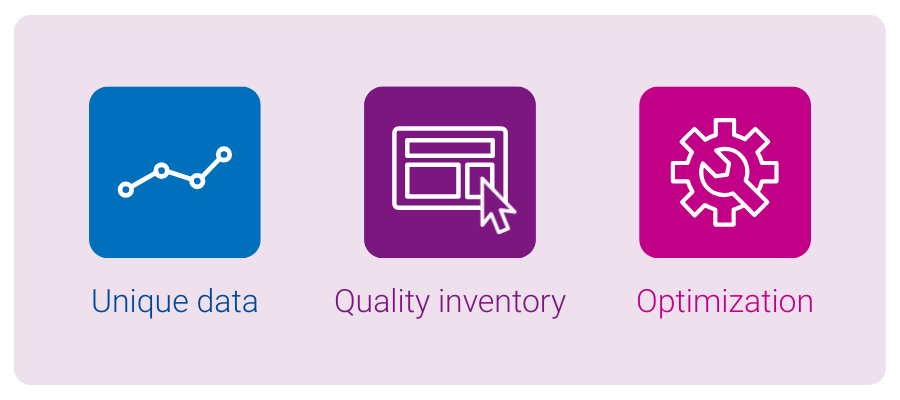
Unique data, quality inventory, and optimization.

This shift reflects a broader move away from probability-based buying toward outcome ownership, where AI-driven systems are measured not on activity, but on results.

3. Activation and measurement finally shared the same stage

Activation and measurement are now coming together around shared data and identity. CES 2026 marked a turning point where closing the loop felt achievable, not aspirational. Both the buy-side and sell-side face pressure to show that media investment drives outcomes.

Agentic AI was a quiet driver of this optimism. As AI agents increasingly manage activation decisions in real time, marketers need measurement systems that can keep up. That requires a shared data and identity foundation. One that allows AI-driven actions to be evaluated against outcomes consistently, across channels and partners.

In healthcare, accuracy is everything. Our clients need to reach patients and healthcare professionals in ways that respect privacy while driving meaningful outcomes. CES underscored that privacy, identity, and measurement must work in harmony. That’s how health marketers reduce risk and increase the likelihood that every message leads to better care.

ExperianSheila Wirick, Sales Director, Health

Achieving that requires a consistent identity spine that connects planning, activation, and outcomes across channels. And that spine is strongest when it’s built on accurate, privacy-first data and audiences that understand people and households. That connection allows marketers to move beyond proxy metrics and evaluate performance based on tangible results. When campaigns and measurement rely on the same data foundation, AI-driven platforms can optimize toward outcomes such as new customers, account growth, or in-store activity, not just delivery metrics.
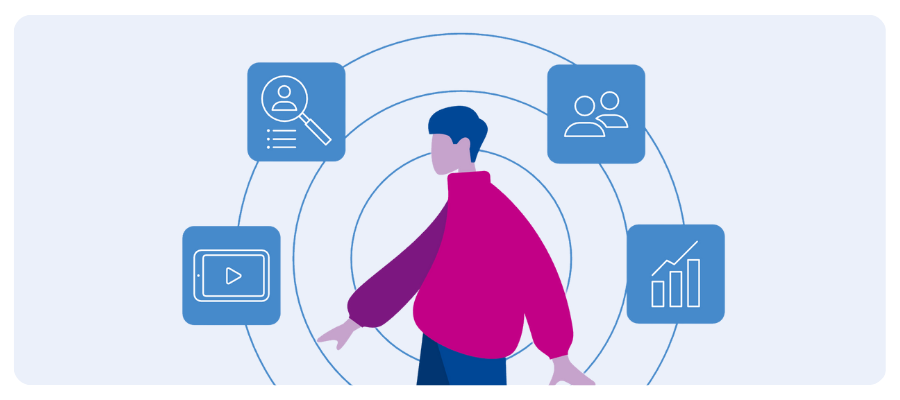
A man with four icons in a half circle around him that represent a tablet, magnifying glass, two people, and a chart.

That’s the connective layer that turns disconnected touch points into a measurable, outcomes-based system.

Three takeaways from CES 2026

  1. AI is maturing, but only for teams withaccurate, connected, privacy-first data that AI agents can act on responsibly.
  2. Curation is scaling, giving both humans and AI systems clearer paths to quality, control, and differentiation.
  3. Activation and measurement are aligning, allowing AI-driven decisions to be judged on outcomes, not assumptions.

We’re building for that world today. One where agentic AI operates on a trusted data and identity foundation, curation defines the rules, and outcomes determine success. With the right foundation and the deep data inputs, you can move faster, reduce risk, and let intelligence (human and artificial) work together to deliver results that last long after the neon lights fade.

Connect with us

This site is protected by reCAPTCHA and the Google Privacy Policy and Terms of Service apply.


FAQs

What was the biggest shift discussed at CES 2026 for marketers?

The biggest shift was the move from hype to accountability. Marketers focused on data quality, intentional media buying, and outcome-based measurement rather than experimental technology.

Why did AI discussions emphasize privacy-first data?

Privacy-first data supports accuracy, compliance, and trust. AI models built on unreliable or opaque data struggle to reflect real consumer behavior and create risk for brands. At Experian, privacy and compliance are built in. Every data signal, attribute, audience, and partner goes through our rigorous review process to meet federal, state, and local consumer privacy laws. With decades of experience in highly regulated industries, we’ve built processes that emphasize risk mitigation, transparency, and accountability.

How does curation help reduce programmatic complexity?

Curation simplifies buying by pairing premium inventory with specific audience and performance goals. This approach reduces waste and creates clearer, more repeatable buying paths. With the acquisition of Audigent, Experian is now more than just a premier data provider. We’re also a full-service curation partner. Together, we deliver end-to-end programmatic curation across data, inventory, and optimization, helping brands and publishers unlock smarter, more scalable media strategies.

What does it mean to align activation and measurement?

It means using the same identity and data foundation to plan campaigns and evaluate results. This alignment allows marketers to measure success based on business outcomes, not just delivery metrics. With Experian, marketers can plan, reach, and measure in a connected cycle. Every impression is measurable. Every audience is accurate. Every decision is powered by data ranked #1 in accuracy by Truthset.

Why is identity central to all three CES themes?

Identity connects data across channels and stages of the customer journey. It enables accurate AI, effective curation, and consistent measurement within one system. Experian delivers identity resolution at the scale, accuracy, and compliance required by the world’s largest enterprises. Our solutions are:
Built on trust: Backed by 40+ years as a regulated data steward and rated #1 in data accuracy by Truthset, so you can act with confidence.
Powered by our proprietary AI-enhanced identity graph: Combining breadth, accuracy, and recency across four billion identifiers, continuously refined by machine learning for maximum accuracy.
Seamlessly connected: Pre-built data integration with leading CDPs, DSPs, and MarTech platforms for faster time to value.
Always up to date: Frequent enrichment and near-real-time identity resolution through Activity Feed for timely personalization and more responsive customer engagement.
Privacy-first by design: Compliance with GLBA, FCRA, and emerging state regulations baked in at every step, supported by rigorous partner vetting.


Latest posts

Loading…
How AI is reshaping identity and marketing: Insights from Cannes Lions 2025

Artificial intelligence (AI) is becoming a bigger part of modern advertising, changing how brands connect with people. At Experian, we believe this technology should make marketing more human, not less. We use AI to help marketers understand consumer behavior, respect privacy, and deliver messages that matter. As part of our latest Cannes Content Studio series, we spoke with leaders from AdRoll, MiQ, OpenX, Optable, PMG, PubMatic, and Yieldmo. Their insights show a clear path forward; one where technology supports human strategy to create more meaningful connections.  1. How does AI help you see audiences more clearly? AI decodes complex behavioral signals to reveal the values and mindsets behind decisions, and increasingly, it predicts what audiences will care about next. This allows marketers to deliver timely, relevant messages that resonate with audiences. At Experian, we help brands use these insights to connect more meaningfully and ethically. Takeaway: Experian’s tools help brands uncover audience insights, enabling more meaningful and ethical connections. 2. Where does AI actually save time, and improve results? Running campaigns is time-consuming. Solutions like Agentic AI now orchestrate end-to-end campaign workflows, audience building, trafficking, QA, pacing, and routine optimizations, so teams focus on strategy and creativity. Many leaders (94%) are investing broadly in AI to drive efficiency and impact, and 49% of marketers use it daily for image and video generation, shifting repetitive tasks from people to tools. By quickly combining past and current performance data, AI can pre-optimize before launch and refine mid-flight, while marketers steer the message and experience. "AI uses past campaign data to optimize performance before launch, continues learning during the campaign, and refines strategies based on the insights it generates, driving better results over time.”Howard Luks Takeaway: Experian’s solutions streamline campaign workflows, allowing marketers to focus on creativity and strategy while improving results. 3. How do AI and human strategy work together in real time? AI handles real-time data analysis and optimization, freeing marketers to focus on strategy, messaging, and creativity. By defining audiences once and activating them across platforms, teams can adapt quickly and confidently. At Experian, we combine machine intelligence with human insight to deliver smarter, more agile campaigns. “AI analyzes data, pulls insights, and automates optimizations, allowing marketers to focus on strategy, messaging, and creativity instead of spending time digging through numbers and data."Lizzie Chapman Takeaway: Experian solutions empower marketers to adapt quickly and confidently, combining human strategy with insights. 4. What does privacy-first look like now? Relying on simple, static data points is no longer enough. A modern approach to identity blends deterministic data (like known identifiers) with modeled components, ensuring data remains de-identified where possible. Clear, transparent guardrails, permitted-use policies, retention limits, sensitive-category blocks, and audit trails, help brands balance personalization with privacy, build trust, and respect user choice. "A new blend of identity systems combines deterministic data, known identifiers, and model driven components, creating fresh ways to address identity and activate campaigns with precision.” Vlad Stesin Takeaway: Experian’s privacy-first identity solutions help brands balance personalization with safety, ensuring trust and compliance. 5. Which new data signals matter, and why? AI is unlocking a new generation of data signals, like content context, sentiment, emotional tone, suitability, attention, and commerce intent, that go beyond legacy identifiers like cookies and demographics. These signals can help brand messages appear in the most relevant environments and by high-value audiences. Used well, they improve relevance, avoid placements near unsuitable or off-brand content, and drive stronger campaign outcomes. "Unlocking new data sets (like emotion, sentiment, and context), AI is creating innovative ways to connect client content with advertising opportunities and rethink how we approach the market.” Sam Bloom Takeaway: Experian’s solutions use advanced data signals to help marketers create more effective and innovative campaigns. Why Experian for human-centered AI? We deliver on the promise of AI-powered marketing through five pillars: See audiences clearly across households, individuals, and devices. Recommend next‑best audiences and automate setup for faster execution. Adapt in real‑time to keep relevance high. Innovate responsibly with strong governance and transparency. Plan, activate, and measure campaigns on one unified platform. The future of intelligent marketing AI will keep accelerating, but the goal stands: make marketing more human. Teams that blend privacy‑first identity, predictive insight, AI‑powered simplicity, and real‑time intelligence will earn trust and drive outcomes. Experian helps you bring those pieces together so every campaign moves from assumptions to clarity, and from activity to measurable results. Talk to Experian about building human-centered AI into your marketing strategy AI marketing trends FAQs How does AI help marketers understand audiences better? AI analyzes complex signals, behaviors, values, and mindsets to provide a clearer picture of what matters to audiences. That clarity makes messaging feel personal and relevant. Learn more about Experian’s Digital Graph and how it can help marketers understand audiences better.  Where is AI improving campaign efficiency today?   Automation reduces manual setup and reporting, so teams focus on strategy and creative. Nearly half of marketers (49%) use AI daily for image and video generation, reflecting this shift.  What does “smarter activation across platforms” mean? Smarter activation across platforms means defining audiences once, then carrying them across channels with live feedback, so relevance and suitability stay high. See how Experian enables smarter activation with our data and identity solutions.  How is AI changing identity?  Privacy‑first identity blends deterministic and modeled components, keeping data de‑identified where possible. Experian’s solutions balance personalization with safety. Learn about Experian’s identity solutions is changing identity.  Why is structured data important for AI‑driven marketing?   AI systems rely heavily on brand‑managed sources. 86% of citations come from websites, listings, and reviews, so clean, accurate, structured data makes your answers and your brand more discoverable. Discover how Experian supports structured data for AI-driven marketing.  Latest posts

Oct 29,2025 by Experian Marketing Services

A deep dive with an Experian partner, AdRoll

In our Ask the Expert Series, we interview leaders from our partner organizations who are helping lead their brands to new heights in AdTech. Today’s interview is with George Castrissiades, General Manager of Connected TV at AdRoll. Premium reach and fragmentation As viewer attention fragments across platforms, how should marketers redefine “premium reach” in CTV to prioritize engagement and audience quality over scale alone? A few years ago, ad supported streaming over-indexed on younger adults, those without much financial history and much more budget conscious. It would have been fair for B2B brands to assume that maybe they weren’t going to find their C-Suite audiences on those channels, and so connected TV(CTV) was positioned as a top of funnel tactic aimed at retail. But that’s all changed – ad-free prices are going up, and ad supported tiers are the norm across the majority of channels. 66% of adults have at least one ad supported streaming channel, and adults today spend nearly as much time streaming movies and TV as they spend on their mobile phones. Now that ad viewing audiences on CTV really span the full spectrum of demo, techno, and firmographic segments, savvy marketers should partner with platforms that offer breadth and depth of targeting and measurement to find the highest value audiences wherever they’re watching CTV and serve them highly relevant ads that draw their attention towards the screen. I know I’m jumping out of my seat whenever I see an AdTech or MarTech ad. Identity and relevance What does a strong identity framework unlock for delivering household- and person-level relevance across screens, and how does it reshape audience planning? In privacy-safe ecosystems, people want to share less data and log in to websites and browsers less frequently. If you can’t resolve a household ID to a CTV device through Safari and other sources of obfuscated identity, you’re going to end up losing a lot of signal along the way. On top of that, targeting smaller, higher-value audiences means this attrition can have a profound impact on your ability to build meaningful reach and use audience forecasts to predict scale. A strong identity framework is the key to maintaining as much of your planned audience as possible and staying true to initial forecasts. AI and outcome planning How is AI evolving CTV from tactical bidding to strategic outcome planning, and what mechanisms are in place to validate true performance lift? Tomorrow isn’t guaranteed, especially not in advertising. Audiences change where and when they consume media, and so shifting budget to a placement that did well yesterday is like buying a stock when it’s outperforming – the gains might be gone by then! Predictive AI is bridging the gap to find the highest value and most engaged audiences in real time, versus being purely reactive. This helps drive outcomes which we see in the form of pipeline influence, ROAS, and site traffic lift – without exponentially increasing costs. The same is true for account-based marketing(ABM) outcomes – there’s a blend of signals, account “fit” and intent data that needs to be evaluated in a deeper, more intelligent way. AI is helping to find those highest value accounts, even before they’re in market, which means smart marketers aren’t showing up late to the party. Measurement and incrementality What privacy-safe, closed-loop measurement frameworks should become standard to prove incremental visits and sales from CTV campaigns? Working with a dedicated multichannel, full-funnel ad and marketing platform like AdRoll can easily let you know when a user arrives at your site and makes a purchase, but understanding how that customer arrived there and which tactics deserve the credit requires a deeper, more sophisticated workflow. Our partnership with Experian allows all devices in a household to ladder back up to a household ID, so we can ensure accuracy without pivoting on anything personally identifiable. This works perfectly in CTV, an environment that follows an app workflow of user resettable device IDs rather than IP address or email but always connects seamlessly to web tokens including cookies. Accuracy, scale, and privacy are maintained in a proven way – you see this tech underpinning the infrastructure of streaming across all the biggest players, so marketers can rest easy. Creative and commerce How can creative sequencing and shoppable TV experiences convert living-room attention into commerce without compromising user experience or feeling intrusive? I like to say that CTV trades attention for action. Users lean back and focus on the messaging and visuals of the big screen rather than scrambling for the mouse or tapping to close some intrusive pop-up. This focus means that the messaging is absorbed more quickly, but creatives can wear out their welcome just as fast. Sequential messaging really helps to move the messaging along without subjecting the viewer to longer ads where attention wanes, but also increases brand recall and specific product information because the story evolves with each impression. This is a great tactic to use when you want a viewer to take a specific action later – but shoppable ads can help motivate a user to act now, and new formats can really simplify things. Shoppable can feel out of range for most – the top players in this space own major e-comm storefronts and then tie them back into their own demand-side platforms (DSPs), content, and streaming devices. For the rest of us, dipping our toes in slowly through simple and cheap solutions like QR codes can connect audiences right to a web experience from their TVs, or intermediate solutions like interactive video ads. Users love to play around with fun on-screen experiences, and there’s a whole spectrum of crawl/walk/run options available. Trust and governance Which shared guardrails—brand safety, fraud control, and frequency management- are essential to unlocking sustainable, scaled investment in CTV? I’ve always thought of CTV inventory analogously to high-end watches – if you buy from the source or a well-known, reputable dealer, you’re probably buying the real thing. But that fancy timepiece the guy was selling outside the bar, that you swore looked real? Probably not. Untrusted resellers and too-good-to-be-true pricing might mean you’re running ads on a screen at a lonely gas station at 3 am to an audience of no one, and that's not even the worst case scenario. Good relationships and deep pockets can solve brand safety and fraud issues, but not every advertiser is going to have those resources. Brand safety and fraud prevention can reduce workload and help distinguish the good stuff from the growing pool of gray area, arguably, CTV inventory that isn’t what was promised to a customer. Outsourcing this trust also goes a long way, with buyers knowing you’re not grading your own homework. Frequency management is equally as important. Once you have your audience and your good supply, it’s important not to abuse a single household just because they meet your targeting criteria. Reach is your best friend with CTV. Data and audience strategy How do Experian’s syndicated audiences provide a consistent, scalable foundation for planning, activation, and measurement across CTV and digital, and what outcomes are clients seeing? We love to talk about how Experian’s data is such an integral part of so much of streaming’s architecture, and the fact that it’s built on deterministic datasets means you’re getting scaled audiences built on knowledge rather than best guesses. That means a lot when working across multiple channels, privacy-safe environments, and households with an ever-growing number of connected devices. Our customers are always delighted at how precise targeting can be, especially in the B2B/B2C space – and knowing the size of those audiences helps them to understand how budget transforms into reach in a more predictable way. It’s confidence-inspiring to point to a new audience and tell your client that these are their future customers. The best part is showing them the outcomes reporting – we consistently see a massive spike in site traffic and engagement on days when a new Experian syndicated audience is launched! Contact us FAQs Why is identity resolution important in CTV? Identity resolution ensures marketers can connect devices and maintain audience accuracy. Experian's identity solutions help reduce data loss and improve audience forecasts, making campaigns more effective. How can marketers find the right audiences on CTV? With viewer attention spread across platforms, marketers need tools that offer both broad and detailed targeting. Experian's syndicated audiences provide reliable, scalable data to help identify and reach high-value audiences across channels. How can creative strategies improve CTV campaigns? Techniques like sequential messaging and shoppable ads keep viewers engaged and encourage action. Simple tools like QR codes or interactive video ads can connect audiences to web experiences directly from their TVs. How do DSPs benefit from strong identity frameworks in CTV? Strong identity frameworks help DSPs maintain accurate targeting and audience reach, even in privacy-focused environments. By connecting devices to household IDs, solutions like Experian’s Digital Graph ensure DSPs can deliver relevant ads and measure performance effectively across channels. About our expert George Castrissiades General Manager of Connected TV, AdRoll George leads the CTV go-to-market strategy at NextRoll, driving rapid growth and adoption of the channel for both B2B and B2C customers. With a track record of building and scaling CTV solutions, he is focused on developing a strategic playbook that accelerates success in the evolving digital advertising landscape. Before joining NextRoll, George spearheaded CTV product innovation at iSpot.tv and held leadership roles in product and operations at YouTube, VICE Media, Crackle, Roku, and Innovid. His expertise spans product development, monetization, and market expansion. About AdRoll AdRoll is a connected advertising platform built for growth-minded marketers. With powerful AI, flexible campaign tools, and seamless integrations, AdRoll helps mid-sized businesses turn complexity into clarity and clicks into customers. The AdRoll platform delivers full-funnel performance through multi-channel advertising, audience insights, and cross-channel attribution, supporting marketers across industries including ecommerce, technology, financial services, education, and more. For B2B teams, AdRoll ABM extends these capabilities with account-based precision, multi-touch campaigns, and real-time buyer intelligence. Backed by nearly 20 years of data and award-winning support, AdRoll enables marketing teams to advertise smarter, move faster, and achieve more, all from one place. Latest posts

Oct 28,2025 by Experian Marketing Services

AI-powered identity resolution for connected customer experiences

Every marketer has seen it: a customer browses reviews on a laptop, adds items to a cart on mobile, then “disappears.” In reality, they just likely switched devices or logged in with a different email. Identity resolution connects these scattered signals into a single profile so you never lose sight of the customer journey. Identity resolution is what helps you keep track of customers who bounce around. Connecting scattered signals into a single customer profile can help you deliver seamless experiences, meet strengthening privacy standards, turn first-party data into measurable results, and fuel better customer analytics. See our identity resolution solution in action Learn about it here What is identity resolution? Identity resolution is the process of pulling together the different identifiers a customer uses and connecting them to a single profile. Without it, you’re left with an incomplete picture of the customer — like a cart tied to one email, an app login tied to another device, or a loyalty swipe that never links back to the same person. Common identifiers include: Cookies: Short-lived browser data Emails: Plain-text and hashed Device IDs: Mobile advertising IDs (MAIDs) or app-based identifiers Loyalty IDs: Program numbers that tie online and offline activity Hashed PII: Personally identifiable information (PII) encrypted for privacy Ultimately, identity resolution can help you recognize the same customer wherever they engage. Why does identity resolution matter now? Marketers face incomplete views, data silos, privacy regulations, and shrinking visibility: Rising consumer expectations: People want seamless, personalized journeys across touchpoints. Privacy-first environment: Consumer privacy legislation (like the GDPR, CCPA, GLBA, FCRA, and new state laws) makes compliance non-negotiable. Signal loss: The decline of cookies, MAIDs, and walled gardens are pushing brands toward first-party data. Experian utilizes AI and machine learning to fill these gaps, predict behaviors, and connect signals across devices — providing marketers with a clear, privacy-safe view of their customers, even when traditional identifiers are missing. In this environment, identity resolution matters because it gives marketers a way to deliver seamless, personalized customer experiences and engage audiences effectively while respecting their privacy. It’s the basis for turning consented first-party data into measurable marketing outcomes without sacrificing trust. Talk to an expert Why is identity resolution critical in a privacy-first world? Even as cookies linger, marketers have already shifted their strategies to rely on first-party data, where choice and transparency are the baseline expectation. At Experian, our long history as a regulated data steward makes us a uniquely capable and trusted partner for managing modern compliance expectations. Our identity resolution solutions maximize the value of permission-based data while meeting consumer demand for privacy, personalization, and control. Struggling with scattered customer data? Experian makes identity resolution seamless Learn more How does identity resolution help brands? Identity resolution turns fragmented signals into unified profiles that drive personalization, efficiency, and compliance. Here’s how it creates measurable business impact. Creates a unified customer view One of the biggest advantages of identity resolution is the ability to integrate data from loyalty programs, point-of-sale (POS) systems, customer relationship management (CRM) platforms, web analytics, and offline sources into a single, comprehensive profile. Experian strengthens identity resolution with AI-driven clustering models that resolve household and individual identities across billions of signals with greater accuracy. With a clearer picture of each customer, brands see higher match rates and larger addressable audiences, which translates to more substantial reach and better return on ad spend (ROAS). Enables better personalization Customers constantly switch devices, update their information, and change preferences. Experian makes it easier to keep pace with these changes through frequent data enrichment and near-real-time identity resolution via Activity Feed. Combined with our long-standing use of AI and machine learning, this approach ensures shifting behaviors are captured quickly, enabling timely personalization, and more responsive engagement. With less delay from data to action, the result is faster response times and higher conversion rates. Improves the customer experience Customers notice when brands deliver relevant ads and contextual content across every channel. Consistency matters! But consistency doesn’t just happen on its own; it comes from identity resolution, which keeps the customer journey connected. As brands maintain continuity, they build trust, strengthen engagement, and increase customer lifetime value. Drives better marketing ROI Not every profile is valuable. Identity resolution helps marketers identify the highest-value audiences and reduce wasted spend. That efficiency leads to lower CPA and a higher overall ROI across campaigns. The power of modeling from a stronger foundation When you have a unified customer view, your models are built on better data. That means you can find more people who look like your best customers, build more responsive audience segments, and target with greater accuracy. This foundation can lead to better spending, more relevant campaigns, and a higher ROI. Maintains privacy compliance With GLBA/FCRA-grade standards and consumer choice mechanisms like opt-outs and data correction, you can protect your brand while maintaining personalization — without compromising legal or ethical safeguards. What are some identity resolution use cases and examples? Every industry faces its own unique identity challenges, but identity resolution is the common thread that turns scattered data into connected experiences. Let’s break down how companies in different verticals are putting it to work (and the kinds of results they’re seeing). Retail and e-commerce Shoppers bounce between websites, carts, and checkout lines, leaving behind scattered signals in the process. In retail, identity resolution bridges the gap between online and in-store experiences by matching online carts with loyalty swipes or connecting connected TV (CTV) exposure to in-store sales. This means fewer silos, better targeting, and more personalized offers wherever people shop. Our 2025 Digital trends and predictions report calls out that omnichannel experiences aren’t optional anymore. With CTV and social dominating spend, brands need identity resolution to cut through silos and build a complete view of customer behavior. Read the full report Financial services In financial services, identity resolution makes it possible to deliver personalized, compliant offers like refinancing options for likely mortgage switchers or the right rewards card for frequent spenders. Our partnership with FMCG Direct to create Consumer Financial Insights® and Financial Personalities® segments helps banks, insurers, and lenders understand behaviors — such as credit card use, deposit balances, and investment habits — without exposing sensitive details. Read more below about how our financial audiences enable privacy-safe personalization. Explore privacy-safe financial audiences Travel and hospitality Travel decisions aren’t always planned out in advance. Many bookings happen spur-of-the-moment, which is why real-time identity resolution is so powerful; it keeps the journey seamless when travelers jump from phone to laptop to tablet and presents relevant offers right as decisions are being made. Windstar Cruises put this information into action with Experian’s identity graph to connect digital interactions with actual bookings, which drove 6,500+ reservations and $20 million in revenue. Get the $20 million Windstar Cruises playbook here Media and TV Viewers tend to hop around between linear TV, streaming apps, and social feeds. And without identity resolution, every screen looks like a different person. Marketers can accurately plan, activate, and measure campaigns by unifying viewing behaviors into one ID with Experian’s AI-powered identity graph. Optimum Media tackled its multiscreen challenge by partnering with Experian for identity solutions. Layering our audience insights and our AI-driven Digital Graph onto their subscriber data, they were able to connect the dots across channels, reach the right households, and measure results instead of just impressions. In the end, they finally got a clear view of what works across every screen. Learn how Optimum Media mastered multiscreen measurement Curious how identity resolution can power your customer analytics? We can walk you through it. Chat with an expert Healthcare and pharma Healthcare marketers can’t afford slip-ups with HIPAA regulations. Identity resolution makes it possible to engage the right patients and providers with de-identified audiences rather than third-party cookies. At Experian, AI and machine learning have always been part of how we power identity resolution. In healthcare, that means using AI-enhanced modeling to connect de-identified clinical and claims data with lifestyle insights. The result is a more comprehensive picture of the patient journey that helps close care gaps, reduce wasted spending, and improve outcomes. By working with partners like Komodo, PurpleLab, and Health Union, we make it possible to activate campaigns at scale that boost engagement and adherence while keeping patient privacy front and center: Komodo Health enriches our identity graph with insights from millions of de-identified patient journeys plus lifestyle data, giving brands a fuller view of where care gaps exist and how to close them. PurpleLab connects real-world clinical and claims data to Experian’s platform, letting advertisers activate HIPAA-compliant audiences across CTV, mobile, and social with the ability to measure real outcomes like prescription lift and provider engagement. Health Union contributes a data set built from 50 million+ patient IDs and 44 billion+ patient-reported data points. Combined with our identity and modeling capabilities, this expands match rates and unlocks up to 76% net-new reach, so campaigns reach patients and caregivers in critical health moments. As a result, healthcare brands can launch campaigns that are privacy-first, highly targeted, and proven to drive meaningful impact. Audio People use audio while commuting, working out, and even folding laundry. It can be one of the hardest channels to track because of how frequently listeners switch between apps, stations, and devices. Experian’s identity resolution partnerships with Audacy and DAX change the game: Audacy helps tie scattered listening into a single view, so advertisers can follow audiences across devices and keep ads relevant in the moment. DAX pairs Experian’s 2,400+ syndicated audiences with its audio network, enabling brands to target precisely and launch impactful campaigns at scale. These partnerships turn audio into an accurate channel where ads feel personal, privacy-safe, and measurable. Gaming Gamers don’t stick to one platform. Player data gets scattered across mobile, console, and PC, so it’s tough to keep track of individuals. Experian helps stitch those signals together so publishers can finally see the whole picture, personalize gameplay, and keep players coming back. With enriched profiles, publishers can deliver offers that resonate and unlock fresh revenue by packaging high-value gaming audiences for advertisers outside the industry. Unity, a leading gaming platform, is tapping into Experian’s syndicated audiences to gain player insights and help advertisers reach gamers across mobile, web, and CTV. For global publishers, unifying player data with Experian has driven higher engagement and stronger ad ROI. Discover how to unlock revenue with unified player data How should I evaluate identity resolution providers? When choosing an identity resolution partner, look for: Data scale and quality: The value of identity resolution depends on how complete and accurate the underlying data is. The right provider should bring together a wide range of identifiers from online and offline sources, maintaining high accuracy so your customer profiles are broad and reliable. Match accuracy and recency: The best partners also refresh their data regularly and can blend deterministic (exact, one-to-one matches) with probabilistic (pattern-based matches) methods. That way, you get the accuracy of “this email is definitely that customer” with the reach of “this device likely belongs to the same person.” Privacy and compliance readiness: Compliance can’t be an afterthought. Your identity partner should be ready for GLBA, FCRA, GDPR, CCPA, and the latest state-level rules with built-in tools for opt-outs, corrections, and deletions. Integration flexibility: A good provider fits into your world, not the other way around. Look for pre-built integrations with your customer data platform (CDP), demand-side platform (DSP), or marketing tech (MarTech) stack so you can get up and running without the heavy IT lift. Data analytics capabilities: You need proof that identity resolution drives ROI. Look for closed-loop measurement that ties unified IDs directly to campaign performance, so you can see what’s working and optimize with confidence. How Experian enables enterprise-grade identity resolution Experian delivers identity resolution at the scale, accuracy, and compliance required by the world’s largest enterprises. Our solutions are: Built on trust: Backed by 40+ years as a regulated data steward and rated #1 in data accuracy by Truthset, so you can act with confidence. Powered by our proprietary AI-enhanced identity graph: Combining breadth, accuracy, and recency across four billion identifiers, continuously refined by machine learning for maximum accuracy. Seamlessly connected: Pre-built data integration with leading CDPs, DSPs, and MarTech platforms for faster time to value. Always up to date: Frequent enrichment and near-real-time identity resolution through Activity Feed for timely personalization and more responsive customer engagement. Privacy-first by design: Compliance with GLBA, FCRA, and emerging state regulations baked in at every step, supported by rigorous partner vetting. The bottom line Identity resolution turns fragmented signals into connected, measurable, and compliant experiences. From retail to gaming, brands using it see stronger personalization, engagement, and ROI. With Experian, you get the data, trust, and responsible AI innovation to make identity resolution work across every channel. Our approach uses AI to connect identities, predict behaviors, and deliver personalization that balances privacy with performance. If you’re ready to turn fragmented data into growth, now’s the time to start. The world’s leading brands trust us to power identity resolution at scale. See how we can do the same for you. Identity resolution FAQs What’s the difference between deterministic and probabilistic matching? Deterministic uses exact identifiers (like an email) for accuracy, while probabilistic uses signals and algorithms to expand reach. Best-in-class providers usually combine both. How does identity resolution improve ROI? Identity resolution helps with personalization by unifying scattered signals into one profile. It reduces wasted spend and increases match rates, which means bigger addressable audiences and higher ROAS. Can identity resolution work without third-party cookies? Yes. With first-party data and hashed PII, brands can still maintain addressability and personalization. What industries benefit most from identity resolution? Retail, finance, travel, media, gaming, and audio all use identity resolution to personalize, attribute sales, and improve efficiency. How is Experian different from a CDP? A customer data platform unifies the data you already own. Meanwhile, we add depth, scale, and higher match rates by layering in our identity graph and data enrichment. Is Experian identity resolution privacy-compliant? Yes. Experian is GLBA/FCRA compliant, GDPR/CCPA ready, and supports consumer opt-outs and corrections to ensure responsible personalization. Latest posts

Oct 22,2025 by Experian Marketing Services

Subscribe to our newsletter

Enter your name and email for the latest updates

This site is protected by reCAPTCHA and the Google Privacy Policy and Terms of Service apply.

About Experian Marketing Services

At Experian Marketing Services, we use data and insights to help brands have more meaningful interactions with people. As leaders in the evolution of the advertising landscape, Experian Marketing Services can help you identify your customers and the right potential customers, uncover the most appropriate communication channels, develop messages that resonate, and measure the effectiveness of marketing activities and campaigns.

Visit our website

Subscribe to our newsletter

Stay up to date on the latest industry news and receive expert tips from our marketing experts.
Subscribe now!