At A Glance
CES 2026 showed that AdTech in 2026 will depend on strong data foundations, intentional media buying, and measurable outcomes. Agentic AI systems that can act, optimize, and transact on behalf of marketers emerged as a defining force, but only where data is accurate and privacy-first. Curation is becoming a standard buying approach as AI-powered systems prioritize quality and control. And activation and measurement are finally aligning through identity, allowing AI-driven decisions to be evaluated against real business results.Year after year, CES signals where marketing is headed next. In 2026, the message was clear. Progress comes from connecting data, intelligence, and outcomes with discipline, not spectacle. Across AI, programmatic media, and measurement, the same priorities surfaced again and again.
Under the bright lights of Las Vegas, three themes cutthrough,and each one pointed to a future where data, intelligence, and outcomes move in lockstep.
Here are the three themes that defined CES 2026.
1. Agentic AI proved that it’s only as good as its data inputs
AI was once again the star of the show. At CES 2026, marketers focused less on demos and more on proof that AI improves decisions, reduces friction, and drives outcomes. Every credible use case traced back to accurate, privacy-first data.
What changed at CES was how that intelligence is being applied. Agentic AI systems designed to act autonomously are moving beyond insights and into execution. From media buying to optimization, these agents are increasingly expected to make decisions at speed and scale. That shift raises the stakes for data quality. When AI is operating campaigns, not just informing them, accuracy and privacy are non-negotiable.

“This year’s CES made agency priorities crystal clear. Efficiency, differentiation, and outcomes. As agentic AI takes on more responsibility across planning, activation, and measurement, Experian gives agencies a robust data and identity foundation they can trust to own the outcome for every client.”
ExperianGreg Williams, Chief Operating Officer
Without accurate, privacy-compliant data, AI agents struggle to reflect real behavior or support responsible personalization. A reliable, privacy-first data foundation is what turns AI from an interesting experiment into an operational advantage.

That advantage gets even stronger when it’s anchored in an identity graph that understands people and households across channels. When identity and intelligence move together, AI becomes more accurate, accountable, and effective at driving outcomes.
In an AI first world, the strongest signal isn’t scale. It’s data quality.
2. Curation goes mainstream
Curation is no longer experimental. At CES, it showed up as a mandated capability for buyers and sellers navigating fragmented signals and complex supply paths. Marketers want intentional media buys they can explain, defend, and repeat.
AI is accelerating this shift. As AI systems take on more responsibility for planning, packaging, and optimization, curation provides the guardrails. It defines what “good” looks like (premium supply, trusted data, and clear performance goals), and allows AI to operate within those constraints driving the optimal outcomes for marketers.

“Our sell-side clients walked into CES asking how to stand out in a crowded landscape. The answer kept coming back to data-driven curation. With Experian Audiences and Curated Deals, SSPs and publishers can improve targeting within PMPs, package inventory more intelligently, and prove value with confidence. As we head into 2026, data is no longer a supporting input. It needs to be at the center of every conversation.”
ExperianChris Meredith, Head of Sell-Side
Rather than maximizing inventory access, curation prioritizes control, transparency, and performance. Buyers want premium supply aligned to specific goals. Sellers want clearer paths to demand. They can play the odds or own the outcome. When data leads, they own it. When curation is powered by high-fidelity audiences and a connected identity framework, it becomes even stronger. That’s what allows curated deals to deliver clarity, confidence, and repeatable performance.
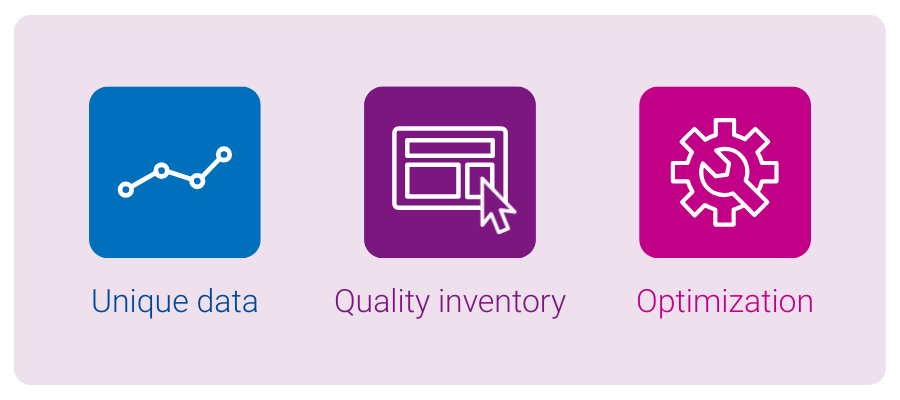
This shift reflects a broader move away from probability-based buying toward outcome ownership, where AI-driven systems are measured not on activity, but on results.
3. Activation and measurement finally shared the same stage
Activation and measurement are now coming together around shared data and identity. CES 2026 marked a turning point where closing the loop felt achievable, not aspirational. Both the buy-side and sell-side face pressure to show that media investment drives outcomes.
Agentic AI was a quiet driver of this optimism. As AI agents increasingly manage activation decisions in real time, marketers need measurement systems that can keep up. That requires a shared data and identity foundation. One that allows AI-driven actions to be evaluated against outcomes consistently, across channels and partners.

In healthcare, accuracy is everything. Our clients need to reach patients and healthcare professionals in ways that respect privacy while driving meaningful outcomes. CES underscored that privacy, identity, and measurement must work in harmony. That’s how health marketers reduce risk and increase the likelihood that every message leads to better care.
ExperianSheila Wirick, Sales Director, Health
Achieving that requires a consistent identity spine that connects planning, activation, and outcomes across channels. And that spine is strongest when it’s built on accurate, privacy-first data and audiences that understand people and households. That connection allows marketers to move beyond proxy metrics and evaluate performance based on tangible results. When campaigns and measurement rely on the same data foundation, AI-driven platforms can optimize toward outcomes such as new customers, account growth, or in-store activity, not just delivery metrics.
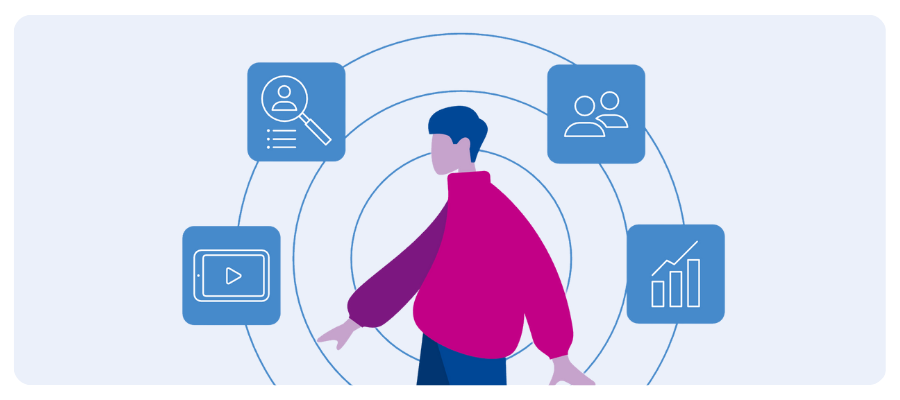
That’s the connective layer that turns disconnected touch points into a measurable, outcomes-based system.

Three takeaways from CES 2026
- AI is maturing, but only for teams withaccurate, connected, privacy-first data that AI agents can act on responsibly.
- Curation is scaling, giving both humans and AI systems clearer paths to quality, control, and differentiation.
- Activation and measurement are aligning, allowing AI-driven decisions to be judged on outcomes, not assumptions.
We’re building for that world today. One where agentic AI operates on a trusted data and identity foundation, curation defines the rules, and outcomes determine success. With the right foundation and the deep data inputs, you can move faster, reduce risk, and let intelligence (human and artificial) work together to deliver results that last long after the neon lights fade.
Connect with us
FAQs
The biggest shift was the move from hype to accountability. Marketers focused on data quality, intentional media buying, and outcome-based measurement rather than experimental technology.
Privacy-first data supports accuracy, compliance, and trust. AI models built on unreliable or opaque data struggle to reflect real consumer behavior and create risk for brands. At Experian, privacy and compliance are built in. Every data signal, attribute, audience, and partner goes through our rigorous review process to meet federal, state, and local consumer privacy laws. With decades of experience in highly regulated industries, we’ve built processes that emphasize risk mitigation, transparency, and accountability.
Curation simplifies buying by pairing premium inventory with specific audience and performance goals. This approach reduces waste and creates clearer, more repeatable buying paths. With the acquisition of Audigent, Experian is now more than just a premier data provider. We’re also a full-service curation partner. Together, we deliver end-to-end programmatic curation across data, inventory, and optimization, helping brands and publishers unlock smarter, more scalable media strategies.
It means using the same identity and data foundation to plan campaigns and evaluate results. This alignment allows marketers to measure success based on business outcomes, not just delivery metrics. With Experian, marketers can plan, reach, and measure in a connected cycle. Every impression is measurable. Every audience is accurate. Every decision is powered by data ranked #1 in accuracy by Truthset.
Identity connects data across channels and stages of the customer journey. It enables accurate AI, effective curation, and consistent measurement within one system. Experian delivers identity resolution at the scale, accuracy, and compliance required by the world’s largest enterprises. Our solutions are:
– Built on trust: Backed by 40+ years as a regulated data steward and rated #1 in data accuracy by Truthset, so you can act with confidence.
– Powered by our proprietary AI-enhanced identity graph: Combining breadth, accuracy, and recency across four billion identifiers, continuously refined by machine learning for maximum accuracy.
– Seamlessly connected: Pre-built data integration with leading CDPs, DSPs, and MarTech platforms for faster time to value.
– Always up to date: Frequent enrichment and near-real-time identity resolution through Activity Feed for timely personalization and more responsive customer engagement.
– Privacy-first by design: Compliance with GLBA, FCRA, and emerging state regulations baked in at every step, supported by rigorous partner vetting.
Latest posts
Originally appeared in AdExchanger Google’s decision not to deprecate cookies in the Chrome browser after all caused a stir across the industry. Companies invested heavily in developing solutions aligned with the Privacy Sandbox as a survival tactic for the post-cookie landscape. At first glance, Google’s about-face may appear to undercut those efforts. It’s easy, and perhaps even satisfying for some – but inaccurate – to say “all that effort was for nothing.” Given Chrome’s dominance among browsers, AdTech companies had no choice but to prepare for “what if” scenarios. The same goes for cookie deprecation. Google’s plan to end support for third-party cookies would have removed a mechanism that has been a cornerstone of addressability for the past 15 years. To be clear, those efforts have not been wasted. They spurred innovation across the AdTech landscape, driving progress in privacy-first targeting, alternative identifiers, supply-path data activation, and real-time data enrichment – all of which will pay dividends for years to come. Whether born directly from Privacy Sandbox participation or inspired by the broader trend toward privacy reform, industry-wide preparation for cookie loss and browser disruption has yielded tangible benefits. Pressure from Google, Apple, and evolving regulations served as a catalyst for modernization that could shape the next decade of advertising technology. An industry anchored in product innovation AdTech is a fundamentally product-driven industry defined by short innovation cycles and the imperative to build and test rapidly. This DNA enables companies to stay resilient, evolve and deliver innovation. Change is good. Disruption can be even better – but only for those who embrace it. Google’s evolving stance on cookies and Privacy Sandbox doesn’t negate what’s been learned. If anything, it underscores the need to keep innovating. The next wave of disruption is likely right around the corner. The payoff While some may argue that the time and effort spent preparing for cookie loss was wasted, those efforts have functioned as a forcing mechanism for several innovations in data activation. Supply-side data activation and optimization, aka “curation,” is an alternative to the traditional approach to data activation. Unlike the traditional data management platform (DMP) to demand-side platform (DSP) activation flow, curation allows buyers to utilize supply-path data more directly. The upshot? Improved performance and pricing for media agencies and brand advertisers. As curation continues to evolve, it’s poised to play a central role in how advertisers and publishers transact. Real-time data enrichment is another area that has benefited from this period of accelerated innovation. Many companies were compelled to improve their tech stacks to align with Sandbox protocols. These updates, particularly in real-time data enrichment capabilities, are now laying the groundwork for future data activation strategies across both the buy and sell-sides. Exiting out of tunnel vision Over the past five years, the AdTech industry has invested deeply in planning for a future without cookies. Still those investments have been well worth it. While cookies are not going away, the broader deprecation of signal continues. The work that was done to prepare will inevitably inform the next evolution of our industry. Contact us Latest posts

Marketers are under more pressure than ever to deliver personalized, high-performing campaigns—while navigating tighter budgets, shifting privacy expectations, and fragmented tech stacks. Despite an explosion of tools and data sources, the fundamentals of marketing haven’t changed. Every great campaign still starts with a simple question: Who are we trying to reach? The answer depends on how well you understand your customers. Increasingly, that understanding is hampered by data silos, inconsistent identity signals, and disconnected workflows between planning, activation, and measurement. When those pieces don’t align, it leads to inefficient spending, incomplete insights, and missed opportunities. To move forward, marketers need more than better tools—they need a more connected approach. Start with a complete view of the customer The foundation of effective marketing is understanding your audience—not just who they are, but what they care about and how to reach them across devices and platforms. That starts with building a complete customer profile. For many marketers, this means linking persistent offline data—such as name and address—with fresh digital signals like device IDs and online behaviors. When combined, these elements provide a high-fidelity view of the customer that can be enriched with attributes like demographics, purchase behavior, and lifestyle interests. This kind of profile doesn’t just help you understand people—it helps you build audience segments that actually perform. Whether you’re working with your own CRM data or third-party sources, the ability to create addressable segments that are both accurate and scalable is what separates good campaigns from great ones. 🛳️ That’s exactly what MMGY did for Windstar Cruises. By layering first-party data with behavioral and demographic insights, they built custom audiences that more than doubled campaign benchmarks. 🎮 Gaming platform Unity tapped into Experian audiences to understand player behaviors across web, mobile, and connected TV (CTV). These insights helped their advertisers reach gaming audiences more effectively—tailoring creative and delivery to real-world preferences, not assumptions. Activate with precision, not just volume Knowing your audience is only half the battle. The next challenge is reaching them—consistently and efficiently—across multiple channels. This is where fragmentation can creep back in. All too often, marketers build audiences in one system, but activate in another, causing data loss and targeting mismatches. A more connected strategy uses the same identity and audience spine across planning and activation, reducing signal loss and improving accuracy. 👉 Curated private marketplaces (PMPs), for example, allow marketers to match high-quality audiences with premium inventory in a targeted, transparent, and efficient way. These deals let marketers align their spending with their goals—whether that’s lowering cost-per-acquisition or boosting reach in a key vertical. Performance results are bearing this out: PMG By using Audigent’s curated PMP approach in combination with Experian audience data, they delivered campaigns that were 44% more cost-efficient across CTV. Boiron For Boiron, a homeopathic brand, using curated media buying reduced data costs by 30% and beat CPA goals for both video and display by more than 40%. Index Exchange Publishers benefit, too. When Index Exchange included Audigent-curated inventory in their PMPs, they saw an average 70% revenue lift for mobile and a 13% lift for CTV. When identity, audience, and inventory are aligned, everyone benefits—marketers, publishers, and consumers. Measure what matters Too often, measurement is treated as an afterthought. But in a connected campaign, it’s built in from the beginning. By using consistent identity across planning, activation, and measurement, marketers can connect ad exposure to real-world outcomes—whether that’s an online conversion, an in-store visit, or a new customer relationship. This kind of closed-loop measurement turns marketing into a learning engine. You don’t just see what happened—you understand why it happened and can use that information to improve the next campaign. 🛳️ In the case of Windstar Cruises, MMGY used Experian identity to precisely measure how digital ad exposures translated into bookings. That kind of visibility gives marketers more than a report card. It gives them the feedback they need to optimize smarter next time—and prove ROI every time. The future is connected To meet today’s demands, marketers need a new way of working—one that starts with a complete understanding of the customer, builds addressable audiences on a strong identity foundation, activates them precisely across channels, and measures impact in real time. The marketers embracing this approach are already seeing results: stronger performance, more efficient spending, and deeper insights that power what comes next. The future won’t be built on more tools—it will be built on more connection. Connect with us Latest posts

Curation — the intelligent packaging of data and inventory actionable in a private marketplace deal — can no longer be considered a trend or buzzword. With over 66% of all open exchange – representing $100 billion in annual spend – being transacted through private marketplace deals (PMPs), curation is a key part of how data and identity are addressed and actioned in programmatic media. Programmatic advertising is certainly known for big shifts, but as shared by Index Exchange CEO Andrew Casale, “Curation will be bigger than header bidding and as big as programmatic or real-time bidding (RTB) – that’s our bet.” And we agree. But why has curation become a critical component of brands and media agencies' digital advertising strategies? Put simply, the math. Case study after case study empirically shows curation performs well for both the buy and sell-sides. For media agencies and brands, curation consistently shows four main benefits: Significant cost efficiencies Buying curated PMPs shows significant cost efficiencies when compared to buying data from the buy-side alone. Strong performance Data-enriched, curated PMPs can be optimized through the supply path, unlike a data management platform (DMP) segment, which leads to strong performance. Futureproofs media buying When data is curated through the supply path, it does not need to rely on legacy identifiers (like cookies), and the door is open to robust, next-gen addressability which better futureproofs media buying opportunities. Value-added insights Curation comes with robust log-level data that can be used for value-added data science including analytics, insights, reporting, and attribution – all critical in a world where addressability and identity resolution are becoming even more challenging. Curation introduced efficiency into homeopathic brand Boiron’s media buys, reducing the brand’s data costs by 30%, which enabled the brand to reinvest the same budget in brand awareness goals. Curation not only met but also exceeded the CPA for display by 82% and for video by 41%. “Audigent has been a top 5 performer in terms of CPA during our testing, helping our teams deliver 44% more efficient spend for brands across CTV campaigns."Sam Bloom, Head of Partnerships at agency PMG A big boost for addressability Legacy identity signals are changing. Whether it’s by browser, device, or platform, both buy-side and sell-side platforms need strong identity signals to reach their intended audiences, and this has become harder than ever before. Curation, with its real-time data connection and enrichment capabilities, solves signal loss challenges by directly connecting to the supply path and using a broader spectrum of identity solutions to boost addressability. Curation allows platforms to target first-party, third-party, contextual, indexed and modeled audiences. This alleviates the dependence on any one identifier and boosts the relevant bidding opportunities for brands and media agencies to target audiences. Not all curation is created equally As with any hot innovation, AdTech is notorious for companies jumping on the bandwagon of the largest trends. Curation is no different, with seemingly everyone now claiming to be a “curator.” As the industry works to define what is and isn’t “curation," we are uniquely positioned to define this as Audigent has pioneered curation for seven years and is the industry leader. The definition of curation is the intelligent packaging and optimization of data curated against the inventory supply path. There are three definitional elements to any curation product: Unique audience data Curation must include first-party, third-party, contextual, indexed and/or modeled data. Robust SSP integration To apply data in real-time to the inventory supply path, a curator must have deep partnerships and integrations that enable the combination of data and inventory into a single package. Optimization The whole point of curating data against the supply path is that it opens the door for robust real-time optimization to drive performance. If the solution ticks all three boxes, then brands and agencies should test curation and gauge its results firsthand. Curation done right drives results for brands, agencies, and publishers When done well, curation improves media buying efficiency and performance for brands and agencies. Importantly, it also drives results for publishers and content creators. Advertisers realize average data segment savings of 36-81% when using PMPs over the open exchange (Internal data) Advertisers see 10-70% lower CPC, 1.5x-3.0x higher CTR, and 10-30% higher video completion rate when using data-enriched PMPs over the open exchange (Internal data) When including their inventory in curated PMPs, publishers see an average 70% revenue uplift for mobile and 13% for connected TV (CTV) Beyond voting with budgets, media agencies and brands are also weighing in on the curation conversation: “Our Conditions Marketplace strategies have driven a 48% improvement in eCPM and a 26% improvement in CPA across our pharma client portfolio as of May 2024. For one client, we saw ROAS improve by 58% compared to their overall omnichannel performance while maintaining quality. These results aren’t outliers—they’re proof that curation is no longer a nice-to-have; it’s a must-have for marketers who want performance, precision, and scale working in lockstep.”Amanda DeVito, Butler/Till Industry-leading curation with Experian Tapping into an end-to-end solution that enables marketers to understand and reach their desired customers across channels through curation is a win-win for all parties. In the past three years, Experian and curation company Audigent have delivered a range of industry-leading innovations together, including the integration of Experian data into Audigent’s PMPs. As one company now, Experian's unique identity and data capabilities amplify how curation activates on the buy-side at scale, setting a new standard for audience targeting with added benefits like audience customization and flexible activation through Audigent’s PMPs or demand-side platforms. Connect with us Latest posts