Loading...

The end of the Wild West in third-party data 

Published: October 30, 2025 by Jeremy Meade, VP, Marketing Data Product & Operations

At A Glance

Third-party data has moved from a fast-growth, loosely governed environment into one defined by trust, transparency, and compliance. Marketers are now looking for partners with institutional experience and rigorous data standards—not opportunistic providers chasing short-term gains. The brands that win will treat responsible data sourcing as the foundation of their customer strategy.

How third-party data has changed and why it matters in 2025

For years, third-party data operated in an expansive, lightly regulated marketplace: fast-moving, high-growth, and filled with players eager to capitalize on digital marketing’s demand for audience insights.

That era is over. Regulatory scrutiny, stricter compliance standards, and rising consumer expectations have already transformed the market. Today, third-party data belongs to partners with proven expertise and built-in compliance. This isn’t a space for opportunistic newcomers; it’s one that rewards long-term commitment and trust.

Even the rapid rise of retail media networks (RMNs) reflects this shift. These platforms are built on long-standing, trusted relationships between brands, retailers, and data partners, utilizing that foundation in new ways to reach audiences responsibly and effectively.

The best providers have already made this transition; those still “shifting” are catching up.

From growth to governance: A market defined by accountability

The third-party data ecosystem has matured. After years of rapid expansion and recalibration, the market has stabilized around a new standard: data quality and regulatory accountability.

Third-party data enriches first-party insights with attributes such as income, gender, and interests that round out the customer view. But when the industry grew unchecked, unreliable providers diluted quality and trust. This resulted in a decline in the overall value and reliability of the third-party data marketplace.
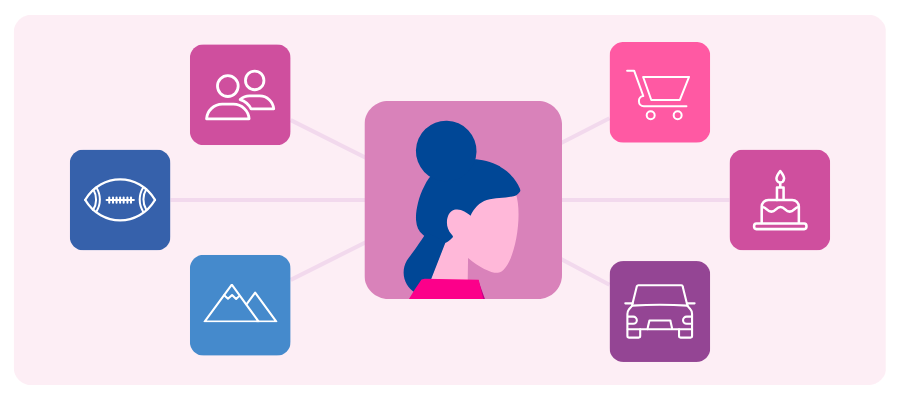
Third-party data enriches first-party insights with attributes such as income, gender, and interests that round out the customer view.

That breakdown led directly to today’s privacy laws, now active across more than 20 U.S. states and numerous countries worldwide. These regulations reflect a permanent consumer expectation: relevance delivered responsibly. Consumers aren’t rejecting personalization; they’re rejecting how it’s been done in the past. They still want relevant, tailored experiences, but they expect brands to deliver them through ethical, transparent data practices.

Does third-party data still matter in a privacy-first era?

Third-party data isn’t disappearing, if anything, it’s become more important. Brands will always need additional insight to deepen customer understanding; first-party data alone only reflects what’s already known.

The industry has entered a mature phase where data quality and compliance are table stakes. The companies leading today built their data infrastructure on rigorous standards, regulatory foresight, and transparent governance.

That same foundation powers the next wave of innovation, including the explosive growth of RMNs. RMNs rely on responsibly sourced third-party data to enrich shopper insights, validate audiences, and extend addressability beyond their own walls. Trusted data partners make that expansion possible, connecting retail environments with broader media ecosystems while maintaining privacy and accuracy.

High-quality, compliant third-party data remains essential because it:

A magnifying glass icon

Fills knowledge gaps

Good third-party marketing data complements first-party insights with demographic, behavioral, and transactional context, providing the missing puzzle pieces to complete the full customer profile.

A target icon

Improves accuracy

Filling in gaps in customer understanding helps you identify, reach, and engage your customers more effectively. This helps improve the delivery of relevant messages and offers to your customers and prospects across channels.

An icon that represents interoperability

Builds connections

Third-party data helps brands build loyalty with consumers by speaking to their interests, and intent behind purchases.

An icon that shows an outline of three people with a star on top of the person in the middle

Fuels prospecting

Third-party data can help you find your best prospects. By enriching customer files, you can understand who your best customers are, and how to find more of them. By modeling this data, you can determine who your best customers are and source prospects similar to them.

Advancements in AI and machine learning are reshaping how this data is used across the ecosystem. What was once primarily a buy-side tactic is now expanding into the sell-side, where publishers and platforms are using data to curate, package, and activate audiences more intelligently. As AI enhances modeling accuracy and automation, third-party data will play an even greater role in connecting brands and consumers in more meaningful, privacy-conscious ways.

The bottom line: it’s not about having more data; it’s about having better, verified data you can trust.

How can you spot a trustworthy data partner?

The strongest third-party data partners demonstrate accountability through experience, infrastructure, and integrity.

Look for providers that:

A shield icon

Operate with clear data principles

Trustworthy partners publish and follow codified data principles that guide every step of data handling. Experian adheres to a set of global data principles designed to ensure ethical practices and consumer protection across all our operations.

A lock icon

Treat new privacy regulations as routine

For mature providers, evolving privacy laws are routine, not disruptive. At Experian, privacy and compliance have long been built in. Every partner and audience goes through Experian’s rigorous review process to meet federal, state, and local consumer privacy laws. Decades of experience have shaped processes that emphasize risk mitigation, transparency, and accountability.

Shaking hands icon

Stay deeply connected

Leading data companies maintain deep relationships with technology partners and industry and regulatory groups to ensure that ethical data practices are put into practice and their customers are aware of platform-specific regulations. Experian’s relationships with demand-side platforms (DSPs), supply-side platforms (SSPs), and even social platforms like Meta, ensures we are aware of any platform-specific initiatives that may impact audience targeting. We’re also active participants in many trade groups to ensure that the industry puts ethical data practices in place to ensure consumers still receive personalized experiences but their data usage and collection is opt-in, transparent and handled with their privacy at the center of the transaction.

Trophy icon

Have a proven track record in the industry

Longevity matters in a regulated and compliance-driven industry. Providers that have thrived through economic cycles and regulatory shifts are the ones equipped for the future. The ability to source high-quality third-party data is core to their business, not an afterthought. Our data is ranked #1 in accuracy by Truthset, giving our clients confidence that every decision they make is backed by the industry’s most reliable insights.

Why the future of third-party data depends on accountability

The third-party data industry has already crossed the threshold from expansion to accountability. The companies leading this era have established their credibility through governance and proof. The future belongs to providers that:

  • Build with regulatory foresight
  • Maintain rigorous quality assurance
  • Prioritize partnership over profit

The Wild West days are long gone. The third-party data ecosystem is now defined by stability, transparency, and shared responsibility.

Partner with Experian for data you can trust and results you can prove

When accuracy and accountability define success, you need a partner built on both. Work with the company that’s setting the standard for responsible data-driven marketing and helping brands connect with people in meaningful, measurable ways.

Get started

This site is protected by reCAPTCHA and the Google Privacy Policy and Terms of Service apply.


About the author

Jeremy Meade, VP, Marketing Data & Product Operations

Jeremy Meade

VP, Marketing Data Product & Operations, Experian

Jeremy Meade is VP, Marketing Data Product & Operations at Experian Marketing Services. With over 15 years of experience in marketing data, Jeremy has consistently led data product, engineering, and analytics functions. He has also played a pivotal role in spearheading the implementation of policies and procedures to ensure compliance with state privacy regulations at two industry-leading companies.


Third-party data FAQs

What is third-party data?

Third-party data is information collected by organizations that don’t have a direct relationship with the consumer. It supplements first-party data by adding demographic, behavioral, and interest-based insights.

Why are privacy regulations reshaping data practices?

Privacy regulations are reshaping data practices because consumers expect control over how their information is used. That expectation led directly to today’s privacy laws, now active across more than 20 U.S. states and numerous countries worldwide. These regulations reflect a permanent consumer expectation: relevance delivered responsibly. Consumers aren’t rejecting personalization; they’re rejecting how it’s been done in the past. They still want relevant, tailored experiences, but they expect brands to deliver them through ethical, transparent data practices. Laws like the CCPA and state-level privacy acts enforce this expectation, holding brands and data providers accountable for the ethical use of data.

Can brands still use third-party data safely?

Yes, brands can still use third-party data safely when sourced responsibly. Partnering with established, compliant providers like Experian ensures both legal protection and data accuracy. 

How does Experian ensure compliance with evolving privacy regulations?

Experian adheres to a set of global data principles designed to ensure ethical practices and consumer protection across all our operations. At Experian, privacy and compliance have long been built in. Every partner and audience goes through Experian’s rigorous review process to meet federal, state, and local consumer privacy laws. Decades of experience have shaped processes that emphasize risk mitigation, transparency, and accountability. Experian’s relationships with demand-side platforms (DSPs), supply-side platforms (SSPs), and even social platforms like Meta, ensures we are aware of any platform-specific initiatives that may impact audience targeting. We’re also active participants in many trade groups to ensure that the industry puts ethical data practices in place to ensure consumers still receive personalized experiences but their data usage and collection is opt-in, transparent and handled with their privacy at the center of the transaction.

What should marketers look for in a data partner?

Marketers should look for transparency, longevity, and evidence of compliance when looking for a data partner. The best partners can clearly explain how their data is sourced, validated, and maintained. Read Experian’s guide on how you can swipe right on the perfect data partner here.


Latest posts

Loading…
Inside Experian’s solutions for SSPs with Yieldmo

Supply-side platforms (SSPs) are expected to deliver more than inventory—they’re being asked to support sell-side targeting strategies, campaign results, and proof of performance. To meet that demand, SSPs need more than access to inventory. They need better data, better tools, and a way to bring it all together. Experian’s solutions for SSPs We built Experian’s solutions for SSPs with that demand in mind. By combining identity resolution, audience targeting, and third-party measurement, we help platforms move beyond basic transactions. Whether you’re doing sell-side targeting, supporting direct deals, or looking to support campaign validation, our tools make it easier to create value for buyers—and keep them coming back. Our solutions that help SSPs: Resolve identity across digital touchpoints using our industry-leading Digital Graph Build differentiated audiences using over 2,400 Experian Audiences and Partner Audiences in Audience Engine Support advertiser-direct relationships with tools to create, activate, and host custom segments Measure real outcomes like in-store visitation and sales through Outcomes, our third-party validated reporting suite Together, these capabilities allow SSPs to produce data-driven deals, increase addressability, and meet buyer demand for smarter, more measurable media. Campaign snapshot: Yieldmo + Experian Yieldmo, an advertising platform known for its creative formats and data-informed approach, has already put this solution to work. Here’s how they built a custom strategy for a major athletic retail client using Experian's solutions for SSPs. The challenge: Drive in-store traffic and reach new buyers Yieldmo supports a leading athletic retailer’s seasonal campaigns focused on in-store traffic. This advertiser wanted to reach new buyers—specifically those who might otherwise shop with a competitor. To do this, they needed access to strong audience segments with reliable data and the flexibility to act quickly across channels. This was the first time Yieldmo applied Experian Audiences to this retailer’s campaigns. The stakes were high: the client was looking for better in-store outcomes and a more streamlined activation workflow. The solution: Experian's activation solution for SSPs Using Experian’s Audience Engine, which includes our proprietary and third-party data marketplace, Yieldmo built a flexible, high-performing media plan that spanned display inventory and included both conquesting and primary in-store shopper segments. The team selected and activated: Apparel and footwear audiences built from Experian and partner data providers In-store shopper segments targeting retail behavior signals Competitive purchasers to capture likely buyers from other athletic brands Our data marketplace allowed Yieldmo to combine Experian Audiences with Partner Audiences from providers like Alliant, Circana, Sports Innovation Lab, and Webbula—all in one place. Manual audience creation used to take days. Now, Yieldmo can build and activate campaigns through a streamlined, self-serve workflow. By working in the Audience Engine platform, Yieldmo was able to avoid multiple contracts and manual requests. They filtered audiences by brand, tailored segments to their goals, and launched without delays. “Experian’s data marketplace in Audience Engine fills a critical gap—letting us quickly search by brand, build smarter conquest segments, and activate custom audiences fast.”Abby Littlejohn, Director of Sales Planning, Yieldmo The results: Expected lift in store visits While final in-store lift results are pending, the early performance metrics are promising: Click-through rates are at and above historical benchmarks across both conquesting and primary shopper segments. Using Audience Engine’s self-serve tools, Yieldmo created audiences faster and more easily. They reduced their workload by minimizing the need for manual data wrangling. “We include Experian audience segments in 80% of formal RFPs. Between contract simplicity, data quality, and campaign results, Experian has become our go-to for third-party audience targeting.”Nelson Montouchet, AVP, Strategic Partnerships, Yieldmo Download the full case study Bring this to your platform Whether you’re looking to monetize more effectively, build deeper advertiser relationships, or stand out with sell-side targeting offerings, we designed Experian’s solutions for SSPs to do exactly that. With our industry-leading Digital Graph, over 2,400 syndicated audiences, partner data, flexible self-serve tools, and outcome-based measurement, SSPs can now move faster and go further—without compromising scale or precision. Get in touch with our team Latest posts

Jun 25,2025 by Experian Marketing Services

Less hype, more action: Three trends from Cannes Lions 2025

After another week under the sun at Cannes Lions 2025, one thing is abundantly clear: our industry is done talking about possibilities — it’s ready to act. From speaking engagements to packed suite meetings, and even stateside through our “Can’t Cannes” activations, the appetite for change was real — and we were right at the center of it. A front-row seat to innovation Experian made a powerful impact across the Croisette, partnering with Audiostack, Basis, Infillion, IQVIA, Magnite, NextRoll, Odeeo, OpenX, The Female Quotient, and the Unplugged Collective x The Digital Marketer, to contribute to some of the week’s most insightful conversations. Our thought leaders were everywhere—on stage, in studio interviews, at executive roundtables—offering a clear voice on retail media growth, pharma advertising disruption, AI innovation, and identity-driven personalization. Three themes that defined the week 1. AI gets real If 2024 was the year of AI buzz, then 2025 is the year AI found its footing. Conversations shifted from “what if” to “what now.” While the promise of AI was front and center, conversations with clients and partners highlighted that we’re still in the foundational phase. Real-world applications—from creative optimization to predictive segmentation—are gaining traction, but long-term value will depend on robust data architecture and trustworthy identity frameworks. MiQ and PMG debuted AI-integrated platforms that demonstrated how AI can automate creative, optimize budget allocation, and personalize media in real time. AI has moved from sidekick to strategist. "Last year it was all about AI, but in a very general sense. This year, it’s about specific applications — a clear sign AI is evolving from a talking point into product.”Budi Tanzi, VP, Product 2. Outcomes > impressions Outcomes may have been a buzzword at Cannes, but as several industry leaders pointed out, simply saying “we drive outcomes” isn’t enough—it risks sounding like table stakes. In today’s performance-driven environment, what matters is how companies define and deliver those outcomes in unique ways. The most compelling conversations weren’t about generic promises, but about clear strategies: challenging assumptions, leaning into strengths, and making specific choices that tie data, media, and technology to measurable impact. "By using consistent identity across planning, activation, and measurement, marketers can connect ad exposure to real-world outcomes—whether that’s an online conversion, an in-store visit, or a new customer relationship."Chris Feo, Chief Business Officer 3. Curation isn't just a tactic Curation is quickly becoming the industry’s preferred approach to cutting through complexity. As marketers contend with signal loss and inconsistent inventory quality, the shift from broad access to intentional activation is gaining momentum. At Experian, we see curation not just as packaging, but as strategic alignment—where identity, data, and inventory come together in purpose-built environments that reduce waste, enhance safety, and drive performance. "Supply-side data activation and optimization, aka “curation,” is an alternative to the traditional approach to data activation. Unlike the traditional DMP-to-DSP activation flow, curation allows buyers to leverage supply-path data more directly. The upshot? Improved performance and pricing for media agencies and brand advertisers."Drew Stein, Managing Director, Audigent Bringing the Cannes experience stateside Not everyone can make it to the South of France—so we brought Cannes to them. Our “Can’t Cannes” events in the U.S. offered local clients a first-class experience filled with insights and networking, minus the jet lag. Final takeaways This year’s festival made one thing clear: real progress requires more than innovation; it requires integration. And that’s where Experian is focused—connecting identity to activation, and data to outcomes, in ways that are practical, scalable, and privacy-resilient. If I had to sum it up? AI is progressing from abstract to application Curation beats clutter Partnership is power And everyone’s aligned around performance We’re grateful to have been part of these conversations and even more excited about where they’ll lead next. Let’s continue the conversation If you're exploring how to connect identity to performance, or simplify the way you activate, measure, and grow, we’d love to talk. Latest posts

Jun 25,2025 by Dave Rosner, VP, Marketing, Audigent

The unexpected upside of a cookieless future that never came

Originally appeared in AdExchanger Google’s decision not to deprecate cookies in the Chrome browser after all caused a stir across the industry. Companies invested heavily in developing solutions aligned with the Privacy Sandbox as a survival tactic for the post-cookie landscape. At first glance, Google’s about-face may appear to undercut those efforts. It’s easy, and perhaps even satisfying for some – but inaccurate – to say “all that effort was for nothing.” Given Chrome’s dominance among browsers, AdTech companies had no choice but to prepare for “what if” scenarios. The same goes for cookie deprecation. Google’s plan to end support for third-party cookies would have removed a mechanism that has been a cornerstone of addressability for the past 15 years. To be clear, those efforts have not been wasted. They spurred innovation across the AdTech landscape, driving progress in privacy-first targeting, alternative identifiers, supply-path data activation, and real-time data enrichment – all of which will pay dividends for years to come. Whether born directly from Privacy Sandbox participation or inspired by the broader trend toward privacy reform, industry-wide preparation for cookie loss and browser disruption has yielded tangible benefits. Pressure from Google, Apple, and evolving regulations served as a catalyst for modernization that could shape the next decade of advertising technology. An industry anchored in product innovation AdTech is a fundamentally product-driven industry defined by short innovation cycles and the imperative to build and test rapidly. This DNA enables companies to stay resilient, evolve and deliver innovation. Change is good. Disruption can be even better – but only for those who embrace it. Google’s evolving stance on cookies and Privacy Sandbox doesn’t negate what’s been learned. If anything, it underscores the need to keep innovating. The next wave of disruption is likely right around the corner. The payoff While some may argue that the time and effort spent preparing for cookie loss was wasted, those efforts have functioned as a forcing mechanism for several innovations in data activation. Supply-side data activation and optimization, aka “curation,” is an alternative to the traditional approach to data activation. Unlike the traditional data management platform (DMP) to demand-side platform (DSP) activation flow, curation allows buyers to utilize supply-path data more directly. The upshot? Improved performance and pricing for media agencies and brand advertisers. As curation continues to evolve, it’s poised to play a central role in how advertisers and publishers transact. Real-time data enrichment is another area that has benefited from this period of accelerated innovation. Many companies were compelled to improve their tech stacks to align with Sandbox protocols.  These updates, particularly in real-time data enrichment capabilities, are now laying the groundwork for future data activation strategies across both the buy and sell-sides. Exiting out of tunnel vision Over the past five years, the AdTech industry has invested deeply in planning for a future without cookies. Still those investments have been well worth it. While cookies are not going away, the broader deprecation of signal continues. The work that was done to prepare will inevitably inform the next evolution of our industry. Contact us Latest posts

Jun 16,2025 by Drew Stein, Audigent Managing Director, Experian

Subscribe to our newsletter

Enter your name and email for the latest updates

This site is protected by reCAPTCHA and the Google Privacy Policy and Terms of Service apply.

About Experian Marketing Services

At Experian Marketing Services, we use data and insights to help brands have more meaningful interactions with people. As leaders in the evolution of the advertising landscape, Experian Marketing Services can help you identify your customers and the right potential customers, uncover the most appropriate communication channels, develop messages that resonate, and measure the effectiveness of marketing activities and campaigns.

Visit our website

Subscribe to our newsletter

Stay up to date on the latest industry news and receive expert tips from our marketing experts.
Subscribe now!