
Brands have spent years strengthening identity. That was the right move. A stronger identity foundation gives marketers a better chance to understand people, shape audiences, and connect media to outcomes.
Yet I see many teams hit the same wall after that work is done. Performance breaks at activation.
I think of it as the activation gap. It’s the distance between knowing who you want to reach and being able to act on that intelligence across channels in a privacy-safe, measurable way. For many brands, identity is stronger than it was a few years ago. The challenge now is carrying that signal cleanly from data into execution, and from execution into outcomes.
Identity was the first step
For a long stretch, the industry was focused on rebuilding identity. That made sense. Marketers needed a more durable foundation for audience strategy, activation, and measurement.
Now the market is in a different phase. First-party data can’t stop at organization in a CRM, it has to be usable in market as an addressable audience that can move across digital, TV, social, and commerce environments.
That shift sounds straightforward. In practice, this is where the process starts to break down.
A pharma brand may already have patient or consumer records, onboarding capability, and audience segmentation. It may be able to launch awareness messaging in a few channels. The harder part is turning that foundation into a connected strategy it can carry into market from start to finish.

That has direct implications for growth. When signal degrades between planning and execution, media becomes less efficient, optimization slows down, and it gets harder to connect audience decisions to business results.
The gap is operational
Closing the gap starts with making identity usable in market, not just accurate on paper.
A pharma marketing team may know which audiences it needs to reach, have a view of likely demand, and know which channels are in play. None of that creates value if the path from audience creation to activation is disconnected.
Modern marketing should be judged by connected execution. Data has to move cleanly into activation. Activation has to stay close enough to measurement so teams can unify cross-channel exposure, build a clearer view of consumer behavior, and connect campaign exposure back to outcomes with more accuracy in near real-time.
That’s the part many organizations are still working through. They’ve invested in the foundation. The system above it still feels too fragmented to carry signal from start to finish.
The missing layer in pharma marketing. Watch our Q&A
Complex markets raise the stakes
This pressure is even more visible in regulated categories.
In health and finance, brands need more than audience access. They need privacy-safe activation, strong governance, and outcome visibility that can stand up to scrutiny. They need a way to carry audience intelligence across environments without losing control of how that signal is used.
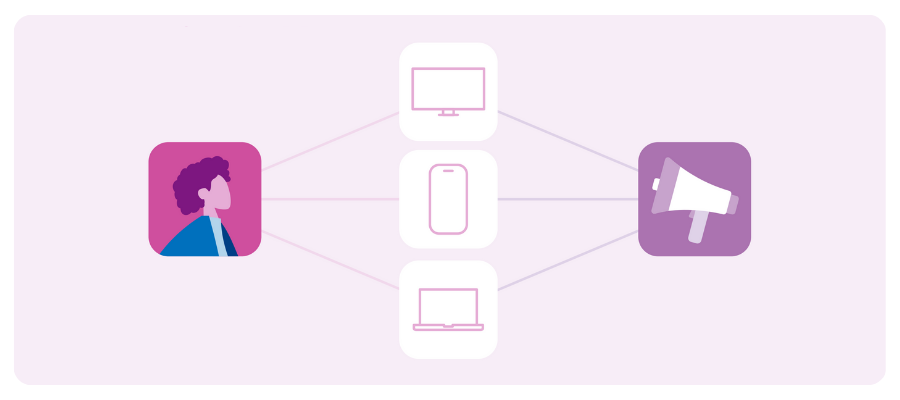
In these categories, weak connections between identity, activation, and outcomes create hesitation, and hesitation is expensive.
What closing the gap looks like
Closing the gap starts with a fuller view of the consumer across channels.
Most brands already have valuable first-party data. The challenge is whether they have enough insight to make it activation-ready.
When identity, activation, and measurement work more closely together, brands can understand not just who the consumer is, but how that person tends to engage and convert across channels. A consumer may be more likely to engage through streaming TV or digital video, then convert later online or in person. Those insights help brands build a more tailored outreach strategy by device and channel, shaping where they show up, how they sequence messages, and where they place the strongest conversion opportunity.
From onboarding to outcomes
Pharma marketing teams need identity workflows that can support accurate audience creation, governed activation, and partner-enabled measurement without combining DTC and HCP identity paths.
Download our pharma marketing playbook to help your team:
- Evaluate audience quality, usable reach, and governance
- Plan DTC and HCP identity strategies with clearer separation
- Prepare audiences for activation across approved channels and partners

Remove duplication across channels and ecosystems
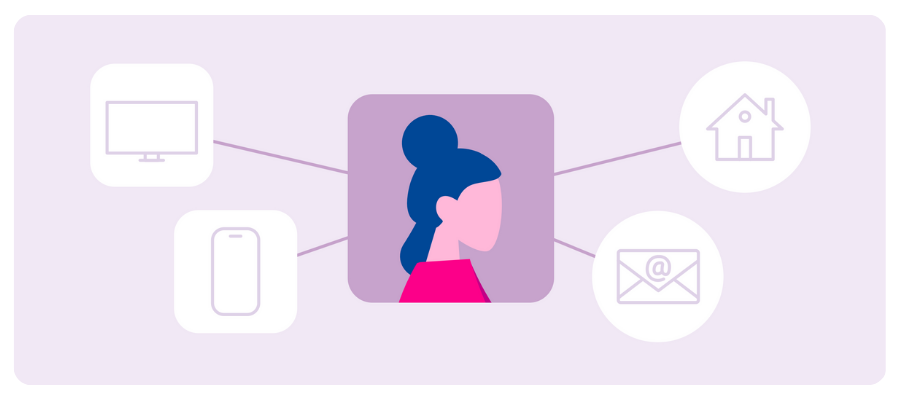
Look for an identity provider that supports accurate and scalable onboarding and resolution across environments, and that shows how identity graph distribution aligns to industry standards at the household and person level. In a multi-device world, that foundation also needs to support high-confidence deduplication to the person and household, especially in connected TV (CTV) and TV environments where devices are often shared and both activation and measurement depend on understanding those relationships.
Find the best path to your audience
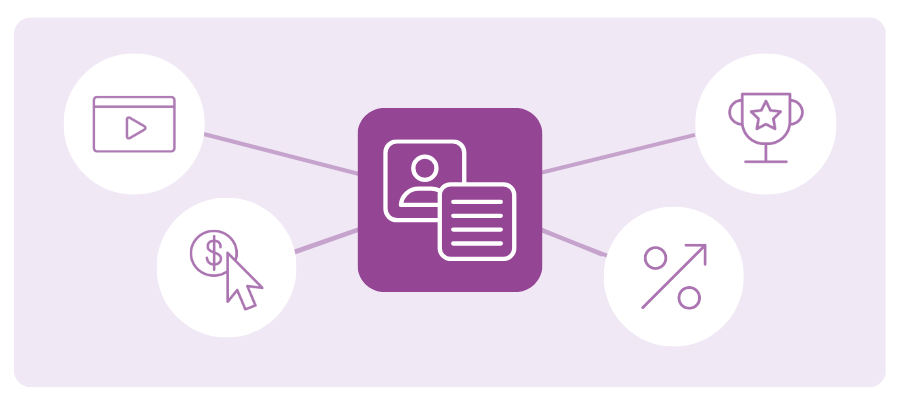
Then make sure those insights can move into activation, supported by curation that helps brands find a more efficient path to reach those audiences, and connected measurement that can tie exposure back to outcomes.
My view
I’ve spent enough time around growth teams to know that the market rarely rewards brands for having the best data story in a conference room. It rewards the brands that can turn audience intelligence into action in market and see clearly what that action produced.
That’s why I think the next separation point is activation. The teams that stand out will be the ones that can take signal from strategy into execution without losing fidelity, then connect that execution back to outcomes quickly enough to make better decisions while it still matters.
That changes how I would evaluate a marketing operation. I would look less at how much data a brand has collected and more at whether that data can travel.
Identity still matters. The difference now is that identity alone will not create growth. Growth comes from carrying signal all the way through activation and into outcomes, with enough clarity to know what’s working and enough confidence to act on it.
About the author

Kevin Dunn
Chief Revenue Officer, Experian
Kevin Dunn joins Experian Marketing Services with more than 20 years of leadership experience across marketing and advertising technology, most recently serving as Senior Vice President of Brands and Agencies at LiveRamp. In that role, he led growth across retail, CPG, travel, hospitality, financial services, and healthcare, overseeing new business, account expansion, and channel partnerships.
Kevin is known for building cohesive, accountable teams and leading with optimism, clarity, and a strong sense of shared purpose. His leadership philosophy centers on empowering people, driving positive outcomes for clients and fostering a culture where teams can grow, take smart risks, and succeed together.
Latest posts

OpenAudience promises the targeting capabilities of a walled garden but without the restrictionsOpenX has lifted the lid on a targeting solution it claims will offer people-based advertising opportunities outside of the industry’s walled gardens such as Facebook and Google. Dubbed OpenAudience, the supply-side programmatic player claims the new offering is powered by proprietary data assets and is supplemented by data partnerships with partners such as LiveRamp and Tapad, a part of Experian. Initially available in the U.S., OpenAudience has a user graph of 240 million monthly users and is currently being tested with multiple marketers with a general rollout planned for the third quarter of 2019. Speaking with Adweek, OpenX CEO Tim Cadogan said the rollout would help differentiate it among its peers as for the most part ad exchanges have marketed themselves based on their impression count, not necessarily addressable audiences. Compare this with Google and Facebook, both of whom account for almost 60% of U.S. ad spend, although this is disproportionate to the amount of time spent with their properties, according to Cadogan. “The thing that has given Facebook and Google so much power is that they have people-based systems [for ad targeting] that are simple to use and operate with a massive scale that are effective, and programmatic hasn’t kept pace with that,” he said. Cadogan cited the findings of a further study by eMarketer, which indicated that marketers are increasingly reliant on such walled garden players for their online inventory supply with the latest launch geared towards capitalizing on that. The latest launch is the culmination of the California-based company’s recent strategic overhaul, namely its attempts to get to grips with an identity-based solution that provides options outside of the walled gardens. Also speaking with Adweek was Todd Parsons, OpenX’s chief product officer, who offered further insight into how OpenAudience operates including how it uses its recently sealed relationship with Google Cloud Platform and machine learning to ape the efficacy of walled garden advertising solutions. “We had to build a matching technology, which made it possible for us to talk about monthly active users instead of talking about cookies or devices,” he explained. “And it took several quarters of staffing up with the right people from the consumer data and identity space.” OpenAudience’s matching technology works by using the identity and cookie matching capabilities of cross-device specialist Tapad and data onboarder LiveRamp to formulate a persistent, deterministic ID which can then be used to match advertisers with audiences on its ad exchange. “So, the idea isn’t for us as a company to put our future into one provider,” added Parsons. “It is to provide a matching technology that uses the best of several.” OpenAudience will also include involve additional tie-ups to offering further demographic information on the 240 million monthly U.S. users such as location, etc., which is currently in testing. “We felt like we needed to be very different about enabling marketers and publishers to activate against that data,” added Parsons. He further added that OpenX wants to rival Facebook’s levels of service when it comes to helping publishers monetize audiences on the social network, except this time on the open web. “No one has actually pushed identity and consumer data into the hands of publishers in a way that you might unify the view of audiences across many websites.” OpenX’s Cadogan summed up the OpenAudience offering and how it may look to advertisers when he said, “Imagine the open web is one publisher, and this lets buyers look at it as a single entity and market to them accordingly.” Contact us today
Everyone knows that it’s important for businesses to have a clearly defined brand. In the modern world, the personal brand has become just as important, and many professionals are trying to build up their public reputation, expertise and industry authority. In the digital age, there are many different methods and channels you can use to build your personal brand, but some are more efficient than others. According to Forbes Agency Council, here are some of the most effective ways to develop an authentic personal brand.1. Give More Than You Receive Whatever you do, always aim at giving more than you receive. When you build your network, try to bring value to each new person that you meet. When you get featured in some media, see what you can do for them in return. This is the best strategy because actions speak louder than words. People will remember you for what you are, not what your website is. – Solomon Thimothy, OneIMS 2. Define What You Stand For, Then Align Your Actions Define your mission. What is your purpose? What do you want to accomplish, and what is your key message? Once you have answers to those questions, use that mission as a guiding North Star to consistently reinforce your personal brand every day. This will come across in how you lead, how you interact with employees and peers, how you communicate, and how you give back to the community. – Preethy Vaidyanathan, Tapad 3. Develop A Creative Positioning Statement It’s all about positioning your company. You need to have creative positioning statements about who you are and what your company is doing to benefit its clients. Clients want resolutions to their problems, and that’s where you come to the rescue. It’s either sold or ignored. – Cagan Sean Yuksel, GRAFX CO. 4. Speak At An Event Becoming a keynote speaker gives you access to the things you need to elevate your brand: influencer status, large audiences and media profile. But access doesn’t equal attention. While speaking gives you the platform, you need to have something compelling to say. You’ll need a differentiated message, unique presentation style and a great agent to make this strategy successful. – Andrew Au, Intercept Group 5. Focus On A Specific Audience The most effective way to build your personal brand is to create content specifically for a very specific group of people. Create relevant content that details solutions to the unique needs of this audience so that it spreads quickly due to its hyper-relevance. This creates authority and credibility for your personal brand and helps you stand out as being the most relevant expert in your field. – Adam Guild, Placepull 6. Be Ruthlessly Consistent Developing a personal brand requires ruthless consistency in your subject matter and how you present yourself to the world. I go back to the early days of marketing blogs. In those days, some bloggers were all over the map with content. The ones who were consistent with their audience and their goals are the ones who had staying power. They became the authors, speakers and consultants. – Scott Baradell, Idea Grove 7. Follow Through Just like a traditional brand, the quality of your offering helps to build your brand. If you are clear on what you can and cannot deliver and always follow through on your word, your personal brand reputation will precede you and will be lifted by the recommendations of others. – Kieley Taylor, GroupM 8. Build A Solid Reputation “Personal brand” is just a new-age name for reputation. Doing your job exceptionally well, going above and beyond, treating people with respect and kindness, having a point of view—essentially any action that builds a solid professional reputation does the very same for your personal brand. – Jess Cook, TMV Group 9. Define Your Voice Establish your unique voice and personal point of view and stick to it in all you do and all you say. Personal brands must be consistent and have consistency in messaging, attitude and behavior. Express your personal brand through comments on articles, at significant events and important platforms where it can best showcase and support your personal point of view and brand persona. – Pat Fiore, FIORE 10. Create And Share Video Content Video is hard for many people. That’s why it can be your competitive advantage if you do it. Video allows you to be seen, heard and felt emotionally in a way that no other medium can. You may say, “That’s not for me” and that’s fine, but good luck competing with those who embrace it. Barriers to video are so low that building a personal brand without it seems as if you are hiding something. – A. Lee Judge, Content Monsta 11. Share Your Point of View In Everything You Do There are a finite number of topics that make for interesting discussion in our industry, so having a point of view and sharing it through crafted content is vital for building your personal brand. You don’t have to be controversial, necessarily, but considering themes and topics and providing honest commentary that demonstrates experience is the quickest way to build your reputation. – David Harrison, EVINS 12. Stay True To You The most effective way to build your personal brand is to be true to who you are. If you are wildly creative and outgoing, show that in your branding! Don’t hold back in your content; post that crazy Instagram picture that shows the world how you think. If you are conservative, then own that. This passion for who you really are—and what your company really is—authentically shines through. – Katy Boos, Remix Marketing Inc. Contact us today
OpenAudience™ will provide marketers the ability to easily plan and buy advertising for every digitally addressable consumer across the open web LOS ANGELES, May 2, 2019 /PRNewswire/ — For the past decade, the most effective way to advertise in digital media has been on Facebook and Google. Marketers in the U.S. now spend two-thirds of all digital ad spend on the “walled gardens”, despite the fact that they receive less than 36 percent of total consumer time spent online. According to eMarketer, addressing this massive asymmetry in advertising – where tens of billions of dollars are over allocated to the walled gardens – is the top concern of marketers in 2019. While programmatic technology has become the primary monetization system for the open web, it has lacked the simplicity and efficacy of walled gardens. Today, OpenX is changing that paradigm by bringing true people-based marketing to the open web for the first time with the introduction of OpenAudience. OpenAudience will provide marketers and publishers with an unprecedented, unified level of knowledge about consumer audiences – through a platform built on privacy by design principles that brings the efficiency and efficacy of walled garden advertising to the open web. OpenAudience is powered by a comprehensive proprietary data asset and supplemented by integrated partnerships with recognized leaders in data and identity like LiveRamp, Tapad, a part of Experian, and more. For marketers, OpenAudience will provide the ability to plan and buy people-based marketing campaigns that combine the impact and ease of use of Facebook advertising with the scale of the open web. OpenAudience is currently in active partner testing with multiple marketers in the U.S., including Fortune 500 financial service and consumer personal care companies, along with one of America’s largest online entertainment outlets, and will be generally available to the broader market in Q3 of 2019. For publishers, OpenAudience will deliver user-based knowledge that empowers them to value and sell advertising with unparalleled precision. With the ability to automatically place consumers into high-value audience segments drawn from the more than 240M U.S. Monthly Active Users OpenX reaches across the open web, OpenAudience allows publishers to maximize revenue like never before. “OpenAudience is a natural evolution of programmatic advertising, combining the unified knowledge of people-based audiences with the transactional power of programmatic to create a planning, buying and advertising experience that is unlike anything else in the market today,” said Todd Parsons, chief product officer at OpenX. “No exchange in the market today has enabled a unified view of publisher audiences,” said Travis Clinger, vice president of strategic initiatives, LiveRamp. “Now, OpenX is democratizing identity across all publishers on the open web, helping marketers to plan and buy audiences the way they do inside walled gardens. We are thrilled to be a key component of OpenAudience.” For more information, or to request a place in the private testing phase of OpenAudience, visit: http://www.openx.com, or contact your OpenX account representative today. About OpenX Nobody understands the open web better than OpenX. As the world’s largest independent advertising exchange, OpenX makes the efficient people-based marketing buying experience of the walled gardens available to all marketers across the open web. OpenX works with more than 30,000 advertisers across every screen and device, reaching nearly one billion consumers – including a quarter billion unique consumers in the US – and processing more than one trillion transactions globally each day. To date, OpenX has helped deliver more than $3 billion in total monetization to publishers. That’s the Power of Open™. Contact us today