
Brands have spent years strengthening identity. That was the right move. A stronger identity foundation gives marketers a better chance to understand people, shape audiences, and connect media to outcomes.
Yet I see many teams hit the same wall after that work is done. Performance breaks at activation.
I think of it as the activation gap. It’s the distance between knowing who you want to reach and being able to act on that intelligence across channels in a privacy-safe, measurable way. For many brands, identity is stronger than it was a few years ago. The challenge now is carrying that signal cleanly from data into execution, and from execution into outcomes.
Identity was the first step
For a long stretch, the industry was focused on rebuilding identity. That made sense. Marketers needed a more durable foundation for audience strategy, activation, and measurement.
Now the market is in a different phase. First-party data can’t stop at organization in a CRM, it has to be usable in market as an addressable audience that can move across digital, TV, social, and commerce environments.
That shift sounds straightforward. In practice, this is where the process starts to break down.
A pharma brand may already have patient or consumer records, onboarding capability, and audience segmentation. It may be able to launch awareness messaging in a few channels. The harder part is turning that foundation into a connected strategy it can carry into market from start to finish.

That has direct implications for growth. When signal degrades between planning and execution, media becomes less efficient, optimization slows down, and it gets harder to connect audience decisions to business results.
The gap is operational
Closing the gap starts with making identity usable in market, not just accurate on paper.
A pharma marketing team may know which audiences it needs to reach, have a view of likely demand, and know which channels are in play. None of that creates value if the path from audience creation to activation is disconnected.
Modern marketing should be judged by connected execution. Data has to move cleanly into activation. Activation has to stay close enough to measurement so teams can unify cross-channel exposure, build a clearer view of consumer behavior, and connect campaign exposure back to outcomes with more accuracy in near real-time.
That’s the part many organizations are still working through. They’ve invested in the foundation. The system above it still feels too fragmented to carry signal from start to finish.
The missing layer in pharma marketing. Watch our Q&A
Complex markets raise the stakes
This pressure is even more visible in regulated categories.
In health and finance, brands need more than audience access. They need privacy-safe activation, strong governance, and outcome visibility that can stand up to scrutiny. They need a way to carry audience intelligence across environments without losing control of how that signal is used.

In these categories, weak connections between identity, activation, and outcomes create hesitation, and hesitation is expensive.
What closing the gap looks like
Closing the gap starts with a fuller view of the consumer across channels.
Most brands already have valuable first-party data. The challenge is whether they have enough insight to make it activation-ready.
When identity, activation, and measurement work more closely together, brands can understand not just who the consumer is, but how that person tends to engage and convert across channels. A consumer may be more likely to engage through streaming TV or digital video, then convert later online or in person. Those insights help brands build a more tailored outreach strategy by device and channel, shaping where they show up, how they sequence messages, and where they place the strongest conversion opportunity.
From onboarding to outcomes
Pharma marketing teams need identity workflows that can support accurate audience creation, governed activation, and partner-enabled measurement without combining DTC and HCP identity paths.
Download our pharma marketing playbook to help your team:
- Evaluate audience quality, usable reach, and governance
- Plan DTC and HCP identity strategies with clearer separation
- Prepare audiences for activation across approved channels and partners

Remove duplication across channels and ecosystems
Look for an identity provider that supports accurate and scalable onboarding and resolution across environments, and that shows how identity graph distribution aligns to industry standards at the household and person level. In a multi-device world, that foundation also needs to support high-confidence deduplication to the person and household, especially in connected TV (CTV) and TV environments where devices are often shared and both activation and measurement depend on understanding those relationships.
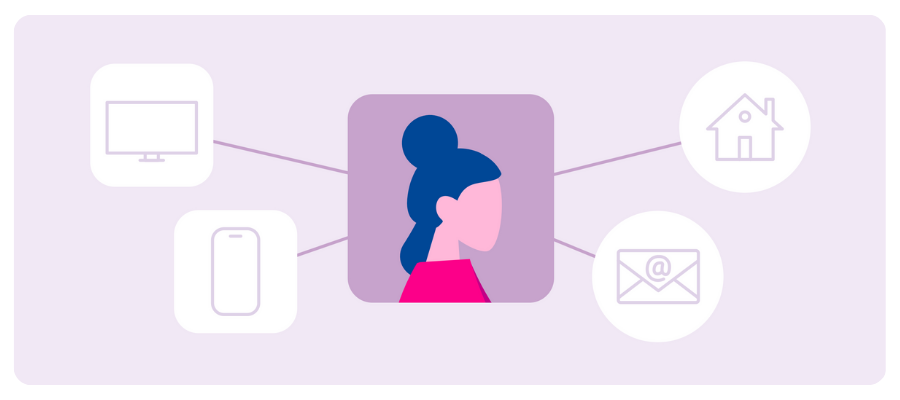
Find the best path to your audience
Then make sure those insights can move into activation, supported by curation that helps brands find a more efficient path to reach those audiences, and connected measurement that can tie exposure back to outcomes.
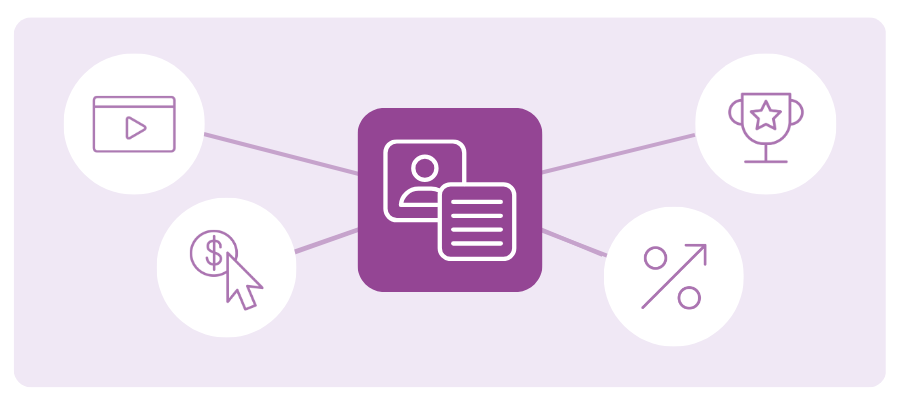
My view
I’ve spent enough time around growth teams to know that the market rarely rewards brands for having the best data story in a conference room. It rewards the brands that can turn audience intelligence into action in market and see clearly what that action produced.
That’s why I think the next separation point is activation. The teams that stand out will be the ones that can take signal from strategy into execution without losing fidelity, then connect that execution back to outcomes quickly enough to make better decisions while it still matters.
That changes how I would evaluate a marketing operation. I would look less at how much data a brand has collected and more at whether that data can travel.
Identity still matters. The difference now is that identity alone will not create growth. Growth comes from carrying signal all the way through activation and into outcomes, with enough clarity to know what’s working and enough confidence to act on it.
About the author

Kevin Dunn
Chief Revenue Officer, Experian
Kevin Dunn joins Experian Marketing Services with more than 20 years of leadership experience across marketing and advertising technology, most recently serving as Senior Vice President of Brands and Agencies at LiveRamp. In that role, he led growth across retail, CPG, travel, hospitality, financial services, and healthcare, overseeing new business, account expansion, and channel partnerships.
Kevin is known for building cohesive, accountable teams and leading with optimism, clarity, and a strong sense of shared purpose. His leadership philosophy centers on empowering people, driving positive outcomes for clients and fostering a culture where teams can grow, take smart risks, and succeed together.
Latest posts

Dextro clients to achieve increased accuracy in cross-device consumer measurement and engagement NEW YORK, Feb. 6, 2017 /PRNewswire/ — Dextro Analytics, a pure play analytics company that harnesses the power of human learning and artificial reasoning to drive more informed and effective consumer marketing, is partnering with Tapad, the leading provider of unified, cross-screen marketing technology solutions and now a part of Experian. The deal is effective immediately and the scope of the partnership covers North America. Additional terms were not disclosed. Leveraging Tapad’s privacy-safe Device Graph™, Dextro Analytics will be able to significantly bolster its insight engine to decode complex customer journeys. Armed with more relevant, actionable insights, marketers can use Dextro’s cross-screen, closed-loop measurement systems to reach and engage the right customer at the right time through the right channel. “Being able to accurately map consumer preferences, behaviors and journeys in a privacy-safe and unified way across devices is still one of the biggest pain points for marketers,” said Ajith Govind, co-founder of Dextro Analytics. “At the same time, this partnership engages customers with the right message at the right time.” “Detecting latent patterns and signals, and tracing backward- and forward-looking behavioral characteristics, are keys to sustaining a competitive advantage in a crowded space,” said Manmit Shrimali, co-founder of Dextro Analytics. “With the proliferation of data and devices, connecting the dots is of paramount importance.” “Dextro is solving some of the biggest challenges in analytics today,” said Pierre Martensson, GM of Tapad’s data division. “Our partners consistently see notable improvements in both budget allocation and device optimizations after integrating with the Tapad Device Graph, and I have every confidence that Dextro will be among them.” For more information about Dextro Analytics’ revolutionary approach to using human learning and artificial intelligence algorithms to solve business and analytical problems, please visit http://dextroanalytics.com/. For more information about Tapad’s cross-platform advertising solutions, please visit https://www.experian.com/marketing/consumer-sync. Contact us today
NEW YORK & LOS ANGELES / BUSINESS WIRE / Jan. 30, 2017– Tapad, part of Experian, and Rubicon Project (NYSE: RUBI) announced today a new global partnership offering a unified, cross-device campaign delivery solution within an automated advertising marketplace. Tapad is the leading provider of unified, cross-screen marketing technology solutions and Rubicon Projectoperates one of the largest advertising marketplaces in the world. The Tapad Device Graph™, which enables buyers to expand their high-value display data signals to associated mobile devices, will be integrated across Rubicon Project’s leading advertising exchange and Orders platform, significantly improving consumer mobile reach. The new global partnership will empower Buyers within Rubicon Project’s exchange to find and engage audiences across their entire digital experience. Rubicon Project operates one of the world’s largest mobile exchanges connecting to approximately 1 billion unique mobile devices globally. “We’re excited to partner with Tapad to continue to provide our customers the very best data for managing their advertising businesses,” said Harry Patz, Chief Revenue Officer, Rubicon Project. “Cross-device delivery is crucial for buyers today with more than 81% of internet users currently relying on more than one device for digital access[1]. Through our partnership, buyers will be able to extend their desktop private marketplace campaigns to mobile, allowing them to find and engage their audience across devices, anywhere in the world. The net result will also benefit sellers; the increase in mobile reach will better position publishers and app developers to strategically capitalize on their inventory, ultimately increasing bid rates and mobile revenue across the board.” “Our partnership with Rubicon Project marks the first time advertisers and publishers alike are able to use cross-device solutions at significant scale outside of Google and Facebook,” said Pierre Martensson, GM of Tapad’s Data Division and APAC. “Our Device Graph will help Rubicon Project’s advertisers make more informed buying decisions and find the audiences who matter most.” Barry Adams, VP of Commercial Development at Bidswitch, said, “As digital advertising moves away from desktop and increasingly toward a mobile-first model, cross device data becomes critical to finding consumers. The rich data buyers will now be able to leverage at scale through the Tapad and Rubicon Project integration will enable us to provide a state-of-the-art cross-screen solution for the 150+ buying platforms that use our service, and the tens of thousands of advertisers they represent.” For more information about Rubicon Project’s inventory, please visit www.rubiconproject.com. For more information about Tapad’s cross-platform advertising solutions, please visit https://www.experian.com/marketing/consumer-sync. Contact us today
Tapad expands linear TV analytics solution, enabling optimal reach and frequency across TV and digital platforms NEW YORK, Jan. 24, 2017 /PRNewswire/ — Tapad, now a part of Experian, has partnered with WideOrbit, the leading provider of advertising management software for media companies, to develop the industry’s first programmatic TV-buying platform powered by a device graph. Tapad is the leading provider of unified, cross-screen marketing technology solutions and was first to market with a device graph, the Tapad Device Graph™. WideOrbit’s robust supply platform and industry-leading footprint offers access to premium TV inventory on top networks, reaching more than 99 million households across local affiliates. The partnership pairs Tapad’s demand-side technology with WideOrbit’s supply-side inventory. As a result, marketers can leverage cross-device audiences in their TV buys for the first time. Additionally, integrating the Tapad Device Graph™ with digital feedback loops and audiences both accelerates optimization and enables precise audience discovery for TV marketers. “The integration of WideOrbit’s quality TV supply takes orchestrated cross-screen media buys to the next level,” said Marshall Wong, Tapad’s SVP of TV market development. “Marketers can now optimize TV campaigns within days instead of weeks. This also untethers them from buying against generic demographics like age and gender. By allowing brands to employ their own CRM or third-party data, we can move them much closer to audiences who will take action.” “Integrating Tapad’s device graph with WideOrbit’s programmatic marketplace delivers enormous value to marketers looking to add TV to cross-device campaigns,” said Ian Ferreira, EVP of programmatic at WideOrbit. “Television still delivers the most efficient reach of any medium, and Tapad’s platform now allows marketers to purchase premium broadcast inventory that extends the power of cross-screen campaigns to TV with a single, unified solution.” “Our clients build lasting relationships with consumers through thoughtful and pioneering marketing,” said Jeff Giacchetti, VP of digital at Mediavest Spark. “The strategic partnership of demand-side technology and supply-side inventory makes it easier for brands to find efficient, incremental reach and are critical in this endeavor.” For more information about Tapad’s cross-platform advertising solutions, please visit https://www.experian.com/marketing/consumer-sync. Contact us today