In a perfect world, we’d all have a single, go-to grocery store that carried everything on our shopping list – fresh produce, gourmet coffee beans, rare spices, and maybe even that special-grade olive oil, right alongside our wholesale bulk purchases at unbeatable prices. It would be convenient and efficient, and it’d save a lot of driving around town.
The changing data marketplace: From one-stop shop to specialized selection
For a long time, data buyers enjoyed something similar in their world: a small set of large-scale data marketplaces that offered a wide array of audiences, making it easy to load up on whatever you needed in one place. Not only are there fewer places to pick everything up, but new factors like privacy and signal deprecation are placing a spotlight on quality and addressability.
Just as our dinner plans are growing more ambitious insofar as we want health, flavor, value, and convenience all in one place – so are our data strategies. Instead of a single steak-and-potatoes meal, today’s data marketplace operators might be cooking up a complex menu of campaigns.
As a result, data buyers are beginning to shop around. Some still rely on large-scale marketplaces for familiar staples, but now they have reasons to explore other options. Some are turning to providers known for offering top-tier, transparently sourced segments. Others are focusing on specialty providers that excel in one area.
A more selective approach to data buying
In this environment, choosing where to “shop” for data is becoming more deliberate and selective. Data buyers aren’t just thinking about broad scale; they’re looking to prioritize quality, durability, data privacy, and differentiation. They need to place higher value on data marketplaces that can maintain audience addressability over time, despite signal loss. Sometimes, that means accepting a smaller assortment in exchange for tighter vetting and more reliable targeting. Other times it means mixing and matching – stopping by one marketplace for premium segments and another for cost-friendly, wide-reaching data sets. Either way, they can benefit from having more choices.
Experian’s marketplace: A trusted source for high-quality data
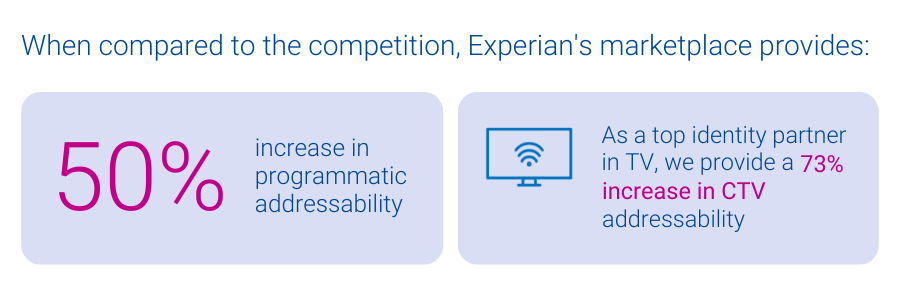
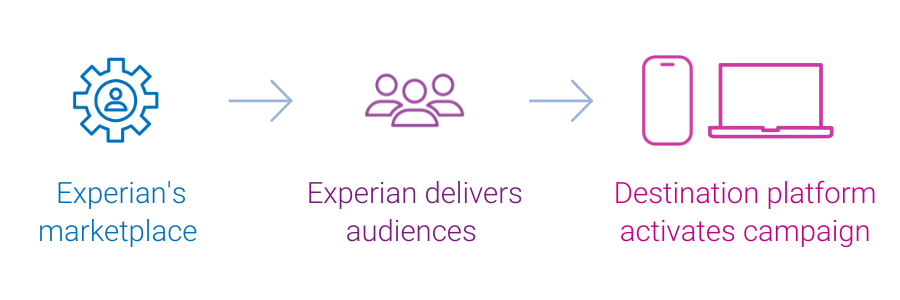
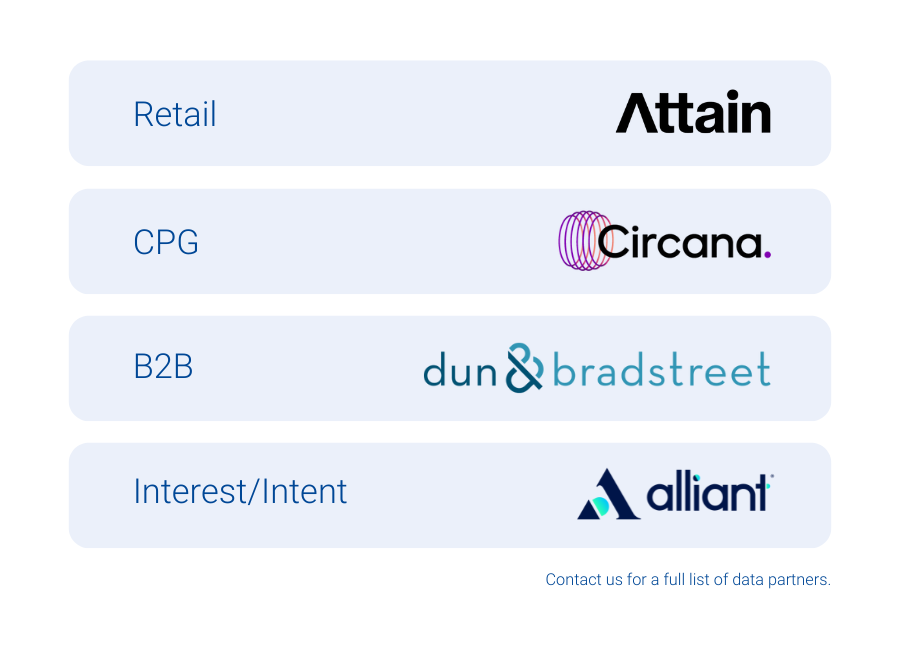
Experian’s vetted and curated blend of data partners and vertically-aligned audiences offers a trusted specialty store for data buyers. Experian’s marketplace, powered by identity graphs that include 126 million households, 250 million individuals, and 4 billion active digital IDs, enables partner audiences to be easily activated and maintain high addressability across display, mobile, and connected TV (CTV) channels. In particular, Experian’s marketplace provides:
The future of data marketplaces: Precision and flexibility matter
The evolution of data marketplaces reflects the industry’s shifting priorities. Data buyers seek specificity, reliability, and adaptability to align with their diverse campaign needs. The best data strategy, much like the best grocery run, isn’t about grabbing everything in one place – it’s about carefully selecting the right ingredients to create the perfect recipe for success. This shift underscores the importance of flexibility and precision as data buyers navigate a landscape shaped by privacy regulations, signal loss, and evolving consumer expectations.
As data marketplaces adapt to meet these demands, they are redefining what it means to deliver value. Experian’s marketplace enables buyers to strike the perfect balance between reach and quality by offering enhanced match rates, precise audience planning, and seamless distribution. In this new era, data buyers have the tools and options to craft campaigns that are impactful and aligned with the increasingly selective and privacy-conscious digital landscape. The key is recognizing that today’s data strategy is about utilizing the strengths of many to create a cohesive and effective whole.
If you’re interested in learning more about Experian’s marketplace or becoming an active buyer or seller in our marketplace, please contact us.
Contact us
Latest posts

Everyone knows that it’s important for businesses to have a clearly defined brand. In the modern world, the personal brand has become just as important, and many professionals are trying to build up their public reputation, expertise and industry authority. In the digital age, there are many different methods and channels you can use to build your personal brand, but some are more efficient than others. According to Forbes Agency Council, here are some of the most effective ways to develop an authentic personal brand.1. Give More Than You Receive Whatever you do, always aim at giving more than you receive. When you build your network, try to bring value to each new person that you meet. When you get featured in some media, see what you can do for them in return. This is the best strategy because actions speak louder than words. People will remember you for what you are, not what your website is. - Solomon Thimothy, OneIMS 2. Define What You Stand For, Then Align Your Actions Define your mission. What is your purpose? What do you want to accomplish, and what is your key message? Once you have answers to those questions, use that mission as a guiding North Star to consistently reinforce your personal brand every day. This will come across in how you lead, how you interact with employees and peers, how you communicate, and how you give back to the community. - Preethy Vaidyanathan, Tapad 3. Develop A Creative Positioning Statement It’s all about positioning your company. You need to have creative positioning statements about who you are and what your company is doing to benefit its clients. Clients want resolutions to their problems, and that’s where you come to the rescue. It’s either sold or ignored. - Cagan Sean Yuksel, GRAFX CO. 4. Speak At An Event Becoming a keynote speaker gives you access to the things you need to elevate your brand: influencer status, large audiences and media profile. But access doesn’t equal attention. While speaking gives you the platform, you need to have something compelling to say. You’ll need a differentiated message, unique presentation style and a great agent to make this strategy successful. - Andrew Au, Intercept Group 5. Focus On A Specific Audience The most effective way to build your personal brand is to create content specifically for a very specific group of people. Create relevant content that details solutions to the unique needs of this audience so that it spreads quickly due to its hyper-relevance. This creates authority and credibility for your personal brand and helps you stand out as being the most relevant expert in your field. - Adam Guild, Placepull 6. Be Ruthlessly Consistent Developing a personal brand requires ruthless consistency in your subject matter and how you present yourself to the world. I go back to the early days of marketing blogs. In those days, some bloggers were all over the map with content. The ones who were consistent with their audience and their goals are the ones who had staying power. They became the authors, speakers and consultants. - Scott Baradell, Idea Grove 7. Follow Through Just like a traditional brand, the quality of your offering helps to build your brand. If you are clear on what you can and cannot deliver and always follow through on your word, your personal brand reputation will precede you and will be lifted by the recommendations of others. - Kieley Taylor, GroupM 8. Build A Solid Reputation “Personal brand” is just a new-age name for reputation. Doing your job exceptionally well, going above and beyond, treating people with respect and kindness, having a point of view—essentially any action that builds a solid professional reputation does the very same for your personal brand. - Jess Cook, TMV Group 9. Define Your Voice Establish your unique voice and personal point of view and stick to it in all you do and all you say. Personal brands must be consistent and have consistency in messaging, attitude and behavior. Express your personal brand through comments on articles, at significant events and important platforms where it can best showcase and support your personal point of view and brand persona. - Pat Fiore, FIORE 10. Create And Share Video Content Video is hard for many people. That’s why it can be your competitive advantage if you do it. Video allows you to be seen, heard and felt emotionally in a way that no other medium can. You may say, “That’s not for me” and that’s fine, but good luck competing with those who embrace it. Barriers to video are so low that building a personal brand without it seems as if you are hiding something. - A. Lee Judge, Content Monsta 11. Share Your Point of View In Everything You Do There are a finite number of topics that make for interesting discussion in our industry, so having a point of view and sharing it through crafted content is vital for building your personal brand. You don’t have to be controversial, necessarily, but considering themes and topics and providing honest commentary that demonstrates experience is the quickest way to build your reputation. - David Harrison, EVINS 12. Stay True To You The most effective way to build your personal brand is to be true to who you are. If you are wildly creative and outgoing, show that in your branding! Don’t hold back in your content; post that crazy Instagram picture that shows the world how you think. If you are conservative, then own that. This passion for who you really are—and what your company really is—authentically shines through. - Katy Boos, Remix Marketing Inc. Contact us today
OpenAudience™ will provide marketers the ability to easily plan and buy advertising for every digitally addressable consumer across the open web LOS ANGELES, May 2, 2019 /PRNewswire/ — For the past decade, the most effective way to advertise in digital media has been on Facebook and Google. Marketers in the U.S. now spend two-thirds of all digital ad spend on the "walled gardens", despite the fact that they receive less than 36 percent of total consumer time spent online. According to eMarketer, addressing this massive asymmetry in advertising – where tens of billions of dollars are over allocated to the walled gardens – is the top concern of marketers in 2019. While programmatic technology has become the primary monetization system for the open web, it has lacked the simplicity and efficacy of walled gardens. Today, OpenX is changing that paradigm by bringing true people-based marketing to the open web for the first time with the introduction of OpenAudience. OpenAudience will provide marketers and publishers with an unprecedented, unified level of knowledge about consumer audiences – through a platform built on privacy by design principles that brings the efficiency and efficacy of walled garden advertising to the open web. OpenAudience is powered by a comprehensive proprietary data asset and supplemented by integrated partnerships with recognized leaders in data and identity like LiveRamp, Tapad, a part of Experian, and more. For marketers, OpenAudience will provide the ability to plan and buy people-based marketing campaigns that combine the impact and ease of use of Facebook advertising with the scale of the open web. OpenAudience is currently in active partner testing with multiple marketers in the U.S., including Fortune 500 financial service and consumer personal care companies, along with one of America's largest online entertainment outlets, and will be generally available to the broader market in Q3 of 2019. For publishers, OpenAudience will deliver user-based knowledge that empowers them to value and sell advertising with unparalleled precision. With the ability to automatically place consumers into high-value audience segments drawn from the more than 240M U.S. Monthly Active Users OpenX reaches across the open web, OpenAudience allows publishers to maximize revenue like never before. "OpenAudience is a natural evolution of programmatic advertising, combining the unified knowledge of people-based audiences with the transactional power of programmatic to create a planning, buying and advertising experience that is unlike anything else in the market today," said Todd Parsons, chief product officer at OpenX. "No exchange in the market today has enabled a unified view of publisher audiences," said Travis Clinger, vice president of strategic initiatives, LiveRamp. "Now, OpenX is democratizing identity across all publishers on the open web, helping marketers to plan and buy audiences the way they do inside walled gardens. We are thrilled to be a key component of OpenAudience." For more information, or to request a place in the private testing phase of OpenAudience, visit: http://www.openx.com, or contact your OpenX account representative today. About OpenX Nobody understands the open web better than OpenX. As the world's largest independent advertising exchange, OpenX makes the efficient people-based marketing buying experience of the walled gardens available to all marketers across the open web. OpenX works with more than 30,000 advertisers across every screen and device, reaching nearly one billion consumers – including a quarter billion unique consumers in the US – and processing more than one trillion transactions globally each day. To date, OpenX has helped deliver more than $3 billion in total monetization to publishers. That's the Power of Open™. Contact us today

Tom Rolph, VP EMEA at Tapad, part of Experian, says that ad-sponsored streaming services can be successful if they can deliver a higher quality viewer experience than other streaming services. Last week, Hulu, the streaming service acquired by Fox and now owned 60 per cent by Disney, announced it will be regularising its ad loads. The streaming service will be bringing ad breaks down to 90 seconds in an effort to deliver a better viewer experience. This is a positive move from Hulu and one which other ad-supported streaming services should follow in order to be successful in a competitive market. Previously ad breaks on Hulu could vary wildly, from 180 seconds to 240 seconds, due to existing deals with its three owners: Disney, Comcast and AT&T. Over in the UK, we haven’t suffered from quite as inconsistent an approach as in the US, but there is still viewer frustration with the ad experience on ITV Hub and All4, where the problem tends to be over exposure of the same ad. Therefore, this move to standardise ad break lengths for streaming platforms is one that should be embraced on both sides of the pond. An important shift in this space will be to limit the number of ads during each show, but have better ad targeting to minimise repetitive advertising and increase the ROI of ad spend. All of which can be accomplished by investing in identity resolution products that can support CTV devices. Last year Ofcom found that in the UK subscriptions to Netflix, Amazon and NOW TV have risen above those to traditional pay TV services. With Netflix and Amazon both ad-free and NOW TV only a limited ad funded model, it’s clear that there is a growing appetite for ad-free viewing models. A fact that is only further supported when you consider the role of the BBC and BBC iPlayer. But the picture isn’t entirely negative for ad-funded models. There is demand for great content on ad-funded services in the UK, with ITV Hub boasting over 1bn requests and 540m hours of TV watched. The ITV Hub mobile app has also been downloaded on over 27m devices across the country – with over 22m people now registered to ITV Hub database, including more than half of Britain’s 16-24 year olds. However, to continue to attract and retain younger viewers, the experience will have to improve. There are several areas where ad-supported streaming providers need to improve in order to remain top players in this space: Ad experienceAs explored above, both volume and repetition of ads can be a turn off for viewers, but with Brits already spending a total of £303.16m every month on TV streaming services, according to Finder.com, there is potential for free, ad-funded models to flourish as people hit a limit on what they are willing to spend. There are already signs of improvement with the ad experience, with ITV just signing a deal with Amobee to allow for addressable ads on ITV Hub, while Sky’s AdSmart technology remains best in class and has now crossed over the pond to be used by Comcast stablemate NBC. Server reliabilityA cursory search finds little evidence of ongoing reliability problems with Netflix, but much evidence of problems with ITV Hub and All4, which are both prone to crashing. To compete with bigger players with massive server farms, server capacity needs to be tackled. This is especially true when it comes to live events, where many people will recall ITV Hub’s famous fails during the World Cup. While even some of the larger players have had similar streaming issues (for example, Amazon’s move into live sports streaming when they had to pull UK streaming of the US Open Tennis due to user complaints), viewing experience should be prioritised as the space gets increasingly competitive. Getting the content rightAmazon and Netflix have huge content budgets, but UK broadcasters remain strong in this regard, Channel 4 has enjoyed viewing figures of 7.5m for the Great British Bake Off, while ITV pulled in 13.7m for I’m A Celebrity. By building on UK-specific content that speaks to UK audiences, ad-supported streaming services can continue to pull in more viewers. Mobile accessMore and more Brits are choosing to watch TV content on their smartphone or tablet, according to UKOM-approved comScore data. In fact, 6.5m adults visited the BBC iPlayer app to watch video on either a smartphone or tablet, edging out Netflix which attracted 5.8m Getting the experience right on mobile, with the option to download content so it can be viewed in areas of low or no signal, is key.If UK ad-supported TV stations can crack these key areas for their Connected TV offering then they will be set up to succeed and offer a true home-grown alternative to the US streaming giants. Full article here. Contact us today