At A Glance
Telecom buyers shop, switch, and upgrade across multiple channels, making purchase behavior, switching motivations, and timing important for audience strategy. As competition expands across wireless, home internet, and devices, Experian Audiences helps marketers identify relevant consumers using shopping behaviors, purchase interests, and other signals to plan more targeted campaigns.Key takeaways
- Wireless carriers can’t compete on plan price alone anymore, so offers, bundles, trade-in deals, and messaging carry more weight.
- A growing share of telecom sales happens through retailers, resellers, and third-party staff, giving some carriers and device makers a partial view of their own buyers.
- Most consumers are open to switching carriers, but their motivations differ, so marketers need to match the right offer and message to the right type of switcher.
- Phone launches, upgrade offers, and bundle decisions often connect to recurring purchase moments, giving telecom and related brands clear opportunities to plan campaigns around consumer behavior. Experian Audiences helps marketers reach consumers based on shopping behaviors, purchase interests, and other relevant signals, so they can plan more timely, targeted campaigns.
Why telecom marketing needs more than a plan price pitch
Telecom competition once centered largely on plan pricing, but consumer priorities now extend beyond cost alone. Price remains a major factor, in an Oxio consumer survey, 85.02% of surveyed consumers citing it as a key consideration when choosing a mobile provider. However, 33.40% prioritize better network coverage as a reason to switch, while 74.80% would consider switching for a more personalized plan that could save them money. Carrier margins have also narrowed, reducing the ability of price alone to distinguish one brand from another. Carriers now rely more heavily on bundles, trade-in deals, and promotions to attract and retain customers.
The set of companies vying for those customers has changed too. Cable companies now sell wireless services without owning wireless network infrastructure. Comcast’s Xfinity Mobile and Charter’s Spectrum Mobile pay a major carrier for network access and resell service under their own brands, a setup known as a Mobile Virtual Network Operator (MVNO). This model lets them price aggressively, and together these two brands picked up 45% of all new wireless customers added in 2025. At the same time, wireless carriers are moving into home internet using cell towers instead of cable lines, and the major carriers now have the network capacity to serve up to 32 million fixed wireless access customers.
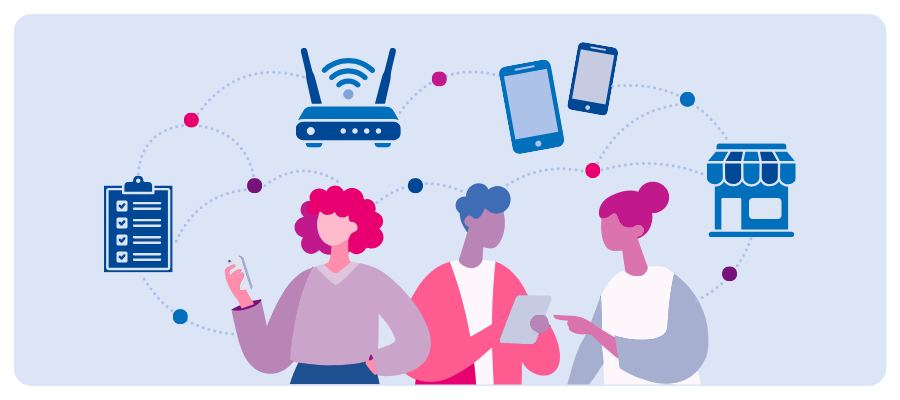
As telecom competition expands across providers and services, the ways consumers purchase phones and plans are evolving too. Most phone and plan purchases now take place somewhere other than a carrier’s own store. Walmart Supercenter alone accounted for 17.4% of all wireless store visits in the U.S. in Q2 2025, and third-party retail vendors staff much of that activity rather than carrier employees.
As telecom competition evolves, carriers, device makers, and retailers face new challenges in understanding and reaching consumers. Experian Audiences help marketers navigate these changes with audience strategies built around three key signals: who’s actually buying, who’s open to switching and why, and when people are most likely to act.
Three audience challenges shaping telecom marketing
Three audience challenges shape telecom marketing today:
- Limited buyer visibility
- Matching switchers with the right offer
- Promotion and upgrade timing
Addressing these challenges will help marketers align audience strategies with campaign goals through understanding:
- How incomplete purchase data changes prospecting
- How mixed switching motivations shape messaging
- How deal-driven moments shape the upgrade decision
1. Limited buyer visibility: How incomplete purchase data changes prospecting
A growing share of telecom transactions takes place through channels where the carrier or device maker has partial or no visibility into who made the purchase. Third-party vendors typically staff Walmart’s wireless counters, and Best Buy is building out its own marketplace business, adding another seller layer between manufacturer and buyer. Discount brands like Mint Mobile and Visible resell service on a larger carrier’s network, and that carrier’s visibility into those customers can vary based on the resale agreement. Carriers and device manufacturers still maintain direct customer relationships, but those relationships don’t capture every buyer. A retailer, reseller, staff provider, or network owner may sit between the telecom brand and the end customer. That makes it more difficult to build a full view of a best customer from direct sales data alone
Experian Audiences helps carriers and device makers reach relevant consumers beyond those they can identify through their own customer data. Marketers can use carrier-spend signals alongside retailer and electronics-shopping behaviors to identify potential buyers, including consumers who purchase through third-party channels.
Experian Audiences you can activate to rebuild buyer visibility
- AT&T Mobile Phone Spenders
- Big-Box Electronics Stores: High Spenders
- Consumer Electronics: In Store High Spenders
- Electronics Stores
- Mobile Enthusiasts
- Mobile Phones
- T-Mobile Mobile Phone Spenders
- Verizon Mobile Phone Spenders
- Walmart High Spenders
- Wireless: Cell/Mobile Phone Service Spenders
How to use these audiences
Activate a carrier spender audience, such as Verizon Mobile Phone Spenders, alongside a retailer-based audience like Walmart High Spenders or Big-Box Electronics Stores: High Spenders to reach relevant buyers beyond a carrier’s direct customer base. Activate Mobile Phones or Mobile Enthusiasts to extend reach to consumers showing interest in mobile devices, even when marketers don’t know where those consumers will ultimately shop or make a purchase.
2. Matching switchers with the right offer: How mixed switching motivations shape messaging
In 2025, 90.54% of consumers said they’d consider switching to a MVNO, and 39.21% said they’d definitely leave their current carrier. But willingness to switch doesn’t mean every consumer wants the same thing. A basic prepaid household may respond to a different offer than a household considering wireless, internet, and streaming together. AT&T linked a recent increase in customer-loss rates to increased switching activity and device upgrade cycles, and Americans switch carriers most often in March, January, and December.
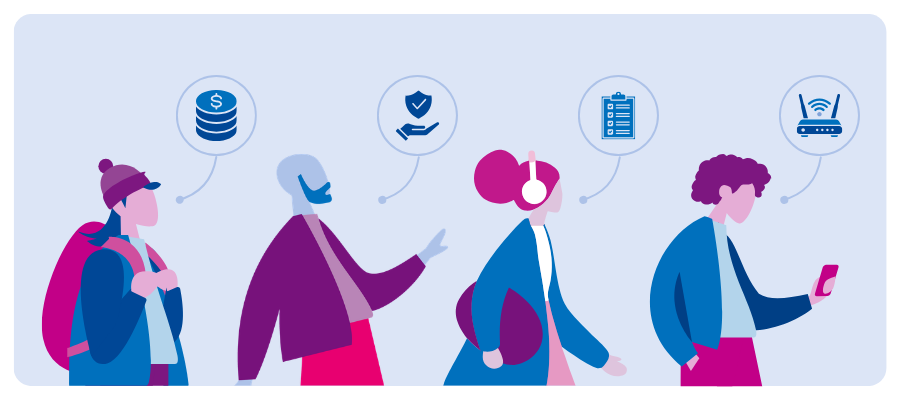
Experian Audiences helps marketers move from identifying likely switchers to matching them with relevant offers. Marketers can start with switcher segments for specific carriers, then add prepaid, cord-cutting, or bundle-receptive signals to distinguish audiences that may respond to a value-focused message from those that may respond to a bundled-service offer.
Experian Audiences you can activate to engage switchers and build bundles
- Likely AT&T Mobile Service Switchers
- Likely Boost Mobile Service Switchers
- Likely Cricket Mobile Service Switchers
- Likely T-Mobile Service Switchers
- Likely Verizon Mobile Service Switchers
- Mobile Phone Service Providers (those actively in market for a new provider)
- Prepaid Phone & Calling Card users
- Prepaid Recurring Phone Services High Spend
- Streaming First Cord Cutters
- Wireless Phone Service Switchers
How to use these audiences
Activate Wireless Phone Service Switchers as the foundational audience, then add a carrier-specific segment like Likely Verizon or Likely Boost Mobile Service Switchers for conquest campaigns, Prepaid Recurring Phone Services High Spend for budget-led messaging, or Streaming First Cord Cutters for a bundle pitch. A cable company’s wireless brand looking to win back switchers in January, a peak switching month, could pair Wireless Phone Service Switchers with Mobile Phone Service Providers, then split messaging by value versus bundle appeal.
3. Promotion and upgrade timing: How deal-driven moments shape the upgrade decision
Deals play a major role in consumers’ decisions to upgrade their phones, often carrying more weight than the device launch itself. Research around the iPhone 17 launch found that discounts, holiday offers, and low monthly financing drove over 70% of consumers’ upgrade decisions, while 85% of potential upgraders were still waiting to make a purchase six weeks after launch. Trade-in programs returned $6.4 billion to U.S. consumers in 2025, up 42% year over year. These opportunities repeat around launch season, back-to-school, the holidays, and device eligibility, creating relevant moments for carriers, retailers, device makers, accessories brands, entertainment companies, and financing providers.
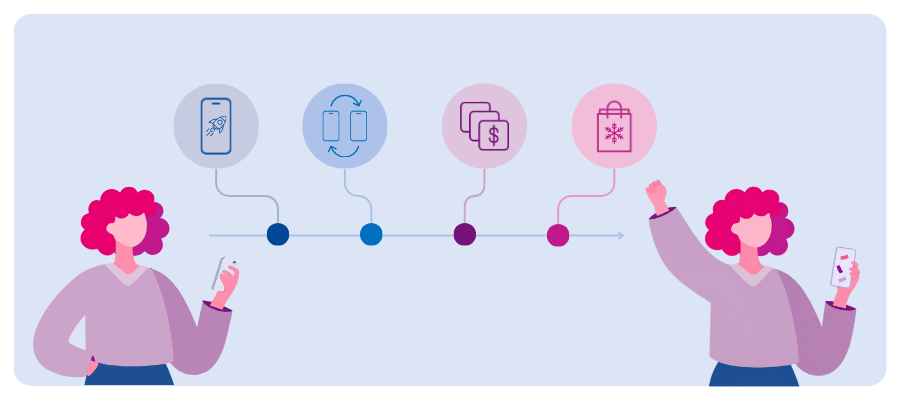
Experian Audiences helps marketers align campaigns with those moments by pairing purchase-propensity signals with seasonal and launch-driven audiences. Marketers can focus promotions on consumers who already show signs of electronics spending, device interest, or seasonal shopping behavior, connecting the offer to audiences more likely to be considering a purchase.
Experian Audiences you can activate around launch and promotion windows
- Amazon Prime Day Shoppers
- Big-Box Electronics Stores: High Spenders
- Consumer Electronics: In Store High Spenders
- Consumer Electronics: Online High Spenders
- Electronic Device Protection Plan Buyers
- Holiday Shoppers: Consumer Electronics
- Household Electronics Annual Spend $2,500 Plus
- Mobile Phone Accessories (mobile phone accessories shoppers)
- Mobile Phones (new mobile phone shoppers)
- Phone Accessory Purchasers, 90-Day Recency
How to use these audiences
Activate Consumer Electronics: Online High Spenders alongside Holiday Shoppers: Consumer Electronics or Amazon Prime Day Shoppers to reach people already primed to spend, then add Electronic Device Protection Plan Buyers and Phone Accessory Purchasers for cross-sell at the moment of upgrade.
The same three challenges, extended to small business buyers
Limited visibility, mixed switching motivations, and deal-driven timing aren’t only consumer patterns. Small-business owners buy wireless service, devices, and connectivity through many of the same third-party channels, switch providers for a similarly varied set of reasons, and respond to the same seasonal promotion calendar.
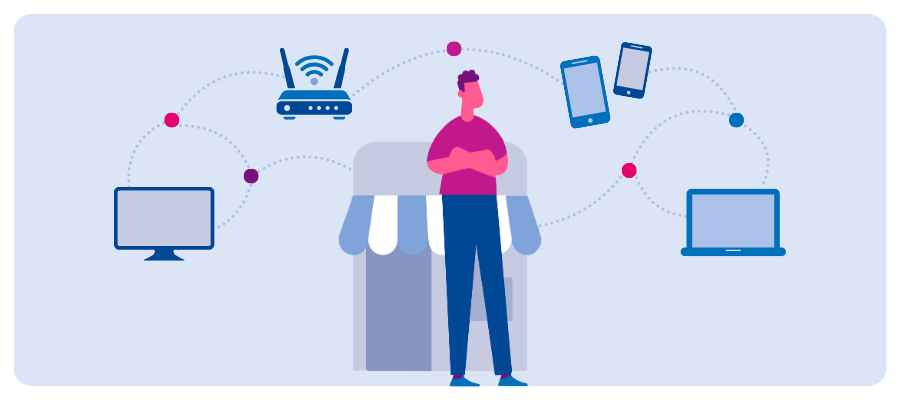
Marketers can treat this group as a smaller, complementary extension of the three challenges above rather than a separate problem to solve. A focused campaign can address business wireless plans, devices, connectivity, and telecom utility needs without shifting the direction of a primarily consumer-facing program.
Experian Audiences to consider for a small business wireless or connectivity campaign
- Business Founder and Owner Households
- Business Utilities (business owners responsible for telecommunications decision-making)
- Occupation: Small Business Owners
- Recently Started Business Owners
- Small Business Growth and Operations Engagers
When are telecom audiences most receptive to outreach?
Timing matters as much as audience selection in telecom marketing. Three moments can shape when people are ready to act.
Back-to-school and holiday shopping
Back-to-school device refreshes and the holiday shopping season, including Amazon Prime Day and Black Friday, align with periods when households may already plan electronics purchases. Activate Holiday Shoppers: Consumer Electronics and Amazon Prime Day Shoppers to align upgrade and bundle offers with existing spending intent.
Peak switching months
Switching activity varies throughout the year. March, January, and December are the strongest windows for win-back and conquest campaigns, particularly when marketers pair carrier-specific switcher audiences with prepaid or bundle messaging that reflects the audience’s reason for considering a change.
Device launch season
While device launches aren’t the only factor driving upgrades, they still prompt many consumers to consider a new phone. Deals and promotions can influence when those consumers make a purchase, including in the six or more weeks following a launch. Activate Consumer Electronics: Online and In Store High Spenders, Phone Accessory Purchasers, and Electronic Device Protection Plan Buyers to reach consumers showing signs of purchase interest.
Explore our syndicated audiences guide for more seasonal and launch-ready segments
What sets Experian Audiences apart?
Custom audiences
Need a custom audience? Reach out to our audience team, and we can help you build and activate an Experian audience on the platform of your choice.
Partner Audiences
Explore some of our Partner Audiences that complement Experian Audiences across key telecom use cases, with flexible activation through Experian’s data marketplace or leading activation platforms.
Evertune
- AI Retargeting > Tech & Electronics > Mobile Devices
- AI Retargeting > Tech & Electronics > Phone Plans
Facteus
- Purchase History > Technology / Media / Telecom > Telecom > SPECTRUM > Lapsed Subscriber
- Purchase History > Technology / Media / Telecom > Telecom > T-MOBILE > Low Spend Subscriber
- Purchase History > Technology / Media / Telecom > Telecom > VERIZON > Active Subscriber
NinthDecimal
- Seasonal > Black Friday Shoppers > Big Box Visitors
- Seasonal > Black Friday Shoppers > Electronics Store Visitors
- Shopper > Electronics Retailers > Best Buy > Loyalists
- Shopper > Electronics Retailers > Mobile Phone Carriers > Verizon Subscriber
Start.io
- Demographics > Family Flag > Parents with Teenagers > Parents with Teenagers
- Device Ownership > Smartphones > iOS (Apple) > iPhone SE > iPhone SE Users
- Device Ownership > Smartphones > Samsung > Galaxy A34 > Galaxy A34 Users
For a full list, download our syndicated audiences guide.
Leading activation platforms
Whether you want to activate audiences directly or build a customized media strategy, Experian gives you flexible ways to reach the right consumers.
Our 4,000+ syndicated audiences are available at over 200 leading activation platforms, including programmatic, social, and TV.
Choose the activation path that works best for your campaign:
- Activate syndicated audiences directly through your preferred platform.
- Work with our team to build a curated media strategy tailored to your goals.
Want to activate an Experian Audience on Meta, Pinterest, Snap, TikTok, or on a platform not listed above? Contact us today.
Premium inventory through Curated Deals
Looking for a more customized solution? Curated Deals combine trusted audiences with premium inventory into a private marketplace built specifically for your campaign objectives. Our experts help you design, activate, and optimize a strategy that fits your audience and campaign needs.
Reach the right audiences for your industry
Reach telecom buyers with Experian Audiences
Telecom buyers don’t behave as one market. Experian Audiences helps marketers account for differences in purchase channel, switching motivation, and upgrade timing, then reach likely buyers across programmatic, social, connected TV, and curated media environments. Building audience strategy around how people shop, switch, and spend gives marketers a clearer path from audience selection to action.
Connect with our audience experts
Click here to view Experian’s U.S. Consumer Data Privacy Notice.
This site is protected by reCAPTCHA and the Google Privacy Policy and Terms of Service apply.
FAQs
Experian Audiences are pre-built, privacy-compliant consumer segments that help marketers target based on verified demographic, financial, and behavioral data. They’re designed for flexibility across channels and can be activated on 200+ platforms, including major social, CTV, and programmatic partners. Marketers can choose from 4,000+ syndicated audiences that capture signals such as income, spending behavior, household structure, financial attitudes, and ability to pay. These same audiences are also available through partnerships on platforms like DirecTV, Dish, Magnite, OpenAP, and The Trade Desk. For a deeper look at our audience catalog, explore our syndicated audience guide.
You can activate Experian Audiences across 200+ digital and connected TV (CTV) platforms, including Meta, Pinterest, The Trade Desk, and Audigent private marketplaces (PMPs).
Yes, you can combine your own first-party data with Experian’s 4,000+ syndicated audiences and additional segments from multiple partner data providers, as a custom audience within a Curated Deal or self-service via Audience Engine.
Appendix
Limited buyer visibility
- Retail Shoppers: Purchase Based > Technology/Telecom > AT&T mobile phone Spenders
- Retail Shoppers: Purchase Based > Shopping Behavior > Big-Box Electronics Stores: High Spenders
- Retail Shoppers: Purchase Based > Shopping Behavior > Consumer Electronics: In Store High Spenders
- Mobile Location Models > Visits > Electronics Stores
- Audigent > Affinity > Technology > Mobile Enthusiasts
- Audigent > In-Market > Consumer Electronics > Mobile Phones
- Retail Shoppers: Purchase Based > Technology/Telecom > T-Mobile mobile phone Spenders
- Retail Shoppers: Purchase Based > Technology/Telecom > Verizon mobile phone Spenders
- Retail Shoppers: Purchase Based > Shopping Behavior > Walmart High Spenders
- Retail Shoppers: Purchase Based > Technology/Telecom > Wireless: Cell/Mobile Phone Service Spenders
Switching and offer matching
- Retail Shoppers: Purchase Based > Technology/Telecom > Likely AT&T Mobile Service Switchers
- Retail Shoppers: Purchase Based > Technology/Telecom > Likely Boost Mobile Service Switchers
- Retail Shoppers: Purchase Based > Technology/Telecom > Likely Cricket Mobile Service Switchers
- Retail Shoppers: Purchase Based > Technology/Telecom > Likely T-Mobile Service Switchers
- Retail Shoppers: Purchase Based > Technology/Telecom > Likely Verizon Mobile Service Switchers
- Audigent > In-Market > Telecom > Mobile Phone Service Providers
- Lifestyle and Interests (Affinity) > Purchase Behavior > Prepaid Phone & Calling Card users
- Purchase Predictors > Shoppers All Channels > Prepaid Recurring Phone Services High Spend
- Lifestyle and Interests (Affinity) > Cord Cutters > Streaming First Cord Cutters
- Retail Shoppers: Purchase Based > Technology/Telecom > Wireless Phone Service Switchers
Promotions, launches, and timing
- Lifestyle and Interests (Affinity) > Personas (US) Seasonal > Amazon Prime Day Shoppers
- Retail Shoppers: Purchase Based > Shopping Behavior > Big-Box Electronics Stores: High Spenders
- Retail Shoppers: Purchase Based > Shopping Behavior > Consumer Electronics: In Store High Spenders
- Retail Shoppers: Purchase Based > Shopping Behavior > Consumer Electronics: Online High Spenders
- Retail Shoppers: Purchase Based > Lifestyle and Interests > Electronic Device Protection Plan Buyers
- Retail Shoppers: Purchase Based > Seasonal > Holiday Shoppers: Consumer Electronics
- Consumer Financial Insights > Discretionary Spend – Electronics > Household Electronics Annual Spend $2,500 Plus
- Audigent > In-Market > Consumer Electronics > Mobile Phone Accessories
- Audigent > In-Market > Consumer Electronics > Mobile Phones
- Retail Shoppers: Purchase Based > Ecommerce > Phone Accessory Purchasers – 90 Day Recency
Small business extension
- Demographics > Occupation > Business Founder and Owner Households
- Audigent > IAB > Business and Finance > Business > Business Utilities
- Consumer Behaviors > Occupation: Small Business Owners
- Publisher Derived > Life Events > Recently Started Business Owners
- Publisher Derived > Interest: Business and Industrial > Small Business Growth and Operations Engagers
Partner Audiences
Evertune
- AI Retargeting > Tech & Electronics > Mobile Devices
- AI Retargeting > Tech & Electronics > Phone Plans
Facteus
- Purchase History > Technology / Media / Telecom > Telecom > SPECTRUM > Lapsed Subscriber
- Purchase History > Technology / Media / Telecom > Telecom > T-MOBILE > Low Spend Subscriber
- Purchase History > Technology / Media / Telecom > Telecom > VERIZON > Active Subscriber
NinthDecimal
- Seasonal > Black Friday Shoppers > Big Box Visitors
- Seasonal > Black Friday Shoppers > Electronics Store Visitors
- Shopper > Electronics Retailers > Best Buy > Loyalists
- Shopper > Electronics Retailers > Mobile Phone Carriers > Verizon Subscriber
Start.io
- Demographics > Family Flag > Parents with Teenagers > Parents with Teenagers
- Device Ownership > Smartphones > iOS (Apple) > iPhone SE > iPhone SE Users
- Device Ownership > Smartphones > Samsung > Galaxy A34 > Galaxy A34 Users
Latest posts

Addressable TV has been through a transformation in the past year. Streaming content has become the most coveted space for creators and advertisers with the rise of new apps and platforms; but the influx of stay-at-home orders around the country have shifted television viewership as we know it, and streaming apps are popping up in droves to take advantage. So, how can you? With no shortage of opportunities to advertise on addressable TV and CTV, how does it fit into the media mix? And furthermore, how can you attribute this household-level device into your overall strategy? Tying it all together Layering addressable TV within digital ad campaigns couldn’t be easier today — but applying the right targeting and cadence between all of your digital efforts; and tying them together in attribution takes the right kind of data. Marketers can use CTV identifiers coupled with other device identifiers available in The Tapad Graph to not only target impressions but also map addressable TVs within the consumer journey; and unify strategies between household decision makers to better personalize messaging. 1 The Trade Desk Q2 2020 Earnings Call Transcript, August 2020; 2 iSpot Report, via Deadline, July 2020; 3 Flixed.io, January 2020 Contact us today
For the past several years ad-tech defined the value of identity at the individual level; made possible by the evolution of data, technology and machine-learning. But, earlier this year COVID-19 set in motion many shifts in consumer digital behavior. The more we’ve been working and learning from home, using devices that are shared amongst an entire household, the more apparent it is that marketers need to shift their strategies to align with these changes. Did you know the average household owns eleven or more connected devices? And the longer we’ve been at home, the more these devices are shared by multiple individuals. If you’re looking for a few simple ways to evolve from an individual focused strategy to a household strategy, here’s a good place to start: Audience segmentation Traditionally, audiences are built with a narrow focus on a single user, and what known attributes about that individual or their brand engagement can be leveraged for a targeting strategy. Now that screens are being shared between multiple users in a home, how can you be sure you’re identifying them correctly, and thus, segmenting them in the right buckets for targeting? The key lies in the ability to connect those points through identity resolution. Using ad exposure from household level devices, followed by a second engagement from an individual within that household can indicate a user is a better candidate for purchase or conversion than others. So before you build audiences for targeting, you can qualify them at the household level for segmentation with more confidence. Example: An auto advertiser uses audience segments from a third party provider such as ‘auto intenders’ to target individuals with new pricing offers. They would continue retargeting these users, unaware that some are connected in the same household, and thus are probably not all in the market to actually get a new car. By bucketing users that share a common household device within this third party segment, they can hone in on which individuals are actually in-market for a car and evolve their strategy to be more effective. Targeting Retargeting, frequency capping and sequential messaging have always been meant for an individual user — the more they’re exposed to your brand in a personalized way, the more likely they are to take the desired action. But, have you considered that multiple users could have a shared initial exposure to your brand? Today, you can target a household of potential consumers on a shared device like a CTV, and employ those retargeting strategies based on that common initial exposure. Starting at the household level, means you can compare movement through the funnel between different individuals in that household, and tailor your targeting accordingly. Perhaps you realize only one person in that household will convert and you tailor messaging to them more frequently, while confidently suppressing the other individuals. Example: a CPG brand uses OTT advertising, but doesn’t incorporate it within their sequential strategy, because they consider it just a ‘brand awareness’ opportunity. By using OTT more strategically as a household level engagement, it can reveal which individuals within a household are more favorable towards a brand further down the funnel. So, you can spend impressions targeting those users, rather than wasting impressions on multiple individuals within the household. Measurement Measurement and attribution are imperative to understanding the path to purchase and making strategies more efficient over time. Often that efficiency involves adding or removing devices and channels from a targeting strategy based on their contribution to an action or conversion by an individual. This year we’re seeing addressable TV devices explode in use, which are shared at the household level. Even desktop computers are being used by more people in the home due to COVID-19. So, assuming a linear path of attribution by an individual is missing the full picture. Identity resolution can help you understand where messaging was more effective for some users in the household than others, and leverage that insight to continue more effective strategies in the future. Example: Without a household view, a direct-to-consumer brand would assume all interactions from one device would be coming from a single individual, and that could create a higher cost-per analysis. By incorporating the household level devices into attribution models, they can find efficiencies between touch points of multiple users, and learn how those split off into individual paths to conversion. Not only can this DTC create a more effective model, but they can use that model to create cost efficiencies in the future. Contact us today

With the long-term effects to the economy unknown, many consumers are feeling the financial impact, while others are looking for opportunities, resulting in a transformational shift in spending. Some brands are experiencing decreased or paused marketing budgets, and you may be trepidatious about making the right decisions in your efforts to grow share of wallet. Recent events have been an impetus for change and we’re seeing brands make modifications to traditional marketing strategies. Some are developing innovative technologies and utilizing new sources of data and analytics. As we look at how these changes impact marketing results, we see the gap grow between those brands who are equipped to pivot and implement new strategies quickly, versus those who are not. So what steps can your organization implement now to make the smartest choices for both your customers and your business to secure more share of wallet? Here are four ideas to accelerate the success of your next financial marketing campaign: 1. Meet your customers wherever they are: Digital-first strategies have never been more relevant than they are right now. While consumers have fully embraced online engagement, marketers are even more focused on reaching high-value segments in the channels they utilize. By using an informed, data-driven strategy that includes preferred marketing communication channels and decision-making styles, engagement increases across those channels your target audience frequents the most. For example, are they heavy social media users? Do they prefer streaming TV? Or do they tend to rely on financial advice vs. performing their own research? To drive take rates, your audience must be exposed to a tailored message, in the right channel, and possibly multiple times. 2. Use messaging that resonates: As consumers refocus priorities, their expectations of brands with whom they do business are ever-increasing. Reflecting an understanding of the current needs and interests of your customers and prospects is an undertone that can only help strengthen their view of your brand. Consumer behavior has changed and is unlikely to revert to what was, so you want to be relevant, but you also do not want to be seen as ‘tone deaf’. As a result, consider revising your segmentation strategy to leverage predictive insights, such as household economic indicators, financial behaviors, lifestyle propensities and interests to help shape your message into one that truly makes an impact. 3. Prove the worth of your campaign: New consumer journeys are being formulated and showing ROI is imperative as your marketing budget is scrutinized. Having the right industry-relevant metrics and reports to analyze and share with leadership are key. Demonstrate that your campaigns are contributing to bottom-line success—and justify future campaigns—by using data-driven measurement insights collected across multiple reads and countless touchpoints. Marketing budgets are being scrutinized now more than ever, so showing ROI is critical. Having the right metrics and reports to analyze and share with leadership are key. 4. Follow government regulations—leverage Fair Lending-friendly audiences: Whether you’re cross-selling or prospecting, now is the time to identify the right audiences with rich data insights to not only execute impactful campaigns but adhere to government regulations that protect consumers and your organization. Trusting that the data you are activating follows Fair Lending Laws, including the Equal Credit Opportunity Act (“ECOA”) and the Fair Housing Act (“FHA”) is crucial. The Federal ECOA prohibits creditors from discriminating against credit applicants on the basis of several prohibited factors. Developing people-based segments that are not derived using these factors positions you to follow these regulations. Check out our previous blog post about Fair Lending-friendly audiences here. As you transition to new operating models, access to current and accurate consumer data can provide confidence in campaign potential, help you avoid business risk, enable you to respond to market changes and make better decisions. Experian can help you implement these strategies and put your brand unique position for growth. From start to finish, we provide the marketing solutions you need to plan, build and execute successful, Fair Lending-friendly campaigns to cross-sell to existing customers and acquire new customers. *Experian Fair Lending-friendly audiences do not constitute legal advice or otherwise assure compliance with the FHA, ECOA, or any other applicable laws. It’s recommended to seek legal advice with respect to the use of data in connection with lending decisions or application and compliance with applicable laws. Contact us today