Marketers are under more pressure than ever to deliver personalized, high-performing campaigns—while navigating tighter budgets, shifting privacy expectations, and fragmented tech stacks. Despite an explosion of tools and data sources, the fundamentals of marketing haven’t changed.
Every great campaign still starts with a simple question: Who are we trying to reach?
The answer depends on how well you understand your customers. Increasingly, that understanding is hampered by data silos, inconsistent identity signals, and disconnected workflows between planning, activation, and measurement. When those pieces don’t align, it leads to inefficient spending, incomplete insights, and missed opportunities.
To move forward, marketers need more than better tools—they need a more connected approach.
Start with a complete view of the customer
The foundation of effective marketing is understanding your audience—not just who they are, but what they care about and how to reach them across devices and platforms.
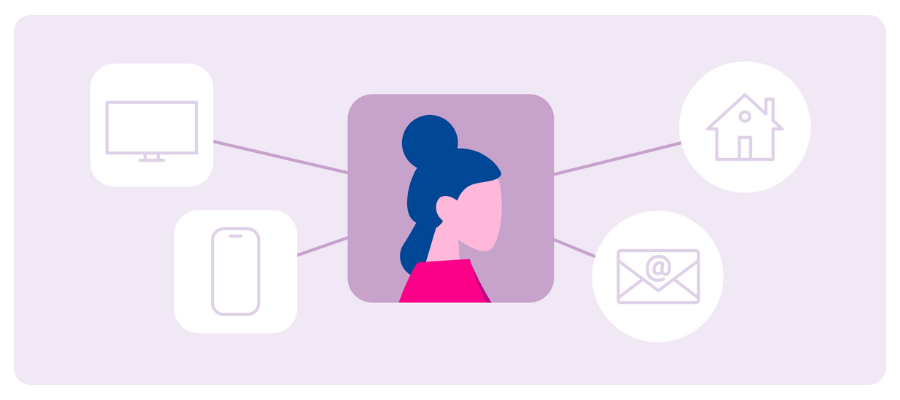
That starts with building a complete customer profile. For many marketers, this means linking persistent offline data—such as name and address—with fresh digital signals like device IDs and online behaviors. When combined, these elements provide a high-fidelity view of the customer that can be enriched with attributes like demographics, purchase behavior, and lifestyle interests.
This kind of profile doesn’t just help you understand people—it helps you build audience segments that actually perform. Whether you’re working with your own CRM data or third-party sources, the ability to create addressable segments that are both accurate and scalable is what separates good campaigns from great ones.
🛳️ That’s exactly what MMGY did for Windstar Cruises. By layering first-party data with behavioral and demographic insights, they built custom audiences that more than doubled campaign benchmarks.
🎮 Gaming platform Unity tapped into Experian audiences to understand player behaviors across web, mobile, and connected TV (CTV). These insights helped their advertisers reach gaming audiences more effectively—tailoring creative and delivery to real-world preferences, not assumptions.
Activate with precision, not just volume
Knowing your audience is only half the battle. The next challenge is reaching them—consistently and efficiently—across multiple channels.

This is where fragmentation can creep back in. All too often, marketers build audiences in one system, but activate in another, causing data loss and targeting mismatches. A more connected strategy uses the same identity and audience spine across planning and activation, reducing signal loss and improving accuracy.
👉 Curated private marketplaces (PMPs), for example, allow marketers to match high-quality audiences with premium inventory in a targeted, transparent, and efficient way. These deals let marketers align their spending with their goals—whether that’s lowering cost-per-acquisition or boosting reach in a key vertical.
Performance results are bearing this out:
When identity, audience, and inventory are aligned, everyone benefits—marketers, publishers, and consumers.
Measure what matters
Too often, measurement is treated as an afterthought. But in a connected campaign, it’s built in from the beginning.
By using consistent identity across planning, activation, and measurement, marketers can connect ad exposure to real-world outcomes—whether that’s an online conversion, an in-store visit, or a new customer relationship.
This kind of closed-loop measurement turns marketing into a learning engine. You don’t just see what happened—you understand why it happened and can use that information to improve the next campaign.
🛳️ In the case of Windstar Cruises, MMGY used Experian identity to precisely measure how digital ad exposures translated into bookings. That kind of visibility gives marketers more than a report card. It gives them the feedback they need to optimize smarter next time—and prove ROI every time.
The future is connected
To meet today’s demands, marketers need a new way of working—one that starts with a complete understanding of the customer, builds addressable audiences on a strong identity foundation, activates them precisely across channels, and measures impact in real time.
The marketers embracing this approach are already seeing results: stronger performance, more efficient spending, and deeper insights that power what comes next.
The future won’t be built on more tools—it will be built on more connection.
Connect with us
Latest posts

With the recent announcement of delaying third-party cookie deprecation to 2024, the industry has more time to rethink how to identify and communicate with consumers.

As today’s digital landscape gets more and more complicated there are more ways for brands to connect with users and drive purchases and more ways for ad tech to target and measure those touch points. As in-person shopping picks up steam due to the re-normalization of society post-COVID 19; the connection between digital ads and in-person purchases needs to be made once again. With the rise of Connected TV throughout the pandemic there are even more digital opportunities to target a user. But how do you make sure that those brand engagements are captured and correctly attributed to offline purchases and conversions? The answer lies in a holistic identity resolution strategy. Cross-device identity resolution with The Tapad Graph connects the identifiers and devices of individuals within a household to each other; enabling targeting, frequency capping, extension, segmentation and measurement or attribution between devices; including Connected TV and hashed (privacy-protected) email addresses along with Cookies, Mobile Ad Ids and IP Address. Brands can join their first-party data to The Tapad Graph to execute strategies that connect online and offline data for pre, mid and post-campaign efficiencies. Let’s imagine a scenario in which an outdoor retail brand is targeting users watching specific content on a Connected TV device. Powered by identity resolution, they start with a general ad on CTV and continue targeting down individual paths with each user. When one of them converts in store and makes a purchase; the outdoor retailer can connect that action through location and in-store traffic data with the cross-device identity resolution used to execute the digital campaign. Now the actions of the user online and offline are resolved for more accurate measurement and attribution after the campaign ends. But it doesn’t stop there– the brand's CRM data can be reactivated for the next digital campaign and leveraged to capitalize on the most effective media mix for the user who made the purchase previously. These combined insights can be invaluable in shaping up future campaign strategies with geo-contextual ads, recommended additional products and personalization to help drive more conversions and purchases in-store or online. As in-person shopping picks back up and marketers are tasked once again with balancing online and in-store KPIs, the right identity resolution strategy can unlock necessary efficiencies for retailers, ad tech vendors and agencies tasked with supporting these initiatives. Get in touch

Experian Marketing Services and Data Quality President Genevieve Juillard recently sat down with Zach Rodgers, host of the AdExchanger Talks podcast to discuss the future of identity, the importance of data transparency and privacy, and our recent acquisition of Tapad. Genevieve focused on the opportunity for our industry to reimagine an advertising ecosystem that is resilient and adaptable; one that takes advantage of emerging data and prioritizes data transparency and consumer privacy. She also discussed the importance of advertising strategies that put consumers at the heart of every decision and give them more control over their data. Genevieve shared with AdExchanger that Experian’s acquisition of Tapad, a global leader in digital identity resolution, was a natural fit for our company. Tapad’s approach and role in the ecosystem is very much aligned with Experian’s, which is to develop solutions that are resilient to industry and consumer changes. The combination of our capabilities supports interoperability across all types of identifiers, both online and offline, and will position us to help our clients navigate the post-third-party cookie world. To learn more about Experian’s plans to support an effective advertising ecosystem that will evolve with our dynamic industry, listen to the full podcast Embracing ‘Healthy Fragmentation’ In Ad Tech, With Genevieve Juillard. Get in touch