At A Glance
OpenAP and Experian are making identity interoperable across premium video, connecting brands, platforms and publishers to OpenAP’s common framework for resolving household identity using Experian’s Offline Graph and Digital Graph as a key data input. The approach supports household and individual-level TV planning, flexible curation for buyers and sellers, and measurement that stays consistent from activation through reporting.Key takeaways
- OpenAP powers consistent audience and identity across the entire premium video ecosystem for advanced advertising.
- OpenAP uses Experian’s identity graphs to keep audiences consistent across every state of the campaign life cycle.
- Experian Curated Deals package Experian Audiences and Experian Partner Audiences with premium video supply under a single Deal ID, giving buyers and sellers room to keep their preferred demand-side platform (DSP) or supply-side platform (SSP).
- Marketers planning a premium video campaign should map how many steps separate their audience from the inventory it’s meant to reach, since fewer hops of how the identity is translated preserves more of that audience’s value.
Premium video brings together publishers, platforms, and screens,with each partner and endpoint having itsown identity framework. OpenAP and Experian are helping connect these environments so audiences can move more directly from brands to the inventory they are meant to reach.
OpenAP and Experian help connect those steps. Experian’s Offline and Digital Graphs provide a foundation for understanding households, people, and digital identifiers. Through OpenAP’s Open Identity, identity data is resolved consistently and accurately, enabling Experian identity data to support both audience building and campaign exposure measurement.
Matthew Papa, VP of Partnerships and Business Development at OpenAP, joined us to discuss how a consistent identity foundation, using Experian’s Digital Graph and Offline Graph, helps audiences move from marketer to programmer and supports reliable measurement.
Identity collaboration streamlines premium video buying
Identity collaboration streamlines premium video buying by giving every brand, platform, and publisher in the supply chain a shared way to recognize the same audience. Each party brings its own data and identity systems to the process, and aligning those systems gives advertisers a more direct path for audiences to move from marketer to programmer.
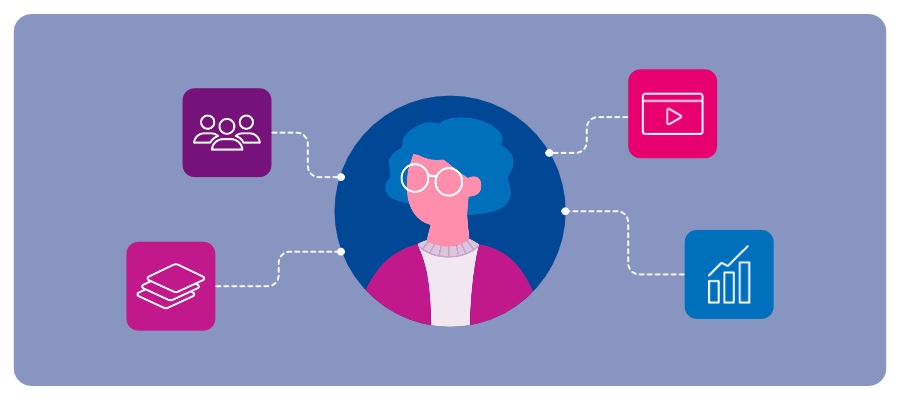
The industry is making progress. Platforms are working more closely with the suppliers behind them, including TV makers, and marketers are setting clearer standards for how the data they pay for is delivered to supply. OpenAP and Experian build on that momentum, bringing consistency and accuracy to audiences at every step from brand to inventory.
Why TV needs households and people together
TV needs both households and individuals: buying, forecasting, and planning across a market close to $100 billion start with household data, then get sharper with individual-level detail layered on top. Experian’s Offline Graph connects people to the households they live in, giving TV teams a household foundation for planning and forecasting. Experian Marketing Attributes can add details about income, preferences, and vehicle ownership. Those details can inform the creative a brand produces and how it shows up in search, social, and display, where TV’s halo can extend.
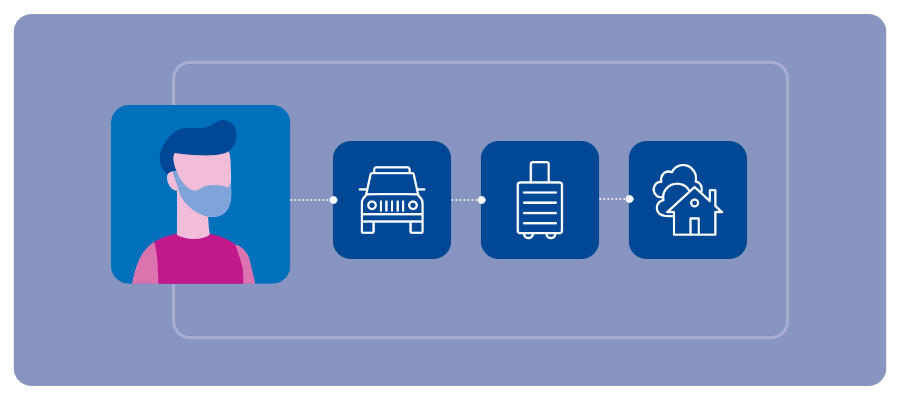
Experian’s Digital Graph is signal-agnostic, connecting hashed emails (HEMs), IP addresses, device IDs, and universal IDs to individuals and households to support one-to-one marketing across screens. Pairing the Digital Graph with the Offline Graph connects offline accuracy with digital scale. For OpenAP, offline identity can validate identity across its Open Identity framework, support other onboarding initiatives, and connect to other transaction data sets. That broader view helps advertisers plan for high-consideration purchases with longer sales cycles. Marketers often start with what they need to measure and work backward to the identity and activation approach that can support those goals.
“Bringing together both of those graphs is very important when it comes to activation, but they’re almost more important when it comes to measurement.”
OpenAPMatthew Papa, VP of Partnerships and Business Development
How Experian’s identity solutions support premium video
Curation gives buyers and sellers more flexibility
Experian Curated Deals bring trusted audiences and premium video supply together under a Deal ID while giving advertisers and content owners the flexibility to work with the partners they already use. Because the data targeting happens on the supply side, a deal can involve more technology partners or fewer, depending on what the transaction needs.
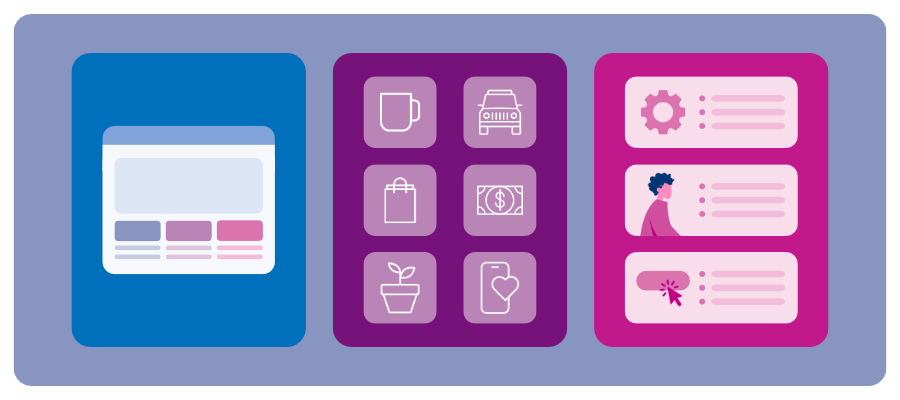
That flexibility matters in premium video, where many inventory owners want to sell more of their inventory directly, so they keep control over pricing, who they sell to, and the audience it’s sold against. A curated deal can be set up between one publisher and one buyer, across a network of publishers that shares pricing power, or with a buyer across an entire SSP. OpenAP was built to make it simple to transact across many premium video partners, with Experian identity used for buying and measurement.
Consistent identity is what makes measurement consistent
Identity consistency is what makes measurement consistent: it lets the same audience definition carry from activation through reporting.
Agencies and publishers are looking for efficient processes that can scale with their teams. Consistent identity across activation and measurement supports dependable outcomes for the brands and publishers OpenAP represents.
“It’s very important to have consistency of identity when it comes to activation, because that is going to inform consistency of measurement and outcomes.”
OpenAPMatthew Papa, VP of Partnerships and Business Development
Four planning questions for your next premium video campaign
If you’re planning across streaming and TV, start with four questions:
When audiences move directly from brand to publisher, more of their value carries through the campaign.
Ready to simplify how your audiences move through premium video? Contact us
Click here to view Experian’s U.S. Consumer Data Privacy Notice.
This site is protected by reCAPTCHA and the Google Privacy Policy and Terms of Service apply.
About our expert

Matthew Papa
VP of Partnerships and Business Development, OpenAP
Based in New York City, Matthew is VP of Partnerships at OpenAP, the industry’s leading audience platform for the premium video ecosystem. He leads strategic collaboration and business development with data and identity partners to advance audience driven video advertising for the world’s leading media brands and advertisers.
FAQs
OpenAP is a technology company powering the data-driven video workflow of the future. Rooted in their mission of bringing simplicity and scale to audience-based advertising, their Open Audience Platform powers a more streamlined audience creation, planning, buying and measurement process for TV, spanning data-driven linear, programmatic and streaming channels. OpenAP makes it easier for buyers to work across multiple publishers and platforms, while bringing transparency and consistency to how identity is resolved across every stage of the campaign. Their technology is open and interoperable, allowing publishers, agencies, and brands to harness operational efficiencies to scale.
Experian powers much of the identity behind OpenAP’s partners and is integrated with the Open Identity framework, pairing Experian’s Digital Graph and Offline Graph, to connect people, households, and devices across streaming and TV. This foundation lets OpenAP’s audiences access high-quality data to help carry the same identity from activation through measurement, keeping results consistent across the campaign.
Experian’s Offline Graph, a deterministic identity foundation rooted in decades of data stewardship, connects people to the households they live in, giving TV teams a stable household foundation for planning and forecasting. Experian’s Digital Graph links digital identifiers such as hashed emails, IP addresses, and device IDs to those same people and households, supporting one-to-one marketing across streaming and digital screens.
Curation lets buyers and inventory owners keep working with the platforms they already use, such as a preferred DSP or SSP, while still reaching premium, audience-matched supply. Experian Curated Deals packages Experian Audiences and Experian Partner Audiences with that supply under a single Deal ID, and the deal can be optimized while the campaign is running.
Marketers should start with having a deep understanding of the audience they want to reach, as well as KPIs that the campaign performance will be measured by. From there, they should decide whether they’re planning around households, individuals, or both, and then partner with OpenAP and Experian to ensure identity is managed consistently across the lifecycle and partners of the campaign.
Latest posts

Discover Experian’s 19 new holiday shopping audiences designed for you to reach the most relevant shoppers this holiday season.

In our Ask the Expert Series, we interview leaders from our partner organizations who are helping to lead their brands to new heights in ad tech. Today’s interview is with Jordan Feivelson, VP, Digital Audiences at Webbula. Jordan is a 22-year advertising industry veteran who has worked for media properties such as WebMD and Disney. Over the past ten years, he has transitioned to the data and programmatic space, including growing the data business for Kantar Shopcom and Adstra. What types of advertisers might benefit from utilizing Webbula audiences across various verticals? Can you provide examples of how different industries successfully leverage your data to achieve specific campaign goals? Most advertisers can leverage Webbula’s award-winning attributes for their activation initiatives. Webbula offers approximately 3,000 syndicated segments covering categories such as Demographics, Automotive, Political, Mortgage, B2B, Hobby/Interest/Lifestyle, and Interests & Brand Preferences (brand name targeting). Audience insights and marketing strategies What specific types of audience segments does Webbula provide? How can advertisers leverage these segments to craft more effective, personalized marketing strategies? Webbula has incredible depth and breadth within its verticals, giving marketers the tools to deliver targeted messaging effectively. Our Demographic, B2B, Mortgage, Automotive, and Interest and Brand Preferences segments each contain 500-1,000 segments, all built on deterministic, self-reported, and individually linked data. We ensure the best accuracy with multiple deterministic data points tied to the real world (ex., first name, last name, postal address, and email address). Some examples of our unique syndicated audience types: B2B: A view of the latest industry trends with detailed cuts of the professional world, such as companies with and not within the Fortune 500 companies and job positions that are directors and below. This also includes custom capabilities, including ABM (list of target companies in an activation campaign or by industry code (ex. NAICS, SIC). Interest and Brand Preferences: Consumers who have shown interest and affinity to hundreds of brands (ex., Nike), genres (ex., comedy, hip hop), sports teams, and more. Mortgage: A detailed view of homebuyers’ purchase range, loan type (ex. jumbo loan, standard loan), mortgage amount, interest rate, and more. With Webbula’s audience data, brands can create a comprehensive picture of their audiences down to the individual level and reach them accurately. Data quality, sourcing, and differentiation How is consumer data sourced and curated at Webbula? Are there data quality standards that Webbula establishes for consumer data, and how do you ensure your sources and methods meet these standards consistently? Webbula’s data is aggregated from over 110 trusted and authenticated sources, including publishers, data partners, social media, and more. The data collected comes directly from consumers who self-report information through surveys and other methods. We apply our hygiene filters to mitigate fraud and accurately score the data. Data Collection: The data collected comes directly from consumers who self-report information through surveys, questionnaires, transactions, and sign-ups. This ensures that brands display ads to audiences based on self-identified, cross-channel behaviors, not modeled assumptions. Hygiene Solutions: Webbula applies multi-method hygiene solutions to mitigate fraud and accurately score the data before onboarding, ensuring that all data meets the highest quality standards. Examples of Data Sources: Questionnaires: Self-reported data through surveys, offer submissions, and telemarketing. Transactions: Deterministic data from aftermarket parts, online purchases or services, and more. Sign-ups: Individually linked data from information entered through sweepstakes, infomercials, newsletters, and forms. What differentiates Webbula’s data from other data providers in the market? Can you explain the unique value proposition that Webbula offers in terms of data depth and breadth? Due to our extensive experience in data cleansing, we provide the most accurate data within the programmatic ecosystem. TruthSet, the leading programmatic accuracy measurement company, has ranked Webbula as having the highest number of top attributes compared to other data providers with 150M+ HEMs. Additionally, Publicis Groupe and Neutronian further validate Webbula’s data quality, underscoring its position as a leader in the industry. Webbula’s data stands out in the market due to its unmatched accuracy and quality, achieved through years of expertise in data cleansing. Unlike other providers, Webbula’s foundation lies in its robust email hygiene process, ensuring that all data entering the programmatic ecosystem is thoroughly cleansed. Privacy, compliance, and future-proofing What measures does Webbula take to maintain data privacy and compliance? How do these efforts benefit advertisers in an evolving regulatory landscape and ensure ethical standards? Webbula was created over a decade ago with a future-proof, privacy-compliant foundation. We understand the industry’s rapid changes, including government and state legislation and cookie depreciation. Our goal has always been to build long-term partnerships and ensure we are prepared for industry changes. We rely on validated offline data sources, making us resilient to external influences. Success stories Can you share success stories where advertisers saw significant campaign improvements using Webbula’s data? What were the key factors that contributed to these successes? Our success is measured by client feedback and increased client spend. Webbula has helped several key advertisers achieve six-figure monthly thresholds by providing the most accurate data to meet campaign KPIs. Clients consistently return to use our data, validating our belief that “the proof is in the pudding.” Thanks for the interview. Any recommendations for our readers if they want to learn more? For those interested in learning more about Webbula, reach out for a personalized consultation. Contact us Latest posts

Experian’s 2024 Holiday spending trends and insights report covers consumer spending trends for the holiday season.