Originally appeared on MediaPost
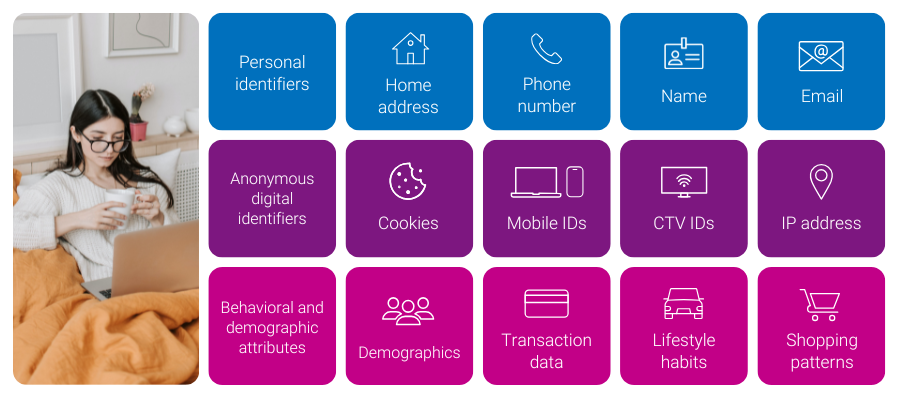
As the digital ecosystem becomes more complex, managing multiple identifiers for consumers has emerged as a significant challenge. From cookies and IP addresses to mobile IDs and universal IDs, marketers and platforms face increasing difficulty in maintaining a unified view of their consumers. Without a coherent identity strategy, campaigns can suffer from poor targeting, limited personalization, and flawed attribution.
Experian understands these challenges and offers solutions to help our partners navigate the complexities of a multi-ID landscape. By utilizing both digital and offline data, we provide the tools to unify fragmented identifiers and maintain a persistent view of consumers. As a result, marketers and platforms get rich insights, accurate cross-device targeting, improved addressability, and measurable advertising.
The shifting identity landscape
For years, the industry has relied on cookies to identify consumers across devices and platforms. However, with ongoing signal loss, including the uncertainty around cookies, and the evolution of privacy regulations, the digital identity landscape has grown more complicated. As consumers hop from one device to another, they are now represented by multiple signals, each tied to a different aspect of their digital behavior.
While this shift brings complexity, it also opens the door for innovation. Marketers and ad platforms now have the opportunity to rethink their identity strategies and adopt more flexible approaches that are not reliant on a single identifier.
This is where Experian comes in.
Connecting the dots: A holistic view of the customer journey
Our identity solutions are designed to help manage today’s multi-ID ecosystem by connecting digital and offline identifiers to a single customer profile. This creates a unified view of the consumer, and when combined with our understanding of customer behavior (e.g. demo, interests, shopping patterns) marketers and platforms get both insights about their customers and the addressability to reach them across channels.
Four examples of what you can do with a strong identity foundation
- If an advertiser wants to make its first-party data more addressable, it can utilize our Digital Graph with universal IDs, hashed emails (HEMs), and connected TV (CTV) IDs to extend its reach.
- A publisher who wants to gain further insights into their audiences and create private marketplaces (PMPs) can achieve this goal with the use of our Digital Graph with hashed emails, universal IDs, mobile ad IDs (MAIDs), CTV IDs, and IPs. The publisher can use this in concert with Marketing Attributes to understand age, gender, household income, buying behavior, and more. The publisher can connect marketing attributes to the Digital Graph via our Living Unit ID (LUID) to understand more about consumers that fall into their segments.
- A demand-side platform (DSP) who wants to extend first-party and third-party audience reach across all digital devices on their platform will use the Digital Graph with all digital IDs to allow users of their platform to select cross-device extension against first-party and third-party audiences.
- A retail media network (RMN) can use our Offline and Digital Graphs to connect in-store and online purchases to a household profile—even when purchases are made by different people. The RMN can then reach that household across digital media platforms and accurately attribute the in-store purchase back to digital ad exposure.
Identity as a strategic asset: Today and in the future
In our paradoxical world where consumers are represented by multiple identifiers, yet marketers and platforms face signal loss, identity is more than a technical issue—it’s a strategic asset. The ability to unify identity data into a single profile provides marketers with the customer intelligence needed to drive growth and stay competitive. Here’s how we do it:
- Deep, persistent customer understanding: With roots in offline, deterministic data like names, addresses, and emails, we provide an accurate and persistent view of identity to our customers. This allows you to maintain a consistent and comprehensive understanding of your customers and their marketing attributes over time.
- Highly accurate and refreshed digital identities: Our signal-agnostic graph is not reliant on any one signal as it includes HEMs, cookies, MAIDs, IPs, Universal IDs, and CTV IDs. Our Digital Graph is updated weekly, ensuring the data is always fresh and addressable. This persistent linkage of individuals and households to their identifiers and devices means your campaigns are always targeting the right people.
- Connected offline and digital graphs for holistic insights: We connect offline and digital identities by following privacy-first best practices, such as preventing re-identification, to allow insights from the offline world to be used in the online world. This integrated approach, enriched with marketing data, gives you better insights, more addressable advertising, and the ability to engage customers across multiple devices while accurately measuring campaign impact.
Transform challenges into opportunities
The rise of the multi-ID landscape presents both challenges and opportunities for the advertising industry. We stand as the trusted partner to navigate this complexity, utilizing insights from the offline world to inform decisions in the online world, enabling personalized marketing and accurate attribution, and helping you achieve your current and future goals.
Get started today
Latest posts
Every marketer has seen it: a customer browses reviews on a laptop, adds items to a cart on mobile, then “disappears.” In reality, they just likely switched devices or logged in with a different email. Identity resolution connects these scattered signals into a single profile so you never lose sight of the customer journey. Identity resolution is what helps you keep track of customers who bounce around. Connecting scattered signals into a single customer profile can help you deliver seamless experiences, meet strengthening privacy standards, turn first-party data into measurable results, and fuel better customer analytics. See our identity resolution solution in action Learn about it here What is identity resolution? Identity resolution is the process of pulling together the different identifiers a customer uses and connecting them to a single profile. Without it, you’re left with an incomplete picture of the customer — like a cart tied to one email, an app login tied to another device, or a loyalty swipe that never links back to the same person. Common identifiers include: Cookies: Short-lived browser data Emails: Plain-text and hashed Device IDs: Mobile advertising IDs (MAIDs) or app-based identifiers Loyalty IDs: Program numbers that tie online and offline activity Hashed PII: Personally identifiable information (PII) encrypted for privacy Ultimately, identity resolution can help you recognize the same customer wherever they engage. Why does identity resolution matter now? Marketers face incomplete views, data silos, privacy regulations, and shrinking visibility: Rising consumer expectations: People want seamless, personalized journeys across touchpoints. Privacy-first environment: Consumer privacy legislation (like the GDPR, CCPA, GLBA, FCRA, and new state laws) makes compliance non-negotiable. Signal loss: The decline of cookies, MAIDs, and walled gardens are pushing brands toward first-party data. Experian utilizes AI and machine learning to fill these gaps, predict behaviors, and connect signals across devices — providing marketers with a clear, privacy-safe view of their customers, even when traditional identifiers are missing. In this environment, identity resolution matters because it gives marketers a way to deliver seamless, personalized customer experiences and engage audiences effectively while respecting their privacy. It’s the basis for turning consented first-party data into measurable marketing outcomes without sacrificing trust. Talk to an expert Why is identity resolution critical in a privacy-first world? Even as cookies linger, marketers have already shifted their strategies to rely on first-party data, where choice and transparency are the baseline expectation. At Experian, our long history as a regulated data steward makes us a uniquely capable and trusted partner for managing modern compliance expectations. Our identity resolution solutions maximize the value of permission-based data while meeting consumer demand for privacy, personalization, and control. Struggling with scattered customer data? Experian makes identity resolution seamless Learn more How does identity resolution help brands? Identity resolution turns fragmented signals into unified profiles that drive personalization, efficiency, and compliance. Here’s how it creates measurable business impact. Creates a unified customer view One of the biggest advantages of identity resolution is the ability to integrate data from loyalty programs, point-of-sale (POS) systems, customer relationship management (CRM) platforms, web analytics, and offline sources into a single, comprehensive profile. Experian strengthens identity resolution with AI-driven clustering models that resolve household and individual identities across billions of signals with greater accuracy. With a clearer picture of each customer, brands see higher match rates and larger addressable audiences, which translates to more substantial reach and better return on ad spend (ROAS). Enables better personalization Customers constantly switch devices, update their information, and change preferences. Experian makes it easier to keep pace with these changes through frequent data enrichment and near-real-time identity resolution via Activity Feed. Combined with our long-standing use of AI and machine learning, this approach ensures shifting behaviors are captured quickly, enabling timely personalization, and more responsive engagement. With less delay from data to action, the result is faster response times and higher conversion rates. Improves the customer experience Customers notice when brands deliver relevant ads and contextual content across every channel. Consistency matters! But consistency doesn’t just happen on its own; it comes from identity resolution, which keeps the customer journey connected. As brands maintain continuity, they build trust, strengthen engagement, and increase customer lifetime value. Drives better marketing ROI Not every profile is valuable. Identity resolution helps marketers identify the highest-value audiences and reduce wasted spend. That efficiency leads to lower CPA and a higher overall ROI across campaigns. The power of modeling from a stronger foundation When you have a unified customer view, your models are built on better data. That means you can find more people who look like your best customers, build more responsive audience segments, and target with greater accuracy. This foundation can lead to better spending, more relevant campaigns, and a higher ROI. Maintains privacy compliance With GLBA/FCRA-grade standards and consumer choice mechanisms like opt-outs and data correction, you can protect your brand while maintaining personalization — without compromising legal or ethical safeguards. What are some identity resolution use cases and examples? Every industry faces its own unique identity challenges, but identity resolution is the common thread that turns scattered data into connected experiences. Let’s break down how companies in different verticals are putting it to work (and the kinds of results they’re seeing). Retail and e-commerce Shoppers bounce between websites, carts, and checkout lines, leaving behind scattered signals in the process. In retail, identity resolution bridges the gap between online and in-store experiences by matching online carts with loyalty swipes or connecting connected TV (CTV) exposure to in-store sales. This means fewer silos, better targeting, and more personalized offers wherever people shop. Our 2025 Digital trends and predictions report calls out that omnichannel experiences aren’t optional anymore. With CTV and social dominating spend, brands need identity resolution to cut through silos and build a complete view of customer behavior. Read the full report Financial services In financial services, identity resolution makes it possible to deliver personalized, compliant offers like refinancing options for likely mortgage switchers or the right rewards card for frequent spenders. Our partnership with FMCG Direct to create Consumer Financial Insights® and Financial Personalities® segments helps banks, insurers, and lenders understand behaviors — such as credit card use, deposit balances, and investment habits — without exposing sensitive details. Read more below about how our financial audiences enable privacy-safe personalization. Explore privacy-safe financial audiences Travel and hospitality Travel decisions aren’t always planned out in advance. Many bookings happen spur-of-the-moment, which is why real-time identity resolution is so powerful; it keeps the journey seamless when travelers jump from phone to laptop to tablet and presents relevant offers right as decisions are being made. Windstar Cruises put this information into action with Experian’s identity graph to connect digital interactions with actual bookings, which drove 6,500+ reservations and $20 million in revenue. Get the $20 million Windstar Cruises playbook here Media and TV Viewers tend to hop around between linear TV, streaming apps, and social feeds. And without identity resolution, every screen looks like a different person. Marketers can accurately plan, activate, and measure campaigns by unifying viewing behaviors into one ID with Experian’s AI-powered identity graph. Optimum Media tackled its multiscreen challenge by partnering with Experian for identity solutions. Layering our audience insights and our AI-driven Digital Graph onto their subscriber data, they were able to connect the dots across channels, reach the right households, and measure results instead of just impressions. In the end, they finally got a clear view of what works across every screen. Learn how Optimum Media mastered multiscreen measurement Curious how identity resolution can power your customer analytics? We can walk you through it. Chat with an expert Healthcare and pharma Healthcare marketers can’t afford slip-ups with HIPAA regulations. Identity resolution makes it possible to engage the right patients and providers with de-identified audiences rather than third-party cookies. At Experian, AI and machine learning have always been part of how we power identity resolution. In healthcare, that means using AI-enhanced modeling to connect de-identified clinical and claims data with lifestyle insights. The result is a more comprehensive picture of the patient journey that helps close care gaps, reduce wasted spending, and improve outcomes. By working with partners like Komodo, PurpleLab, and Health Union, we make it possible to activate campaigns at scale that boost engagement and adherence while keeping patient privacy front and center: Komodo Health enriches our identity graph with insights from millions of de-identified patient journeys plus lifestyle data, giving brands a fuller view of where care gaps exist and how to close them. PurpleLab connects real-world clinical and claims data to Experian’s platform, letting advertisers activate HIPAA-compliant audiences across CTV, mobile, and social with the ability to measure real outcomes like prescription lift and provider engagement. Health Union contributes a data set built from 50 million+ patient IDs and 44 billion+ patient-reported data points. Combined with our identity and modeling capabilities, this expands match rates and unlocks up to 76% net-new reach, so campaigns reach patients and caregivers in critical health moments. As a result, healthcare brands can launch campaigns that are privacy-first, highly targeted, and proven to drive meaningful impact. Audio People use audio while commuting, working out, and even folding laundry. It can be one of the hardest channels to track because of how frequently listeners switch between apps, stations, and devices. Experian’s identity resolution partnerships with Audacy and DAX change the game: Audacy helps tie scattered listening into a single view, so advertisers can follow audiences across devices and keep ads relevant in the moment. DAX pairs Experian’s 2,400+ syndicated audiences with its audio network, enabling brands to target precisely and launch impactful campaigns at scale. These partnerships turn audio into an accurate channel where ads feel personal, privacy-safe, and measurable. Gaming Gamers don’t stick to one platform. Player data gets scattered across mobile, console, and PC, so it’s tough to keep track of individuals. Experian helps stitch those signals together so publishers can finally see the whole picture, personalize gameplay, and keep players coming back. With enriched profiles, publishers can deliver offers that resonate and unlock fresh revenue by packaging high-value gaming audiences for advertisers outside the industry. Unity, a leading gaming platform, is tapping into Experian’s syndicated audiences to gain player insights and help advertisers reach gamers across mobile, web, and CTV. For global publishers, unifying player data with Experian has driven higher engagement and stronger ad ROI. Discover how to unlock revenue with unified player data How should I evaluate identity resolution providers? When choosing an identity resolution partner, look for: Data scale and quality: The value of identity resolution depends on how complete and accurate the underlying data is. The right provider should bring together a wide range of identifiers from online and offline sources, maintaining high accuracy so your customer profiles are broad and reliable. Match accuracy and recency: The best partners also refresh their data regularly and can blend deterministic (exact, one-to-one matches) with probabilistic (pattern-based matches) methods. That way, you get the accuracy of “this email is definitely that customer” with the reach of “this device likely belongs to the same person.” Privacy and compliance readiness: Compliance can’t be an afterthought. Your identity partner should be ready for GLBA, FCRA, GDPR, CCPA, and the latest state-level rules with built-in tools for opt-outs, corrections, and deletions. Integration flexibility: A good provider fits into your world, not the other way around. Look for pre-built integrations with your customer data platform (CDP), demand-side platform (DSP), or marketing tech (MarTech) stack so you can get up and running without the heavy IT lift. Data analytics capabilities: You need proof that identity resolution drives ROI. Look for closed-loop measurement that ties unified IDs directly to campaign performance, so you can see what’s working and optimize with confidence. How Experian enables enterprise-grade identity resolution Experian delivers identity resolution at the scale, accuracy, and compliance required by the world’s largest enterprises. Our solutions are: Built on trust: Backed by 40+ years as a regulated data steward and rated #1 in data accuracy by Truthset, so you can act with confidence. Powered by our proprietary AI-enhanced identity graph: Combining breadth, accuracy, and recency across four billion identifiers, continuously refined by machine learning for maximum accuracy. Seamlessly connected: Pre-built data integration with leading CDPs, DSPs, and MarTech platforms for faster time to value. Always up to date: Frequent enrichment and near-real-time identity resolution through Activity Feed for timely personalization and more responsive customer engagement. Privacy-first by design: Compliance with GLBA, FCRA, and emerging state regulations baked in at every step, supported by rigorous partner vetting. The bottom line Identity resolution turns fragmented signals into connected, measurable, and compliant experiences. From retail to gaming, brands using it see stronger personalization, engagement, and ROI. With Experian, you get the data, trust, and responsible AI innovation to make identity resolution work across every channel. Our approach uses AI to connect identities, predict behaviors, and deliver personalization that balances privacy with performance. If you’re ready to turn fragmented data into growth, now’s the time to start. The world’s leading brands trust us to power identity resolution at scale. See how we can do the same for you. Identity resolution FAQs What’s the difference between deterministic and probabilistic matching? Deterministic uses exact identifiers (like an email) for accuracy, while probabilistic uses signals and algorithms to expand reach. Best-in-class providers usually combine both. How does identity resolution improve ROI? Identity resolution helps with personalization by unifying scattered signals into one profile. It reduces wasted spend and increases match rates, which means bigger addressable audiences and higher ROAS. Can identity resolution work without third-party cookies? Yes. With first-party data and hashed PII, brands can still maintain addressability and personalization. What industries benefit most from identity resolution? Retail, finance, travel, media, gaming, and audio all use identity resolution to personalize, attribute sales, and improve efficiency. How is Experian different from a CDP? A customer data platform unifies the data you already own. Meanwhile, we add depth, scale, and higher match rates by layering in our identity graph and data enrichment. Is Experian identity resolution privacy-compliant? Yes. Experian is GLBA/FCRA compliant, GDPR/CCPA ready, and supports consumer opt-outs and corrections to ensure responsible personalization. Latest posts

In our Ask the Expert Series, we interview leaders from our partner organizations who are helping lead their brands to new heights in AdTech. Today’s interview is with Allison Dewey (Director, Data & Curation) at 33Across. Navigating complexity in digital advertising Digital advertising is more fragmented and privacy-constrained than ever. How is 33Across helping marketers cut through that complexity to drive real outcomes, and what makes your approach distinct? Reaching audiences without compromising scale or performance is one of the toughest challenges for marketers. Users consume content across multiple devices and channels, making it difficult for marketers to identify and accurately target them with the right message. 33Across segments leverage AI-powered contextual and behavioral signals across privacy-safe environments to help marketers accurately identify audiences, whether they’re streaming content on their connected TV or researching products on their mobile device. What sets us apart is that we don’t just identify valuable audiences; we help marketers also target cookieless inventory and power it with real-time signals. Marketplace integration milestones What excites you most about bringing 33Across audiences into Experian’s data marketplace? We’re excited to bring 33Across audiences into Experian’s data marketplace because it connects our unique segments with a powerful data ecosystem that marketers already trust. Buyers looking to activate audiences that are both privacy-safe and performant continue to tap into the Experian data marketplace for high-quality, high-performing data. We offer a wide range of audience verticals, including B2B, demographic, retail purchase data, interest and intent, and political data. In addition, we offer the ability to create custom segments across verticals. Our intent-based audiences, built from contextual and engagement signals, help buyers reach consumers on CTV, desktop, or mobile devices with scale. Being part of Experian’s data marketplace accelerates access to these audiences, drives better ROI, and helps brands future-proof their strategies today. Retail demand signals Retail brands are racing toward privacy-safe, first-party data. Which 33Across retail datasets or segments are experiencing the highest demand, and what makes them a must-have? Retail marketers are leaning into contextual and behavioral intent signals to complement their first-party data strategies. At 33Across, we’re seeing high demand for segments tied to shopping intent, including in-market consumers browsing for categories like fashion, home goods, electronics, and health & wellness. What makes these segments essential is their real-time nature – they can capture consumer interest as it happens. For retail brands looking to expand their reach while respecting privacy, our segments offer scalable, actionable intent that drives results. B2B without cookies Reaching real B2B decision-makers at scale is tough with or without signals. How does 33Across deliver both precision and reach in this environment? B2B marketing often struggles with balancing scale and specificity. 33Across addresses this by combining contextual precision with AI-modeled behavioral signals; this segment approach reaches professionals actively engaging with relevant content and topics, even in environments where IDs are unavailable. Marketers gain access to more signals and, in turn, better reach from 33Across’ unique publisher integrations and audience curation built from machine learning and AI. We surface intent through content consumption patterns and contextual engagement, unlocking valuable, privacy-safe signals at scale. Allowing B2B marketers to reach real decision-makers in a signal-sparse world. Use cases With retail, B2B, and beyond, can you share an example of how brands in these verticals are utilizing your audiences? Top brands that have a user-focused approach use 33Across audiences to drive scale; performance. These brands enable our segments to precisely reach the right users across devices and increase conversion rates; brand awareness. By reaching the right users, brands have higher conversion rates and increase campaign efficiency. Supply path innovation As identifiers disappear, advertisers are looking for scalable, privacy-safe ways to reach real people. How is 33Across helping unlock more addressable inventory and drive performance? By combining contextual, semantic, and engagement-based signals, we deliver intent-based targeting that performs across CTV, display and video. Higher addressability helps marketers not only extend their reach but also deliver personalized messaging across digital channels in a privacy-compliant way. Contact us About our expert Allison Dewey Director of Data and Curation, 33Across Allison Dewey is the Director of Data & Curation at 33Across, where she oversees data partnerships, integrations, and supply-side curation. With a deep expertise in audience targeting and signal optimization, Allison plays a key role in connecting data into the programmatic world. Allison holds a Bachelor's degree in Psychology from Bates College. About 33Across Rooted in over 15 years of data expertise, 33Across harnesses signals to enrich and expand marketers’ audiences and reach them wherever they consume content. Built from over 300 billion proprietary data signals, we apply machine learning and AI to create over 1,500 B2C and B2B segments using privacy-first principles to reach audiences. Cookieless targeting FAQs How can advertisers reach audiences without traditional identifiers? By using contextual and engagement-based signals, advertisers can target consumers across CTV, mobile, and desktop in a privacy compliant way, even as identifiers become less available. What audience segments are most in demand for retail marketers? Segments tied to shopping intent, such as consumers browsing fashion, electronics, or health products, are highly sought after because they capture real time interest and drive results. How can B2B marketers find decision-makers without cookies? Combining content engagement patterns with machine learning allows marketers to reach professionals actively engaging with relevant topics, even in environments where IDs are unavailable. What makes privacy safe audience targeting effective? Privacy safe targeting uses real time contextual and behavioral signals to deliver relevant messaging across devices and channels without compromising consumer trust. How can real-time intent signals drive demand? Real time intent signals allow advertisers to capture consumer interest as it happens, helping demand side platforms and brands deliver timely, relevant ads that increase engagement and drive conversions across devices like CTV, mobile, and desktop. Latest posts

Originally appeared in Adweek This holiday advertising season, identity is the real differentiator Marketers are betting big on AI to run their holiday advertising, using it to build predictive audiences, generate creative at scale, and optimize media buys in real time. The draw is clear: greater efficiency, delivered at scale. But here’s the problem: without a solid identity foundation, AI is just guessing. And in a year when consumers are cautious and competition is fierce, guesses won’t deliver the outcomes you need. Experian’s 2025 Holiday spending trends and insights report shows that success this season will depend on connecting the right data to the right audiences in real time. Download the report now Are shoppers really using AI to make holiday purchases? Not yet. Only 12% of consumers plan to use AI tools to shop this season, mostly for finding discounts. Instead, trusted influences (like retailer websites, product reviews, and recommendations) still guide buying decisions. For marketers, that’s a signal to focus on credibility and connection. AI can support your holiday advertising strategy, but trust still wins the sale. Consumer sentiment heading into the holidays is low, but that could mislead marketers Here's why How marketers are really using AI in holiday advertising Behind the scenes, AI is working overtime. Teams use it to segment audiences, test creative, and optimize media in real time. These capabilities are powerful, but only if they’re grounded in accurate, persistent data. Think about the typical holiday shopper. They may browse a product online, validate it in store, and finally purchase days later from a different device than they used while browsing. If AI isn’t anchored in identity, it struggles to connect those touchpoints. Instead of amplifying relevance, it amplifies noise. See our predictions for Black Friday 2025 Why identity is the GPS for AI-driven holiday advertising Identity is what turns AI from a blunt instrument into an accurate tool. By unifying fragmented signals across channels and devices, identity provides the consistent consumer view that AI needs to be effective. With that foundation, AI can do more than churn out models. Instead, it can: Identify the right audiences and filter out waste Personalize with context, not just scale Measure real outcomes, linking exposures to visits and purchases Identity doesn’t just improve efficiency; it creates accountability. And in a season where every holiday advertising campaign dollar is scrutinized, accountability is the difference between investment and waste. Why connected data will make or break Cyber Week How to turn complexity into clarity this holiday season This year's holiday advertising season is complicated. Marketers are confident, consumers are cautious, and AI is somewhere in the middle. The challenge isn’t just speed or volume, it’s accuracy. By pairing AI with identity, you can adapt to real behavior instead of assumptions. You can build campaigns that are consistent across connected TV, retail media, and social platforms. And you can prove results when it matters most. AI isn’t a holiday miracle. But when it’s powered by identity, it can give you clarity in a noisy season and proof of performance when budgets are under scrutiny. Explore Experian's holiday audiences to activate this season What’s the real takeaway for marketers this season? Don’t assume AI alone will save your holiday advertising strategy. It won’t. Consumers still trust human voices more than machines, and your AI models are only as strong as the data beneath them. Identity is the difference between guesswork and accuracy, between activity and impact. This holiday season, the winners won’t be the brands that simply spend more or automate faster. They’ll be the ones that put identity at the core of their AI strategy and meet consumers where they really are. Download Experian’s 2025 Holiday spending trends and insights report to see where consumers are spending and how identity can help your holiday advertising campaigns more effective. Download now About the author Colleen Dawe VP, Advertiser Partnerships, Experian Colleen Dawe is VP, Advertiser Partnerships at Experian Marketing Services, where she oversees revenue growth and client success, helping advertisers harness data and identity to fuel marketing strategies. With over 15 years of experience spanning TV and digital media, she brings deep expertise in data, identity, activation, and measurement to help her clients connect innovation with business outcomes. Holiday advertising FAQs Why isn’t AI enough on its own for holiday advertising? AI works best when it’s grounded in accurate data. Without identity, it can’t connect actions across devices or channels, which limits its effectiveness. How does identity improve AI-driven campaigns? Identity creates a single, persistent view of your audience. That means AI can personalize content, measure conversions, and cut waste with far greater accuracy. What does “identity” mean in marketing terms? It’s the data layer that connects people across their devices, browsers, and behaviors—so your campaigns reach real individuals. How can marketers prove ROI in holiday advertising? By tying exposure to verified outcomes—like store visits or purchases—using identity-linked data. That’s how Experian helps brands move from impressions to impact. Latest posts