Loading...

Identity is the bridge between AI and outcomes

Published: July 22, 2025 by Christopher Feo, Chief Business Officer

AI needs identity to deliver

Originally appeared in The Current

Forget the cookie delay — AI is already rewriting the rules of advertising.

While the industry was busy debating yet another postponement of Chrome’s third-party cookie phaseout, AI quietly became the most disruptive force in marketing. But here’s the twist: AI doesn’t work without identity. If marketers want results — real outcomes, not just impressions — they need to prioritize the data that makes AI go.

First-party data strategies are now mainstream. Interoperable identity solutions like Unified I.D. 2.0 (UID2) and ID5 are gaining adoption across the open web. Connected TV (CTV) has grown into a performance-focused, cookieless channel. Contextual and geo-based targeting have become smarter and more scalable. Identity graphs are helping marketers stitch together signals across devices, platforms, and channels.

The foundation for a better ecosystem isn’t being built — it’s already here.

The AI hype is over — and the stakes are higher

It’s no longer buzz. AI is here, and it’s already reshaping how we plan, activate, and measure advertising.

We’re seeing the rise of agentic AI: systems that don’t just surface insights but act on them. These AI agents are identifying patterns, building audiences, optimizing media buys, and analyzing performance. AI is helping marketers stop guessing and start improving.

But there’s a catch — one we can’t afford to overlook.

An image that represents a person's offline data - their name, address, and email

AI is only as good as the data it works with. “Garbage in, garbage out.” as the saying goes. And in advertising, that means if you don’t know who you’re reaching, even the smartest AI won’t drive results. To unlock AI’s full potential, marketers need a strong, privacy-safe identity foundation.

Identity is the fuel that makes AI work

AI can personalize creative, optimize in-flight campaigns, and even recommend which channels to prioritize — but it can’t do any of that well without context. And context starts with identity.
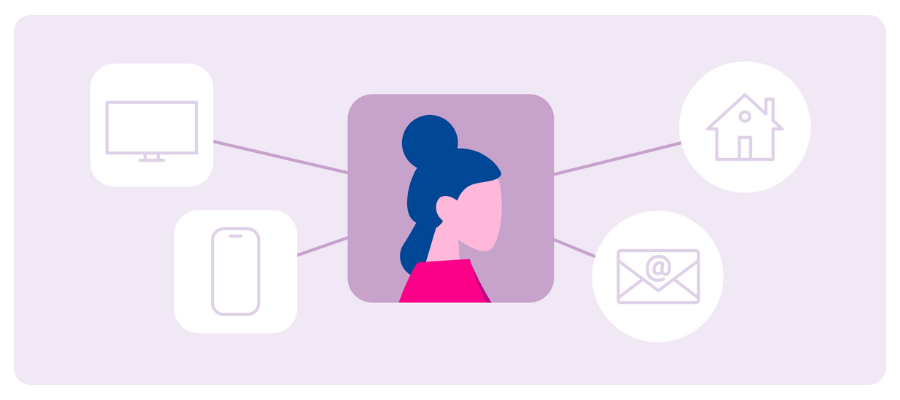
A picture of a woman with four icons surrounding her that represent a TV, cell phone, house, and email

Identity connects signals from different devices, logins, channels, and interactions to real people. It tells your AI models who you’re talking to — not just what they clicked. That kind of clarity gives AI the power to make smarter predictions, uncover insights, and deliver relevance at scale. Without identity, AI is guessing. With identity, it’s delivering.

Identity is the foundation of the outcomes era

We’re living in a performance-driven age. Impressions and clicks are no longer enough. Marketers today are being judged by real outcomes: incremental sales, customer acquisition, revenue lift, and long-term value.
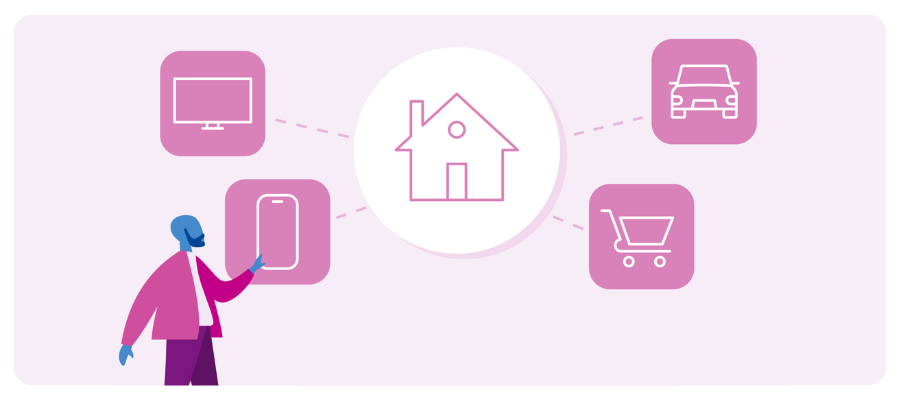
A man stands by an icon of a house surrounded by four icons that represent a TV, cell phone, car, and shopping cart

To measure those outcomes, you need to know who you reached — and whether they took action. Identity makes that connection possible. It links ad exposure to real-world results. It enables accurate attribution across channels. It powers personalization at every stage of the journey, making every impression more valuable.

This is the outcomes era, and identity is what makes it measurable.

Commerce media and CTV show what’s possible

Two of the fastest-growing channels — commerce media and CTV — are great examples of identity in action.

Shopping cart icon

Commerce media

In commerce media, identity helps retailers and marketplaces organize their customer data, enrich it with external insights, and activate it across their own sites and off-site channels. It makes accurate targeting possible and gives marketers a clear ROI they can prove.

TV icon

CTV

In CTV, identity helps solve a fundamental challenge: turning anonymous viewers into addressable audiences. On free ad-supported streaming platforms (FAST), identity solutions resolve viewership to the household level. On logged-in platforms, identity enriches profiles with behavioral and purchase data, boosting demand, improving CPMs, and growing revenue.

At Experian, we’ve invested in this future. Our recent acquisition of Audigent brings together data, identity, and activation — under one roof — built to support both AI-driven planning and outcome-based performance.

How marketers can win now

To stay ahead in a world defined by AI and outcomes, marketers need to:

Connectivity icon

Invest in omnichannel identity

To unify signals across platforms and environments.

Action icon

Make identity actionable in real time

To inform both targeting and measurement.

Partnership icon

Utilize first-party data, clean rooms, and privacy-safe partnerships

To future-proof performance.

Target icon

Tailor identity strategies

To fit their media mix — because what works in CTV may not apply to in-app or web.

It’s not about rebuilding everything. It’s about building on what’s already working.

Final thought: Identity is the bridge

AI is raising the bar, and outcomes are the new standard. But neither works without identity. The marketers who win won’t treat identity as a compliance checkbox — they’ll treat it as their competitive edge.

Get started with us today

This site is protected by reCAPTCHA and the Google Privacy Policy and Terms of Service apply.


Latest posts

Loading…
Unpacking the future of AdTech: Insights from Beet Retreat 2023

Industry leaders recently gathered at the influential Beet Retreat 2023 conference held in Santa Monica, sharing forward-looking perspectives on the future of advertising. This renowned event known for its diverse mix of leaders from TV, agencies, advertising, and technology sectors, was enriched by insights from Experian’s very own Chris Feo, SVP of Sales & Partnerships, and Kimberly Gilberti, Chief Product Officer. Both Feo and Gilberti brought their expertise and perspectives for harnessing the potential of high-growth connected TV (CTV) advertising. The era of connected everything at Beet Retreat 2023 In the “Era of Connected Everything,” panel, Feo dived into the concept of a ‘connected everything’ world. He emphasized the importance of balancing consumer and privacy expectations with the increasing integration of AI and machine learning. “As decisioning evolves, creative tech and data derived from creative scale will play a bigger role.”chris feo, svp, sales & partnerships Feo further discussed the potential of creative technology, particularly in how AI and machine learning could revolutionize content personalization. He cited examples where the same creative content is used indiscriminately across diverse demographics, suggesting a future where creative content adapts and performs well for a variety of audience identities. Experian's balanced approach at Beet Retreat 2023 During a fireside chat, Gilberti shared her vision on the transformative role of television in the advertising technology landscape. “Connecting exposure to business outcomes is the holy grail of measuring CTV and effectiveness.”kimberly gilberti, chief product officer Her insights reflected the growing interplay between digital and traditional TV advertising, and the opportunities arising from this convergence. Gilberti emphasized the critical role of data analytics in enabling advertisers to tailor content more effectively to diverse TV audiences. She envisioned a future where the integration of digital strategies and traditional TV advertising create a more cohesive and impactful AdTech approach. Future focus: Diversification and partnerships Both Feo and Gilberti underscored the need for advertisers to diversify their partnerships. By working with a variety of partners, you can mitigate risks and foster innovation, ensuring you are not overly dependent on a single channel or approach. Navigate what’s next with Experian Experian's contributions at Beat Retreat 2023 underscore our pivotal role in the AdTech industry. With a unique balance of offline and online data expertise, we are not just adapting to changes but leading the way in innovation and strategy. Our insights and approaches, as highlighted by Feo and Gilberti, demonstrate our commitment to guiding the industry through its rapid evolution, making our role indispensable in the future of advertising technology. At Experian, we’re your partner in data-driven marketing and can help make your interactions more meaningful. To learn more, connect with a member of our team today. Connect with us Latest posts

Nov 30,2023 by Experian Marketing Services

Experian launches innovative new Geo-Indexed audiences

Experian is excited to introduce our new Geo-Indexed audiences. Our Geo-Indexed audiences use a new advanced indexing classification technology to identify and reach consumers based on their geo-regional attributes. These audiences can help you discover, segment, and craft messaging for consumers without the use of sensitive personal information, so you can confidently reach your target audience without sacrificing data privacy. In this blog post, we’ll review how our new Geo-Indexed audiences can help you reach your audience while balancing data privacy and accuracy. How we collect and use data is changing The AdTech industry is undergoing a transformation as various forces shape its trajectory. One significant factor is legislation, with as many as 26 states currently considering data privacy laws. Consumer preferences also play a crucial role, as more individuals look to brands for responsible and ethical data handling practices. According to Forbes, 82% of people view brands positively when they consciously opt to refrain from using personal data for personalized ads. Major players in the field such as Apple and Google are actively pushing for a shift away from traditional methods like cookies and other identifiers in data collection and usage. These developments mark a considerable shift in how we use data. Many brands are seeking a few solutions to continue to find and reach their target audience online, but at Experian, we see a great opportunity for innovation and impact within geo-based targeting solutions. “We predict that over the next year, you will begin to see innovations in geo-based targeting methodologies that satisfy the industry's need for audience targeting with responsible data strategies. By embracing innovations in geo-based targeting and adhering to responsible data strategies, you can not only comply with these laws but continue to reach your intended audiences effectively.”jeremy meade, vp, marketing data & operations Introducing Experian’s Geo-Indexed audiences Geo-Indexed audiences from Experian allow brands to reach consumers and households based on geographic regions that over-index for a common set of attributes. Our Geo-Indexed audiences give brands the ability to: Stay connected: Maintain a touchpoint with consumers as other audience targeting solutions disappear or reduce scale due to new legislation. Expand your audience reach: With our sophisticated geo-indexing methodology, you will be reaching your target audience’s circle of influence within the geo-region. Execute where you want: By linking our Geo-Indexed audiences to Experian’s persistent identifiers, you can activate these audiences on the shelf of your platform of choice. As a part of the release of Geo-Indexed audiences, we will be rolling out three main categories: Language Ethnic Group Demographics which include: Education Household Income Marital Status Occupation Presence of Children Over the next year, we will continue to release new audiences within Geo-Indexed audiences. How you can use Geo-Indexed audiences An Auto brand has a new corporate policy restricting the use of sensitive personal information in audience targeting but would like to reach high-income earners. To reach their target audience they use the Geo-Indexed audiences to reach households who are in geographic regions that index highly for income ranges ‘$175,000 – $199,999’ and ‘$200,000+.’ Prioritize privacy without sacrificing accuracy with Experian’s Geo-Indexed audiences Our Geo-Indexed audiences are available in most major data and demand-side platforms. Visit our partner page for more information. Don’t see our audiences on your platform of choice? We can help you build and activate an Experian audience on the platform of your choice. Connect with our audience team Latest posts

Nov 28,2023 by James Esquivel, Product Marketing Manager

Are walled gardens in 2024 still a marketing challenge?

In this article…What is a walled garden?Integrated marketing is more important than everPerspectives on walled gardens from Cannes Lions 2023Walled gardens aren’t going away in the near futureThe fuure of walled gardens Digital marketers face an ongoing challenge in the form of "walled gardens," closed online ecosystems where it is difficult to access user data. As we get ready for 2024, it's more important than ever for marketers to evaluate the current challenges and opportunities surrounding walled gardens and to take stock of the impact of walled gardens in marketing as an industry. What is a walled garden? A walled garden is a closed online ecosystem controlled entirely by one tech company. Advertising on these ecosystems is fairly locked down, as major tech companies with walled gardens tend to tightly control access to the user data, content, and advertising that appears within the ecosystems. Some examples of walled garden ecosystems include Google, Facebook, Amazon, and Apple. These walled gardens have particular advantages, like access to massive user bases and precise targeting within the individual ecosystems. It can also be difficult to reach said audiences outside of the ecosystems, reducing the amount of control you have over your advertising strategies. Learn more about walled gardens. Learn the differences between walled gardens and hedged gardens. Integrated marketing is more important than ever Today, it's become more crucial to connect with consumers over multiple touchpoints, which can be done from tech like connected TV (CTV) to websites, mobile devices, and even shopping in a physical store. However, as integrated marketing gains utility, many platforms with walled garden ecosystems have increased, making a truly integrated and personalized marketing strategy more difficult in many situations. As a result, many marketers have realized the value of a more streamlined marketing approach, emphasizing the importance of fully integrated advertising strategies. Though there are surely marketing advantages to gain from walled garden ecosystems, especially in audience size, the challenges they pose will require you to innovate and find more creative ways to engage with your audience from platform to platform. Perspectives on walled gardens from Cannes Lions 2023 Offering a poignant view of industry trends and ideas, the Cannes Lions International Festival of Creativity of 2023 had much to say about the significance of walled gardens in the marketing world. Let's look at two key takeaways from this year's festival. Retail media In recent years, many retail companies have started selling ad space within their own walled garden shopping platforms, dubbed "retail media." Platforms like Amazon and Walmart have developed their own particular advertising ecosystems where they sell ads to marketers within the shopping environment itself. Navigating the sell-side of retail media’s walled gardens While retail media offers marketers unique opportunities, it's not without its challenges. For one, ad space in these environments is limited, so the competition can be difficult on the sell-side, leading to higher ad costs. Additionally, this shift in dynamic also forces marketers to change how they prioritize their marketing channels, looking closer at the results of their efforts rather than focusing on particular channels within the platforms themselves. Opportunities in the buy-side of retail media’s walled gardens Brands on the buy-side see various benefits from advertising within retail media channels and walled gardens. By browsing in an online shopping environment, the users in these ecosystems are likely high-intent shoppers, people who are further down the sales funnel and who are ready to make a purchase soon. Shoppers can also be precisely targeted within these environments, as marketers are given the ability to access very specific audience segments based on details like shopping behavior, preferences, and even purchase history. Omnichannel marketing To more effectively engage audiences even among an abundance of walled garden ecosystems, speakers at the 2023 Cannes Lions Festival discussed the importance of omnichannel marketing. By emphasizing strategies that reach the consumer through multiple touchpoints, marketers can deliver a unified brand experience across channels. This allows marketers to focus more on results than specific advertising channels, including walled garden platforms. Walled gardens aren’t going away in the near future Though various challenges are associated with walled gardens in advertising, they aren't going anywhere. So, what's the current state of these environments throughout the industry? Efforts are being made to break down walled gardens in tech In a handful of countries, regulatory actions have been put forward to address how dominant many major tech companies are in their respective markets. One major example of this is Meta and Google's entanglements in Canada. Currently, neither company can display news on their websites in the Canadian market. This decision was reached to give Canadian news agencies more control over their advertising revenue since, previously, the tech giants received more views and, therefore, gained the ad revenue. Though relatively small, this does indicate a certain shift in dynamic. Why companies are resisting Despite their challenges, walled gardens in 2023 persisted, mainly because they are particularly adept at generating revenue for the tech companies that control them. In 2022, 78 percent of global digital advertising revenue came from these closed ecosystems, and projections expect that figure to rise to 83 percent by 2027. From the viewpoint of a company that operates in a walled garden, the idea of releasing their control over their environment represents losing out on a stream of vast revenue, making letting go of a walled garden ecosystem an unattractive prospect. The future of walled gardens As time progresses, what can digital marketers like you expect from walled garden ecosystems in the near future? A cookieless future A huge element to consider is the transition to a cookieless future. Many major browsers have begun phasing out the use of third-party cookies. In the wake of this decision, many are looking for reasonable alternatives that allow for behavior tracking and more personalized advertising experiences. Solutions like Experian's identity resolution can provide a strong alternative option, allowing marketing strategies to adapt to the current landscape. An influx of mini gardens You should also anticipate the proliferation of various smaller, specialized walled garden ecosystems in the future. These so-called "mini gardens" specialize in more niche audiences and industries, and they can present their own challenges and opportunities. Alternative IDs As you search for new identification methods outside cookies, various alternatives have presented themselves, requiring further exploration and experimentation. Among these are privacy-compliant solutions like Unified ID 2.0, which allow you to serve more personalized ads without compromising the consumer's privacy. Navigating the evolving landscape of walled gardens in 2024 As we begin 2024, you will continue facing opportunities and challenges regarding walled gardens. The 2023 Cannes Lions International Festival of Creativity re-emphasized how important it is for marketers to stress omnichannel marketing within walled garden environments and become well acquainted with identity resolution solutions as we move into a cookie-less future. All of this requires you to become comfortable with walled gardens being here to stay and innovate to navigate an evolving and developing landscape. We’re here to help you navigate the evolving landscape of walled gardens in 2024. Contact us today. Get in touch Latest posts

Nov 16,2023 by Experian Marketing Services

Subscribe to our newsletter

Enter your name and email for the latest updates

This site is protected by reCAPTCHA and the Google Privacy Policy and Terms of Service apply.

About Experian Marketing Services

At Experian Marketing Services, we use data and insights to help brands have more meaningful interactions with people. As leaders in the evolution of the advertising landscape, Experian Marketing Services can help you identify your customers and the right potential customers, uncover the most appropriate communication channels, develop messages that resonate, and measure the effectiveness of marketing activities and campaigns.

Visit our website

Subscribe to our newsletter

Stay up to date on the latest industry news and receive expert tips from our marketing experts.
Subscribe now!